Categories
Audio Sources - Full Text Articles

Ex-Wagner commander witnessed comrades shot for fleeing, says his Norwegian lawyer

2023-01-26T20:19:38Z

Cadets of a military academy fire a salute during the funeral of Dmitry Menshikov, a mercenary for the private Russian military company Wagner Group, killed during the military conflict in Ukraine, in the Alley of Heroes at a cemetery in Saint Petersburg, Russia December 24, 2022. REUTERS/Igor Russak/File Photo

A former commander of Russia’s Wagner mercenary group who fled to Norway has spoken about how he witnessed some of his comrades being shot as they were trying to flee from the frontline in Ukraine, his Norwegian lawyer told Reuters.

Andrei Medvedev, who fled from Russia by crossing the Russian-Norwegian border on Jan. 13, has said he fears for his life after witnessing what he said was the killing and mistreatment of Russian prisoners taken to Ukraine to fight for Wagner.

Medvedev is living in a secret location in the Oslo area after he was released from detention on Wednesday following a “disagreement” with the police about measures taken to ensure his safety.

His lawyer Brynjulf Risnes told Reuters that Medvedev had seen some “incredibly horrible” situations while he was fighting with Wagner last autumn.

He had witnessed “the shooting of his comrades while he was watching because they tried to flee,” Risnes said in an interview, citing Medvedev.

The Russian was “slowly coming to terms with what’s happening”, his lawyer said.

“His life has been chaotic and dangerous and very stressful for a very long time,” Risnes said, “particularly, of course, during the autumn when he was in Ukraine with the Wagner group.”

“But of course, his life hasn’t been easy before that either.”

Thousands of Ukrainian civilians have been killed, millions uprooted and cities reduced to rubble since Russian forces invaded Ukraine 11 months ago.

Kripos, Norway’s national criminal police service, which has responsibility for investigating war crimes, has begun questioning him about his experiences in Ukraine and would continue to do so, Risnes said.

Kripos is part of a project to investigate war crimes in Ukraine conducted by the International Criminal Court.

Other groups like the Norwegian Helsinki Committee and the Clooney Foundation were also interested in talking to Medvedev, his lawyer said.

“One main thing will be to coordinate so we don’t have to ask all the questions five or ten times,” Risnes said.


Categories
Audio Sources - Full Text Articles

U.S. Representative Schiff sets sights on fellow Democrat Feinstein“s Senate seat

2023-01-26T20:22:54Z

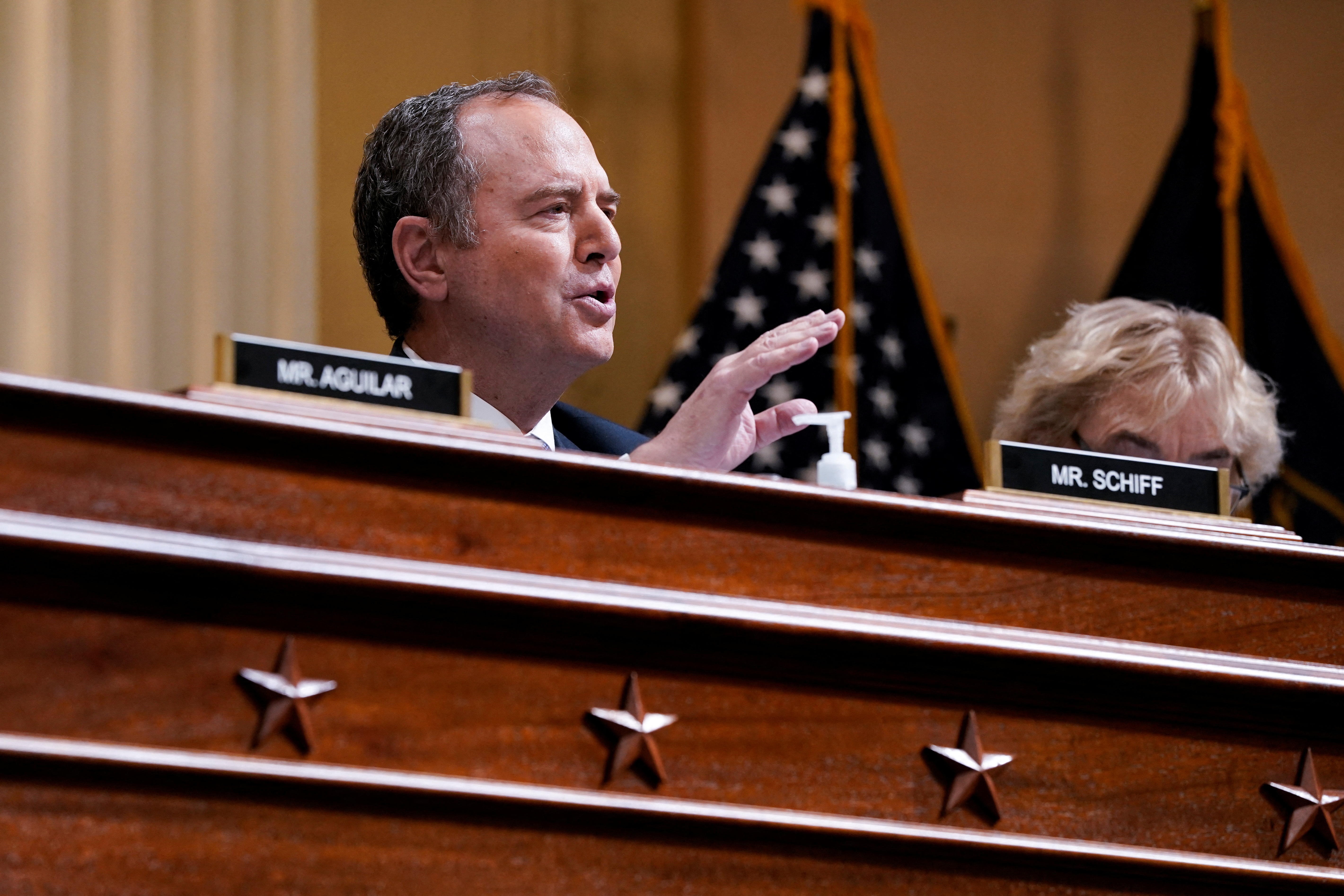
U.S. Representative Adam Schiff (D-CA) speaks during a public hearing of the U.S. House Select Committee to investigate the January 6 Attack on the U.S. Capitol, on Capitol Hill in Washington, U.S., October 13, 2022. REUTERS/Elizabeth Frantz

U.S. Representative Adam Schiff, a Democrat who led the impeachment case against former President Donald Trump and sat on a committee that probed the Jan. 6, 2021, attack on the Capitol, said on Thursday he would run for U.S. Senate.

Schiff joined other California Democrats aiming for the seat currently held by Democratic Senator Dianne Feinstein. U.S. Representative Katie Porter launched her U.S. Senate campaign this month. The Washington Post has reported that Representative Barbara Lee was also planning to run for the seat.

“Our democracy is under assault from MAGA extremists, who care only about gaining power and keeping it,” Schiff said in a statement, using a Trump slogan standing for “Make America Great Again.”

“I look forward to campaigning hard in this race,” Schiff said.

Feinstein, who has held the seat since 1992, has not said she would run for re-election but has faced pressure to resign given that she is the oldest member of Congress at 89 years old. If she were re-elected, she would be 97 at the end of her six-year term.

Schiff, 62, is the former chairman of the House of Representatives Intelligence Committee. The new Republican House Speaker, fellow Californian Kevin McCarthy, has blocked Schiff from serving on the prestigious panel again.

Schiff, a prominent House Democrat who was first elected in 2000, gained national attention for his high-profile role in the 2020 Trump impeachment trial. He also sat on the select committee investigating the Republican former president’s role in the attack by his supporters on the U.S. Capitol on Jan. 6, 2021.

Feinstein is a trailblazer in U.S. politics: the first woman to serve as mayor of San Francisco, first woman to serve on the Senate Judiciary Committee and now the longest-serving female senator. She has said she would make an announcement of her plans for 2024 at the appropriate time.

(This story has been refiled to fix syntax in headline)

Categories
Selected Articles

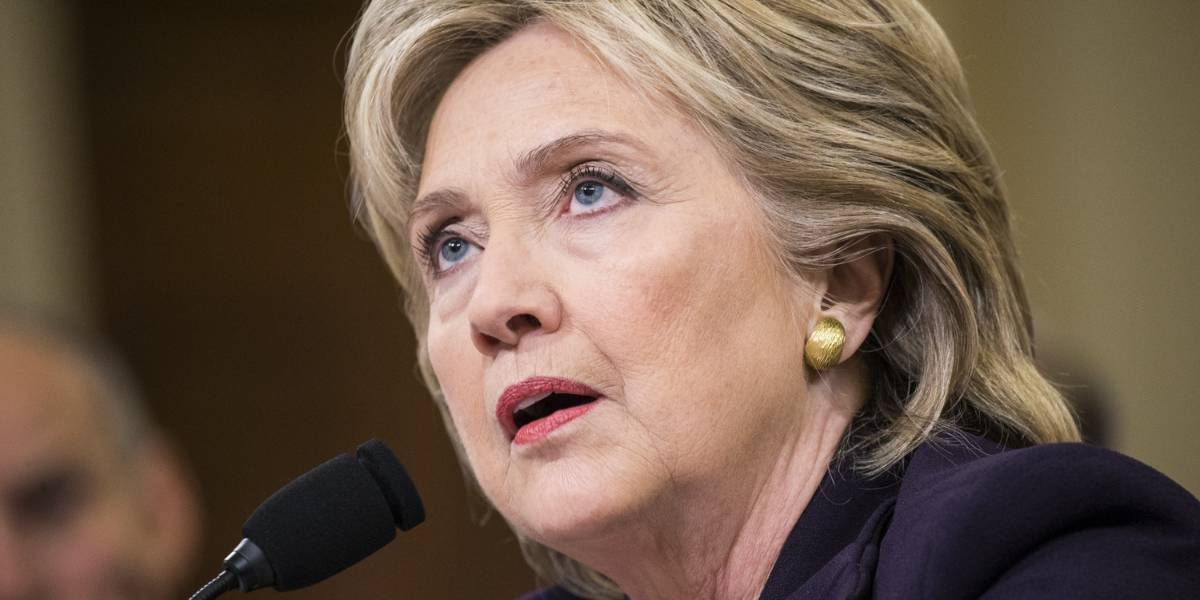
Hillary Clinton Is Probably Shaking Her Damn Head—We’re Right There With Her

img.png?width=1200&height=600&coordinate

If you haven’t heard the name “Charles McGonigal” before, that’s how it’s supposed to be. Top FBI officials in Counterintelligence aren’t supposed to make the news and become household names.

But yesterday, McGonigal was indicted by grand juries in New York and Washington D.C. and arrested for secretly working for Russian oligarch and close Putin ally Oleg Deripaska, and for taking money from an Albanian intelligence agent.

McGonigal is charged with violating economic sanctions, money laundering and conspiracy.

It’s hard to overstate how damaging this arrest is to the already tainted reputation of the FBI. Los Angeles Times legal columnist Harry Litman noted the arrest has left the FBI community “completely stunned” and wondering “if they can get to a guy like McGonigal, whom can’t they get to?”

And as NBC Investigations analyst Tom Winters put it, “Taking a big picture and the totality of all of this, this is somebody whose job was to investigate Oleg Deripaska” and now “he’s a potential foreign agent.”

But beyond the shock of the arrest, things get way murkier when you rewind the clock, especially knowing what we now do about McGonigal’s willingness to do Deripaska’s bidding.

Much as I hate to reopen questions around the 2016 election, McGonigal’s arrest and the revelations about his later ties to the Russian oligarch require it. And I can see how Hillary Clinton might be left with an inescapable “I knew it” feeling.

Let’s dive into why.

McGonigal was in a position to do serious harm to Clinton in 2016.

McGonigal was no run-of-the-mill FBI agent. He was the special agent in charge of the FBI’s New York Field Office’s counterintelligence division—in other words, the official who was supposed to be investigating the Russians, not crawling into bed with them, even if it happened after he left the FBI.

His willingness to accept illegal employment from Deripaska calls his integrity, patriotism, and motives while acting as FBI division head directly into question.

The timing of his initial appointment is also causing raised eyebrows, now that we know what we know. On October 4, 2016, a month before the presidential election between Clinton and Donald Trump, then FBI Director James Comey appointed McGonigal to that key counterintelligence position in the New York office.

It’s important to point out here that around the time of the 2016 election, that particular field office really had it out for Hillary Clinton. Former Attorney General Loretta Lynch spoke candidly about the animosity of that office toward Clinton when she was interviewed by investigators looking into Comey’s actions while FBI director.

Comey had told Lynch that it had become clear that “there is a cadre of senior people in New York who have a deep and visceral hatred of Secretary Clinton,” and that “it was surprising to him or stunning to him.” Comey said that “it was hard to manage because these were agents that were very, very senior.”

Did those “very, very senior” agents include McGonigal? Legal and political observers have taken note of the timing of McGonigal‘s appointment, including historian Michael Beschloss, who observed that Comey made the appointment in late October of 2016, only “[t]hree weeks before his fateful announcement” that he was reopening the criminal case against Hillary Clinton.

Josh Marshall of the influential Talking Points Memo also couldn’t help but notice the timing, tweeting:

“Weird. McGonigal got put in charge of CI [Counterintelligence] at the NYC field office like almost to the day they reopened the Clinton emails case.”

Marshall called these circumstances “ironies,” and that’s the correct term because it’s highly unlikely that the case itself reopened because of McGonigal.

There simply wouldn’t have been time for him to make such an order. But two other major things happened shortly after that appointment that are worth highlighting.

Leaks out of the NY Office forced Comey’s hand.

If Comey had never gone public with the fact that his office had reopened the Clinton email investigation, there would have been no impact on her standing in the national election.

But leaks about the investigation were coming straight out of that New York office, and Comey later admitted that it was the leaks that required him to get ahead of the news.

As The Atlanticreported, Comey told investigators he believed partisan agents in New York might try to put their finger on the political scale:

“My worry was, I have to be careful that people in New York aren’t by virtue of political enthusiasm, trying to take action that will generate noise that will have an impact on the election.”

Former FBI counsel James Baker echoed that fear, specifically about a likely leak of the reopened investigation:

“We were quite confident that … somebody is going to leak this fact. That we have all these emails. That, if we don’t put out a letter, somebody is going to leak it.”

Rudy Giuliani, himself a former federal prosecutor, was openly hinting that he had inside information from the FBI’s New York office, telling Fox News a week before Comey’s disclosure to Congress that there was a “pretty big surprise” coming. (Giuliani later denied he had spoken to any FBI agents.)

In short, Comey felt compelled to get ahead of the leaks driven by partisan pressures from the New York Office. Was McGonigal among those partisans? Was he the source of the leak? And worse still, was he in any way influenced by foreign adversaries?

While there isn’t yet any evidence that McGonigal was compromised by the Russians at the time, his subsequent illegal behavior with Deripaska should raise big concerns.

After all, by the time he started illegally working on Deripaska’s behalf, it was well-established that Deripaska had worked with convicted Russian asset Paul Manafort, the “voluntary” head of the Trump campaign who also provided internal battleground state polling data to Russian intelligence.

McGonigal knew what kind of danger Deripaska presented to America when he accepted a job from him, but he chose money over loyalty to country.

Was McGonigal a source of disinformation?

On October 31, 2016, unnamed sources in FBI counterintelligence led The New York Times to publish a big story with the headline “Investigating Donald Trump, F.B.I. Sees No Clear Link to Russia.”

It reported, rather maddeningly and incorrectly:

“Law enforcement officials say that none of the investigations so far have found any conclusive or direct link between Mr. Trump and the Russian government.”

“And even the hacking into Democratic emails, F.B.I. and intelligence officials now believe, was aimed at disrupting the presidential election rather than electing Mr. Trump.”

The identity of these “law enforcement officials” was left undisclosed, but the damage was done. Voters who had any doubts about Trump and his links to Russia now had nothing less than The New York Times assuring them that the FBI had found nothing despite months of investigation.

Historian Beschloss again took note of the timing of the Times article.

“This was 8 days before the Trump-Clinton election.”

“It was 27 days after Comey named McGonigal to head Counterintelligence for FBI’s New York Field Office.”

Could McGonigal have been one of the Times’ sources for this misleading reporting, and could he have falsely shaped the narrative here? It’s hard to be sure of anything, given what little we still know, and the Times isn’t likely to ever reveal its sources.

But it would be unwise to discount the possibility that the long hand of Russian money and influence may have played some role.

Political commentator Kaivan Shroff captured the cold fury of many upon connecting the dots:

“Just to be clear, when the New York Times reported that the FBI saw ‘no link between Trump and Russia’—a week before the 2016 election—the FBI agent who was just arrested over ties to Russian oligarch Oleg Deripaska was heading up the investigation.”

“Just an absolute scandal.”

When those in charge of our investigations and our security are themselves so readily compromised, public faith in our institutions takes a nosedive, and with good reason.

The arrest of McGonigal is an important step toward restoring integrity to the Department, but to get back there we will need a thorough and honest accounting of what damage McGonigal did while in his position, especially to the electoral chances of Hillary Clinton.

If the answer after a full inquiry is that he was not part of the cabal in the New York field office bent on bringing her down, then we should know that as well.

But right now it is more than understandable why mistrust and anger among Democrats runs deep, given the guy in charge of the Trump-Russia investigation in New York illegally went to work for the Russians and even may have played a significant part in Hillary Clinton’s narrow electoral defeat.

Categories
Audio Sources - Full Text Articles

An unfaithful employee leaked Yandex source code repositories

A source code repository allegedly stolen by a former employee of the Russian tech giant Yandex has been leaked online.

A Yandex source code repository allegedly stolen by a former employee of the Russian IT giant has been leaked on a popular cybercrime forum.

Ой, 44.71G yandex git sources утекло)https://t.co/wvITjk4hkI

— Dmitry Balakov (@dbalakov) January 25, 2023

Yandex

The announcement published on BreachForums includes a magnet link to the alleged ‘Yandex git sources.’ The threat actor behind the post claims to have obtained 44.7 GB of files in July 2022, all the files are dated back to 24 February 2022 (the date of the Russian invasion of Ukraine). The threat actor claims the source code repositories contain the source code except the anti-spam rules.

The researchers Arseniy Shestakov published a detailed analysis of the leaked repository, which seems to contain the source code for all major services of Yandex, including:

  • Search Engine and Indexing Bot
  • Maps – Like Google Maps and Street View
  • Alice – AI assistant like Siri / Alexa
  • Taxi – Uber-like taxi service
  • Direct – Ads service like Google Ads / Adwords
  • Mail – Mail service like GMail
  • Disk – File storage service like Google drive
  • Market – Marketplace like Amazon
  • Travel – Like a Booking.com plus Airplane, Train and Bus tickets
  • Yandex360 – Like Google Workspaces for services on your own domain
  • Cloud – Probably not all infrastructure code was leaked.
  • Pay – Payment processing like Stripe, but with limited set of features
  • Metrika – Like Google Analytics

“Since this is leak only contain contents of git repositories there is no personal data. There are at least some API keys, but they are likely only been used for testing deployment only.” wrote Shestakov.

Bleeping Computer contacted the Russian company, which in turn replied that its systems were not breached and that the repository was leaked by a former employee.

The company confirmed that is investigating the data leak, however, it pointed out that user data were not compromised and platform performance was not impacted.

The public availability of the git source code can allow threat actors to analyze it and find vulnerabilities that can be exploited in attacks against the Yandex services.

Follow me on Twitter: @securityaffairs and Facebook and Mastodon

[adrotate banner=”9″] [adrotate banner=”12″]

Pierluigi Paganini

(SecurityAffairs – hacking, data leak)

[adrotate banner=”5″]

[adrotate banner=”13″]

The post An unfaithful employee leaked Yandex source code repositories appeared first on Security Affairs.

Categories
Audio Sources - Full Text Articles

Russian strikes kill 11 in Ukraine, Zelenskiy says intimidation effort failed

2023-01-26T18:56:57Z

Russia launched a rush-hour barrage of missiles towards Ukraine on Thursday (January 26), killing at least one person, the day after Kyiv secured Western pledges of dozens of modern battle tanks to try to push back the Russian invasion.

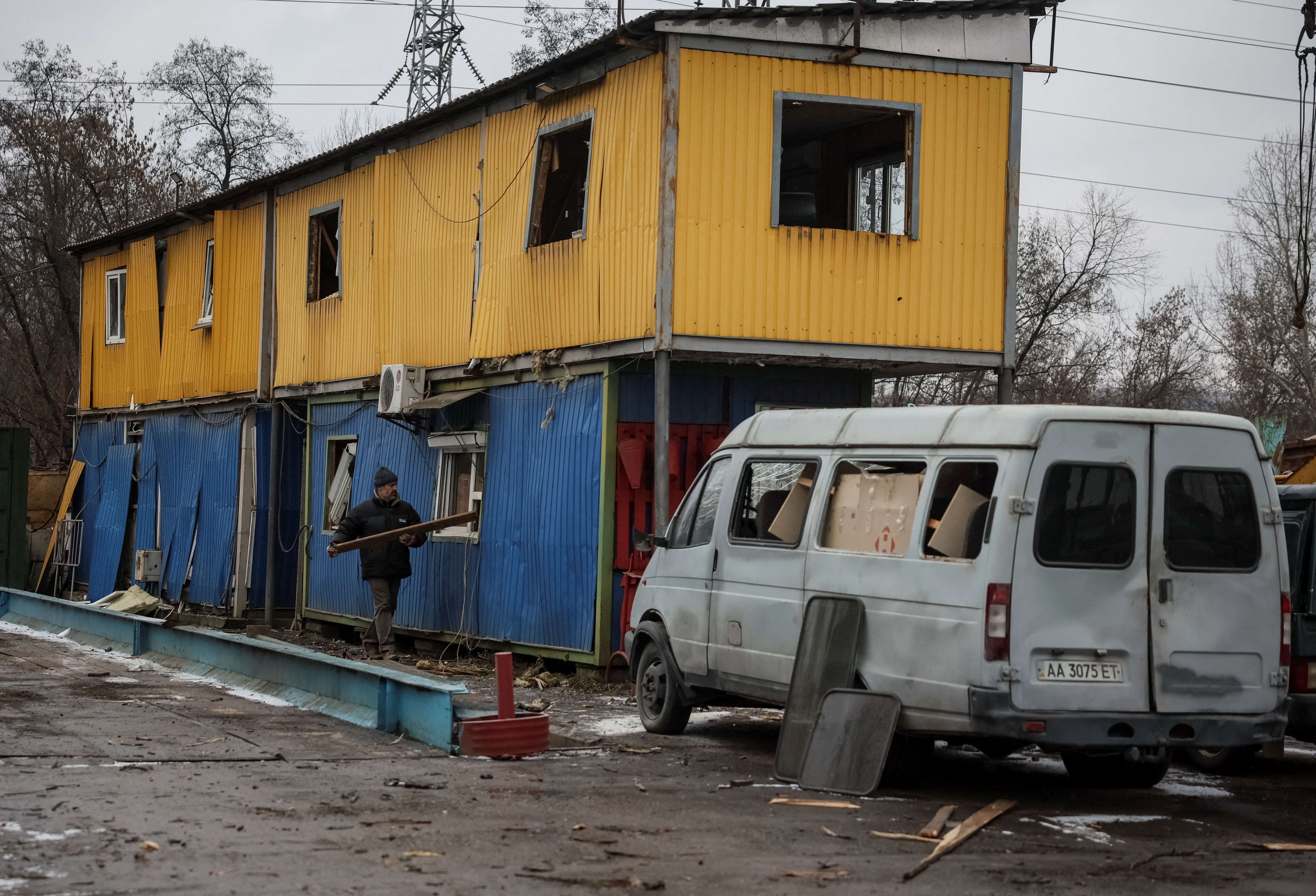
Russia pounded Ukraine with missiles and drones in waves of attacks on Thursday, killing at least 11 people, damaging dozens of buildings and energy facilities in an array of regions, officials said.

Crowds of people took cover in Kyiv’s metro stations as an air raid alert sounded at rush hour before Russia unleashed its latest in a campaign of attacks on the power grid since October that have caused sweeping outages during winter.

The missile strikes followed drone attacks overnight, one day after Ukraine secured pledges of main battle tanks from Germany and the United States to beef up its troops – a move that infuriated Russian officials.

“Another attempt by a terrorist country to intimidate us with a massive missile strike has recently suffered a defeat, just as the whole of Russia will soon be defeated,” President Volodymyr Zelenskiy said in a statement on Telegram.

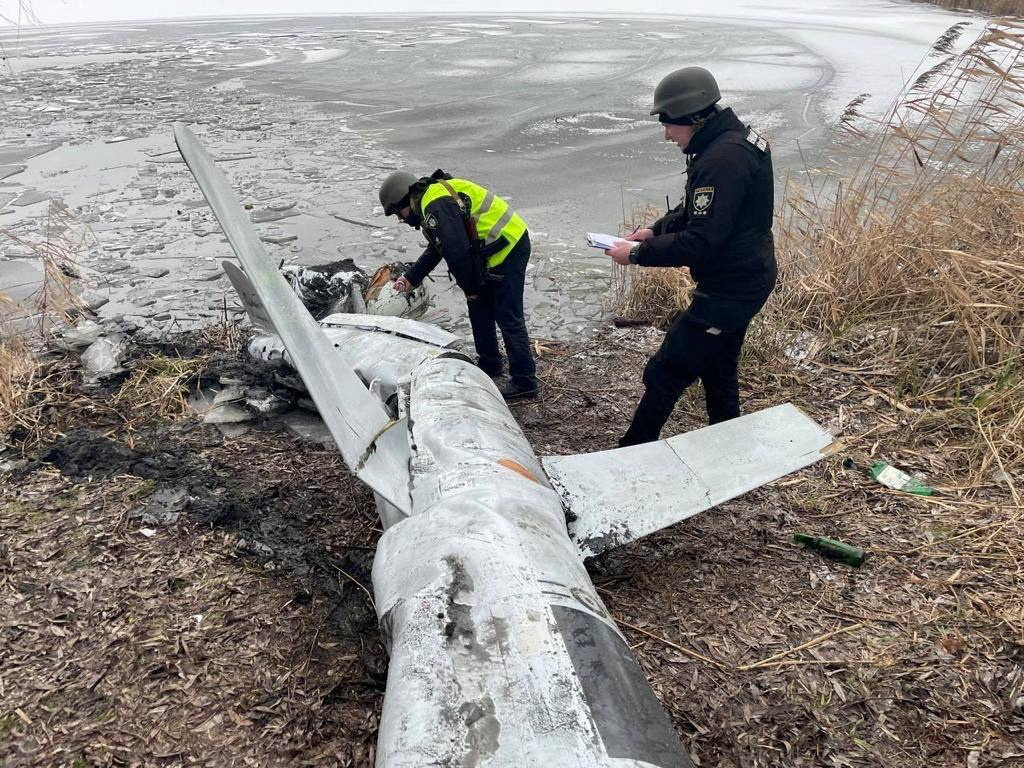
Air defences shot down 47 of 55 missiles that included at least one Kh-47 Kinzhal hypersonic missile, said General Valeriy Zaluzhnyi, Ukraine’s top military commander.

Twenty missiles were downed in the vicinity of Kyiv where a 55-year-old man was killed and two people wounded as a missile hit non-residential buildings, officials said.

Zelenskiy said he had met top commanders on Thursday and discussed ways to counter future missile attacks even more effectively, but gave no details.

Russia has denied targeting civilians in what it calls its “special military operation” in Ukraine but has said critical infrastructure is a legitimate military target.

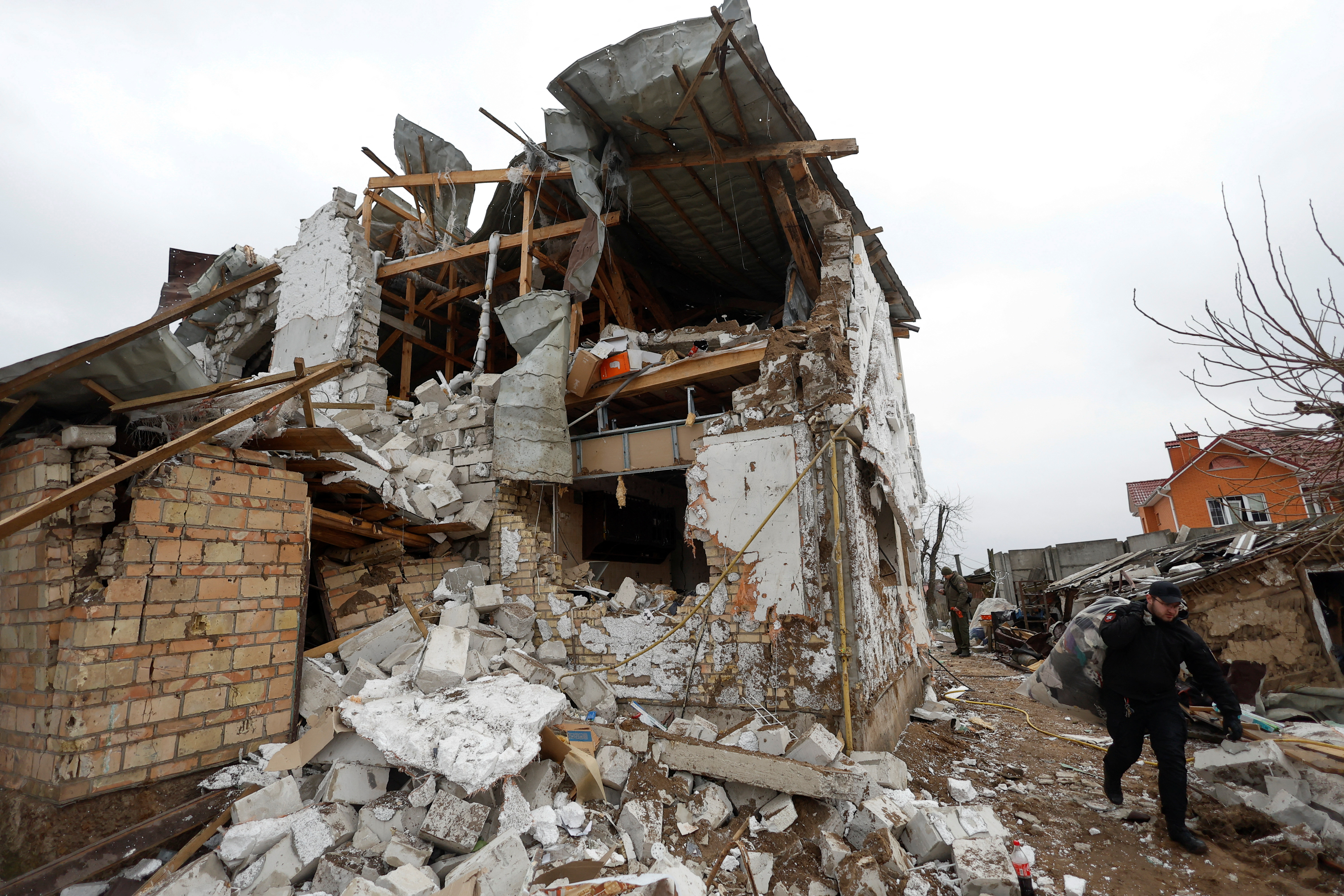
“This is such a tragedy for me. I’m telling you, I’m left without anything?” said 67-year-old Halyna Panosyan whose house was destroyed in the village of Hlevakha near Kyiv.

“There was an extremely loud strike that made me jump up. I was in the bedroom… I was saved by the fact that the bedroom is to the other side of the house,” she said.

Oleksandr Khorunzhyi, spokesperson for the State Emergency Service, said Thursday’s attacks killed 11 people, wounded 11 more and damaged 35 buildings across 11 regions.

In separate statements, officials said one person had been killed in the region of Kryvy Rih, two in the Donetsk and Kharkiv regions, and three in the region of Zaporizhzhia. An energy worker was also killed.

The military said it shot down all 24 drones unleashed by Russia overnight. Fifteen of them were downed around Kyiv where there were no reports of any damage, they said.

As many as six Tu-95 strategic bombers launched long-range missiles after taking off from the Arctic region of Murmansk in northern Russia, Air Force spokesperson Yuriy Ihnat said.

Prime Minister Denys Shmyhal said Russia’s main target had been energy facilities and that the strikes aimed to deprive Ukrainians “of light and heating” with the temperature in Kyiv at below freezing.

“Unfortunately, substations were hit. But the situation in the energy system remains under control,” he wrote on Telegram.

A Reuters reporter heard the sound of a missile flying overhead at a low altitude, about 30 km (19 miles) from Kyiv.

Two critical energy infrastructure facilities were damaged in the southern region of Odesa, but no injuries were reported.

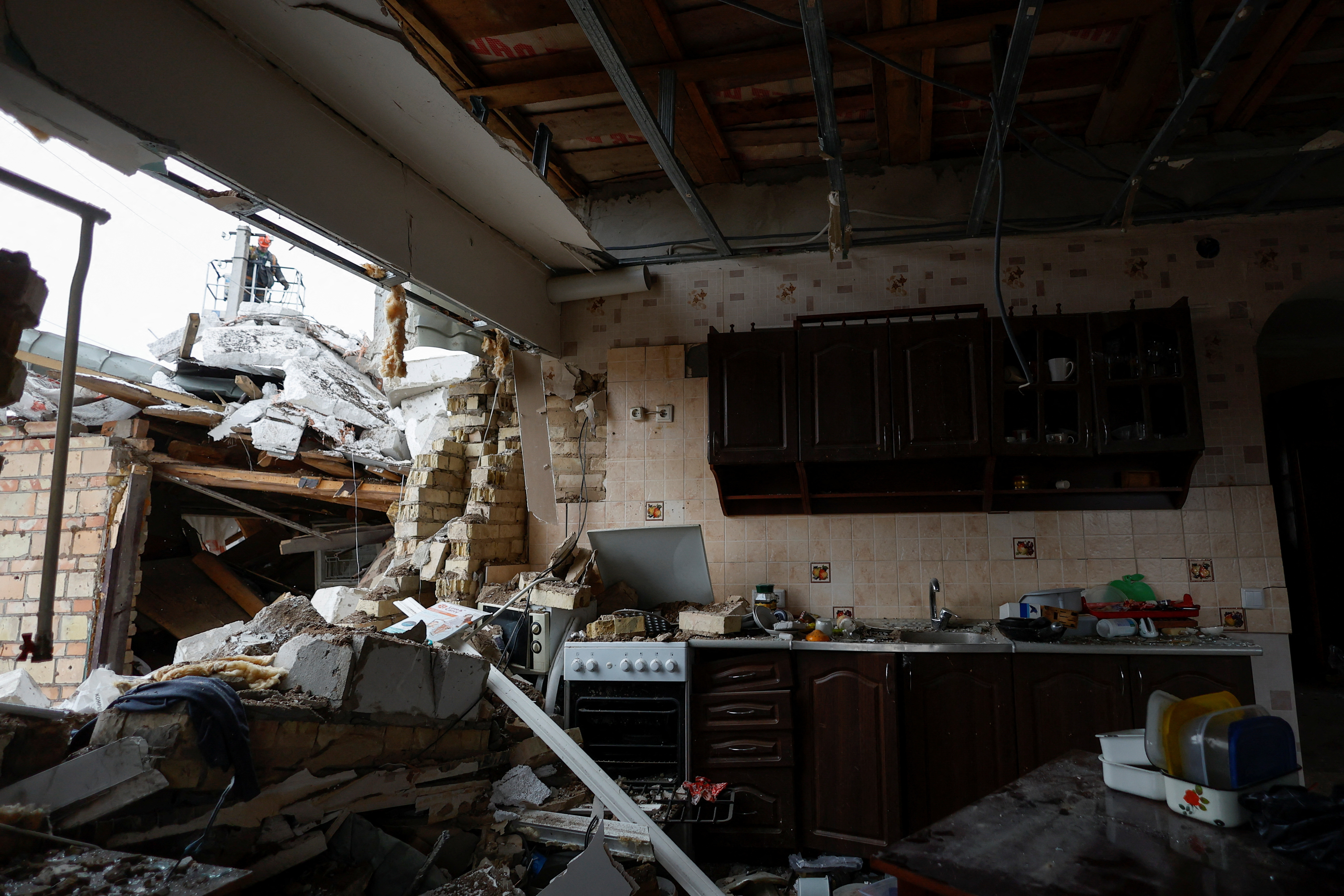
Impacts were reported in the central region of Vinnytsia, while Kyiv region officials said critical infrastructure and residential homes had been damaged.

In the capital, Iryna, an accountant sheltering in a metro station, said she was worried about her husband.

“He was planning to go to a post office in the morning and now he is not answering his phone,” she said.

An eerie calm descended on a snow-blanketed Kyiv during the strikes, but life quickly returned to normal. Central bank officials announced the findings of their key interest rate meeting at a briefing from the safety of an undisclosed shelter.

DTEK, Ukraine’s largest private energy producer, said it was conducting emergency power shutdowns in Kyiv, the surrounding region as well as the regions of Odesa and Dnipropetrovsk because of missile attacks.

Related Galleries:

People take shelter inside a metro station during massive Russian missile attacks in Kyiv, Ukraine January 26, 2023. REUTERS/Viacheslav Ratynskyi

People take shelter inside a metro station during massive Russian missile attacks in Kyiv, Ukraine January 26, 2023. REUTERS/Viacheslav Ratynskyi

A local resident carry home staff from a house of his neighbour damaged by a Russian military strike, amid Russia’s attack on Ukraine, in the town of Hlevakha, outside Kyiv, Ukraine January 26, 2023. REUTERS/Valentyn Ogirenko

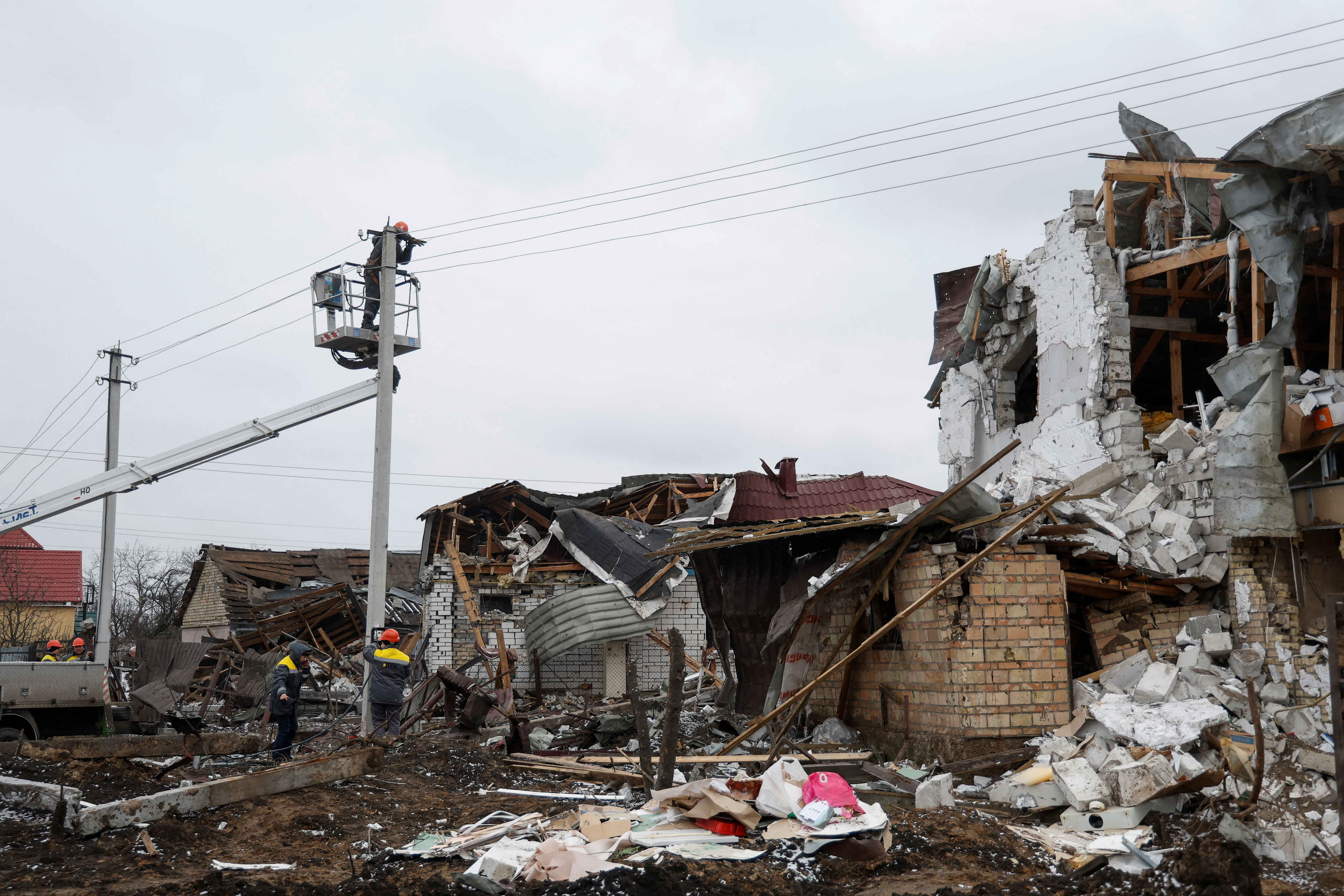
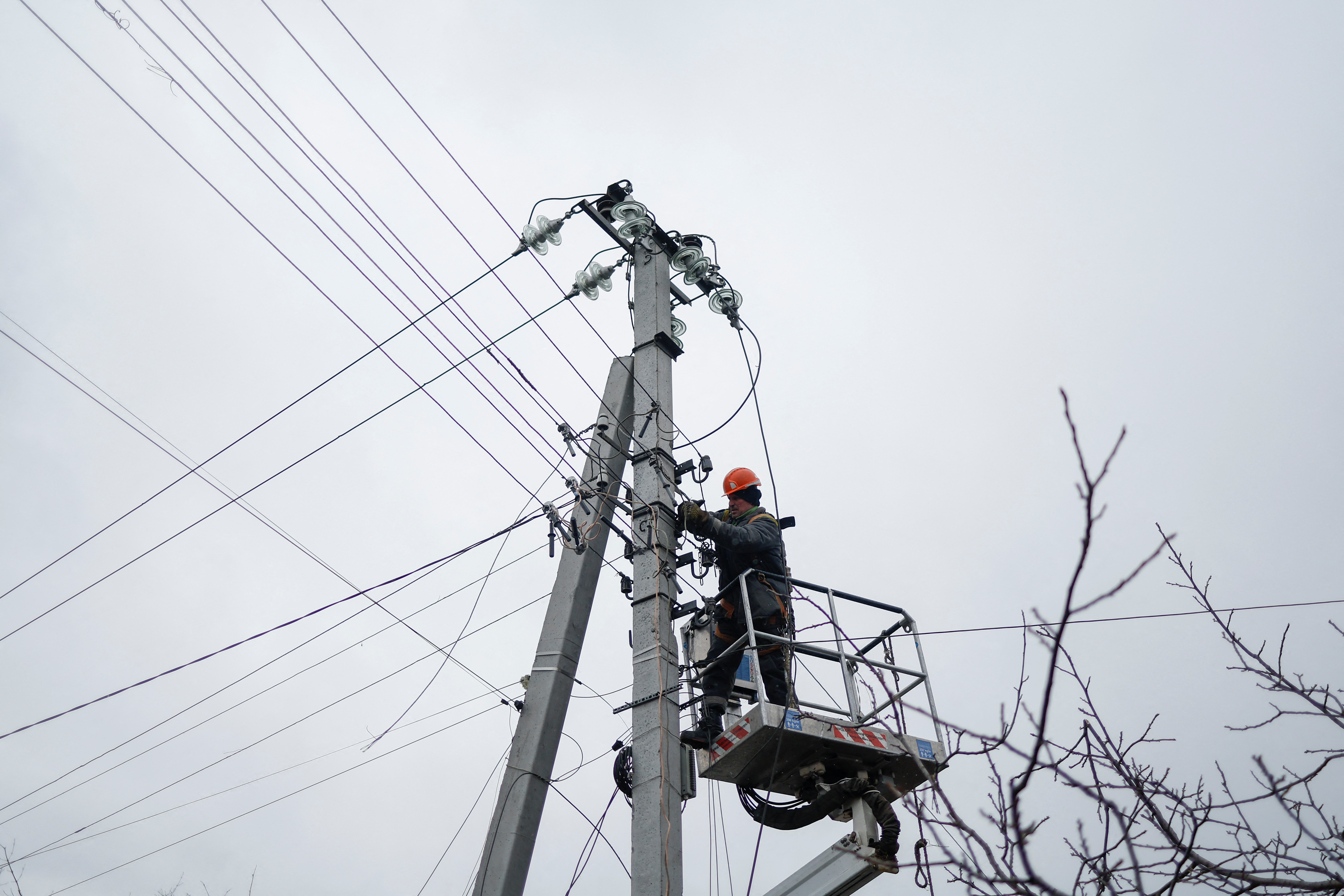
Employees of power supplier repair power lines in front of residential houses damaged by a Russian military strike, amid Russia’s attack on Ukraine, in the town of Hlevakha, outside Kyiv, Ukraine January 26, 2023. REUTERS/Valentyn Ogirenko

An employee of power supplier repairs power lines in front of residential houses damaged by a Russian military strike, amid Russia’s attack on Ukraine, in the town of Hlevakha, outside Kyiv, Ukraine January 26, 2023. REUTERS/Valentyn Ogirenko

An employee of power supplier repairs power lines next to a residential house damaged by a Russian military strike, amid Russia’s attack on Ukraine, in the town of Hlevakha, outside Kyiv, Ukraine January 26, 2023. REUTERS/Valentyn Ogirenko

Police officers inspect a Russian cruise missile shot down by the Ukrainian Air Defence Forces, amid Russia’s attack on Ukraine, in Kyiv region, Ukraine January 26, 2023. Head of the National Police of Kyiv region Andrii Nebytov via Telegram/Handout via REUTERS

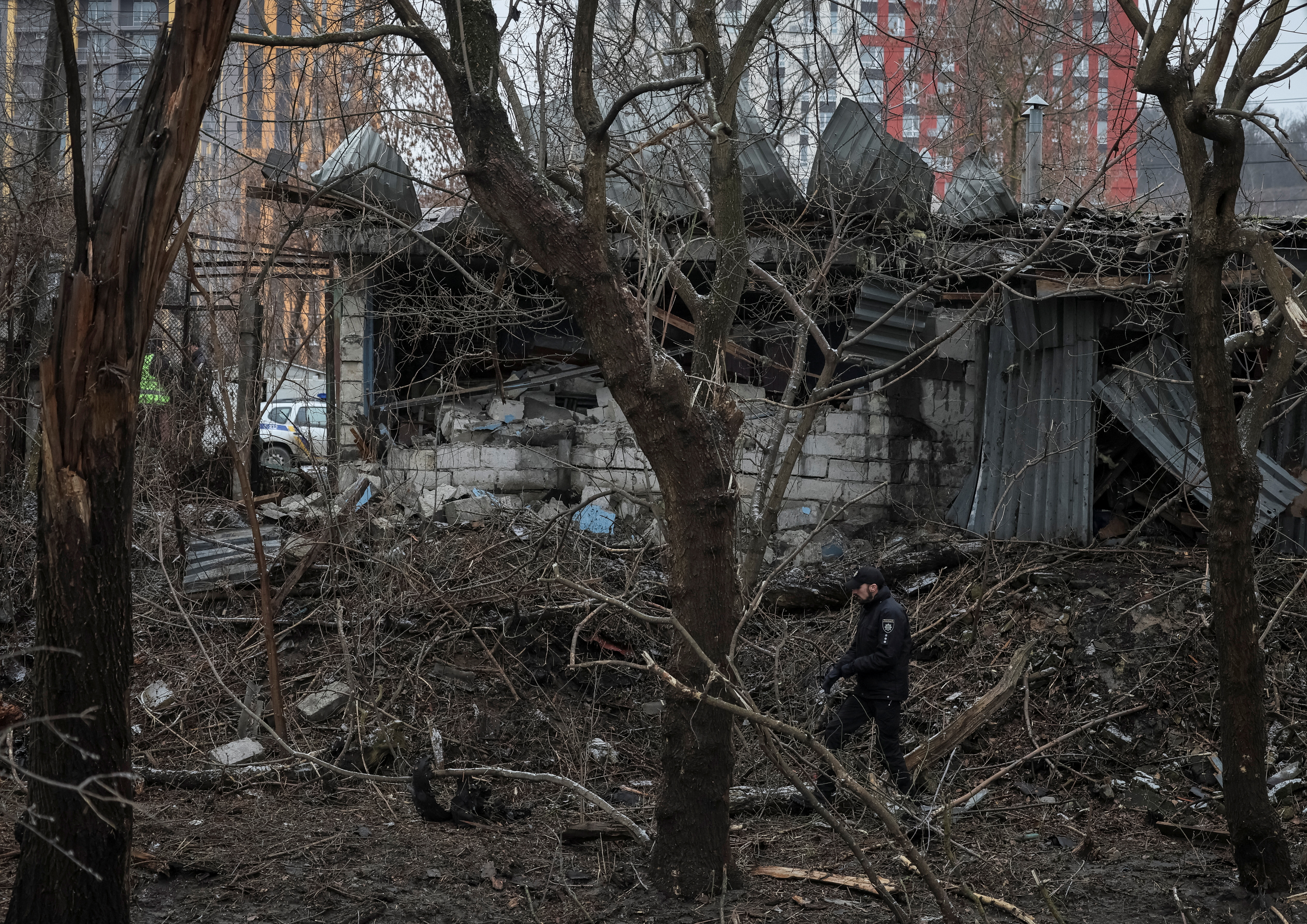
Police officers are seen at a site of a Russian missile strike, amid Russia’s attack on Ukraine, in Kyiv, Ukraine January 26, 2023. REUTERS/Gleb Garanich

A view shows an area damaged by a Russian missile strike, amid Russia’s attack on Ukraine, in Kyiv, Ukraine January 26, 2023. REUTERS/Gleb Garanich
Categories
Audio Sources - Full Text Articles

Analysis: Lebanese elite bury blast probe, pushing fragile state closer to edge

2023-01-26T19:04:40Z

In their move to bury an investigation into the Beirut port blast, Lebanon’s ruling elite have driven another nail in the coffin of the collapsing state, stirring conflict in the judiciary as they try to avoid accountability at any cost.

Long-simmering tensions over the investigation have boiled over since Judge Tarek Bitar brought charges against some of the most influential people in the land, defying political pressure as he resumed his inquiry.

With friends and allies of Lebanon’s most powerful factions, including Hezbollah, among those charged, the establishment struck back swiftly on Wednesday, when the prosecutor general charged Bitar with usurping powers.

Critics called it “a coup” against his investigation.

It leaves little hope of justice ever being served over the explosion that killed 220 people and devastated swathes of Beirut, raising concern the case will go the way of countless others in a country where impunity has long been the norm.

With deep fissures in the judiciary exposed, the tussle adds to the unravelling of a state accelerated by a three-year-long financial crisis, left to fester by the ruling elite.

“This is the destruction of the judiciary,” said Nabil Boumonsef, deputy editor-in-chief of Annahar newspaper.

“I fear they are dismantling the country. There is nothing left called a state. We face anarchy and the law of the jungle.”

Lebanon has been rocked by one crisis after another since its financial system caved in, marking the start of its most destabilising phase since the 1975-90 civil war.

A currency collapse of more than 97% since 2019 has picked up speed in recent days, impoverishing ever more people.

Some 2.3 million people – 42% of the population – will face acute food insecurity in the first quarter of this year, according to a U.N.-backed study.

Foreign aid has become ever more critical to keeping people fed and the security forces on the streets: the United States and Qatar are helping pay soldiers’ salaries.

Ruling politicians have meanwhile done little to nothing to address the crisis, putting vested interests ahead of reform.

On the political front, factional rivalries, many of which date to the civil war, have spawned an unprecedented government crisis laced with sectarianism.

The presidency, reserved for a Maronite Christian, has been vacant for months. Maronite leaders, warning against any move to bypass their sect, have objected to meetings of the Sunni Muslim-led caretaker cabinet.

Against this backdrop, European prosecutors are digging ever deeper into allegations that central bank governor Riad Salameh – a financial linchpin for Lebanon’s rulers with deep political ties – embezzled hundreds of millions of dollars during his 30-year-long tenure. Salameh denies any wrongdoing.

Attempts by a Lebanese judge to investigate Salameh have hit obstacles in Lebanon, where politicians have big sway over the judiciary.

The difficulties echo the problems faced by Bitar, appointed to investigate the blast two years ago. His predecessor was ousted after complaints against him by officials he had charged.

“There is a systemic attempt by the establishment to protect its members from the port explosion, from the financial implosions, and from all … they have actually been responsible for,” Policy Initiative Director Sami Atallah said.

The blast was caused by hundreds of tonnes of improperly stored chemicals of which the president and prime minister at the time were aware, among other officials.

All those charged deny wrongdoing.

Bitar’s inquiry was frozen when judges retired from a court that must rule on complaints filed against him by officials he had charged, including top members of Parliament Speaker Nabih Berri’s Amal Movement.

The Berri-backed finance minister held off signing a decree appointing new judges, prompting fears of an indefinite limbo.

Resuming his work on Monday, Bitar charged more officials including Prosecutor General Ghassan Oweidat and Major General Abbas Ibrahim, a security official with good ties to the powerful, heavily armed Shi’ite Muslim Hezbollah group.

Oweidat had earlier recused himself from any involvement in the case as his brother-in-law, an Amal member and former minister, was among those charged.

This week Oweidat hit back at Bitar, including by ordering the release of people detained since the port explosion.

“This is like a coup – a person charged by a judge decided to defend himself by pushing aside the judge who charged him and releasing all the detainees,” said Nizar Saghieh of the Legal Agenda civic group.

Doubting local authorities will bring anyone to account over the explosion, some Lebanese called for an international inquiry from the start.

It would not be the first: a U.N.-backed tribunal set up after the 2005 Rafik al-Hariri assassination ultimately convicted a Hezbollah member of conspiracy to kill him.

The Iran-backed Hezbollah, which always denied any role, condemned the tribunal as a tool of its enemies.

In opposing Bitar, Hezbollah has accused the United States of meddling in the investigation and Bitar of political bias.

Washington denies interfering.

Hezbollah believes Bitar’s decision to resume the inquiry stemmed from his recent meeting with French judges investigating the blast, which killed two French citizens, according to a source familiar with Hezbollah’s view.

Bitar could not be reached for comment.

In 2021, a Hezbollah official sent a message to Bitar vowing to “uproot” him, and its supporters marched in an anti-Bitar rally that prompted deadly violence along an old civil war front line between Christian and Shi’ite neighbourhoods.

Mohanad Hage Ali of the Carnegie Middle East Center think tank said derailing the inquiry could worsen sectarian tensions. He noted that while the blast had killed Lebanese of all sects, the worst damage was largely in Christian-majority areas and the Maronite patriarch had called for justice.

With the presidency empty, sectarian rhetoric sharpening, the currency tumbling, and people taking security into their own hands in some areas, Hage Ali said “the ingredients are there” for any street clashes to be worse than in 2021.

“If there is a demonstration of the families of the victims, and their supporters, leading to clashes, casualties or arrests, that could definitely well be the breaking point towards wider unrest.”

Related Galleries:

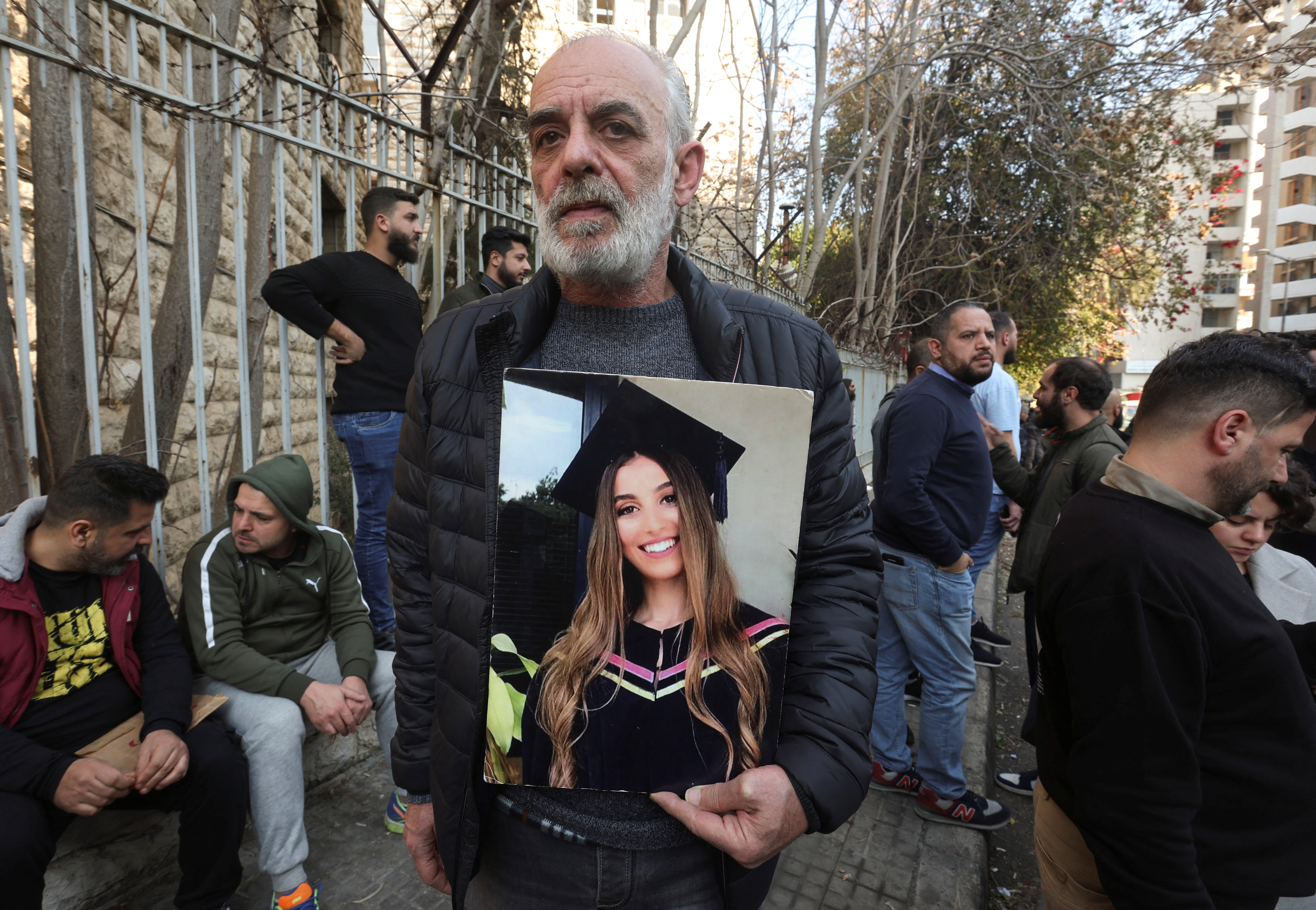
George Bezdjian, whose daughter Jessica died in 2020 port explosion, holds her picture during a protest against steps taken this week to hamstring a probe into the 2020 port blast, in Beirut, Lebanon January 26, 2023. REUTERS/Aziz Taher

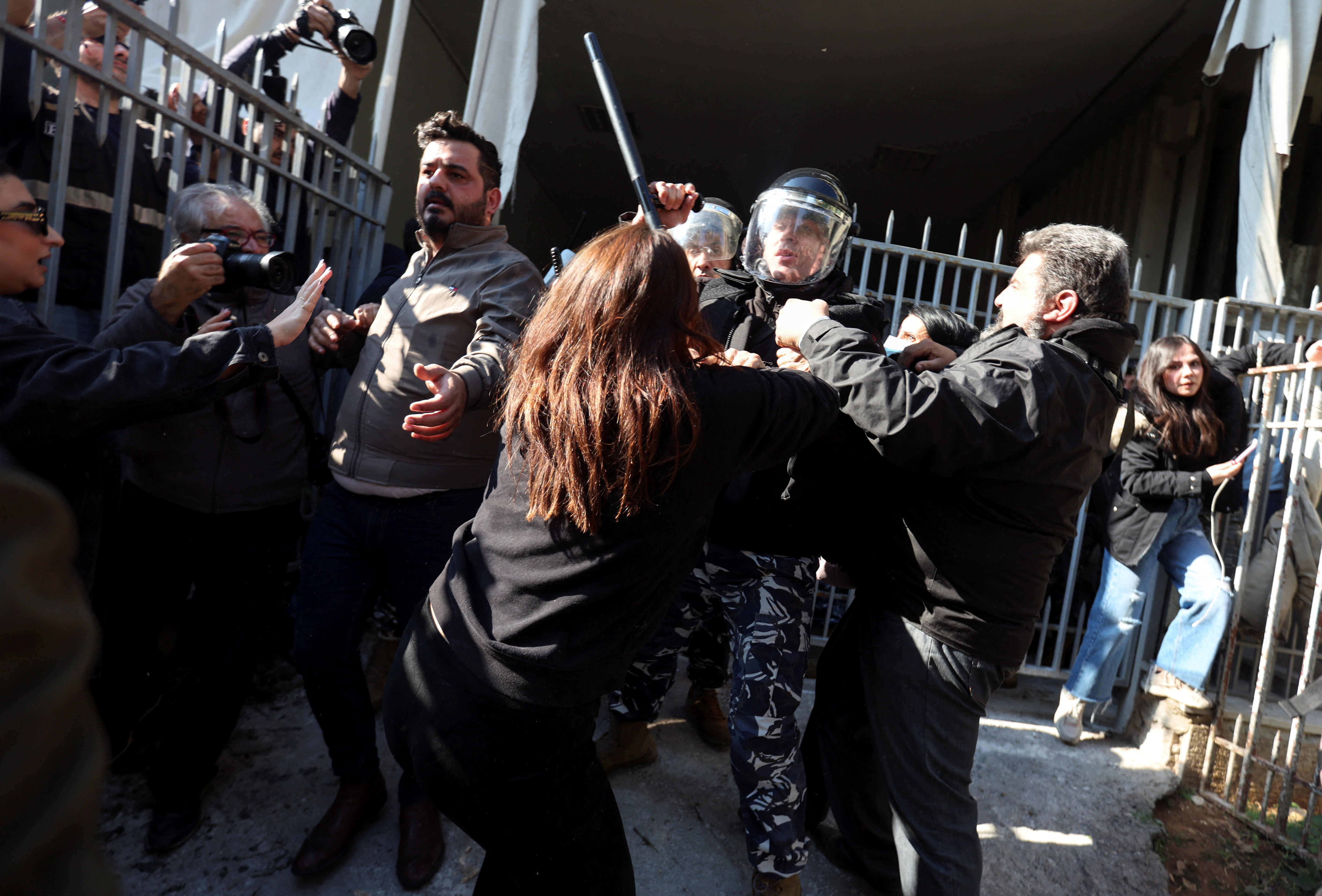
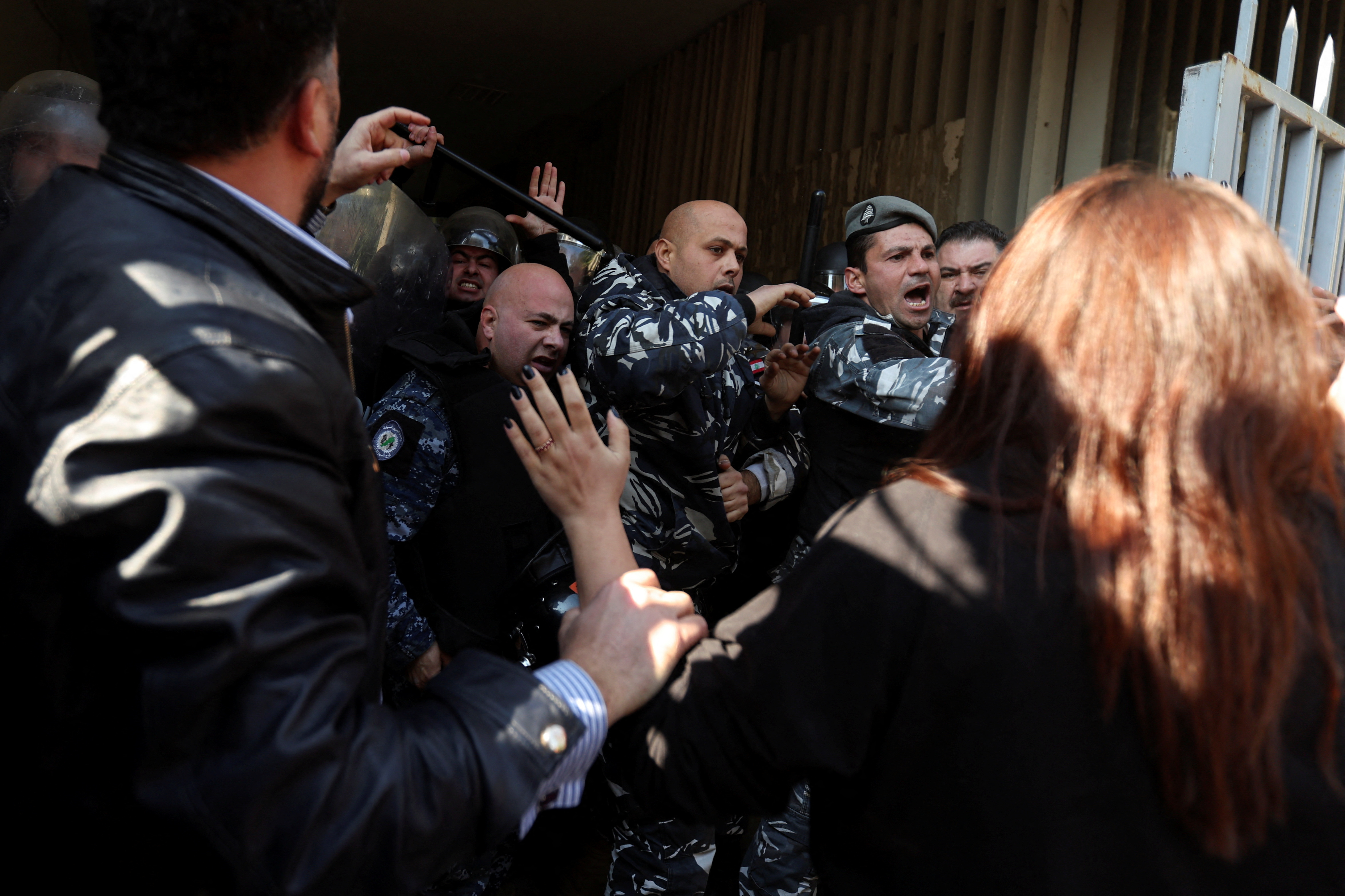
Demonstrators confront with police as they attempt to break in the Justice Palace, during a protest against Lebanon’s top public prosecutor who charged the judge investigating the 2020 Beirut port blast and ordered the release of those detained in connection with the explosion, in Beirut, Lebanon January 26, 2023. REUTERS/Aziz Taher

Demonstrators confront with police as they attempt to break in the Justice Palace, during a protest against steps taken this week to hamstring a probe into the 2020 port blast, in Beirut, Lebanon January 26, 2023. REUTERS/Aziz Taher
Categories
Audio Sources - Full Text Articles

Haiti protests flare after police officers killed in gang violence

2023-01-26T19:07:39Z

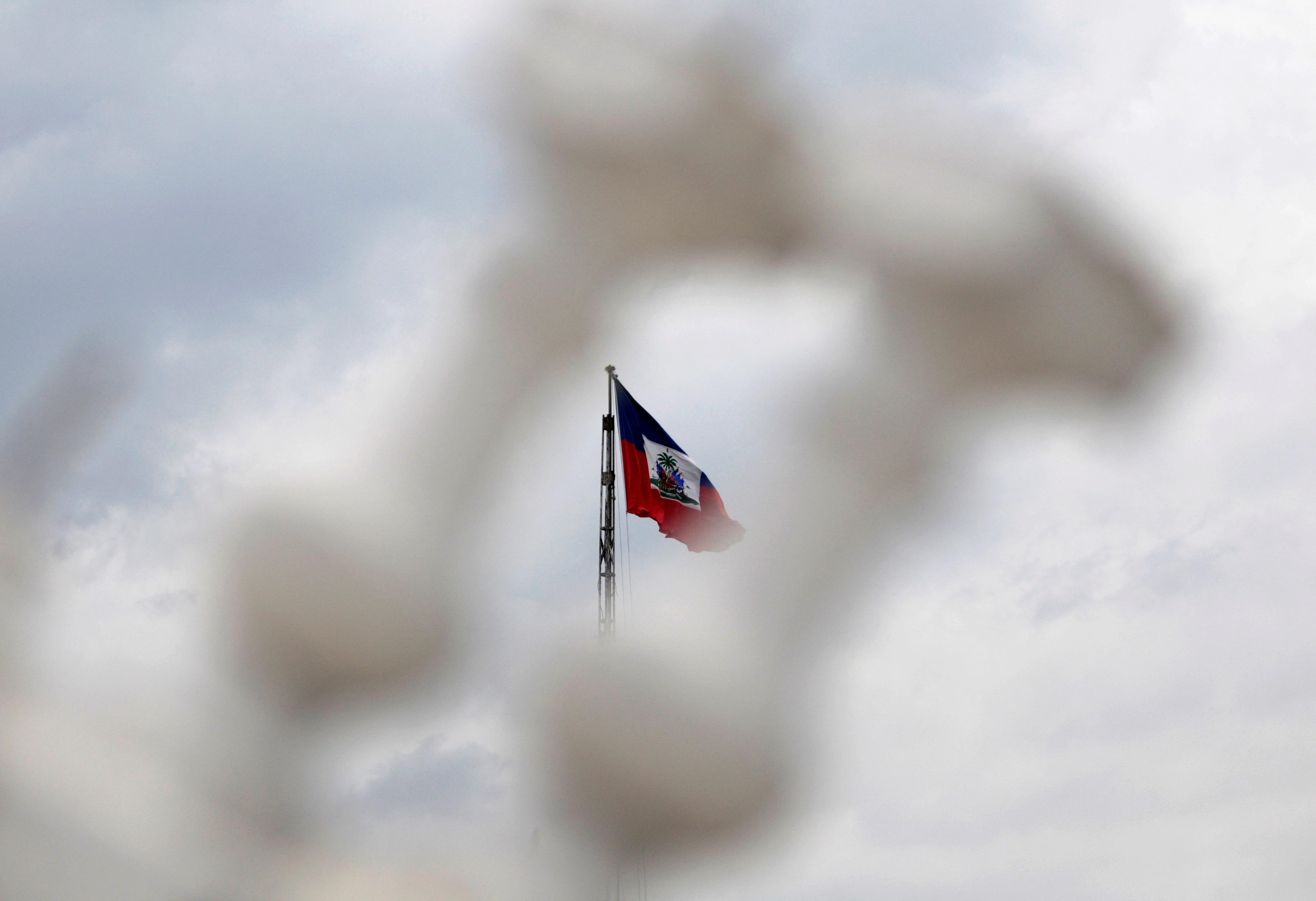
The Haitian flag, photographed through two of the balusters remaining on a balcony of the collapsed National Palace, flies from a pole on the front lawn in Port-au-Prince August 13, 2012. REUTERS/Swoan Parker/File Photo

Demonstrators blocked streets and burned tires in Haiti’s capital Port-au-Prince on Thursday after 11 police officers were killed over the last week due to gang violence that continues to grip the Caribbean nation.

Protesters blocked roads around the capital and in several cities to the north, with local media reporting that police officers angry over lack of government support to fight gangs were leading the demonstrations.

A group of demonstrators arrived at the official residence of Prime Minister Ariel Henry and then left for the Port-au-Prince airport, according to a Reuters witness.

Henry returned from a trip to Argentina for a conference on Thursday afternoon, according to two sources present at the airport.

Haiti’s National Police and the Prime Minister’s Office did not immediately respond to requests for comment.

The Vitelhomme gang last week killed four police officers near the capital, while shootouts with the Savien gang in the town of Liancourt left another seven officers dead on Wednesday, according to Haiti’s National Police and local media reports.

The upheaval comes as the United Nations discusses sending a foreign strike force to confront Haitian criminal groups, a proposal that was originally made three months ago.

No country has offered to lead such a force.

Categories
Audio Sources - Full Text Articles

Notes on the Jan. 6 Committee’s Notes

FVYvHEAWYAAeNb2.jpeg

The first thing that struck me in reading the executive summary of the Jan. 6 Select Committee’s final report last month was footnote number 50. The text it supports in the main document is the following bald statement: “As the Committee’s hearings demonstrated, President Trump made a series of statements to White House staff and others during this time period indicating his understanding that he had lost” the 2020 election.

But wait a minute, I thought as I read this. I don’t recall from the hearings Trump’s making statements indicating that he acknowledged privately that he had lost. He had seemed to me, rather, quite delusionally confident of the fraud he was alleging. Willful blindness, definitely, but actual knowledge that he had lost? I didn’t remember that. 

Yet there, in footnote 50, were four different references to transcripts which the committee claimed supported the sentence:

See, e.g., Select Committee to Investigate the January 6th Attack on the United States Capitol, Transcribed Interview of General Mark A. Milley (Nov. 17, 2021), p. 121; Select Committee to Investigate the January 6th Attack on the United States Capitol, Transcribed Interview of Alyssa Farah Griffin, (April 15, 2022), p. 62; Select Committee to Investigate the January 6th Attack on the United States Capitol, Continued Interview of Cassidy Hutchinson, (Sep. 14, 2022), p. 113; Select Committee to Investigate the January 6th Attack on the United States Capitol, Transcribed Interview of Kellyanne Conway, (November 28, 2022), pp. 79-84.

One of them, with Kellyanne Conway, was even recent—having taken place after the hearings this summer. 

I couldn’t look up the transcripts at the time because neither the full report nor the underlying material was available publicly yet. But in the weeks since, the committee has released both. 

The release of the full report reveals that this remarkable claim exists only in the executive summary. The committee does not allege in the report itself that Trump acknowledged his loss in repeated conversations to staff. The underlying material, meanwhile, allows us to check up on this arresting statement allegedly made by President Trump. 

So did he really admit privately he had lost? The answer, as I’ll explain, is yes-ish. But the evidence isn’t all that strong, which explains why the committee did not focus on this in its hearings or in the body of the report itself. Only one of the transcripts cited clearly supports the claim. Two sort of do, but it’s a matter of interpretation. And one—at least in my view—really does not. 

It is a very rare thing for a government body to show its work to the extent the Jan. 6 Committee has done in its final report. 

The select committee did not just release a narrative report. It also released a huge trove of material that underlies that report. That trove includes hundreds of deposition and interview transcripts and also untold numbers of documents. The notes also navigate the reader through a giant public record, consisting of court filings, newspaper articles, public statements, and yes, a great many tweets. It’s hundreds of thousands of pages all told.

Normally, notes in an investigative report point to interviews the reader can’t access. They point to grand jury transcripts, internal memoranda of interviews, or other materials the reader cannot simply click on and search.

But the committee here has given not just its interpretation of events and not just the raw material from which it drew its judgments, but also thousands of connections between the two. Those connections are the report’s endnotes.  

It’s a powerful model for future investigative bodies, one that allows anyone to check up on the committee’s interpretation of its evidence and one that offers pointers to journalists as to where to find the good stuff in the pile of material the committee has released. 

Reading the notes carefully reveals a number of different themes. 

Perhaps the most important is the significant exercise of power the committee’s work represents. A huge percentage of these notes point to interviews or depositions that were directly or impliedly compelled and to documents whose production was demanded by the committee. 

Scanning the notes, one thing that jumps out at the reader is that this was not work journalism could have done. It required the force of law behind it. It required coercion. 

A great many people during the period of the committee’s work decried the refusal of a small number of people to comply with its demands for documents and testimony. The striking feature of the picture the notes paint, by contrast, is the degree to which many other witnesses did comply. So while the committee could not compel Mark Meadows’s testimony, it has pages and pages sourced to his assistant, Cassidy Hutchinson. While Vice President Mike Pence would not testify, the committee has endless pages sourced to two of his top aides. White House Counsel Pat Cipollone and his deputy, Patrick Philbin, have countless notes sourced to them. And there are any number of other White House, Trump campaign, and Justice Department officials cited over and over and over again. While there are specific areas in which the committee was blinded by non-cooperation, there actually aren’t many of them. 

The vast majority of the notes are just citations, of course, but different notes actually serve a number of different purposes beyond simple citation.

One function is the evidentiary show of force, the apparent point of note 50 in the executive summary. The committee makes a statement, which it does not support in the text, but the reader then goes to the note to find multiple transcripts that allegedly back it up. In the case of note 50, the committee cites interviews with Gen. Mark Milley, Alyssa Farah Griffin, Cassidy Hutchinson, and Kellyanne Conway. 

The thing about showing your work, however, is that one risks getting caught in little acts of exaggeration, and some of this testimony represents stronger evidence that Trump really acknowledged defeat than do other transcripts. Milley’s statement is the strongest individual piece of evidence; he recalls that at one meeting about “an overseas national security issue, . . . I clearly remember the President saying to someone  . . . words to the effect of: Yeah, we lost, we need to let that issue go to the next guy. Meaning President Biden.”

But the other witnesses are weaker on this point. Hutchinson’s account is powerful, but it’s second-hand; she is reporting what Meadows told her that Trump had told him. In court, it would be entirely inadmissible hearsay.

And the other two stories are generally consistent with Trump expressing his shame that he could have lost to Biden—not an unambiguous acknowledgement that he did lose. For example, Griffin recounts: “I popped into the Oval just to, like, give the President the headlines and see how he was doing. And he was looking at the TV and he said, ‘Can you believe I lost to this effing guy?’” 

And Conway said the following of a phone call the day after the election: “It was brief. I think that one is he can’t believe he lost to Joe Biden. And it’s both, knowing Donald Trump as I do, I believe the President was saying it literally and figuratively. Like, how in the world do you lose to a guy who didn’t come out of his basement and who all the Democrats didn’t even want, since they all ran against him? . . .  And then it was literal, that there’s no way I could have lost to him.” 

Imagine you’re a prosecutor, thinking of bringing a case predicated in any way on Trump’s state of mind. You are unlikely to want to rely heavily on such ambiguous material. Prosecutors seem far more likely, in my view, to bank on the voluminous evidence the committee presents that Trump was repeatedly informed of his loss by his campaign, his White House staff, and his lawyers. That’s what the committee does in the body of the report. This note, if you follow the text to the transcripts themselves, shows why.  

Another function the notes play is to give the committee the opportunity to make marginal comments on its own work. Sometimes it does so in relatively trivial ways.

You have to read to note 708 of the executive summary to get the committee’s rather moving character assessment of Hutchinson. 

“The Committee sat for dozens of hours with Hutchinson and concluded that she is brave and earnest, and understood the intense backlash that would inevitably result from those who were enlisted to defend President Trump’s behavior,” the committee writes apropos of virtually nothing. 

The note ostensibly supports a line in the executive summary that mentions Hutchinson as one of a series of committee witnesses commendable for having bravely “provided important live testimony during the Committee’s hearings.” 

But the note represents a particular pat on the back for Hutchinson combined with an almost parental concern for her safety—one the committee does not bother showing for its other heroes. “The thuggish behavior from President Trump’s team . . . gave rise to many concerns about Hutchinson’s security, both in advance of and since her public testimony. . . . Accordingly, the Committee attempted to take appropriate measures to help ensure her safety in advance of her testimony, including measures designed to minimize the risk of leaks that might put her safety at risk.” Those measures included holding a surprise, announced-at-the-last-minute hearing at which she could testify live to minimize the amount of time her name was public and she could be subject to pressure.

The committee also uses notes to bare its fangs at those whom it thinks are lying. Consider, for example, note 115 of Chapter 7 concerning Secret Service and White House officials who disputed Hutchinson’s account of Trump’s activity on Jan. 6 and the altercation she had heard about between Trump and the Secret Service over his desire to go to the Capitol. 

“The Justice Department will have all of the relevant information and can make decisions about whether and how to proceed based upon this evidence,” the committee warns darkly in a note attached to the following text: “The Select Committee has great respect for the men and women of the Secret Service. That said, it is difficult to fully reconcile the accounts of several of the witnesses who provided information with what we heard from [Secret Service Agent Bobby] Engel and [Deputy Chief of Staff Tony] Ornato.”

Translation: Get a good criminal lawyer. 

Perhaps the most important function of the notes is to raise issues that are not quite sufficiently baked to go in the main text of the report. The most important of these is note 205 of chapter 4. 

It is easy to miss, as it appears roughly halfway through the lengthy document, and has to be read in tandem with a series of other notes that appear both nearby and far away to deliver the full impact. 

And yet this particular note helps explain why the committee was unable to unravel a key element of the post-election story—and the challenge that thus lies ahead for Special Counsel Jack Smith and the team working under him at the Justice Department if it wants to do so. 

The note in question straddles pp. 417-418, and it deals with a lawyer who served ever-so-briefly at the Justice Department in the period surrounding the Jan. 6 insurrection—a man named Kenneth Klukowski. 

In one of the more deflating passages in the main text of the report, the committee candidly admits that it was unable to discern whether the plot by Justice Department official Jeffrey Clark to depose the department’s leadership and intervene in the election was actually coordinated with Trump legal advisers like John Eastman or not. 

Writes the committee, “the extent to which Clark directly coordinated his actions with the Trump Campaign and its outside advisors is unclear.” 

The main reason it’s unclear is that Clark asserted his Fifth Amendment right not to answer questions, and other witnesses asserted privileges too. So while the committee was able to establish “that Clark and John Eastman were in communication throughout this period,” it was not able to establish that they were coordinating activity on a shared plan. 

I say the passage is deflating because such a shared plan would be key to establishing the kind of broad-ranging conspiracy that many analysts—myself very much included—suspect was behind the insurrection of Jan. 6, 2021. 

The committee delivers overpowering evidence of what it calls the “fake electors” plan, that is to say the plot to get people to cosplay as electors for Trump in various states and to get state legislators to legitimize them. 

And it has convincing evidence of a plot by Clark to get the Justice Department to intervene in the election in several states—and to install himself as acting attorney general if need be to accomplish this. 

It has powerful evidence as well that President Trump sat atop both of these plots. But while the plots proceeded according to a suspiciously similar legal theory, and while the committee developed evidence that the perpetrators were in touch, it was unable to show what seems obvious: that the two plots actually proceeded in coordination with one another. 

Note 205, along with a few other endnotes, however, tell us more about what the committee couldn’t get, and the story they tell offers a window into what it will take for the Justice Department to crack open the nut the committee was unable to break. They lay out the precise reasons the committee could not close the circle and show how Eastman and Clark were working together—but also why the committee is nonetheless confident that they were doing so.

Clark’s key staffer at the Justice Department was this fellow Klukowski, who drafted the infamous December 28 letter to Georgia state officials that Clark proposed to send but which his superiors at the department quashed. Klukowski had only been at the Justice Department a very brief time. He had begun work on December 15, 2020, and as a political appointee, his job would end on Jan. 20, 2021. Before he had gone to work for Clark, he had worked at the Office of Management and Budget and moonlighted as a volunteer lawyer on behalf of the Trump campaign in the period immediately before and after the election. 

Note 205 in Chapter 4 reports that “The Select Committee questioned, and sought documents from Klukowski about his interactions with Eastman and others related to the 2020 election and the January 6th joint session of Congress.” But Klukowski “objected to certain questions, and withheld a number of relevant communications, on the basis of attorney-client privilege, work product, or the First Amendment, including communications that he had with Eastman.”

The note cites an example: “on December 9th, before Klukowski joined the Department of Justice, he sent an email to Eastman with an attachment of draft talking points arguing that state legislators in states where Biden won could disregard the election results and appoint electors for Trump.” Those “talking points were circulated the same day” among a group of conservative activists and lawyers, including Eastman and White House Chief of Staff Mark Meadows. The note reports that “During his deposition with the Select Committee, Klukowski said that the document containing the talking points looked like a document he had drafted, but asserted attorney-client privilege when asked certain questions asked about the document.” 

Even after Klukowski went to work at the Justice Department, the note asserts that the contacts continued: “an email sent to [Klukowski], Eastman, Rep. Louie Gohmert’s Chief of Staff, and others on December 28th with the subject line ‘VP Briefing on 1/6/21 Meeting’ and a message from Edward Corrigan that said, ‘I believe the VP and his staff would benefit greatly from a briefing by John and Ken’ but cautioned to ‘make sure we don’t overexpose Ken given his new position.’” Klukowski told the committee he didn’t participate in any such briefing, though the committee notes that “Eastman did.”

Other notes flesh out the story. Note 204, the one immediately preceding the recitation of Klukowski’s history, reports that the committee obtained phone records “showing five calls between John Eastman and Jeffrey Clark from Jan. 1, 2021, through Jan. 8, 2021. And note 287 of the report’s executive summary recounts that there were direct phone contacts as well between Klukowski himself and Eastman: “The Committee has learned that their communications included at least four known calls between December 22, 2020, and January 2, 2021.” 

You can see the committee’s frustration here. It has two streams of post-election misconduct—one involving fake electors and pressure on the vice president, the other involving shenanigans at the Justice Department. The perpetrators of these two streams are frequently in touch with each other during the relevant period of time. And they are making substantially overlapping arguments. And yet, the committee can’t breach claims of privilege and show they are actually working together—rather than, say, chatting about barbeque or vacation plans. 

These privilege claims may well impede the Justice Department too. But they may not, at least not as absolutely as they impeded the committee on this point.

The department has certain tools available to it that the committee either could not or would not use. For example, the department can break through a Fifth Amendment privilege claim by immunizing witnesses if it needs to. What’s more, press reports indicate that Klukowski is cooperating with the Justice Department—though it’s not entirely clear that that means or if it’s true. In the context of his cooperation, Klukowski might manage to find ways without breaching privilege to shed light on Clark’s collusion with Eastman—particularly if he fears prosecution. The department, of course, also has the power to indict people and thereby put great pressure on them to cooperate, though that wouldn’t necessarily obviate all privilege concerns. And it also has the power as well to litigate privilege claims it believes are unmerited. The committee did this successfully with Eastman, convincing a federal judge that certain material was covered by the crime-fraud exception to the privilege, but it appears to have let Klukowski get away with his privilege claims—perhaps because it was working on such a tight deadline.

In other words, these notes don’t just identify the challenge that the committee faced; they also point to some of the tools the Justice Department might use to succeed where the committee failed. 

Throughout his depositions, Klukowski presented himself as a careerist, who ended up at Justice at the tail end of the administration for purely professional reasons. In a comic aside, the committee goes out of its way in note 207 to out Klukowski for a little professional ruse he had going during this same time period. 

Why go to the Justice Department for only a few weeks, committee investigators asked the lawyer? Klukowski said “he was ‘hopeful’ that he could ‘get as many medals on my chest as possible during that short period of time,’ and ‘given that it was going to cross the New Year’s dateline, [he] figured [his] resume would say Department of Justice 2020 and 2021.’” This would enable him to “get into an interview for future jobs before a future employer ‘would find out how few days in each of those calendar years we were actually talking about.’”

Sure, he had worked with the coup-plotters in his past life, which was only a few days earlier, and was still cc’ed on some emails, but he was shocked at their legal arguments, didn’t agree with them, and certainly wasn’t helping them. He just wanted to get some litigation experience in, put his head down, and do a few oral arguments. 

The man’s trouble now is not that future employers may find out how few days he worked in those two years. It is that the committee has alleged that his service made up for in dishonor what it lacked in length—and clearly doesn’t believe him.  

“Although Klukowski told the Select Committee that the Trump Campaign was his client before joining DOJ,” the committee complains in another note, “Klukowski nevertheless helped Clark draft the December 28th letter described in this Report that, if sent, would have encouraged one or more State legislatures to take actions that could have changed the outcome of the 2020 election.” 

What’s more, the “Select Committee has concerns about whether Klukowski’s actions at DOJ, and his continued contacts with those working for, or to benefit, the Trump Campaign, may have presented a conflict of interest to the detriment of DOJ’s mission” and about “many of the ‘privilege’ claims Klukowski used to withhold information responsive to his subpoena, as well as concerns about some of his testimony, including his testimony about contacts with, among others John Eastman.”

The message these notes ultimately convey is a simple one: The committee has done what it can to connect the Eastman and Clark stories, but the department needs to do more if the public is to get to the truth. 

More broadly, because of the degree to which the committee released its underlying material, the notes play a role unlike normal citations in a government report, forming a network of connective tissue between the committee’s interpretations and the massive record the committee has assembled. The committee has distilled from this material one possible construction of events—no doubt accurate in most respects but subject to reasonable question in any number of particulars and dead wrong on some matters. The notes allow readers to see how that version was put together, to test how well it was built, and to ask what alternative constructions are possible—and what additional conclusions we might draw.

Categories
Audio Sources - Full Text Articles

San Francisco Lawmakers Could Skirt Ban on ‘Safe Injection Sites’

California Democrats are forging ahead with a plan to open so-called safe injection sites after Gov. Gavin Newsom (D.) vetoed a bill that would have legalized them.

Democratic supervisors have proposed a plan to establish “wellness centers” around the city, which would provide a number of services including spaces for drug consumption, the San Francisco’s KRON reported. These centers would be partially funded by taxpayers, though private nonprofits would fund and operate the “safe consumption areas” for drug users. While they have yet to convince Mayor London Breed (D.) to join their initiative, Breed has suggested nonprofits forge ahead with plans for safe injection sites while the city debates the proposal’s legality.

Newsom in August vetoed a bill that would have legalized publicly funded injection sites in a number of California cities.

This is the latest effort by San Francisco lawmakers to manage the city’s addiction problem. The city boasts over 20 “harm reduction centers” where drug users can obtain clean crack pipes or needles, free of charge. The San Francisco Board of Supervisors last month proposed a $5.5 million budget for drug-use hubs across the city, which would also provide drug users with access to medical care.

Progressive lawmakers argue that these safe injection sites will curb overdose deaths. So far, this has not been the case. The city in December shut down the controversial Tenderloin Linkage Center, a $22 million project meant to connect at-risk drug users with public aid. Breed pledged that the site, which opened in January 2022, would help reduce overdose deaths. The city had 625 overdose deaths in 2022, 41 percent more than pre-pandemic levels.

The Linkage Center was purposefully constructed in the Tenderloin, which is home to San Francisco’s largest “open air drug market.” Small business owners in the Tenderloin are demanding tax refunds from the city to make up for the loss of business they say is caused by the city’s inaction on drug use and crime.

Breed was supposed to meet with the coalition this week but postponed the meeting until February, the group said in an email to members Tuesday.

The post San Francisco Lawmakers Could Skirt Ban on ‘Safe Injection Sites’ appeared first on Washington Free Beacon.

Categories
Audio Sources - Full Text Articles

Meetings with Lindh prompt move to revoke convict’s release

FALLS CHURCH, Va, (AP) — A northern Virginia man convicted nearly a decade ago of supporting the Islamic State group as a teenager has now been accused of violating his terms of release by meeting with convicted Taliban supporter John Walker Lindh.

According to court documents, the FBI photographed Ali Shukri Amin meeting withLindh on three different occasions in for about three hours. The document does not state where the meetings occurred. The meetings violate a condition of Amin’s supervised release, which bars him from meeting with known extremists, prosecutors said.

The meetings could have well have constituted a violation of Lindh’s supervised release as well when they occurred but Lindh’s term of supervised release expired last year and he is no longer subject to supervision.

It’s not entirely clear why authorities used the meeting as a basis to claim a violation against Amin but not against Lindh, given that they both were barred from meeting with extremists.

The court documents show, though, that authorities had reason to be concerned about Amin beyond his meetings with Lindh. Amin, who lives in Dumfries, is also accused of corresponding online with a British individual described as a “known extremist” until that person was arrested in February 2022 by British authorities.

In his conversations with the British individual, authorities say Amin provided guidance related to the teachings of two Islamic preachers considered extremists by the FBI, according to the court document.

The document also accuses Amin of using a virtual private network to conceal his online activity and evade the supervision of his parole officer.

Michael Jensen, an investigator with the University of Maryland’s National Consortium for the Study of Terrorism and Responses to Terrorism, said terrorism defendants are assigned to veteran probation officers who devote significant time and energy to helping them transition back into their communities, and it’s unusual to petition for revocation of supervised release.

“(I)f a probation officer is petitioning the court to revoke supervised release, then they have significant concerns that the individual is not reintegrating into their community successfully and that they remain a potential threat,” he said.

It is clear, though, that the FBI and other agencies also continue to harbor concerns about Lindh’s activity, ideology, and continued radicalization after his release from prison in 2019. The court document describing Amin’s meetings with Lindh state that Lindh “remains a known extremist and is believed by the FBI to hold extremist ideations.”

Lindh was the first American to face major terrorism charges after the Sept. 11 attacks. He was convicted of supplying services to the Taliban after he was captured in Afghanistan in the weeks after the 9-11 attacks fighting with Taliban forces against the U.S.-backed Northern Alliance.

He was sentenced to 20 years in prison as part of a plea deal and was released from custody in 2019 after serving about 85 percent of his sentence, with the remainder reduced for good behavior.

Shortly before he was released, a judge imposed additional restrictions on his 3-year period of supervised release, in addition to the original conditions which included the ban on meeting with known extremists. The new requirements included monitoring software on his internet devices; requiring that his online communications be conducted in English; and forbidding him from possessing extremist material, holding a passport or leaving the U.S.

Amin’s case was notable primarily because of his age. It’s rare for federal prosecutors to seek and obtain convictions against people under the age of 18. But Amin was 17 when he pleaded guilty in 2015 to helping the Islamic State group by using social media to provide advice and encouragement to the Islamic State group and its supporters under the Twitter handle Amreekiwitness — Amreeki translates to “American.”

He also admitted helping a classmate, 18-year-old Reza Niknejad, travel to Syria to join the Islamic State group.

He was sentenced to more than 11 years in prison but later had his sentence reduced to six years. Still, he filed multiple lawsuits and petitions seeking to have his conviction overturned. In one lawsuit he accuses the FBI of “manipulating his underdeveloped juvenile brain” and contributing to his radicalization by placing his online activities under surveillance at a young age.

Even though he admitted his guilt, he argued that his online activities should have been protected free speech and that he was wrongly prosecuted “based on his profession of views which do not conform to the normative scope of American bipartisan consensus.”

A hearing on whether to revoke Amin’s supervised release is scheduled for Feb. 13. Amin’s lawyer, Jessica Carmichael, declined to comment but is expected to file a motion on her client’s behalf ahead of the hearing.

Judges have the option to send defendants back to prison or to extend their time on supervision, though in Amin’s case he has already been sentenced to lifetime supervision.

WP Radio
WP Radio
OFFLINE LIVE