Categories
Audio Sources - Full Text Articles

NIH Urged to Consider Banning Wuhan Institute of Virology From Future Grants

The National Institutes of Health failed to effectively monitor a controversial grant that was used to study coronaviruses in China, according to a lengthy report released this week from the Office of the Inspector General at the Department of Health and Human Services.

The report takes to task both the NIH and EcoHealth Alliance, a New York-based nonprofit that received nearly $8 million in grant money from the NIH between May 2014 and July 2021, some of which it used to help fund coronavirus research at China’s Wuhan Institute of Virology. EcoHealth Alliance’s work with the Wuhan lab has plunged it into the center of the stormy debate over the origin of Covid-19.

Among other findings, the inspector general report concluded that EcoHealth Alliance failed to immediately notify the NIH about the unexpected results of certain U.S.-funded research in Wuhan that involved lab-manipulated coronaviruses, despite an obligation to do so. The report also found that since late 2021, the Wuhan Institute of Virology has not been responsive to NIH and EcoHealth Alliance requests to provide lab notebook entries and electronic files that could offer insight into the nature of the federally funded experiments performed at the lab. Given the lack of cooperation, the report recommended that the NIH consider referring the institute to the Department and Health and Human Services for debarment, which would block it from receiving NIH funding in the future. The NIH, in a written response, concurred with the inspector general’s recommendation concerning the Wuhan lab.

Of the three major NIH grants that EcoHealth Alliance has received since 2014, the most high-profile by far is titled “Understanding the Risk of Bat Coronavirus Emergence,” also known as grant R01ATI10964. The new inspector general report primarily focuses on this grant. First awarded in 2014 and renewed again in 2019, the grant awarded roughly $3.7 million to EcoHealth Alliance, with subawards totaling nearly $600,000 to the Wuhan Institute of Virology, according to the report. The grant money was meant to examine the risk of future coronavirus emergence from wildlife by screening bats for coronaviruses and conducting experiments on coronaviruses in cell culture and in humanized mice, among other research activities.

Between 2018 and 2019, the fifth year of the grant, researchers at the Wuhan lab infected humanized mice with hybrid coronavirus chimeras; such chimeras contain genes combined together from multiple naturally occurring bat coronaviruses. One of these chimeras, according to a 2021 letter from the NIH to Congress, unexpectedly caused mice to “become sicker” than they did when infected with a wholly natural bat coronavirus. Both the NIH and prominent scientists have said that these specific experiments could not have caused the Covid-19 pandemic; the viruses involved are too genetically distant from the pandemic virus.

Nevertheless, the inspector general wrote that EcoHealth Alliance should have immediately reported the experiment’s unexpected results to NIH, as the terms of its grant required, but it failed to do so in part due to limited guidance on reporting requirements from NIH. The inspector general also found that EcoHealth Alliance submitted its Year 5 progress report — which contained details of these unexpected results — almost two years late. The progress report was due in September 2019, but EcoHealth Alliance did not turn it in until August 2021, according to the report. The inspector general chastised both EcoHealth Alliance and NIH for failing to ensure that the progress report was submitted on time.

The Wuhan Institute of Virology, meanwhile, has continued to stonewall both the NIH and EcoHealth Alliance, according to the report.

“On November 5, 2021, NIH requested that EcoHealth provide certain scientific documentation from WIV substantiating research covering EcoHealth’s Year 4 (project period June 1, 2017, to May 31, 2018) and Year 5 (project period June 1, 2018, to May 31, 2019) progress reports to gain insights into the nature of the experiments that were performed,” the report says. “In turn, EcoHealth requested the information from WIV. However, based on records reviewed, we did not see evidence that EcoHealth obtained the scientific documentation. EcoHealth officials confirmed to us that WIV had not been responsive to its request to provide the scientific documentation and indicated it was unlikely to receive the requested information.”

The inspector general found other faults with the NIH and EcoHealth Alliance. In April 2020, amid pressure from the Trump administration, the NIH abruptly terminated its R01ATI10964 grant to EcoHealth Alliance. The inspector general found that the termination was not conducted in accordance with federal regulations and policies. The grant was later reinstated, though the NIH immediately suspended it. In August 2022, the agency terminated the grant’s subaward that was being used to fund the Wuhan Institute of Virology.

The 64-page report also found that EcoHealth Alliance had improperly used nearly $90,000 in grant funds since 2014, including for things like salaries and bonuses, travel, and tuition.

In a public statement and a written response to the inspector general, EcoHealth Alliance said it welcomed the oversight, but it pushed back on some of the report’s findings. The group said that it has reimbursed the NIH for the improperly used grant funds, which amounted to only “1% of the NIH grant awards to EHA.” It also objected to the inspector general’s characterization of the tardy Year 5 progress report and the unexpected experimental results it detailed, saying, among other things, that the results of the experiments in question have been misinterpreted. The NIH generally concurred with the inspector general’s findings and recommendations.

Lawrence Gostin, a professor of global health law at Georgetown University and an informal adviser to the Biden administration on biosecurity issues, said the inspector general’s report reveals “serious deficiencies that need to be corrected as a matter of urgency.”

“It shows clearly that NIH did not monitor and rigorously implement its policies to ensure the safety of the research it funded,” he said. “The public has the right to know in a transparent way how NIH is going to ensure rigorous oversight in the future.”

Sen. Roger Marshall — a Republican from Kansas, a physician, and a member of the Senate Health, Education, Labor, and Pensions Committee — said in a statement that the report “confirms NIH’s inability to properly oversee risky research funded by its massive $47.5 billion annual budget.”

The inspector general’s report comes on the heels of a major new draft report from national biosecurity experts that recommends increased oversight of federally funded research that involves dangerous pathogens.

The post NIH Urged to Consider Banning Wuhan Institute of Virology From Future Grants appeared first on The Intercept.
Categories
Audio Sources - Full Text Articles

How Alex Murdaugh came to face trial for murder of wife, son

Alex Murdaugh is standing trial for the killings of his wife and son at their hunting estate in June 2021 — charges that have led to the unraveling of a prominent South Carolina attorney known for multimillion-dollar judgments and whose family dominated the legal scene in a small county for decades.

If found guilty of murdering his wife, Maggie, 52, and their son, Paul, 22, Murdaugh faces 30 years to life in prison without parole. Prosecutors did not choose to seek the death penalty. Murdaugh is also charged with two counts of possession of a weapon during a violent crime, which could carry an additional five years in prison.

Murdaugh has adamantly denied killing his wife and son, saying he’d been gone for an hour to visit his ailing mother on the night of the murders. During opening statements at the trial that began this week, Murdaugh’s lawyers said that investigators have wrongly forced evidence to fit their theory that he killed his wife and son and that they ignored any other information. They described him as a loving husband and father.

Over the 13 months that authorities probed the murders, investigators pouring through the details of Murdaugh’s life announced dozens of other charges against him, including money laundering, stealing from his clients, and trying to get a man to kill him so that his surviving son could claim a life-insurance policy.

WHAT HAPPENED ON THE NIGHT OF THE KILLINGS?

Alex Murdaugh called 911 on the evening of June 7, 2021 and said he found his son and wife dead when he returned home from a one-hour visit with his mother, who has dementia.

Authorities said Paul Murdaugh was shot twice with a shotgun, each round loaded with different size shot, while Maggie Murdaugh was struck with four to five bullets from a rifle. A crime scene report suggested both victims were shot in the head after initially being wounded.

In his opening statement, prosecutor Creighton Waters conceded it is not an open and shut case. He made almost no mention of DNA evidence, fingerprints, confessions or eyewitness statements.

Instead, Waters held up his cellphone in front of the jury and said such devices would be key to linking Murdaugh to the killings. Their frequent exchange of information and data have given investigators a second-by-second account of where all three people were the night of the killings, Waters said.

Waters said there was plenty of circumstantial evidence, including a missing rifle, ammunition used in the killings similar to what was found in the home, and gunshot residue — all of which will fit together like puzzle pieces, he said, to eventually create a clear picture of what happened.

HOW DOES A BOATING ACCIDENT FIT INTO THE MURDAUGH TRIAL?

About two years before the killings, Paul Murdaugh was charged with a felony, for boating under the influence. Investigators said his blood-alcohol level was 0.24 % after he crashed a boat, leading to the death of 19-year-old Mallory Beach, who was onboard.

Alex Murdaugh came to the emergency room the night of the February 2019 crash and talked to others on the boat who survived. The Beach family said he was trying to use his influence to stymy the investigation and deflect blame from his son.

More than two years later, Alex Murdaugh mentioned the boat crash to the first deputy to arrive on the scene of the killings of his wife and son.

“This is a long story. My son was in a boat wreck a while back. We’ve been getting threats, I know that’s what it is,” Murdaugh said to Colleton County Sgt. Daniel Greene, according to body camera video admitted at the trial.

Beach’s family filed a wrongful death lawsuit against Alex Murdaugh and his family. Prosecutors said Murdaugh worried that financial information he had to give to lawyers in that case would reveal all the money he had stolen from clients.

WHAT IS THE MURDAUGH FAMILY’S LEGAL LEGACY?

The Murdaugh name is well-known in judicial circles in the rural, southern South Carolina. Alex Murdaugh worked for the family law firm that had been in business in tiny neighboring Hampton County for a century, winning a number of multimillion-dollar settlements for fatal accidents and workplace injuries in the county of 18,000 people.

Murdaugh’s father, grandfather and great-grandfather were the elected prosecutors for 87 years straight in Colleton, Hampton and three other counties.

Typically, a portrait of Murdaugh’s father hangs in the Colleton County Courthouse. Judge Clifton Newman ruled that it be removed during his son’s trial.

WHAT OTHER CRIMES IS MURDAUGH CHARGED WITH?

The murder charges, which took authorities 13 months to file, are only two of about 100 criminal counts Murdaugh faces. Most of the other charges were brought first.

They include stealing millions of dollars from clients, diverting a wrongful death settlement from the family of his longtime maid to himself, running a drug and money-laundering ring, evading taxes and committing fraud from what police said was an attempt to have someone kill him so his surviving son could collect a $10 million life-insurance policy.

Indictments on the tax-fraud charges indicate Murdaugh made nearly $14 million as a lawyer over nine years, but also stole nearly $7 million from his law firm at the same time.

Categories
Audio Sources - Full Text Articles

Santos posted offensive remark about the Holocaust and made jokes about Jewish stereotypes, according to new report

GettyImages-1459384472.jpg

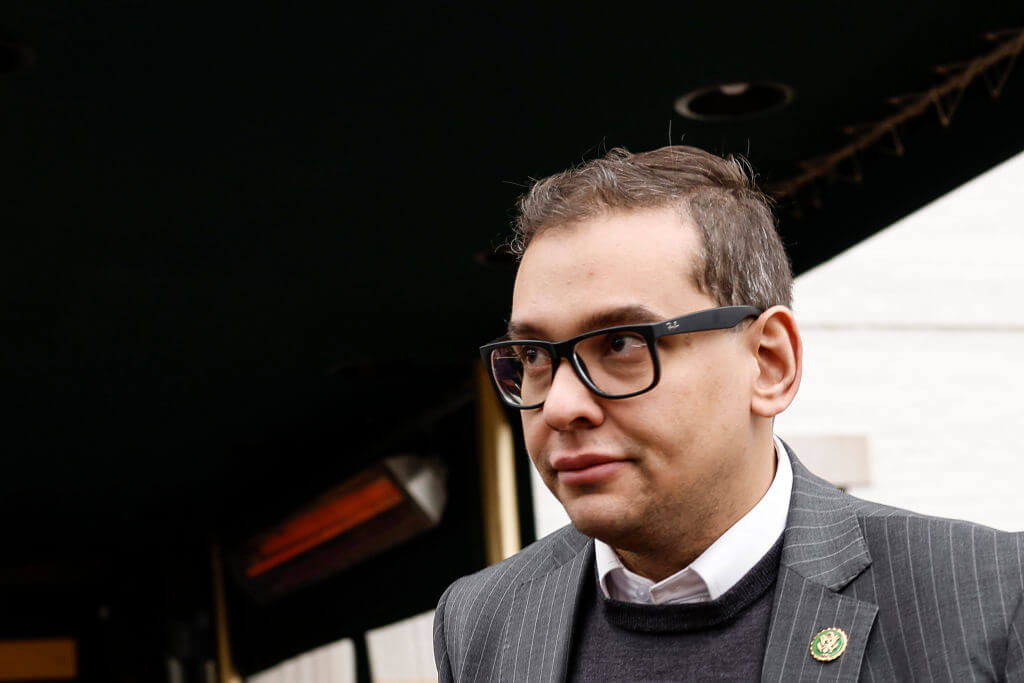
Rep. George Santos from New York, who has come under fire for lying about having Jewish grandparents who fled persecution during World War II, reportedly made offensive comments about the Holocaust and Jews in social media posts before he ran for office. 

Patch published Thursday – a day before the commemoration of International Holocaust Remembrance Day – social media posts from the congressman’s now-deleted Instagram and Facebook accounts as well as comments that include offensive and racist remarks – including a suggestion that Jews and Blacks would take revenge on people who make Hitler jokes. 

In a March 2011 comment, a screenshot of which was submitted to the Long Island publication by a former friend, Santos commented on a photo shared by a Facebook friend which shows a person making a military salute with the caption “something like Hitler’ with the following: “hiiiiiiiiiiiiiiiiiiiigh hiiiiiiiiiiiitlerrrrrrrrrrr (hight hitler) lolololololololololololol sombody kill her!! the jews and black mostly lolllolol!!! Dum.” 

Santos, a Republican who was elected in November to represent parts of New York’s Nassau County, is under federal investigation for fabricating key details of his resume and for possible campaign finance violations and could face a House ethics probe for a web of lies during the campaign. Among them, Santos claimed to have Jewish grandparents who fled Belgium during the Holocaust and called himself a “proud American Jew” in outreach to Jewish voters. 


Gregory Morey-Parker, a former roommate and friend of Santos, told Patch that Santos would frequently make offensive jokes about Jews, in particular when it came to paying the bill at restaurants. “He’d always say that it was okay for him to make those jokes because he was Jewish,” Morey-Parker said.

The Washington Post reported on Wednesday that Santos has an outstanding bill from an Italian restaurant in Queens for $18,773.54 

A spokesperson for Santos didn’t immediately respond about whether Santos will attend any of the events marking International Holocaust Remembrance Day on Friday. 


The post Santos posted offensive remark about the Holocaust and made jokes about Jewish stereotypes, according to new report appeared first on The Forward.

Categories
Audio Sources - Full Text Articles

I’m a guide at a former concentration camp. Here’s why it’s important to remember non-Jewish Holocaust victims

GettyImages-51844253-scaled.jpg

I work as a guide at Sachsenhausen Memorial and Museum, a former concentration camp in Germany. When I tell people what I do for a living, I tell them that I am a Holocaust educator, but that it’s complicated.

In North American Jewish educational settings, National Socialist (or Nazi) persecution is synonymous with the Holocaust. The primacy of the Jewish experience — stories of the ghettos, camps and resistance fighters — stems in part from family histories. For many American Jews, these are not just facts from a textbook, but the personal experiences of parents or grandparents, transmitted as living memory. 

A major idea in Holocaust remembrance is that we honor survivors and victims by telling their stories and remembering their names. This is even more visceral in Jewish settings, where many have personal connections to the Holocaust. Why then, do we rarely do the same for other groups targeted by Nazi ideologies?

The stories of these non-Jewish victims make up much of my work at Sachsenhausen. 

A blindspot

Growing up in the northeastern United States, I received a Holocaust education both in school and in the many encounters I had with friends with survivor grandparents. For much of my life, observing either International Holocaust Memorial Day on Jan. 27 or Yom Hashoah in the spring was a given. 

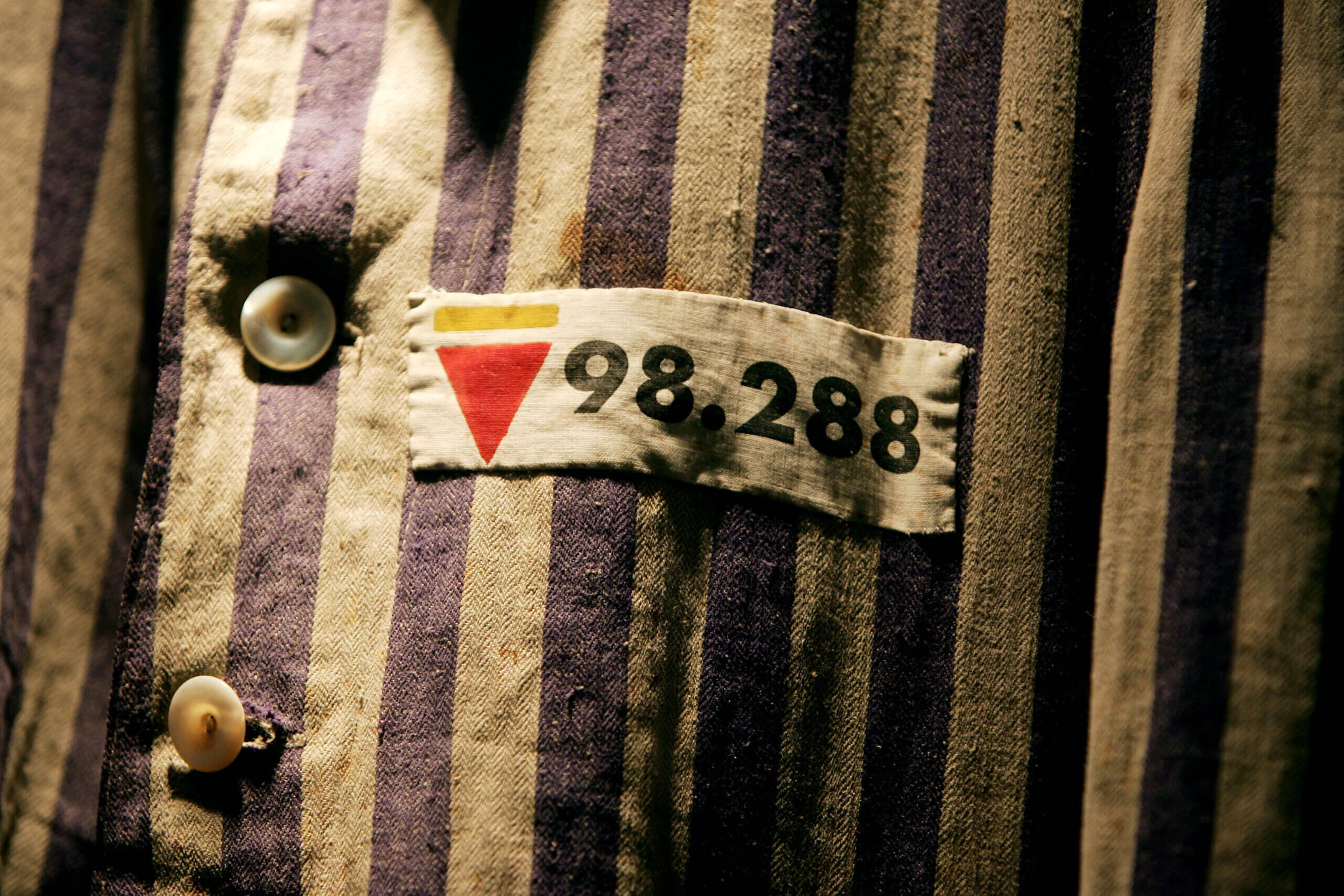
I entered the field of Holocaust education in the fall of 2019 with a fellowship at Sachsenhausen. Like other concentration camps in Germany, Sachsenhausen was a labor camp rather than an extermination camp. Jewish prisoners were in the minority at Sachsenhausen due, in part, to its distance from Eastern Europe’s larger Jewish communities and the 1942 decision to deport Jews from Germany and Nazi-controlled Austria to extermination camps in Poland. 

I quickly realized that while I knew much about the Holocaust as the genocide of Jews, I knew little about the other persecuted groups who made up the majority of prisoners at Sachsenhausen  including Sinti and Roma, individuals with mental and physical disabilities, Poles, Ukrainians, Russians, Jehovah’s Witnesses, gay men and political prisoners.

Learning about the persecution of these other groups transformed not only my understanding of Nazi ideology, but the societal context that enabled genocidal antisemitism. I believe that Holocaust education in the United States should be expanded to teach about other groups persecuted by the Nazis. 

Other targets of the Nazis

Often derogatorily called “gypsies,” Sinti and Roma are related ethnic groups that have lived in Europe since the 1400s. In many ways, their treatment by the Nazis parallels the treatment of Jews. Both groups were targeted for their supposed “racial inferiority.” Sinti and Roma who were German citizens were eventually excluded from German society, just like German Jews. In 1942, the Nazis began deporting Sinti and Roma to extermination camps.

Yet the genocide of Sinti and Roma, or as it has been dubbed in Romani, the Porajmos (meaning destruction), is often a footnote or completely absent from Holocaust curriculums. 

Learning about the experiences of other persecuted groups gives us a better understanding of the comprehensive horrors of Nazi Germany and the milieu that enabled the Holocaust. By studying the treatment of other groups, we can learn how the early anti-Jewish edicts of 1933 led within a decade to the creation of extermination camps in the early 1940s. 

It also helps us understand how a totalitarian party establishes itself. The first groups sent to the concentration camps, which were established within two months of the Nazis coming to power in January 1933, were imprisoned because they belonged to opposing political parties. The first imprisonment of Jews targeted for their Judaism, rather than for their political affiliations, was five years later during Kristallnacht.

Lastly, this curriculum change would illustrate how Nazi ideology impacted different groups in different ways. Although some groups, like Jews and Sinti and Roma, were targeted for the ethnicities they were born into, anyone could become disabled or deemed “asocial.” Likewise, any man could be accused of being queer if they were seen as effeminate.

Many of these marginalized groups not only lack representation in historical accounts but still face discrimination today. Homophobia persists and the Nazis’ gay victims only received official recognition from the German government as “persecuted homosexuals” in the 1990s. 

Another overlooked group is the men and women with mental and/or physical disabilities targeted by the T-4 euthanasia program. They were killed because Nazi ideology viewed them as unworthy burdens on the state. 

‘Why add more information from outside the Jewish experience?’

In contrast to this ideology, Judaism considers all human lives to be b’tzelem Elohim, or “in the image of God.” In a day school or Hebrew school setting, this philosophy could be taught alongside the history of the T-4 program, giving students a powerful example of how their own faith considers each human life to be precious.

There are, for sure, practical limits to how much can be covered on any subject in a classroom, along with other questions of Holocaust pedagogy — how much is too much, how early is too early? I empathize with Jewish educators already struggling to teach a broad swath of Holocaust history as well as living Judaism. Why add more information from outside the Jewish experience?

I heard an answer to this question at the ceremony marking the 75th liberation of Auschwitz-Birkenau, on Jan. 27, 2020. There, survivor Marion Turski implored the crowd to remember that “Auschwitz didn’t fall from the sky.” In other words, we must understand the world that made Auschwitz possible, and not just focus on the history of the place itself.

Recognizing other groups persecuted by the Nazis does not diminish the singularity of Jewish persecution, but gives necessary context to recognizing the world that made such horrors possible, and making sure it never happens again. 

Another aspect of Holocaust history with contemporary relevance is that various ideologies of hate existed, and were politicized, at the same time: antisemitism alongside anti-Romani sentiment, xenophobia alongside ableism; homophobia alongside misogyny. The Nazis intersected these different ideologies in pursuit of  their white supremacist Aryan world.

This International Holocaust Memorial Day, we can choose to honor the lives of all those persecuted by Nazis: Jewish, Sinti, Roma, the disabled and so many more marginalized people. We honor them by telling all of their stories and embracing the fullness of history, no matter how dark it is.

To contact the author, email opinion@forward.com

The post I’m a guide at a former concentration camp. Here’s why it’s important to remember non-Jewish Holocaust victims appeared first on The Forward.

Categories
Audio Sources - Full Text Articles

I’m a university professor. The reality on campus is more complex than ‘Zionist snowflakes’

My critique of Rob Eshman’s recent column, “When did Zionists become snowflakes?” comes from a probably unexpected place. I am a Workers Circle leftist and am entirely at odds with the current Israeli government. Our perspectives are not opposite. But I believe that the reality is far more challenging, complicated, and informing than anything suggested by the “snowflake” rhetoric Eshman utilizes.

I was on the faculty at the University of Michigan for more than 40 years. Michigan figures centrally in Eshman’s piece, and I have seen close-up much of what he invokes from editorial distance.

The core of Eshman’s argument is that actions intended to make campuses like Michigan “safe” for Jewish students — at least for those who are Zionistically “out” — are too often hysterical overreactions. The result of attempts to silence anti-Zionist protesters and threaten universities, he argues, is not good for students. Shielding them from “conflict and hardship,” we foster “fragile intellects and “weak spirits.” That is the price of “coddling,” a term Eshman borrows from Jonathan Haidt.

Concerns about “coddling” American young people are certainly not new. In 1908, Teddy Roosevelt decried colleges (which were all-male at the time) for making their charges “too sensitive to take part in the rough hurly-burly of the actual work of the world” and turning out “mollycoddles.”

When the Committee for Open Debate on the Holocaust showed up on our campus in 1994, they took out an ad in the school newspaper and called for vigorous debate on whether there was any reliable evidence that the Holocaust ever happened. At the time, Michigan students’ response to blatant Holocaust denial framed as legitimate debate was not “weak” or “fragile” but a strenuous rejection. They firmly repudiated attempts to promote dangerous, antisemitic and ahistorical narratives.

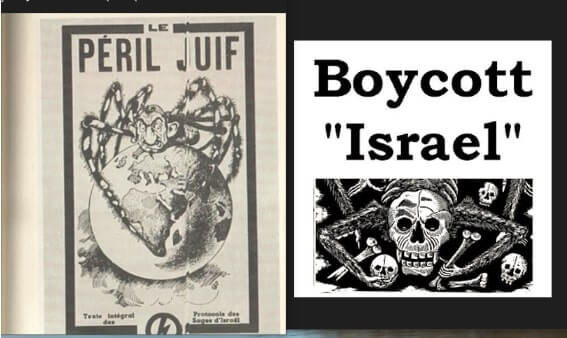
The recent campus events that are the focus of Eshman’s piece — the demonstrations by Students for Justice in Palestine and associated BDS organizations — are not equivalent to unvarnished Holocaust denial. But when people get angry at Israel, their rage often draws from multiple wells. It is therefore not surprising that BDS demonstrations at Michigan have typically featured posters that depict Israel with imagery that invokes classic antisemitic tropes: the Jews, and the Jewish state, are portrayed as demonic, subhuman, and infinitely deadly.

Here I juxtapose one such poster from 2019 with a cover of a 1934 French edition of the The Protocols of the Elders of Zion. The poster was carried in front of the university’s graduate library during several demonstrations in recent years.

(L) A French copy of ‘The Protocols of the Elders of Zion’ from 1936; (R) an anti-Zionist poster the author photographed at a protest at UMichigan in 2019. Graphic by Henry Greenspan
When I shared this juxtaposition with a colleague who supports both SJP and BDS, she said that she found it “interesting.” There was nothing further that she was willing to discuss.

Is it unreasonable that Jewish students who see such posters in front of the university’s main library — amid a host of speakers and their supporters — feel a bit “uncomfortable,” and even “threatened”?

I agree with Eshman that this does not mean SJP should be shut down, or the university threatened in silly and heavy-handed ways. But we should at least call things by their right names, which “fragile intellects” and “weak spirits” rarely do.

There is a difference between rhetoric (including about “snowflakes”) and genuine debate. I taught about the Holocaust for over 40 years and have had many Palestinian students. In one class in the 2010s, a young Palestinian woman approached me. “Isn’t the Holocaust exaggerated?” she asked. “Hasn’t it served Israel and others to make it so important, and bigger than it was?”

Her question caught me by surprise. I did not see this interaction ending well. But I sensed there was something more sincere than hateful in this woman’s question. Indeed, I saw trust and a desire to understand.

She had learned the arguments that Holocaust deniers often cite: “Isn’t it true that 4 million people were not actually killed in Auschwitz? She was right — the actual Auschwitz death toll is roughly 1.4 million. The 4 million figure was mainly an invention of Soviet propaganda (the “extra victims” counted were likely Soviet POWs and civilians that got attributed to Auschwitz tolls). I explained all this to her, and that fallacious arguments that she’d repeated did not affect the scale of the Holocaust as a whole, quantitatively or otherwise. We had a genuine conversation.

I don’t know what she ultimately concluded, but the victory is that she and I could have such a conversation at all. Unlike my BDS-supporting colleague, this student was ready to engage. Neither one of us opted for what might have been the more “safe” or more “comfortable” option. During my years at the University of Michigan, I have known many more Jewish and Palestinian students like her than like the “snowflakes” Eshman invokes.

Real conflicts, real virtues, and real people are various and complicated. It does not serve to coddle any of us with rhetoric that washes out that complexity.

To contact the author, email opinion@forward.com

The post I’m a university professor. The reality on campus is more complex than ‘Zionist snowflakes’ appeared first on The Forward.

Categories
Audio Sources - Full Text Articles

My mother and grandmother never made challah. Here’s why I do, and why I love it.

2048px-Challah_Bread_Six_Braid_1.jpg

On Friday afternoons at my house, the last 15 minutes before candle-lighting is classic pre-shabbos hysteria.

“Did you turn on the shabbos lamp yet?”

“Fill up the water urn — and don’t forget to plug it in!”

“Hey, it’s my turn in the shower!”

Throughout the madness, though, it’s the comforting, delicious aroma of challah in the oven that keeps me focused. Baking challah, for me, is a big deal. Let me explain.

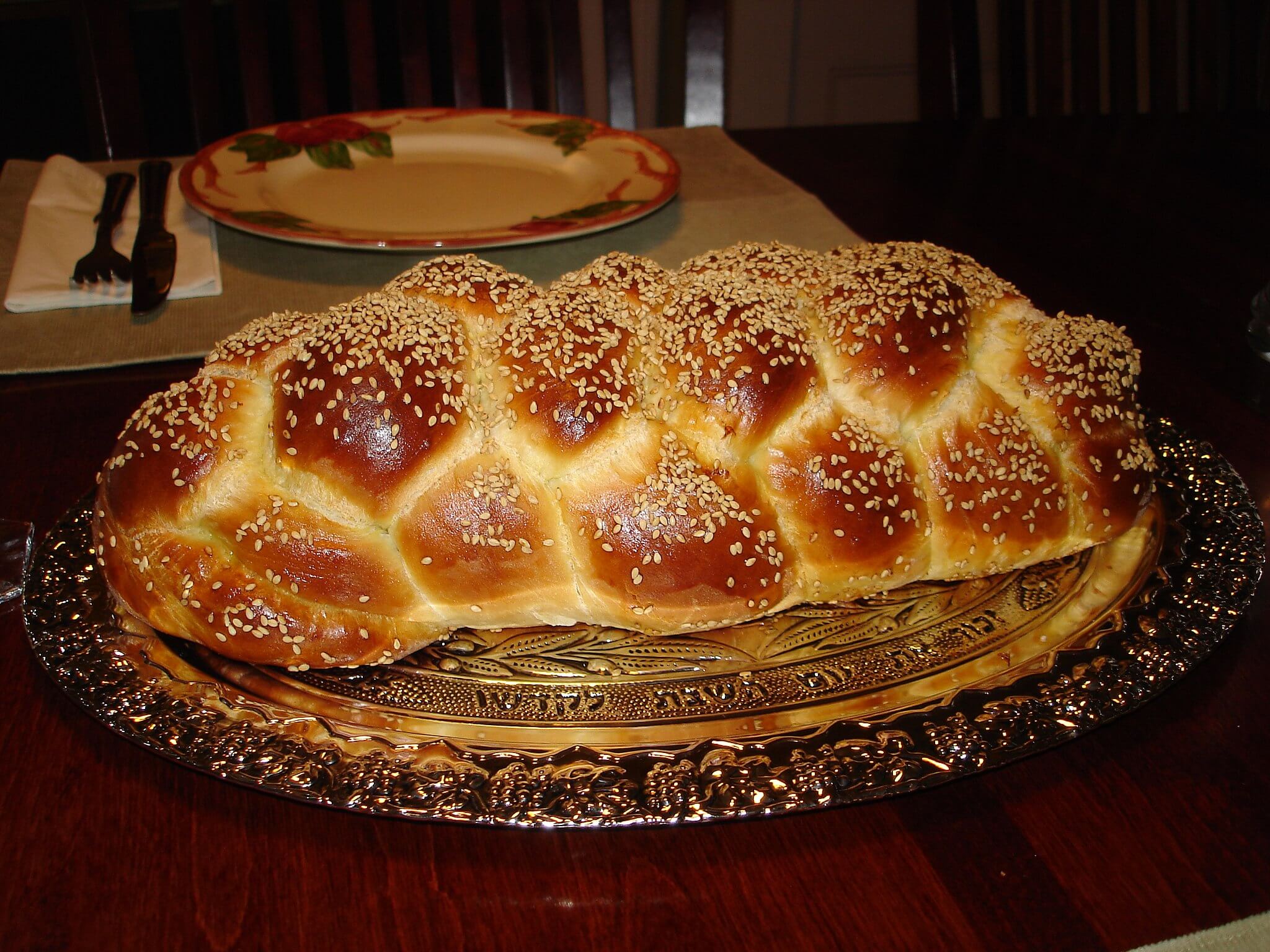
Most Jewish women who make their own challah every Friday inherited the practice from their mothers and grandmothers. I wish I could say this. I wish I could call challah-baking a deeply ingrained part of my family tradition. A spiritual bond with the women in my family going back generations.

But it’s not true. Yes, my mother and both grandmothers were proud Jewish women. They prepared traditional shabbos fare every Friday. We ate hicken soup with dill (which they called the Jewish herb), roast chicken and potato kugel. But they would have balked, had anyone asked them to bake challah, too.

“Why go through all the trouble when I can get it fresh from the bakery?” I could hear my mother saying.

I never questioned their commonsense decision, and welcomed the ease of buying four small challah loaves every week. This was especially true while I was busy managing three active little boys at home.

But as I began longing for a more traditional Jewish lifestyle, and gradually became more observant, I was intrigued by an Orthodox friend of mine, Elaine, who baked challah every erev shabbos (every Friday before the Sabbath). Whenever she invited my family over for a shabbos meal, I found myself nibbling her homemade bread. I rarely did that with the store-bought kind I’d been serving at home.

Baking my own challah was too much trouble

I asked her for the recipe but got intimidated seeing that the dough had to be kneaded for 10 minutes to ensure it rises properly. I’ve never been physically strong and was sure that my dough wouldn’t rise enough, making my challah look like puffed-up pita bread. And then there were all those bread-making rules. Monitoring the room temperature. Punching it down. Shaping it into loaves. Too much trouble, I sighed.

But then I learned that Elaine didn’t knead the dough by hand either; she used an electric dough mixer. Although I’d still have to monitor the dough as it rose and braid it into loaves, I wouldn’t be kneading it by hand.

So I bought a Cuisinart dough mixer and began making my own challah, using a basic recipe I’d found on the internet. To make it heartier, I substituted a quarter of the white bread flour with rye and whole wheat. The baked loaves were usually cooled off by the time I was ready to light the shabbos candles. So I wrapped them in foil, warmed them in the oven, and kept them in the oven after turning it off. Unwrapping them an hour later, right before reciting hamotzi (the blessing for bread), the challah was still tantalizingly warm. I served them with homemade guacamole and hummus. My husband and kids loved it.

Still, something was missing. Since the recipe wasn’t one I learned from my relatives, the challah felt generic. Tasty, but lacking any personal, meaningful connection.

Then four years ago my friend Judy, who’s a skilled challah baker like Elaine, told me about a challah recipe she thought might interest me. She found it in Maggie Glezer’s comprehensive Jewish bread-baking book, A Blessing of Bread: The Many Rich Traditions of Jewish Bread Baking Around the World. 

A challah named after city where my late father was born and raised

“It’s called the Czernowitzer Challah,” Judy said.

My mouth fell open. Czernowitz (pronounced tsher-no-vits) was the city where my late father was born and raised. It was also a major Jewish culture hub in Romania before the Holocaust. For years, on Friday nights after dinner, I would listen to him and his older sister Beyle reminisce about their hometown. Over a glass of tea they’d share stories about their relatives, former neighbors and friends in Czernowitz. Beyle even hosted Yiddish writers and artists who lived there before the war, when they visited New York — usually from Israel.

What amazed me now was not only that there was a challah recipe named after my father’s birthplace, but that Glezer even knew about this once very Jewish city. Few Americans do. And after my father and aunt passed away, I felt a gnawing hunger to learn all that I could about it. Czernowitz had a long, vibrant, Yiddish-speaking history, lasting from the 15th to the 20th century. In fact, by 1919 almost half the population of Czernowitz was Jewish.

Glezer writes that Czernowitz was known as the Vienna of Eastern Europe in the late 19th century. It was famous throughout Austria-Hungary for “its tolerance, civic beauty, culture, and learning.” The city passed through Romanian, Ottoman, and Austrian control and is now part of Ukraine and called Chernivtsi.

At its cultural peak, at the turn of the 20th century, Glezer says Czernowitz was populated and governed by Jews from Poland, Russia, Austria and Romania. In 1908, the city even hosted the first-ever Yiddish-language conference. Most of the city’s Jews were deported to Auschwitz.

I faithfully followed the instructions

Glezer goes on to say that the challah is “not terribly sweet or eggy, but it is generously enriched with oil” and “holds its shape so beautifully during baking that it is a great choice for showing off any fancy shape.”

Judy told me about the recipe on a Sunday morning so I had to wait until Friday to try it out. I faithfully followed the instructions, with one difference. As I did with all my challahs, I substituted a quarter of the bread flour with rye and whole wheat. (It really is better that way.)

As I placed the silky dough into a large warm bowl and covered it with a kitchen towel, I hoped I wouldn’t mess up. But everything happened as it should. Within three hours the dough had puffed up to the rim of the bowl. I punched it down, braided it into four small loaves and let it rise some more.

I then used a trick I learned from Yiddish gourmet chef Eve Jochnowitz. I preheated the oven to 450 degrees, put the challah inside and then quickly lowered it to 350. That initial blast of high heat provides a jolt that allows the dough to expand one last time before baking, Eve said.

That evening, as I bit into the warm, slightly sweet and oil-rich challah, I closed my eyes and, chewing it slowly, savored the experience. What I relished wasn’t just the taste and delightful texture of the Czernowitzer challah. It was the visceral bond it created instantly between me and my ancestors. It was like coming home.


The post My mother and grandmother never made challah. Here’s why I do, and why I love it. appeared first on The Forward.

Categories
Audio Sources - Full Text Articles

In speech to EU parliament, Israel’s president says criticism is OK, but questioning Israel’s existence is not

GettyImages-1246551770.jpg

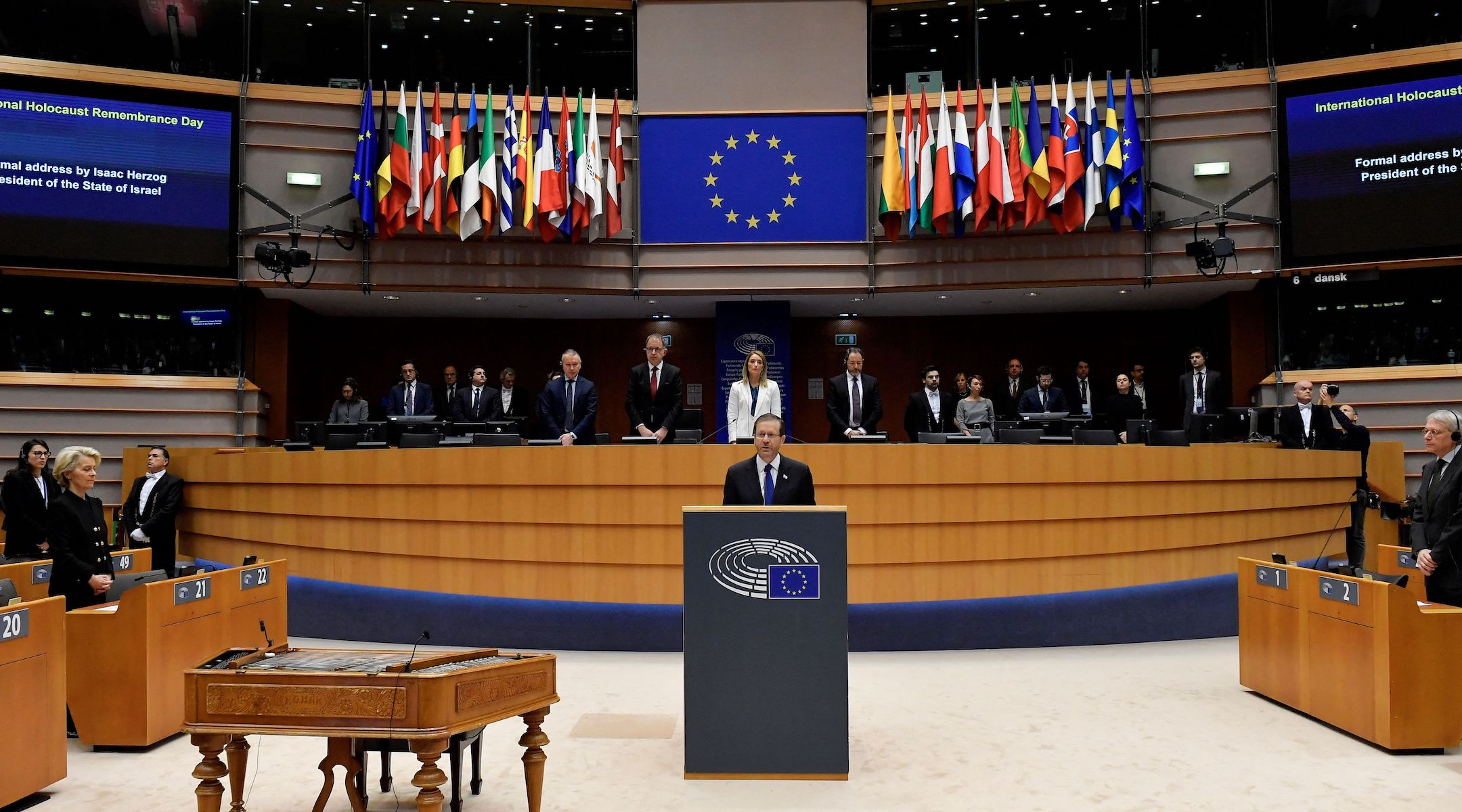
(JTA) — In a speech to the European Union parliament tied to commemorating International Holocaust Remembrance Day, Israeli President Isaac Herzog said that criticism of his country, which has drawn renewed international scrutiny over its new right-wing government, is legitimate. Questioning Israel’s right to exist, he added, is “antisemitism in the full sense of the word.”

“It is, of course, OK to criticize the state that I head. It is OK to criticize us, and it is OK to disagree with us, just as it is OK to criticize you and your states,” he said on Thursday. “Our country is open to criticism like all members in the family of nations, and Israeli democracy certainly excels in fierce and penetrating internal criticism.”

Herzog’s comments come as his government back home has proposed a wave of judicial reforms that critics say will damage Israel’s standing as a full-fledged democracy. Two Israeli tech firms pulled their funds out of the country on the same day, citing what they deem the financial dangers of the government’s proposals, and all eyes are fixed on the government’s right-wing Cabinet ministers in charge of security and the West Bank after a military raid left nine Palestinians dead on Thursday.

Later in the day, Herzog visited a Jewish school in Brussels, where he was asked a question about the government’s controversial proposals.

“In the current crisis in Israel,” he responded, according to the Times of Israel. “I am making a supreme effort to create a dialogue between all sides. This is an important presidential role, to try and do good for the people of Israel.”

On Tuesday, Herzog, a former Labor Party leader, sharply criticized the judicial reform proposals, which would strip the country’s Supreme Court of the power to override parliament decisions.

“The dramatic reform, when done quickly without negotiation, rouses opposition and deep concerns among the public,” he said, according to the Times of Israel. “I see the sides prepared and ready all along the front for an all-out confrontation over the character of the State of Israel, and I am anxious we are on the brink of an internal struggle that could consume us all.”

Herzog’s EU speech also comes at a time when recent surveys of views in European countries, such as a recent one conducted in Belgium’s neighbor the Netherlands, show record levels of Holocaust ignorance and acceptance of antisemitic beliefs.

“I call upon you, elected officials of Europe, do not stand by, you must read the warning signs and fight at all costs,” he said. “You must ensure that every Jew wanting to live a full Jewish life in your countries may do so safely and fearlessly.”

Friday marks International Holocaust Remembrance Day, tied to the anniversary of the liberation of the Auschwitz-Birkenau concentration camp. Herzog also mentioned his family history in his remarks, wore a kippah at the podium and recited a version of “El Malei Rachamim,” a traditional Jewish prayer for the dead that had been rewritten by his grandfather — Rabbi Isaac Herzog, Israel’s first chief rabbi — to account for enormity of the Holocaust.

“In the only Jewish synagogue in Warsaw that was still standing [after the Holocaust], the Nozhik synagogue, a few dozen souls gathered, snatched from the jaws of carnage. A blood stained Torah scroll was handed to my grandfather by the survivors to be taken to the land of Israel for internal memory,” he said.

This article originally appeared on JTA.org.

The post In speech to EU parliament, Israel’s president says criticism is OK, but questioning Israel’s existence is not appeared first on The Forward.

Categories
Audio Sources - Full Text Articles

UK NCSC warns of spear-phishing attacks from Russia-linked and Iran-linked groups

ncsc.png?fit=700%2C366&ssl=1

The U.K. National Cyber Security Centre (NCSC) warns of a surge in the number of attacks from Russian and Iranian nation-state actors.

The U.K. National Cyber Security Centre (NCSC) is warning of targeted phishing attacks conducted by threat actors based in Russia and Iran. The are increasingly targeting organizations and individuals.

The UK agency reported ongoing spear-phishing campaigns carried out by Russia-based group SEABORGIUM and Iran-based group TA453 to gather intelligence on the victims.

SEABORGIUM has been active since at least 2017, its campaigns involve persistent phishing and credential theft campaigns leading to intrusions and data theft. The APT primarily targets NATO countries, but experts also observed campaigns targeting the Baltics, Nordics, and Eastern Europe regions, including Ukraine.

The SEABORGIUM group primarily focuses operations on defense and intelligence consulting companies, non-governmental organizations (NGOs) and intergovernmental organizations (IGOs), think tanks, and higher education.

The group also targets former intelligence officials, experts in Russian affairs, and Russian citizens abroad.

SEABORGIUM’s campaigns begin with a reconnaissance activity of target individuals, with a focus on identifying their contacts on social networks or the sphere of influence.

TA453 is a nation-state actor that overlaps with activity tracked as Charming Kitten, PHOSPHORUS, and APT42.

Throughout 2022, both groups targeted sectors included academia, defence, governmental organisations, NGOs, think-tanks, as well as politicians, journalists and activists.

The NCSC shared technical details about the TTPs (techniques, tactics, and procedures) used by the attackers, they also provide recommendations to mitigate the threat.

“Using open-source resources to conduct reconnaissance, including social media and professional networking platforms, SEABORGIUM and TA453 identify hooks to engage their target. They take the time to research their interests and identify their real-world social or professional contacts. [T1589; T1593].” reads the alert published by the UK Agency.

The group also used fake social media or networking profiles that impersonate respected experts, and used supposed conference or event invitations as lures. In some attacks, the threat actors also used false approaches from journalists.

The two APT groups use webmail addresses from different providers (including Outlook, Gmail, and Yahoo), and impersonate known contacts of the target or prominent names in the target’s field of interest or sector.

The attackers have also created malicious domains resembling legitimate organisations.

In August, the Microsoft Threat Intelligence Center (MSTIC) announced it has disrupted activity by SEABORGIUM (aka ColdRiver, TA446), but recent events demonstrate that the group recovered its operations.

Microsoft has disrupted activity by SEABORGIUM, a Russia-based actor launching persistent phishing, credential and data theft, intrusions, and hack-and-leak campaigns tied to espionage. More details + TTPs in this MSTIC blog: https://t.co/nVoF8GxrFQ

— Microsoft Security Intelligence (@MsftSecIntel) August 15, 2022

Below are the recommendations provided by the agency in the advisory:

  • Use strong and separate passwords for your email account
  • Turn on multi-factor authentication (also known as 2-step verification, or 2SV) 
  • Protect your devices and networks by keeping them up to date
  • Exercise vigilance
  • Enable your email providers’ automated email scanning features
  • Disable mail-forwarding

Follow me on Twitter: @securityaffairs and Facebook and Mastodon

[adrotate banner=”9″] [adrotate banner=”12″]

Pierluigi Paganini

(SecurityAffairs – hacking, APT)

[adrotate banner=”5″]

[adrotate banner=”13″]

The post UK NCSC warns of spear-phishing attacks from Russia-linked and Iran-linked groups appeared first on Security Affairs.

Categories
Audio Sources - Full Text Articles

Wall Street closes green as GDP data eases recession worries

2023-01-26T21:01:11Z

Wall Street ended a choppy session higher on Thursday as investors grappled with an onslaught of economic data and a string of mixed corporate earnings, all while eyeing the clock as it ticks down toward next week’s Federal Reserve monetary policy meeting.

While all three major U.S. stock indexes advanced, megacap momentum stocks, buoyed by Tesla Inc’s (TSLA.O) earnings beat and upbeat sales forecast, helped put the Nasdaq in the lead.

A raft of data showed the U.S. economy fared better in the fourth quarter than analysts expected, and the labor market remains tight, despite some signs of weakening demand. This is a double-edged sword for investors, as it could embolden the Fed to keep key interest rates at restrictive levels for longer.

While financial markets have largely priced in a 25 basis point rate from the central bank next Wednesday, that sentiment is not unanimous.

“The economic data had something in it for everybody; for the dreamers who think the economy is just slow enough to put the Fed on hold, and the pessimists who think growth is still too hot for the Fed to step away,” said David Carter, managing director at JPMorgan Private Bank in New York.

“Hope is not an investment strategy, and the economic facts could soon weigh on the market,” Carter added. “The biggest uncertainty is what will happen in the back half of this year.”

Fourth-quarter earnings season has hit full stride, with more than one fourth of the companies in the S&P 500 having reported. Of those, 69% have beaten consensus estimates, up from 67% on Wednesday, according to Refinitiv.

Analysts now see aggregate fourth quarter earnings falling 2.7%, worse than the 1.6% year-on-year decline seen on Jan. 1, but an improvement over the 3% annual decline as of Wednesday, per Refinitiv.

According to preliminary data, the S&P 500 (.SPX) gained 43.96 points, or 1.09%, to end at 4,060.18 points, while the Nasdaq Composite (.IXIC) gained 199.05 points, or 1.76%, to 11,512.40. The Dow Jones Industrial Average (.DJI) rose 202.70 points, or 0.60%, to 33,946.54.

Tesla Inc (TSLA.O) provided one of the heftiest boosts to the S&P 500, its shares jumping in the wake of its earnings report.

Chevron Corp (CVX.N) announced it would triple its budget for share buybacks, which sent the oil major’s stock higher.

Among losers, IBM Corp (IBM.N) fell in the wake of its announcement that it would cut jobs divest some assets after falling short of its annual cash target.

Southwest Airlines Co (LUV.N) slid after warning of current quarter losses.

And despite forecasts of strong demand for air travel in 2023, the broader S&P 1500 Airlines index also ended the session lower.

That might have something to do with Mastercard Inc’s (MA.N) disappointing current quarter revenue forecast, cited an expected diminishing pent-up travel demand. The consumer payments company’s shares closed lower on the day.

Shares of Bed Bath & Beyond Ink (BBBY.O) tanked after the home goods retailer received a default notice from JPMorgan Chase.

Mastercard rival Visa Inc (V.N) is due to post results shortly, as is chip bellwether Intel Corp (INTC.O).

Related Galleries:

People stand by the New York Stock Exchange (NYSE) in New York City, U.S., January 26, 2023. REUTERS/Andrew Kelly

Traders work on the trading floor at the New York Stock Exchange (NYSE) in New York City, U.S., January 25, 2023. REUTERS/Andrew Kelly
Categories
Audio Sources - Full Text Articles

Jury convicts New York bike path attacker, to weigh death penalty

2023-01-26T21:02:37Z

A U.S. jury on Thursday convicted a man who used a truck to kill eight people on a Manhattan bike path in 2017 on murder and terrorism charges, in the first federal death penalty trial of U.S. President Joe Biden’s administration.

After finding Sayfullo Saipov guilty of committing murder with the goal of joining the militant group Islamic State, also known as ISIS, the Manhattan jury will return on Feb. 6 to consider whether the death penalty is appropriate punishment.

U.S. District Judge Vernon Broderick instructed the jurors not to talk about the case until they return.

The only point of contention between prosecutors and Saipov’s lawyers was whether the defendant carried out the attack in order to join Islamic State, which the United States brands a terrorist organization.

Saipov, an Uzbek national who moved to the United States in 2010, was convicted on all of the 28 counts he faced.

These included murder and attempted murder to gain entrance to Islamic State, providing material support to a terrorist organization, and damage or destruction of a motor vehicle. Saipov had pleaded not guilty.

Wearing a mask and a headset to listen to an interpreter, Saipov looked downwards as the verdict was read, and then spoke with one of his lawyers.

Jason Richman, a prosecutor, told jurors during closing arguments on Tuesday that Saipov had asked to hang the Islamic State flag in the hospital where he was treated after the Oct. 31, 2017 attack.

“He was happy about the terrorist attack he had unleashed,” Richman said. “He had done his part, he earned his way in, and he wanted to show the world.”

David Patton, a federal public defender representing Saipov, conceded in his closing argument that the defendant conducted the attack, but said he expected to die and become a martyr for Islam, not join the Islamic State.

Patton also said Saipov was “steeped in ISIS propaganda” at the time.

“He didn’t expect to be here before all of you,” Patton said. “And he didn’t expect to be joining any organization. And that means he’s not guilty.”

The U.S. Department of Justice said in September that it intends to seek the death penalty for Saipov, despite a moratorium on federal executions since July 2021 as the department reviews the practice.

Saipov, who last worked as an Uber driver in Paterson, New Jersey, could also be sentenced to life in prison without parole. He has been jailed since his arrest on the day of the attack.

Related Galleries:

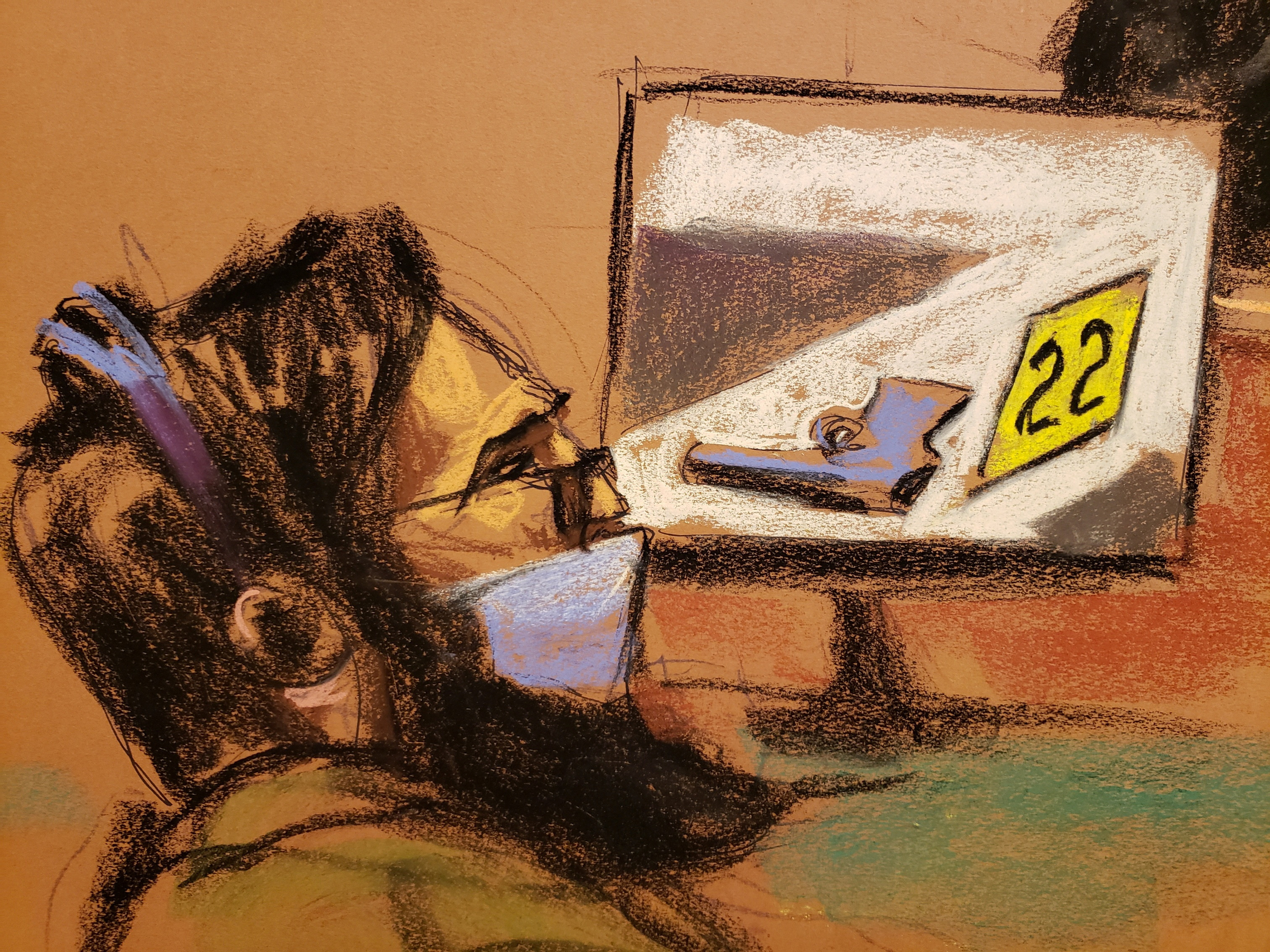
Sayfullo Saipov, the Uzbek man charged with using a truck to kill eight people on a Manhattan bike path on Halloween in 2017, listens to testimony from FBI Special Agent Margaret Girard at his federal trial in New York City, U.S., January 9, 2023 in this courtroom sketch. REUTERS/Jane Rosenberg

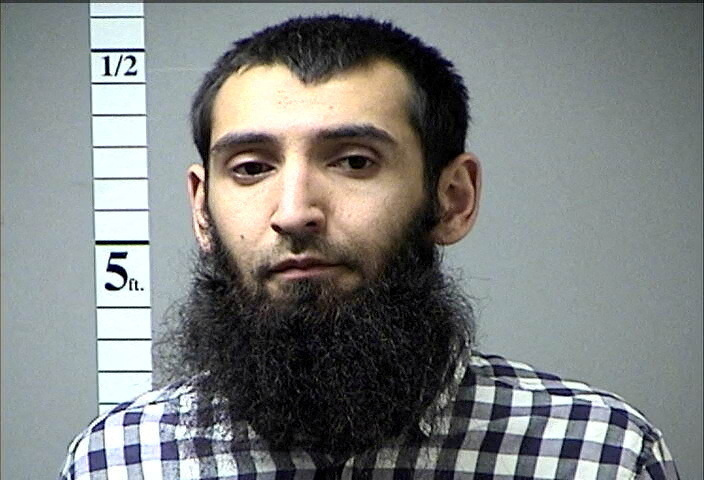
Sayfullo Saipov, the suspect in the New York City truck attack is seen in this handout photo released November 1, 2017. St. Charles County Department of Corrections/Handout via REUTERSFile Photo
WP Radio
WP Radio
OFFLINE LIVE