Categories
Selected Articles

The Indictment of Charles McGonigal

63d2a735b5635.image.jpg?crop=1439%2C758%

One evening in May 2017, Charles “Charlie” McGonigal was about to take the stage to give a talk to the Foreign Policy Association when he learned that less than four months into his presidency, Donald Trump had fired FBI Director James Comey.

At the time, McGonigal was one of the most senior officials in the FBI – special agent in charge [SAC] of the bureau’s prestigious counterintelligence division in New York City. He let the audience know how much he would miss his boss: “Director Comey was probably one of the most loved leaders that we’ve had in a number of years commanding a leadership role in the FBI,” McGonigal told the crowd. “I think many of us who were nominated for leadership positions by him will forever hold him in esteem as we progress through our FBI careers.”

According to an indictment in the U.S. District Court for the Southern District of New York, the next significant step in McGonigal’s own FBI career was agreeing to work secretly for the powerful Russian oligarch Oleg Deripaska.

In the stylized jargon of the Department of Justice indictments, complete with its idiosyncratic capitalization, the indictment states flatly how McGonigal was recruited by a former Soviet diplomat, Sergey Shestakov: “In or about 2018, while McGONIGAL was still serving as SAC, SHESTAKOV introduced McGONIGAL via email to an employee and agent of Deripaska (‘Agent-1’).” Prosecutors maintain that McGonigal collected $225,000 from a sometime “employee of a foreign intelligence service” while serving as special agent in charge of FBI counterintelligence efforts in the New York Office. McGonigal retired from the FBI later that year, in September 2018.

It has widely been noted this week that McGonigal was a key player in the “Crossfire Hurricane” investigation that targeted Trump and his advisers. But what about after he left the FBI? It turns out that McGonigal would still have a visible role in intelligence and threat assessment, often at conferences he participated in or organized, even while working for the Russians.

After he left the FBI in 2018, the indictment alleges, McGonigal and his Russian comrade continued efforts on behalf of Oleg Deripaska. “In 2021,” it states, “McGonigal and Shestakov conspired to provide services to Deripaska, in violation of U.S. sanctions imposed on Deripaska in 2018.”

McGonigal also took a job as a senior vice president of “Global Security and Life Safety” at the U.S. division of Brookfield, an international real estate company. In that capacity he co-chaired a “Homeland Security Task Force” assembled to meet the threat of “election-related security issues.” At a remote task force meeting in October 2020, there were presentations by Michael Burgwald, assistant section chief of the FBI’s Domestic Terrorism Operations Section, Counterterrorism Division, and Branden Fuller, unit chief of the Strategic Engagement Unit in the bureau’s Counterterrorism Division.

At that conference, McGonigal boasted about his connections with U.S. law enforcement and intelligence agencies. “Our well-established industry relationship with federal, state, and local law enforcement partners and homeland security officials facilitates a robust information-sharing exchange that benefits both the commercial facilities sector and government officials,” he said. “We rely on timely updates from them and they look to us for insight on threats to commercial real estate.”

At the same time, McGonigal was one of the intelligence community specialists issuing warnings about voting security and possible election violence.

In October of 2020 McGonigal participated in an Atlantic Council online seminar on the threat posed by Russia’s domestic intelligence service, entitled “How did Russia’s security services capture the Kremlin?” McGonigal stated that what had happened in Russia “would be akin to having in the United states the FBI as a rogue element operating at the behest of the highest bidder, engaged in criminal activities.” It is an analogy that now seems to cut too close to the bone.

Consider the description of McGonigal’s actions presented by prosecutors: “McGonigal and Shestakov agreed to and did investigate a rival Russian oligarch in return for concealed payments from Deripaska. As part of their negotiations with Deripaska’s agent, McGonigal, Shestakov, and the agent attempted to conceal Deripaska’s involvement by, among other means, not directly naming Deripaska in electronic communications, using shell companies as counterparties in the contract that outlined the services to be performed, using a forged signature on that contract, and using the same shell companies to send and receive payment from Deripaska.”

If the charges against McGonigal prove true, his corruption of the FBI continued long after he left the bureau.

The indictment of a top FBI Russia hand for working hand-in-glove with the very Russians he was supposed to be monitoring may be the most shocking of the many astonishing embarrassments to befall the FBI since it put presidential candidate – and then president – Donald Trump in its crosshairs.  

So far, the FBI has exhibited little sense of shame over its many missteps and sketchy actions characterizing its Trump-Russia investigation.

Disgraced former FBI agent Andrew McCabe was discussing government ethics on CNN this very week. Mike Pence, Joe Biden, and Trump had committed “serious violations of pretty clear rules” with their handling of presidential papers, McCabe told Anderson Cooper. No mention was made of McCabe’s own firing for lying to an Inspector General investigating the politicization of “Crossfire Hurricane,” a probe led by McCabe.

Meanwhile, former FBI lawyer James Baker is back in the news. Another high-ranking official in the middle of the bureau’s investigations of Trump, Baker left the FBI under a cloud after being investigated for leaking material to the press. Baker was never charged with wrongdoing, but he was recently fired by Elon Musk when it turned out that while employed at Twitter, he helped lead the social platform’s censoring efforts.

Then there’s the curious case of Kevin Clinesmith, the FBI lawyer who undermined the credibility of the nation’s highly sensitive Foreign Intelligence Surveillance Court – those were the words of the federal judge who accepted his guilty plea. In his zeal to get Trump, Clinesmith misrepresented facts to a FISA court to the point of doctoring emails so he could obtain a warrant to spy on Trump campaign aide Carter Page.

Although prosecutors recommended a seven-month prison stint, Clinesmith was sentenced to community service, and later reinstated to the D.C. bar.

Jim Comey, the official all these men reported to, told Trump before his own firing, “I don’t do sneaky things, I don’t leak, I don’t do weasel moves.” At the time, it was learned later, Comey was leaking secret FBI memos about Trump to a friend in hopes of placing stories in the New York Times that would generate the appointment of a special prosecutor.

The indictment of Charles McGonigal, if proven, deals with behavior that goes far beyond such “weasel moves.” It’s more than just a run-of-the-mill felony, too. It’s the exact behavior the FBI hierarchy twisted itself into knots trying to pin on Donald Trump: collusion with Russia. Actions that the special prosecutor whom Comey helped create, by the way, did not find.

Categories
Audio Sources - Full Text Articles

Egypt unveils tombs and sarcophagus in new excavation

Egypt on Thursday unveiled dozens of new archaeological discoveries, including two ancient tombs, at a Pharaonic necropolis just outside of the capital Cairo.

The artifacts, unearthed during a year-long excavation, were found beneath an ancient stone enclosure near the Saqqara pyramids and date back to the fifth and sixth dynasties of the Old Kingdom, spanning from roughly 2500 B.C to 2100 B.C., Egypt’s Ministry of Tourism and Antiquities said.

One of the uncovered tombs belonged to a priest from the fifth dynasty known as Khnumdjedef, while the other larger tomb belonged to an official named Meri, a palace official who held the title of “the keeper of the secrets,” the ministry said. Other major findings from the excavation include statues, amulets, and a well-preserved sarcophagus.

Egypt’s most renowned archaeologist and director of the excavation, Zahi Hawass, personally unveiled the new discoveries from the stone enclosure, known as Gisr al-Mudir.

“I put my head inside to see what was inside the sarcophagus: A beautiful mummy of a man completely covered in layers of gold,’′ Hawass said.

The Saqqara site is part of a sprawling necropolis at Egypt’s ancient capital of Memphis that includes the famed Giza Pyramids as well as smaller pyramids at Abu Sir, Dahshur and Abu Ruwaysh. The ruins of Memphis were designated a UNESCO World Heritage site in the 1970s.

Thursday’s unveiling comes amid a flurry of new discoveries announced by Egyptian authorities over the past week. Near the southern city of Luxor, authorities said they found dozens of burial sites from the New Kingdom era, dating from 1800 B.C. to 1600 B.C. Discovered nearby were the ruins of an ancient Roman city, it said.

In a separate announcement Tuesday, a group of scientists from Cairo University revealed previously unknown details about a mummified teenage boy dating to about 300 B.C. By using CT scans, the team of scientists were able to shed new light on the boy’s high social status by affirming the intricate details of the amulets inserted within his mummified body and the type of burial he received.

Egypt often publicly touts its ancient discoveries to attract more tourists, a significant source of foreign currency for the cash-strapped North African country. The sector suffered a long downturn after the political turmoil and violence that followed a 2011 uprising.

Egypt’s tourist industry was also hit hard by the coronavirus pandemic and is currently suffering from the fallout from the war in Ukraine. Both Russia and Ukraine formerly comprised a large source of tourists visiting Egypt.

___

Associated Press writer Jack B. Jeffery contributed to this report from Cairo.

Categories
Audio Sources - Full Text Articles

The ADL did not go too far in its remarks on the NYT Hasidic yeshiva investigation

9-9-22-Hasidic-yeshiva-instruction-2048x

Re: “The ADL is wrong to attack the NYT’s brave investigative reporting on Hasidic yeshivas” by Ruth Messinger

To the editor: 

While we greatly respect and value constructive feedback from Ruth Messinger on issues affecting the Jewish community, we were surprised by her suggestion that the ADL went too far in asking the New York Times to carefully consider the potential for its series of investigative articles on the Hasidic community’s education system to evoke stereotypes about Jews.

To be clear, ADL never attempted to stop the Times story. Our first step after learning that the series was in the works was to privately send a letter to the editor outlining our concerns and urging them to avoid certain language that could play into antisemitic tropes about Jews. Once the initial stories appeared, our CEO made our concerns public in a statement that clearly noted that the story “merits investigation and exploration,” but added that certain elements of the framing of the story was “unhelpful” when it leaned into tropes about Jewish money and power. And we commented again after the Times ran nearly a dozen more stories that still included language we considered to be problematic.

ADL is and has always been a firm believer in the First Amendment, but we also feel strongly that the right to free speech is not just reserved for journalists. At a time when Jews are being attacked with impunity in Brooklyn and Williamsburg, Jewish organizations such as ADL who monitor and combat antisemitism have every right to raise our voice to ensure that coverage of our community does not inadvertently give credence to tropes that could fuel more antisemitism in society.

— Scott Richman

New York/New Jersey Regional Director, Anti-Defamation League

The post The ADL did not go too far in its remarks on the NYT Hasidic yeshiva investigation appeared first on The Forward.

Categories
Audio Sources - Full Text Articles

Militant groups vow to retaliate after major Israeli raid in Jenin kills 9 Palestinians

01-26-2023-Jenin.jpg

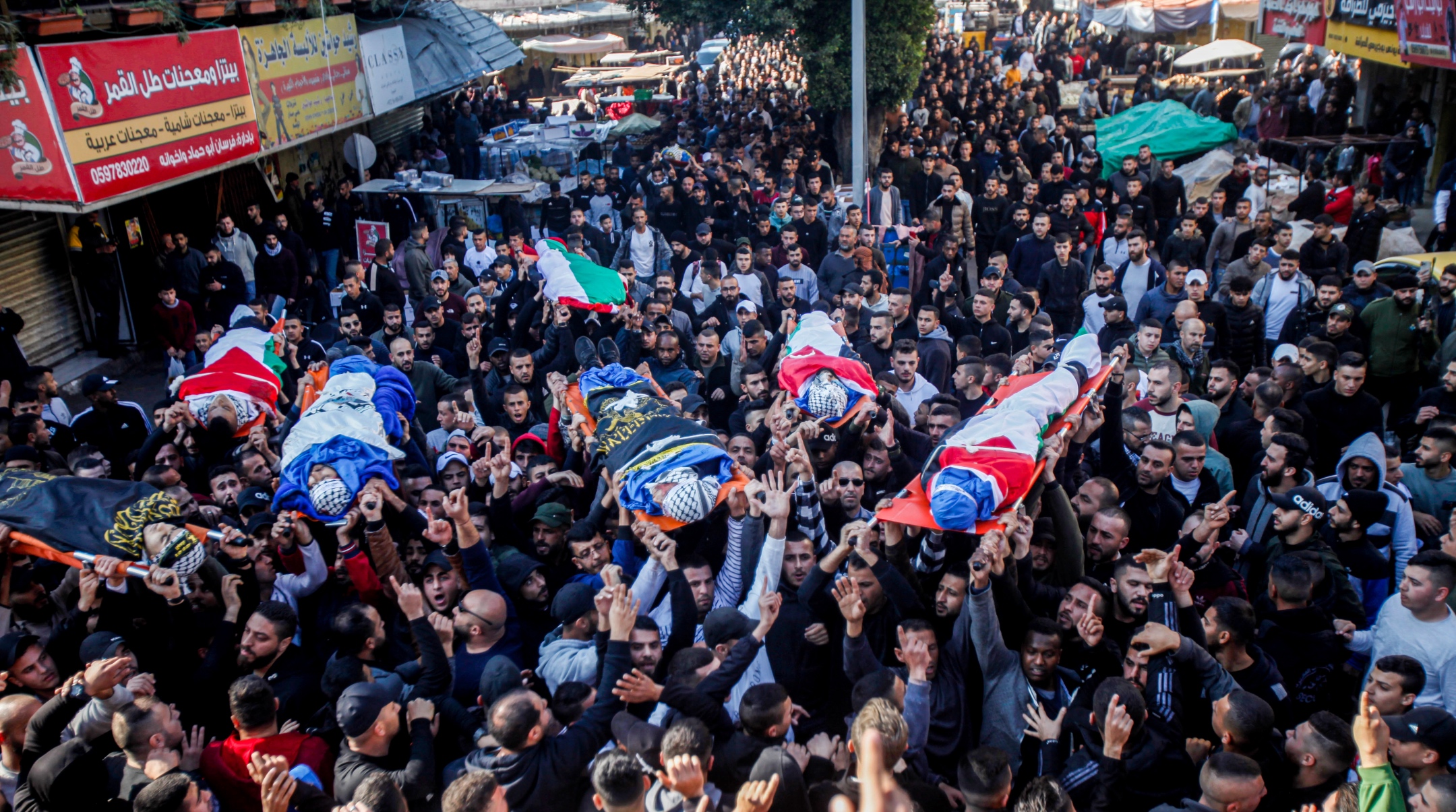
(JTA) — At least nine Palestinians were killed in Jenin during the first major Israel raid on the city since Israel’s new right-wing government took office last month.

Israeli authorities say they killed six militants in the raid on what they said was a safe house. They said the raid was aimed at heading off a major attack on Israel.

Palestinian officials said nine were killed, including civilians, among them a 60-year old woman, and that Israeli forces blocked entry to first responders for hours.

Palestinian Authority President Mahmoud Abbas declared three days of mourning and Hamas and Islamic Jihad, Islamist terrorists whose affiliates are among the armed gangs who effectively control the city, vowed to retaliate.

The raid, the largest in months, comes as the new Israeli government led by Prime Minister Benjamin Netanyahu, the most right-wing in history, is in its first weeks. Before he stepped down earlier this month, the previous head of the Israel Defense Forces warned that the coalition’s plans, especially around governance in the West Bank, could ignite conflict and make Israelis less safe.

The raid also comes a week ahead of a visit to the region by U.S. Secretary of State Antony Blinken. The Biden administration, focused on supporting Ukraine’s effort to repel Russia’s invasion, is seeking quiet in the Middle East. Also at stake are pledges by Blinken and Netanyahu to expand the Abraham Accords, Israel’s normalization agreements with four Arab countries.

Israel has been targeting Jenin since last April, after a series of deadly attacks on Israeli civilian targets inside Israel’s pre-1967 borders, and in the West Bank. Israeli authorities say the attacks originate in the West Bank city, which is nominally under Palestinian Authority control, but where militias reign.

This article originally appeared on JTA.org.

The post Militant groups vow to retaliate after major Israeli raid in Jenin kills 9 Palestinians appeared first on The Forward.

Categories
Audio Sources - Full Text Articles

Just opposite: if you want the independent, non-partisan, objective FBI Director, keep Wray. He cannot be blamed for the mistakes of the past (poor preparedness for 1.6.21 is one of them), and he should continue the self-investigations of the FBI in depth. https://t.co/bWtDrnUGHR Quoted tweet from @mikenov: Opinion | Wray’s latest scandal should be strike three – The Washington Post washingtonpost.com/opinions/2023/…

Just opposite: if you want the independent, non-partisan, objective FBI Director, keep Wray. He cannot be blamed for the mistakes of the past (poor preparedness for 1.6.21 is one of them), and he should continue the self-investigations of the FBI in depth. https://t.co/bWtDrnUGHR

Opinion | Wray’s latest scandal should be strike three – The Washington Post washingtonpost.com/opinions/2023/…

Categories
Audio Sources - Full Text Articles

Opinion | Wray’s latest scandal should be strike three – The Washington Post washingtonpost.com/opinions/2023/…

Opinion | Wray’s latest scandal should be strike three – The Washington Post washingtonpost.com/opinions/2023/…
Categories
Audio Sources - Full Text Articles

How Not to Fight Inflation

Categories
Audio Sources - Full Text Articles

Who Is Part of the Free World?

Categories
Audio Sources - Full Text Articles

Strong U.S. economic growth expected in fourth quarter, outlook darkening

2023-01-26T05:02:39Z

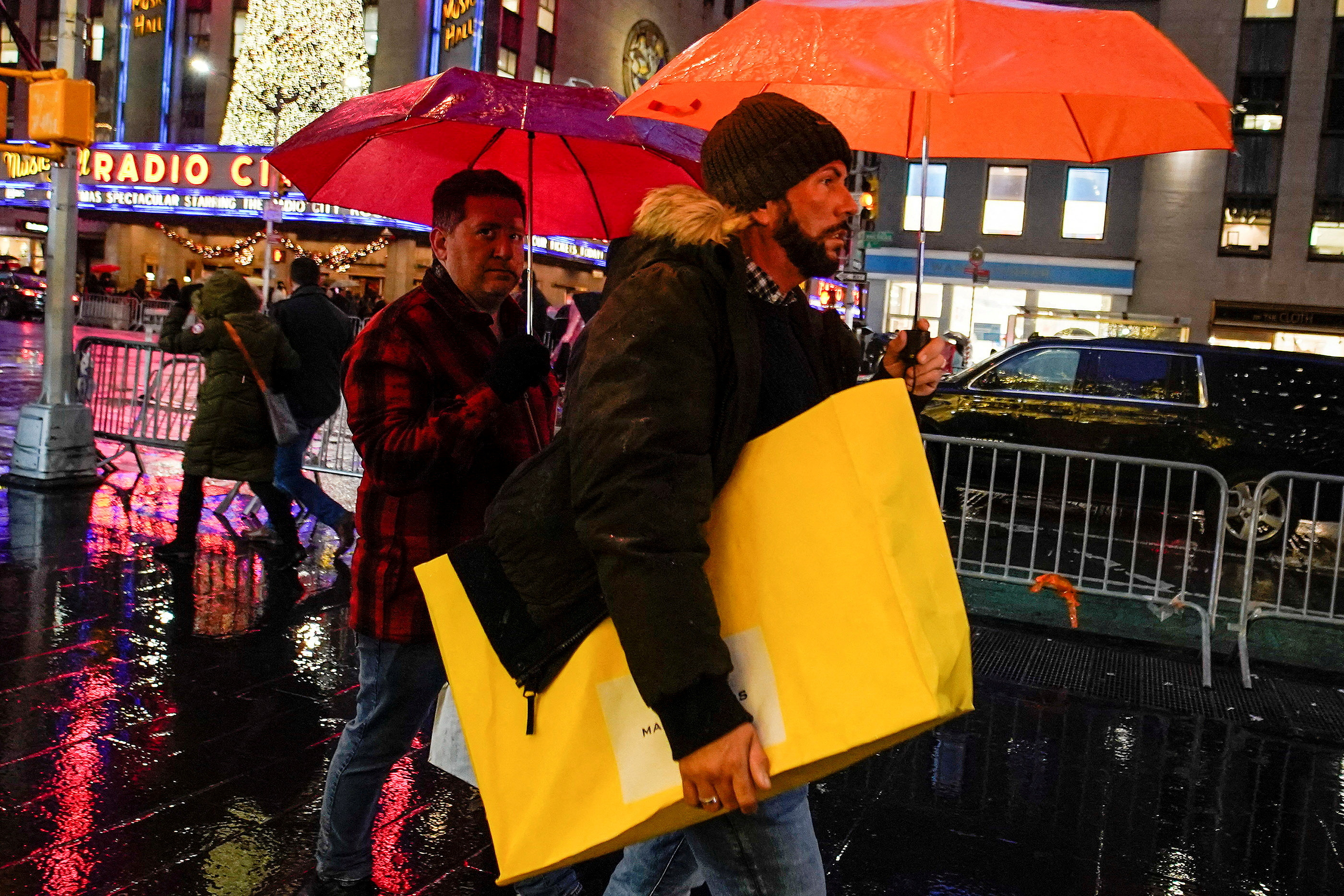
A man walks under the rain with his shopping bag during the holiday season in New York City, U.S., December 15, 2022. REUTERS/Eduardo Munoz

The U.S. economy likely maintained a strong pace of growth in the fourth quarter as consumers boosted spending on goods, but momentum appears to have slowed considerably towards the end of the year, with higher interest rates eroding demand.

The Commerce Department’s advance fourth-quarter gross domestic product report on Thursday could mark the last quarter of solid growth before the lagged effects of the Federal Reserve’s fastest monetary policy tightening cycle since the 1980s kick in. Most economists expect a recession by the second half of the year, though mild compared to previous downturns.

Retail sales have weakened sharply over the last two months and manufacturing looks to have joined the housing market in recession. While the labor market remains strong, business sentiment continues to sour, which could eventually hurt hiring.

“This looks like it could be the last really positive, strong quarterly print we’ll see for a while,” said Sam Bullard, a senior economist at Wells Fargo Securities in Charlotte, North Carolina. “Markets and most people will look through this number. More recent data are suggesting that economic momentum is continuing to slow.”

According to a Reuters survey of economists, GDP growth likely increased at a 2.6% annualized rate last quarter after accelerating at a 3.2% pace in the third quarter. Estimates ranged from a 1.1% rate to a 3.7% pace.

Robust second-half growth would erase the 1.1% contraction in the first six months of the year.

Growth for the full year is expected to come in at around 2.1%, down from the 5.9% logged in 2021. The Fed last year raised its policy rate by 425 basis points from near zero to a 4.25%-4.50% range, the highest since late 2007.

Consumer spending, which accounts for more than two-thirds of U.S. economic activity, is expected to have grown at a pace faster than the 2.3% rate notched in the third quarter. That would mostly reflect a surge in goods spending at the start of the quarter.

Spending has been underpinned by labor market resilience as well as excess savings accumulated during the COVID-19 pandemic. But demand for long-lasting manufactured goods, which are mostly bought on credit, has fizzled and some households, especially lower income, have depleted their savings.

Economic growth also likely received a lift from business spending on equipment, intellectual property and nonresidential structures. But with demand for goods tanking, business spending also lost some luster as the fourth quarter ended.

Despite the clear signs of a weak handover to 2023, some economists are cautiously optimistic that the economy will skirt an outright recession, but rather suffer a rolling downturn, where sectors decline in turn rather than all at once.

They argue that monetary policy now acts with a shorter lag than was previously the case because of advances in technology and the U.S. central bank’s transparency, which they said resulted in financial markets and the real economy acting in anticipation of rate hikes.

“We will continue to have positive GDP numbers,” said Sung Won Sohn, a finance and economics professor at Loyola Marymount University in Los Angeles. “The reason is sectors are taking turns going down, and not simultaneous declining. The rolling recession began with housing and now we are seeing the next phase which is consumption related.”

Indeed, with demand for goods slumping, factory production has declined sharply for two straight months. Job cuts in the technology industry were also seen as flagging cutbacks in capital spending by businesses.

While residential investment likely suffered its seventh straight quarterly decline, which would be the longest such streak since the collapse of the housing bubble triggered the Great Recession, there are signs the housing market could be stabilizing. Mortgage rates have been trending lower as the Fed slows the pace of its rate hikes.

Inventory accumulation was seen adding to GDP last quarter, but with demand slowing, businesses are likely to focus on reducing stock in their warehouse rather than placing new orders, which would undercut growth in the quarters ahead.

Trade, which accounted for the bulk of GDP growth in the third quarter, was seen either making a small contribution or subtracting from GDP growth. Strong growth is expected from government spending.

While the labor market thus far has shown remarkable resilience, economists argue that deteriorating business conditions will force companies to slow hiring and lay off workers.

Companies outside the technology industry as well as interest-rate sensitive sectors like housing and finance are hoarding workers after struggling to find labor during the pandemic.

A separate report from the Labor Department on Thursday is likely to show initial claims for state unemployment benefits rose to a seasonally adjusted 205,000 for the week ended Jan. 21, from 190,000 in the prior week, according to a Reuters survey of economists.

“We expect initial jobless claims will eventually start to turn back up after their recent drop, consistent with an eventual downturn in payrolls and a rise in the unemployment rate,” said Kevin Cummins, chief economist at NatWest Markets in Stamford, Connecticut. “In turn, we expect spending to slow as consumers will be less willing to run down savings in the face of a deteriorating labor market.”

Categories
Audio Sources - Full Text Articles

U.S. Representative Schiff announces campaign for Senate

2023-01-26T15:17:36Z

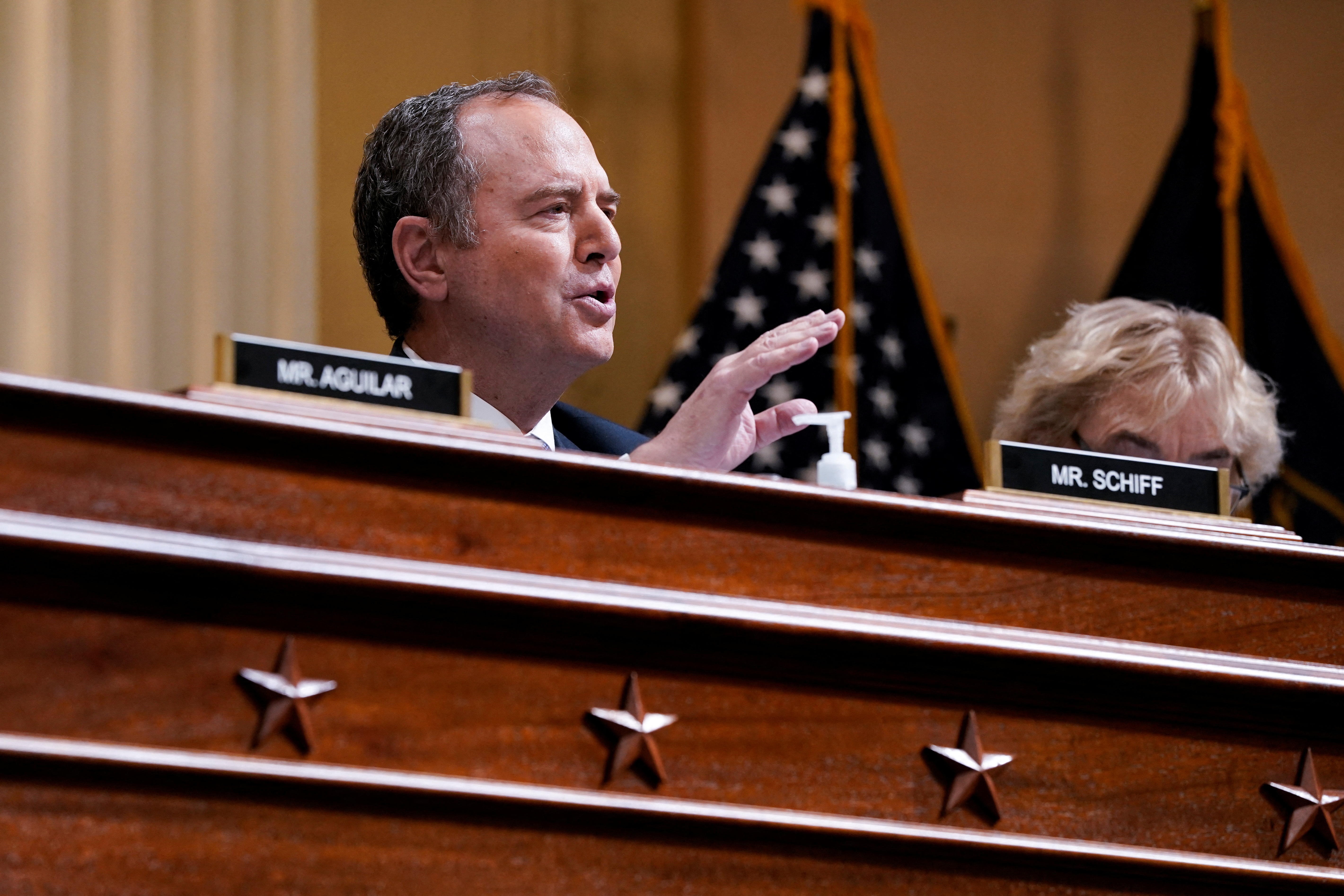
U.S. Representative Adam Schiff (D-CA) speaks during a public hearing of the U.S. House Select Committee to investigate the January 6 Attack on the U.S. Capitol, on Capitol Hill in Washington, U.S., October 13, 2022. REUTERS/Elizabeth Frantz

California Democratic U.S. Representative Adam Schiff, who led the impeachment case against former President Donald Trump and was a member of the congressional panel that probed the 2021 Capitol attacks, announced a campaign for the U.S. Senate to represent the state.

“Our democracy is under assault from MAGA extremists, who care only about gaining power and keeping it,” Schiff said in a statement on Thursday. “I look forward to campaigning hard in this race,” he added.

WP Radio
WP Radio
OFFLINE LIVE