Categories
Audio Sources - Full Text Articles

Report: Suspects Who Assaulted Fox News Weatherman Already Released

Three of the four suspects who on Saturday assaulted Fox News weatherman Adam Klotz in New York City have already been released, the New York Post reported.

The teenage suspects, who beat Klotz after he tried to stop the group from setting an elderly man’s hair on fire on the subway, were released from custody shortly after they were arrested, police said. A fourth suspect remains at large.

The three suspects, who range in age between 15 and 17, have not yet been charged with any crimes.

The incident comes after former Democratic governor Andrew Cuomo signed a bail reform into law in 2019 that eliminated cash bail for most misdemeanors and some felonies.

“I want someone to be held responsible, but really what I want is some sort of change. I don’t want this to happen to somebody else, and I don’t think necessarily just these kids getting in trouble,” Klotz said. “Like, where’s the structural things?”

The weatherman called out Democrat mayor Eric Adams to do “something more long-term” about the crime wave in the city.

The process to get the suspects to face charges is difficult, the Post reported:

The three young thugs who have already been released with “juvenile reports” could only face charges if Klotz files a complaint with the city Department of Probation, which would then decide if it would refer the case to the Law Department, officials said Sunday.

The juvenile reports they were given are handed to youngsters who allegedly commit an act that would constitute an offense if perpetrated by an adult.

However, police said Monday they’re interviewing the elderly man who was allegedly accosted by the teens first — and could still lodge charges against the rowdy crew.

The post Report: Suspects Who Assaulted Fox News Weatherman Already Released appeared first on Washington Free Beacon.

Categories
Audio Sources - Full Text Articles

VMware warns of critical code execution bugs in vRealize Log Insight

vmware-logo.png?fit=620%2C388&ssl=1

A critical vulnerability in VMware vRealize Log Insight appliance can allow an unauthenticated attacker to take full control of a target system.

VMware addressed multiple vulnerabilities, tracked as CVE-2022-31706, CVE-2022-31704, CVE-2022-31710, and CVE-2022-31711, in its vRealize Log Insight appliance. VRealize Log Insight is a log collection and analytics virtual appliance that enables administrators to collect, view, manage and analyze syslog data. Log Insight provides real-time monitoring of application logs, network traces, configuration files, messages and performance data.

The most severe flaws impacting the product are a Directory Traversal Vulnerability tracked as CVE-2022-31706 (CVSS score 9.8), and a broken access control vulnerability tracked as CVE-2022-31704 (CVSS score 9.8).

An unauthenticated, attacker can exploit one of the two flaws to inject files into the operating system of an impacted appliance which can result in remote code execution.

“An unauthenticated, malicious actor can inject files into the operating system of an impacted appliance which can result in remote code execution.” reads the advisory published by the virtualization giant.

The other flaws fixed by VMware are:

  • CVE-2022-31710 – Deserialization Vulnerability (CVSS score 7.5) that can be exploited by a remote attacker to trigger the deserialization of untrusted data which could result in a denial of service.
  • CVE-2022-31711 – Information Disclosure Vulnerability (CVSS score 7.5) which can be exploited by a remote attacker to collect sensitive session and application information without authentication.

Follow me on Twitter: @securityaffairs and Facebook and Mastodon

[adrotate banner=”9″] [adrotate banner=”12″]

Pierluigi Paganini

(SecurityAffairs – hacking, VMWARE)

[adrotate banner=”5″]

[adrotate banner=”13″]

The post VMware warns of critical code execution bugs in vRealize Log Insight appeared first on Security Affairs.

Categories
Audio Sources - Full Text Articles

New Zealand“s Chris Hipkins sworn in as prime minister

2023-01-24T20:29:12Z

?m=02&d=20230124&t=2&i=1621195417&r=LYNX

FILE PHOTO: Chris Hipkins speaks to members of the media, after being confirmed as the only nomination to replace Jacinda Ardern as leader of the Labour Party, outside New Zealand’s parliament in Wellington, New Zealand January 21 2023. REUTERS/Lucy Craymer/File Photo

WELLINGTON (Reuters) – Labour leader Chris Hipkins was sworn in as New Zealand’s prime minister in a formal ceremony on Wednesday, following the resignation of outgoing Prime Minister Jacinda Ardern last week.

The Labour party elected former COVID-19 Response and Police minister Hipkins, 44, to lead the party and the country on Sunday. This comes after the surprise resignation of Ardern, 42, who said she had “no more in the tank” to lead the country.

Hundreds gathered in the grounds of Parliament as Ardern left for the final time, hugging each of her members of parliament in turn, with many looking visibly emotional.

She then travelled to Government House, where she tendered her resignation to King Charles’ representative in New Zealand, Governor General Cindy Kiro.

Hipkins and his deputy Carmel Sepuloni – the first person of Pacific Islander descent to hold the role – were then sworn in, in a ceremony lasting a few minutes.

Hipkins, who has so far refused to comment on his policies since being elected leader, will hold his first cabinet meeting later on Wednesday.

Known as “Chippy”, Hipkins is well-known to New Zealanders for his competence in tackling COVID-19, though he acknowledged some mistakes in handling the pandemic and faces a tough battle to retain power in an October general election.

A 1News-Kantar poll released in December had Labour’s support falling to 33% from 40% at the start of 2022, meaning Labour would not be able to form a majority even with traditional coalition partner the Green Party at 9%. The opposition National Party has benefited from Labour’s decline.


Categories
Audio Sources - Full Text Articles

Musk ends “funding secured“ testimony without citing binding Tesla deal

2023-01-24T22:55:31Z

Tesla Inc (TSLA.O) Chief Executive Elon Musk testified on Tuesday that he expected strong financial support when he tweeted that he would take the electric car maker private in 2018, but admitted he lacked specific commitments from potential backers.

Musk ended three days on the stand defending against claims that he defrauded investors by tweeting on Aug. 7, 2018, that he had “funding secured” to take Tesla private.

The trial in San Francisco federal court is testing whether the world’s second-richest person can be held liable for his sometimes impulsive use of Twitter.

Musk told a jury that he could have drawn upon several sources of financing to take Tesla private, from existing shareholders like Oracle Corp (ORCL.N) co-founder Larry Ellison to Saudi Arabia’s sovereign wealth fund or his own fortune.

“Funding was absolutely not an issue,” Musk said. “It was quite the opposite.”

Musk, however, acknowledged he did not have binding agreements with investors, leaving it to the jury to decide if he misled shareholders.

Musk remained generally subdued and calm during his testimony, which began on Friday. Near the end of nearly nine total hours on the stand, he became more combative, making comments about the class action law firm that brought the case. His comments were struck from the record by U.S. District Judge Edward Chen.

Tesla’s stock surged after Musk’s 2018 tweet about the $420 per share price, which was a premium of about 23% to the prior day’s close, only to fall as it became clear the buyout would not happen. Investors say they lost millions of dollars as a result.

A jury of nine will decide whether the Tesla CEO artificially inflated the company’s share price by touting the buyout’s prospects, and if so, by how much.

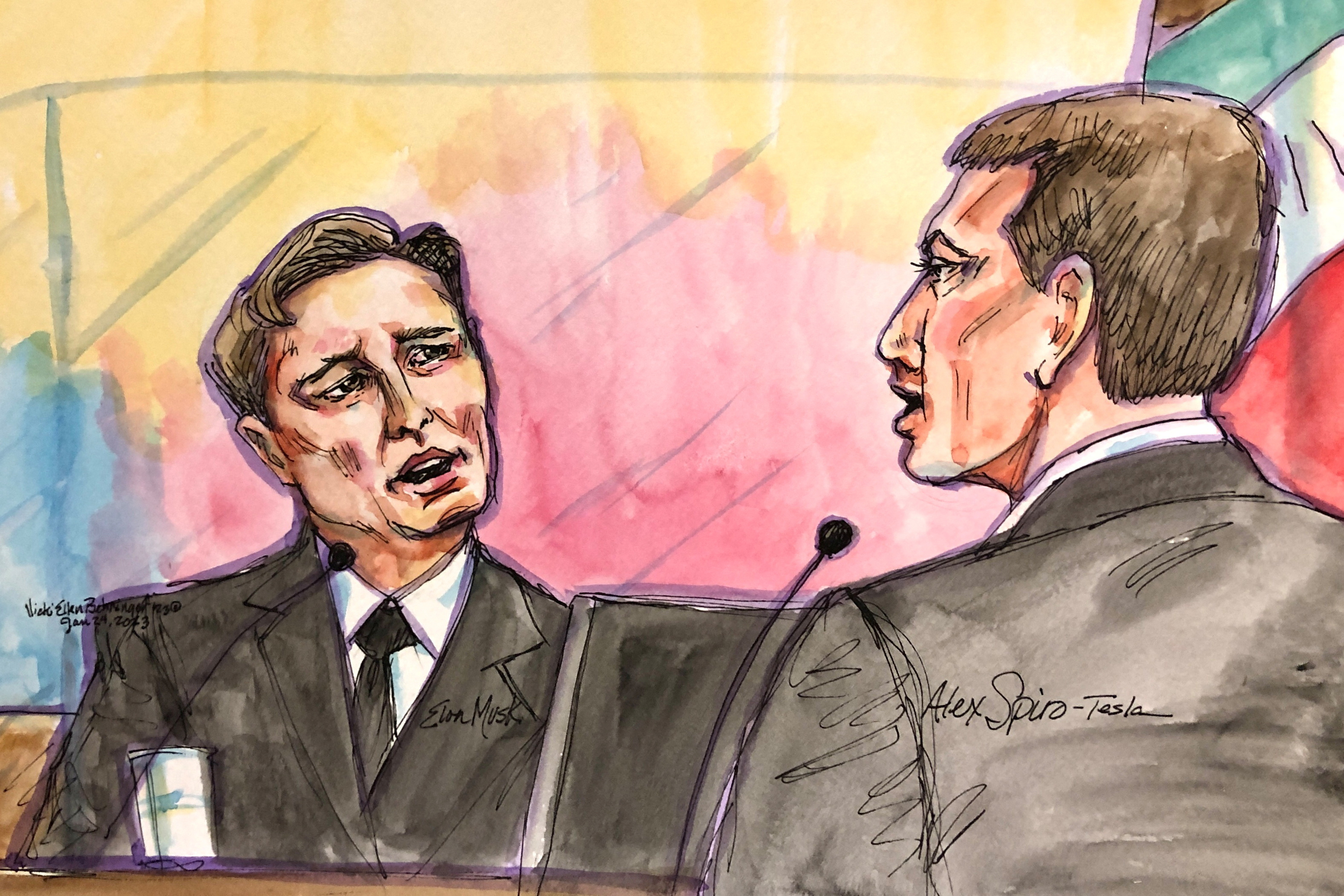
Musk testified on Tuesday in response to questions from his lawyer Alex Spiro that his tweet was intended to inform investors about his interest in taking Tesla private.

Musk said he had already discussed his interest with the Tesla board and Saudi Arabia’s sovereign wealth fund, the Public Investment Fund, and he feared it would leak to the media.

“I had no ill motive,” he said. “My intent here was to do the right thing for shareholders.”

The Saudi fund did not immediately respond to a Reuters request for comment.

Musk told the jury he decided to drop the idea of taking the company private after getting feedback from shareholders.

“After talking to a number of investors, especially the smaller investors, they said they would prefer a Tesla that remained public and I felt it was important to be responsive to their wishes,” Musk testified.

The jury was shown notes and documents from a board meeting in the days after the tweet at which Goldman Sachs (GS.N), which was working with Musk on the proposed deal, had indicated there would be more than enough funding to take the company private.

Goldman Sachs did not immediately reply to a request for comment.

But when questioned by Nicholas Porritt, a lawyer for the investors, Musk said he did not have binding agreements for financing from any interested party.

Musk repeatedly resisted the “yes” or “no” responses sought by Porritt about discussions over funding pledges by the Saudi fund, prompting the judge at one point to help with the questioning.

“Was a specific number discussed, not concepts?” Chen asked.

“Not a specific number,” Musk said.

On Monday, Musk said he could have financed the deal by selling his stake in SpaceX, the aerospace company where he is also chief executive officer. He has also said he believed financing had been pledged by Saudi representatives of the Public Investment Fund, before they backpedaled.

The trial is scheduled to continue into next week with testimony by Tesla board members and experts.

Related Galleries:

Tesla CEO Elon Musk is questioned by his attorney Alex Spiro during a securities-fraud trial at federal court in San Francisco, California, U.S., January 24, 2023 in this courtroom sketch. REUTERS/Vicki Behringer

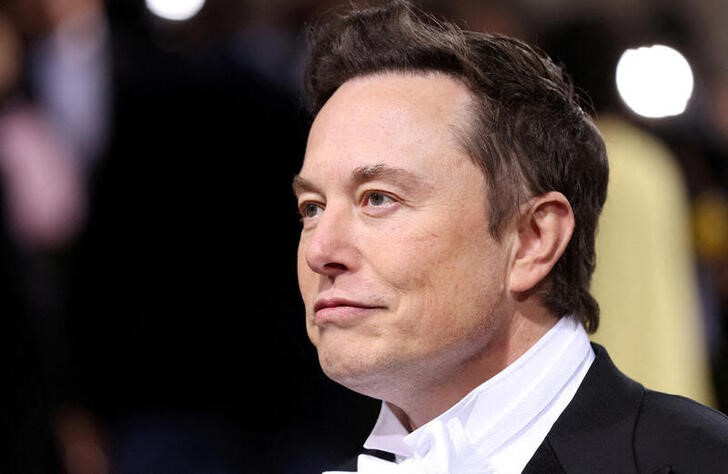
Elon Musk arrives at the In America: An Anthology of Fashion themed Met Gala at the Metropolitan Museum of Art in New York City, New York, U.S., May 2, 2022. REUTERS/Andrew Kelly//File Photo

Tesla CEO Elon Musk is questioned on re-direct by the investors’ attorney Nicholas Porritt before Judge Edward Chen as a screen displays one of Musk’s tweets, during a securities-fraud trial at federal court in San Francisco, California, U.S., January 24, 2023 in this courtroom sketch. REUTERS/Vicki Behringer

Tesla CEO Elon Musk is questioned on re-direct by the investors’ attorney Nicholas Porritt before Judge Edward Chen, during a securities-fraud trial at federal court in San Francisco, California, U.S., January 24, 2023 in this courtroom sketch. REUTERS/Vicki Behringer

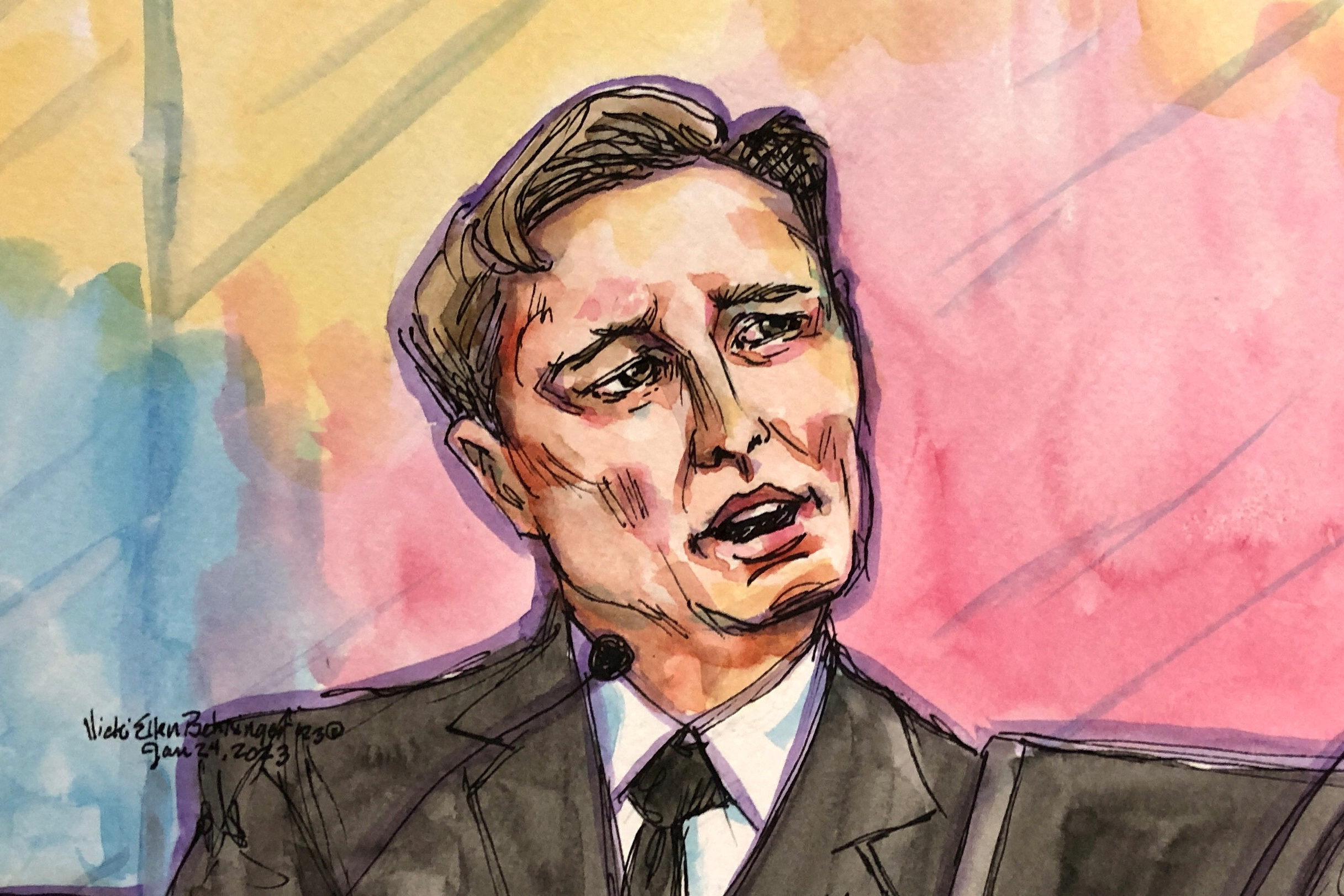
Tesla CEO Elon Musk is questioned by his attorney Alex Spiro during a securities-fraud trial at federal court in San Francisco, California, U.S., January 24, 2023 in this courtroom sketch. REUTERS/Vicki Behringer
Categories
Audio Sources - Full Text Articles

Rupert Murdoch scraps proposal to combine Fox and News Corp, explores sale of Move Inc

2023-01-24T22:54:25Z

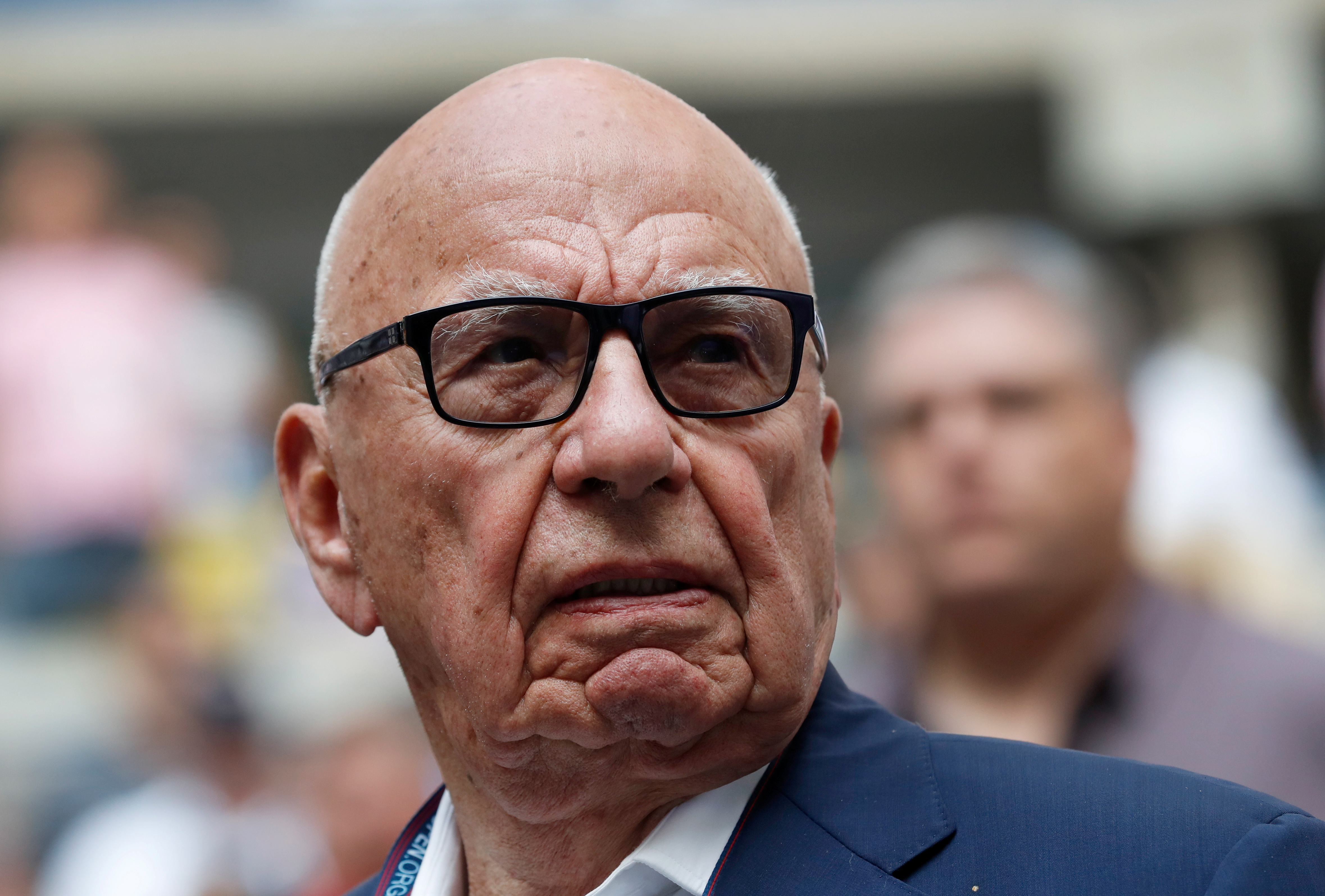
Tennis – US Open – Mens Final – New York, U.S. – September 10, 2017 – Rupert Murdoch, Chairman of Fox News Channel stands before Rafael Nadal of Spain plays against Kevin Anderson of South Africa. REUTERS/Mike Segar/File Photo

Rupert Murdoch withdrew a proposal to re-unite News Corp (NWSA.O) and Fox Corp , indicating that he and his son Lachlan Murdoch, Fox Corp’s head, determined that a combination of the companies was “not optimal” for shareholders, according to a regulatory filing on Tuesday.

News Corp is exploring the sale of its stake in Move Inc, the company that operates the Realtor.com website, sources say.

Those discussions played a role in the decision to end merger talks with Fox. The deal talks over the sale of Move Inc, would weaken the rationale for a merger with Fox, one source said.

Much of the synergies in a News Corp-Fox combination would have hinged on merging News Corp’s digital operations with Fox’s complimentary assets.

The Fox-News Corp deal would have reunited the media empire Murdoch split nearly a decade ago.

No offer was exchanged between News Corp and Fox Corp before merger deliberations were abandoned, according to sources familiar with the process, who said pushback from News Corp shareholders played a role in those plans being scrapped.

Murdoch proposed reuniting his media empire last fall, arguing that together, the publishing and entertainment companies he split apart in 2013 would give the combined company greater scale in news, live sports and information, sources said.

Several people close to the Murdochs viewed the effort to reunite the media companies as driven by the 91-year-old Murdoch’s succession planning to consolidate power behind Lachlan, a notion the company described as “absurd” in November.

Some of News Corp’s larger shareholders, including Independent Franchise Partners and T. Rowe Price (TROW.O) balked at the idea.

In a letter to News Corp employees on Tuesday, News Corp Chief Executive Robert Thomson said, “In my note to you in October, I said the Special Committee assessment would have no impact on our current operations; that was indeed the case, and remains so following today’s announcement.”

Categories
Audio Sources - Full Text Articles

Venezuela“s National Assembly approves first reading of bill to regulate NGOs

2023-01-24T22:56:52Z

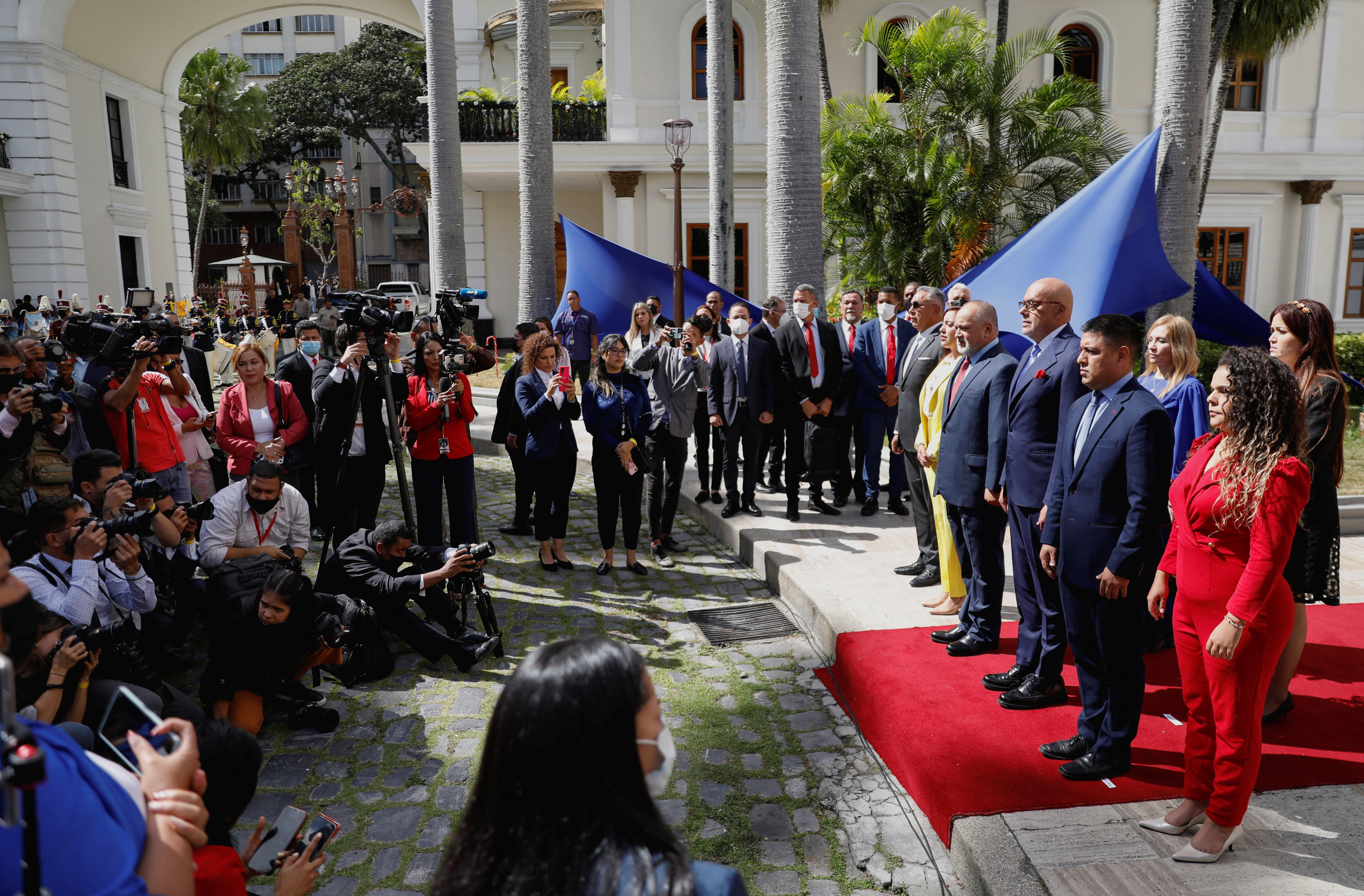
Venezuelan National Assembly’s President Jorge Rodriguez poses with National Assembly member and Vice President of Venezuela’s United Socialist Party (PSUV) Diosdado Cabello, First Vice president Pedro Infante and Second Vice president America Perez after the opening of the 2023 legislative period, in Caracas, Venezuela January 5, 2023. REUTERS/Leonardo Fernandez Viloria

Venezuela’s National Assembly on Tuesday passed a first reading of a bill to regulate and inspect non-governmental organizations (NGOs) in the South American country, which has caused uproar among activists.

If the bill is passed into law following a second reading – promised to come quickly by National Assembly President Jorge Rodriguez – advocacy groups fear it will silence Venezuela’s NGOs and stop them from carrying out their work with new threats and intimidation.

The legislative project is gathering pace while Venezuela waits for the UN High Commissioner for Human Rights, Volker Turk, to visit the country at the end of this week following his tour of the region.

“Criminalization advances. NGOs in Venezuela could be fined up to 200 Petros ($12,000) if they don’t comply with the new law,” local NGO the Venezuelan Action Education Program (Provea) said in a message on Twitter.

The Petro is a cryptocurrency which was launched by Venezuela’s government in February 2018.

The 15-page bill entitled “law for the control, regularization, activities and financing of non-governmental and related organizations” was presented by deputy Diosdado Cabello, who is second in command of Venezuela’s ruling party.

“If you are genuine and dedicated to social and humanitarian work, do you have anything to fear? You can register (and) the financing can be reviewed,” Cabello said at in a broadcast via state television.

“Those screaming are those who are up to no good,” he said, adding that some NGOs worked towards political goals and were backed by foreign governments.

More than 500 NGOs and foundations work in Venezuela, focused on topics including prisoner wellbeing, monitoring violence, investigating extrajudicial killings and reviewing economic indicators, among others.

If the bill is approved NGOs will have to declare their assets, balance sheets, financial statements and their “relationship with donations received, with full identification of the donors, indicating whether they are nationals or foreigners,” according to the bill’s text, published by the National Assembly.

These NGOs will be banned from “carrying out political activities, promoting or allowing actions that threaten national stability and the institutions of the republic,” among others, according to the text.

Categories
Audio Sources - Full Text Articles

Five years later, a gay Jewish student’s alleged killer is going to trial

FullSizeRender-2.jpg

The suspect in the 2018 murder of Blaze Bernstein, a Jewish and gay college student, will be in court Friday for the first time since a California judge ruled him competent to stand trial.

Bernstein’s family hopes the pre-trial hearing marks the beginning of the end of their wait for justice in a case that prosecutors will present as a crime of homophobia.

A University of Pennsylvania sophomore home for winter break, Bernstein, 19, was stabbed to death and buried in an Orange County park. His alleged killer, a high school classmate named Samuel Woodward, now 25, was active in a local neo-Nazi group, the Atomwaffen Division at the time of the murder.

The trial, in Orange County Superior Court, has been delayed several times because the original lead prosecutor was appointed to a judgeship and Woodward has cycled through legal representation. He’s now on his third public defender. Experts say that murder trials on the state level can often take years to go to trial.

But the wait has been excruciating for Jeanne Pepper, Bernstein’s mother, who has watched as bigotry continues to fester across the country and in her area. 

“It’s certainly not doing what the criminal justice system was set up to do,” Pepper said. “And that is not only to provide justice, but to prevent crime.”

Thursday’s hearing will likely result in another continuation, according to Bill Weinberg, Pepper’s attorney, to give Woodward’s new attorney time to prepare for a court trial, a date for which has not yet been set. Woodward, who pleaded not guilty in 2018, has also been charged with committing a hate crime.

After Bernstein’s body was found, his family converted a Facebook group that had served as a tip line into a place where members describe acts of kindness they’ve performed in Blaze’s honor.

Pepper, who said she does not know whether district attorney Todd Spitzer will ask her to testify during the trial, said the D.A.’s office has asked her to stay out of the press to avoid influencing potential jurors.

“The children that were 13 years old when this happened to Blaze are 18 now — they’re legal adults,” Pepper said in a phone interview earlier this month. “Are they ready to live in a world full of violence and hate? Have we done anything in the last five years to instill a sense of humanity in people? I don’t think so.”

The post Five years later, a gay Jewish student’s alleged killer is going to trial appeared first on The Forward.

Categories
Audio Sources - Full Text Articles

A new case before the Supreme Court could make Shabbat observance easier

scotus-facade-hero-scaled.jpg

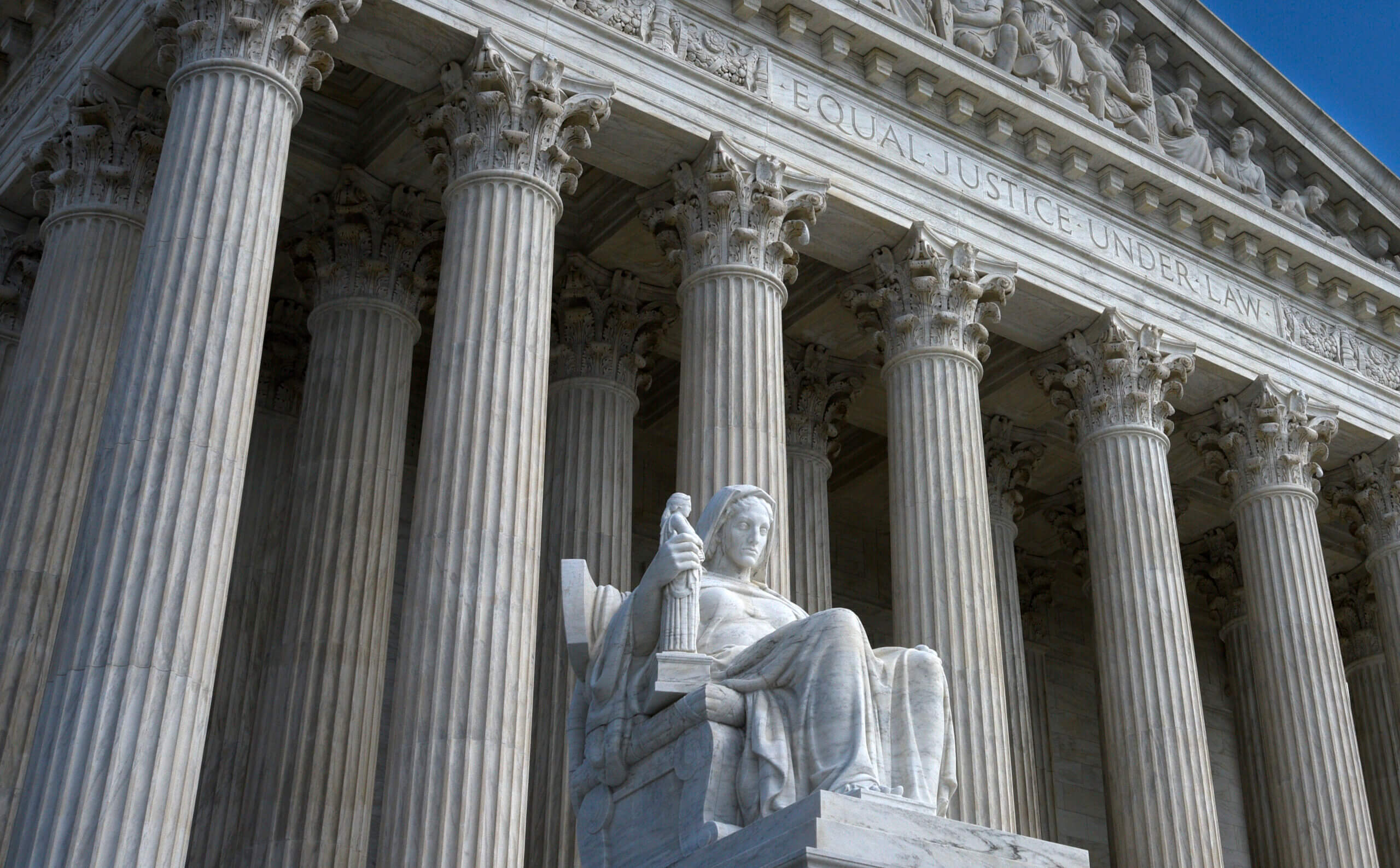
The Supreme Court announced earlier this month that it will hear yet another blockbuster church-state case, Groff v. DeJoy. At the core of the case lies a conundrum that has plagued federal law for nearly half a century: How far must employers go when providing religious accommodations?

Until now, the court’s interpretation has required little of employers. Unsurprisingly, this position has long roiled, among other religious minorities, American Jews, who often find themselves seeking accommodation in the workplace for religious practices such as observance of Shabbat. In taking the case, the Supreme Court has signaled its willingness to revisit its widely-criticized interpretation of existing protections, providing optimism to religious employees hoping to navigate the competing demands of faith and work.

Groff v. DeJoy is the latest case seeking to have the court expand the protections afforded religious employees in the workplace. It involves a U.S. Postal Service employee, Gerald Groff, who sought to have his Sunday observance of the Sabbath accommodated. The Postal Service ultimately refused to do so, arguing that doing so would have had a significant impact on its operations. A federal court of appeals found in favor of the Postal Service and the employee appealed to the Supreme Court.

So, under what circumstances should the Postal Service have to accommodate the Sabbath observances of its employee? Employers’ obligation to accommodate employees’ religious practice derives from Title VII of the 1964 Civil Rights Act. Because the original text of Title VII provided limited guidance in terms of what kind of protections it afforded employees from religious discrimination, Congress subsequently amended Title VII in order to make clear that employers were required to “reasonably accommodate” an employee’s “religious observance or practice” unless, and here is the kicker, providing an accommodation would present an “undue hardship.”

Like so many legal standards, “undue hardship” obscured more than illuminated. At what point can an employer claim that the hardship caused by a requested accommodation is “undue”? In a landmark 1977 case, TWA v. Hardison, the Supreme Court provided a surprising -— and dubious -— answer to the question. Like in Groff, Larry Hardison, the plaintiff and a member of the Worldwide Church of God, had requested to avoid work on his Sabbath -— for him, on Saturday -— in keeping with his religious commitments. But his employer claimed that they were unable to accommodate the request because doing so would have violated the seniority system that the company had negotiated with the representative union. The plaintiff, as a result, lost his job, and he sued TWA for failing to accommodate his religious practice.

The Court found in favor of TWA. In so doing, it famously provided the following gloss on how far employers were required to extend themselves when it came to religious accommodations: “To require TWA to bear more than a de minimis cost” — that is, a trivial or minor cost — “in order to give Hardison Saturdays off is an undue hardship.” Thus, even if TWA could have accommodated Hardison by, for example, paying overtime wages to another employee to cover the Saturday shifts, it was not required to do so. Such “additional costs” would constitute more than the “de minimis” investment required by Title VII.

But a straightforward reading of “undue hardship” certainly seems to require that employers exert more than the barest minimum effort, leading any number of critics to attack the court’s analysis in Hardison. In requiring so little of employers, detractors argue, it has left employees seeking religious accommodations from federal law with limited legal protections. For example, in rejecting Groff’s claims for religious accommodation, the federal court of appeals noted that everything from “negative impacts on the employer’s operations” to even “reduced employee morale” have served as sufficient justification for not providing a religious accommodation.

Among the problems with this prevailing standard is that those left most exposed by the court’s stingy interpretation of Title VII have been religious minorities, whose practices often don’t track the prevailing rhythms of the workplace. According to one brief filed before the Supreme Court in 2020, nearly half of Title VII accommodation appeals are filed by religious minorities, even though those minorities only account for 15% of the population.

Unsurprisingly, American Jews have been at the forefront of attempts to enhance the protections afforded religious employees in the workplace, as diluting employers’ obligation to accommodate religious practices in the workplace continues to present a significant obstacle to Shabbat observance. Already back in 1977, a broad coalition of Jewish organizations filed amicus briefs before the Supreme Court supporting the plaintiff in Hardison, including the National Jewish Commission on Law and Public Affairs, the Central Conference of American Rabbis, the American Jewish Committee and the Anti-Defamation League, among many others. In subsequent decades, a diverse range of Jewish organizations have supported the Workplace Religious Freedom Act, an ultimately unsuccessful attempt since 1999 to expand the religious accommodation protections afforded employees in the workplace.

Even today, the idea that employers need not expend more than de minimis resources and efforts to accommodate religious employees has generated criticism from across the political spectrum. It is one of the rare church-state issues where one can find at least some modicum of agreement in the pages of Fox News and Slate. It does, therefore, make one wonder why the court originally chose this interpretive route back in 1977.

Maybe the strongest explanation for the court’s decision comes from Justice Thurgood Marshall’s dissenting opinion in TWA v. Hardison. The lurking concern (one that Marshall emphatically rejected) was that recognizing a right in Title VII to religious accommodation granted too much protection, and too much power, to religious employees. That sort of power granted to religious employees to make demands on their employers might have consequences for other employees and therefore might trigger First Amendment concerns over establishing religion.

But as Marshall noted at the time, these concerns seem wildly exaggerated. The Supreme Court, on any number of occasions, has upheld laws accommodating religion so long as they don’t privilege those accommodations unequivocally and unyieldingly over all other interest. By contrast, the court has been clear for some time that “appropriately balanced” accommodations don’t trigger First Amendment concerns — a conclusion that has been further bolstered by more recent decisions that have further minimized the demands of separation of church and state.

Critics more recently have wondered what standard should replace the existing standard. Sure, we should require more of employers, but how much more? Some have worried that a standard that grants employees an unfettered right to religious accommodations would generate its own parade of horribles, such as a police officer’s refusal to protect an abortion clinic or a social worker’s demand to use Bible readings, as opposed to mental health counseling, to heal prison inmates.

But, in other contexts, the law has already found a pretty successful middle ground. When it comes to the accommodations required pursuant to the Americans with Disabilities Act, for example, undue hardship is interpreted to mean “significant difficulty or expense.” As a result, employers cannot satisfy their obligation by merely asserting that a requested accommodation imposes a “de minimis” burden; instead, they must extend themselves further in seeking to find an accommodation for those with disabilities, unless doing so will actually generate costs or difficulties that are significant. This standard has proven workable when it comes to accommodations under the ADA, providing good reason to think it could work as well in the context of religious accommodations in the workplace.

Time will tell as to which path the court ultimately chooses. For now, the court’s decision to hear Groff v. DeJoy holds out the hope of remedying a longstanding wrong and providing people of faith in the workplace with more expanded protections. Properly balanced, these sorts of accommodations will hopefully provide a middle ground, ensuring that the cost of entering the workforce need not be the discarding of one’s faith commitments.

To contact the author, email opinion@forward.com

The post A new case before the Supreme Court could make Shabbat observance easier appeared first on The Forward.

Categories
Audio Sources - Full Text Articles

Nike’s messy dispute over who gets credit for signing Michael Jordan is hitting the big screen in film starring Ben Affleck and Matt Damon

Ben Affleck and Matt Damon are bringing a movie about the disputed origins of Nike's deal with Michael Jordan to the big screen.Ben Affleck and Matt Damon while filming ‘Air,’ a movie that recounts how Nike signed Jordan.

Bauer Griffin/Bellocqimages/GC Images/Getty Images

  • “Air” will tell the story of how Nike convinced Michael Jordan to sign with the company. 
  • The central players have given differing accounts of who should get the credit.
  • The movie is set for a theatrical release on April 5, followed by a release on Prime Video.

Michael Jordan’s Nike deal is the gold standard for athletic endorsements. There’s no debate. 

But there’s a lot of debate about who should get the credit for it.

That debate will get renewed attention in April when Ben Affleck and Matt Damon release “Air,” a movie that recounts how Nike signed Jordan. Don’t expect the movie to settle the debate, but get ready for a refresher course in the staggering competitiveness of the industry’s pioneers and a reminder that Nike wasn’t always a goliath. 

The movie stars Damon as Nike executive Sonny Vaccaro and Affleck as Nike cofounder Phil Knight, two sportswear icons who have differing views on how the Jordan deal materialized. Affleck also directed the film.

“The signing of Michael Jordan, yeah, success has a thousand fathers, and failure is an orphan,” Knight told USA Today in 2015. “A lot of people want to take credit for signing Michael Jordan, most obviously Sonny Vaccaro.”

“Everyone’s trying to rewrite history,” Vaccaro responded in the same article. “It goes beyond Jordan. I am the savior of Nike.”

USA Today in 2015 characterized Jordan as “slightly amused” by the debate. His performance on the court, after all, gave the deal its gilded value, not a handful of meals, meetings, and phone calls.

“It’s a lot of people who think they created the success of the Jordan Brand, which is kind of ironic in some ways,” Jordan said. 

The “Air” script was written by Alex Convery, named a Variety “screenwriter to watch.” In October, Variety described the movie as a “witty boardroom procedural zeroing in on a few fateful days in the life of Sonny Vaccaro.” 

“Being able to portray this now-billion-dollar company as an underdog, and Michael as a sort of unknown quantity, those two things in parallel really interested me,” Convery told Variety.

It’s unclear if Vaccaro spoke with Knight, Vaccaro, or Jordan or if he relied on existing sources, including “Sole Man,” an ESPN documentary about Vaccaro. Several books and news stories also have recounted how the Jordan deal came about, including parts of “Just do it,” “Swoosh,” and a sweeping 1992 story in the Washington Post. 

The Post story, like the others, outlines the underdog narrative the movie will likely highlight. 

While it was one of the defining corporate success stories of the 1970s, in the early 1980s, Nike was flailing, having whiffed on the aerobics boom. 

“Orwell was right: 1984 was a tough year,” Knight wrote in that year’s annual shareholder report. 

That same year Nike had a rare round of layoffs and Fortune roasted it for its woeful performance. 

“Nike loses its footing on the fast track,” reads the headline of a November 1984 Fortune article. “Earnings are dismal, management is shuffling, and many wonder if founder Philip Knight has run out of breath.” 

Knight conceded to Fortune that selling the company wasn’t out of the question.

But that’s also when Nike signed Jordan. Landing him wasn’t a sure thing. While it seems almost automatic today given Nike’s dominance, that wasn’t the case in 1984. 

Converse had Julius Erving, Magic Johnson, and Larry Bird. New Balance had James Worthy. 

But somehow, Nike convinced Jordan to take a chance on a company whose sales had slowed to a 6% gain in 1984, after averaging 77% annually over the previous 10 years. 

The cast of “Air” includes Jason Bateman as Rob Strasser, Matthew Maher as Peter Moore, and Marlon Wayans as George Raveling, three additional Nike executives who have gotten some credit for the Jordan deal. 

Knight told USA Today that Vaccaro “helped” with the deal, but Strasser and Moore were the “MVPs.” Jordan gave Raveling credit. 

Knight fired Vaccaro in 1991. Strasser and Knight never reconciled after Strasser went to work for Adidas. In his memoir, Knight called it “an intolerable betrayal.”

Regardless of the movie’s spin on events, the Jordan deal was a pivotal moment for Nike.

Nike did $130 million in sales of Jordan’s signature shoe in its inaugural year, according to the Washington Post, millions more than expected. In fact, Nike wanted an out clause in Jordan’s deal if it couldn’t sell $3 million in product, according to David Falk, Jordan’s longtime agent. 

By 1988, riding the success of Jordan and a suite of new Nike Air products, the company was at the start of a six-year run of double-digit sales increases. Within six years, it more than doubled in size. It also regained the No. 1 position in the industry from Reebok, a lead that it’s never relinquished. 

Jordan played his last NBA game in 2003, but his signature shoes remain wildly popular with collectors and even casual sneaker fans. 

The Jordan brand did $5.1 billion in sales in Nike’s most recent fiscal year. Nike had $46.7 billion in sales in its most recent fiscal year, making it by far the biggest company in the industry. 
 

Read the original article on Business Insider
Categories
Audio Sources - Full Text Articles

How M&Ms went from a wartime treat to playing a starring role in the culture wars

Customers pick M&Ms from dispensers at a storeM&Ms have been popular among consumers since World War II. Now, the brand is making Maya Rudolph its new spokesperson.

Spencer Platt/Getty Images

  • M&Ms is making Maya Rudolph its spokesperson, sidelining its talking candy mascots.
  • The “spokescandies” have been the face of the candy brand for almost three decades.
  • Here’s a history of M&Ms, from the candy’s origins in a European war.

A big change came to M&Ms on Monday: Actress and former SNL cast member Maya Rudolph is replacing the brand’s crew of animated chocolate candies, which it calls “spokescandies,” as its face. 

Rudolph will be “chief of fun” at M&Ms, the brand tweeted on Monday. In a separate tweet earlier in the day, the brand said she would become its spokesperson, with the spokescandies going on “an indefinite pause.” Right-wing commentators had previously criticized a change in shoe style that M&Ms made to one of the anthropomorphic candies last year. 

M&Ms is among the oldest candy brands in the US, and its talking candies are relatively recent additions. Here’s a brief history of the round, colorful candies.

Forrest Mars got the idea for M&Ms during the Spanish Civil War in the 1930s.m&ms

Vincent Kessler/Reuters

Forrest Mars Sr., who managed the Mars candy company with his brother, got the idea for M&Ms while working in Europe in the 1930s. At the time, he was overseeing production of Mars candy bars as part of army rations, according to the History Channel.

Mars noticed soldiers fighting in the Spanish Civil War liked to eat chocolate pieces coated in a hard sugar shell because they didn’t melt easily at high temperatures. When he returned to the US, he replicated the idea, obtaining patents for a production process.

Mars also sourced chocolate for his product with the help of Bruce Murrie, who was the son of William Murrie, a Hershey executive. The candy took its name from both men — “M&M” stands for “Mars and Murrie.”

M&Ms became famous after Mars sold the candies to the US military during World War II.World War IIGeneral Dwight D. Eisenhower speaks to troops in 1944.

AP

Initially, Mars sold M&Ms only to the Army. As the US entered World War II, it needed a convenient, heat-resistant candy that would travel well, and M&Ms fit the bill. 

Mars’ exclusive deal with the US Army had another benefit. After the war ended and soldiers returned home, they were well acquainted with the candy and helped make it a popular snack in the postwar years.

Mars started stamping its candies with the letter M to distinguish them from imitators.M&Ms

Charlie Riedel/AP

The late 1940s marked a boom time for lots of packaged foods. Other companies even copied the sugar coating and colors that M&Ms had popularized, according to Mars.

In 1950, Mars started stamping the letter M on its candies, the company says on a website tracing the history of M&Ms. A marketing campaign at the time told consumers to “look for the M on every piece” and avoid copycat products without it.

M&Ms were the first candy in space in 1981, and became staples among NASA’s astronauts as well as on the International Space Station.Astronaut Loren Shriver eats M&Ms on the space shuttle Atlantis while in orbit around the Earth, which is visible through a window behind him.Astronaut Loren Shriver eats M&Ms on the space shuttle Atlantis in 1992.

HUM Images/Universal Images Group via Getty Images

M&Ms first went to space aboard the space shuttle Columbia in 1981, according to Mars. They have since been a common option for astronauts in orbit due to their heat-resistant shell. 

NASA’s space shuttle program ended in 2011, but M&Ms are still popular among astronauts and others at the International Space Station. In orbit, they’re known simply as “candy coated chocolates” since NASA doesn’t use branded products, according to the Smithsonian Air and Space Museum.

M&Ms said no to being featured in the hit 1982 movie “E.T. the Extra-Terrestrial,” giving rival Reese’s Pieces a sweet opportunity.E.T. and Henry Thomas as Elliott in a red hoodie“E.T. the Extra-Terrestrial.”

Universal

The writers behind E.T.’s script originally wanted Elliot, the movie’s main human character, to attract E.T. to his house using a trail of M&Ms, according to Culinary Lore. But Mars declined, leading the movie to instead use rival Reese’s Pieces, manufactured by Hershey. 

The product placement led to a 65% sales increase in sales of Reese’s Pieces, Entertainment Tonight reported in June. 

Sales slowed in the 90s, but M&Ms got a lift thanks to its crew of walking, talking mascots.M&MsThere are now six M&Ms characters with the addition of Purple.

Mars Wrigley

By the mid-1990s, M&Ms were ubiquitous, but they didn’t stand out from other sweets. “They’d become just candy,” Susan Credle, then creative director at BBDO, an advertising agency, told Insider in 2016. The colorful chocolate pieces were “an aisle store candy brand versus an icon brand.”

Credle and others at BBDO came up with a marketing strategy that changed that. They created four anthropomorphic M&Ms, each with different personalities, to represent the brand.

The initial crew included Red, Yellow, Blue, and Green. M&Ms later added Brown, Orange, and Purple candies to the mix.

M&Ms unwittingly entered the culture wars in 2022 with a simple change in footwear.Two men and three children pose with someone dressed in a green M&M costume at a Halloween party in Newark, New Jersey on October 27, 2016.Taylor Hall of the New Jersey Devils, left, and Basketball star Randy Foye, right, celebrate Halloween with M&M’s, Thursday, October 27, 2016, in Newark, N.J.

Stuart Ramson/Invision for M&M’S/AP Images

M&Ms changed the footwear that its two female spokescandies wore in early 2022. 

The green M&M, for instance, started sporting sneakers instead of the high-heeled go-go boots she had worn since the spokescandies debuted in the 1990s. The brown M&M, meanwhile, switched to heels lower than her previous pair.

The changes were meant to reflect changing expectations in society, Anton Vincent, president of Mars Wrigley North America, told CNN at the time. The female M&Ms became more “representative of the consumer,” he said.

But conservative pundits such as Tucker Carlson criticized M&Ms’ decision to switch the shoes that both female M&Ms wore. Carlson said that the talking chocolate candies were “less sexy” after the change.

Now, M&Ms is turning to Maya Rudolph as its new spokesperson, moving away from its spokescandies.maya rudolph

Monica Schipper/Getty Images for Saks Fifth Avenue

M&Ms announced on Monday that Maya Rudolph would replace the spokescandies as the face of the brand.

M&Ms acknowledged conservative outrage over last year’s shoe change as the reason for hitting pause on the spokescandies in a tweet. “In the last year, we’ve made some changes to our beloved spokescandies,” the statement said. “We weren’t sure if anyone would even notice. And we definitely didn’t think it would break the internet.”

“But now we get it — even a candy’s shoes can be polarizing,” it continued.

Read the original article on Business Insider
WP Radio
WP Radio
OFFLINE LIVE