Categories
Audio Sources - Full Text Articles

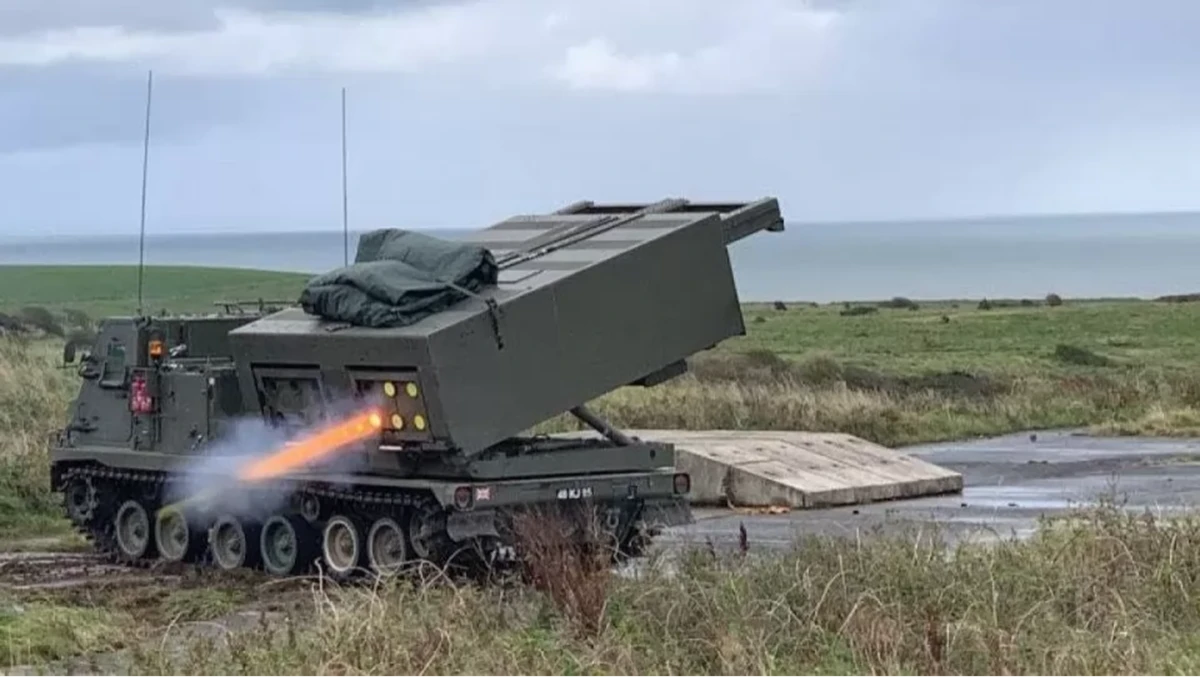
Meet the Beast: Ukraine’s Elite M270 Rocket Brigade | Article

Russia’s war in Ukraine is predominantly an artillery war, with 90 percent of casualties prompted by cannon, howitzer or rocket fire. Victories and defeats – on both equally sides – are largely identified by the excess weight and precision of steel and explosives dropped on prime of the enemy. By most steps, the war’s solitary most potent weapon is the U.S.-created M270 rocket artillery system.

 In a sequence of unique interviews with Kyiv Submit for the duration of January fight operations in the Bakhmut sector, soldiers and officers from just one of Ukraine’s most secretive artillery units, the 107th Rocket Artillery Brigade, explain their encounter studying to operate the M270, and applying its precision-guided rockets to strike Russian military troop concentrations, headquarters and ammo dumps.

 “We understand this is a major accountability, and that we have an critical function to enjoy in the war,” commander Lieutenant Colonel Dmitry Suprunyuk* claims. “Every mission we have out can have a decisive influence, and for lots of motives we have no suitable to make a miscalculation.”

 As the job interview can take spot, Suprunyuk and other Armed Forces of Ukraine (AFU) services staff are in a clandestine place in a forest in the Bakhmut sector. Most soldiers continue to be out of sight in underground hides lined with pine needles. Meanwhile, offer cars occur and go immediately, cellular phones are turned off, and the Starlink method is in default standby mode. Men in the communications bunker trade messages about refueling and rearming following the morning’s mission – a strike versus a creating close to Soledar, perhaps that contains a large amount of Russian infantry.

8c081c98ace4f3634a5d127a5884e6b6.jpgSoldiers from Ukraine’s 107th Rocket Artillery Brigade stroll previous a well-camouflaged M270 program in a forest area in the Donbas area. Photograph credit score: Phil Ittner.

Officers at the 107th convey to Kyiv Put up how the early morning strike “went well” but facts are categorised. Crew associates in line to be sent out on the subsequent M270 start mission are nearly anything but jubilant – just sustaining equipment and ready for their flip.

 “Actually, our do the job is incredibly schedule and systematic. We get some target coordinates, we push out to a selected launch web site, we hearth our rockets and pack up speedy, and then then we occur again or go someplace else,” operator Valery Tomashenko* suggests.

 The exact selection of M270s operated by Ukraine is a armed service key. In accordance to open sources, the depend is most likely 13 in total across the complete AFU, with systems donated by Britain, France and Germany.

 An M270 operator hardly ever sleeps in the similar spot for any duration of time, Tomashenko claims, simply because military commanders keep useful weapons consistently on the go and with any luck , out of sight of Russian reconnaissance.

 “We are primarily based at various places and we at times go to do the job in the course of the working day and occasionally during the evening, but the get the job done by itself is very substantially the exact same all the time.” he claims.

 A web page designer mobilized at the outset of the war, Tomashenko was 1 of a number of dozen customers of the 107th picked in May perhaps to journey to Britain to find out how to work the M270. The equipment is primarily a squat, tracked armored auto that carries just two times the amount of lethal, very long-array rockets as the additional well known HIMARS.

 Evolution of the M270

 The M270 is a Cold War weapon to which fashionable technology has presented a new lease of daily life. Originally, the plan of the M270 was to fire a salvo of unguided rockets carrying anti-armor submunitions in the normal course of a massed Soviet or North Korean tank column. Warheads would scatter hundreds of parachute-dropped explosives, ensuing in any automobile (or really significantly just about anything else) in a single sq. kilometer beneath the rain of mini-bombs would be blasted.

 Rapidly ahead to the 2000s and into the U.S. quagmire in Afghanistan, and Pentagon planners comprehended that the U.S. Army’s opponent of the time – Taliban insurgents – experienced no tanks, and that blasting full map grid squares did minor to earn Afghan hearts and minds.

 The U.S. arms conglomerate Lockheed-Martin, funded by the generosity of the U.S. taxpayer arrived up with a alternative: The Guided Numerous Launch Rocket Method (GMLRS), a 227mm rocket using GPS steerage. The thought, at the time, was to prevent collateral injury.

 Quickly forward yet another ten years to nowadays. In Ukrainian hands, the GMLRS presents Suprunyuk and his guys the capacity to pick an personal setting up or logistics base 80 kilometers away, and have a sensible probability of flying a rocket carrying 91 kilograms of large explosives by way of a chosen window. In July and August past calendar year, the AFU applied dozens of GMLRS missiles to pound and inevitably demolish a 5 meter-wide part of the Antonivskyi Bridge more than the Dnipro River, cutting a critical logistics bottleneck for Russian troops in the then-occupied metropolis of Kherson. The Russians abandoned Kherson in early November.

 U.S. and European media report that a one M270 missile, after transported all the way from Lockheed’s manufacturing facility to a forest in japanese Ukraine, fees in between $4-500,000. Suprunyuk suggests that when he and his commanders assessment drone reconnaissance intelligence, a significant dilemma he must solution is not only irrespective of whether it is safe to deliver males and equipment out to a firing position, but whether or not their goal is worth a half million pounds. The proximity of civilian properties is another issue, he mentioned.

  Soldiers and officers notify Kyiv Put up that by the time the AFU large command picked them to trade in Soviet-era Smerches for U.S.-made M270s, the 107th was comprehensively practiced at launching very long variety rocket strikes, and that adaptation to the NATO weapons process was fairly straightforward.

05516520817416c1a4cfac657af01da6.jpg

Ukrainian troopers coach with the U.S.-produced M270 in spring 2022. Source: Ukraine Ministry of Protection.

Tomashenko clarifies how expert British instructors and the system’s rational command lay-out has produced crossover coaching simple. Suprunyuk praises the weapon’s designers.

 “Really, the variance among the M270 and Smerch is night time and working day,” Suprunyuk factors out. “It’s like comparing a Zhiguli (a smaller Soviet-period auto well-known for its very poor mechanical high-quality and an uncomfortable journey) to a Lamborghini.”

 In accordance to Ukrainian and Russian data platforms, on Jan. 16, the working day Kyiv Article frequented the 107th, a precision guided, extensive-vary AFU missile strike levelled a making in the western outskirts of the town of Soledar, near Bakhmut.

 Russian casualties reportedly exceeded 20 staff, including men inside the developing from the mercenary team Wagner. It was not attainable to figure out conclusively whether an M270 from the 107th was liable for the strike.

 *Interviewees asked Kyiv Write-up to use pseudonyms to protect their identities. All through conferences with the 107th Brigade, Kyiv Submit reporters were being accompanied by an AFU media escort. The officer questioned Kyiv Post not to publish the device location, range of M270s observed, and quantity of soldiers in the device.

77238e601b6342d89b5eae5a101ea5f1.jpg

Caption to earlier mentioned image: Ukrainian seems to be on throughout teaching in Bertain on the M270 rocket artillery program, in June. Display screen get from Sky News Tv, posted by Ukraine’s Ministry of Protection

455a9e341c122d1c61abfe6d921cc6f5.jpg

Soldier from Ukraine’s 107th Rocket Artillery Brigade looks at a effectively-camoflaged M270 rocket artilery program in a forest in the Donbas location. Jan.16 photograph by Phil Ittner.


Resource connection

The post Meet the Beast: Ukraine’s Elite M270 Rocket Brigade | Article appeared first on Ukraine Intelligence.

Categories
Audio Sources - Full Text Articles

Dollar struggles, shares buoyant as business activity data set the mood

2023-01-24T10:23:11Z

U.S. Dollar banknote is seen in this illustration taken July 17, 2022. REUTERS/Dado Ruvic/Illustration

The euro held at a nine-month top against the dollar and global equities bobbed at multi-month highs on Tuesday after reasonable European business activity data and a slew of corporate earnings kept risk appetite buoyant.

Euro zone business activity made a surprise return to growth in January, the latest sign that the downturn in the bloc may not be as deep as feared, according to a survey.

S&P Global’s flash Composite Purchasing Managers’ Index (PMI), climbed to 50.2 this month from 49.3 in December, the first time it has been above the 50 mark since June.

Britain’s flash Composite Purchasing Managers’ Index (PMI) however dropped to 47.8 in January from 49.0 in December, the lowest since January 2021.

MSCI’s world index (.MIAPJ0000PUS) was up 0.1% and touched a fresh seven month high, as Europe’s broad Stoxx 600 index (.STOXX) held steady after shares gained in the U.S. overnight, and parts of Asia earlier in the day.

The MSCI world index is up about 7% since the start of this year, thanks to hopes central banks globally are nearing the end of their interest rate rising programme as well as optimism induced by economic data.

Britain’s FTSE 100 (.FTSE) was down 0.4%, underperforming the broader European market, and domestically-focussed mid caps (.FTMC) gave up early gains after the PMI data to trade near flat.

Most markets in Asia were closed for Lunar New Year for a second day, but Japan’s Nikkei (.N225) closed at a more than one-month high, recovering all its losses since the Bank of Japan’s surprise policy tweak last month. Australian shares also rallied. (.AXJO)

“We’re still pretty Fed-focussed right now, with the meeting coming up next week. The market is of the extremely optimistic view that there will be two rate cuts by the end of the year and I think that’s what’s keeping sentiment buoyed at the moment,” said Fiona Cincotta, an analyst at Cityindex.

“We’re watching U.S. PMIs today,” she added.

The Federal Reserve’s rate setting committee begins its two-day meeting on Feb 1. Inflation has started to come down in recent months, and signs the U.S. economy is slowing could lead the Fed to start thinking about its next steps after a slew of rate hikes last year.

The day’s heavyweight on the corporate earnings front is Microsoft which will report its earnings after market close.

Results both in the Unted States and Europe will help guide investors about whether the renewed optimism about the economy that has buoyed equities in recent weeks is grounded in reality.

Those hopes of a better economic outlook in Europe, have also affected currency markets, and, along with suggestions the U.S. Federal Reserve is slowing rate hikes more quickly than European Central Bank, have continued to support the euro and other neighbouring currencies.

The European common currency was steady at $1.0865, just off its nine-month high of $1.0927 hit a day before. Sterling turned negative after the British data and lost 0.25% to $1.234, retreating from Monday’s seven-month high.

That left the dollar index at 102.04 , around a six-month low.

Government bonds globally gained a little with the benchmark U.S. 10 year Treasury yield down 3 basis points to 3.4913% . Germany’s 10 year yield was down 1 basis point to 2.18%.

Yields move inversely to prices.

Oil largely held onto recent gains from optimism around China’s reopening. Brent crude was down 0.1% at $88.1, just off Monday’s near eight-week high of $89.09.

Gold was up 0.2%, having earlier hit a new nine-month top, as the precious metal continued to be helped by the weaker dollar.

Categories
Audio Sources - Full Text Articles

Shiffrin leads 1st run of GS as she chases record win No. 83

SAN VIGILIO DI MAREBBE, Italy (AP) — Mikaela Shiffrin holds a slim lead during the first run of a giant slalom and is in position for a record-breaking 83rd World Cup win.

Shiffrin currently shares the women’s record of 82 wins with former American teammate Lindsey Vonn.

Shiffrin stood 0.13 seconds ahead of world champion Lara Gut-Behrami and 0.27 ahead of home favorite Federica Brignone at the Kronplatz resort in San Vigilio on Tuesday.

Petra Vlhova, Shiffrin’s usual rival, was 1.01 back, with Olympic champion Sara Hector nearly two seconds behind.

Lower-ranked skiers were still coming down the course.

The second run starts at 1:30 p.m.

___

More AP skiing: https://apnews.com/hub/skiing and https://twitter.com/AP_Sports

Categories
Audio Sources - Full Text Articles

Grasslands institute gets $495K grant for Cumberland Plateau

CLARKSVILLE, Tenn. (AP) — The Southeastern Grasslands Institute is developing a grasslands conservation plan for the Cumberland Plateau in Alabama, Georgia, Kentucky and Tennessee, thanks to a $495,000 federal grant.

The money from the National Fish and Wildlife Foundation will help SGI prioritize habitat needs for at least 185 species of conservation concern, according to a news release from the institute at Austin Peay State University. Those species include at least 125 grassland plants and at least 60 animals that make grasslands their homes.

Dwayne Estes, the institute’s co-founder and executive director, said the 14-million-acre (5.6-million-hectare) Cumberland Plateau has a rich history of forest conservation.

“Sadly, sparsely wooded, grassy ecosystems of the Plateau have received comparatively little focus even though they covered as much as 40% of the Plateau landscape and support the overwhelming majority of species of conservation concern,” Estes said.

Many native grasslands have disappeared over the past century due to fire suppression and the demise of large grazing animals, according to the release.

Categories
Audio Sources - Full Text Articles

FAO: Rising prices, food insecurity add to ranks of hungry

BANGKOK (AP) — Growing numbers of people in Asia lack enough to eat as food insecurity rises with higher prices and worsening poverty, according to a report released Tuesday by the Food and Agricultural Organization and other United Nations agencies.

Nearly a half-billion people, more than eight in 10 of them in South Asia, were undernourished in 2021 and more than 1 billion faced moderate to severe food insecurity, the report said. For the world, the prevalence of food insecurity rose to more than 29% in 2021 from 21% in 2014.

The COVID-19 pandemic was a huge setback, causing mass job losses and disruptions, and the war in Ukraine has pushed up prices for food, energy and fertilizer, putting an adequate diet out of the reach of many millions, it said.

The report is the fifth annual stocktaking on food insecurity and hunger by U.N. agencies including the FAO, UNICEF, World Health Organization and World Food Program.

Over those years, progress toward alleviating hunger and malnutrition has stalled and then backslid as growing numbers of people lost the wherewithal to get enough to eat. The prevalence of undernourishment as measured by the U.N. agencies was 9.1% in 2021, better than the 14.3% in 2000 but up slightly from 2020.

Such figures show that “the slowdown in the fight against hunger continues,” said the report, which also highlights the growing food insecurity faced by people who have moved into cities, where they have less easy access to affordable food.

“Reforming our agrifood systems to produce nutritious food and ensure equitable access to healthy diets is critical,” it said.

The FAO’s Food Price Index has risen in the past several years, hitting a record in March 2022. It fell back as commodity prices declined somewhat later in the year but is still 28% above the 2020 level.

The Asia-Pacific region imports nearly $2 trillion of food a year. Rising prices for basics like rice, wheat and oil hit the poor the hardest.

It’s part of what the U.N. agencies call the “5F” crisis of not enough food, feed, fertilizer, fuel and financing. The conflict in Ukraine has dealt a heavy blow in many countries that depended on the region for wheat, edible oils and fertilizers.

Nearly 2 billion people — or almost 45% of people living in Asia — cannot afford healthy diets, contributing to problems with anemia and obesity as well as hunger.

Underscoring the impact of the pandemic, which hit vulnerable workers in the tourism and manufacturing industries especially hard, nearly one in 10 Thais were undernourished in 2019-2021, according to data in the report — a higher proportion than several years earlier and also than in many other Southeast Asian countries where average incomes are much lower. Poverty already had risen by 2.6% between 2015-2018, according to World Bank data.

“An increase in poverty and in undernourishment would go together,” Sridhar Dharmapuri, the FAO’s author for the report released Tuesday, said in explaining the situation.

Unhealthy diets and inadequate food are also compromising future health and productivity, as they cause children to suffer from stunting or wasting and make them more susceptible to illness. The report says nearly a quarter of children in the Asia-Pacific are affected by stunting, or small height for their ages.

Some other details from the report:

— In Afghanistan, 70% of people are facing moderate or severe food insecurity as the economy has collapsed after the Taliban seized power in August 2021, driving millions into poverty and hunger as foreign aid stopped almost overnight.

— In Cambodia, half of the population faces moderate or severe food insecurity.

— One-third of women in Asia aged 15-49 are affected by anemia, which causes fatigue and, in its most severe forms, can cause lung and heart damage.

Categories
Audio Sources - Full Text Articles

Zelenksy on dismissal of deputy minister: ‘There will be no return to the way things used to be’ news.yahoo.com/zelenksy-dismi…

Zelenksy on dismissal of deputy minister: ‘There will be no return to the way things used to be’ news.yahoo.com/zelenksy-dismi…
Categories
Audio Sources - Full Text Articles

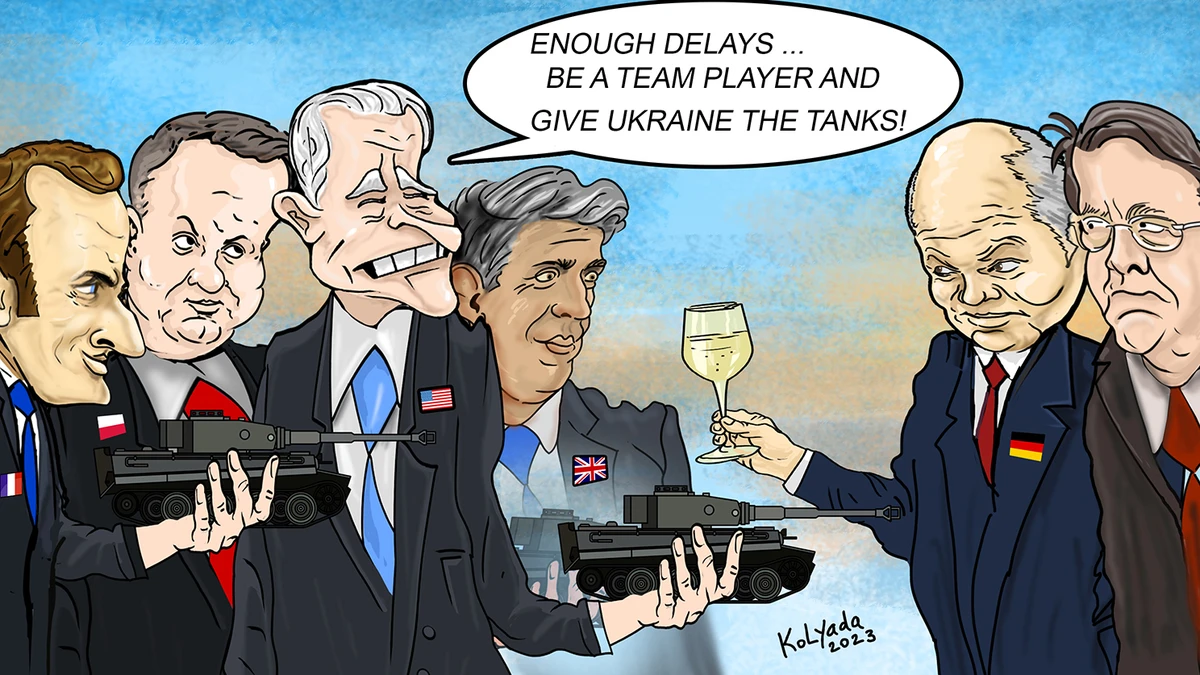
Germany Still Letting Its Entire Side Down.

a8f22688a08a42ad7be6c625953a3443.jpg?w=1

Serhiy Kolyada on Germany testing the patience of it allies as they seek to expedite the delivery of crucial military help for Ukraine.

Categories
Audio Sources - Full Text Articles

Meet the Beast: Ukraine’s Elite M270 Rocket Brigade

4d10b8133ee084e4dfcad44fafeedc94.png?w=1

A mission report on the “baddest” artillery on the battlefield.

Categories
Selected Articles

Russia’s War Breathes New Life Into a Cold War Symbol

00ukraine-rfe-01-qfhc-facebookJumbo.jpg

Radio Free Europe/Radio Liberty, a news network originally set up as a C.I.A. operation early in the Cold War, is experiencing a renaissance and making a case for its independence.

  • Send any friend a story

    As a subscriber, you have 10 gift articles to give each month. Anyone can read what you share.

    Give this articleGive this articleGive this article
A Radio Free Europe/Radio Liberty — or RFE/RL — broadcast last week in Prague. Until 1971, Radio Free Europe was a covert U.S. intelligence operation seeking to penetrate the Iron Curtain and foment anti-communist dissent.

A Radio Free Europe/Radio Liberty — or RFE/RL — broadcast last week in Prague. Until 1971, Radio Free Europe was a covert U.S. intelligence operation seeking to penetrate the Iron Curtain and foment anti-communist dissent.Credit…Akos Stiller for The New York Times

Jan. 24, 2023, 12:01 a.m. ET

Anyone who didn’t live through the Cold War might find the Portuguese Netflix spy thriller series “Glória” improbable.

Deep in the Portuguese countryside, in the tiny village of Glória, a complex radio transmission operation run by Portuguese and American engineers springs up in the 1950s, a branch of a Munich-based news organization called Radio Free Europe.

It broadcasts news and anti-communist messages in languages of various Soviet republics, but, in the show and in real life, that’s only part of its early mission: It’s also a C.I.A. front.

Until 1971, Radio Free Europe was a covert U.S. intelligence operation seeking to penetrate the Iron Curtain and foment anti-communist dissent in what was then Czechoslovakia, in Poland and elsewhere.

The C.I.A. stopped funding Radio Free Europe when its operation was revealed. Since then, the news organization has been funded by the United States Congress and has had editorial independence.

Radio Free Europe/Radio Liberty — or RFE/RL — now barely resembles its historical predecessor, as dramatized in “Glória,” but it is still very much pursuing its mission of fact-based journalism by local reporters, in local languages for local audiences across the former Soviet sphere and Central Asia.

The organization is now based in Prague instead of Munich, and is growing, opening new offices this month in Riga, Latvia, to host a big part of its Russia-focused staff.

An editorial meeting in mid-January at RFE/RI headquarters in Prague. Some in the younger generation of journalists who left the Moscow bureau feel relief at having relocated to Prague safely before the Russian invasion of Ukraine.Credit…Akos Stiller for The New York Times

These days, RFE/RL is only partly a radio broadcaster, although in some regions, the airwaves are still how people access it. The majority of its Russian-language audience finds its reporting online, especially through social-media platforms.

At the Prague offices, high gates, tight security checks and U.S. flags waving up front leave visitors little doubt that they are entering a building with American ties.

But this great gray marble-and-concrete cube — just up a hill from where Franz Kafka is buried — holds a modern newsroom that reaches millions of people each week.

The outlet says it draws an average of 40 million people weekly through its programs and channels, broadcasting in 27 languages and 23 countries “where media freedom is restricted, or where a professional press has not fully developed.”

Russia’s invasion of Ukraine last February both shook up Radio Free Europe’s operations and highlighted its mission’s importance. Within days of the invasion, the organization suspended its operations in Russia. It had already faced years of growing pressure from Moscow and evacuated most staff to Prague and other offices even before the war broke out.

Jamie Fly, the broadcaster’s president and chief executive, has long been in firefighting mode.

“The challenge we’re facing now, and the invasion of Ukraine, is just the latest iteration,” Mr. Fly said in an interview late last year. “We are increasingly getting pressure when we’re operating in these environments, and in some cases, we’re getting pushed out of countries. That’s always been a challenge for us.”

Andrei Shary, director of RFE/RL’s Russian Service, at the office in Prague. “We are nobody’s agent,” he said last year in objecting to Russian measures against the broadcaster’s operations.Credit…Akos Stiller for The New York Times

Strictures in Taliban-led Afghanistan and authoritarian Belarus are among the broadcaster’s other severe challenges.

According the RFE/RL, Russia’s invasion of Ukraine has brought in new audiences, despite the fact that its engineers have to work constantly to get ahead of censors by finding new ways to circumvent prohibitions in Russia and elsewhere.

In the first week of Russia’s invasion of Ukraine, traffic to RFE/RL websites almost tripled to nearly 70 million, compared with the same week in 2021, the organization said. More than half of that traffic came from Russia and Ukraine.

Those gains have stabilized since then. From the start of the war through the end of 2022, viewership of Current Time, RFE/RL’s flagship Russian-language channel, more than tripled on Facebook and more than quadrupled on YouTube, where it remains accessible within Russia, according to RFE/RL.

The broadcaster’s work in Central Asian countries like Kyrgyzstan has been impactful, especially in uncovering corruption. The local network was blocked for two months last year by the Kyrgyz government on accusations that it breached a “fake news” law. Radio Free Europe/Radio Liberty rejected the claims and, as it did in Russia, encouraged its audience to use VPNs to continue following its journalism.

And while its coverage of the war in Ukraine is a crucial part of its offerings, the organization’s most distinctive service is its region-specific programs broadcast in the local vernacular, including those focusing on Russian areas like Chechnya and Tatarstan.

This approach — even for languages spoken only by small populations — has long been a key feature of Radio Free Europe/Radio Liberty operations.

The broadcaster says it draws an average of 40 million people weekly through its programs and channels in 27 languages and 23 countries.Credit…Akos Stiller for The New York Times

Toomas Hendrik Ilves, a former president of Estonia who worked for the broadcaster in Munich from 1984 to 1993, said that reaching those audiences with objective, quality news, in their own languages, was particularly vital.

“RFE/RL’s role is most important in providing objective information in the native language — and is the same role it had 30 years ago,” he said in a phone interview last week.

He added that this mission became more critical for audiences without the many information outlets that the Russian-speaking world has. “There are limited sources of quality information for others, and being able to hear quality news reporting in your own language is important,” he said.

And, as in Mr. Ilves’s time at the organization, its 21st-century incarnation is a kind of Noah’s ark for journalists and émigrés from a vast region undergoing another period of epochal change.

On March 6, 10 days after Russia invaded Ukraine, RFE/RL announced it would suspend its Moscow operations after the local authorities began bankruptcy proceedings against it, citing millions of dollars in unpaid fines over the organization’s refusal to comply with a 2021 order to label itself and some of its staff as foreign agents.

“We are nobody’s agent, and we considered — and continue to consider — this labeling demand to be censorship, an attempt to interfere in editorial policy,” Andrei Shary, director of RFE/RL’s Russian Service, said at the time.

Mr. Shary, who describes himself as a “proud Russian,” has made a home in Prague, as have some of his other Russian colleagues.

The news organization’s most distinctive service is its region-specific programs broadcast in local languages.Credit…Akos Stiller for The New York Times

Mr. Fly, the chief executive, thinks Mr. Shary would most likely be jailed if he returned to Russia. It’s a reality Mr. Shary confronts with stoicism, even though, he says, “I’ll probably never get to see my mother alive again.”

Some in the younger generation of journalists who left the Moscow bureau feel relief at having relocated safely before the invasion, avoiding the panic of friends who fled overnight.

Anastasia Tishchenko, 29, a human-rights reporter, said she struggled with the decision to relocate to the broadcaster’s office in Prague in 2021. It was a time when “you could feel some kind of danger” because of Russian pressure on the network, she said. “But you still didn’t see anything specifically dangerous to you.”

“Now I think that it’s one of the best decisions in my life,” she said in an interview, adding, “All of my friends who are well-educated, if they had opportunities, they escaped, living in Germany, Turkey, Portugal — but not in Russia.”

Ms. Tishchenko’s heartbreak has been that she has had a falling out with her parents over Russia’s invasion of Ukraine. Her parents, who were born in Ukraine, believe the Kremlin’s version of events — that Russia is conducting a liberation operation fighting against an oppressive government in Kyiv, and winning. It is a divide that is playing out among countless families.

She said she didn’t know if she would ever be able to go home to Russia and tried instead to focus on her work in Prague as part of a supportive community of people like her.

“To dream about one day going home, to walk on the streets I grew up in, to play with my sister’s child, that’s just a dream,” she said.

Anastasia Tishchenko reading the news at RFE/RL. Of her move to Prague from Moscow, she said, “I think that it’s one of the best decisions in my life.”Credit…Akos Stiller for The New York Times
Categories
Selected Articles

C.I.A. Director Visited Kyiv for Meeting With Zelensky

19ukraine-briefing-burns-ukraine-visit01

The director, William J. Burns, has made periodic visits to Ukraine to meet with intelligence officials and to exchange information with the country’s president.

  • Send any friend a story

    As a subscriber, you have 10 gift articles to give each month. Anyone can read what you share.

    Give this articleGive this articleGive this article
William J. Burns, the C.I.A. director, in Washington in 2021.

William J. Burns, the C.I.A. director, in Washington in 2021.Credit…Pool photo by Al Drago

Julian E. Barnes

William J. Burns, the C.I.A. director, traveled to Kyiv last week for secret consultations with President Volodymyr Zelensky of Ukraine, according to two U.S. officials.

The C.I.A. tries to keep Mr. Burns’s travels secret, and the agency never comments on the topic. But one U.S. official acknowledged Mr. Burns’s visit and said that it was meant to “reinforce our continued support for Ukraine and its defense against Russian aggression.”

Since just before the invasion, Mr. Burns has made periodic visits to Ukraine to meet with intelligence officials and to convey information to Mr. Zelensky. A second American official said that Mr. Burns’ recent visit was an intelligence mission designed “to ensure that information continues to flow both ways.” The visit was earlier reported by The Washington Post.

There was no comment from Mr. Zelensky or his office about the meeting.

The U.S. government has periodically complained that it knows more about Russian military movements and plans than Ukraine’s. Kyiv has often been tight-lipped about its operational plans. But before Ukraine’s September counteroffensive, its officials began to share more about their intentions, allowing the U.S. to provide intelligence that helped Kyiv’s military reshape its plans to target weak points in Russian lines.

Mr. Burns also met with senior Ukrainian intelligence officials on his recent trip, though U.S. officials would not discuss the nature of those discussions.

Mr. Burns, a career diplomat, emerged early in the Biden administration as an emergency envoy and problem solver for the White House. And the intelligence relationship between Washington and Kyiv has been vital to the war effort. Ukraine is heavily dependent on insights from the C.I.A. and other intelligence agencies on Russian planning.

Shortly before the invasion, he traveled to Ukraine to warn Mr. Zelensky and urge him to shore up defenses around Kyiv. The intelligence provided on that trip helped Ukraine fend off the initial attack by elite Russian airborne troops on Hostomel Airport, north of Kyiv.

The latest visit comes at a crucial point in the war. Ukraine is pushing for more heavy Western weapons, the Russian military has changed its general in command, and the war has ground into a stalemate over the winter aside from the fighting in and around Bakhmut.

Other high-level U.S. officials have also visited Ukraine in recent days. On Monday, a delegation including Deputy Secretary of State Wendy Sherman; Jon Finer, the principal deputy national security adviser; and Colin H. Kahl, the under secretary of defense for policy, met with Mr. Zelensky.

WP Radio
WP Radio
OFFLINE LIVE