
Day: January 23, 2023
(DES MOINES, Iowa) — Two students were killed Monday and an adult employee was injured in what police said was a targeted shooting at a Des Moines school that is dedicated to helping at-risk youth, and three suspects were arrested afterward.
The shooting was at an educational program called Starts Right Here that is affiliated with the Des Moines school district.
Police say emergency crews were called to the school, which is in a business park, just before 1 p.m. Officers arrived to find two students critically injured, and they started CPR immediately. The two students died at a hospital. The adult employee of the school who was injured is in serious condition and was headed into surgery Monday afternoon.
[time-brightcove not-tgx=”true”]
About 20 minutes after the shooting, police said officers stopped a car that matched witnesses’ descriptions about two miles away and took three suspects into custody. Police said one of the suspects ran from the car, but officers using a K-9 were able to track that person down.
“The incident was definitely targeted. It was not random. There was nothing random about this,” Sgt. Paul Parizek said.
The Starts Right Here program, which helps at-risk youth in grades 9-12, was founded in 2021 by Will Holmes, a rapper whose stage name is Will Keeps. He didn’t immediately respond to a message seeking comment Monday.
“The school is designed to pick up the slack and help the kids who need help the most,” Parizek said.
The Greater Des Moines Partnership, the economic and community development organization for the region, says on its website that Keeps came to Des Moines about 20 years ago from Chicago, where he “lived in a world of gangs and violence” before finding healing through music.
The partnership said the Starts Right Here movement “seeks to encourage and educate young people living in disadvantaged and oppressive circumstances using the arts, entertainment, music, hip hop and other programs. It also teaches financial literacy and helps students prepare for job interviews and improve their communication skills. The ultimate goal is to break down barriers of fear, intimidation and other damaging factors leading to a sense of being disenfranchised, forgotten and rejected.”
The school’s website says 70% of the students it serves are minorities, and it has had 28 graduates since it started. The school district said the program serves 40 to 50 students at any given time. The district said no district employees were on site at the time of the shooting.
Interim Superintendent Matt Smith said in a statement: “We are saddened to learn of another act of gun violence, especially one that impacts an organization that works closely with some of our students. We are still waiting to learn more details, but our thoughts are with any victims of this incident and their families and friends.”
Gov. Kim Reynolds, who serves on an advisory board for Starts Right Here, said she was “shocked and saddened to hear about the shooting.” Des Moines Police Chief Dana Wingert is on the Starts Right Here board.
“I’ve seen first-hand how hard Will Keeps and his staff works to help at-risk kids through this alternative education program,” Reynolds said in a statement. “My heart breaks for them, these kids and their families. Kevin and I are praying for their safe recovery.”
Nicole Krantz said her office near the school was put on lockdown immediately after the shooting, and she saw someone running from the building with police in pursuit on foot and in patrol cars.
“We just saw a lot of cop cars pouring in from everywhere,” Krantz said to the Des Moines Register. “It’s terrifying. We’re all worried. We went on lockdown, obviously. We were all told to stay away from the windows because we weren’t sure if they caught the guy,”
The shooting was the sixth at a school in the U.S. this year in which someone was injured or killed, but the first with fatalities, according to Education Week, which tracks school shootings. The website said there were 51 school shootings last year involving injuries or deaths, and there have been 150 since 2018. In the worst school shooting last year, 21 people were killed in an elementary school in Uvalde, Texas.
In a separate shooting outside a Des Moines high school last March, one student was killed and two other teens were badly injured. Ten people — who were all between the ages of 14 and 18 at the time of the shooting — were charged afterward. Five of them have pleaded guilty to various charges associated with the shooting.
___
Funk reported from Omaha, Nebraska. Associated Press writers Jim Salter in O’Fallon, Missouri, and Heather Hollingsworth in Mission, Kansas, contributed to this report.
Help support Palmer Report! Our articles are all 100% free to read, with no forced subscriptions and nothing hidden behind paywalls. If you value our content, you’re welcome to pay for it:
Pay $5 to Palmer Report:

Pay $25 to Palmer Report:
Pay $75 to Palmer Report:
—
Click here to support Palmer Report! Our articles are all 100% free to read, with no forced subscriptions and nothing hidden behind paywalls. If you value our content, you’re welcome to pay for it:
Pay $5 to Palmer Report:
Pay $25 to Palmer Report:
—
Sign up for the Palmer Report mailing list
—
Follow Palmer Report on Facebook • Twitter • Post • Mastodon
—
Soon after the pandemic began in 2020, Donald Trump delighted in repeatedly referring to COVID-19 as the “China virus” and “Wuhan virus,” an act that has encouraged discrimination and harassment against Asian-Americans. Trump then took things an ugly step further, making a racist joke by calling it “kung flu” to thunderous applause at his rallies.
Trump has also enjoyed belittling his former Transportation Secretary, Elaine Chao, with a racist nickname, “Coco Chow,” ever since she called it quits after the Trump-inspired attack on the U.S. Capitol on January 6, 2021. Noting how many times Trump has posted about “Coco Chow” on Truth Social in January 2023 alone, conservative lawyer George Conway recently declared Trump’s behavior to be a “racist obsession.”
While Trump promoted hatred of constituents whom he took an oath to protect, President Joe Biden is building upon past initiatives aimed at lifting people up. This week, the Biden administration released a new strategy designed to “advance equity, justice, and opportunity” for Asian-American as well as Native Hawaiian and Pacific Islander (AA and NHPI) communities.
Biden’s steps to thwart the growing number of bias incidents and discrimination against AA and NHPI communities began the day he took office. Then, in May 2021, Biden issued an executive order recognizing these communities as “irrefutable sources of our Nation’s strength.” Declaring new action, Biden noted that “[t]ragic acts of anti-Asian violence have increased during the COVID-19 pandemic” and that the federal government “must provide the moral leadership, policies, and programs” to end it.
The Biden administration’s newly released strategy includes action plans by 32 federal agencies that expand past efforts even further. The plans range from collecting better data on AA and NHPI communities, growing language access across federal programs, increasing access to federal contracts, grants, and opportunities, making the federal workforce more diverse, and improving outreach and engagement efforts.
Such a comprehensive, dedicated, and persistent effort to tackle hatred in whatever form it may appear is what we have come to expect from President Biden. The federal government can be a powerful player in encouraging dignity toward all Americans, and it’s up to our leaders to set the right tone. If America is a proud democracy, it deserves a President who looks out for everyone. Yelling Kung flu and Coco Chow all the time like an insolent child does not qualify as leadership.
Support Palmer Report! Our articles are all 100% free to read, with no forced subscriptions and nothing hidden behind paywalls. If you value our content, you’re welcome to pay for it:
Pay $5 to Palmer Report:
Pay $25 to Palmer Report:
Pay $75 to Palmer Report:
Write for the Palmer Report Community Section.
Help support Palmer Report! Our articles are all 100% free to read, with no forced subscriptions and nothing hidden behind paywalls. If you value our content, you’re welcome to pay for it:
Pay $5 to Palmer Report:
Pay $25 to Palmer Report:
Pay $75 to Palmer Report:
The post Donald Trump’s racist obsession appeared first on Palmer Report.

Event Announcements
Monday, January 23, 2023, at 11:00 a.m. ET: The Carnegie Endowment for International Peace hosted a discussion about the possibility for multilateral cooperation in the era of great power competition. The conversation, between Justin Vaïsse, founder and director-general of the Paris Peace Forum, and Stewart Patrick, senior fellow and director of the Global Order and Institutions Program at Carnegie Endowment, also covered how coordination between multiple stakeholders might mitigate gaps in global governance.
Tuesday, January 24, 2023, at 8:30 a.m. ET: The Atlantic Council will host an event to discuss weaponized corruption in the U.S. and Europe and strategies to mitigate this threat. The event will feature keynote remarks from Sen. Sheldon Whitehouse (D-R.I.) as well as an address from Bulgarian Minister of Justice H.E. Krum Zarkov. A panel discussion, moderated by Atlantic Council Senior Fellow Ben Judah, will follow Zarkov’s remarks. Panelists include: Matthew Duss, a visiting scholar at the Carnegie Endowment for International Peace’s American Statecraft Program; Gerald Knaus, chairman of the European Stability Initiative; Lakshmi Kumar, policy director at Global Financial Integrity; and Elina Ribakova, deputy chief economist at the Institute for International Finance.
Tuesday, January 24, 2023, at 9:30 a.m. ET: The Center for Strategic and International Studies (CSIS) will host a debate about whether China and the United States can cooperate toward global economic leadership. As part of CSIS’ seventh Annual ChinaPower Conference series, the debate will feature Fred Bergsten, nonresident senior fellow at the Peterson Institute for International Economics; and Daniel Rosen, partner at Rhodium Group and senior associate with the Trustee Chair in Chinese Business and Economic at CSIS. Bonny Lin, director of the China Power Project, will moderate.
Wednesday, January 25, 2023, at 10:00 a.m. ET: The Carnegie Endowment for International Peace will host a discussion about Russia’s response to western sanctions in the context of its invasion of Ukraine. The event will feature remarks from Polina Ivanova, an investigative journalist at the Financial Times who covers Russia, Ukraine, and Central Asia; and Aaron David Miller, a senior fellow at the Carnegie Endowment.
Wednesday, January 25, 2023, at 12:30 p.m. ET: The Wilson Center’s Latin American Program will host a panel discussion about the Wilson Center’s recent report on the current status and future prospects for Venezuela’s authoritarian government. Panelists include: Abraham F. Lowenthal, founding director of the Wilson Center’s Latin American Program; Maryhen Jiménez Morales, Marie Sklodowska-Curie fellow at the University of Oxford and Wilson Center; and Christopher Sabatini, senior research fellow at the Latin America, U.S. and the Americas Programme at Chatham House. The panel will be moderated by Benjamin Gedan, acting director of the Latin American Program and director of the Argentina Project.
Wednesday, January 25, 2023, at 3:00 p.m. ET: The American Enterprise Institute (AEI) will host a conversation about the benefits and limitations of artificial intelligence in content moderation online. The event will feature remarks from CEO of Murmuration Labs Alex Feerst and AEI Senior Fellow Adam J. White.
Thursday, January 26, 2023, at 1:30 p.m. ET: The Wilson Center will host an event to examine the role of the Department of Homeland Security (DHS) and its components in the Arctic. John K. Tien, deputy secretary of the Department of Homeland Security will provide keynote remarks about the department’s unique and significant role in the Arctic region. Following Tien’s remarks, the event will feature a panel discussion on the department’s role in upholding the four pillars of the White House’s National Security for the Arctic Region. Panelists include: David Balton, executive director of the Arctic Executive Steering Committee in the White House Office of Science & Technology Policy;; Rear Adm. Michael P. Ryan, deputy commandant for operations policy & capabilities in the U.S. Coast Guard; Tasha Reid Hippolyte, deputy assistant secretary for trade Policy at DHS; Robert J. Hammer, special agent in charge of DHS Homeland Security Investigations; and David Kang, director of the Office of Response and Recovery at the Federal Emergency Management Agency.
Thursday, January 26, 2023, at 3:00 p.m. ET: CSIS will host a conversation about Kurdish identity in Iran, examined in the context of the anti-government protests inspired by the death of Mahsa Amini. The discussion will feature remarks from Behrouz Boochani, adjunct associate professor of social sciences at The University of New South Wales; Tara Azizi, international legal director at the Herischi Human Rights Law Center;Jason Rezaian, senior associate (non-resident) at CSIS’s Middle East Program; and Jon B. Alterman, CSIS senior vice president.
Friday, January 27, 2023, at 9:00 a.m. ET: CSIS will host a discussion about transatlantic cooperation on various tech and security issues, with focuses on multilateral support for Ukraine,artificial intelligence, and cybersecurity. Following an introduction from CSIS president and CEO John Hamre, Commissioner for Internal Market of the European Union (EU) Thierry Breton will present the EU’s approach toward fostering a transatlantic dialogue to address these critical topics. Following his remarks, Breton will engage in a fireside conversation with Max, Bergmann, director of the Europe, Russia, and Eurasia Program and the Stuart Center at CSIS.
Friday, January 27, 2023, at 12:00 p.m. ET: AEI will host a conversation that delves into the intricacies of the Inflation Reduction Act, and how it may impact private-sector efforts to control healthcare costs. A panel discussion, moderated by AEI Nonresident Fellow Kirsten Axelsen, will feature Ryan Collins, CEO of Edenbridge Pharmaceuticals; Robyn Peters, chief commercial officer of Viver Health; and Kent Rogers, chief commercial officer of EQRx.
Employment Announcements (More details on the Job Board)
Associate Editor for Social Media, Lawfare
Coalition Manager, Integrated Harm Reduction, R Street Institute
Fall 2024 Student Volunteer Program, U.S. Cyber Command
Program Officer, National Governing Institutions, The Hewlett Foundation
Research Assistant, Digital Innovation and Democracy Initiative
Professor of Practice for National Security, Cybersecurity, and Foreign Relations Law, The George Washington University Law School
Research Assistant, National Security Institute, Antonin Scalia Law School at George Mason University
Request for Resumes, Department of Defense Office of the General Counsel
2023-01-23T23:17:53Z
Elon Musk testified on Monday that he was sure he had backing from Saudi financiers in 2018 to take Tesla Inc (TSLA.O) private, but said the fund later backpedaled on its commitment.
At a trial in San Francisco federal court, Musk told the investors’ lawyer Nicholas Porritt that he met on July 31, 2018, with representatives of Saudi Arabia’s sovereign wealth fund, the Public Investment Fund, at Tesla’s Fremont, California, factory.
Musk acknowledged he did not discuss a takeover price with representatives of the Saudi fund, but said they made clear they would do what it took to make a buyout happen.
“PIF unequivocally wanted to take Tesla private,” he testified.
Musk subsequently said that Yasir Al-Rumayyan, governor of the fund, later backpedaled on the commitment to take Tesla private.
“I was very upset because he had been unequivocal in his support for taking Tesla private when we met and now he appeared to be backpedaling,” Musk testified.
Attorneys for Al-Rumayyan did not immediately return a request for comment.
The lawyer for the investors told the court that written evidence does not support Musk’s claim that the Saudi fund made a commitment to him, adding that minutes of a meeting between Musk and the Saudis showed the Saudis wanted to learn more about Musk’s plan.
Musk is defending against claims that he defrauded investors when the billionaire tweeted on Aug. 7, 2018, that he had “funding secured” to take Tesla private at $420 per share, and that “investor support is confirmed.”
Investors say they lost millions as a result of Musk’s tweets.
The trial tests Musk’s penchant for taking to Twitter to air his sometimes irreverent views, and when the world’s second-richest person can be held liable for crossing a line.
Tesla’s stock price surged after Musk’s tweets, and later fell as it became clear the buyout would not materialize.
A jury of nine will decide whether the Tesla CEO artificially inflated the company’s share price by touting the buyout’s prospects, and if so by how much.
U.S. Judge Edward Chen ruled last May that Musk’s post was untruthful and reckless.
But in Monday’s testimony, Musk said he believed he could have sold enough shares of his rocket company SpaceX to fund a buyout, and “felt funding was secured” with SpaceX stock alone.
Musk testified that when he sent the tweet announcing the deal, he was saying “not that it will happen, but that I am thinking about it” and that funding was secured, in his “opinion.”
Musk was also sued by the U.S. Securities and Exchange Commission over the tweets, leading to a combined $40 million in settlements for him and Tesla and a requirement that a Tesla lawyer screen some of his tweets in advance.
The SEC had alleged that Musk rounded the alleged buyout offer to $420 per share from $419 because he had recently learned about the higher amount’s “significance in marijuana culture” and thought his girlfriend would find it funny.
Musk denied having thought that.
“It was chosen because it was a 20% premium over the stock price,” he testified. “The $420 price was not a joke.”
Musk testified calmly, in contrast to his occasional combative testimony in earlier trials.
He began testifying on Friday, telling jurors that while Twitter, which he bought in October, was the most democratic way to communicate, his tweets did not always affect Tesla stock the way he expects.
“Just because I tweet something does not mean people believe it or will act accordingly,” Musk said.
The defendants also include current and former Tesla directors, whom Spiro said had “pure” motives in their response to Musk’s plan.
Related Galleries:
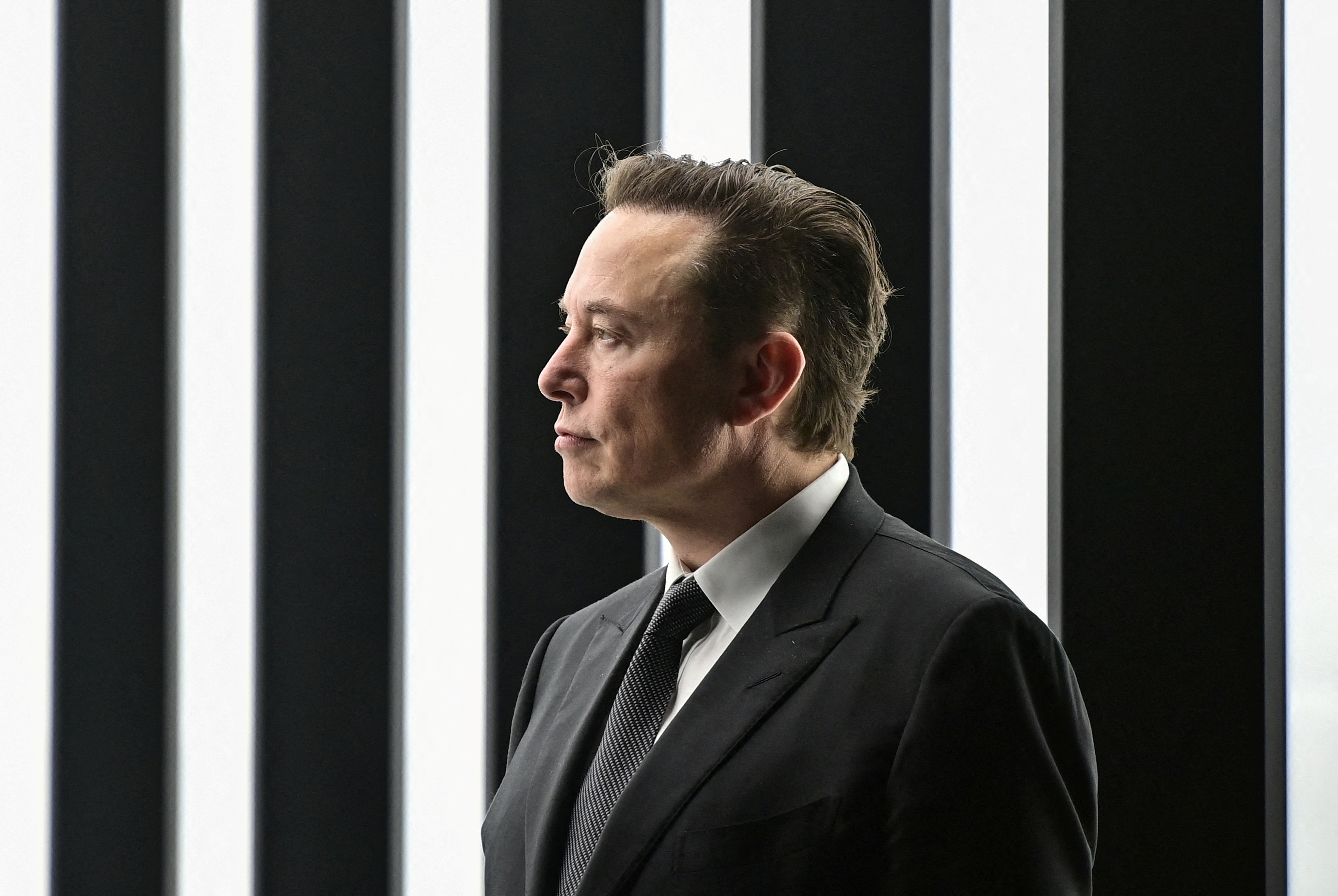
Elon Musk attends the opening ceremony of the new Tesla Gigafactory for electric cars in Gruenheide, Germany, March 22, 2022. Patrick Pleul/Pool via REUTERS

A Tesla vehicle leaves the federal court building during Elon Musk’s securities-fraud trial brought by shareholders in San Francisco, California, U.S. January 23, 2023. REUTERS/Laure Andrillon
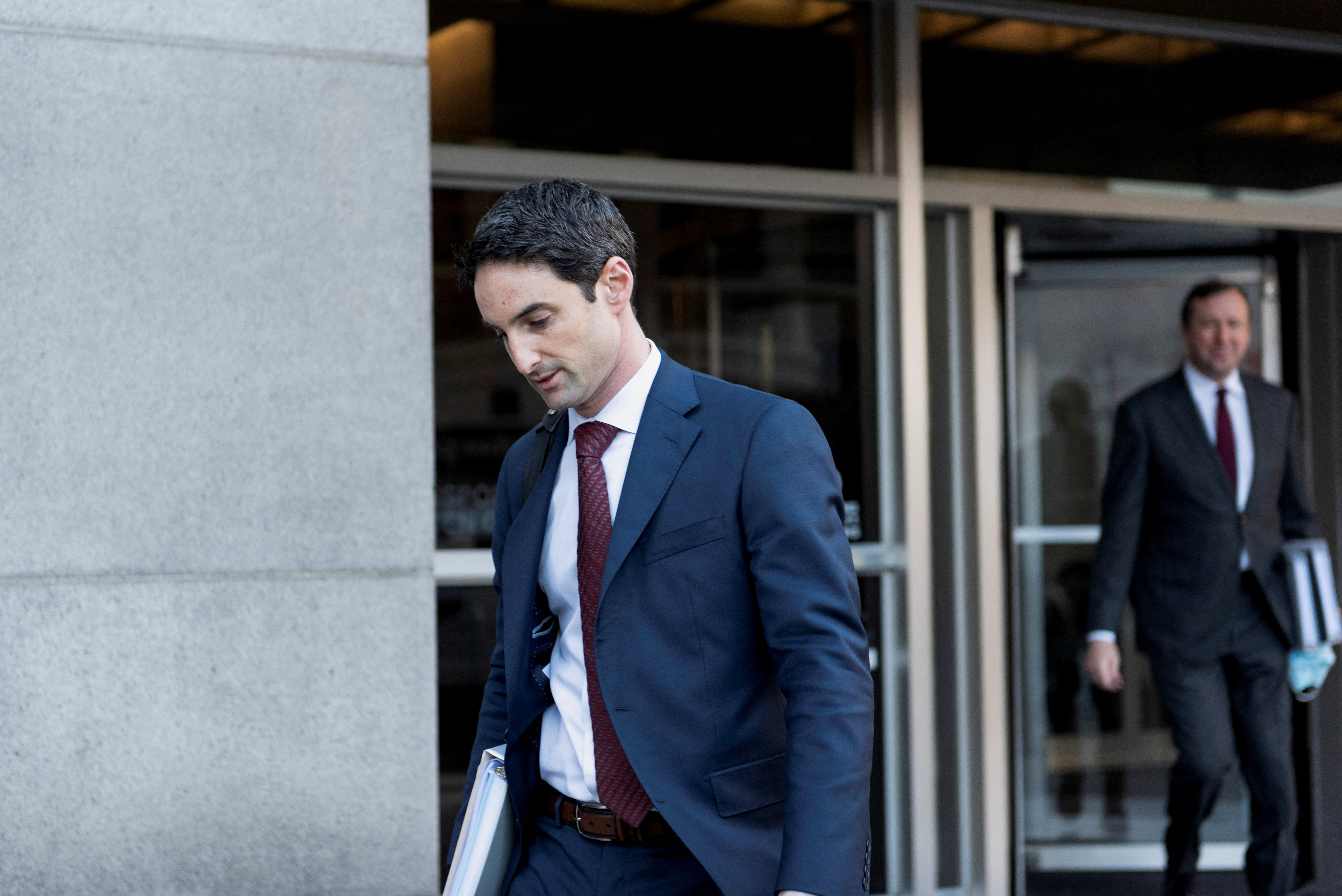
Adam Apton, attorney for Tesla shareholders, leaves after attending a securities-fraud trial brought by shareholders at federal court in San Francisco, California, U.S. January 23, 2023. REUTERS/Laure Andrillon

Tesla CEO Elon Musk is questioned by the investors’ attorney Nicholas Porritt during a securities-fraud trial at federal court in San Francisco, California, U.S., January 23, 2023 in this courtroom sketch. REUTERS/Vicki Behringer

Alex Spiro, an attorney for Elon Musk, walks to his car after attending a securities-fraud trial brought by shareholders at federal court in San Francisco, California, U.S. January 23, 2023. REUTERS/Brittany Hosea-Small
2023-01-23T23:37:30Z
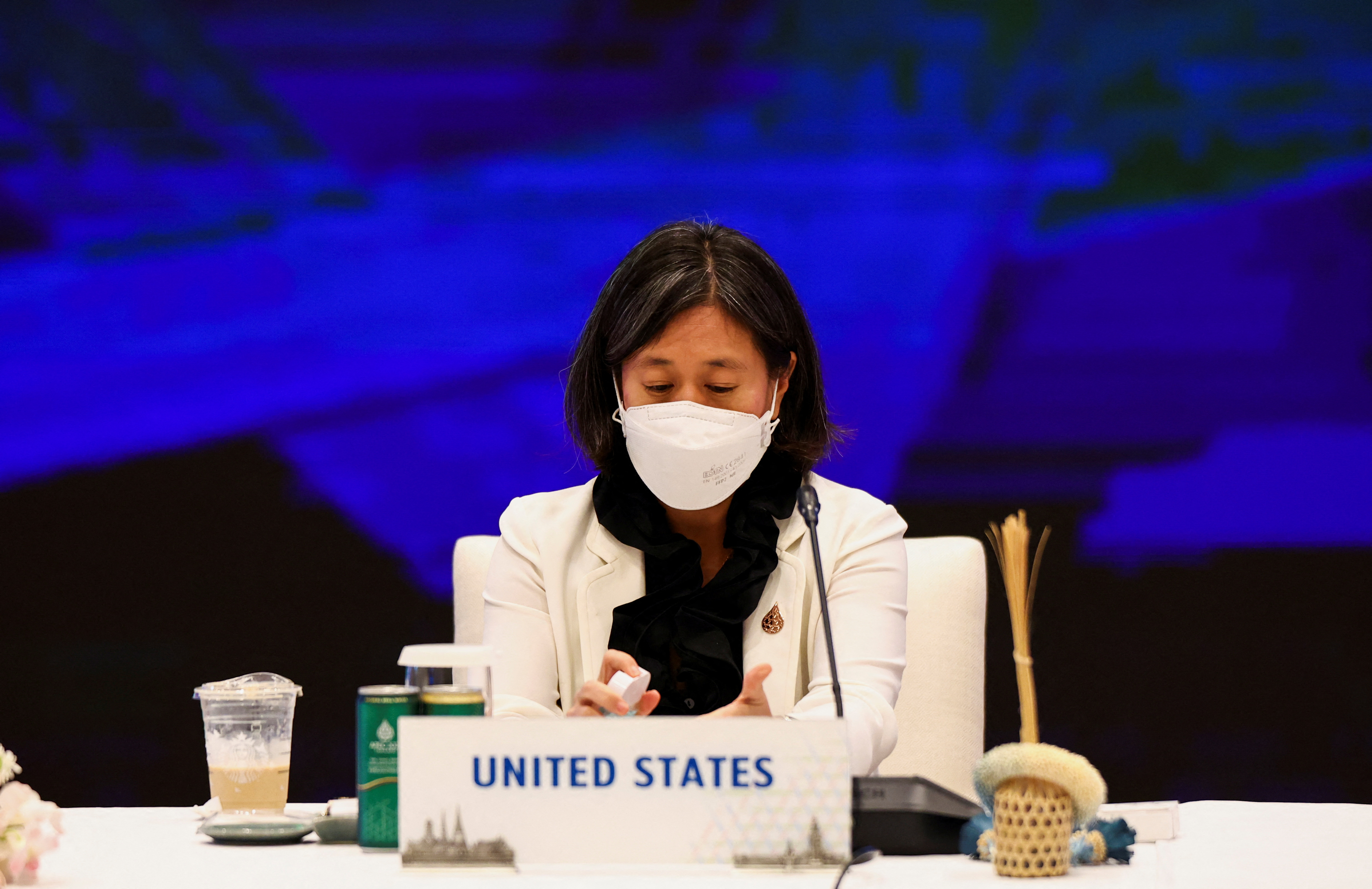
U.S. Trade Representative Katherine Tai attends the APEC Leaders’ Informal Dialogue with Guests during the Asia-Pacific Economic Cooperation (APEC) Summit 2022, in Bangkok, Thailand November 18, 2022. REUTERS/Athit Perawongmetha/Pool
U.S. agriculture and trade officials raised “grave concerns” over Mexico’s agricultural biotechnology policies in meetings with their Mexican counterparts on Monday, the office of U.S. Trade Representative (USTR) Katherine Tai said.
“We made it clear today that if this issue is not resolved, we will consider all options, including taking formal steps to enforce our rights under the U.S.-Mexico-Canada Agreement,” the USTR office said in a statement.
U.S. officials traveled to Mexico to discuss Mexico’s approach to agricultural biotech products.
Representatives for Mexico’s agriculture and economy ministries did not immediately respond to a request for comment.
The countries have been at loggerheads over a Mexican decree, issued in 2020, that would have phased out imports of genetically modified corn and the herbicide glyphosate by 2024.
Mexico decided to postpone its ban of genetically modified (GMO) corn purchases from the United States until 2025 and that was deemed satisfactory by the U.S. government, Agriculture Minister Victor Villalobos said last month.
“Mexico’s proposed approach, which is not grounded in science, still threatens to disrupt billions of dollars in bilateral agricultural trade, cause serious economic harm to U.S. farmers and Mexican livestock producers, and stifle important innovations needed to help producers respond to pressing climate and food security challenges,” the USTR office said after the meetings on Monday.
Mexico is one of the biggest buyers of U.S. corn with American farmers sending about 17 million tonnes of corn to Mexico annually.
U.S. farmers were particularly concerned about the threat of a ban on GMO yellow corn for animal feed.
Mexico and its northern neighbors are already in dispute resolution talks over Mexican President Andres Manuel Lopez Obrador’s energy policies, which the United States argues violate the U.S.-Mexico-Canada trade pact.
Earlier this month, President Joe Biden and his Mexican counterpart discussed having stronger economic ties, fighting illegal drug trade, and approaches to curbing illegal migration at a meeting in Mexico City.
CINCINNATI (AP) — The Cincinnati Bengals went into Buffalo feeling disrespected and played their most complete game of the season.
With tickets on sale last week for a potential neutral-site Buffalo-Kansas City AFC championship game, the Bengals came into a snowstorm and dominated the second-seeded Bills.
Cincinnati’s 27-10 win — its 10th in a row — sets up a rematch with Patrick Mahomes and the top-seeded Chiefs in the AFC championship game Sunday.
The Bengals are peaking in the playoffs again, and nobody is more confident than quarterback Joe Burrow, who said this team is better this last year’s. That squad won 27-24 in overtime at Kansas City to advance to the Super Bowl, where it lost 23-20 to the Los Angeles Rams.
“We’re a more complete team and a better team,” Burrow said. “We just seem to make plays when it counts.”
With three backups playing on the offensive line against Buffalo, it was hard to predict how efficiently the Bengals’ offense could operate.
It couldn’t have gone much better.
Burrow completed 23 of 36 passes for 242 yards and two touchdowns. He had zero turnovers and was sacked just once. He completed passes to eight different receivers.
“Unbelievable,” running back Joe Mixon said. “To come through in the snow and deliver dots the way he was doing it, that’s crazy. I’m going to be honest, that’s crazy. I’ve never seen anything like it, to be real.”
Mixon had a big game, too — a welcome development considering the Bengals’ running game had stalled in recent weeks. He rushed for 105 yards, averaging 5.3 per carry, and a touchdown. It was Mixon’s first 100-yard game since Nov. 6 and only his second this season.
WHAT’S WORKING
Just about everything on Sunday. Cincinnati was balanced on offense, picking up 30 first downs, converting 6 of 10 third downs and finishing with 412 total yards — including 172 on the ground, its most since Nov. 6.
The defense limited Buffalo to 63 rushing yards and kept constant pressure on quarterback Josh Allen, who was hit eight times and sacked once. The Bills’ top receiver, Stefon Diggs, finished with four catches for 35 yards.
WHAT NEEDS HELP
As far as the Bengals are concerned, the NFL’s decision-making process could use some work. The league began selling tickets for a possible game in Atlanta that was dependent on the Bills and Chiefs winning last weekend. The NFL had decided on the first-of-its-kind, neutral-site conference championship because the Bills (13-3) finished the season a half-game behind the Chiefs (14-3) after their game at Cincinnati was canceled on Jan. 2 when Bills safety Damar Hamlin went into cardiac arrest and had to be resuscitated on the field. The Bengals felt disrespected by that plan and were determined to ruin it.
“They keep talking us down, and we’ll keep showing up,” receiver Ja’Marr Chase said.
STOCK UP
Jackson Carman had not played tackle for the Bengals since he was drafted in 2021. Carman was pushed into service at left tackle after Jonah Williams dislocated a kneecap in the wild card-round playoff win over Baltimore. Backups Hakeem Adeniji and Max Scharping were already starting on the right side because of injuries. The O-line has hardly looked better than it did Sunday, when it dominated Buffalo’s defensive front on a snowy field.
STOCK DOWN
WR Tyler Boyd had just one catch for 23 yards.
INJURIES
C Ted Karras suffered a knee injury during Sunday’s game but played through it. He said he’ll be OK for the AFC championship game. … Williams and G Alex Cappa (ankle) were considered week to week.
KEY NUMBER
5 — Number of career postseason wins for Burrow, the most for any Bengals quarterback.
NEXT STEPS
Beat Mahomes and the Chiefs on Sunday for the fourth time in the span of about 13 months to earn a second consecutive trip to the Super Bowl. Mahomes suffered a high ankle sprain on Sunday that could limit his mobility.
“I hope that (Mahomes) is healthy,” Cincinnati safety Jessie Bates III said. “I hope that he is 100 percent healthy so there is no excuses. We’ll be ready.”
___
AP NFL: https://apnews.com/hub/nfl and https://twitter.com/AP_NFL
Apple has backported the security updates for the zero-day vulnerability CVE-2022-42856 to older iPhones and iPads.
On December 2022, Apple released security updates to address a new zero-day vulnerability, tracked as CVE-2022-42856, that is actively exploited in attacks against iPhones.
The IT giant released security bulletins for iOS/iPadOS 15.7.2, Safari 16.2, tvOS 16.2, and macOS Ventura 13.1. Apple addressed the vulnerability with improved state handling for the iPhone 6s (all models), iPhone 7 (all models), iPhone SE (1st generation), iPad Pro (all models), iPad Air 2 and later, iPad 5th generation and later, iPad mini 4 and later, and iPod touch (7th generation).
The CVE-2022-42856 flaw is a type confusion issue that impacts the WebKit browser engine, an attacker can exploit the bug when processing specially crafted content to achieve arbitrary code execution.

“Processing maliciously crafted web content may lead to arbitrary code execution. Apple is aware of a report that this issue may have been actively exploited against versions of iOS released before iOS 15.1.” reads the advisory published by Apple. “A type confusion issue was addressed with improved state handling.”
The vulnerability was reported by Clément Lecigne of Google’s Threat Analysis Group. At this time there are no public details about the attacks exploiting the vulnerability.
Apple this week has backported the security updates for the CVE-2022-42856 issue to older iPhones and iPads.
To secure older devices against attacks exploiting the above issue, Apple released iOS 12.5.7. The patches are now available also for iPhone 5s, iPhone 6, iPhone 6 Plus, iPad Air, iPad mini 2, iPad mini 3, and iPod touch (6th generation).
On December 14, 2022, the U.S. Cybersecurity and Infrastructure Security Agency (CISA) added the vulnerability to its Known Exploited Vulnerabilities Catalog and ordered federal agencies to address it by January 04, 2022
The company addressed the zero-day bug with improved state handling for the following devices: iPhone 5s, iPhone 6, iPhone 6 Plus, iPad Air, iPad mini 2, iPad mini 3, and iPod touch (6th generation).
Follow me on Twitter: @securityaffairs and Facebook and Mastodon
| [adrotate banner=”9″] | [adrotate banner=”12″] |
(SecurityAffairs – hacking, Apple)
[adrotate banner=”5″]
[adrotate banner=”13″]
The post Apple backported patches for CVE-2022-42856 zero-day on older iPhones, iPads appeared first on Security Affairs.
2023-01-23T23:13:43Z
Following a weekend shooting rampage at a dance hall, which killed 11 people, Monterey Park police chief Scott Wiese on Monday told reporters, “I think we all want to find out why. We all want answers to questions that we may never have answers to.”
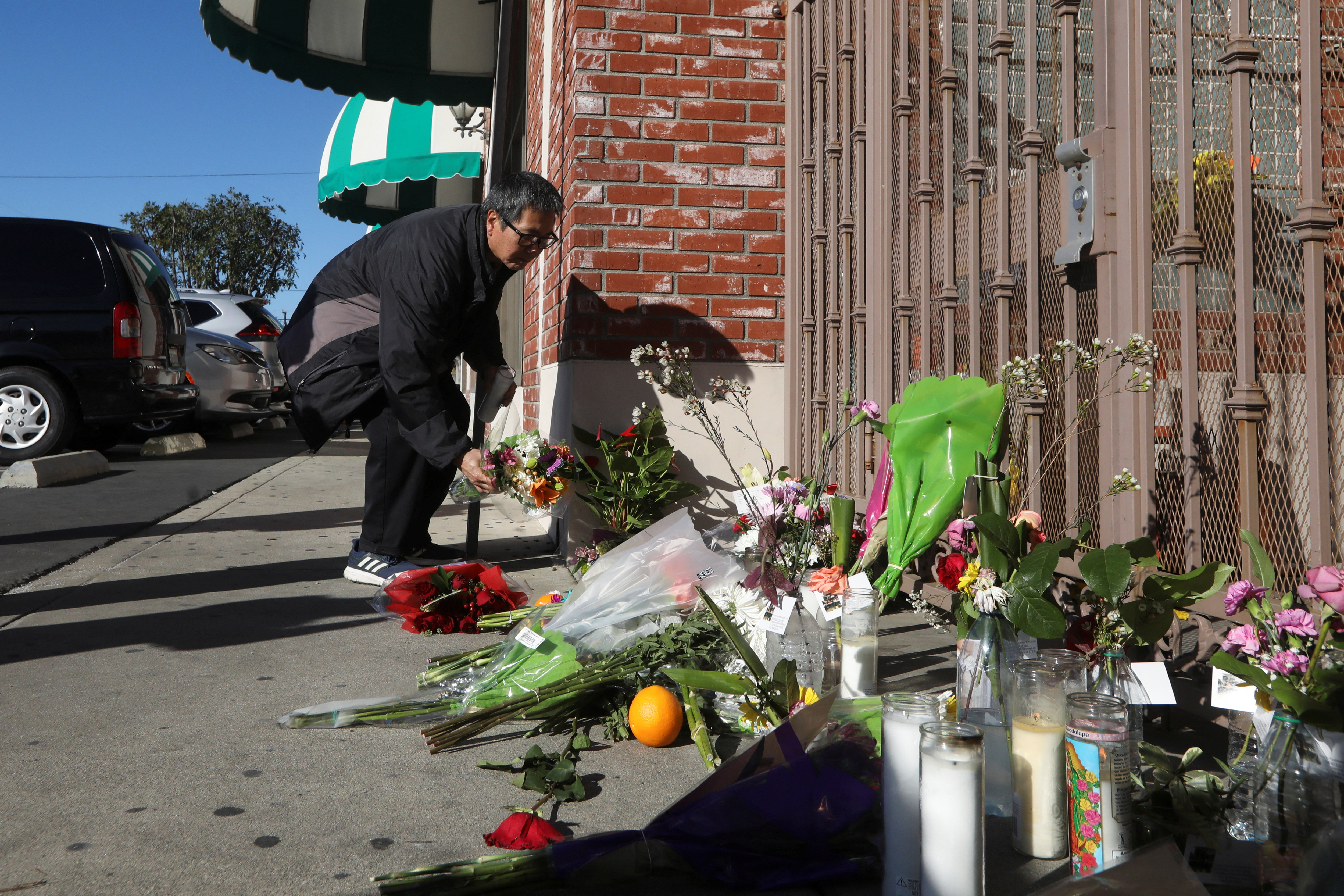
A man lights a candle at the entrance of the Star Ballroom Dance Studio after a mass shooting during Chinese Lunar New Year celebrations in Monterey Park, California, U.S. January 23, 2023. REUTERS/David Swanson
The Los Angeles county coroner’s office on Monday began identifying the 11 people killed in the Lunar New Year massacre inside a popular dance parlor in Monterey Park, California.
Ten victims died at the scene of the Saturday shooting. Authorities on Monday said an 11th person, a woman in her 70s, died while being treated at a local hospital.
The coroner’s office confirmed the names of four victims. Three women – My Nhan, 65, Lilan Li, 63, and Xiujuan Yu, 57 – who were among the patrons who died in Saturday’s shooting at the Star Ballroom Dance Studio. The fourth named victim was Valentino Alvero, 68.
While not releasing the other victims’ names, the coroner’s office said the six women and five men who were killed were all in their 50, 60s and 70s.
Nhan’s family said in a written statement released on Twitter that “we are starting the Lunar New Year broken.” They said Nhan, whom they remembered for her warm smile and kindness, had visited the dance studio on weekends for many years.
“It’s what she loved to do,” they said. “But unfairly, Saturday was her last dance.”
Friends and frequenters of the ballroom identified another victim as Ming Wei Ma, believed to be in his 60s. He was a frequent presence at the dance studio, and friends told a CBS affiliate that he was among the first to rush the shooter.
“He was just caring, an ‘others first, people first’ kind of person,” Ma’s friend Eric Chen told local media.
Lauren Woods, a tango dance instructor at the ballroom, said Ma was “the heart” of the studio.
Woods wrote on her Facebook profile that Ma would greet her with a kiss on the cheek and say “my teacher! My teacher!” and “Love you! Love you!”
Other victims’ identifications were withheld pending notification of next of kin.
The coroner’s office said one woman who died was in her 50s and two other women, in addition to the ones identified, were in their 60s. Three men killed were in their 70s and two were in their 60s.
2023-01-23T23:10:12Z
Two students were killed on Monday and an adult was seriously wounded in a “targeted” shooting at a nonprofit educational center for at-risk youth in Des Moines, Iowa, local police said.
The students died at a hospital, while a staff member of Starts Right Here, a learning facility for young people, was in surgery, Sargent Paul Parizek said at a press conference. No further details were released.
Three suspects, who have not been identified, fled the scene in a car and were taken into custody at a traffic stop within 20 minutes of the incident. One of them jumped out of the vehicle and ran but was eventually arrested with the help of a K-9 unit, Parizek said.
No motive for the shooting is known. Officers were called to the scene just before 1 p.m. local time.
Parizek said the police department works closely with the program, which was designed to help underserved students who have a variety of “troubles and challenges.”
“These are supposed to be our safe spaces,” he said. “To have it happen here, it’s going to be a horrible impact on the community.”
Des Moines Public Schools interim Superintendent Matt Smith said the district partnered with Starts Right Here to help “re-engage students.”
“We are saddened to learn of another act of gun violence, especially one that impacts an organization that works closely with some of our students,” Smith said in a statement.
Parizek did not give a timeline for the investigation, though he said he expects the most serious charges will be handed down.