The Fulton County special purpose grand jury has concluded its investigation into alleged criminal interference in the 2020 Presidential election in Georgia.
On Jan. 9, the grand jury’s supervising judge, Robert McBurney, issued an order dissolving the special purpose grand jury. The order announced that the special purpose grand jury submitted its final report and voted to make the report public. Judge McBurney noted that the dual effect of two statutory provisions of Georgia’s Code, O.C.G.A. § 15-12-102 and O.C.G.A.§ 15-12-80, appeared to mandate publication of the report.
Yet McBurney did not immediately order the report’s publication. “Unresolved is the question of whether the special purpose grand jury’s final report constitutes a presentment,” he wrote. Adding that a hearing would be scheduled for the matter on Jan. 24, McBurney invited argument from the district attorney’s office as well as “any consolidated media intervenors.” Presumably, individuals who might be named in the report will also have an opportunity to provide their perspectives. In the interim, the grand jury’s report remains sealed.
The outcome of the Jan. 24 hearing has little legal bearing on District Attorney Fani Willis’s next moves. As I have previously explained, the special purpose grand jury is not authorized to issue indictments under Georgia law. It can only recommend indictments. Those recommendations are not binding on the district attorney. It is ultimately up to Willis to decide whether to pursue criminal charges before a different regular purpose grand jury. And nothing in Georgia law would prevent her from seeking indictments from that regular grand jury prior to the report’s publication.
But that does not mean that publication of the report is inconsequential. Grand juries have long served as the conscience and voice of their respective communities. Consistent with that rich history, there is a strong public interest in releasing the report as requested by the grand jurors. And for Willis, who has been dogged by allegations of partisanship throughout the nearly two-year investigation, a public grand jury report recommending criminal charges could shore up the appearance of impartiality if she acts as the grand jurors recommend—or provide political cover if she fails to secure convictions.
On the other hand, if the report recommends criminal charges and the district attorney intends to pursue those charges, there may be strategic reasons why prosecutors would want to keep the report under wraps. Prosecutors may well be concerned that release of the report could add fuel to the fire for venue transfer motions later down the road—that is, it could bolster arguments by putative defendants who claim they cannot obtain an impartial jury in Fulton County. Similarly, if the report includes factually rich accounts of witness testimony before the grand jury, prosecutors could seek to shield that information to prevent witness intimidation.
So, the question of when and in what form the report will be published remains important. According to Judge McBurney, the answers to those questions hinge on whether the grand jury’s report constitutes a “presentment.”
All of which has America puzzling, yet again, over a niche area of Georgia law. What do “presentments” have to do with the release of the grand jury’s report? What the heck is a presentment, anyway? And what is McBurney likely to decide at the Jan. 24 hearing?
For those of you who have been fretting over such questions for the past week, here we explain everything you ever wanted to know about grand jury presentments in Georgia, all in unnecessary and excruciating detail.
Why does publication of the report depend on the meaning of “presentment” under Georgia law?
It’s complicated. To start, let’s review some basics about Georgia grand jury law.
As I’ve previously explained, the state’s criminal code establishes two distinct types of grand juries: regular grand juries and “special purpose” grand juries. Initially enacted in the nineteenth century, the regular grand jury provisions largely codified common law grand jury practice in Georgia. Meanwhile, special purpose grand juries were not statutorily authorized until 1974, following the enactment of similar federal legislation in the 1970 Organized Crime Control Act.
The provisions concerning regular grand juries span 23 discrete statutory provisions, from O.C.G.A. § 15-12-60 to O.C.G.A. § 15-12-83. Among other things, these provisions set out the selection procedure for empanelment of a grand jury; the eligibility requirements for grand jury service; the powers and duties of the regular grand jury; and the publication process for grand jury reports.
During its term of service, the activities of a regular grand jury generally fall into two functional categories. First, in its “criminal” or “accusatory” function, a regular grand jury screens the state’s evidence to determine if there is probable cause to justify criminal charges. Second, in its “civil” or “investigative” function, grand juries can carry out periodic investigations of certain county operations, facilities, or authorities.
A separate part of the code, O.C.G.A. § 15-12-100 to O.C.G.A. § 15-12-102, governs the process for empaneling and dissolving a special purpose grand jury. But these provisions fall silent on several key issues concerning the operations of special purpose grand juries. For example, the statute does not expressly authorize special purpose grand juries to return indictments for crimes discovered during its investigation. Similarly, it fails to set out a procedure governing publication of the special purpose grand jury’s final report.
Still, the laws governing special purpose grand juries are not totally divorced from the laws concerning regular grand juries. O.C.G.A. 15-12-102 provides that the provisions applicable to regular grand juries apply to special purpose grand juries, too. And that would seem to include O.C.G.A. § 15-12-80, which governs the publication process for certain regular grand jury reports. The relevant part of that section reads as follows:
Grand juries are authorized to recommend to the court the publication of the whole or any part of their general presentments and to prescribe the manner of publication. When the recommendation is made, the judge shall order the publication as recommended. (emphasis added).
As McBurney wrote in his Jan. 9 order, the Fulton County special purpose grand jury voted to make its final report public pursuant to this section of the statue. He pointed out that the provision is mandatory: “the judge shall order the publication as recommended” (emphasis added). In other words: If O.C.G.A. § 15-12-80 applies, the law requires McBurney to release the grand jury’s report—or at least some version of it—to the public. He would be bound to do so even if the district attorney’s office or targets of the investigation oppose its publication.
Notice, however, that O.C.G.A. § 15-12-80 applies to a particular type of document produced by grand juries: “presentments.” But not any old presentment will do. Georgia law distinguishes between two types of presentments: “special presentments” and “general presentments.” O.C.G.A. § 15-12-80 specifically refers to “general presentments.” So, unless the special purpose grand jury’s findings and recommendations constitute a “general presentment,” McBurney is not obliged to order its release to the public. He would be free to decide that the document should remain sealed.
The problem is that Georgia’s statute never specifies whether the document produced by the special purpose grand jury is a “special presentment,” a “general presentment,” or something else entirely. Indeed, the term “presentment” is conspicuously absent among the provisions governing special purpose grand juries. The statute’s language only refers to the special purpose grand jury’s “report” or “final report.”
All of which raises the inevitable question posed by Judge McBurney last week: Does a special purpose grand jury report constitute a “presentment”? If so, what kind of presentment?
As you might suspect, the answers to those questions are … complicated.
What is a “presentment”? And how is that term defined in Georgia law?
“Presentment” is a term of art, but it has more than one meaning. It refers to the state’s duty to present a defendant to a judge “without unnecessary delay” following his or her arrest. In the “Presentment” clause of the federal Constitution, the term requires legislation to be presented to the President for his signature. A grand jury presentment is something else entirely.
At a rudimentary level, a “presentment” is an accusatory document issued by a grand jury that is not an indictment. But beyond that basic definition, presentment is a fickle word. Imported into early American common law from the English grand jury system, its meaning evolved alongside the changing functions of the grand jury. Broadly speaking, development of the term in federal and state common law courts resulted in two distinct yet overlapping meanings. Georgia’s grand jury statute mirrors this dual use of the term by recognizing two discrete types of presentments: “special presentments” and “general presentments.”
Special Presentments
In its first iteration, a presentment can refer to a charging instrument—that is, a type of document used to formally accuse a person of a crime. At common law, grand juries could charge a person with a crime by “indictment” or “presentment.” That’s why the Fifth Amendment of the federal constitution provides that no person shall be charged with “capital, or otherwise infamous crime” except “by presentment or indictment of a Grand Jury.”
The common law distinction between “indictment” and “presentment” hinged on who initiated the charges. If the prosecutor drew up charges and submitted them to the grand jury, then the charging instrument returned by the jurors would be called a “true bill of indictment.” But what if the grand jury accused an individual of a crime on its own initiative, based on facts the jurors learned during their investigation? In that scenario, the document would be called a “presentment.”
Today, the use of presentments as charging instruments varies at the state and federal level. In federal grand jury practice, charging presentments have been extinct since 1946, when the Federal Rules of Criminal Procedure abolished the use of presentments to initiate prosecutions. By contrast, some state grand jury statutes continue to allow initiation of criminal charges by presentment. Among these states, some consider such presentments to be self-executing, meaning the prosecutor can arraign the defendant based on the presentment alone. In other states, the presentment is treated as an instruction for the prosecuting attorney to draw up a bill of indictment and submit it back to the jurors.
In Georgia, presentments that charge an individual with a crime are called “special presentments.” While the statute does not specifically define that term, Georgia’s Grand Jury Handbook sets out the following definition:
A legal document which is substantially the same as an indictment except that no person is named as the prosecutor because, in theory, the offense charged is based on the Grand Jury’s own knowledge or observation and not upon an arrest warrant.
Importantly, Georgia is not a jurisdiction that treats such presentments as mere instructions or recommendations for the prosecuting attorney to draw up an indictment. Indeed, by statute, the technical distinction between a “special presentment” and “bill of indictment” has been abolished: O.C.G.A. § 17-7-51 states that all special presentments “shall be treated as indictments” and provides that the district attorney “may arraign defendants upon the special presentments.”
General Presentments
In its second and more capacious iteration, the term “presentment” refers to a written report produced by a grand jury. Early English and colonial grand juries got into the practice of issuing informational reports as their functions began to broaden beyond the traditional power to bring criminal charges. Confusingly, these reports also became known as “presentments.”
At least until the mid-nineteenth century, grand juries enjoyed broad powers to issue such presentments on a wide variety of matters concerning public officials, civic affairs, or other investigative matters. A report could, for example, criticize behavior of public officials that was condemnatory but short of criminal. In other instances, grand jury reports summarized inspections of local roads, prisons, or other public facilities. It was not uncommon for grand jury reports to make recommendations, including policy or legislative changes.
Especially at the federal level, the practice of having grand juries issue reports has declined over time. The decline can be attributed in part to the import of the Federal Rules of Criminal Procedure. Rule 7 excluded presentments as charging instruments, which led to some confusion about whether grand juries retained their common law reporting powers. Additionally, the grand jury secrecy provisions in Rule 6 gave judges discretion to seal grand jury reports, effectively gutting the communicative or expressive purpose of the presentment power. Meanwhile, though many state grand juries retain the ability to issue reports, the scope of such reports is often limited to subject matter specifically enumerated by statute.
In Georgia law, the modern analogue for a presentment that contains a report is a “general presentment.” While the statute fails to define that term, the Grand Jury Handbook describes it as follows:
A written report by the Grand Jury which submitted to the Superior Court, usually at the end of the term of court, in which the Grand Jury summarizes its activities and makes findings and recommendations which it is authorized by law to make in conjunction with its non-criminal duties.
The grand jury’s general presentment typically includes an account of the dates on which the grand jurors met during their term of court; the number of indictments or special presentments issued; findings or recommendations resulting from so-called “civil” investigations and inspections authorized under O.C.G.A. § 15-12-71; and suggestions or advice for the succeeding grand jury. As the Grand Jury Handbook observes, general presentments “are merely the recommendations of the grand jurors and are not self-executing.”
Pursuant to O.C.G.A. § 15-12-80, the grand jury may recommend the publication of its general presentments and the manner of publication. Grand juries tend to recommend publication of their general presentments in local legal gazettes or government websites. For example, this general presentment, which contains a report of a grand jury’s inspection of the local jail, was published in the Augusta Chronicle and the Augusta-Richmond county website.
Does this document produced by the Fulton County grand jury constitute a “presentment?”
The best interpretation of the statute and relevant law is that the document constitutes a general presentment and, as such, should be subject to mandatory publication under O.C.G.A. § 15-12-80.
Let’s start with what the document cannot be: a special presentment. As previously established, Georgia Code provides that a “special presentment” is a self-executing charging instrument. But special purpose grand juries are not authorized to bring criminal charges; they are limited to recommending charges. It follows that the Fulton special purpose grand jury’s report cannot amount to a “special presentment” as that term is used under Georgia law.
The better view is that the special purpose grand jury’s report constitutes a general presentment. Like a general presentment, the report will likely summarize the activities of the grand jury and make findings and recommendations authorized by its empaneling order. Additionally, the subject matter of the report—efforts to interfere in the 2020 Presidential election in the state of Georgia—is consistent with traditional subject matter of general presentments concerning public affairs or public officials.
If the document is not a general presentment, what else could it be? Relying on relevant canons of statutory construction, I suppose one could attempt to draw a definitional distinction between the “general presentments” and “reports.” Notably, the statute refers to the document produced by special purpose grand juries as a “report” rather than a “presentment” or “general presentment.” Applying the “presumption of meaningful variation,” that could suggest that the legislature intended a variation in meaning between “presentment” and “report.”
Still, I cannot think of an intelligible way to distinguish “general presentments” from “reports” in a way that is consistent with the statute, common usage, and precedent. For example, another part of the statute indicates that “reports” can be subject to publication under O.C.G.A. § 15-12-80. That is true of O.C.G.A. § 15-12-71(e)(1), which requires the grand jury to “prepare a report or issue a general presentment” following its review of incidents involving a police officer’s use of deadly force. “[A]ny such report or presentment shall be subject to publication as provided for in Code Section 15-12-80,” the provision continues. This suggests that the meaning of “general presentments” in § 15-12-80 either includes or is interchangeable with “reports.”
Georgia courts appear to use “report” and “general presentment” interchangeably, too. For example, in Thompson v. Macon-Bibb County Hospital Authority, the Supreme Court of Georgia consistently used the term “report” to refer to a general presentment issued by a grand jury under O.C.G.A. § 15-12-71.
In short, the document produced by the special purpose grand jury is almost certainly a general presentment, which means that it is almost certainly subject to mandatory publication under O.C.G.A. § 15-12-80. Importantly, Judge McBurney already appears inclined to that view. In his Jan. 9 order, McBurney wrote that O.C.G.A. § 15-12-80 “appears to apply to the work of special purpose grand juries.” I suspect that he will ultimately order the report’s publication.
Still, no matter what McBurney decides this week, it’s possible that all or part of the report could be kept from public view for months or even years. For one thing, McBurney’s order can be appealed—and those who oppose release of the report will likely seek to block its publication while they pursue an appeal.
What’s more, McBurney can redact or expunge parts of the report that go beyond the lawful scope of the special purpose grand jury’s authority. Indeed, his Jan. 9 order anticipates that redactions or expungements could be necessary. In addition to inviting argument on the “presentment” question, McBurney requested perspectives on the “precedential impact” of three cases, each which concern decisions to strike out language included in a general presentment. (You can read those decisions here and here and here.)
The hearing will take place on Tuesday, Jan. 24 at 12:00 p.m. EST. There will be a livestream here. I’ll be there liveblogging and will write a dispatch summarizing the fun as McBurney tries to sort this out.




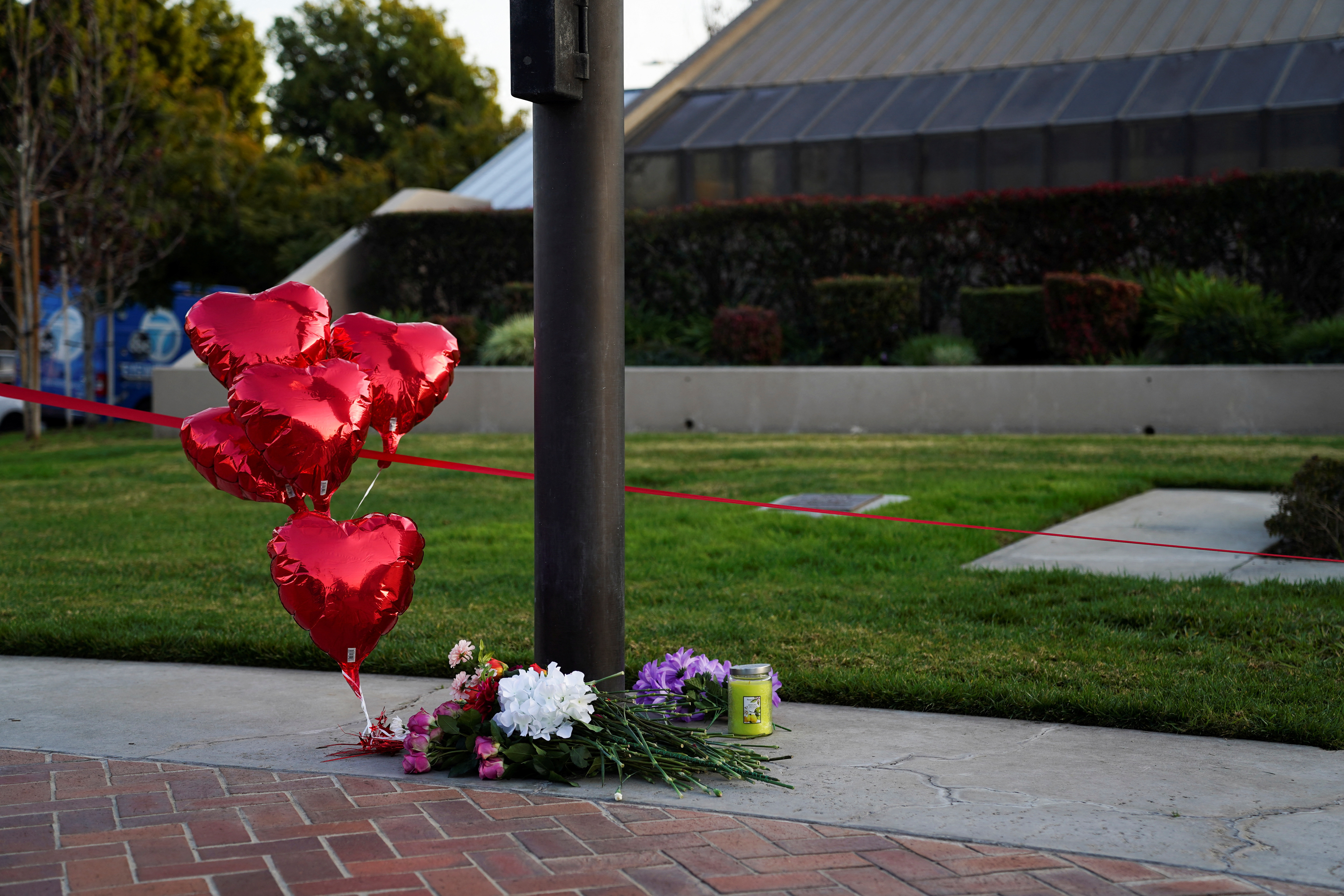

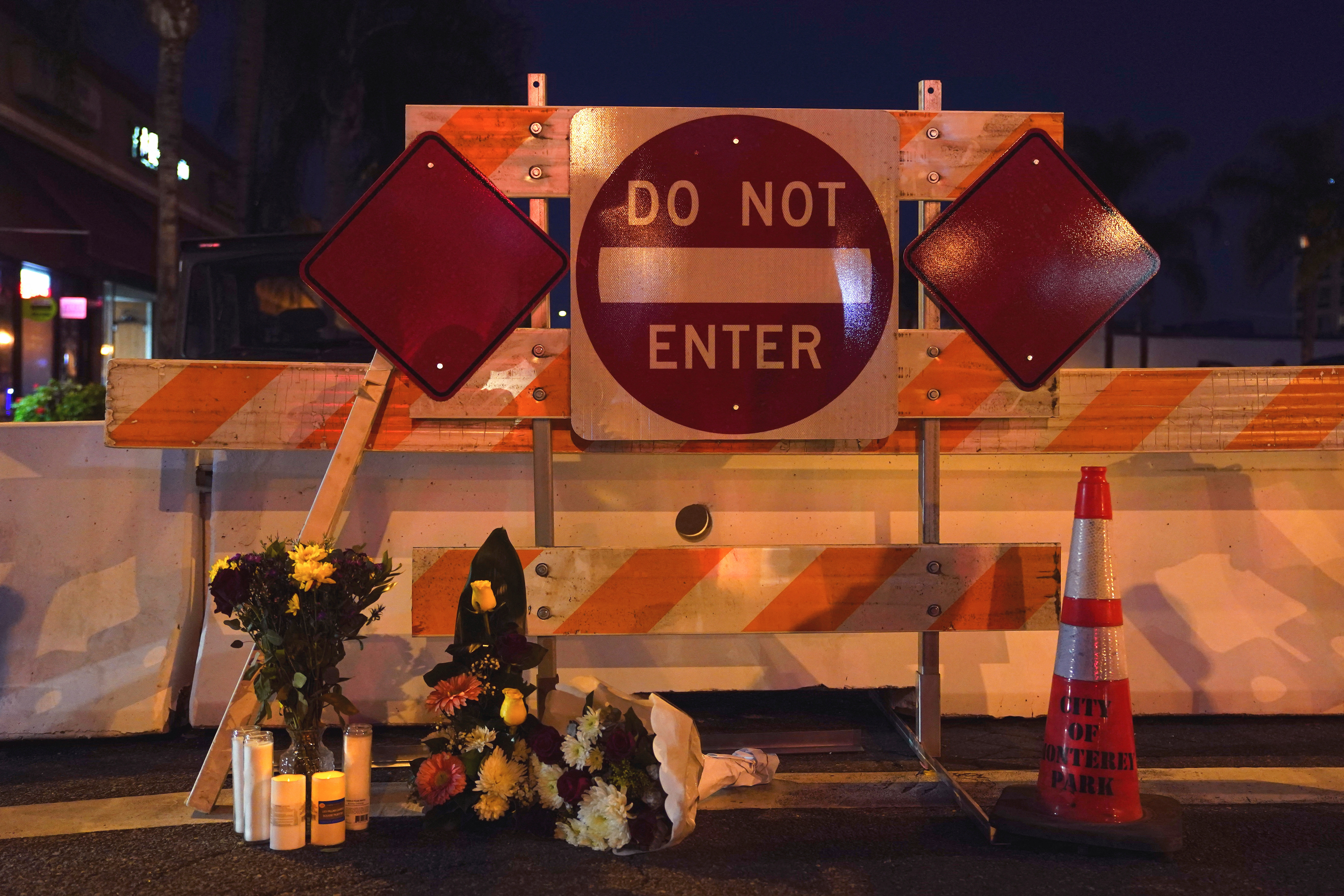
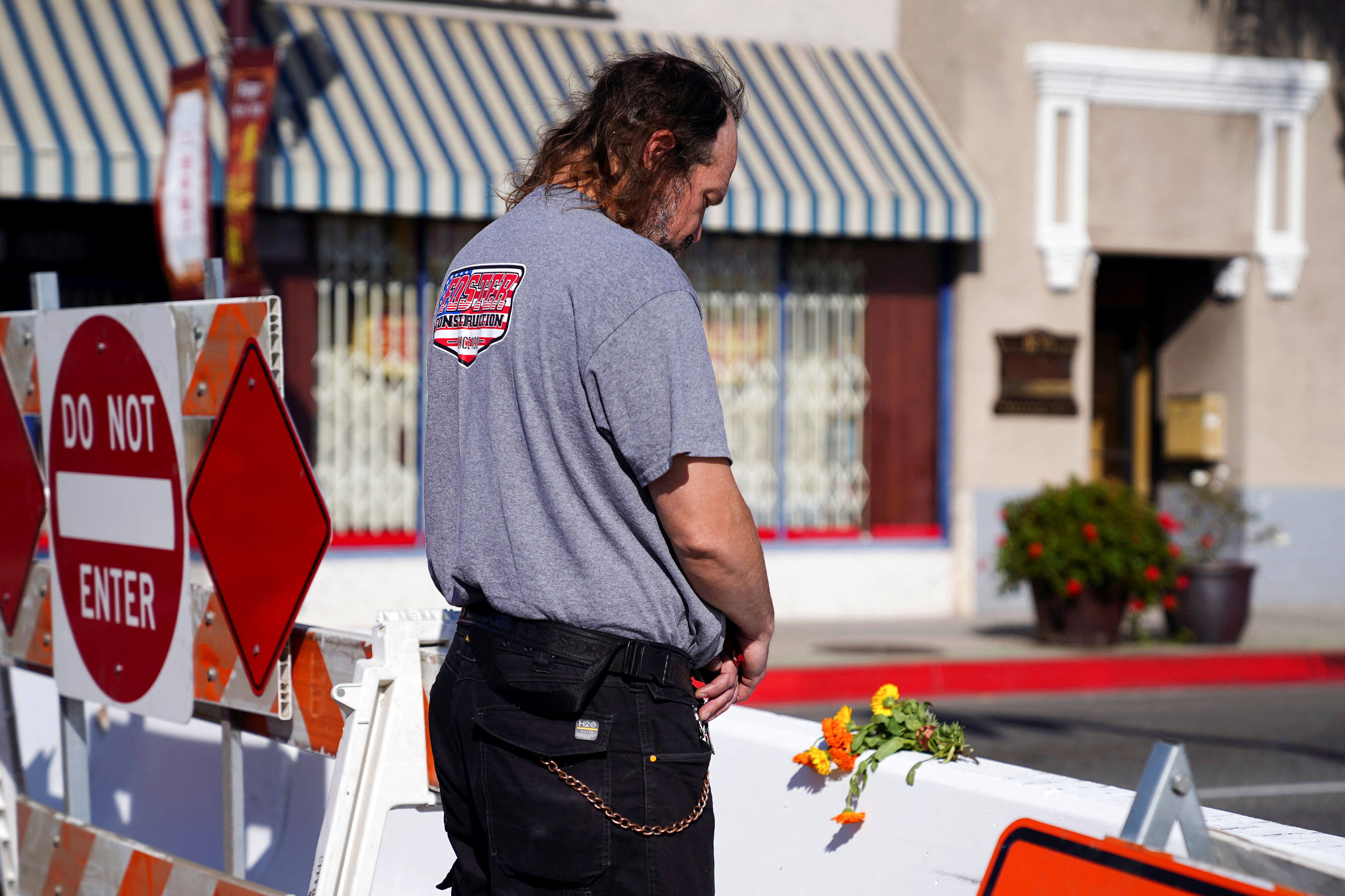
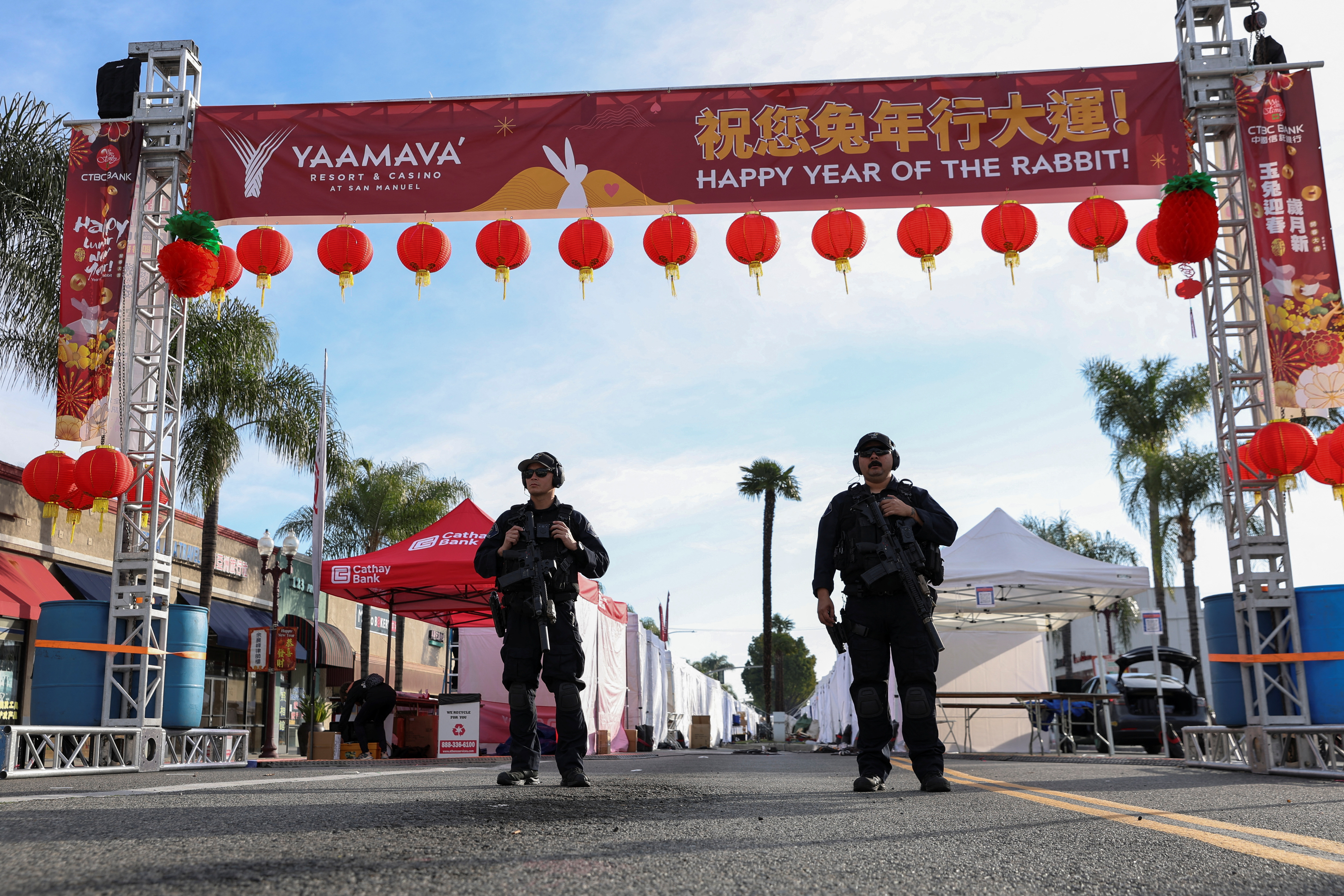

 Police investigate a scene where a shooting took place in Monterey Park, Calif., Sunday, Jan. 22, 2023. Dozens of police officers responded to reports of a shooting that occurred after a large Lunar New Year celebration had ended in a community east of Los Angeles late Saturday. (AP Photo/Jae C. Hong)
 Investigators gather at a scene where a shooting took place in Monterey Park, Calif., Sunday, Jan. 22, 2023. Dozens of police officers responded to reports of a shooting that occurred after a large Lunar New Year celebration in a community east of Los Angeles late Saturday. (AP Photo/Jae C. Hong)
 Members of the media wait for a briefing in Monterey Park, Calif., Sunday, Jan. 22, 2023. Nine people were killed in a mass shooting late Saturday in a city east of Los Angeles following a Lunar New Year celebration that attracted thousands, police said. (AP Photo/Jae C. Hong)
 FBI agents walk near a scene where a shooting took place in Monterey Park, Calif., Sunday, Jan. 22, 2023. Nine people were killed in a mass shooting late Saturday in a city east of Los Angeles following a Lunar New Year celebration that attracted thousands, police said. (AP Photo/Jae C. Hong)
 A police officer walks near a scene where a shooting took place in Monterey Park, Calif., Sunday, Jan. 22, 2023. Nine people were killed in a mass shooting late Saturday in a city east of Los Angeles following a Lunar New Year celebration that attracted thousands, police said. (AP Photo/Jae C. Hong)
 Two police vehicles are seen near a building where a shooting occurred in Monterey Park, Calif., Sunday, Jan. 22, 2023. Nine people were killed in a mass shooting late Saturday in a city east of Los Angeles following a Lunar New Year celebration that attracted thousands, police said. (AP Photo/Jae C. Hong)
 Law enforcement personnel gather outside a ballroom dance club in Monterey Park, Calif., Sunday, Jan. 22, 2023. A mass shooting took place at the dance club following a Lunar New Year celebration, setting off a manhunt for the suspect. (AP Photo/Jae C. Hong)
 Police officers stand outside a ballroom dance club in Monterey Park, Calif., Sunday, Jan. 22, 2023. A mass shooting took place at a dance club following a Lunar New Year celebration, setting off a manhunt for the suspect. (AP Photo/Jae C. Hong)
 A police officer gets out of his vehicle near a ballroom dance club in Monterey Park, Calif., Sunday, Jan. 22, 2023. A mass shooting took place at a dance club following a Lunar New Year celebration, setting off a manhunt for the suspect. (AP Photo/Jae C. Hong)
 A police officer ties tape around a light pole in Monterey Park, Calif., Sunday, Jan. 22, 2023. A mass shooting took place at a dance club following a Lunar New Year celebration, setting off a manhunt for the suspect. (AP Photo/Jae C. Hong)
 An investigator carries markers outside Star Dance Studio in Monterey Park, Calif., Sunday, Jan. 22, 2023. A mass shooting took place at the dance club following a Lunar New Year celebration, setting off a manhunt for the suspect in the fifth mass killing in the U.S. this month. (AP Photo/Jae C. Hong)
 Investigators are seen outside Star Dance Studio in Monterey Park, Calif., Sunday, Jan. 22, 2023. A mass shooting took place at the dance club following a Lunar New Year celebration, setting off a manhunt for the suspect. (AP Photo/Jae C. Hong)
 A law enforcement helicopter hovers over Star Dance Studio in Monterey Park, Calif., Sunday, Jan. 22, 2023. A mass shooting took place at the dance club following a Lunar New Year celebration, setting off a manhunt. (AP Photo/Jae C. Hong)
 An investigator carries markers outside Star Dance Studio in Monterey Park, Calif., Sunday, Jan. 22, 2023. A mass shooting took place at the dance club following a Lunar New Year celebration, setting off a manhunt. (AP Photo/Jae C. Hong)
 This combination image created using photos provided by the Los Angeles County Sheriff’s Department shows a male suspect allegedly involved in a shooting on Saturday, Jan. 21, 2023, in Monterey Park, Calif. Authorities have identified the suspect as 72-year-old Huu Can Tran and say that Tran was found dead of a self-inflicted gunshot wound in the van he used to flee after people thwarted his attempt at a second shooting. (Los Angeles County Sheriff’s Department via AP)
 Members of a SWAT team enter a van and look through its contents in Torrance Calif., Sunday, Jan. 22, 2023. An hours-long manhunt led police to surround and enter the van. Authorities say the suspect in a California dance club shooting that left multiple people dead, shot and killed himself. (AP Photo/Damian Dovarganes)
 A forensic photographer takes pictures of a van’s window and its contents in Torrance, Calif., Sunday, Jan. 22, 2023. A mass shooting took place at a dance club following a Lunar New Year celebration, setting off a manhunt for the suspect. (AP Photo/Damian Dovarganes)
 This image taken with a drone shows Star Dance Studio in Monterey Park, Calif., Sunday, Jan. 22, 2023. A gunman killed multiple people at the ballroom dance studio late Saturday amid Lunar New Years celebrations in the predominantly Asian American community of Monterey Park. (AP Photo/Jae C. Hong)
 A body is seen on the driver’s side of a van as authorities investigate, in Torrance, Calif., Sunday, Jan. 22, 2023. Authorities say the driver, the suspect in a California dance club shooting that left multiple people dead, shot and killed himself. (AP Photo/Damian Dovarganes)
 Hunter Zhao, 41, holds flowers to honor the victims killed in Saturday’s ballroom dance studio shooting in Monterey Park, Calif., Sunday, Jan. 22, 2023. A gunman killed multiple people at the Star Ballroom Dance Studio late Saturday amid Lunar New Years celebrations in the predominantly Asian American community. (AP Photo/Jae C. Hong)
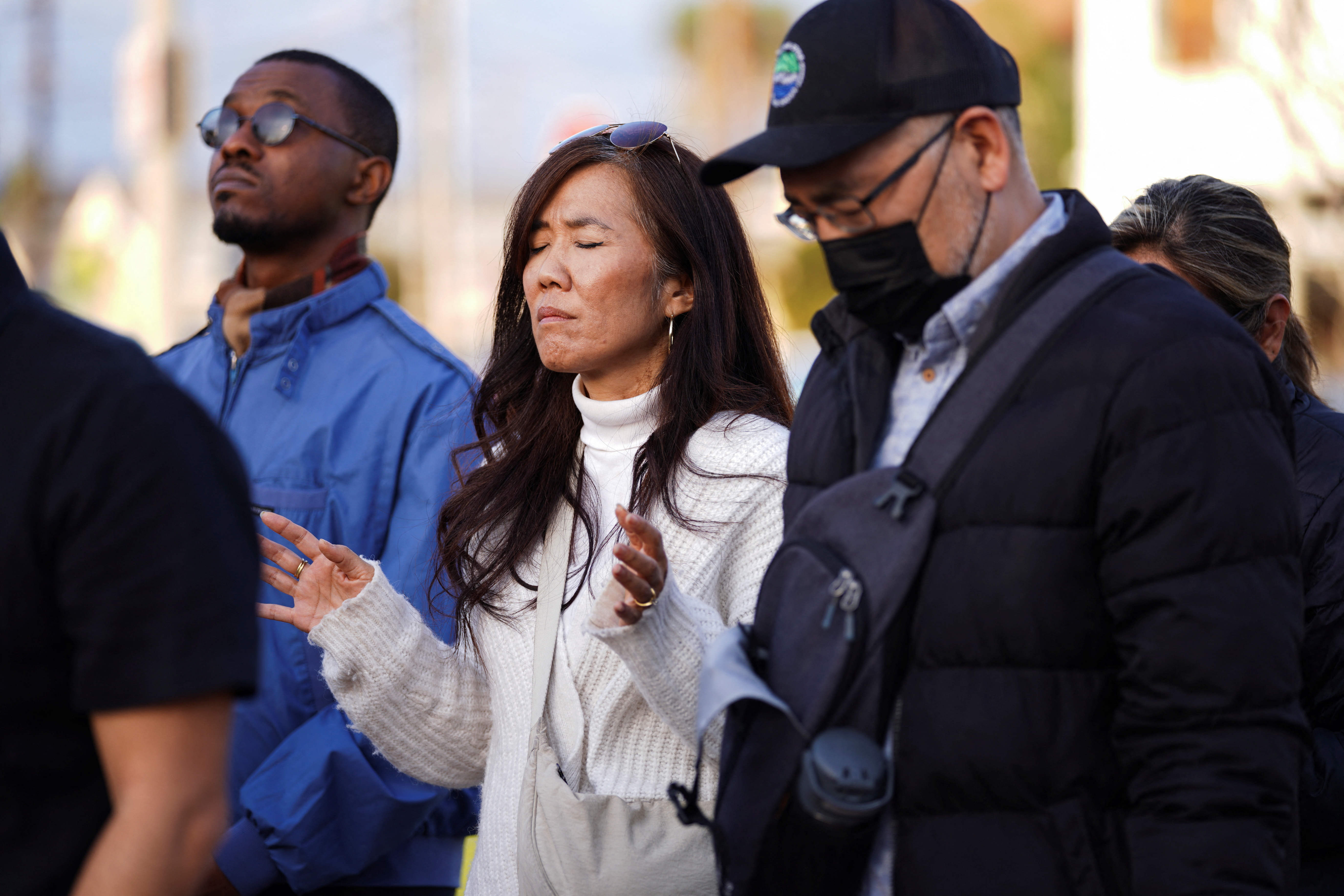
 Jolie Slater, right, and Beth Paz, from Lake Avenue Church, embrace each other at a gathering held to honor the victims killed in Saturday’s ballroom dance studio shooting in Monterey Park, Calif., Sunday, Jan. 22, 2023. A gunman killed multiple people at the Star Ballroom Dance Studio late Saturday amid Lunar New Years celebrations in the predominantly Asian American community of Monterey Park. (AP Photo/Jae C. Hong)
 Investigators leave the Star Ballroom Dance Studio following Saturday’s fatal mass shooting in Monterey Park, Calif., Sunday, Jan. 22, 2023. (AP Photo/Jae C. Hong)