Categories
Audio Sources - Full Text Articles

Peru“s Machu Picchu, Inca trail ordered closed as protests flare

2023-01-21T19:13:40Z

?m=02&d=20230121&t=2&i=1620885629&r=LYNX

FILE PHOTO: A man stands near the Incan ruins of Machu Picchu, a tourism magnet, access to which is being limited by local protests against rising prices amid a worldwide surge most recently triggered by the Russian invasion of Ukraine, outside of Cuzco, Peru April 18, 2022. Picture taken April 18, 2022. REUTERS/Alessandro Cinque/File Photo

(Reuters) – Peruvian authorities ordered the closure of the Incan citadel of Machu Picchu and the Inca trail which leads to the world-renowned archeological site as of Saturday amid anti-government demonstrations that have spread nationwide and left a mounting death toll.

Dozens of Peruvians were injured after tensions flared again on Friday as police clashed with protesters, with security forces in capital city Lima using tear gas to repel demonstrators throwing glass bottles and stones, as fires burned in the streets.

Some 46 people have been killed in the weeks-long clashes and another nine in traffic accidents related to the barricades set up amid the protests.

In the Cusco region, the gateway to Machu Picchu, Glencore’s major Antapaccay copper mine suspended operations on Friday after protesters attacked the premises – one of the largest in the country – for the third time this month.

Airports in Arequipa, Cusco and the southern city of Juliaca were also attacked by demonstrators, delivering a fresh blow to Peru’s tourism industry.

Cultural authorities in Cusco said in a statement that “in view of the current social situation in which our region and the country are immersed, the closure of the Inca trail network and Machu Picchu has been ordered, as of January 21 and until further notice”.

The imposing Incan citadel is a major tourist attraction, with over a million visitors per year, though that number was reduced due to the pandemic.

Protests have rocked Peru since former President Pedro Castillo was ousted in December after he attempted to dissolve the legislature to prevent an impeachment vote.

The unrest, which until this week been concentrated in Peru’s south, has prompted the government to extend a state of emergency to six regions, curtailing some civil rights.

Categories
Audio Sources - Full Text Articles

Justice Department investigating Abbott baby formula plant

NEW YORK (AP) — The U.S. Justice Department is investigating the Abbott Laboratories infant formula plant in Michigan that was shut down for months last year due to contamination, the company confirmed.

The factory’s closure in February 2022 was a key cause of a nationwide baby formula shortage that forced parents to seek formula from food banks, friends and doctor’s offices. Production restarted in June.

The Justice Department has informed Abbott of its investigation and the company is “cooperating fully,” Abbott spokesperson Scott Stoffel said via email. He declined to provide further details.

The investigation was first reported by The Wall Street Journal, which said the Justice Department’s consumer protection branch is looking into conduct at the Sturgis, Michigan, plant that led to its shutdown.

Abbott closed the factory after the Food and Drug Administration began investigating four bacterial infections among infants who consumed powdered formula from the plant. Inspectors uncovered several violations at the plant, including bacterial contamination, a leaky roof and lax safety protocols. But Abbott has stated that its products have not been directly linked to the infections, which involved different bacterial strains.

Abbott is one of just four companies that produce 90% of U.S. formula, and its February recall of several leading brands, including Similac, squeezed supplies that had already been strained by supply chain disruptions and stockpiling during COVID-19 shutdowns.

The shortage was especially acute for children with allergies, digestive problems and metabolic disorders who rely on specialty formulas. The Abbott factory is the only source of many of those products.

The FDA has faced intense criticism for taking months to close the plant and then negotiate its reopening.

Categories
Audio Sources - Full Text Articles

Schools face pressure to take harder line on discipline

As kids’ behavior reaches crisis points after the stress and isolation of pandemic shutdowns, many schools are facing pressure from critics to rethink their approaches to discipline — including policies intended to reduce suspensions and expulsions.

Approaches such as “restorative justice” were adopted widely in recent decades as educators updated exclusionary policies that cut off students’ access to learning and disproportionately affected students of color.

But more students have been acting out, and some school systems have faced questions from teachers, parents and lawmakers about whether a gentle approach can effectively address problems that disrupt classrooms.

The latest example came this week in Newport News, Virginia, where teachers complained at a school board meeting that the school system where a 6-year-old shot his teacher had become too lenient with students. Students who assaulted staff were routinely allowed to stay in the classroom, they said, because of a misguided focus on keeping them in school.

The local school board said it would take “the necessary steps to restore public confidence” in the school system.

Both anecdotally and according to federal data, instances of misbehavior have been on the rise since students returned to classrooms from the COVID-19 pandemic. A National Center for Education Statistics survey of school leaders last summer found 56% of respondents said the pandemic led to increased classroom disruptions from student misbehavior and 48% said it led to more acts of disrespect toward teachers and staff.

New scrutiny of approaches to discipline could halt momentum for policy reform, said Rachel Perera, a fellow at the Brookings Institution who studies education.

“There’s a lot of pressure on schools right now,” she said. “Schools also say they don’t have the resources to address more behavioral problems, and I worry that that will translate to schools falling back on old practices that are not effective in terms of supporting students in the way they need.”

Policy reversals are already underway. In Gwinnett County, Georgia, the school board approved the use of a “restorative practices” program in August that was meant to focus on conflict resolution, repairing harm and rebuilding relationships in the classroom. But the district paused the program in December, with plans to restart it in the 2023-2024 school year, after concerns were raised over incidents in school, including a video of a student assaulting a teacher at a high school.

In Clark County, Nevada, district leaders announced in March that they would take a harder line on fighting and physical altercations, saying they would be grounds for expulsion. Some in the community had blamed a “restorative justice” approach for an increase in violence.

As of 2020, 21 states and the District of Columbia had passed legislation supporting the use of restorative practices in schools, according to research from the Georgetown Law Center on Poverty and Inequality.

Implementing the practice properly takes time, resources, and community support, said Rebecca Epstein, the center’s executive director.

“Change is hard,” Epstein said. “Change takes work and it also takes resources and educators are spread really thin. It can’t be up to individual teachers alone to shift the culture of automatically resorting to excluding students in response to disruptive behavior. It really takes a whole school cultural shift.”

Using restorative justice does not mean a school cannot remove a disruptive student from the classroom, said Thalia González, a professor at the UC College of the Law, San Francisco. But unlike other forms of discipline, restorative practices aim to address the root cause of student’s behavior and reintegrated them into classroom.

“That’s the problem with punitive discipline such as suspension and expulsion,” Gonzalez said. “You get removed and then you just come back. There’s nothing done to reintegrate into the community and rebuild the climate, the connectedness, the sense of safety, all the things that we know are so important to young people learning.”

Traditional discipline has widened inequities. Black children often are suspended or expelled at rates far higher than white children. Research has found that these discipline disparities can have lifelong consequences for children, such as worsened educational outcomes and higher rates of incarceration.

Newport News has its own history with restorative justice.

At a school board meeting in 2017 district officials discussed efforts to reduce school suspensions while implementing restorative practices. Tracy Pope, then the school system’s restorative practices specialist, said at the time that such practices did not do away with anything already in place, but was rather “another way to look at how we do discipline.”

Well before the Jan. 6 shooting of a first-grade teacher, not all educators were happy with the handling of student discipline. According to a spring 2022 survey of teachers and staff, only 60% of respondents said administrators were addressing negative student behaviors.

Michelle Price, a spokesperson for the Newport News schools, said in an email that the district’s code of conduct “fosters the school division’s mission to ensure all students graduate ‘citizen-ready.’

“It provides guidance for students, families, and staff, and details the many options available to NNPS staff to address student conduct,” she said.

___

Ma writes about education and equity for AP’s Race and Ethnicity team. Follow Ma and Finley on Twitter: https://www.twitter.com/anniema15 and https://www.twitter.com/Ben_Finley

___

The Associated Press’ reporting around issues of race and ethnicity is supported in part by the Howard Hughes Medical Institute’s Department of Science Education. The AP is solely responsible for all content.

Categories
Audio Sources - Full Text Articles

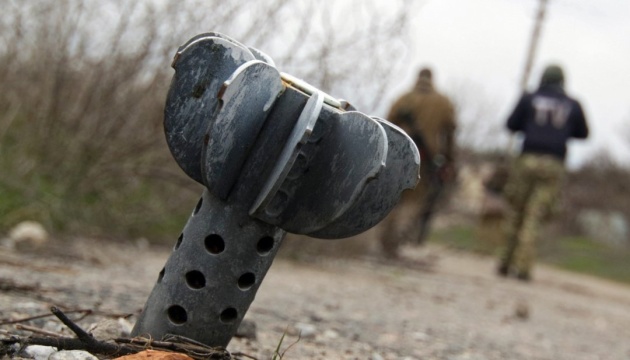
Enemy shells Nikopol district, industrial enterprise damaged

630_360_1479558145-5682.jpg

Russian forces shelled the Nikopol district in Dnipropetrovsk area, harmful an industrial organization.

Mykola Lukashuk, head of the Dnipropetrovsk Regional Council, claimed this in a Telegram publish, Ukrinform studies.  

“This night, the Marhanets local community in the Nikopol district arrived beneath an enemy assault: Russian occupiers shelled it with large artillery and MLRS. There is destruction at one of the industrial enterprises, details are currently being clarified,” Lukashuk wrote.

According to him, no a person was wounded as a end result of the shelling.

In other districts of the region, no attacks ended up recorded.

As documented, Russian troops shelled border locations of Sumy area with mortars 3 moments on January 21.

iy

Source link

The post Enemy shells Nikopol district, industrial enterprise damaged appeared first on Ukraine Intelligence.

Categories
Audio Sources - Full Text Articles

Are Mexican cartels carrying out more violence on US soil?

(NewsNation) — It’s still unclear if a shooting in Central California that left six dead this week was directly related to a Mexican cartel dispute, but experts say it can be hard to make that determination.

A 16-year-old mother and her 10-month-old son were among the victims in what local police have called a “cartel-style” execution. Law enforcement has determined some people at the home had gang and drug associations.

If the attack ends up being tied to an inter-cartel dispute, it would be an uncommon instance of “spillover violence” in the United States.

“While drug-related violence in Mexico remains a concern, there is minimal spillover violence in the United States, as U.S.-based Mexican transnational criminal organization (TCO) members generally refrain from inter-cartel violence to avoid detection and increased scrutiny by law enforcement,” the Drug Enforcement Agency (DEA) wrote in its most recent National Threat Assessment.

The cartel-related violence that does occur in the U.S. tends to take place along the southwest border and is mainly associated with “trafficker-on-trafficker” incidents, the DEA noted.

Those who study Mexican cartels agreed that the organizations tend to be much less brazen on U.S. soil.

“They (cartels) are deterred by effective U.S. law enforcement and judicial entities but in Mexico, they’re not,” said Nathan Jones, a nonresident scholar in drug policy and Mexico studies at Rice University.

That’s one of the reasons the homicide rate in Mexico is about five times higher than in the United States, Jones pointed out.

Jones said he hasn’t seen evidence that spillover violence is increasing, but said it’s hard to measure how much violence in the U.S. is directly linked to Mexican cartels.

“Oftentimes this type of violence will be subcontracted to local street gangs, prison gangs, and local actors,” he said.

In other words, drug disputes that ultimately stem from cartel activities may be attributed to domestic street gangs instead.

Although rare, blatant cartel violence in American cities does occur.

In May 2013, Juan Jesus Guerrero Chapa was gunned down in the parking lot of a Southlake, Texas, shopping center. Authorities say two assassins were sent from Mexico by cartel leaders to carry out the hit against Guerrero-Chapa, who was the longtime personal attorney for the former head of the notorious Gulf Cartel.

Earlier this month, Mexican authorities arrested Jose Rodolfo Villarreal-Hernandez, also known as “El Gato.” Villarreal-Hernandez was on the FBI’s Ten Most Wanted list for allegedly orchestrating the 2013 ambush in Southlake.

The DEA’s latest assessment found major Mexican cartels operating in at least 60 American cities. That activity extends as far south as Miami, Florida, and as far north as Bellingham, Washington.

Some national security experts are concerned spillover violence will become more common as a record number of migrants cross the southern border.

“My expert opinion is that we’re going to see an increase in cartel violence within the United States in all of its forms,” said Charles Marino, a former advisor to the Department of Homeland Security and the CEO of Sentinel Security Solutions.

Marino said many migrants crossing the border are human trafficking victims who will have no choice but to continue working for the cartels.

Data shows that in recent years Immigrations and Customs Enforcement (ICE) has been removing fewer gang members who are in the country illegally. In 2019, 5,497 suspected gang members were deported. In 2022, only 2,667 suspected gang members were removed from the U.S.

Marino believes that decline is a direct result of Biden administration policies that narrowed the scope of ICE agents’ duties.

In a memo sent to ICE leadership in Sep. 2021, Department of Homeland Security Secretary Alejandro Mayorkas directed ICE agents to focus on those with serious criminal histories and said being in the country illegally “should not alone be the basis of an enforcement action” against an individual.

In June, a federal judge in Texas vacated the enforcement guidelines set forth by Mayorkas.

Categories
Audio Sources - Full Text Articles

Canada settles residential school reparations class action for C$2.8 bln

2023-01-21T20:12:39Z

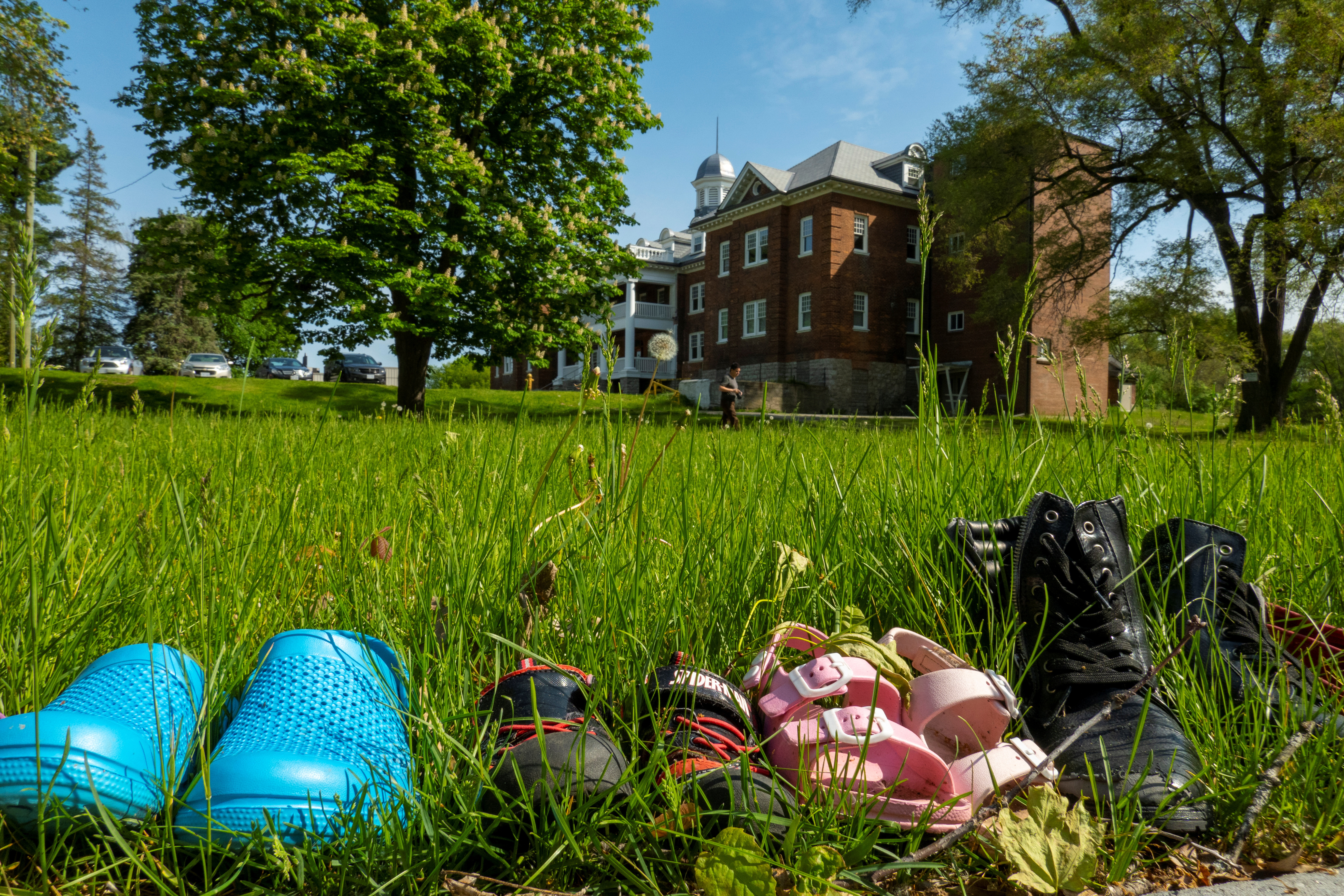
Children’s shoes are pictured outside the Mohawk Institute, a residential school for indigenous children that operated for 136 years, during the planting of commemorative apple trees on the former grounds which is now the Mohawk Village Memorial Park in Brantford, Ontario, Canada May 24, 2022. REUTERS/Carlos Osorio/File Photo

Canada has reached an agreement to settle a class-action lawsuit, seeking compensation for the loss of language and culture brought on by Indian residential schools, for C$2.8 billion ($2.09 billion).

The settlement builds on the 2021 Gottfriedson Day Scholars settlement, that provided individual compensation to day scholars who attended a residential school but did not reside at the institution.

Canada will provide the settlement amount to a non-profit trust, independent of the government, as part of the class settlement.

The organization charged with administering the trust will be governed by a permanent board consisting of nine indigenous directors, the government said in a statement.

The terms of the settlement are yet to be approved by the Federal Court.

($1 = 1.3380 Canadian dollars)

Categories
Audio Sources - Full Text Articles

White House chief of staff Ron Klain expected to step down: sources

(Reuters) – Ron Klain, President Joe Biden’s White House chief of staff, plans to leave his post in the coming weeks, sources familiar with the matter said on Saturday, in a major changing of the guard.

Klain has informed Biden of his plans, the sources said, confirming a New York Times story that said the long-serving aide would likely depart after the president’s State of the Union address on Feb. 7.

The 61-year-old Klain has a long history at the White House, having served as chief of staff to former Vice President Al Gore and to Biden when he was vice president under President Barack Obama.

His departure is coming as Biden prepares to declare his intention to seek a second four-year term in 2024, an announcement anticipated after the State of the Union address.

The Times cited a lengthy list of possible successors to Klain: Labor Secretary Marty Walsh; former Delaware Gov. Jack Markell; Biden senior adviser Anita Dunn, counselor to the president Steve Richetti, former pandemic coordinator Jeff Zients and domestic policy adviser Susan Rice, along with Agriculture Secretary Tom Vilsack.

The news broke as Biden spent the weekend at his Rehoboth Beach, Delaware, home.

Categories
Audio Sources - Full Text Articles

Illegal border crossings surge to highest of Biden’s term

WASHINGTON (AP) — A surge in Cuban and Nicaraguan arrivals at the U.S. border with Mexico in December led to the highest number of illegal border crossings recorded during any month of Joe Biden’s presidency, authorities said Friday.

The extraordinary influx came shortly before Biden introduced measures on Jan. 5 to deter Cubans, Haitians, Nicaraguans and Venezuelans.

U.S. authorities stopped migrants 251,487 times along the Mexican border in December, up 7% from 234,896 times in November and up 40% from 179,253 times in December 2021, Customs and Border Protection said.

Cubans were stopped nearly 43,000 times in December, up 23% from November and more than quintuple the same period a year earlier. Nicaraguans were stopped more than 35,000 times, up 3% from November and more than double from December 2021.

More migrants were also stopped from Ecuador and Peru.

The influx from Cuba and Nicaragua made El Paso, Texas, the busiest of the Border Patrol’s nine sectors on the Mexican border for a third month in a row. The city was overwhelmed with migrants who were released to pursue their immigration cases in the U.S. in the weeks leading up to Biden’s visit on Jan. 8, his first to the border as president.

The number of Venezuelan arrivals remained far below September highs, when the South American country was the second-highest nationality at the border after Mexicans. In October, the U.S. agreed to accept up to 24,000 Venezuelans on humanitarian parole, while Mexico agreed to take back the same number who entered the U.S. illegally and could be expelled under a pandemic-era rule to deny rights to seek asylum on grounds of preventing the spread of COVID-19.

Biden said this month that the U.S. would admit up to 30,000 people a month under humanitarian parole from Cuba, Haiti, Nicaragua and Venezuela, allowing them to live and work for two years if they apply online, pay airfare and find a financial sponsor. At the same time, Mexico agreed to take back the same number from those four countries who enter the U.S. illegally and can be removed under the pandemic-era rule known as Title 42.

Troy Miller, CBP’s acting commissioner, signaled that the latest measures may be having the desired effect.

“Early data suggests the expanded measures for Cubans, Haitians, and Nicaraguans are having a similar impact, and we look forward to sharing the additional data in the next update,” he said in a news release.

Categories
Audio Sources - Full Text Articles

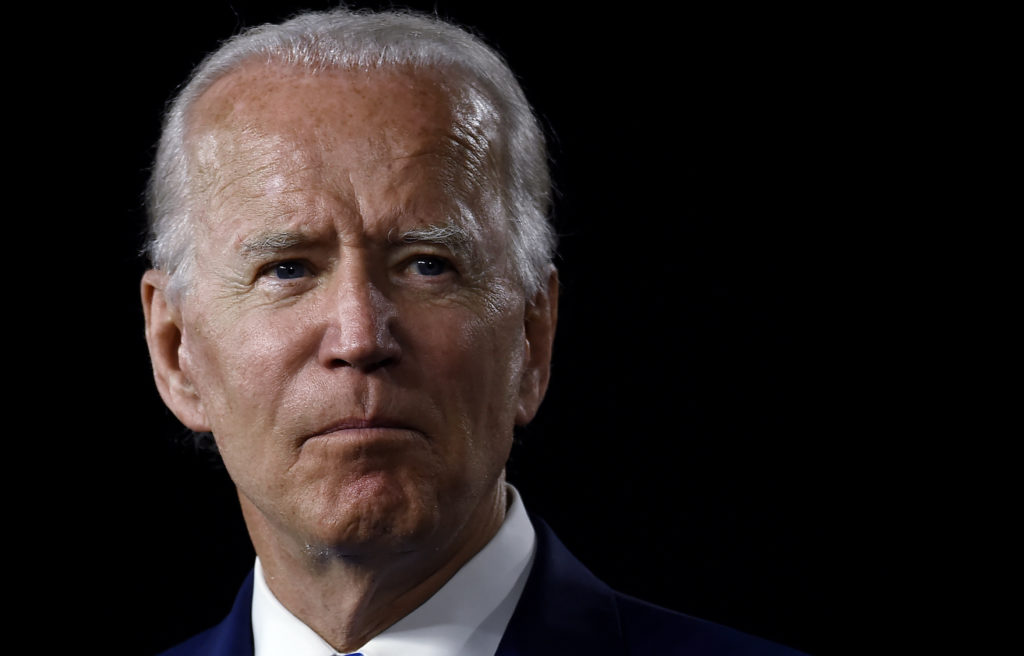
Don’t let the Republicans get away with this one

joe-biden-2.jpg

Help support Palmer Report! Our articles are all 100% free to read, with no forced subscriptions and nothing hidden behind paywalls. If you value our content, you’re welcome to pay for it:

Pay $5 to Palmer Report:

Pay $25 to Palmer Report:

Pay $75 to Palmer Report:


—

Click here to support Palmer Report! Our articles are all 100% free to read, with no forced subscriptions and nothing hidden behind paywalls. If you value our content, you’re welcome to pay for it:

Pay $5 to Palmer Report:

Pay $25 to Palmer Report:

—

Sign up for the Palmer Report mailing list

—

Follow Palmer Report on Facebook • Twitter • Post • Mastodon

—


After President Obama’s first midterm, Republicans decided to use their newly found power in the House to investigate anything and everything related to the administration. They didn’t actually uncover anything of significance – it didn’t diminish Obama’s popularity enough to cost him re-election to a second term, but it worked as a fundraising opportunity and led to Republicans rallying around Benghazi, which did considerable damage to Hillary Clinton when she ran for president in 2016. The media was largely complicit in the non-story about her emails, and the damage was done, allowing Donald Trump to take the White House. Obviously, Republicans with their ridiculous calls to investigate Hunter Biden and the classified docs story, were hoping they could get the same luck twice – and that maybe it’d pay off for them to win full control again in 2024.


The problem is, the House GOP has already hit a snag in their efforts to investigate President Biden’s classified docs. Both the House Judiciary Chair and House Intelligence Committee are running their own investigative efforts into the matter but the problem – aside from the fact that people like Reps. James Comer and Jim Jordan have never run an investigation before, is that Merrick Garland’s appointment of a special counsel means that the House Republicans investigating are likely to be shut out of information requests while the special counsel completes their investigation.

Congressional investigations don’t have much significance when it comes to prosecutions – they’re largely there for the court of public opinion. The problem with this is rather than making the Biden administration look guilty, the poorly organized investigations are just making Republicans look hopelessly incompetent.

Support Palmer Report! Our articles are all 100% free to read, with no forced subscriptions and nothing hidden behind paywalls. If you value our content, you’re welcome to pay for it:

Pay $5 to Palmer Report:

Pay $25 to Palmer Report:

Pay $75 to Palmer Report:

Write for the Palmer Report Community Section.

Help support Palmer Report! Our articles are all 100% free to read, with no forced subscriptions and nothing hidden behind paywalls. If you value our content, you’re welcome to pay for it:

Pay $5 to Palmer Report:

Pay $25 to Palmer Report:

Pay $75 to Palmer Report:

The post Don’t let the Republicans get away with this one appeared first on Palmer Report.

Categories
Audio Sources - Full Text Articles

Peru“s Machu Picchu, Inca trail ordered closed as protests flair

2023-01-21T19:13:40Z

?m=02&d=20230121&t=2&i=1620885629&r=LYNX

FILE PHOTO: A man stands near the Incan ruins of Machu Picchu, a tourism magnet, access to which is being limited by local protests against rising prices amid a worldwide surge most recently triggered by the Russian invasion of Ukraine, outside of Cuzco, Peru April 18, 2022. Picture taken April 18, 2022. REUTERS/Alessandro Cinque/File Photo

(Reuters) – Peruvian authorities ordered the closure of the Incan citadel of Machu Picchu and the Inca trail which leads to the world-renowned archeological site as of Saturday amid anti-government demonstrations that have spread nationwide and left a mounting death toll.

Dozens of Peruvians were injured after tensions flared again on Friday as police clashed with protesters, with security forces in capital city Lima using tear gas to repel demonstrators throwing glass bottles and stones, as fires burned in the streets.

Some 46 people have been killed in the weeks-long clashes and another nine in traffic accidents related to the barricades set up amid the protests.

In the Cusco region, the gateway to Machu Picchu, Glencore’s major Antapaccay copper mine suspended operations on Friday after protesters attacked the premises – one of the largest in the country – for the third time this month.

Airports in Arequipa, Cusco and the southern city of Juliaca were also attacked by demonstrators, delivering a fresh blow to Peru’s tourism industry.

Cultural authorities in Cusco said in a statement that “in view of the current social situation in which our region and the country are immersed, the closure of the Inca trail network and Machu Picchu has been ordered, as of January 21 and until further notice”.

The imposing Incan citadel is a major tourist attraction, with over a million visitors per year, though that number was reduced due to the pandemic.

Protests have rocked Peru since former President Pedro Castillo was ousted in December after he attempted to dissolve the legislature to prevent an impeachment vote.

The unrest, which until this week been concentrated in Peru’s south, has prompted the government to extend a state of emergency to six regions, curtailing some civil rights.

WP Radio
WP Radio
OFFLINE LIVE