
Helicopter crash in Brovary – Google Search google.com/search?q=Helic… nytimes.com/live/2023/01/1…
Day: January 21, 2023
Michael Novakhov retweeted:
If the German Chancellor is incapable of taking the right decisions, Poland must now lead a coalition of the willing to send the heavy tanks that Ukraine needs! #Ramstein #FreeTheLeopards
Michael Novakhov retweeted:
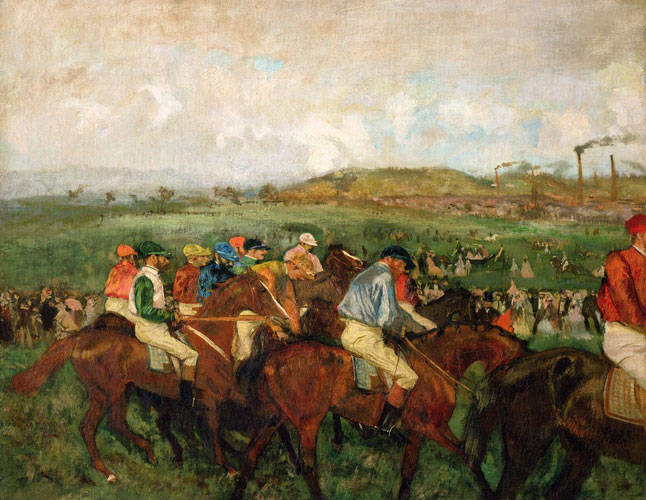
Эдгар Дега. «Джентльмены на скачках. Перед стартом». 1882 г. Холст, масло. Музей Орсе. Париж. Франция.

Since the time of Tony Blair and Gerhard Schröder, social democrats in Europe have declined in electoral support. But is this trend reversing?
In 1994, social democrats held about 35% of the seats in the European Parliament, which decreased to 29% by 1999, continuing its decline to 27% in 2004, and 25% in 2009 and 2014, respectively. In 2019, the last EU election, support for the left-leaning group plummeted to 21%.
Granted, new states joined the EU over the years, and national EU electoral systems were modified, which makes comparison tricky. Also, seat shares only roughly translate into vote share because larger states are proportionally underrepresented in the bloc’s co-legislator.
Regardless, the story of social democrats’ decline is well-documented.
In January 2020, EURACTIV’s polling partner Europe Elects projected that if an election were held, only 18% of the seats and EU-wide popular vote would go to social democratic parties. However, the waning of the past 20 years seems to have since halted, at least for now.
In the past three years, social democrats have not fallen below 18% and would currently receive 20% of the seats. However, it is far too early for centre-left joviality as that result is still below the 2019 election result. Moreover, the lack of data makes it difficult to identify other multi-year recovery phases in support of the centre-left between elections, even if they did occur.
Still, with only one more year until the 2024 EU elections and given the indolent ‘party’ system at the bloc level, the boost in support can be seen as an unusual treat for social democrats in Europe.
We can only speculate about the sustainability and causes of this stabilisation. The temporary halt in decline at 25% after the 2014 elections was followed by further collapse five years later.
One could argue tectonic shifts affecting public life at the end of the last decade, such as Brexit and the coronavirus pandemic, helped to consolidate support around policies that promote a social democratic state that favours European integration. An uptick in support observable after the beginning of Russia’s invasion of Ukraine in 2022 also points in this direction.
Nevertheless, looking at the other parties shows that voting behaviour in the past four years has been remarkably stable in Europe on an aggregate level.
The centre-right EPP Group in the EU Parliament is projected to win 160 seats, 16 less than they currently have. The Social Democrats (S&D) are projected to win 143, one less than they now hold. The liberal Renew Europe group would remain in third position with 99 seats, three less than they have now.
Data suggests the biggest boost in support for the national-conservative ECR Group in Europe, which is projected to overtake the Greens/EFA Group (projected 56 seats, minus 15) and the right-wing Identity and Democracy Group (projected 63, minus one) with 84 seats (+21).
The Left is also on the rise, projected to win 48 seats (+10). Forty-five seats (-19) would go to unaffiliated MEPs, while seven seats could be snatched by new parties that, at this point, have no ties with any of the groups mentioned before.
In 2019, the ECR and the Left Group had issues mobilising their national parliament electorate for EU elections (on which the current projection is based), while The Greens/EFA performed above expectations. This could mean the swings for the three political groups are likely not to be as strong as projected.
(Tobias Gerhard Schminke | EURACTIV.com with Europe Elects)
BERLIN (AP) — Germany has become one of Ukraine’s leading weapons suppliers in the 11 months since Russia’s invasion, but Chancellor Olaf Scholz also has gained a reputation for hesitating to take each new step — generating impatience among allies.
Berlin’s perceived foot-dragging, most recently on the Leopard 2 battle tanks that Kyiv has long sought, is rooted at least partly in a post-World War II political culture of military caution, along with present-day worries about a possible escalation in the war.
On Friday, Germany inched closer to a decision to deliver the tanks, ordering a review of its Leopard stocks in preparation for a possible green light.
There was still no commitment, however. Defense Minister Boris Pistorius rejected the suggestion that Germany was standing in the way but said, “we have to balance all the pros and contras before we decide things like that, just like that.”
It’s a pattern that has been repeated over the months as Scholz first held off pledging new, heavier equipment, then eventually agreed to do so.
Most recently, Germany said in early January that it would send 40 Marder armored personnel carriers to Ukraine — doing so in a joint announcement with the U.S., which pledged 50 Bradley armored vehicles.
That decision followed months of calls for Berlin to send the Marder and stoked pressure for it to move up another step to the Leopard tank.
“There is a discrepancy between the actual size of the commitment and weapons deliveries — it’s the second-largest European supplier — and the hesitancy with which it is done,” said Thomas Kleine-Brockhoff, a Berlin-based senior analyst with the German Marshall Fund of the United States think tank.
Scholz, an unshakably self-confident politician with a stubborn streak and little taste for bowing to public calls for action, has stuck resolutely to his approach. He has said that Germany won’t go it alone on weapons decisions and pointed to the need to avoid NATO becoming a direct party to the war with Russia.
As pressure mounted last week, he declared that he wouldn’t be rushed into important security decisions by “excited comments.” And he insisted that a majority in Germany supports his government’s “calm, well-considered and careful” decision-making.
Speaking at the World Economic Forum in Davos, Switzerland, on Wednesday, Scholz listed some of the equipment Germany has sent to Ukraine, declaring that it marks “a profound turning point in German foreign and security policy.”
That is, at least to some extent, true. Germany refused to provide lethal weapons before the invasion started, reflecting a political culture rooted in part in the memory of Germany’s own history of aggression during the 20th century — including the Nazi invasion of the Soviet Union.
“No German chancellor, of no party, wants to be seen out front in pushing a military agenda — you want to try all other options before you resort to that,” Kleine-Brockhoff said. “And therefore for domestic consumption, it is seen as a positive thing for a German chancellor not to lead on this, to be cautious, to be resistant, to have tried all other options.”
Scholz does face calls from Germany’s center-right opposition and some in his three-party governing coalition to be more proactive on military aid; less so from his own center-left Social Democratic Party, which for decades was steeped in the legacy of Cold War rapprochement pursued by predecessor Willy Brandt in the early 1970s.
Scholz “decided early on that he does not want to lead militarily on Ukraine assistance,” Kleine-Brockhoff said, though “he wants to be a good ally and part of the alliance and in the middle of the pack.”
But the cautious approach “drives allies crazy” and raises questions over whether they can count on the Germans, Kleine-Brockhoff acknowledged.
Berlin kept up its caution on the Leopard tank even after Britain announced last week that it would provide Ukraine its own Challenger 2 tanks.
The hesitancy isn’t just an issue between Berlin and Kyiv, since other countries would need Germany’s permission to send their own stocks of German-made Leopards to Ukraine. On Wednesday, Polish Prime Minister Mateusz Morawiecki said Warsaw would consider giving its tanks even without Berlin’s permission.
“Consent is of secondary importance here. We will either obtain it quickly, or we will do the right thing ourselves,” Morawiecki said.
British historian Timothy Garton Ash wrote in The Guardian and other newspapers this week that “to its credit, the German government’s position on military support for Ukraine has moved a very long way since the eve of the Russian invasion.”
But he argued that the tank issue has become “a litmus test of Germany’s courage to resist (Russian President Vladimir) Putin’s nuclear blackmail, overcome its own domestic cocktail of fears and doubts, and defend a free and sovereign Ukraine,” and that Scholz should lead a “European Leopard plan.”
Whether that will eventually happen remains to be seen. Scholz’s government has insisted on close coordination with the United States, a possible reflection in part of the fact that Germany — unlike Britain and France — relies on the U.S. nuclear deterrent.
On Friday, Scholz’s spokesman, Steffen Hebestreit, denied reports that Germany had insisted it would only deliver Leopard tanks if the U.S. sends its own Abrams tanks. He rejected the notion that Berlin is trailing others and insisted it is taking the right approach.
“These are not easy decisions, and they need to be well-weighed,” he said. “And this is about them being sustainable, that all can go along with them and stand behind them — and part of a leadership performance is keeping an alliance together.”
___
Follow AP’s coverage of the war in Ukraine: https://apnews.com/hub/russia-ukraine
Ramstein meet offers more weapons to Ukraine, but no decisions made on tanks – @EURACTIV euractiv.com/section/global…
LOS ANGELES (AP) — Hall of Fame football player Shannon Sharpe had a heated courtside conversation with Memphis Grizzlies players Ja Morant and Dillon Brooks and Morant’s father at the end of the first half Friday night in a nationally televised game against the Los Angeles Lakers.
The Fox Sports personality exchanged words with Brooks throughout the first half and then yelled at Morant on the final possession of the second quarter. After the halftime buzzer sounded, Brooks yelled at Sharpe and Sharpe motioned toward Brooks.
Morant walked toward Sharpe at his courtside seat before center Steven Adams stepped in front of him.
Tee Morant, Ja Morant’s father, also got involved in the conversation before security at Crypto.com arena separated everyone.
Sharpe, 54, yelled “I bet you won’t!” at Tee Morant as security guards tried to break things up.
Sharpe and Tee Morant talked to security in the tunnels at the arena before returning to their seats when the second half started. They hugged at the end of the third quarter.
___
AP NBA: https://apnews.com/hub/nba and https://twitter.com/AP_Sports

