Michael Novakhov retweeted:
60 Jahre #Zeitenwende stärken. Ich danke Dir für das gemeinsame Handeln in diesen Tagen @EmmanuelMacron. #KanzlerKompakt 🇫🇷🇩🇪
 The Brooklyn Times - bklyntimes.com
Michael Novakhov retweeted:
60 Jahre #Zeitenwende stärken. Ich danke Dir für das gemeinsame Handeln in diesen Tagen @EmmanuelMacron. #KanzlerKompakt 🇫🇷🇩🇪
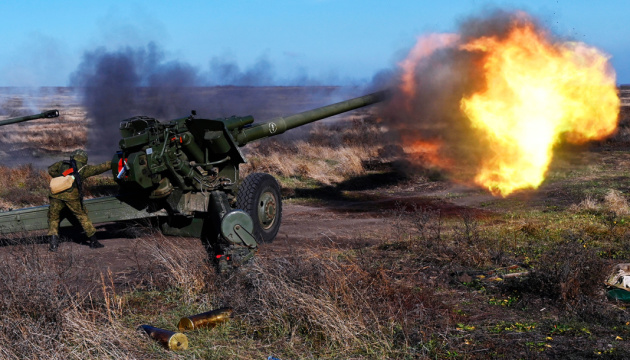
Russian troops launched 36 strikes on the territory of Kherson area more than the past day. Four men and women, together with two young people, ended up hurt.
“About the past working day, January 20, Russian invaders shelled the territory of Kherson location 36 occasions. Tranquil cities and villages have been hit with artillery, MLRS, and mortars… 4 residents of Kherson region acquired accidents of varying levels of severity. Two individuals were being wounded hitting a Russian mine, a 16-12 months-previous boy amongst them. Two folks had been injured in Russian military strikes, a 15-year-outdated boy amid them,” Yaroslav Yanushevych, Head of the Kherson Regional Military services Administration, posted on Telegram.
According to him, the Russians shelled the city of Kherson 11 occasions around the earlier working day, concentrating on the residential neighborhoods, detrimental the houses.
As noted, Kherson region is at the moment less than regular Russian shelling.
ol
The post Russians hit Kherson region 36 times in past day, injuring two teenagers appeared first on Ukraine Intelligence.
Many men and women have asked me for my newest sights on the war in Ukraine, so in this article goes.
Basically my sights have not adjusted. Russia has no path to victory, and the for a longer period the war goes on the worse it gets for Russia, and Putin. It can be only a make any difference of time truly right before either Russian forces in Ukraine collapse, or we see Moscow striving to sue for some form of peace (I think they have tried using several moments in excess of the earlier 12 months really, e.g. through the Turkish route)
On the former, Ukraine has the advantage nevertheless in conditions of troops on the floor, even with the most recent bout of Russian mobilisation. And Ukraine has the gain even now in terms of training and enthusiasm. NATO carries on to arm and teach the Ukrainians at a tempo that just are unable to be matched by Russia. The United kingdom is education now a thing like 30k Ukrainian troops and the US has started a equivalent programme in Poland.
Russian conventional package losses are just so big now that they simply cannot be very easily or speedily changed – they are managing limited of critical munitions and armaments.
Bit by little bit, the Ukrainians are having the package – very first previous T72s, MIG29, but then 155mm artillery, HIMARS, Patriots, Ceasars, now Bradley, and Challenger tanks, and very likely we will see Leopard tanks, and eventually even possible F16s, Apache helicopters, and so on.. Putin has consistently set purple strains when it has arrive to military services supplies from the West, and NATO has constantly rolled through these, contacting Putin’s bluff.
What we have discovered from purple lines remaining set and rolled via is that Putin does not have escalation domination. He has restrictions. He is ultimately afraid of NATO as what he has observed from Ukrainian use of second and third era NATO package in Ukraine, is that Russian fourth and fifth era kit merely simply cannot contend with even decrease tech NATO stuff. If NATO deploys its own 4th and 5th generation kit versus Russia it would be around in hrs. Putin understands this. He faces full defeat if he escalates – and WMD are just not solutions – not often do I concur with some thing Boris Johnson, and he was correct right here when he built comparable responses at Davos.
So, the extended this goes on the even worse it gets for Russia. Additional mobilised troops just do not assist. It just usually means additional Russian troops and kit presenting on their own to be taken out by the Ukrainians.
Speaking to military forms with firsthand expertise now in Ukraine I asked them why the Russians have not seriously bombed NATO convoys providing arms to the Ukrainians. They instructed me that the Russians really don’t have total battlefield satellite protection, which is crucial in modern day warfare. And via NATO, the Ukrainians do. So, the Ukrainians can constantly see in progress what the Russians are doing, ahead of the Russians. It can be just these types of a large benefit. Again it means the extra Russian troops and package are offered, the far more get wiped out.
Now you could possibly request how come the Russians do not have this satellite protection – properly it is both that NATO are jamming them or else the Russians have been investing in the erroneous matters in place – plenty of concentrate on commercial area exercise, like rocket deployment tech to promote to the West, but in fact they have not invested sufficient in genuine satellites, or not adequate relative to NATO.
So above time it just receives even worse – substantially even worse for Russia. More gentlemen and devices shed, and at a time when with oil charges decrease and the Urals oil selling price discount now working at 48%, the Russian budget is eventually beginning to suffer. I estimate that vitality receipts may well be decreased by $150bn this yr, which would signify the price range deficit tripling to around 6% of GDP and likely the $225bn existing account surplus fast evaporating. The latter will accelerate capital flight and reserve depletion. Putin will have to make guns as opposed to butter choices, and that suggests pitfalls of social and political unrest at household.
With all that in head, I consider Moscow would really like a ceasefire or peace deal as is, which would cement its latest gains on the ground, in outcome retaining what it has which is about 17% of Ukrainian territory, which includes the land corridor to Crimea. Moscow experienced all-around 11% prior to the invasion on Feb 21, so Putin could market all this as a get at home, in terms of having an more 6% or so, and he would argue making certain the resupply of Crimea through that land corridor.
And in the conclusion, although Russia might have lost 100k additionally lifeless and wounded and a lot of treasure for not quite significantly, Putin dominates the details narrative at household, and can market regardless of what narrative he would like. If individuals don’t concur they can go away, or protest and stop up with Navalny in the Gulag.
The Ukrainians however will in no way settle for a ceasefire till at the least we get again to Feb 21 configurations. Irrespective of the shift from Russia to assaults on vital infrastructure I see zero alter in the commitment of the Ukrainian authorities to battle on – opinion polls continue to present 90% guidance for continuing the war, and they believe they are heading to gain (so do I). For the Ukrainians it is a issue of survival. Putin has not helped his lead to by shaping the war as a rejection of Ukrainian identity, and that implies that the Ukrainians truly have no choice. The shear brutality of the Russian assault has also cemented view in Ukraine – Russia appears to be established on wiping Ukraine and Ukrainians off the deal with of the earth. So wherever can they go? They have no option but to fight.
Now I know that identical brutality has manufactured some Ukrainians thrust the narrative that the war cannot close right up until all of Ukraine is recaptured, like Crimea and Donbas. But really in personal numerous Ukrainian are extra practical, and numerous would issue why they would want Crimea and DPR and LPR back offered their populations are now warped in their professional-Russian views.
Can Crimea be taken militarily?
Gen. BH’s perception of items is right on target a strike (with serious new gear) on Zap-land to crack the ‘land bridge put together with a different mishap on the Kerch bridge leaves Crimea (and that’s why RU) exceptionally susceptible.
So, I believe any peace can be slice all over Feb 21 configurations, and with the difficulties of the long term of Crimea and DPR and LPR thrown into the lengthy grass via some longer term commission over their upcoming.
NATO might not also countenance a Ukraine higher threat assault on Crimea, which has prolonged before Feb 21 been a substantial Russian military services foundation.
We have seen something of a statis in armed forces positions in the latest months, with emphasis on Bakhmut, but I think later this winter or in the spring we see new Ukrainian offensives and the threat nevertheless is Russian collapse in Ukraine, which indicates at some point Putin has to accept the actuality and negotiate to Feb 21 configurations. He either receives there by armed service collapse with dire political repercussions at residence or else he can negotiate one thing which consists of a reduced military, economic and political value which will allow him to sell some sort of victory at house.
A couple of other points:
Belarus – speak of a Russian/Belarusian counteroffensive from the north?
Effectively Russia tried out that before, in February, and it failed. What has adjusted given that? Not a great deal, apart from Ukrainian capacity and defences improved. And I are unable to see Belarusians fighting for Russia in Ukraine – if Russians will not want to fight in Ukraine, why would the Belarusians, who have no enjoy for Lukashenko? Lukashenko could perhaps current 5,000 faithful troops to combat in Ukraine, but I consider he would be anxious about observing these then ruined in Ukraine, and then the domestic political backlash which could see his have routine toppled. Fairly I think this is all a feint by Russia, to draw Ukrainian forces to the north and away from Donbas. Lukashenko has no alternative but to enjoy along and to present to be loyal to Putin.
Energy – has Putin expended the vitality card?
Perfectly, we are not however via the wintertime, but it has been moderate so far, European fuel storage is at seasonably superior stages, and I consider we are by means of the worst of it. Plenty of aim on the threats to upcoming winter season, but truly I assume we observed the impacts of demand from customers destruction because of selling price, and I assume diversification into renewables and LNG carries on in overdrive.
Really, I imagine we are in for a time period of lower for more time electricity costs, and that hurts Russia. Putin has killed the golden goose. There is no return for Gazprom fuel revenue to Europe.
I know I have been predicting an early finish to the war because September, but basically the sector has traded it that way, as it has developed accustomed to a benign war final result – Putin getting no possibility to escalate, international demand deflates in reaction to the shock of bigger electrical power prices, and markets doing the job to crystal clear imbalances. That is continue to my scenario from in this article. Putin and Russia develop into fewer appropriate. He simply cannot earn the war with a $1.8 trillion Russian economy up in opposition to the West with a merged GDP of what, $40 trillion and a big technological edge.
Western assist for Ukraine
Discuss I know of the West remaining delicate on Ukraine and not inclined to remain for the extended haul. Incorporate in there the GOP handle of the Household in Congress and issues about the capability of Biden to fund the Ukrainian defence.
Basically I believe the West is remarkably unified, and they get that the long run of European stability depends on Putin currently being overwhelmed. The Yanks, the Brits, the East Europeans, the Scandies, even the Dutch are certainly on the similar site. Germany is a joke, and will be pulled kicking and screaming along with the dominant Western see. Orban is largely observed as a traitor in the West now who will be dealt with just after the war ends. Macron is just not related on Ukraine – the French are giving enough finance nor armed forces package as to be appropriate in any way. The French, and Germans, have been totally and completely erroneous on Russia for the past decade and are not seen as acquiring any handy viewpoint.
And on the GOP and Household?
A huge bulk in Congress are still anti Putin, and professional Ukrainian. And in any occasion, Congress already signed off in the $38bn financing bundle for Ukraine in 2023 which will be front loaded.
So, I see no change in potential clients for US and in fact NATO/Western support for Ukraine. In point, I believe the realisation is dawning that the greatest way to prevent NATO having to struggle Putin’s Russia at some issue in the foreseeable future, is in fact to assure the Ukrainians defeat Russia now. Each Russian tank wrecked by Ukraine now is just one a lot less for NATO to have to inevitably confront in the long term.
Russia – the long term?
Really, the far more debatable concern is not how this war will end, as it will totally end in a Ukrainian victory. I have no question. But what takes place to Russia adhering to GS inescapable defeat? Can Putin endure, and can the Federation survive? Therein I see a respectable chance that we see the finish of Putin and, although not my base situation, I imagine it is really doable we see a collapse of the Federation into numerous new states – as with the USSR in 1991. Assume here Tatarstan, Chechnya, Dagestan, Rump Russia, et al. The Federation is I believe 89 areas and autonomous republics. We could see 20 new states.
And the irony herein that Putin started this war to produce a Better Russia, but the most likely internet effect will be a Lesser Russia.
Timothy Ash is a Senior Rising Marketplaces Sovereign Strategist at RBC BlueBay Asset Administration. He is an Associate Fellow at Chatham Home on their Russia and Eurasian software.
Reprinted from @tashecon blog [email protected]
The sights expressed are the author’s and not essentially these of Kyiv Post.
The post Outlook for the war in Ukraine | Opinion appeared first on Ukraine Intelligence.
PHOENIX (AP) — Arizona’s attorney general has put a hold on executions in the state until the completion of a review of death penalty protocols ordered by the new governor due to the state’s history of mismanaging executions.
The review ordered Friday by Gov. Katie Hobbs, Arizona’s first Democratic governor since 2009, came as the state’s new Democratic attorney general, Kris Mayes, withdrew her Republican predecessor’s request for a warrant to execute a convicted killer who initially asked to be executed but later backed out of that request. While Hobbs’ order didn’t declare a moratorium on the death penalty, Mayes will not seek court orders to execute prisoners while the review is underway, said Mayes spokesperson Richie Taylor. The review comes just days after the governor appointed Ryan Thornell, a prison official in Maine, as Arizona’s new corrections director.
“With the Arizona Department of Corrections, Rehabilitation and Reentry now under new leadership, it’s time to address the fact that this is a system that needs better oversight on numerous fronts,” Hobbs said.
The review will examine, among other things, the state’s procurement process for lethal injection drugs and lethal gas, execution procedures, the access of news organizations to executions and the training of staff to carry out executions.
Arizona, which currently has 110 prisoners on death row, carried out three executions last year after a nearly eight-year hiatus that was brought on by criticism that a 2014 execution was botched and because of difficulties obtaining execution drugs.
The state revealed in October 2020 that it had found a compounding pharmacist to prepare lethal injection drugs and announced in the spring of 2021 that it had finally obtained a supply of a lethal injection drug.
Since resuming executions, the state has been criticized for taking too long to insert an IV into a condemned prisoner’s body in early May and for denying the Arizona Republic newspaper’s request to witness the last three executions.
“These problems go back more than a decade,” said Dale Baich, a former federal public defender who teaches death penalty law at Arizona State University. “The department of corrections, the governor and the attorney general (in past administrations) ignored the issues and refused to take a careful look at the problems. Gov. Hobbs and Attorney General Mayes should be commended for taking this matter seriously.”
On Friday, Mayes withdrew a motion made by her Republican predecessor Mark Brnovich for a warrant for the execution of Aaron Gunches, who was first sentenced to death in 2008 for killing his girlfriend’s ex-husband. Gunches earlier this month withdrew his request to be executed, citing recent executions he said amounted to “torture.”
“These circumstances have now changed,” Mayes said. “However, that is not the only reason I am now requesting the previous motion be withdrawn,” Mayes said. “A thorough review of Arizona’s protocols and processes governing capital punishment is needed.”
The state’s nearly eight-year hiatus came after a 2014 execution in which Joseph Wood was injected with 15 doses of a two-drug combination over two hours, leading the death-row prisoner to snort repeatedly and gasp more than 600 times before he died. His lawyers said the execution was botched.
In the past, Arizona and other state had struggled to buy execution drugs after U.S. and European pharmaceutical companies began blocking the use of their products in lethal injections.
In July 2015, the state tried to import sodium thiopental, which had been used to carry out executions but was no longer manufactured by companies approved by the U.S. Food and Drug Administration. The state never received the shipment because federal agents stopped it at the Phoenix airport, and the state lost an administrative challenge to the seizure.
Arizona is the only state to currently have a working gas chamber.
The last lethal gas execution in the United States was carried out in Arizona more than two decades ago. The state refurbished its gas chamber in late 2020. Corrections officials had declined to say why they restarted the gas chamber.
All three prisoners executed in Arizona last year declined lethal gas, leading them to be put to death by injection, the default execution method.

The allies differ on strategy for the coming year and the more immediate question of what Ukraine needs ahead of a major offensive in the spring.
Send any friend a story
As a subscriber, you have 10 gift articles to give each month. Anyone can read what you share.

Defense Secretary Lloyd J. Austin III, left, and Ukrainian officials met in Germany this week with dozens of nations aiding in the war effort. Credit…Michael Probst/Associated Press


By David E. Sanger and Eric Schmitt
WASHINGTON — The billions of dollars in new arms for Ukraine announced this month — including British tanks, American fighting vehicles and howitzers from Denmark and Sweden — are testament to President Vladimir V. Putin’s failure to split the NATO allies after nearly a year of war. But small yet significant fractures are getting too big to hide.
The differences are over strategy for the coming year and the more immediate question of what Ukraine needs in the next few months, as both sides in the war prepare for major offensives in the spring. And while most of those debates take place behind closed doors, Britain’s impatience with the current pace of aid and Germany’s refusal to provide Leopard 2 tanks to Ukraine broke out into public view this week.
When the new British foreign secretary, James Cleverly, visited Washington this week, he gathered reporters for lunch and made the case that it is possible for Ukraine to score a “victory” in the war this year if the allies move fast to exploit Russia’s weaknesses. Officials in Poland, the Baltic States and Finland have largely agreed with the British assessment.
American officials pushed back, saying it is critical to pace the aid, and not flood Ukraine with equipment its troops cannot yet operate. And they argue that in a world of limited resources, it would be wise to keep something in reserve for what the Pentagon believes will likely be a drawn-out conflict, in which Russia will try to wear Ukraine down with relentless barrages and tactics reminiscent of World War I and II.
On Friday, at the conclusion of a meeting in Germany of the dozens of nations supplying the war effort, the chairman of the Joint Chiefs of Staff, Gen. Mark A. Milley, repeated the assessment he has offered since the fall.
“For this year it would be very, very difficult to militarily eject the Russian forces,” he said. The best that could be hoped for is pressing Russia into a diplomatic negotiation — the way most wars end — though senior American diplomats say they have low expectations that Mr. Putin will enter serious talks.
Then came the more immediate blowup with the German government of Chancellor Olaf Scholz, over his refusal to send what many military experts believe could be a decisive weapon in Ukrainian hands: the German-built Leopard 2 tanks.
Secretary of Defense Lloyd J. Austin III spent several days trying to persuade the Germans to ship them, or at least allow Poland and other nations that use the tanks to re-export them. But by the time the meeting with scores of allies ended, the German defense minister, Boris Pistorius, reported that no agreement had been reached, although he said they would make a decision “as soon as possible.” He and Mr. Austin tried to focus on the unity of the effort to confront Russia, rather than the obvious rift over arms.
Differences of strategy among wartime allies are the norm, not the exception. In World War II there were major debates about whether to focus on defeating Nazi Germany first, and turn to Japan — which had actually attacked American territory — second. Similar debates happened during the Korean War, Vietnam and the wars in Iraq and Afghanistan. Because the United States was providing the bulk of the fighting force, it usually prevailed.
But in interviews with American, British and other European officials, including senior military leaders, it is clear that Ukraine is different. Only the Ukrainians are on the line, and no one wants to tell them how to fight a battle in which their forces, the only ones engaged in the daily brutality, have shown both grit and determination. But with both Russia and Ukraine planning fresh offensives, the debate over strategy and arms has reached what the NATO secretary general has called “an inflection point.”
The Ukrainians have made no secret that much as they appreciate the support of their allies, what they are getting is not enough. When Britain announced earlier this week that it was sending Challenger 2 tanks, Ukraine’s foreign minister and defense ministers issued a joint statement thanking the British government but adding that “it is not sufficient to achieve operational goals.”
Ukraine’s leader, Volodymyr Zelensky, was typically blunt. After thanking the United States for a $2.5 billion contribution of arms, atop $3 billion announced several weeks ago, he said: “Hundreds of thank yous are not hundreds of tanks.”
In an appearance on German television, he said: “If you have Leopards, then give them to us.”
American officials were clearly frustrated after their negotiations with the German government this week. Germany had begun by saying that it would send Leopard tanks, and authorize others to, if the United States sent its M-1 Abrams tank as well. The United States declined, saying the tank is such a gas guzzler — it employs a jet engine — and requires such a supply line to keep running that it would not be useful in Ukraine’s environment. (The officials dodged questions about why a tank so difficult to operate on European battlefields is in the American arsenal.)
The British Challengers and German Leopards are more flexible and easier to run. But in public, Mr. Austin and others avoided criticizing Mr. Scholz, who in their view has managed the biggest reversal of German foreign policy — starting with the suspension of two pipelines bringing gas from Russia — quite skillfully.
Mr. Scholz’s real concern, they suspect, is that he does not believe the world is ready to see German tanks near the borders of Russia, a reminder of the Nazi invasion in World War II. One senior American official said this week that if Mr. Scholz and the German public are worried about that, in these circumstances “they are the only ones who are.”
While Germany did not say yes to sending Leopard tanks this week, it didn’t say no, either — at least not yet. But Ukraine has a very narrow window of time in which to launch a potentially decisive spring offensive before the Russians do, and the tanks are a key part of that effort.
Before that launch, Ukraine has to muster thousands of combat-ready troops, receive new advanced weapons from the West, and train their soldiers in how to use and maintain those arms. Getting all that done would be, according to General Milley, “a very, very heavy lift.”
That’s why Germany’s delay on approving tanks was so frustrating to Mr. Austin and other top Western officials who had been trying all week to reach an agreement with their German counterparts to provide what Ukraine needs now to wrest back territory.
“If we stop now or limit or diminish it, it will all have been in vain,” Wopke Hoekstra, the Dutch foreign affairs minister, said in an interview. “We have to double down. There is no substitute for victory on the battlefield.”
Speaking about the current German position, a British official said that London’s commitment to send Challenger tanks was intended to encourage other nations to do likewise, and that the British government still hoped it would.
At a news conference after Friday’s meeting, Mr. Austin sought to play down the importance of the Leopard tanks and highlight what Germany has provided — fighting vehicles, air defenses and training ranges for Ukrainian soldiers — no doubt hoping Berlin eventually would come around on Ukraine’s main request.
“This isn’t really about one single platform,” Mr. Austin said, quickly pivoting to note that Ukraine was still getting more than 100 Bradley fighting vehicles and nearly 90 Stryker combat vehicles from the United States, the equivalent of “two brigades of combat power.”
Still, Mr. Austin signaled the calendar is not on Ukraine’s side. “We have a window of opportunity here, between now and the spring,” he said. “That’s not a long time.”

Twitter Inc has about 2,300 active employees, Elon Musk said in a Tweet on Saturday.
CNBC on Friday reported that Twitter’s full-time headcount has reduced to about 1,300 active, working employees, including fewer than 550 full-time engineers by title.
About 75 of the company’s 1,300 employees are on leave including about 40 engineers, CNBC said, citing internal records.
“The note is incorrect. There are about 2300 active, working employees at Twitter,” billionaire Musk tweeted in a response to a tweet quoting CNBC.
“There are still hundreds of employees working on trust & safety, along with several thousand contractors,” Musk added.
Musk took over Twitter in October and swiftly moved through a number of product and organizational changes. The company rolled out Twitter-verified Blue check-mark as a paid service and also laid off about 50% staff.
Turkish Defence Minister Hulusi Akar said on Saturday that a planned visit by his Swedish counterpart to Ankara has been cancelled after Swedish authorities granted permission for protests in Stockholm.
“At this point, the visit of Swedish Defense Minister Pal Jonson to Turkey on January 27 has become meaningless. So we cancelled the visit,” Akar said.
Swedish Defence Minister Jonson had planned to travel next week to Ankara at the invitation of his Turkish counterpart as the Nordic country hopes to nudge Turkey to ratify its bid to join NATO.
Akar said he discussed the lack of measures for protests in Sweden against Turkey with President Tayyip Erdogan and conveyed his reaction to his Swedish counterpart on the sidelines of a meeting of Ukraine Defence Contact Group.
“It is unacceptable not to make a move or react to these (protests). The necessary things needed to be done, measures should have been taken,” Akar said according to a statement by Turkish defence ministry.
On Friday, Turkey summoned the Swedish ambassador over authorities’ permission for a protest, in which Muslim holy book the Koran will be burned, near the Turkish Embassy in Stockholm scheduled to be held on Saturday.


Germany is well positioned in education levels when compared with its European peers, but a study conducted by the IW economic institute showed that this privileged position could be at risk.
Having a strong education and vocational training system is important to Germany’s economy, Europe’s largest, which relies on skilled labour to support its high-end products and services.
“Germany has been left behind to a certain extent in the strong expansion of education that has taken place throughout the European Union in recent years,” according to the study of the IW, to which Reuters had access on Saturday.
In the European Union, the proportion of workers between the ages of 25 and 64 without a vocational qualification or higher education fell to 20.7% in 2021 from 27% in 2011, thanks to a dynamic expansion of education in southern Europe. However, in Germany, this share of the population rose slightly to 15.2% in 2021 from 13.4% 10 years before, the study showed.
Among young professionals, those aged 25 to 34 years old, the proportion of highly qualified people with tertiary education was significantly lower in Germany at 35.7%, compared to 41.2% on average in the European Union.
“This should be seen against the background of the very special position of vocational education and training in Germany,” the IW said. If one looks at the segment of young professionals with tertiary and secondary vocational training together, Germany has a significantly higher share of 77.0% of educated professionals than the 73.4% for the European Union.
“With the changing demands on employees in the context of digitalisation, decarbonisation and de-globalisation, it is becoming increasingly important for Germany and Europe that the working population achieves the highest possible level of qualification,” the IW said.
The IW, a private research institute advocating for German employers, said the government should ensure through early and intensive support that all children in the country are able to acquire a vocational qualification.
Advertisements – Advertising at The News And Times – advertising-newsandtimes.com | WE CONNECT!
Audio | Video | Top News | On Twitter | Security | FBI | Capitol Riot | JOSSICA | Trump | Russia | Putin | Russia – Ukraine War | Covid-19 | Brooklyn NY | Puerto Rico | World
September 27, 2026 10:02 am
The News And Times | Featured Posts | All Articles | Current News | Selected Articles | Shared Links | Opinions | In My Opinion | Sites | Blogs | Links | Twitter | Facebook

Contact Form | Blogs | Sites | News Reviews | Links | Advertising
All The News That’s Fit To Web