
Day: January 19, 2023
It’s been a year and a half since the United States left Afghanistan, and the Taliban continues to make decrees in an effort to silence and eliminate women from society. Two months into their administration in Nov. 2021, the Taliban sent all women employees of the government home. A month later, they ordered the closure of university campuses for women, and yet another ban calls for the segregation of healthcare preventing women to be seen by male doctors. Afghan women begin each day with confusion, dismay, and fear of what’s to come. In the latest salvo of Jan. 9, 2023, the Taliban threatened the closure of all stores and markets where women work in northern Mazar-e-Sharif and the closure of all beauty salons in Baghlan. The Taliban have denied these claims, but they are giving women a 10-day grace period after which they will be provided “appropriate” locations to work. In Taliban language, that’s a ban in the making.
[time-brightcove not-tgx=”true”]
Worried about my friends back home, I called Maryam (not her real name) whom I remember as a youngster during the first reign of the Taliban in 1996. After the Taliban fell, Maryam returned to school and had to start first grade at the age of nine. She studied economics at Herat University and later married a police officer who worked at the Ministry of Interior. Her husband was killed in a Taliban ambush in 2018. During these years, Maryam was the breadwinner for her children. She was working in a government office until November 2021 when, like most women Afghan civil servants, she was prevented from working in the government office. These latest decrees pose yet another challenge for Maryam to put food on the table for her three children, so Maryam decided to open a sewing shop with two other friends. Although Maryam has decided to move the sewing shop to her home, she is certain that she will have trouble finding customers. On the phone, she sighs deeply and says, “I must get out of Afghanistan before it is forbidden for us women to even breathe.”
Read More: One year after the fall of Kabul, Afghan women are attempting to build new lives abroad
The 20-year U.S. military involvement in Afghanistan has left many women widows, many of whom are now their family’s only breadwinners—women who have to put food on the table no matter what the suffering and hardships.
After banning women from employment in the civil service and academia, large numbers of women have joined the ranks of street beggars. The Taliban made only one concession: that women who beg are not required to have a mahram, a male companion, when leaving their homes.
From the Taliban’s perspective, the presence of a large number of women in the streets doesn’t challenge their honor, but a woman working in an office is seen as a sign of her independence and empowerment, threatening the religious, social, and cultural identity that the Taliban upholds.
I, however, remember Afghanistan of two years ago very differently.
In Kabul, my apartment was located in the Karte Chahar district across from the Kabul University campus, in a neighborhood with three high schools and five private and public schools. The indomitable enthusiasm and excitement of the girls during the school holidays gave me hope that it was impossible for Afghanistan to return to the dark days of the past. Before the fall of the previous regime, that reality was defined by the presence of millions of girls and women in the education sector and various other walks of life in urban and rural Afghanistan.
Today’s Afghanistan has been defined by the post-Aug. 15, 2021 reality when Kabul, once again, fell to the Taliban. All around me, the Taliban commanded the streets as if they had risen from their graves. They passed by me as though I didn’t even exist. The Kabul University campus was now a ghost town, and no one but the Taliban could be seen on the streets. Black paint was smeared on posters of women’s images on a barbershop window I passed and advertisement posters with women’s images had been torn down.
The city that used to be humming with life and cheerful crowds was no more. Instead, there was the milling of distraught crowds of young and old, men and women, around the Kabul Airport, queuing up for their last hope – a way out.
In the last days of August 2021, I watched the American military planes through my 10th floor apartment window as they took off and landed from the hell-on-earth that was the Kabul Airport. My concern was for the women of Afghanistan: How many women can these military planes rescue? Where will they take them? What will become of the women who are left behind? Will women be suppressed again under the yoke of misogynistic slavery? Are the Taliban “saving” Afghans from sin and corruption by establishing the “Islamic” version of Gilead in Afghanistan that will spawn yet another Handmaid’s Tale? Will Afghan women be subjugated in a 21st-century serfdom of the Taliban? Will Afghan women fight for their rights at the ballot box as an alternative to Taliban rule? Or will these girls and women be crushed the way we were in 1996?
I lived under the Taliban regime from 1996 to 2001, and I have seen their world from under my burqa. Girls’ schools were shuttered, shopkeepers were threatened not to sell to women who didn’t have a mahram, and all women were expelled from public and private offices. The Taliban ordered men to protect and herd their wives, daughters, and sisters “properly,” as if they were livestock.
Tucked away from the Taliban’s eyes early in the spring of 1997, those of us who were once in school gathered for a meeting in the safety and privacy of the women’s public bathhouses to discuss our future. It was there that the first feminist political action by the girls of my hometown, Herat, took place. We planned a public demonstration against the Taliban, calling for the reopening of our schools.
Our 10-girl-strong demonstration started on a Wednesday morning and ended instantly. An angry armed guard stood in front of the governor’s office and swore that if we didn’t leave immediately, he would gun down every one of us. Soon after that incident, the women’s bathhouses were closed. Several of the girls I knew from the bathhouse gatherings committed self-immolation. The rest of them were forced into arranged marriages, often to members of the Taliban.
In the summer of 1997, when five brave young men of Herat also tried to protest the Taliban, they were accused of conspiracy against the Islamic Emirate. They were beheaded and hanged from the meat hooks of butcher shops. The rustic and traditional city of Herat could not protest this Taliban crime. No voice was raised after that. No protest was organized.
The war-weary grown-ups, exhausted by civil war, simply surrendered their fate to the Taliban law. For 10 long years, they had fought against the Russians to honor and liberate the homeland—they had paid their dues.
The plight of women under Taliban rule did not concern the men much. But they were not alone in abandoning us. The world community turned away as well. While many men suffered, it was the women who paid the highest price. As the outside world espoused third-wave feminist slogans, they couldn’t be heard by the faraway and locked-up women of Afghanistan—and their plight couldn’t be heard either.
During the two decades after the fall of the Taliban in 2001, girls went back to school and women filled the rank and file in the public and private sectors of society. Women played a major role in the development of their country. A new generation grew up in Afghanistan that did not expect to see the Taliban as the only reality for Afghanistan.
Read More: What Afghanistan’s Women Stand to Lose
It was quite clear that, this time around, the girls and women of Afghanistan would not be silenced and would stride farther than the previous generations of Afghans. It took some time for women to come out of the shock of the government’s sudden collapse after the U.S. withdrawal, but ultimately they returned to the streets in protest. Girls in Badakhshan, Herat, Kabul, and Mazar-e Sharif took to the streets in small groups risking the wrath and pain of Taliban whips. They raised their voices for freedom and justice in front of school gates, on the street, and on university campuses.
The many miseries and gender apartheid that have befallen women in Afghanistan like Maryam are not the responsibility of the Afghan women alone. It is a crime against humanity and must concern every human being on this planet. 20 million women have been taken hostage by the Taliban—20 million women locked away, herded, denied basic rights, abused, and have literally vanished from daily life. If they’re not already buried underground, they are virtually buried alive.
Maryam’s firm, strong, and telling voice is a testimony that she does not and will not spare any effort for herself or her children. She is determined to continue to fight along with many other women, but they cannot defeat the Taliban alone.
The liberation of the women of Afghanistan is the responsibility of all the countries that believe in human rights and that have protected their interests on Afghan soil for the past 22 years.

Logan Cyrus/AFP/Getty Images
- Air passengers should expect more travel chaos this year, according to the CEO of United Airlines.
- Most airlines did not not invest during the pandemic and are now catching up to cope with demand.
- Airlines now need more pilots and aircraft compared to pre-pandemic days, the CEO said.
The CEO of United Airlines has sounded a dour warning for air travel in 2023.
He thinks passengers should expect more travel chaos this year, as airlines don’t yet have the capacity to operate all the flights they are planning.
“We believe the industry capacity aspirations for 2023 and beyond are simply unachievable,” Scott Kirby said during a fourth-quarter earnings call with analysts and the media on Wednesday, according to a transcript.
A pilot shortage, higher employee sick rates, and outdated technology at most airlines continue to weigh on airlines, he said.
Most airlines also did not invest during the COVID-19 pandemic — which devastated the industry — and are now struggling to cope with the rebound in travel after the public health crisis.
“That means the system simply can’t handle the volume today, much less the anticipated growth,” said Kirby. “There are a number of airlines who cannot fly their schedules. The customers are paying the price.”
And ramping up capacity is not the only answer. The compounding issues facing airlines mean carriers will need 10% more pilots and 5% more aircraft to reach pre-pandemic available seat miles, or ASM — a measure of an airlines revenue-generating capacity — said Kirby.
“Like it or not, that’s just the new reality and the new math for all airlines,” he said.
“We believe any airline that tries to run at the same staffing levels that it had pre-pandemic is bound to fail and likely to tip over to meltdown anytime there are weather or air traffic control stresses in the system,” he added.
Kirby did not call out any airline by name, but his sharp comments came just weeks after competitor Southwest canceled more than 16,700 flights between December 21 and 31 as the busy travel season collided with a major winter storm, an outdated scheduling system, and an unconventional flight structure.
Other airlines — including United — also canceled flights during the period.
United Airlines reported a profit of $843 million in the fourth-quarter of 2022 — that’s about 30% higher than the pre-pandemic levels seen in the similar period of 2019, thanks to robust demand for travel.
That’s even though United flew “a lot less last year than we’d have like to fly.” The airline “did it intentionally,” Kirby said. “It gave us the breathing room to make even further investments in our technology and infrastructure and to increase our staffing levels.”
Read the original article on Business Insider
Kerry Marshall/Getty Images
- New Zealand Prime Minister Jacinda Ardern announced her resignation on Thursday.
- In the hours after her announcement, world leaders started sharing reactions on social media.
- In a tweet, Canada’s Justin Trudeau thanked Ardern for her friendship and leadership.
World leaders paid tribute to New Zealand Prime Minister Jacinda Ardern’s time in office after she announced her resignation just months before her nation’s next general election.
Ardern, who served as prime minister since 2017, surprised supporters on Thursday by saying she will leave office by February 7, adding that “she no longer had enough in the tank” to continue her current role. She will also not seek reelection this fall.
“The decision was my own,” she said on Thursday. “Leading a country is the most privileged job anyone could ever have, but also the most challenging. You cannot and should not do it unless you have a full tank, plus a bit in reserve for those unexpected challenges.”
Anthony Albanese, Australia’s prime minister since 2022, tweeted on Thursday morning that Ardern had “shown the world how to lead with intellect and strength.”
“She has demonstrated that empathy and insight are powerful leadership qualities,” Albanese wrote. “Jacinda has been a fierce advocate for New Zealand, an inspiration to so many and a great friend to me.”
Canadian Prime Minister Justin Trudeau called Ardern his “friend” in a tweet on the same day. “Thank you, @JacindaArdern, for your partnership and your friendship — and for your empathic, compassionate, strong, and steady leadership over the past several years,” he wrote.
“The difference you have made is immeasurable. I’m wishing you and your family nothing but the best, my friend.”
This is a developing story.
Read the original article on Business Insider
- Meta’s chief product officer said the metaverse will one day become as important as the smartphone.
- Speaking at a Davos panel on Wednesday, Chris Cox discussed Meta’s vision for the metaverse.
- Meta has focused heavily on its Reality Labs division in recent years, making heavy losses.
Meta’s chief product officer Chris Cox said he believes the metaverse will one day become as essential as smartphones during a panel about the technology at the World Economic Forum in Davos, Switzerland on Wednesday.
Cox said Meta believes that “one day that computing platform will be as important as the smartphone has become in our lifetimes.”
Cox explained that the tech giant had spent the last eight years trying to build a virtual reality product line that is affordable, accessible, and impressive enough for users to incorporate into social experiences, fitness, gaming, medicine, drug development, and to design sneakers and cars.
Cox pointed out that one of the problems with the metaverse at present is its current lack of interoperability with other platforms.
“I think the Internet is a very good way of thinking about the metaverse, because some parts of the Internet are very coherent with each other,” Cox said at the panel, noting out how easy it is to switch from app to app like Instagram to Google Maps without confusion.
He said this interoperability “doesn’t exist yet for the metaverse.”
The panel was hosted by Atlantic CEO Nicholas Thompson and included author and creator of the term metaverse Neal Stephenson; CEO of HP Enrique Lores, and Paula Ingabire, Minister of ICT and Innovation in Rwanda.
Meta lost $10 billion on Reality Lab — the division focusing on building the metaverse — in 2021 and more than $9 billion in 2022. But CEO Mark Zuckerberg doubled down on his commitment to the metaverse and said spending on Reality Labs is only set to increase throughout 2023, despite mass layoffs at the company late last year.
Some Meta employees are unhappy with the company’s metaverse focus, Insider reported in 2022. It is the “only thing Mark wants to talk about,” one director level employee told Insider in April.
“It’s basically fomenting disorganization and anxiety,” an employee told Insider at the time. “People don’t really seem to know what to deliver or what to work on because there is still no coherent strategy.”
Read the original article on Business Insider
2023-01-19T09:50:18Z
As Ukraine attempts to secure more modern arms from its allies, it has stepped up a parallel effort to lock in financial support from business leaders in Davos to help rebuild the country.
Since Russia invaded Ukraine last year, the United States and its allies have given tens of billions of dollars’ worth of weaponry, but Kyiv is still desperate for more.
It is also keen to ride a wave of Western public support to ensure that pledges for its reconstruction, which cannot begin in earnest until the war ends and some estimate cost as much as $1 trillion, are more than just words.
But talk of rebuilding appears premature.
Analysts say the mix of donors ranging from countries to development and international organisations, private sector players or the potential redistribution of seized Russian assets has already made coordination complicated.
And the reality is that progress has been arduous.
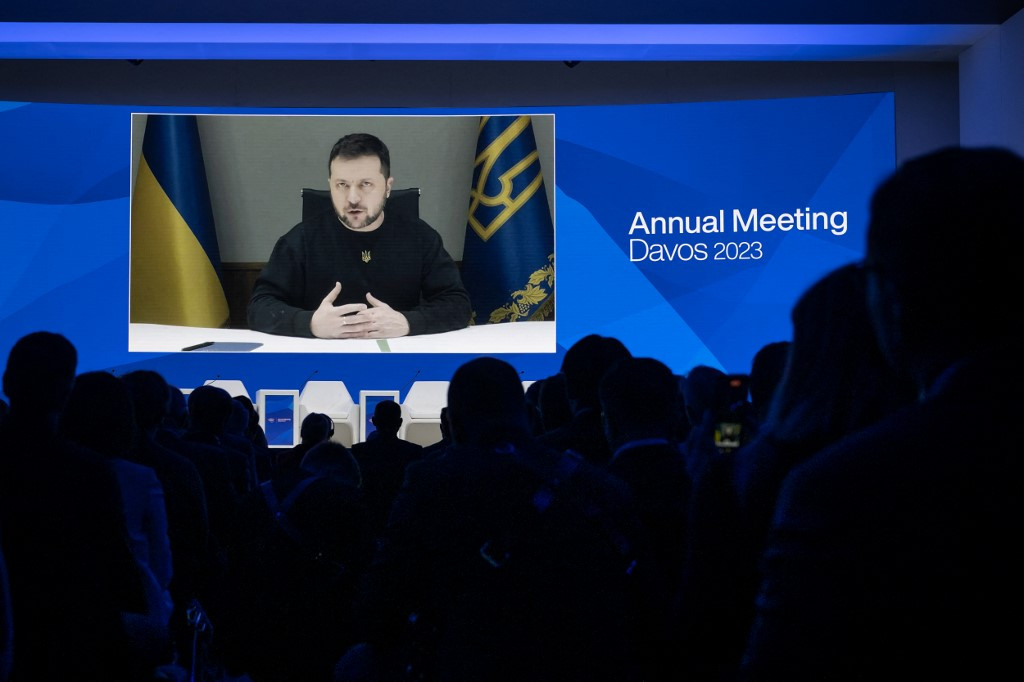
Ukraine, which dominated the World Economic Forum’s (WEF) last big meeting in May, has again sent dozens of executives, lawmakers and decision makers with a clear message from President Volodymyr Zelenskiy: commit now, not later.
“We have to think for the day after. The whole world needs Ukraine as a democratic and successful country. It is the best answer for our friends but also our enemies. It’s our task to make it a successful country,” Kyiv mayor and former world heavyweight boxing champion Vitali Klitschko told Reuters.
Ukraine last year tasked BlackRock, the world’s largest asset manager, to put together a reconstruction fund.
“The more we do now, the less we will have to do in reconstruction,” Odile Françoise Renaud-Basso, President of the European Bank for Reconstruction and Development (EBRD), said.
The EBRD, which invested some 1.7 billion euros ($1.8 billion) in energy, transport and other infrastructure in Ukraine in 2022, nevertheless estimated that its local economy shrunk by nearly a third over the year.
A joint report in September by the Ukraine government, European Commission and the World Bank, estimated that the cost of reconstruction and recovery amounted to $349 billion (322 billion euros) and the figure is rising as war drags on.
Highlighting the daunting task, Yulia Svyrydenko, Ukraine’s First Vice Prime Minister and Minister of Economic Development and Trade, said estimates were now closer to $1 trillion.
With every Russian missile hitting critical infrastructure, the costs for reconstruction rise and investor appetite, particularly in the private sector, wavers.
For Zelenskiy, the heavy Davos presence is more than just symbolically underscoring that Ukraine remains afloat and that Russia’s one-time omnipresence in at the event is over.
It is about creating momentum and giving assurances that even during the war, Ukraine is not closed for business.
Svyrydenko said Davos was the opportunity to move from strategy to concrete projects.
“Ukraine has shown resilience in war time and business too so we have to find additional tools on how to facilitate Ukraine business to develop and foreign investment to come to Ukraine even now,” she said.
Zelenskiy addressed BlackRock executives and its clients in Davos via Zoom on Tuesday, a person who attended said. BlackRock Chief Executive Larry Fink said in Davos that private sector could help, adding he was looking for a “fair and just return”.
While BlackRock may appear upbeat, there is always the risk that war drags on for years or that when it ends like in previous post reconstruction efforts like Afghanistan, Iraq or in the Balkans, pledges and support do not materialise or money is wasted through corruption and incompetence.
“Tensions will resurface when the time comes to fund Ukraine’s reconstruction – made much more expensive by Russia’s continued attacks on Ukrainian critical infrastructure – but that won’t happen until the war ends, and the war isn’t ending anytime soon,” Eurasia Group said in its outlook for 2023.
In Davos, an exhibition at Ukraine House reminds visitors of the scale of the destruction. The venue is also the go-to place for the business elite and Ukraine’s closest backers to assess its prospects and reiterate that Ukraine cannot afford to lose the war as it heads into its first year anniversary on Feb. 24.
“What Ukraine is doing is to try to get everybody on the starting line for when they are able to start the rebuilding,” Lithuania’s Foreign Minister Gabrielius Landsbergis told Reuters.
For daily Davos updates in your inbox sign up for the Reuters Daily Briefing here.
(1 euro = $1.0827)
Related Galleries:

Visitors queue in front of the Ukraine House during the World Economic Forum (WEF) 2023, in the Alpine resort of Davos, Switzerland, January 16, 2023. REUTERS/Arnd Wiegmann/File Photo

The Ukraine House is reflected in a window of a shop as Swiss police officers stand in front, during the World Economic Forum (WEF) 2023, in the Alpine resort of Davos, Switzerland, January 16, 2023. REUTERS/Arnd Wiegmann/File Photo
2023-01-19T09:33:28Z
Thursday’s shock resignation of New Zealand Prime Minister Jacinda Ardern, who altered the face of global politics when she was elected the world’s youngest female head of state, throws a spotlight on the punishing demands faced by women in power.
Holding back tears as she made her declaration, the 42-year-old politician said she had next to nothing left “in the tank” and it was time to step aside after a challenging 5-1/2 years in office.
“Politicians are human,” she said. “We give all that we can, for as long as we can, and then it’s time. And for me, it’s time.”
But the remarks that followed were more revealing, said Anne-Marie Brady, a professor of politics at New Zealand’s University of Canterbury.
Directly addressing her family in her speech, Ardern said she was looking forward to being around when her young daughter Neve started school soon, and finally marrying her partner Clarke.
“She was just very upfront and relatable,” added Brady. “I think any young woman that has grown up in this era where we can have it all, yes, but actually we still have our heart connections to our loved ones.”
Women have been liberated but “patriarchal institutions” have not evolved enough to support family life, she said.
“We need people like Jacinda Ardern in politics. So, her situation is cause for reflection about what we can do more to support women in politics, and men and their family life too,” Brady added.
During her time in office, Ardern has not been afraid to break the mould, becoming the first prime minister since Pakistan’s Benazir Bhutto to have a baby in the job and then take maternity leave.
A politician who campaigned on making tertiary education partially free, tackling child poverty and decriminalising abortion, Ardern has also called out blatant sexism in politics.
After meeting Finnish Prime Minister Sanna Marin last November, she dismissed a suggestion by reporters that their similar age and gender was the reason for the meeting.
“She shifted the face of politics globally just by being her,” said Marian Baird, a professor of gender and employment relations at the University of Sydney.
“I think she has been a bit of a model for younger female politicians and perhaps even younger male politicians who want to present in a different way,” she said. “Certainly she really challenges the male stereotype of being a prime minister.”
Despite her high profile globally, Ardern’s popularity had waned domestically, hurt by rising living costs, growing crime and concern about social issues. read more
In the wake of her resignation she has been lauded as a leader who bought grace and generosity of spirit to the job, particularly amid challenging political times.
Former Prime Minister Helen Clark said Ardern had done an “extraordinary job” in leading New Zealand through major crises.
She delivered on a key social and economic agenda, and positioned the nation as one that “stood for co-operation and decent values”.
“The pressures on prime ministers are always great, but in this era of social media, clickbait, and 24/7 media cycles, Jacinda has faced a level of hatred and vitriol which in my experience is unprecedented in our country,” Clark said in a statement.
“Our society could now usefully reflect on whether it wants to continue to tolerate the excessive polarisation which is making politics an increasingly unattractive calling.”
Cambodian opposition figure Mu Sochua said the world had lost a leader who commanded trust and respect, and “always led with her heart”.
Yenny Wahid, a prominent Indonesian activist for women’s rights and director of the Wahid Institute said Ardern’s decision carried an important message for the next generation of leaders.
“She chose the timing of her own exit, she has different priorities at this point in her life. It shows the young generation that it’s OK.”
Related Galleries:
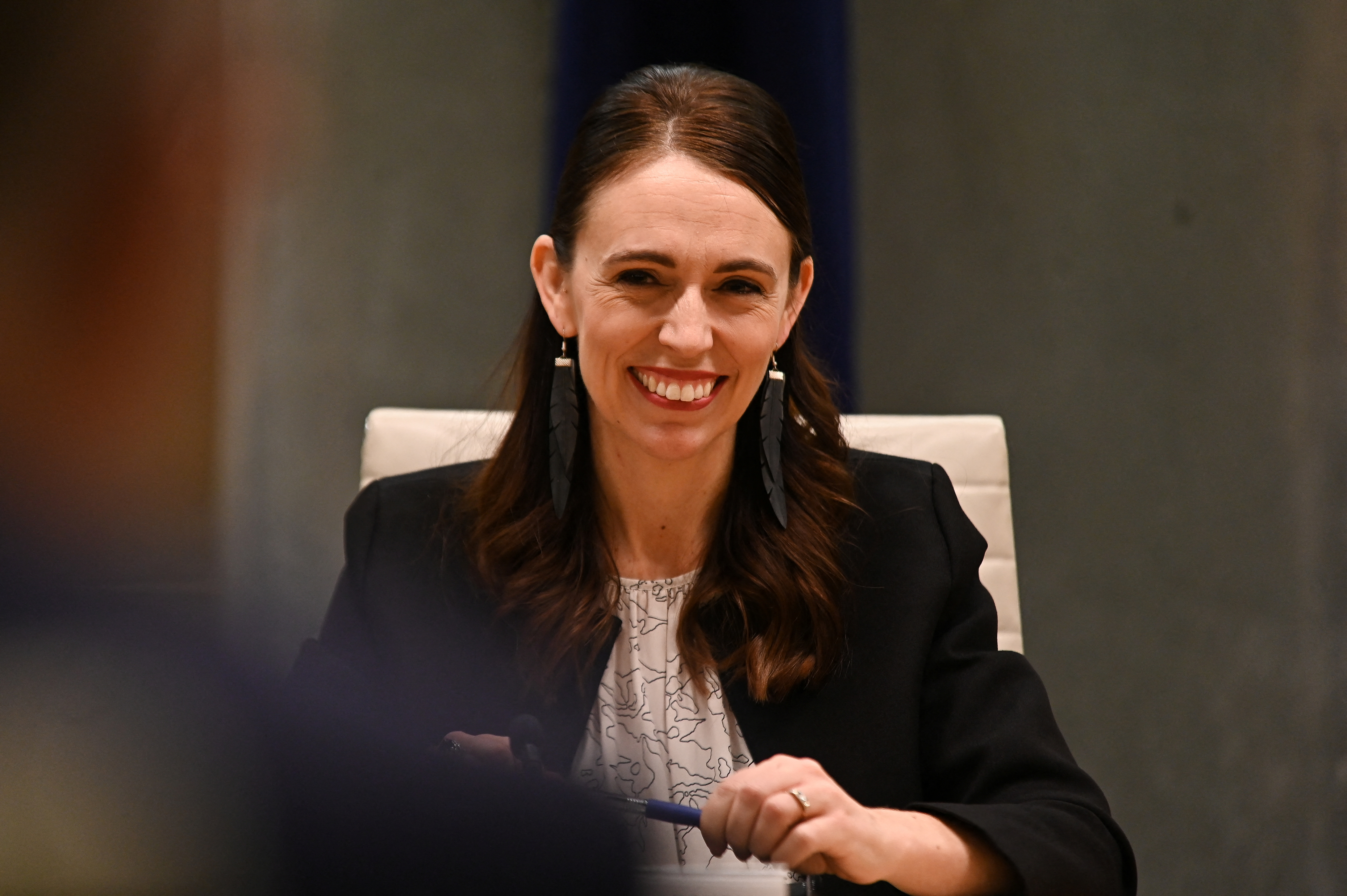
New Zealand Prime Minister Jacinda Ardern during the Australia-New Zealand Leaders’ Meeting at the Commonwealth Parliamentary Offices in Sydney, Australia, on Friday, July 8, 2022. Steven SAPHORE/Pool via REUTERS
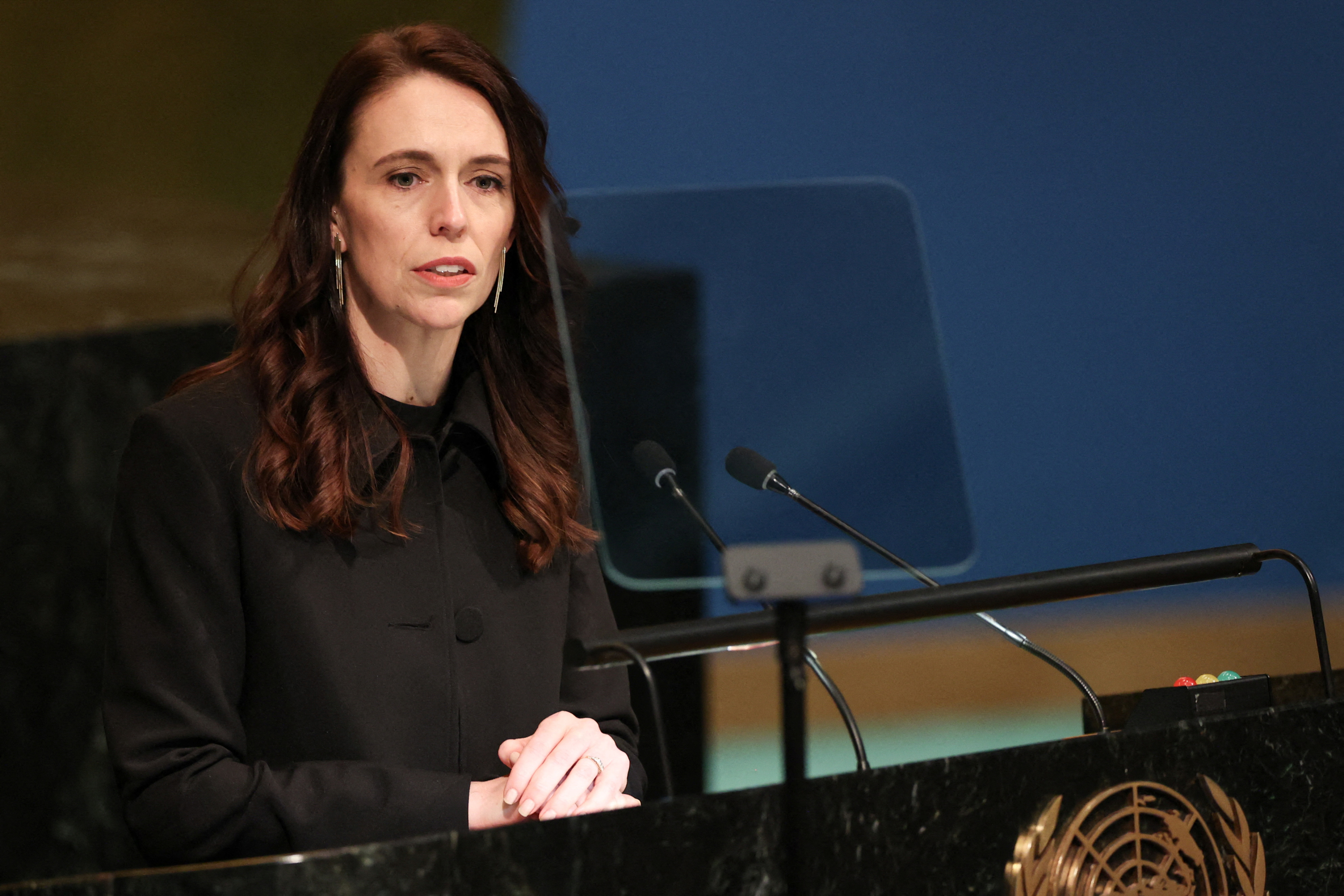
New Zealands’ Prime Minister Jacinda Ardern addresses the 77th United Nations General Assembly at U.N. headquarters in New York City, New York, U.S., September 23, 2022. REUTERS/Caitlin Ochs