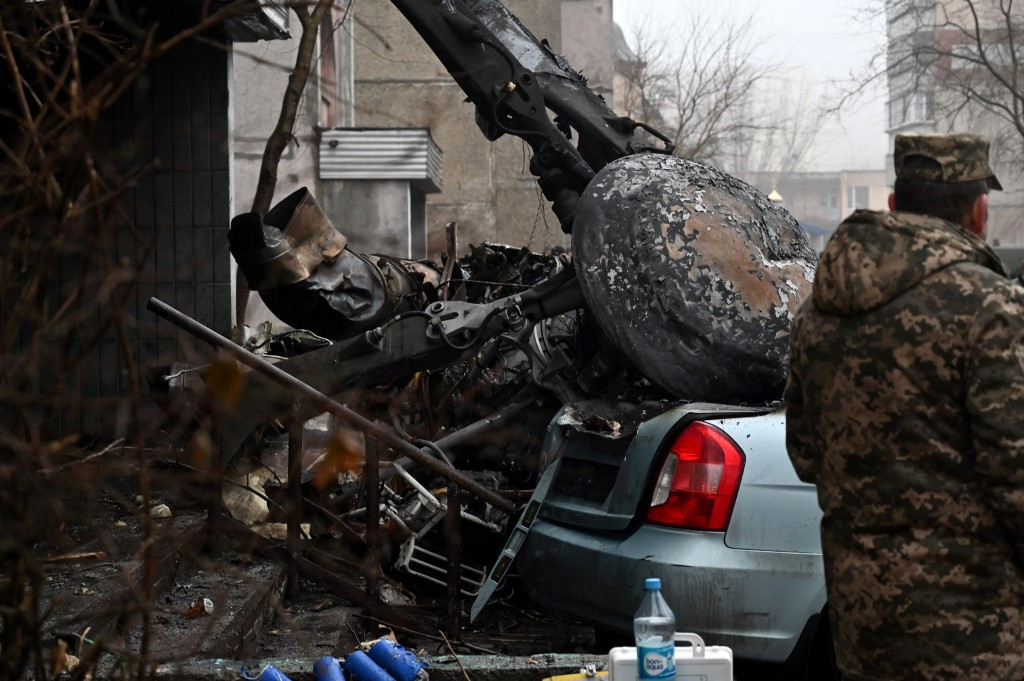
At least eighteen people died including three children when the aircraft crashed near a Kindergarten.
 The Brooklyn Times - bklyntimes.com
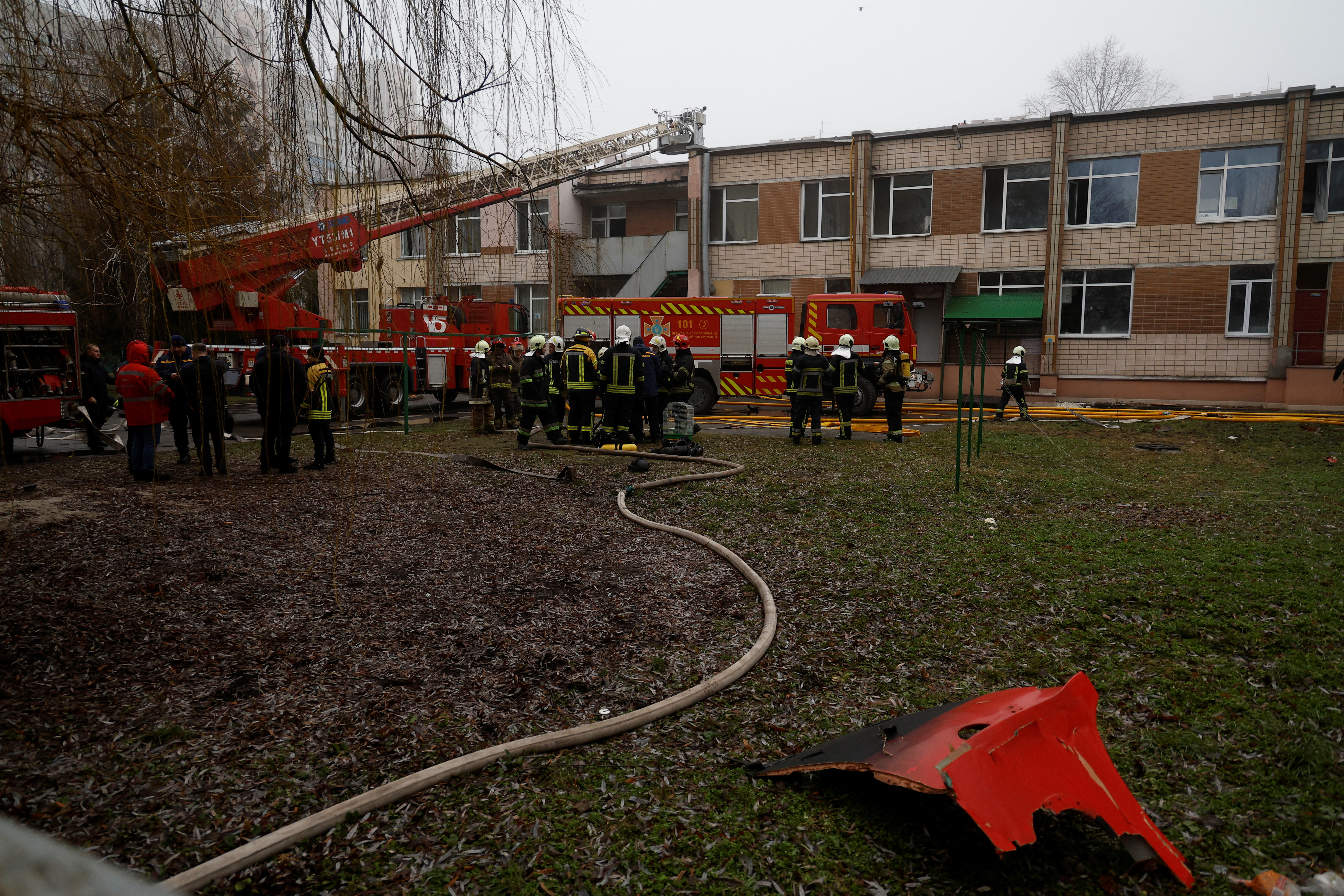
KYIV, Ukraine — A helicopter crash in a Kyiv suburb Wednesday killed 17 people, including Ukraine’s interior minister and two children, Ukrainian authorities said.
Interior Minister Denys Monastyrskyi, his deputy Yevhen Yenin and State Secretary of the Ministry of Internal Affairs Yurii Lubkovych were among those killed, according to Ihor Klymenko, chief of Ukraine’s National Police.
Nine of those killed were aboard the emergency services helicopter that crashed in Brovary, an eastern suburb of the Ukrainian capital, Klymenko said.
There was no immediate word on whether the crash was an accident or a result of the almost 11-month war with Russia.
A total of 22 people were injured, including 10 children. Earlier, officials and media reports said the helicopter crashed near a kindergarten.
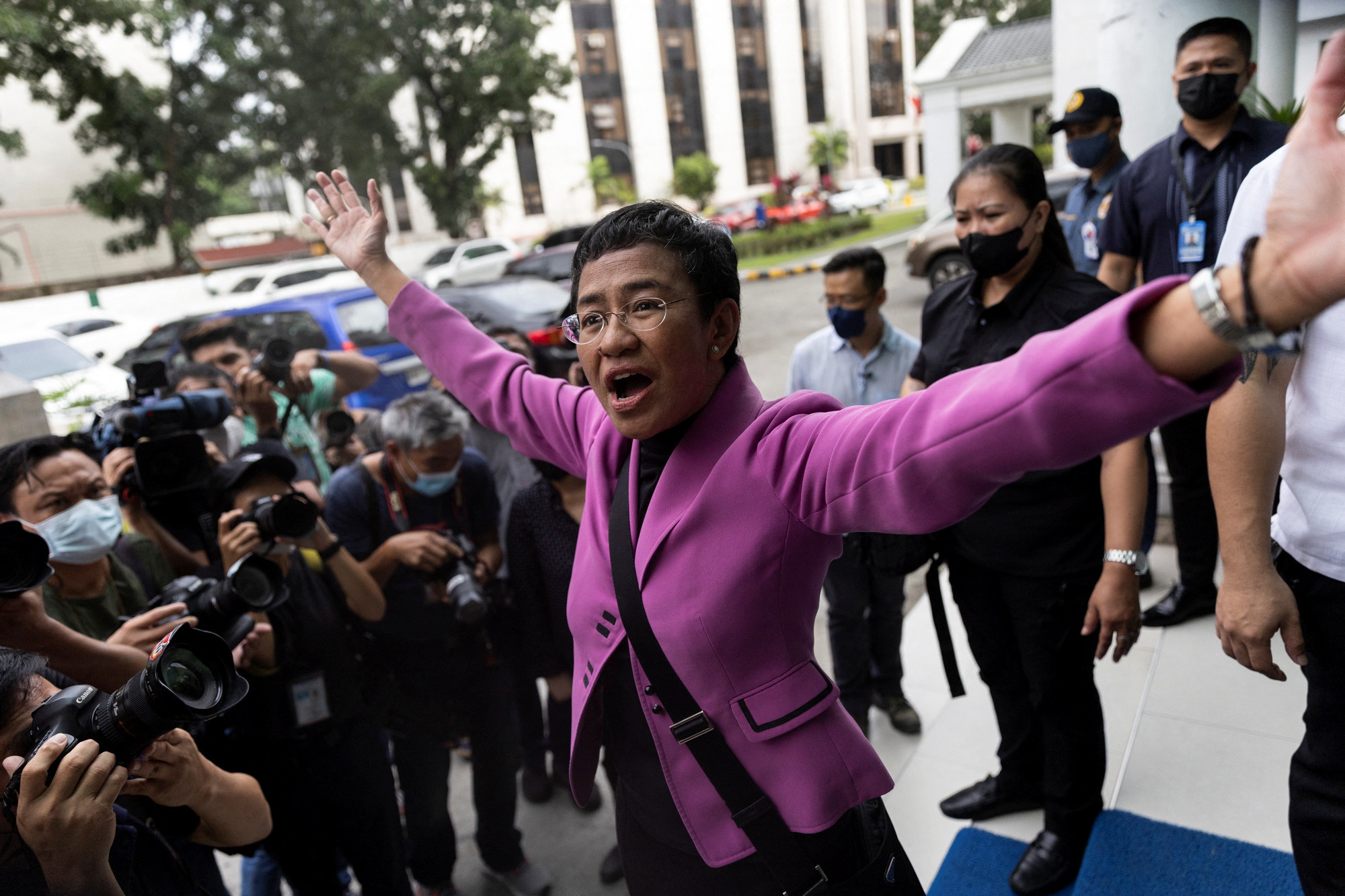
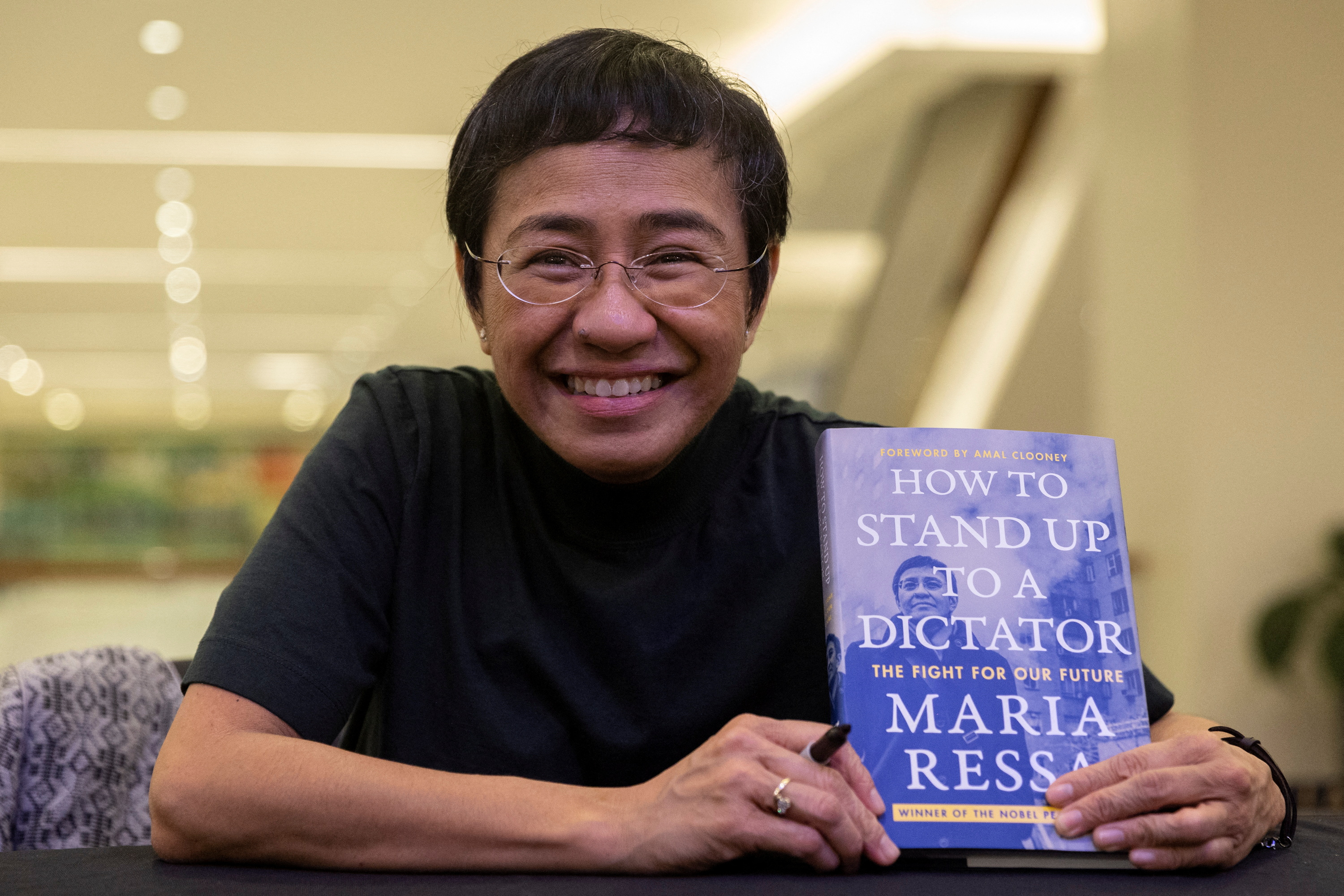
Philippine Nobel laureate Maria Ressa and her news site Rappler were acquitted by a court of tax evasion charges on Wednesday, in a ruling that media watchdogs and human rights groups described as a win for press freedom and rule of law.
Ressa, who was awarded the Nobel Peace Prize alongside a Russian journalist in 2021, is head of Rappler, which earned a reputation for its in-depth reporting and tough scrutiny of former president Rodrigo Duterte and his deadly war on drugs.
“This acquittal is not just for Rappler it is for every Filipino who has ever been unjustly accused,” Ressa said after the verdict, describing it as a win for justice and the truth.
“These charges… were politically motivated… A brazen abuse of power,” she said, while fighting back tears.
The tax evasion case stemmed from accusations by the state revenue agency that Rappler had omitted from its tax returns the proceeds of a 2015 sale of depositary receipts to foreign investors, which later became the securities regulator’s basis to revoke its licence.
The tax court said in its ruling it acquitted Ressa and Rappler because of the prosecution’s failure to prove their guilt beyond reasonable doubt.
The Philippine’s justice department said it respected the decision of the court.
Ressa, 59 is currently on bail as she appeals a six-year prison sentence handed down in 2020 for a libel conviction.
She has been fighting a string of government lawsuits since 2018 which she has described as part of a pattern of harassment.
Her plight has stoked international concern about media harassment in the Philippines, described as one of Asia’s most dangerous places for journalists.
“Hope is what this provides,” said Ressa when asked if she thought the tide was turning under the watch of President Ferdinand Marcos Jr, whose office has said the leader respects press freedom.
Media watchdogs and human rights groups lauded the court’s decision, which they said was a win for journalists and the rule of law.
“It is a victory for press freedom in the Philippines,” Carlos Conde, senior researcher at Human Rights Watch, said in a statement.
The challenge for the Marcos administration is “to take stock of this and ensure that journalists did their jobs without fear”, Conde said.
In October, a radio journalist was shot dead, among scores killed in the past decade.
The Philippines ranked 147 out of 180 countries in the 2022 World Press Freedom Index, and the Committee to Protect Journalists ranks the Philippines seventh in the world in its 2021 impunity index, which tracks deaths of media members whose killers go free.


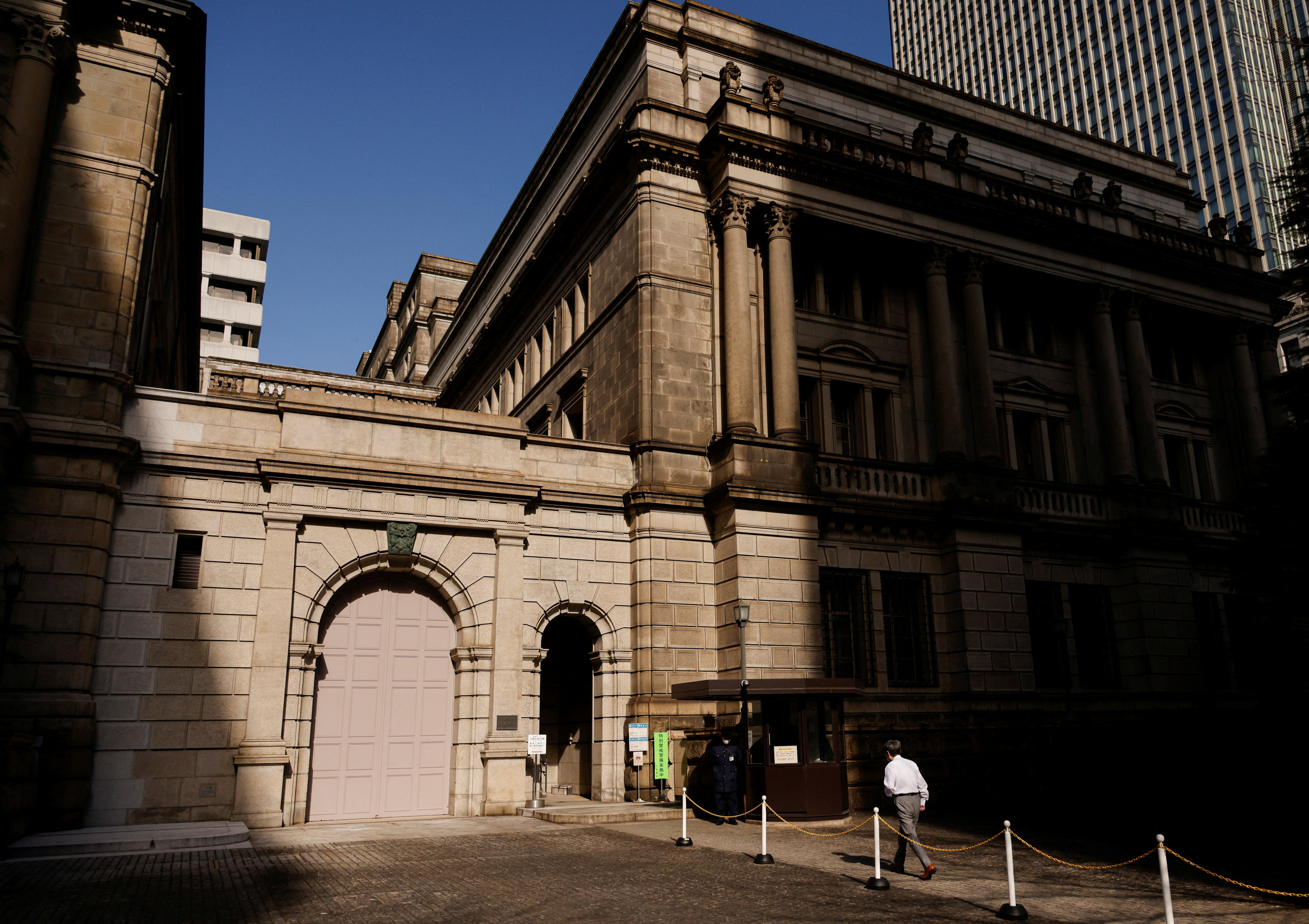
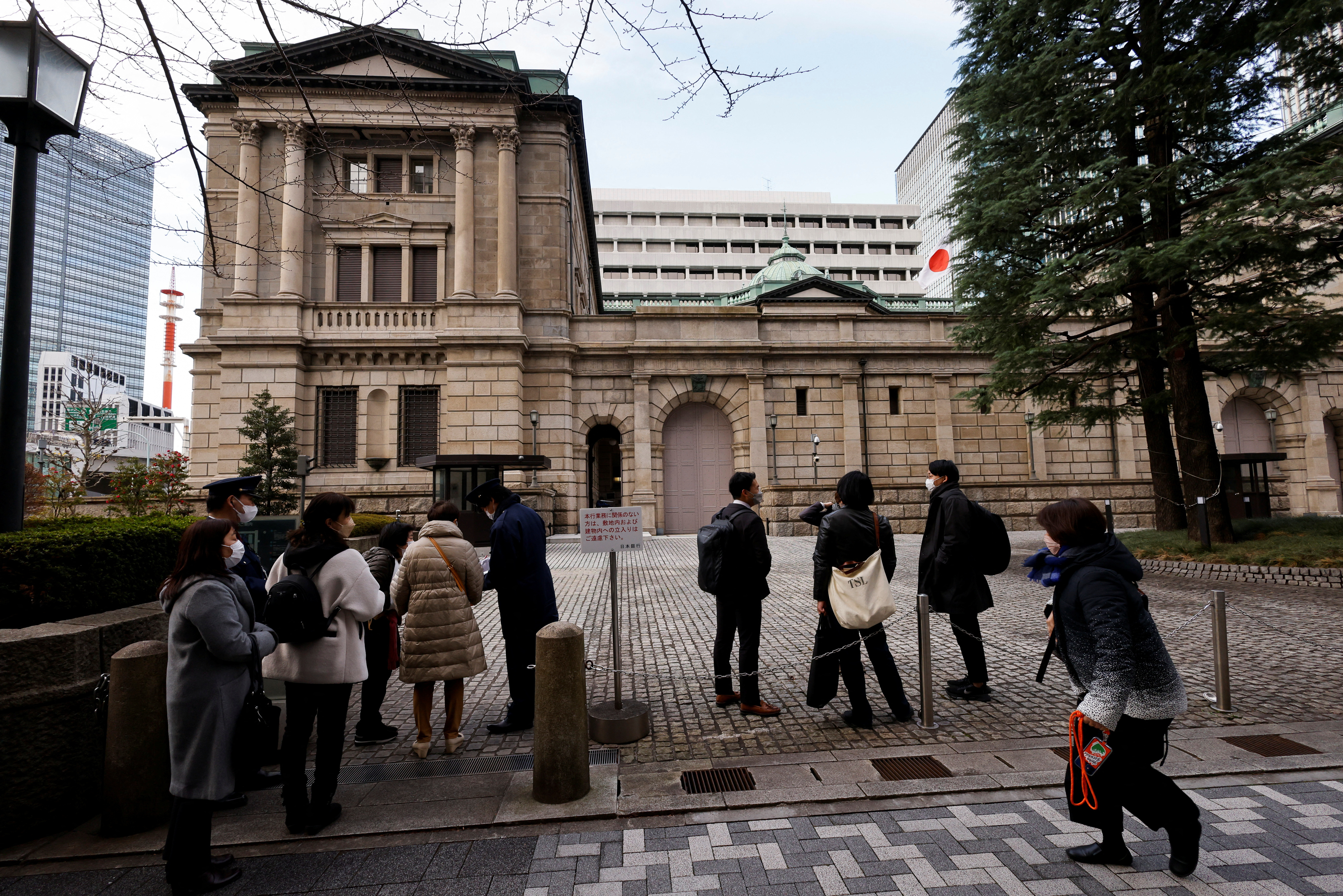
The Bank of Japan on Wednesday maintained ultra-low interest rates, including a bond yield cap it was struggling to defend, defying market expectations it would phase out its massive stimulus programme amid mounting inflationary pressure.
The surprise decision sent the yen skidding against other currencies and bond yields tumbling the most in decades, as investors unwound bets they made anticipating the central bank would overhaul its yield control policy.
Instead of changing its stimulus programme, the BOJ crafted a new weapon to prevent long-term rates from rising too much – a move some analysts took as a sign Governor Haruhiko Kuroda will hold off on making big policy shifts during the remaining months of his term, which ends in April.
At a two-day policy meeting, the BOJ kept intact its yield curve control (YCC) targets, set at -0.1% for short-term interest rates and around 0% for the 10-year yield, by a unanimous vote.
The central bank also made no change to its guidance that allows the 10-year bond yield to move 50 basis points either side of its 0% target.
“Uncertainty regarding Japan’s economy is very high. It’s necessary to support the economy with our stimulus policy, to ensure companies can raise wages,” Kuroda told a news conference after the meeting.
“By maintaining ultra-easy policy, we will strive to achieve our price target stably and sustainably accompanied by wage hikes,” he said.
The BOJ’s decision to beef up its key market operation tool will help curb rises in long-term interest rates but importantly underscores its dogged commitment to defend the cap.
“Widening the yield band or dismantling YCC now would have made the BOJ even more vulnerable to market attack,” said Izuru Kato, chief economist at Totan Research.
“By showing its resolve to use market tools more flexibly, the BOJ wanted to signal to markets it won’t make big monetary policy changes under Kuroda.”
Kuroda’s last policy meeting will be held on March 9-10, ending a decade helming the bank, which brought about radical monetary stimulus but ultimately failed to meet its objective of sustainably reviving anemic consumer demand.
The BOJ’s decision on Wednesday follows its surprise move last month to double the yield band, a tweak analysts say has failed to correct market distortions caused by its heavy bond buying.
The dollar rose 2.4% to 131.20 yen <JPY=EBS > on the BOJ’s announcement, marking its biggest one-day jump since March 2020, while the Nikkei stock average (.N225) jumped 2.5% to 26,791.12, its highest close since Dec. 19.
Japanese government bond (JGB) yields tumbled across the curve with the benchmark 10-year yield sliding to 0.37%, well below the BOJ’s 0.5% ceiling and posting the biggest one-day decline since November 2003 at one point.
Since December’s action, the BOJ has faced the biggest test to its YCC policy since its introduction in 2016 as rising inflation and the prospects of higher wages gave traders an excuse to attack the central bank’s yield cap with aggressive bond selling.
In a quarterly report released on Wednesday, the BOJ raised its core consumer inflation forecast for the current fiscal year ending in March to 3.0%, from 2.9% projected in October.
It also revised up the inflation forecast for the fiscal year ending March 2024 to 1.8%, from 1.6% seen three months ago.
But the inflation forecast for fiscal 2023 was maintained at 1.6%, a sign the board is sticking to the view prices will moderate as the effect of past surges in raw material costs dissipate.
The BOJ also slashed its economic growth projections for fiscal 2023 and 2024, amid worries slowing global growth will weigh on the export-reliant economy.
Japan’s core consumer inflation has exceeded the BOJ’s 2% target for eight straight months, as companies raised prices to pass on higher raw material costs to households.
Data due out on Friday is likely to show inflation hit a fresh 41-year high of 4.0% in December, according to a Reuters poll, although analysts expect price growth to moderate later this year reflecting recent declines in global commodity prices.

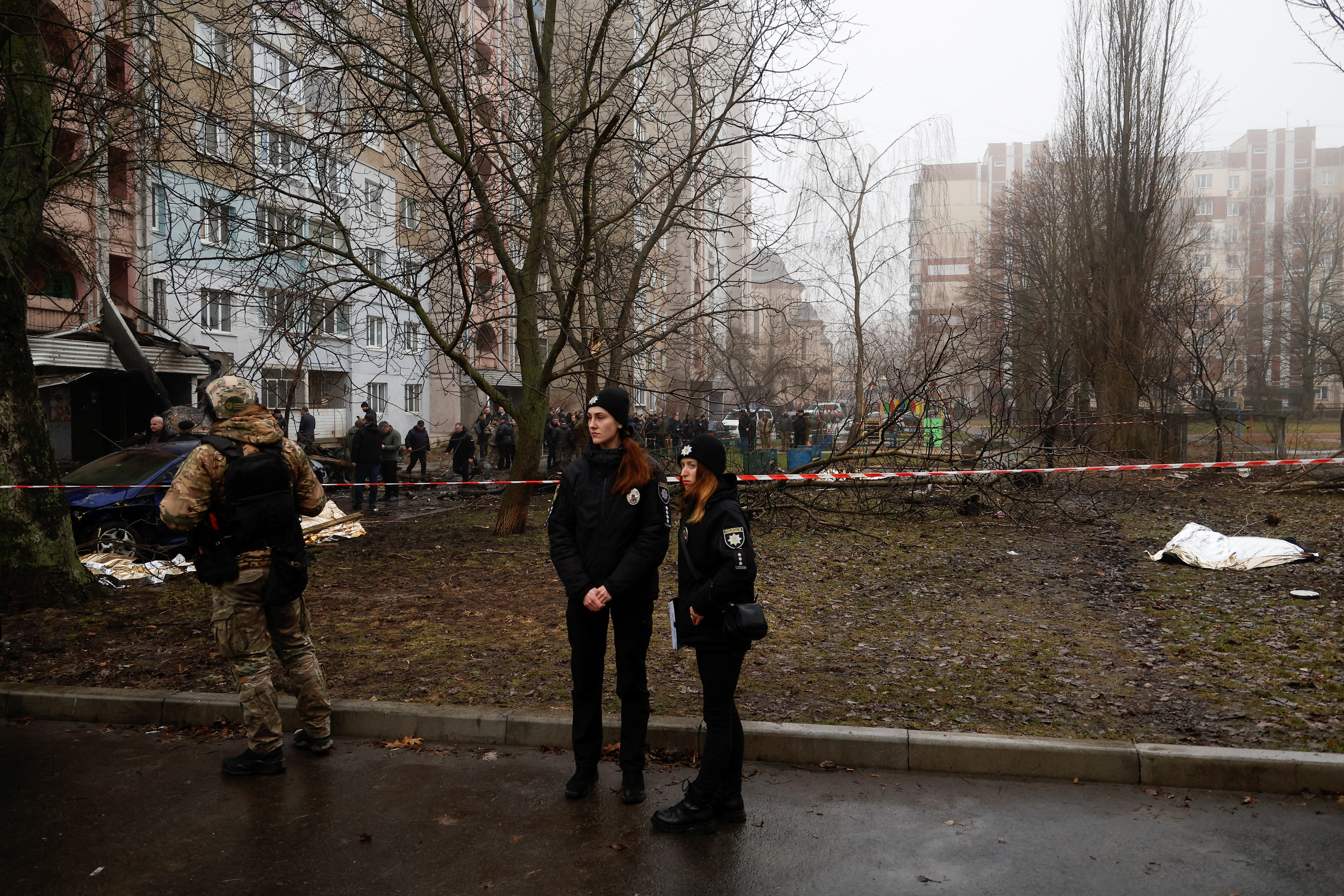
Sixteen people including Ukraine’s interior minister and other senior ministry officials were killed on Wednesday when a helicopter crashed outside Kyiv in the town of Brovary, the national police chief said.
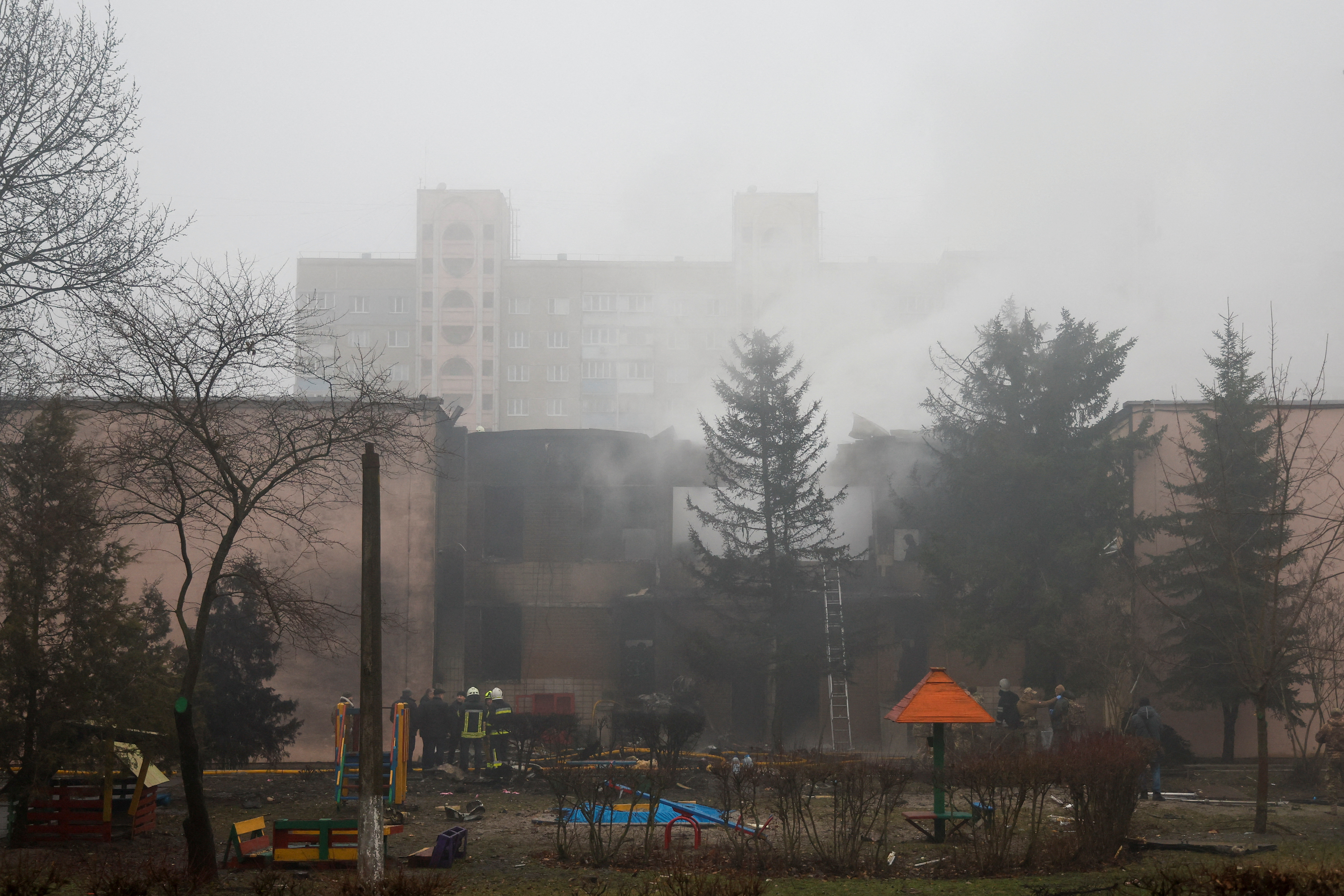
The governor of the Kyiv region said earlier on Wednesday that a helicopter crashed near a nursery and a residential building earlier on Wednesday.
Two children were among the dead and 10 of them were in hospital, officials said
Sixteen people including Ukraine’s interior minister and other senior officials were killed on Wednesday when a helicopter crashed in a suburb outside Kyiv, the national police chief said.
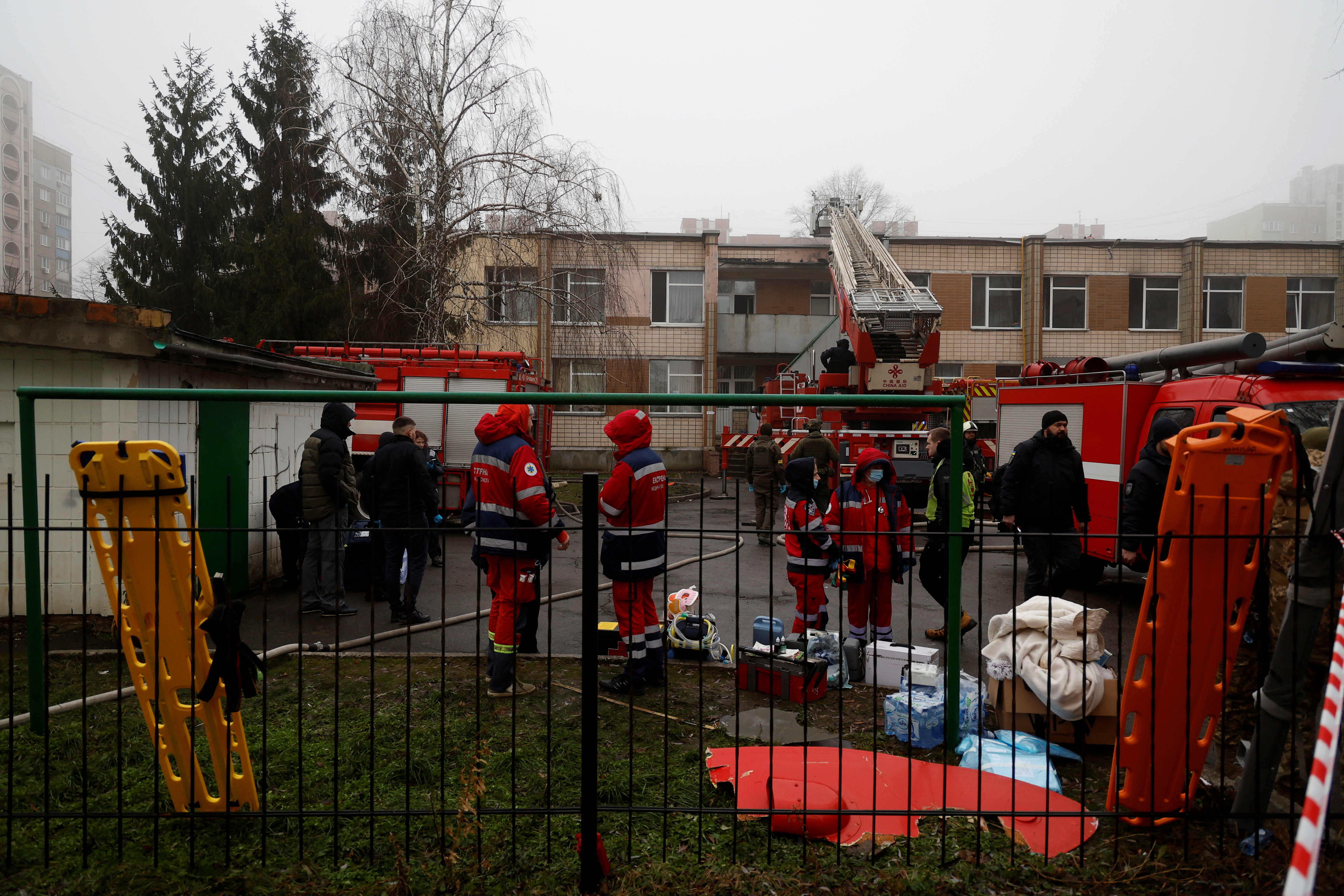
The helicopter came down near a nursery in the town of Brovary on the capital’s eastern outskirts. Two children were among the dead and 10 were in hospital, officials said
Officials gave no immediate account of the cause of the crash and there was no immediate comment from Russia, which invaded Ukraine last February.
Interior Minister Denys Monastyrsky, responsible for the police and security inside Ukraine, would be the most senior Ukrainian official to die since the war began.
National police chief Ihor Klymenko said Monastyrsky had been killed along with his deputy and other senior ministry officials.
“There were children and…staff in the nursery at the time of this tragedy. Everyone has now been evacuated. There are casualties,” Kyiv region governor Oleksiy Kuleba wrote on Telegram.
Reuters journalists at the scene saw several dead bodies draped in foil blankets in a courtyard near the building damaged by the crash.
Videos shared on social media showed a burning building and people could be heard screaming. Reuters was unable immediately to verify the footage.
“We are finding out information about casualties and the circumstances,” the deputy head of Ukraine’s presidential office, Kyrylo Tymoshenko, wrote on Telegram.












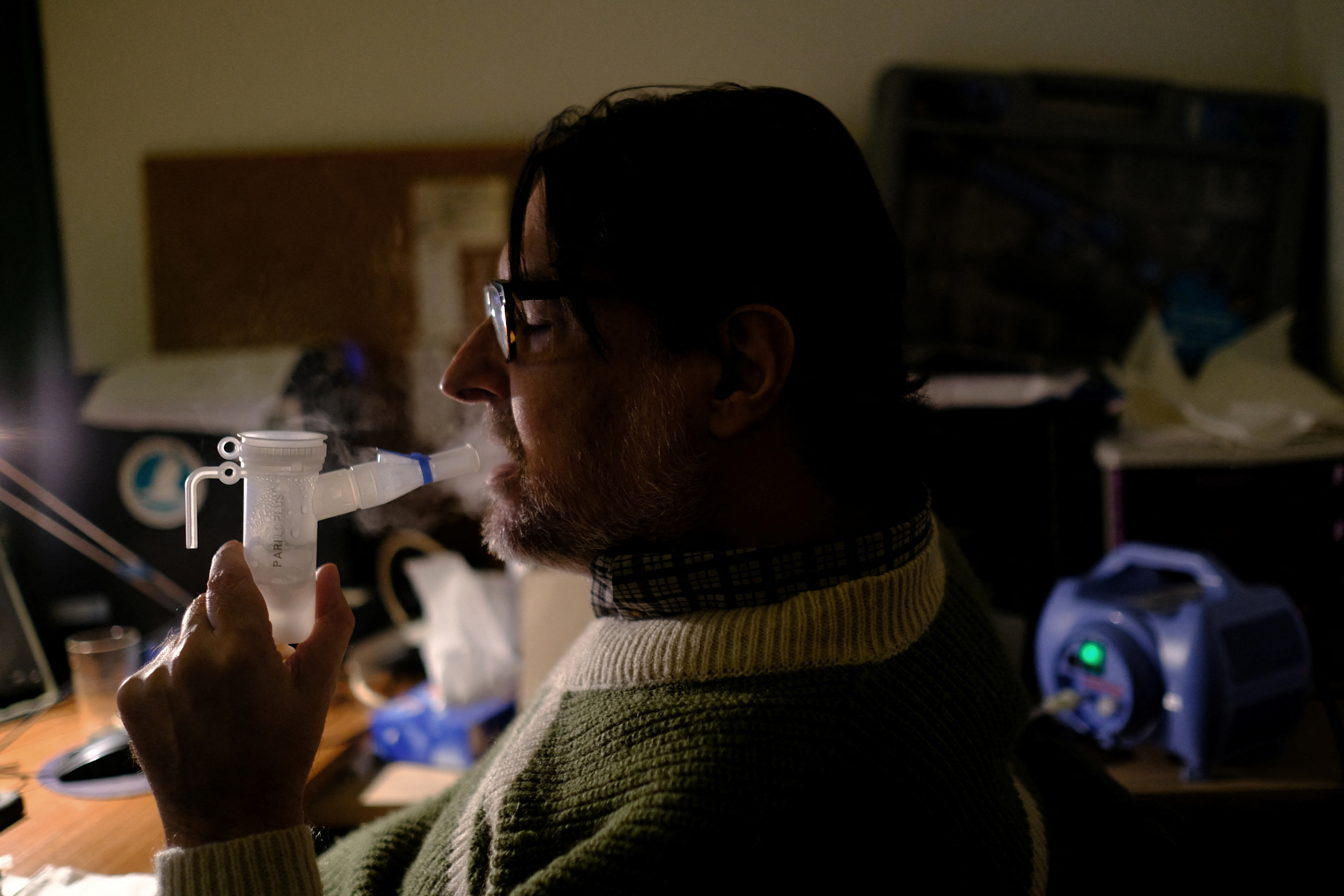
Jose Maria Casais’s 2,700 euros-a-month income from a pension and incapacity benefits ought to leave him better off than most of his fellow Spaniards.
But Casais, a retired engineer living in Barcelona, says he is being forced to raid his savings every month after his energy bills soared because of his reliance on an oxygen machine to alleviate his chronic obstructive pulmonary disease (COPD).
For the past two years, Casais has been plugged into the oxygen concentrator for up to 24 hours a day. His electricity bill has almost tripled since Russia invaded Ukraine in February, he says, triggering an energy crisis in Europe because of its dependence on Russian gas.
He’s part of a middle class in Spain being dragged into poverty by the crisis. Nearly 4% of Spanish households in the fourth income decile – a segment typically viewed as middle class – have spent more than half of their income on energy since the rise in prices last year, an Oxfam survey found.
Whereas before the energy crisis nearly half of households in Spain had the capacity to save, Oxfam estimates that now only three in 10 households can do so.
Casais spends between 300 euros and 400 euros a month on energy – about triple what he spent before the crisis – leaving little or nothing for other essentials after his other medical expenses, which include a live-in carer. By mid-month, he has to start drawing on his savings, he said.
“It limits everything else; leaves no option for other things,” Casais, a former engineer at the state-run rail company Renfe, told Reuters in his Barcelona apartment.
Casais’ oxygen concentrator pulls air through a compressor, removing nitrogen and filtering oxygen to deliver to the patient. Depending on how much difficulty Casais has breathing on a given day, he will be connected between 17 and 24 hours.
He is not alone. An estimated five million people in Spain suffer from COPD, said Dr. Sergi Pascual, pulmonology unit coordinator at the Hospital del Mar in Barcelona. It’s the third largest cause of death worldwide and the fourth in Spain, the Spanish Association for Patients with COPD (APEPOC) says.
Patients in other countries are also suffering. A survey of more than 3,600 people with lung conditions by the charity Asthma + Lung UK found that one in five Britons surveyed with asthma reported life-threatening attacks as they cut back on medicines, heating and food because of the soaring cost of living.
Sufferers of other maladies such as kidney failure dependent on electricity-guzzling machines to survive are also struggling, two medical groups representing kidney disease say.
Without his oxygen machine, Casais said he would have to be permanently hooked up to a machine in hospital, losing his independence and costing the state more.
COPD is “a chronic, irreversible disease,” Pascual said, “so these patients’ objective is to live a useful and full life and they therefore need the necessary funds”.
It’s not only oxygen machines that rack up bills. Pulmonary disease sufferers must carefully regulate their homes’ ambient temperature, which means relying on air conditioning in Spain’s searing summers and central heating in its brisk winters.
“If the weather suddenly changes from good to a rainy day you feel terrible,” Casais said. “The cold affects your breathing.”
Fernando Uceta, 61, who had a double lung transplant in August and also suffers from COPD, says he avoids air conditioning and relies on easier-to-monitor electric heaters to manage his costs.
“There’s an energy poverty that some call the invisible version, which is where people do what I do: put on less heating and not use air conditioning. Or people turn off their oxygen machine and don’t receive the amount they need,” Uceta said.
Many electricity-dependent Spaniards are facing some stark choices, said Nicole Hass, a spokesperson for APEPOC: “With this rise in electricity prices they have to decide between eating and breathing.”
APEPOC wants Spain’s local governments to subsidise energy bills for all COPD sufferers, regardless of their income.
Spain’s national health service covers the cost of oxygen but not of electricity, Hass said. “What use is the oxygen if we don’t have the electricity to plug in the machine?”
APEPOC wants Spain to emulate countries like Argentina, which in 2017 made electricity free for electricity-dependent individuals. In New Zealand, electricity retailers are obliged by law to provide discounts for so-called medically dependent consumers.
Health policy in Spain is determined by its 17 autonomous regions. An initiative last year by Catalan party Esquerra Republicana to include patients dependent on medical devices in a list of vulnerable consumers who receive help with their energy bills stalled in the national parliament.
In response to Reuters questions, Catalonia’s health ministry pointed to a protocol approved by the regional government in 2020 that guarantees no-one has their electricity cut off. The measure does not offer subsidies to help patients with high bills.
Casais has already altered his diet to cut costs. He now lives on one-euro packets of processed meats and tins of tuna. He’s now considering remortgaging his apartment to cover his medical and energy costs.
“They should give a direct discount on electricity bills to everyone who is electricity-dependent regardless of their income or where they live,” he said.





KYIV, Ukraine (AP) — A helicopter crash in a Kyiv suburb Wednesday killed 16 people, including Ukraine’s interior minister and two children, according to Ihor Klymenko, chief of Ukraine’s National Police.
Nine of those killed were aboard the emergency services helicopter that crashed in Brovary, Kyiv’s eastern suburb, Klymenko said.
A total of 22 people were injured, including 10 children. Earlier, officials and media reports said the helicopter crashed near a kindergarten.
INDIANAPOLIS (AP) — Republican Rep. Jim Banks, a combative defender of former President Donald Trump, announced on Tuesday that he is running for the U.S. Senate seat in Indiana being vacated by GOP Sen. Mike Braun.
Banks is the first candidate to formally enter the Senate race since Braun said in December that he would forgo a 2024 reelection bid and run instead for Indiana governor. Banks’ announcement comes days after Donald Trump Jr. and the Washington-based anti-tax Club for Growth began attacking former Indiana Gov. Mitch Daniels as insufficiently conservative while Daniels ponders whether to also seek the Senate seat.
Banks criticized current Senate Republicans for cooperating too much with the Biden administration and allowing passage of a massive $1.7 trillion spending bill just before Christmas.
“I just believe now more than ever that we need conservatives in the Senate who are going to fight back against radical Democrat policies instead of going along with it,” Banks told The Associated Press. “Republican primary voters are looking for a conservative fighter, someone to go to Washington and fight for Hoosier family values and against the radical, socialist and woke agenda that Democrats are pushing in Washington.”
Banks, 43, was first elected to Congress from a heavily Republican district in northeastern Indiana in 2016, the year after he returned from an eight-month military deployment to Afghanistan with the Navy Reserve.
He has since become a frequent Fox News Channel guest and Trump ally who voted against certifying Joe Biden’s presidential election victory after a mob of Trump supporters stormed the U.S. Capitol on Jan. 6, 2021. Then-House Speaker Nancy Pelosi, D-Calif., months later rejected Republican leader Kevin McCarthy’s pick of Banks as the top GOP member on the committee investigating the deadly Capitol insurrection, citing the need to protect the review’s “integrity.”
Banks backed McCarthy throughout his fight to become House speaker this month and has kept up ties with Trump, visiting with him since he left the White House and joining him on a 2021 trip to the U.S.-Mexico border. Banks said that last week he told Trump — who won Indiana by wide margins in 2016 and 2020 — of his decision to enter the Senate race.
“I told him I’d like to have his support, hope he comes to Indiana and campaigns with me,” Banks said. “I was proud to fight alongside him for the America First policies and agenda that he pushed when he was president and believe strongly we need to go back to that.”
Banks’ announcement could be the start of a competitive race for the Republican nomination in the GOP-dominated state, with one potential candidate being Ukrainian-born Rep. Victoria Spartz, who has been critical at times of Ukrainian President Volodymyr Zelenskyy’s government since the Russian invasion of Ukraine began last February.
But the biggest factor could be whether Daniels decides to enter the race. The 73-year-old Daniels completed two terms as governor in early 2013 with high approval ratings and finished a decade as the high-profile president of Purdue University at the end of December.
Not waiting for Daniels’ decision, the conservative Club for Growth released an ad last week reaching back to his time as President George W. Bush’s budget director to criticize him for increasing the federal debt. It calls Daniels an “old guard Republican clinging to the old ways of the bad old days.”
Club for Growth President David McIntosh, who was an Indiana congressman in the 1990s, said the deep-pocketed group is “ready to spend what it takes to make sure Hoosiers have a conservative in that Senate seat.”
McIntosh said the group hasn’t decided whether to back a candidate in the race.
“We think very highly of Jim Banks,” McIntosh said. “He is that type of new, young Republican leadership that people are looking for.”
Mark Lubbers, a longtime Daniels friend and adviser, said the Club for Growth helped push failed Republican candidates as the party fell short of recapturing the Senate in last year’s election.
“Sad to see that Jim Banks has thrown in with them,” Lubbers said. “And apparently they think it’s political genius to poke the bear with a sharp stick. We’ll see how that works out.”
Banks has been eager to pull at political divides.
His congressional office Twitter account was suspended for a couple weeks in 2021 after he responded to a post about Biden administration official Dr. Rachel Levine becoming the first transgender four-star officer in the U.S. uniformed services by writing: “The title of first female four-star officer gets taken by a man.”
Banks also lined up last year against Republican Indiana Gov. Eric Holcomb’s veto of a bill banning transgender females from competing in girls’ school sports. He urged state lawmakers, who later overrode the veto, to “send a message to the rest of the nation that Indiana values women.”
Advertisements – Advertising at The News And Times – advertising-newsandtimes.com | WE CONNECT!
Audio | Video | Top News | On Twitter | Security | FBI | Capitol Riot | JOSSICA | Trump | Russia | Putin | Russia – Ukraine War | Covid-19 | Brooklyn NY | Puerto Rico | World
September 24, 2026 10:45 pm
The News And Times | Featured Posts | All Articles | Current News | Selected Articles | Shared Links | Opinions | In My Opinion | Sites | Blogs | Links | Twitter | Facebook

Contact Form | Blogs | Sites | News Reviews | Links | Advertising
All The News That’s Fit To Web