Categories
Audio Sources - Full Text Articles

Nepal plane crash searchers rappel, fly drones in last-ditch effort to find two people

2023-01-17T11:28:24Z

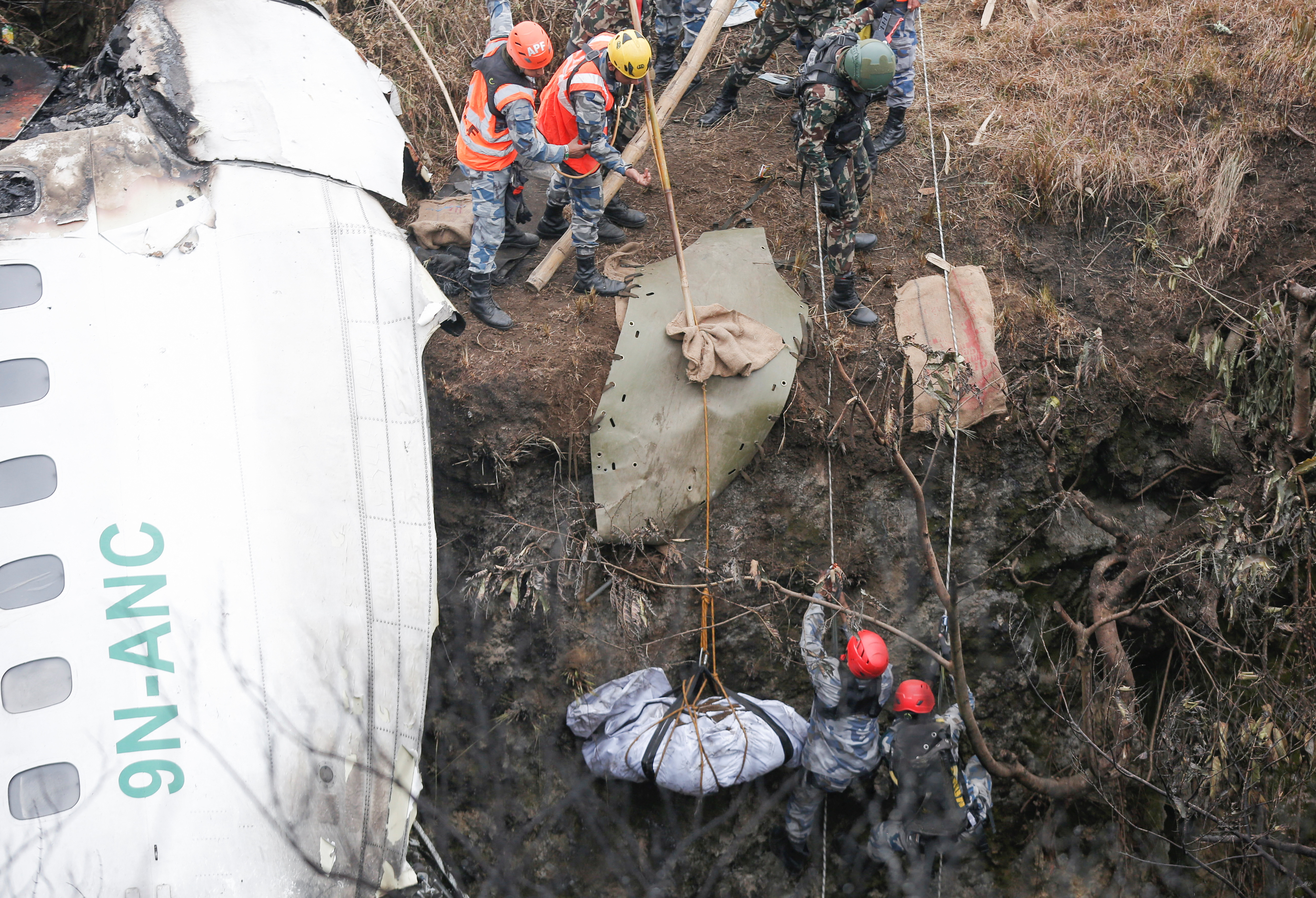
Searchers used drones and rappelled down a 200-metre (656-feet) deep gorge in Nepal’s second-biggest city on Tuesday to search for two people unaccounted for after the country’s deadliest plane crash in 30 years killed at least 70 people.

Difficult terrain and inclement weather was hampering rescue efforts near the tourist city of Pokhara, where the Yeti Airlines ATR 72 turboprop carrying 72 people crashed in clear weather on Sunday just before landing.

Rescue teams were also struggling to identify bodies, Ajay K.C, a police official in Pokhara who is part of the rescue efforts, told Reuters.

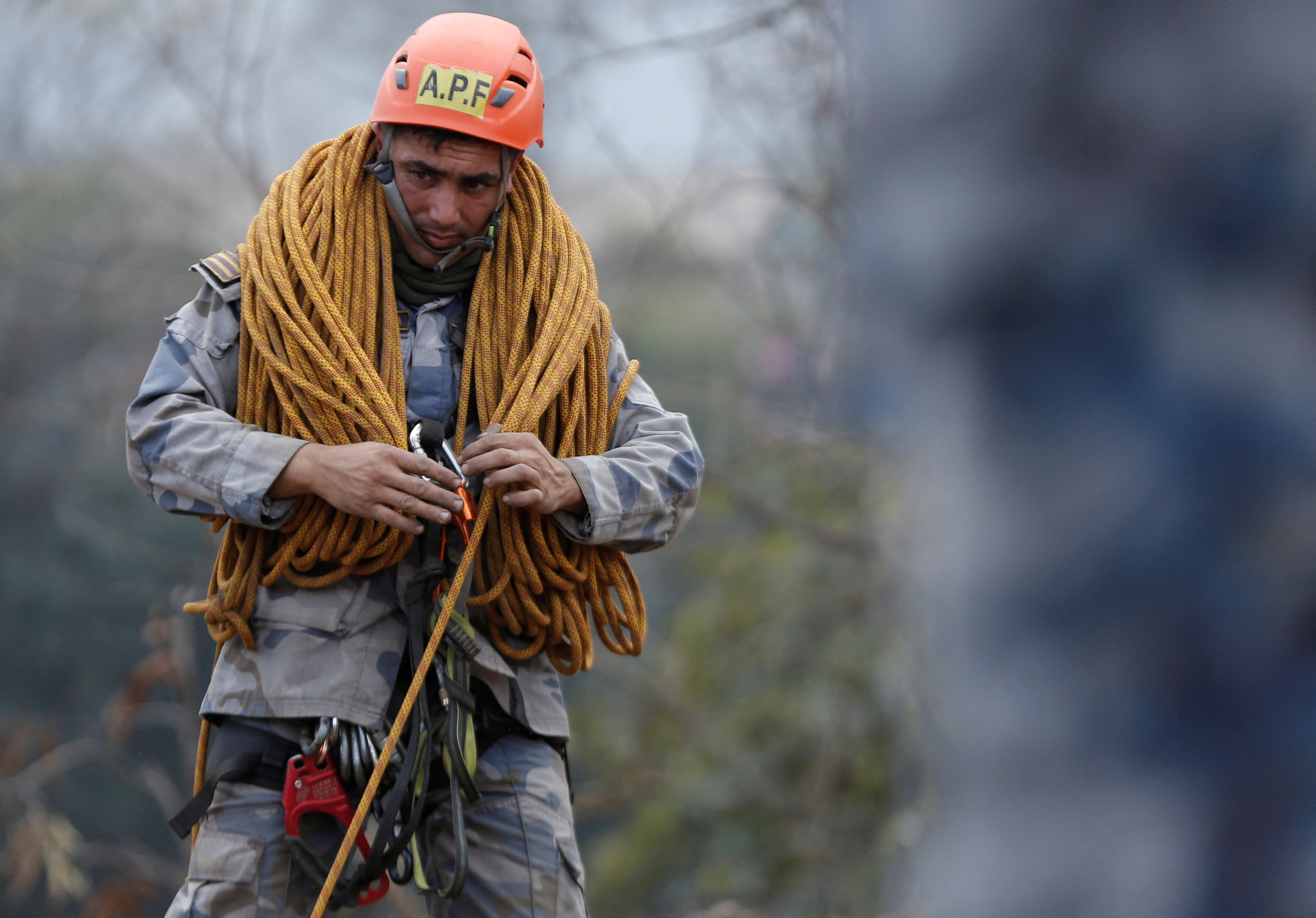
“There is thick fog here now. We are sending search and rescue personnel using ropes into the gorge where parts of the plane fell and was in flames,” K.C.said.

Rescuers had collected what appeared to be human remains and sent them for a DNA test, he said, but search efforts would continue till all 72 passengers and crew were accounted for.

Search teams found 68 bodies on the day of the crash, while two more bodies were recovered on Monday before the search was called off.

“There were small children among the passengers. Some might have been burnt and died, and may not be found out. We will continue to look for them,” K.C. said.

An airport official said 48 bodies were brought to the capital Kathmandu on Tuesday and sent to a hospital for autopsies, while 22 bodies were being handed over to families in Pokhara.

Medical personnel in personal protective equipment and masks helped transport shrouded bodies from stretchers to a vehicle before they were flown to Kathmandu, Reuters pictures showed.

Television channels showed weeping relatives waiting for the bodies of their loved ones outside a hospital in Pokhara.

Dr Tulsi Kandel, at the teaching hospital in Kathmandu, said it could take up to a week to complete autopsies on all 48 bodies – half of them charred.

On Monday, searchers found the cockpit voice recorder and flight data recorder from the flight, both in good condition, a discovery that is likely to help investigators determine what caused the crash.

Under international aviation rules, the crash investigation agencies of the countries where the plane and engines were designed and built are automatically part of the inquiry.

ATR is based in France and the plane’s engines were manufactured in Canada by Pratt & Whitney Canada (RTX.N).

French and Canadian air accident investigators have said they plan to participate in the probe.

Related Galleries:

A rescue team recovers the body of a victim from the site of the plane crash of a Yeti Airlines operated aircraft, in Pokhara, Nepal January 16, 2023. REUTERS/Rohit Giri

A member of Arm Police Force works at a crash site of a Yeti Airlines operated aircraft, in Pokhara, Nepal January 16, 2023. REUTERS/Rohit Giri NO RESALES. NO ARCHIVES

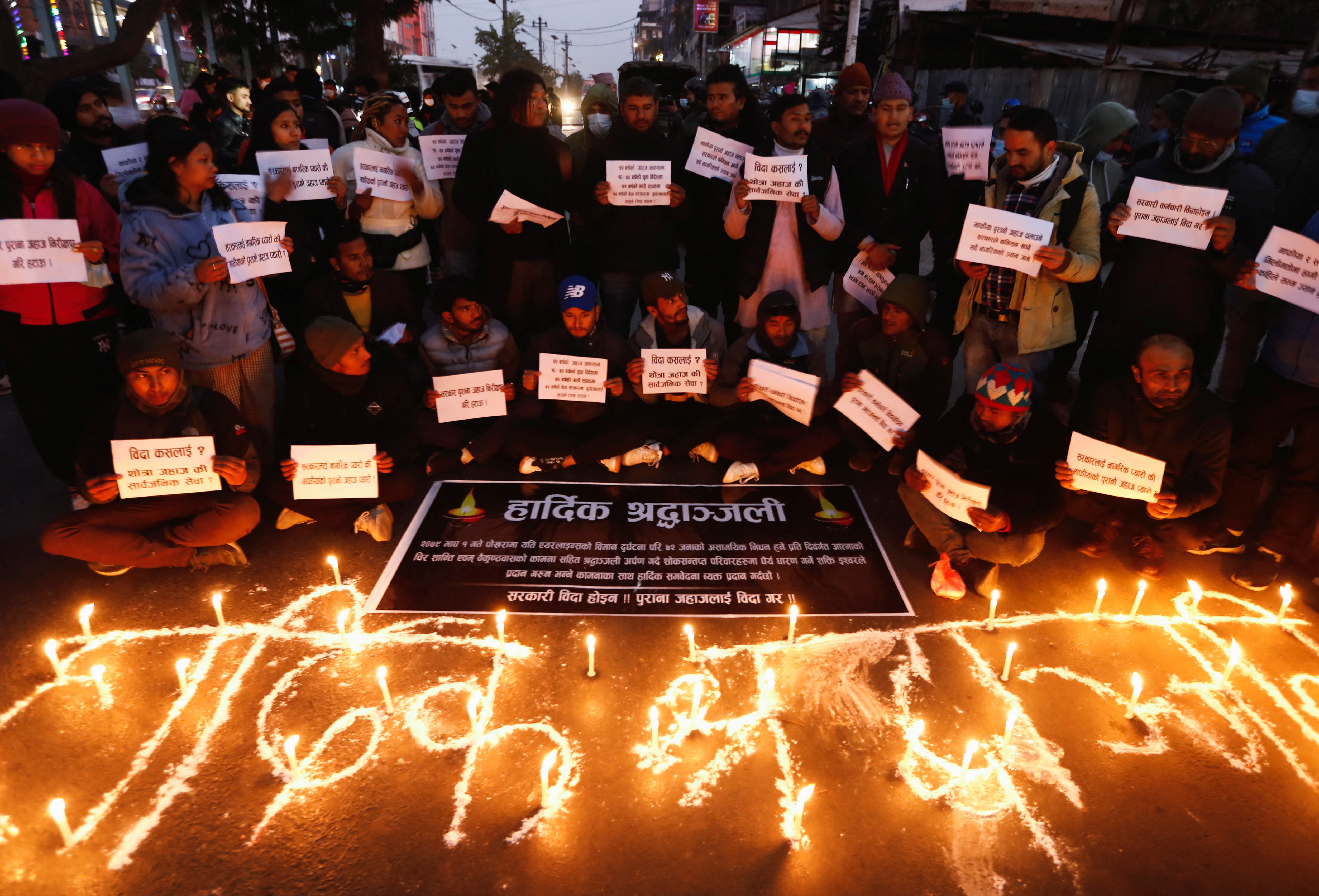
People hold placards as they take part in a condolence and protest meeting following the plane crash of a Yeti Airlines operated aircraft, in Pokhara on January 15, 2023, in Kathmandu, Nepal January 16, 2023. REUTERS/Navesh Chitrakar
Categories
Audio Sources - Full Text Articles

Resisting Russia one artwork at a time

Here we go again. An art heist rivaling the plunder of the Nazis during World War II is taking place right now in Europe. Since its full-scale invasion of Ukraine began in February 2022, Russia has pillaged over 30 museums, stealing thousands of precious objects from oil paintings to ancient artifacts.

These thefts, as the New York Times recently reported, are not isolated episodes, but part of a wider and premediated effort by Russian President Vladimir Putin to destroy the culture of Ukraine. This is an aspiration that Moscow has repeatedly tried and failed to fulfill over the past several centuries.  

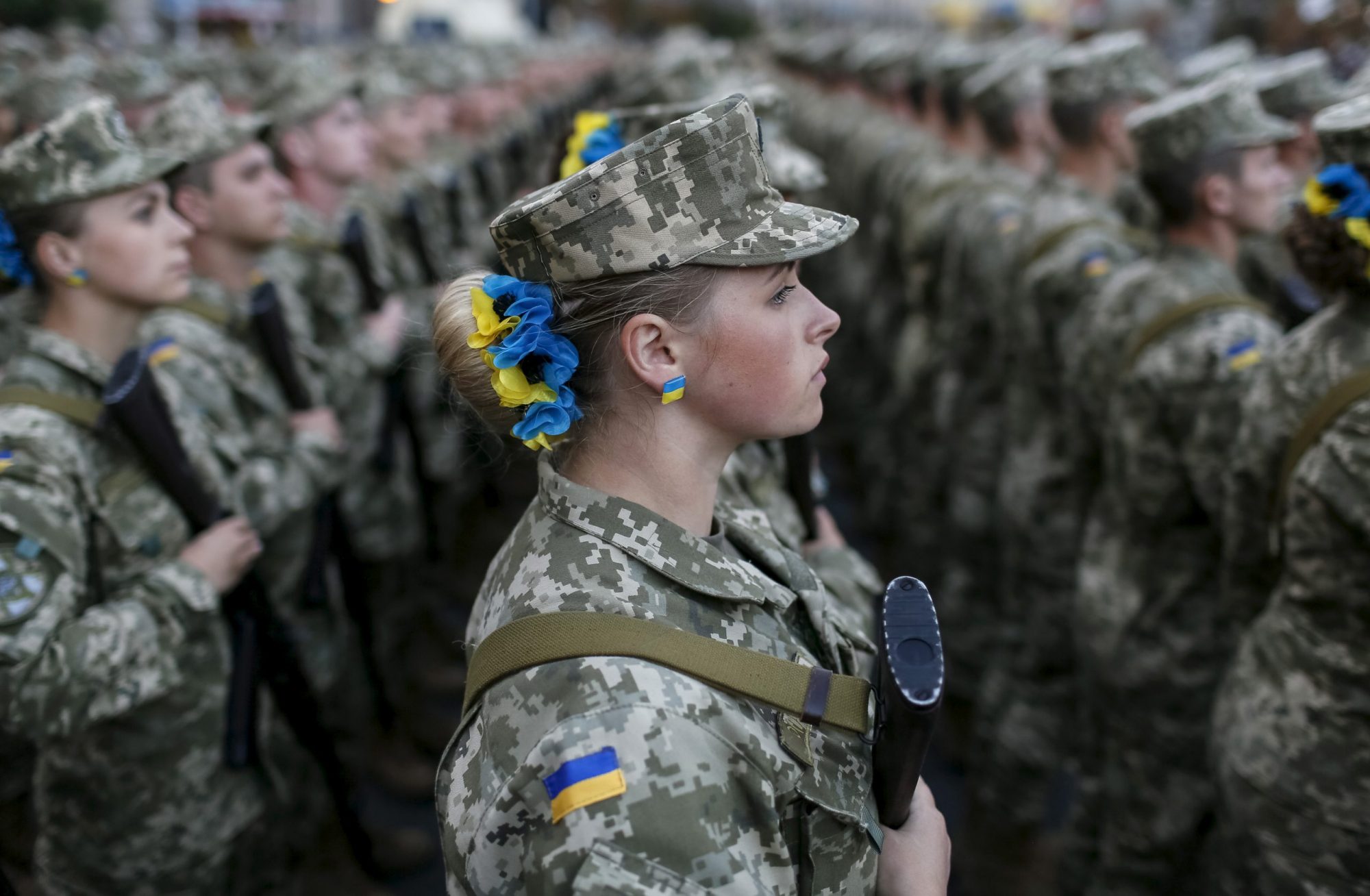
“Women at War,” a new US exhibition featuring a variety of works by twelve female Ukrainian artists, is a symbol of defiance to the Kremlin’s latest attempt to expunge Ukraine’s heritage. Though a number of the artists featured in the exhibition have fled to Europe or America since the full-scale invasion began, all of the works on show were originally crafted in Ukraine itself.

Curated by Monika Fabijanska at the Fridman Gallery in New York, the exhibition demonstrates that, in contrast to Russian imperial dreams, a thriving and independent Ukrainian artistic tradition exists. Indeed, as Fabijanksa has observed, “[Ukrainian artists] have their own culture and dreams and, often, that dream is about independence and about an identity that is their own, without the threat of annexation, invasion, and annihilation.”  

Subscribe to UkraineAlert

As the world watches the Russian invasion of Ukraine unfold, UkraineAlert delivers the best Atlantic Council expert insight and analysis on Ukraine twice a week directly to your inbox.

2015-08-20T120000Z_1614809784_GF10000177

  • Name

    First

    Last

  • Email*
  • Comments
    This field is for validation purposes and should be left unchanged.

This exhibition has now traveled to the Stanford in Washington Gallery, where American Purpose, an intellectually engaging online magazine devoted to covering politics and culture, held a reception on January 12 welcoming its arrival. Opening remarks from several speakers including the historian Sonya Michel, who saw the exhibition in New York and helped bring it to Washington, testified to its ability to bring home the daily indignities, humiliations, and horrors of the war.  “Women at War” will remain at the Stanford in Washington campus until March 22.

The exhibition, which includes a seven-minute film by Oksana Chepelyk that is titled “Letter from Ukraine,” features various artworks ranging from cartoons of the hellishness of daily life in the Donbas to a superb life-size oil painting on canvas by Lesia Khomenko called “Max in the Army.” The solitary and solemn uniformed Max, himself an artist and the husband of Khomenko, is shown saluting and staring into the distance, offering a poignant reminder of the isolation that can accompany heading off to join the army. Was Khomenko saying farewell to him as much as he was to her?

Several drawings depict rape victims of Russian soldiers. Wrestling with such depravity could not have come easily. Dana Kavelina, who was born in 1995 in Melitopol and now lives in Germany as a refugee, took this challenging subject up in a series of searing drawings called “Communications. Exit to the Blind Spot.” She not only addresses the vile actions of Russian soldiers in Ukraine but also the “rape camps” established by the Serbs in Bosnia and Herzegovina during the 1990s. The drawings are never less than harrowing. One, for example, features blood spooling from several women’s bodies and men depicted with red hands. These women, as the exhibition notes, were “purposefully destroyed by repeated rapes,” but Kavelina is searching for a way to bring “subjectivity” to these victims and to bear witness to their anguish. 

Perhaps the most significant piece in the exhibition required the least overt artistry. A white linen sheet hangs at the entrance with a poem written on it in felt pen:

“May you choke on my soil.

May you poison yourself with my air.

May you drown in my waters.

May you burn in my sunlight.

May you stay restless all day and all night.

And may you be afraid every second.”

Olia Fedorova wrote these words while Russian forces besieged her home city Kharkiv in March 2022. Her text reflects the feelings of ordinary Ukrainians caught up in the horrors of Russia’s invasion. She captures the rage, helplessness, and flinty determination that outsiders can only begin to comprehend when they see the mass graves in Bucha, the hundreds of destroyed cars piled high outside Irpin, or the viral video of one girl’s birthday party in her bright yellow family kitchen just before it was destroyed by a Russian missile.   

The exhibition also shines in detailing the hardships of everyday life since Moscow’s illegal annexation of Crimea in 2014 and establishment of puppet regimes in eastern Ukraine. In this regard, a series of 12 cartoon drawings by Aleutina Kakhidze is very instructive indeed. She vividly depicts the journey her elderly mother had to make to collect her paltry pension. We learn that it took her up to eleven-and-a-half hours to cross numerous military borders, with endless delays and no predictability. In the final picture, her mother’s heart gives out as she waits for her pension to be processed. While shocking, the outcome is all too common as senior citizens were often forced to stand in long lines.

The tone of the exhibition is not always grim. Consider the series of photographs by Yevgenia Belorutets entitled “Victories of the Defeated.” Her marvelously evocative four photographs introduce us to the ordinary beauty of daily life in post-industrial Ukraine in spite of all the hardships. Covered in coal soot and outfitted in large gloves and an ill-fitting jacket, one woman in a blue stocking cap stares knowingly at the camera while the female subjects in two others smile broadly and even laugh.

Far from cowering before Putin and his thugs, Ukrainians remain defiantly triumphant. As Zhanna Kadyrova explains in an accompanying note that she composed in March 2022, passivity in the face of terror is not an option. “For the first two weeks of the war, it seemed to me that art was a dream, that all twenty years of my professional life were just something I had seen while asleep, that art was absolutely powerless and ephemeral in comparison to the merciless military machine destroying peaceful cities and human lives. I no longer think so: I see that every artistic gesture makes us visible and makes our voices heard!” Yes, they do. Both the Stanford in Washington Gallery and American Purpose deserve plaudits for helping to ensure that the efforts of Ukrainian artists to thwart Russian tyranny attract the attention they so abundantly merit.

Jacob Heilbrunn is the editor of the National Interest and Melinda Haring is the director of stakeholder relations and social impact at the Superhumans Center in Ukraine. Both Heilbrunn and Haring are non-resident senior fellows at the Atlantic Council’s Eurasia Center.

Further reading

The views expressed in UkraineAlert are solely those of the authors and do not necessarily reflect the views of the Atlantic Council, its staff, or its supporters.

The Eurasia Center’s mission is to enhance transatlantic cooperation in promoting stability, democratic values and prosperity in Eurasia, from Eastern Europe and Turkey in the West to the Caucasus, Russia and Central Asia in the East.

Follow us on social media
and support our work

The post Resisting Russia one artwork at a time appeared first on Atlantic Council.

Categories
Audio Sources - Full Text Articles

The X22 Cruise Missile – Characteristics of Weapon that Struck Dnipro Apartment Building

3bd3dcd59274fa5ee35f776d9d55bda3.jpeg?w=

An Х-22 missile that hit an apartment building in Dnipro is reported to have killed at least 35 people and injured 73. A further 35 remain missing.

Categories
Audio Sources - Full Text Articles

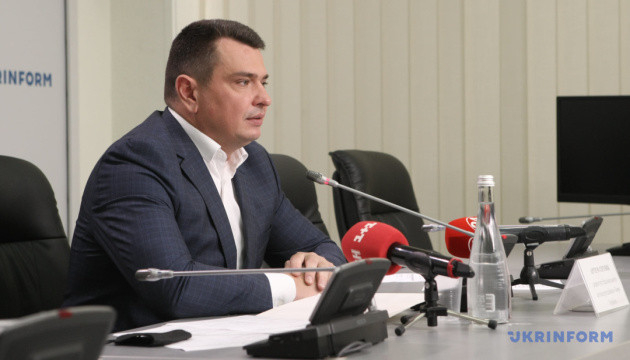
How the National Anti-Corruption Bureau Works During Wartime

ed22375b3b7bd03fb93b140079bd0685.jpg?w=1

NABU has issued suspicion notices against several high-ranked officials since the start of the full-scale invasion.

Categories
Audio Sources - Full Text Articles

As elites arrive in Davos, conspiracy theories thrive online

NEW YORK (AP) — When some of the world’s wealthiest and most influential figures gathered at the World Economic Forum’s annual meeting last year, sessions on climate change drew high-level discussions on topics such as carbon financing and sustainable food systems.

But an entirely different narrative played out on the internet, where social media users claimed leaders wanted to force the population to eat insects instead of meat in the name of saving the environment.

The annual event in the Swiss ski resort town of Davos, which opens Monday, has increasingly become a target of bizarre claims from a growing chorus of commentators who believe the forum involves a group of elites manipulating global events for their own benefit. Experts say what was once a conspiracy theory found in the internet’s underbelly has now hit the mainstream.

“This isn’t a conspiracy that is playing out on the extreme fringes,” said Alex Friedfeld, a researcher with the Anti-Defamation League who studies anti-government extremism. “We’re seeing it on mainstream social media platforms being shared by regular Americans. We were seeing it being spread by mainstream media figures right on their prime time news, on their nightly networks.”

The meeting draws heads of state, business executives, cultural trendsetters and representatives from international organizations to the luxe mountain town. Though it’s always unclear how much concrete action will emerge, the meeting is slated to take on pressing global issues from climate change and economic uncertainty to geopolitical instability and public health.

Hundreds of public sessions are planned, but the four-day conference is also known for secretive backroom meetings and deal-making by business leaders. This gap between what’s shown to the public and what happens behind closed doors helps make that makes the meeting a flashpoint for misinformation.

“When we have very high levels of ambiguity, it’s very easy to fill in narratives,” said Kathleen Hall Jamieson, who is the director of the Annenberg Public Policy Center at the University of Pennsylvania and also studies misinformation.

Theories about influential global leaders are not new, she said, but scrutiny of the forum and its chairman, Klaus Schwab, intensified in 2020 in the early days of the COVID-19 pandemic. That year, the theme of the annual meeting was “The Great Reset.” The initiative envisioned sweeping changes to how societies and economies would work to recover from the pandemic and build a more sustainable future.

Now, in increasingly mainstream corners of the internet and on conservative talk shows, “The Great Reset” has become shorthand for what skeptics say is a reorganization of society, using global uncertainty as a guise to take away rights. Believers argue that measures including pandemic lockdowns and vaccine mandates are tools to consolidate power and undercut individual sovereignty.

In a time of mounting anxiety, Jamieson says the public has become more susceptible to falsehoods, as conspiracy theories emerge as a tool to cut through the chaos. Researchers who monitor extremism say these beliefs are becoming more popular and more concerning.

At a rally staged on the grounds of an upstate New York church last fall, a photo of Schwab was displayed on the center of a large screen alongside other “villains” accused of threatening American values. The crowd of thousands had gathered in a revivalist tent at a traveling roadshow used as a recruiting tool for an ascendant Christian nationalist movement. Participants discussed “The Great Reset,” among a host of other theories, as an assault on America’s foundations.

The phrase was used more than 60 times across all programs on Fox News in 2022, according to one tally generated by the Internet Archive’s TV news database. That’s up from 30 mentions in 2021 and about 20 in 2020. It was discussed most frequently on “The Ingraham Angle” and “Tucker Carlson Tonight.”

And in August, amid a defamation trial for calling the Sandy Hook Elementary School attack a hoax, Infowars host Alex Jones released a book called “The Great Reset: And The War For the World.” It’s described as an analysis of “the global elite’s international conspiracy to enslave humanity and all life on the planet.”

As the World Economic Forum has become intertwined with this narrative, a steady stream of claims have plagued the organization. While some people offer legitimate criticisms of the forum — namely that it hosts wealthy executives who fly in on emissions-spewing corporate jets — others spread unverified or baseless information as fact.

For example, a site known for spreading fabricated stories falsely claimed last month that Schwab publicly encouraged the decriminalization of sex between children and adults, using an invented quote and other baseless statements. Still, it drew tens of thousands of shares on Twitter and Facebook.

Meanwhile, the popular claim that the forum wants people to replace meat with bugs is a distorted reference to an article once published on the organization’s website. In another instance, a widely shared post claimed without evidence that the forum had “appointed” U.S. Rep. Kevin McCarthy as speaker of the House before the actual vote had taken place.

The concern, Friedfeld says, is that posts like these could introduce people to more fringe and dangerous conspiracy theories or even translate into real-world violence. Yann Zopf, head of media for the forum, says the organization has increased its monitoring of this kind of online activity and carefully watches for direct threats.

“Creating all that kind of stuff can generate enemies that people believe are responsible for whatever bad thing is happening in the world,” Friedfeld said. “Once that happens, when you believe that that things are happening in the world and a certain person or group of people is responsible for these attacks, all of a sudden, the idea of using violence to resist becomes more plausible.”

___

Follow AP’s coverage of the World Economic Forum meeting at https://apnews.com/hub/world-economic-forum

Categories
Audio Sources - Full Text Articles

Fortinet observed three rogue PyPI packages spreading malware

Researchers discovered three malicious packages that have been uploaded to the Python Package Index (PyPI) repository by Lolip0p group.

FortiGuard Labs researchers discovered three malicious PyPI packages (called ‘colorslib’, ‘httpslib’, and “libhttps”) on the PyPI repository that were uploaded by the same actor, Lolip0p. The packages were discovered on January 10, 2023, the packages “colorslib” and “httpslib” were published on January 7, 2023, while “libhttps” was published on January 12, 2023.

PYPI

The packages are designed to drop malware on compromised developer systems.

The three packages were downloaded over 550 times in total.

The packages use an identical setup.py script that runs a PowerShell and runs a malicious executable (“Oxzy.exe“) hosted on Dropbox.

The researchers noticed that the download URL has not previously been labeled as malicious, while the downloaded executable was identified as malicious by some security vendors.

Upon executing the file, another binary named update.exe is executed in the temporary folder ‘%USER%AppDataLocalTemp.’

The malware (Wacatac Trojan) that is dropped on the developers’ systems can perform a broad range of malicious activities and deliver additional malicious payloads.

“The author also positions each package as legitimate and clean by including a convincing project description. However, these packages download and run a malicious binary executable.” concludes the report. “Python end users should always perform due diligence before downloading and running any packages, especially from new authors. And as can be seen, publishing more than one package in a short time period is no indication that an author is reliable.”

Follow me on Twitter: @securityaffairs and Facebook and Mastodon

Pierluigi Paganini

(SecurityAffairs – hacking, malware)

The post Fortinet observed three rogue PyPI packages spreading malware appeared first on Security Affairs.

Categories
Audio Sources - Full Text Articles

U.S. Supreme Court weighs Turkish lender Halkbank“s bid to avoid charges

2023-01-17T11:04:55Z

WASHINGTON (Reuters) – The U.S. Supreme Court is set on Tuesday to hear arguments over a bid by Turkey’s state-owned lender Halkbank to avoid criminal charges in the United States for allegedly helping Iran evade economic sanctions.

?m=02&d=20230117&t=2&i=1620352395&r=LYNX

FILE PHOTO: A view of the U.S. Supreme Court building in Washington, U.S. October 3, 2022. REUTERS/Jonathan Ernst/File Photo

The justices are weighing Halkbank’s appeal of a lower court’s ruling in favor of the U.S. government that allowed the prosecution of the bank to proceed. The case tests Halkbank’s contention that it is shielded from prosecution because, as an entity majority owned by the Turkish government, it has sovereign immunity.

The bank said its view is backed up by a 1976 U.S. law called the Foreign Sovereign Immunities Act (FSIA) that limits the jurisdiction of American courts over lawsuits against foreign countries. President Joe Biden’s administration contends that the law does not apply to criminal prosecutions and, even if it did, the bank’s actions fall under the law’s exception to sovereign immunity for misconduct involving commercial activities.

Halkbank’s case has complicated U.S.-Turkish relations, with Turkish President Tayyip Erdogan calling the 2019 American charges against the bank an “unlawful, ugly” step.

Prosecutors accused Halkbank of converting oil revenue into gold and then cash to benefit Iranian interests, and documenting fake food shipments to justify transfers of oil proceeds. They also said Halkbank helped Iran secretly transfer $20 billion of restricted funds, with at least $1 billion laundered through the U.S. financial system.

Halkbank has pleaded not guilty to bank fraud, money laundering and conspiracy charges over its alleged use of money servicers and front companies in Iran, Turkey and the United Arab Emirates to evade sanctions.

The Manhattan-based 2nd U.S. Circuit Court of Appeals in 2021 ruled against Halkbank, concluding that even if the FSIA shielded the bank, the conduct for which it was charged falls under the commercial-activity exception.

Noting that international law prohibits one country from prosecuting another in its own courts, Halkbank told the Supreme Court in a filing that until the decisions in this case “no court had authorized the criminal trial of a foreign sovereign or its instrumentalities.”

The Justice Department disagreed, calling Halkbank’s claims unprecedented.

“Federal prosecutions of foreign officials date back to the Founding era,” the government said in a filing, adding that as foreign government-owned commercial entities expanded operations in the 20th century, they were not exempted either,” the department said in a filing.

Categories
Audio Sources - Full Text Articles

Tesla, Musk face trial in shareholder case over 2018 tweets

2023-01-17T11:11:20Z


Elon Musk arrives at the In America: An Anthology of Fashion themed Met Gala at the Metropolitan Museum of Art in New York City, New York, U.S., May 2, 2022. REUTERS/Andrew Kelly

Elon Musk and Tesla Inc (TSLA.O) are set to go to trial in San Francisco on Tuesday in a case where the company’s shareholders claim they were defrauded by Musk’s 2018 statement that funding was “secured” to take the electric car maker private.

The lawsuit seeks damages for shareholders who bought or sold Tesla stock in the days after Musk’s tweets on Aug. 7, 2018. The company’s shares shot higher and then fell again after Aug. 17, 2018, when the New York Times reported that funding for the take-private bid was “far from secure.”

The shareholders have not specified the damages, but said Musk’s tweets cost investors “billions.”

The defendants, who also include seven current and former Tesla directors, have denied wrongdoing.

Opening arguments could get under way later on Tuesday, after the jury is selected. Potential panelists were asked ahead of time about their opinions of Musk and whether they own a Tesla vehicle.

Musk had asked U.S. District Court Judge Edward Chen to move the case to Texas, arguing too many potential jurors are biased against him because of negative local media coverage of layoffs at Twitter, which he took over in October.

The judge, who is overseeing the case, denied that bid last week.

Investors sued in August 2018, shortly after Musk posted on Twitter that he was considering taking Tesla private at $420 per share. “Funding secured,” he said.

In another tweet the same day, he wrote, “Investor support is confirmed,” adding, “only reason why this is not certain is that it’s contingent on a shareholder vote.”

Chen has ruled that those statements were untrue and reckless. The jury will decide if Musk’s words mattered to investors, whether he acted knowingly and whether to award damages and in what amount.

The defendants have said in court papers that they will argue that Musk had good reason to believe funding for the deal was secured.

The billionaire had met Yasir Al-Rumayyan, the managing director of Saudi Arabia’s sovereign wealth fund, on multiple occasions, according to the court filing, which also said Al-Rumayyan had urged Musk to take Tesla private and offered up to $60 billion in backing.

Musk may take the stand in the case, according to court documents, along with Oracle Corp (ORCL.N) co-founder Larry Ellison and James Murdoch, son of Fox Corp (FOXA.O) Chairman Rupert Murdoch.

The trial is expected to last around three weeks.


Categories
Audio Sources - Full Text Articles

As crypto hackers and thieves make off with billions, there’s another kind of fraud lurking in the industry.

Happy Tuesday, readers. I’m Phil Rosen. By the end of the month I’ll be back in wintry Manhattan, but for now I’m writing to you from Los Angeles. 

Like a limp handshake, the downfall of FTX has served as a sorry introduction for readers without previous exposure to the nascent crypto industry. A once-niche segment of finance has been thrust into the mainstream, and now everyone and their mother knows the name Sam Bankman-Fried.

Since the bedlam kicked off in November, countless people have told me their view of crypto has soured. Bearishness is building — and much of that can be chalked up to a broad loss of trust.

I’m sorry to say when you dig deeper into the practices of opaque crypto exchanges, there’s little to restore that faith.

But before we jump in, Matt Turner, the editor in chief of business at Insider, is at the World Economic Forum in Davos. He will be posting notes and videos to his LinkedIn all week. You can follow along here — and read his latest post here. 

Now, shall we?


In case you missed it: On Friday I spent an hour answering questions about FTX on Reddit. You can see the Q&A here.


If this was forwarded to you, sign up here. Download Insider’s app here.


Sam Bankman-FriedSam Bankman-Fried outside at the federal court in Manhattan on Thursday.

Jeenah Moon/Reuters

1. Yes, FTX has shown us why it’s bad to gamble with customer funds, but evidence of a lesser known fraudulent practice called wash trading has made its rounds through the crypto sector, too, according to the National Bureau of Economic Research.

In a working paper published last month, the group concluded that wash trades accounted for up to 70% of all transactions on unregulated crypto exchanges. 

That suggests pervasive fraud and deception, as my colleague Jennifer Sor writes.

Imagine I start a lemonade stand. I want to make people think my lemonade is the best in town. My partners in the business (in this case some kids down the block) come around and buy some lemonade and proclaim its superior refreshing qualities. Maybe they state loudly that they’d gladly pay much more than I am asking for a glass of the stuff. 

Soon everyone wants what I’m selling. 

Perhaps it’s an uneven metaphor, but you get the idea. People want what other people are interested in. In wash trading, a party trades with itself to give the illusion of deeper liquidity than exists, and artificially pump the price of an asset that may draw in inexperienced investors.  

To be sure, the schemes are usually more elaborate than pretending to buy your own lemonade. Timothy Cradle, director of regulatory affairs at Blockchain Intelligence, told Insider that wash trading is market manipulation. 

“There’s competition in every industry,” Cradle said. “That’s not an excuse to go out and do wash trading and try to make your exchange look more liquid than it actually is, especially when you’re dealing with cryptocurrency.”

And these aren’t just some little-known mom-and-pop shops. NBER researchers estimated that wash trading comprises nearly half of all transactions on Binance, the world’s largest crypto exchange by volume. (A spokesperson for Binance told Insider that it does not engage in the practice.)

Similarly, KuCoin, another top-five crypto exchange, was estimated to have 52.9% of its transactions consist of wash trading (which the company denied).

Get the full details here, from Insider’s Jennifer Sor. 

Are you surprised that the researchers found wash trading to be so rampant a practice? Tweet me (@philrosenn) or email me (prosen@insider.com) to let me know.


In other news:

trader nyse

Reuters

2. Global stocks and US futures are down early Tuesday, after weak economic data in China renewed fears of a slowdown. Investors will also be closely watching the latest slew of corporate financials as earnings season kicks off. Here are the latest market moves.

3. On the docket: Morgan Stanley, Goldman Sachs, and Citizens Financial Group Inc, all reporting.

4. This fund manager has beaten 99% of his competitors over the last five years. He shared the investing strategy that has led to his massive success — and then broke down seven of his favorite value stocks.

5. JPMorgan Asset Management’s investment chief said the Fed has already won its war on inflation. The firm’s David Kelly believes that it’s time for policymakers to halt rate hikes: “They’re in danger of tipping the economy into a recession.”

6. “Dr. Doom” economist Nouriel Roubini said the Fed will wimp out on its inflation fight. In his view, policymakers must raise rates past 6% to hit their target for inflation. Either way, he believes a severe recession at this point has become inevitable.

7. A recession is going to drag down stocks this year, according to PIMCO. But that means it could be the perfect time to load up on bonds — which have lower but safer returns and are an attractive investment during a downturn. 

8. A portfolio manager and top strategist at UBS Asset Management broke down the opportunities he’s most bullish on for 2023. The US economy is going to hang on longer than people expect, Evan Brown said — but that doesn’t mean stocks as a whole will outperform. 

9. The ETF strategy boss at $19.5 billion Allianz explained why the Fed is on course to shock markets. Once central bankers raise rates for higher and longer than expected, inventors will end up regretting that they ignored what the Fed’s been signaling. In his words, a “wet blanket for stocks.” 

VIX  index on Jan.17, 2023

Markets Insider

10. Fundstrat’s Tom Lee pointed out that more than half of the components in the CPI are in deflation mode. That’s good news for the stock market, as easing inflation will help loosen financial conditions. Here’s what he said in particular about Wall Street’s fear gauge.


Curated by Phil Rosen in Los Angeles. Feedback or tips? Tweet @philrosenn or email prosen@insider.com

Edited by Max Adams (@maxradams) in New York and Hallam Bullock (@hallam_bullock) in London.

Read the original article on Business Insider
Categories
Audio Sources - Full Text Articles

In the largest-ever experiment of its kind, 33 companies adopted a four-day workweek. The results were conclusive: It’s time for everyone to take Fridays off.

3d rendering of a building as a calendarMore companies are finding success with the four-day workweek. A recent trial of 33 companies had overwhelmingly successful results.

Arif Qazi/Insider

A real-world experiment just proved that we should all shift to a four-day workweek

The results are in: It’s time for your company to stop working on Fridays (or Mondays).

The latest, perhaps most convincing evidence yet for the shift to a four-day workweek comes from a six-month trial which began in February 2022 in which 33 companies with employees in six countries decreased their employees’ workload to four days, or 32 hours, a week. Organized by 4 Day Week Global, the real-world experiment sought to see whether the employees could be just as productive in 80% of the time — all for the same pay. The results were overwhelmingly positive: Companies in the program reported increased revenue and improved employee health and well-being, and had a positive impact on the environment. And after the success, a hundred more companies that together employ thousands of people are considering or are already implementing the same approach.

So if you’ve ever tried to persuade your boss to shift to a four-day workweek, this is the best evidence yet that it can work. The results of the new report were unequivocal: The four-day workweek was better for everyone.

‘It probably sounds crazy, but it works’ 

At the outset of the trial, employees at Soothing Solutions, a Dundalk, Ireland-based company that makes cough lozenges for children, were skeptical that a four-day working week would be feasible, let alone profitable. But the founders Sinéad Crowther and Denise Lauaki had high hopes. When the company was founded in 2017, the duo wanted to establish a people-focused culture, so when Crowther learned about 4 Day Week’s program in 2021, she saw it as a way to attract and retain talent.

Since Soothing Solutions hired its first employees last year, no staff members have left the company, and Crowther told me the anecdotal feedback about the four-day week had been so glowing that it almost moved her to tears. “One of our employees has an elderly parent who was terminally ill, and she got to spend three, four days a week with them,” she told me. “She said nothing can give her that time back. She wouldn’t have got to do that in any other job.” Another worker has been able to pursue her passion for photography in her time off, Crowther said, adding that “it turns out, she’s a fantastic photographer!”

Because Soothing Solutions started operations using the four-day week, the founders don’t have anything to compare their business growth to, but Crowther isn’t worried about any negative impact a four-day week might have on business, even as the company grows. When we spoke, Soothing Solutions had just launched on Amazon and had its first UK sale. Its products are available in Ireland, Northern Ireland, Cyprus, and Scotland, with plans to expand further. “We have absolutely no concerns,” she said. “It probably sounds crazy, but it works.”

4 Day Week Global is a nonprofit community platform that promotes the four-day workweek by helping companies implement it and by funding research into the future of work. The organization was established after the success of a landmark trial program at its cofounder Andrew Barnes’ New Zealand company Perpetual Guardian. To conduct trials at companies and analyze their results, the group has partnered with academics at Harvard Business School, Oxford University, and the University of Pennsylvania.

The four-day-week movement has been gaining momentum on the heels of the Great Resignation and the push from employees to rethink the way we work. The tech startup Bolt became the first unicorn to trial it in 2021, finding it so successful that it implemented it after three months. Other trials of shorter weeks have found success as well: A 2021 trial in Iceland found positive results, and a 2019 research paper by Henley Business School found that two-thirds of businesses operating on a four-day week saw employee productivity increase. 

There is some pushback, though. A shorter week could mean employees’ workload increases each day, causing more stress rather than less. For companies that experience significantly busier periods around holidays or during the summer, it may not be possible to extend the program across the whole year. And many companies, such as banks or insurance companies that require around-the-clock customer service or news organizations that follow a 24-hour news cycle, aren’t able to shutter for even one day each week. But in those cases, companies could approach the four-day week the way they already handle weekends: Simply arrange teams’ schedules so there are always people working.

No downsides

The ongoing push for a four-day workweek isn’t the first time there’s been a movement to upend the traditional model of work. Until 1926, the standard US workweek lasted six days. Then, Henry Ford reduced the workweek at his namesake company down to five days. He believed an extra day off would increase workers’ productivity and give workers more leisure time to spend more money — hopefully on Ford cars. The trend caught on, and, after organizing by workers in favor of the shift, the Fair Labor Standards Act set the standard for the workweek at 44 hours; an amendment in 1940 set the now-standard 40-hour week. Fast forward to today, and our norms appear ripe for a shake-up once again.

Barry Prost, a cofounder of the Irish company Rent a Recruiter, a specialist talent-acquisition service, took part in the six-month 4 Day Week trial with the goal of addressing staff turnover — a problem for many businesses since the coronavirus pandemic. When the pandemic began, Rent a Recruiter was already moving to a permanent remote-work model, and after hearing about the program the company decided to try the four-day week as well. To Prost, it was particularly important to ensure the switch didn’t hurt clients. Despite these reservations, Prost told me that not only had customers been supportive of the modified schedule, but some had even asked about implementing the policy themselves.

Crucially, the new approach has brought huge gains to the small startup, which employs 20 people. Over the six-month trial period, Rent a Recruiter doubled its gross profits and calculated that its staff’s productivity doubled over that time as well. And though it wasn’t the initial motivation, Prost told me the benefits had shown up in more than just the company’s bottom line. “Anecdotally, we have a manager who’s also a psychotherapist — she’s now able to spend more time on her therapy practice,” he said. “We’ve got mums and parents who are able to drop off and pick up their kids on a Friday, which they wouldn’t have been able to do otherwise.”

While staff well-being and retention are important, the trial also was associated with a revenue boost among the participating companies. Among the 16 companies in the trial that provided revenue data, combined revenue for the companies, weighted by size, increased by 8.14%, which for some companies was nearly 40% higher than revenue growth during the same six-month period of the previous year.

The companies that took part in the trial have reported almost no downsides. None of the 27 companies that filled out a final survey for participants said they had any plans to return to a five-day week. And nearly all of the 495 employees involved in the trial wanted to maintain the four-day working week. According to the post-trial surveys, everyone from CEOs and managers to junior employees noticed far-reaching benefits, and a new UK-wide trial is now underway.

Fewer work hours may also help the environment and gender inequality

While adopters of a four-day workweek might be primarily seeking a business impact — in revenue or employee well-being — there could also be less-obvious benefits.

For one thing, less time working correlates with lower carbon emissions — people are commuting less, and businesses use less energy. The 4 Day Week trial found that participants spent an hour less time commuting than before the trial. And as Orla Kelly, an environmental sociologist at University College Dublin who was the lead researcher for the 4 Day Week trial, told me, the shorter workweek also helps people make more pro-environmental choices. “When people are working longer hours, they tend to be in this kind of work-spend cycle where consumption patterns tend to be quite intensive,” Kelly said. With less free time, people are more likely to buy food in disposable plastic packaging, drive to work instead of walking or taking public transportation, and spend more money on material goods. Kelly tells me that because this is hard to measure, the research is still in its early stages, but she hopes to dive deeper into the idea and provide more concrete evidence of the environmental benefits of a shorter working week.

A four-day week also provides vast improvements in well-being, life satisfaction, and sleep for women. Since women tend to take on more caring responsibilities, the extra day off work was most beneficial for them, allowing the extra load of emotional labor to be spread more evenly. In Ireland, where many of the companies in the trial were based, 70% of part-time workers are women. “Women tend to often be in jobs that pay less, so they tend to be the ones that move to part time, even if they don’t want to,” Kelly told me. In the past few years especially, women have been leaving the workforce in droves, or cutting back hours, over burnout or a lack of childcare options. “This can be problematic for their long-term career trajectory, their pension contributions, and the dynamics of power within the household,” Kelly said. Cutting back working hours for everyone helps women stay in their full-time jobs and not feel as if they’re getting pushed out of the workforce. 

It’s unlikely that the world will shift to a four-day week overnight, but the trial produced real benefits and found it’s possible for many different kinds of corporations, as long as they are willing, to make the change. As companies continue to grapple with attracting and retaining staff, the four-day week could be a relatively simple solution. And after the latest trial, there aren’t many excuses not to try it out.


Molly Lipson is a freelance writer and an organizer from the UK.

Read the original article on Business Insider
WP Radio
WP Radio
OFFLINE LIVE