Categories
Audio Sources - Full Text Articles

The Observer view on how the UK has become a hostile place to have children | Observer editorial

Parents are being forced to bring up their offspring in conditions that will have grave repercussions for society

It takes a village to raise a child, according to the old proverb. That may have little meaning for the majority of parents today, but the proper place for institutions outside the family in the birth and rearing of our children is a pressing matter indeed. And recent evidence suggests that government is grievously failing parents in many ways.

It starts even before birth. A new report, out last week from the Care Quality Commission (CQC), highlighted a worrying decline in women’s experiences of NHS maternity services in England . The trend comes in the wake of a number of inquiries into the appallingly poor maternity care on offer in some hospital trusts; it is estimated that more than 1,000 babies die or are left with severe injuries each year as a result of something going wrong during labour and the CQC has found four in 10 maternity services are providing unacceptable levels of care. This goes beyond the general resourcing and staffing issues within the NHS that have created its biggest ever crisis; it reflects a cultural under-prioritisation of the care of women and their babies that has not been adequately addressed by successive administrations.

Continue reading…

Categories
Audio Sources - Full Text Articles

Biden declares emergency for California due to winter storms

2023-01-15T05:44:53Z

U.S. President Joe Biden delivers remarks on the economy from an auditorium on the White House campus in Washington, U.S. January 12, 2023. REUTERS/Jonathan Ernst

U.S. President Joe Biden approved an emergency declaration for California on Saturday, as storms have pounded the Golden State since Dec. 26, killing at least 19 people and bringing floods, power outages, mudslides, evacuations and road closures.

Biden ordered federal aid to supplement state, tribal and local recovery efforts in the areas affected by severe winter storms, flooding, landslides, and mudslides, the White House said in a statement.

The president’s action makes federal funding available to affected individuals in Merced, Sacramento and Santa Cruz counties, it said.

Categories
Audio Sources - Full Text Articles

China, Hong Kong resume high-speed rail link after 3 years of COVID curbs

2023-01-15T05:29:39Z

HONG KONG/BEIJING (Reuters) – China resumed on Sunday high-speed rail services between Hong Kong and the mainland for the first time since the beginning of the COVID-19 pandemic, as it dismantles travel curbs after Beijing scrapped quarantine for arrivals a week earlier.

?m=02&d=20230115&t=2&i=1620146471&r=LYNX

A Chinese police officer stands guard at in the mainland port area of West Kowloon High-Speed Train Station Terminus on the first day of the resumption of rail service to mainland China, during the coronavirus disease (COVID-19) pandemic in Hong Kong, China, January 15, 2023. REUTERS/Tyrone Siu

The re-opening comes amidst a massive wave of infections nationwide and a day after authorities said nearly 60,000 people with COVID had died in hospital, following last month’s abrupt U-turn on “zero-COVID” policy in the wake of historic protests.

Despite the infections, some passengers voiced excitement and relief about being able to more easily return to their hometowns in time for the approaching Lunar New Year.

“The resumption of the high-speed railway has made it very convenient for us and has brought us closer to home,” said Mang Lee, 33, who was among dozens going through border checks at Hong Kong’s West Kowloon station before boarding trains.

“For the past three years, due to the pandemic, it has not been easy to enter China in any way,” added Meng, originally from the southern city of Guangzhou. “I have not been able to go home for a long time.”

A surge in travel ahead of the holiday celebrations set to begin on Jan. 21, as hundreds of millions of people return home from cities to small towns and rural areas, has fuelled worries about more infections.

Saturday’s updated death toll was a huge increase over previous figures, following global criticism of China’s coronavirus data. The move was welcomed by the World Health Organisation, although the body called for more detailed data.

But the figure still falls short of the predictions of international health experts, who have said China could have more than a million COVID-related deaths this year.

Operations at West Kowloon station have been smooth, with a flow of about 1,400 passengers by 10 a.m., said Cheung Chi-keung, head of operator MTR Corp’s cross-boundary operations.

Tickets for nearly all trains were sold out on Sunday, a display at the station showed, a Reuters witness said.

The re-opening will initially be just for short journeys, MTR chairman Rex Auyeung told reporters at the station.

Hong Kong’s transport secretary, Lam Sai-hung, said he could not confirm when long-haul journeys would resume, but that would be after talks with mainland authorities.

Categories
Audio Sources - Full Text Articles

George Santos’ former roommate says the congressman stole his $520 Burberry scarf and wore it to a ‘Stop the Steal’ rally: report

George Santos wearing black glasses, a blue suit and yellow tie while walking past reportersEmbattled Newly Elected Rep. George Santos (R-NY) Is Sought After By Reporters On Capitol Hill

Win McNamee/Getty Images

  • Two roommates of Rep. George Santos suspect the congressman of stealing a Burberry scarf in 2020. 
  • The roommates also believe Santos stole other valuable clothing items from them.
  • One of the roommates became convinced after seeing Santos wear a Burberry scarf a year later.

Two former roommates of Representative George Santos say the congressman took a Burberry scarf from one of them and wore it in public a year later to a 2021 “Stop the Steal” rally at which he claimed his own 2020 election was stolen from him.

The new revelation adds to a lengthy and growing list of accusations lobbed at the new member of Congress.

Gregory Morey-Parker and Yasser Rabello, who lived with Santos and have accused him of stealing other expensive items, told Patch they believe Santos stole a $520 Burberry scarf that was gifted to Morey-Parker by a friend during the time they lived together in an apartment in Queens. 

In messages sent in 2020 between Morey-Parker and Rabello obtained by Patch, the two roommates vented about the items they suspected Santos had stolen, including an Armani shirt worth $500. The roommates refer to him as Anthony in the messages, matching reports that Santos was previously using the name Anthony Devolder.

Morey-Parker told Patch when he watched Santos speak at the January 5, 2021 rally while wearing the designer camel check scarf, he was sure it was his due to its “lighter” color in comparison to similar scarfs.

During his speech at the rally, Santos protested his own loss in New York’s 3rd congressional district to Democrat Thomas Suozzi in 2020, falsely claiming that like former President Donald Trump, his own election was “stolen” from him.

—The Republican Accountability Project (@AccountableGOP) January 11, 2023


Calls for Santos’ resignation — including from Republicans — have become louder following revelations of the extent of his lies as well as the multiple investigations into his business history opened by state and federal authorities.

Santos, however, says he will continue to serve in office.

A representative for Santos did not immediately respond to Insider’s request for comment.

Read the original article on Business Insider
Categories
Audio Sources - Full Text Articles

How Ukraine became a laboratory for western weapons and battlefield innovation


CNN

 — 

Last fall, as Ukraine won back large swaths of territory in a series of counterattacks, it pounded Russian forces with American-made artillery and rockets. Guiding some of that artillery was a homemade targeting system that Ukraine developed on the battlefield.

A piece of Ukrainian-made software has turned readily available tablet computers and smartphones into sophisticated targeting tools that are now used widely across the Ukrainian military.

The result is a mobile app that feeds satellite and other intelligence imagery into a real-time targeting algorithm that helps units near the front direct fire onto specific targets. And because it’s an app, not a piece of hardware, it’s easy to quickly update and upgrade, and available to a wide range of personnel.

US officials familiar with the tool say it has been highly effective at directing Ukrainian artillery fire onto Russian targets.

The targeting app is among dozens of examples of battlefield innovations that Ukraine has come up with over nearly a year of war, often finding cheap fixes to expensive problems.

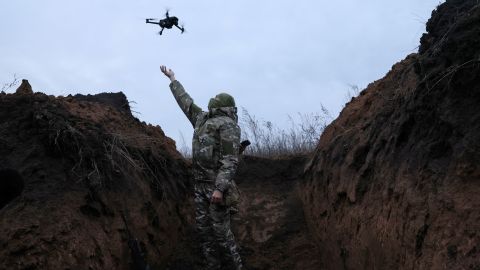
Small, plastic drones, buzzing quietly overhead, drop grenades and other ordinance on Russian troops. 3D printers now make spare parts so soldiers can repair heavy equipment in the field. Technicians have converted ordinary pickup trucks into mobile missile launchers. Engineers have figured out how to strap sophisticated US missiles onto older Soviet fighter jets such as the MiG-29, helping keep the Ukrainian air force flying after nine months of war.

Ukraine has even developed its own anti-ship weapon, the Neptune, based off Soviet rocket designs that can target the Russian fleet from almost 200 miles away.

This kind of Ukrainian ingenuity has impressed US officials, who have praised Kyiv’s ability to “MacGyver” solutions to its battlefield needs that fill in important tactical gaps left by the larger, more sophisticated Western weaponry.

Ukrainian servicemen of National Guard operate with a homemade anti-aircraft machine gun to destroy drones in Mykolaiv, Ukraine.

While US and other Western officials don’t always have perfect insight into exactly how Ukraine’s custom-made systems work – in large part because they are not on the ground – both officials and open-source analysts say Ukraine has become a veritable battle lab for cheap but effective solutions.

“Their innovation is just incredibly impressive,” said Seth Jones, director of the international security program at the Center for Strategic and International Studies.

Meanwhile, the war in Ukraine has also offered the United States and its allies a rare opportunity to study how their own weapons systems perform under intense use – and what munitions both sides are using to score wins in this hotly fought modern war. US operations officers and other military officials have also tracked how successfully Russia has used cheap, expendable drones that explode on impact, provided by Iran, to decimate the Ukrainian power grid.

Ukraine is “absolutely a weapons lab in every sense because none of this equipment has ever actually been used in a war between two industrially developed nations,” said one source familiar with Western intelligence. “This is real-world battle testing.”

For the US military, the war in Ukraine has been an incredible source of data on the utility of its own systems.

Some high-profile systems given to the Ukrainians – such as the Switchblade 300 drone and a missile designed to target enemy radar systems – have turned out to be less effective on the battlefield than anticipated, according to a US military operations officer with knowledge of the battlefield, as well as a recent British think tank study.

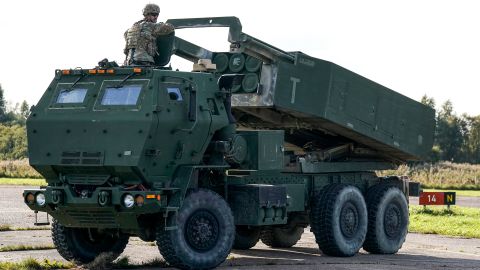
But the lightweight American-made M142 multiple rocket launcher, or HIMARS, has been critical to Ukraine’s success – even as officials have learned valuable lessons about the rate of maintenance repair those systems have required under such heavy use.

How Ukraine has used its limited supply of HIMARS missiles to wreak havoc on Russian command and control, striking command posts, headquarters and supply depots, has been eye-opening, a defense official said, adding that military leaders would be studying this for years.

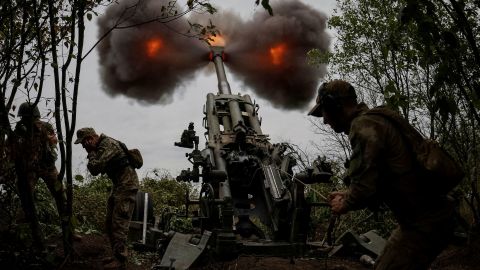
Ukrainian service members fire a shell from an M777 Howitzer at a front line, as Russia's attack on Ukraine continues.

Another crucial piece of insight has been about the M777 howitzer, the powerful artillery that has been a critical part of Ukraine’s battlefield power. But the barrels of the howitzers lose their rifling if too many shells are fired in a short time frame, another defense official said, making the artillery less accurate and less effective.

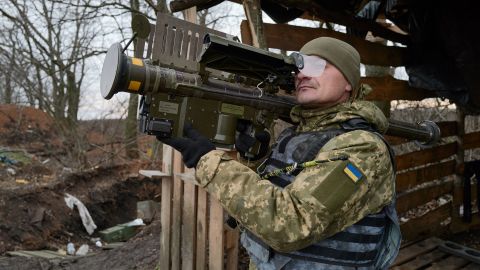
The Ukrainians have also made tactical innovations that have impressed Western officials. During the early weeks of the war, Ukrainian commanders adapted their operations to employ small teams of dismounted infantry during the Russian advance on Kyiv. Armed with shoulder-mounted Stinger and Javelin rockets, Ukrainian troops were able to sneak up on Russian tanks without infantry on their flanks.

The US has also closely studied the conflict for larger lessons on how a war between two modern nations might be waged in the 21st century.

A High-Mobility Artillery Rocket System (HIMARS) during military exercises at Spilve Airport in Riga, Latvia.

The operations officer said that one lesson the US may take from this conflict is that towed artillery – like the M777 howitzer system – may be a thing of the past. Those systems are harder to move quickly to avoid return fire – and in a world of ubiquitous drones and overhead surveillance, “it’s very hard to hide nowadays,” this person said.

When it comes to lessons learned, “there’s a book to be written about this,” said Democratic Rep. Jim Himes of Connecticut, a member of the House Intelligence Committee.

US defense contractors have also taken note of the novel opportunity to study – and market – their systems.

BAE Systems has already announced that the Russian success with their kamikaze drones has influenced how it is designing a new armored fighting vehicle for the Army, adding more armor to protect soldiers from attacks from above.

And different parts of the US government and industry have sought to test novel systems and solutions in a fight for which Ukraine needed all the help it could get.

Ukrainian soldiers are on standby with a US made Stinger MANPAD (man-portable air-defense system) on the frontline in Bakhmut, Ukraine

In the early days of the conflict, the National Geospatial-Intelligence Agency sent five lightweight, high-resolution surveillance drones to US Special Operations Command in Europe – just in case they might come in handy in Ukraine. The drones, made by a company called Hexagon, weren’t part of a so-called program of record at the Defense Department, hinting at the experimental nature of the conflict.

Navy Vice Adm. Robert Sharp, the head of the National Geospatial-Intelligence Agency at the time, even boasted publicly that the US had trained a “military partner” in Europe on the system.

“What this allows you to do is to go out underneath cloud cover and collect your own [geointelligence] data,” Sharp told CNN on the sidelines of a satellite conference in Denver last spring.

Despite intense effort by a small group of US officials and outside industry, it remains unclear whether these drones ever made it into the fight.

Meanwhile, multiple intelligence and military officials told CNN they hoped that creating what the US military terms “attritable” drones – cheap, single-use weapons – has become a top priority for defense contractors.

“I wish we could make a $10,000 one-way attack drone,” one of these officials said, wistfully.

Source link

The post How Ukraine became a laboratory for western weapons and battlefield innovation appeared first on Ukraine Intelligence.

Categories
Audio Sources - Full Text Articles

Israel“s Cognyte won tender to sell intercept spyware to Myanmar before coup -documents

2023-01-15T05:03:06Z

Israel’s Cognyte Software Ltd (CGNT.O) won a tender to sell intercept spyware to a Myanmar state-backed telecommunications firm a month before the Asian nation’s February 2021 military coup, according to documents reviewed by Reuters.

The deal was made even though Israel has claimed it stopped defence technology transfers to Myanmar following a 2017 ruling by Israel’s Supreme Court, according to a legal complaint recently filed with Israel’s attorney general and disclosed on Sunday.

While the ruling was subjected to a rare gag order at the request of the state and media cannot cite the verdict, Israel’s government has publicly stated on numerous occasions that defence exports to Myanmar are banned.

The complaint, led by high-profile Israeli human rights lawyer Eitay Mack who spearheaded the campaign for the Supreme Court ruling, calls for a criminal investigation into the deal. It accuses Cognyte and unnamed defence and foreign ministry officials who supervise such deals of “aiding and abetting crimes against humanity in Myanmar.”

The complaint was filed on behalf of more than 60 Israelis, including a former speaker of the house as well as prominent activists, academics and writers.

The documents about the deal, provided to Reuters and Mack by activist group Justice for Myanmar, are a January 2021 letter with attachments from Myanmar Posts and Telecommunications (MPT) to local regulators that list Cognyte as the winning vendor for intercept technology and note the purchase order was issued “by 30th Dec 2020”.

Intercept spyware can give authorities the power to listen in on calls, view text messages and web traffic including emails, and track the locations of users without the assistance of telecom and internet firms.

Representatives for Cognyte, Myanmar’s military government and MPT did not respond to multiple Reuters requests for comment. Japan’s KDDI Corp (9433.T) and Sumitomo Corp (8053.T), which have stakes in MPT, declined to comment, saying they were not privy to details on communication interception.

Israel’s attorney general did not respond to requests for comment about the complaint. The foreign affairs ministry did not respond to requests for comment about the deal, while the defence ministry declined to comment.

Two people with knowledge of Myanmar’s intercept plans separately told Reuters the Cognyte system was tested by MPT. They declined to be identified for fear of retribution by Myanmar’s junta.

MPT uses intercept spyware, a source with direct knowledge of the matter and three people briefed on the issue told Reuters although they did not identify the vendor. Reuters was unable to determine whether the sale of Cognyte intercept technology to MPT was finalised.

Even before the coup, public concern had mounted in Israel about the country’s defence exports to Myanmar after a brutal 2017 crackdown by the military on the country’s Rohingya population while Aung San Suu Kyi’s government was in power. The crackdown prompted the petition led by Mack that asked the Supreme Court to ban arms exports to Myanmar.

Since the coup, the junta has killed thousands of people including many political opponents, according to the United Nations.

Many governments around the world allow for what are commonly called ‘lawful intercepts’ to be used by law enforcement agencies to catch criminals but the technology is not ordinarily employed without any kind of legal process, cybersecurity experts have said.

According to industry executives and activists previously interviewed by Reuters, Myanmar’s junta is using invasive telecoms spyware without legal safeguards to protect human rights.

Mack said Cognyte’s participation in the tender contradicts statements made by Israeli officials after the Supreme court ruling that no security exports had been made to Myanmar.

While intercept spyware is typically described as “dual-use” technology for civilian and defence purposes, Israeli law states that “dual-use” technology is classified as defence equipment.

Israeli law also requires companies exporting defence-related products to seek licenses for export and marketing when doing deals. The legal complaint said any officials who granted Cognyte licenses for Myanmar deals should be investigated. Reuters was unable to determine whether Cognyte obtained such licenses.

Around the time of the 2020 deal, the political situation in Myanmar was tense with the military disputing the results of an election won by Suu Kyi.

Norway’s Telenor (TEL.OL), previously one of the biggest telecoms firms in Myanmar before withdrawing from the country last year, also said in a Dec. 3, 2020 briefing and statement that it was concerned about Myanmar authorities’ plans for a lawful intercept due to insufficient legal safeguards.

Nasdaq-listed Cognyte was spun off in February 2021 from Verint Systems Inc (VRNT.O), a pioneering giant in Israel’s cybersecurity industry.

Cognyte, which had $474 million in annual revenue for its last financial year, was also banned from Facebook in 2021. Facebook owner Meta Platforms Inc (META.O) said in a report Cognyte “enables managing fake accounts across social media platforms”.

Meta said its investigation identified Cognyte customers in a range of countries such as Kenya, Mexico and Indonesia and their targets included journalists and politicians. It did not identify the customers or the targets.

Meta did not respond to a request for further comment.

Norway’s sovereign wealth fund last month dropped Cognyte from its portfolio, saying states said to be customers of its surveillance products and services “have been accused of extremely serious human rights violations”. The fund did not name any states.

Cognyte has not responded publicly to the claims made by Meta or Norway’s sovereign wealth fund.

Related Galleries:

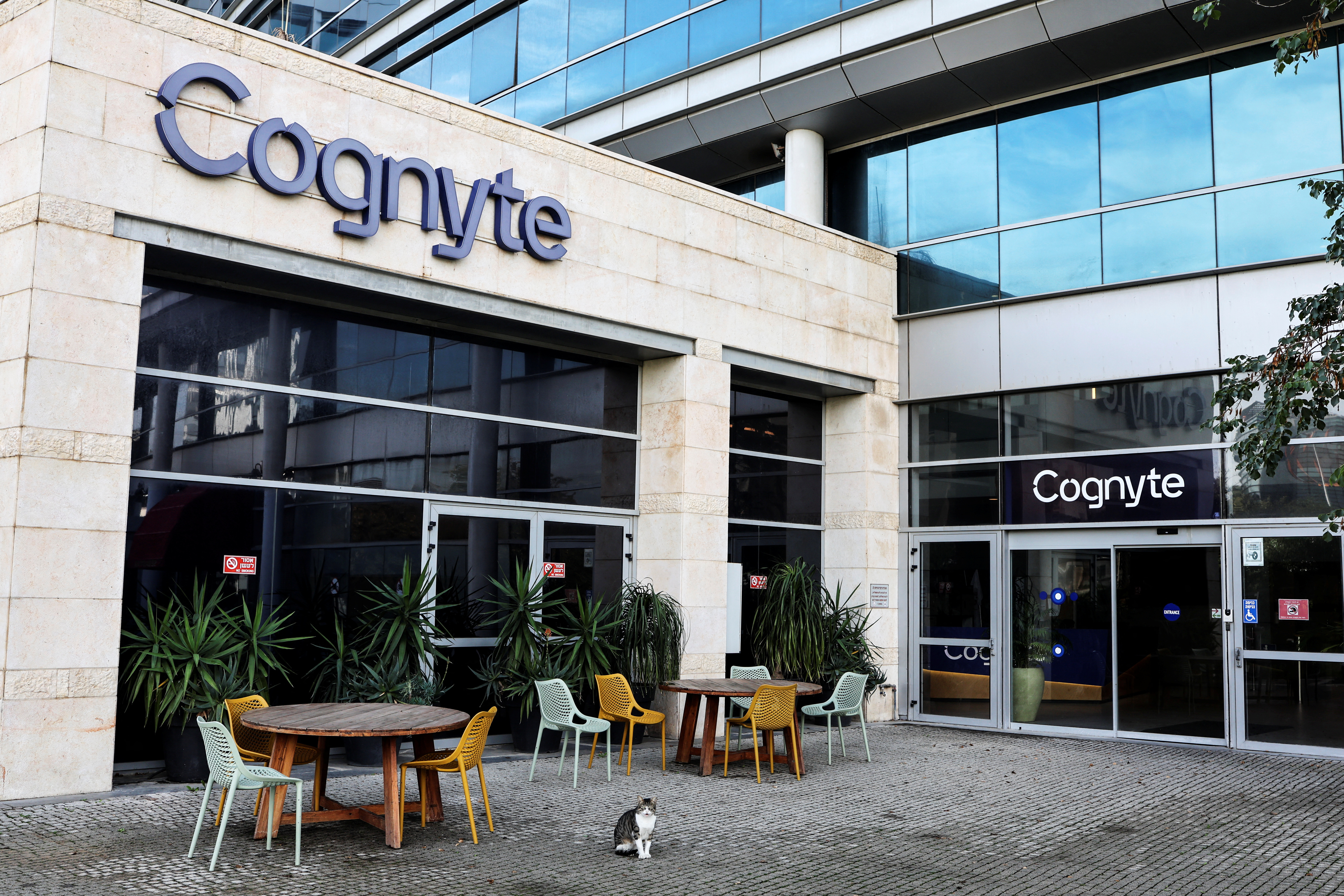
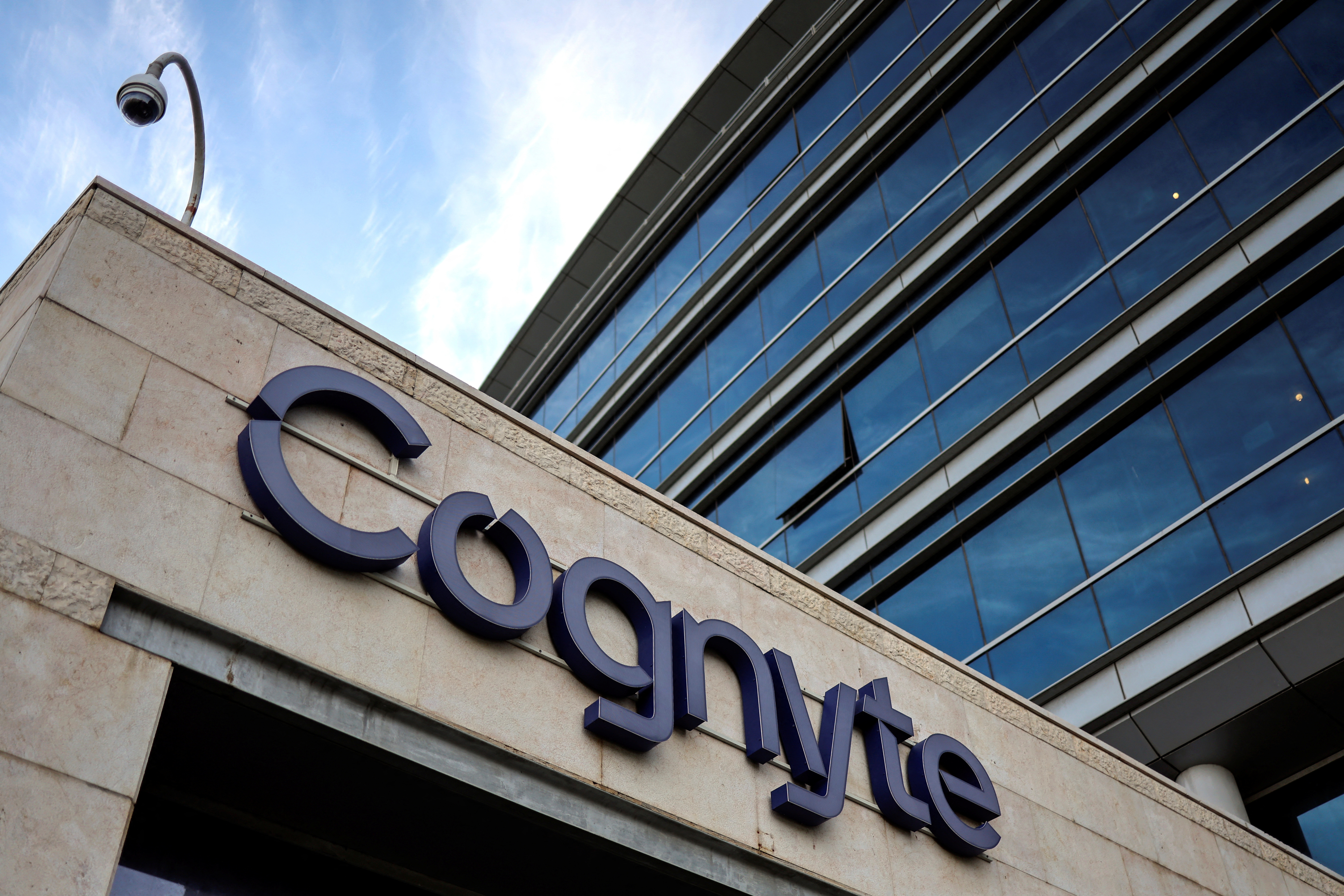
Signs of the Israeli company Cognyte, are seen on their headquarters building in Herzliya near Tel Aviv, Israel January 13, 2023. REUTERS/Nir Elias

A sign of the Israeli company Cognyte, is seen on their headquarters building in Herzliya near Tel Aviv, Israel January 13, 2023. REUTERS/Nir Elias

A sign of the Israeli company Cognyte, is seen on their headquarters building in Herzliya near Tel Aviv, Israel January 13, 2023. REUTERS/Nir Elias
WP Radio
WP Radio
OFFLINE LIVE