President Zelensky: We managed to strengthen resoluteness of … Ukrinform
The post President Zelensky: We managed to strengthen resoluteness of … – Ukrinform first appeared on The Russia And Ukraine News – The News And Times.
 The Brooklyn Times - bklyntimes.com
President Zelensky: We managed to strengthen resoluteness of … Ukrinform
The post President Zelensky: We managed to strengthen resoluteness of … – Ukrinform first appeared on The Russia And Ukraine News – The News And Times.
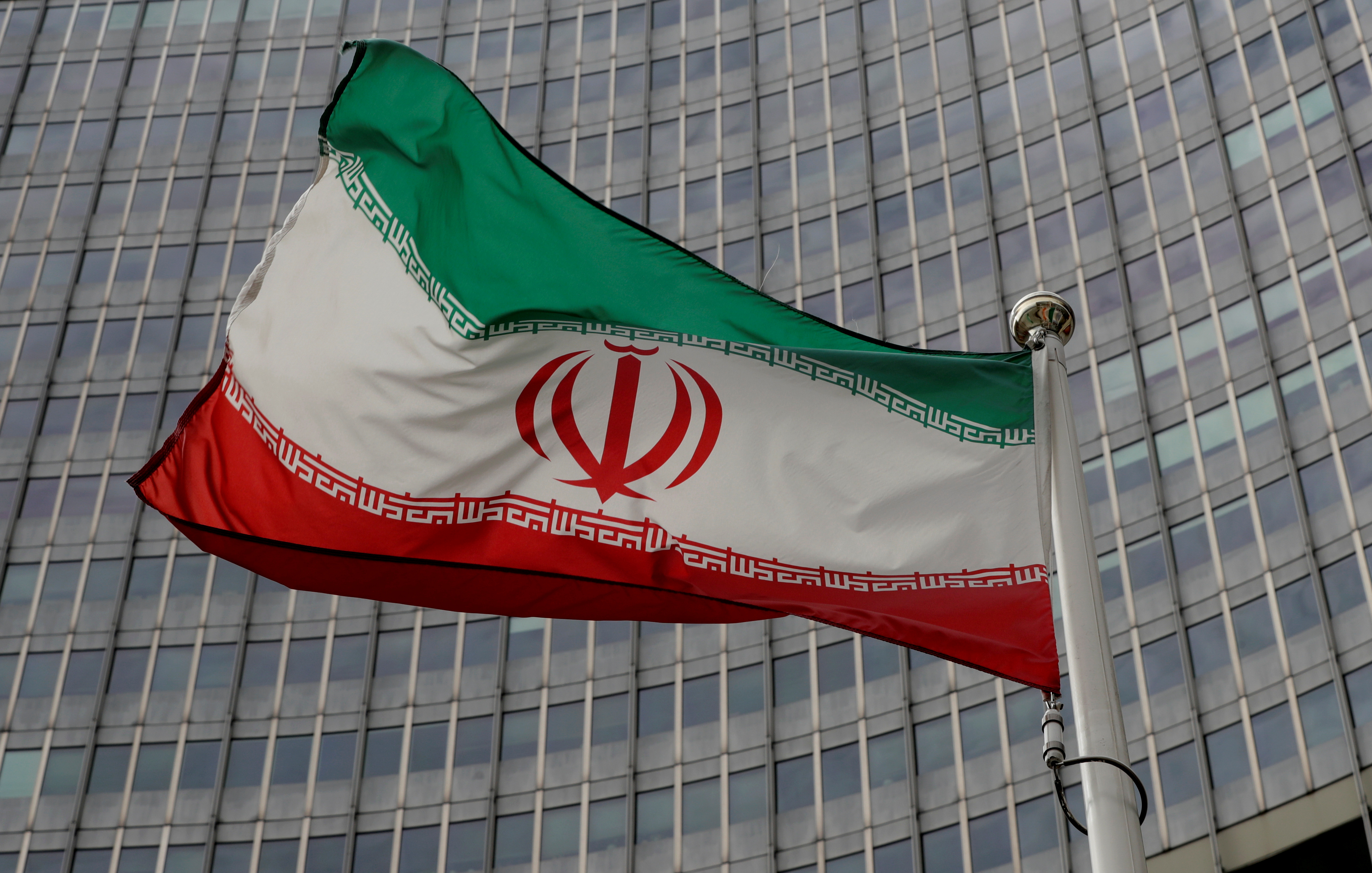
British-Iranian relations, which have been strained for decades, were back in the spotlight after Iranian authorities executed British-Iranian national Alireza Akbari for spying, charges he had denied.
Here is a timeline of main bilateral developments since the 1950s:
1953 – Britain and the United States help orchestrate the overthrow of popular Prime Minister Mohammed Mossadegh and restore Shah Mohammed Reza Pahlavi to power.
1979 – Islamic Revolution overthrows the U.S.-backed Shah.
1980 – Britain closes its embassy in Tehran.
1988 – Britain restores full diplomatic relations with Iran.
February 1989 – Iranian Supreme Leader Ayatollah Ruhollah Khomeini calls on Muslims to kill British author Salman Rushdie for blasphemy against Islam in his book “The Satanic Verses”, prompting Britain to break diplomatic relations in March.
1990 – Partial diplomatic relations are restored.
1994 – Britain accuses Iran of contacts with the outlawed Irish Republican Army, a charge Iran denies but relations worsen. Iran and Britain expel each others’ diplomats over the IRA issue.
1998 – Iran formally dissociates itself from the call to kill Rushdie.
1999 – Iran says relations between Tehran and Britain have been upgraded to ambassadorial level.
September 2001 – British Foreign Minister Jack Straw visits Iran to strengthen an international “anti-terror” coalition after the Sept. 11, 2001 attacks on the United States.
2004 – Iran arrests eight British military personnel for straying into its waters from Iraq. They are later freed.
2005 – Britain says there is evidence Iran or the Iran-backed Lebanese militia Hezbollah was the source of technology used in roadside bombs against British soldiers in Iraq, a charge Tehran Iran denies. The same year, Iran accuses Britain of being behind bombings that killed six people in Iran. London denies it.
March 2007 – Iranian forces seize eight Royal Navy sailors and seven marines from their patrol boat in the Shatt al-Arab waterway separating Iran and Iraq. They are freed in April.
June 2007 – Iran’s Foreign Ministry summons the British ambassador to protest against the award of a British knighthood to Salman Rushdie.
June 2009 – Britain freezes Iranian assets under Western sanctions imposed over Iran’s disputed nuclear programme. The same month, Britain protests to Iran after Supreme Leader Ayatollah Ali Khamenei calls Britain “the most treacherous” of Iran’s enemies. London and Tehran each expel two of the other’s diplomats.
July 2009 – Iran releases on bail the last of nine Iranians who worked at the British embassy and who had been detained in June for alleged involvement in unrest following an Iranian election.
2011 – Britain imposes financial sanctions on Iran, ordering all UK financial institutions to stop doing business with Iranian counterparts and Iran’s central bank. Iran’s Guardian Council approves a parliamentary bill reducing ties with Britain.
November 2011 – Britain shuts Iran’s embassy in London and expels its staff, saying the storming of the British mission in Tehran that month could not have taken place without consent from Iran’s authorities.
2015 – Iran reaches a nuclear deal with the United States, Britain, France, Germany, Russia and China. Under the agreement Iran accepted curbs on its nuclear programme in return for a lifting of many foreign sanctions. Iran reopens its embassy in London hours after Britain restores diplomatic ties.
April 2016 – Iran detains British-Iranian aid worker Nazanin Zaghari-Ratcliffe, who was employed by the Thomson Reuters Foundation, a charity operating independently of Thomson Reuters and its news subsidiary Reuters. She is later convicted of seeking to overthrow the clerical rulers, a charge she denied.
May 2019 – Twitter suspended Iranian Supreme Leader Ayatollah Ali Khamenei’s account over a tweet that said Khomeini’s fatwa against Rushdie was “solid and irrevocable”.
March 2022 – Zaghari-Ratcliffe and another British-Iranian dual national, Anoosheh Ashoori, return to Britain from Iran.
August 2022 – Salman Rushdie is stabbed on stage at a literary event in New York state. Iran’s Foreign Ministry says no one has the right to level accusations against Tehran. Several Iranian hardline newspapers praise Rushdie’s attacker.
October 2022 – Britain imposes sanctions on three Iranian military figures and a defence manufacturer for supplying Russia with drones used to attack targets in Ukraine.
November 2022 – The head of Britain’s domestic spy agency says Iran’s intelligence services have made at least 10 attempts to kidnap or kill British nationals or individuals in Britain.
December 2023 – Iran’s Revolutionary Guards arrest seven people with links to Britain over anti-government protests.
January 2023 – Iran sentences to death and executes British-Iranian national Alireza Akbari, a former Iranian Defence Ministry official, on charges of spying for Britain. State media say he was involved in the 2020 assassination in Iran of a top nuclear scientist. Akbari denied the charges.
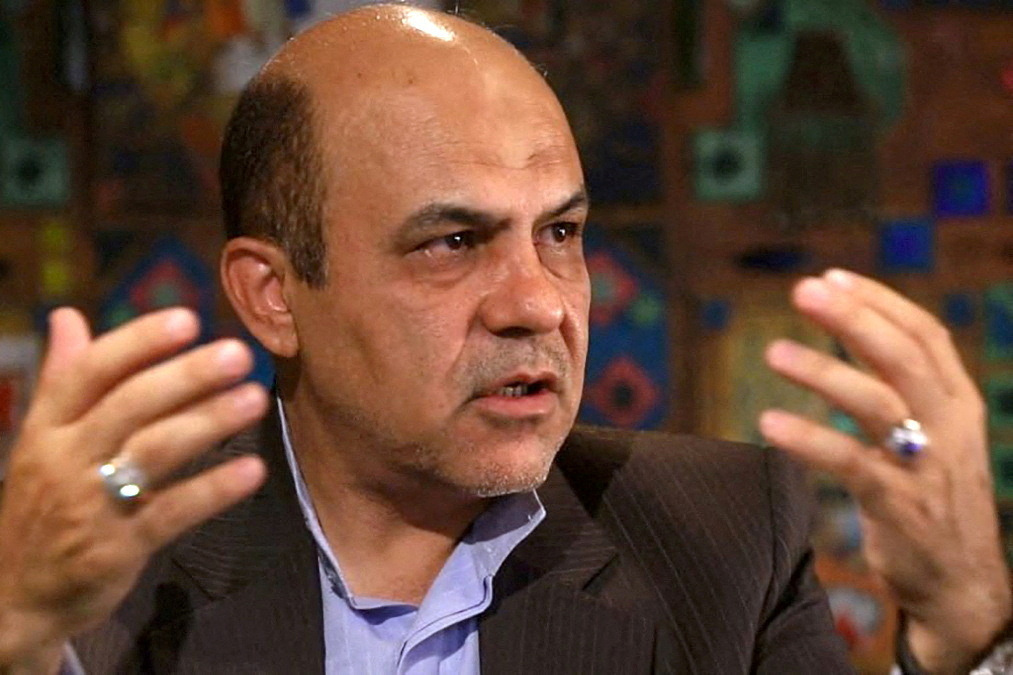
Iran has executed British-Iranian national Alireza Akbari, the judiciary’s Mizan news agency reported on Saturday, after sentencing him to death on charges of spying for Britain.
British Foreign Secretary James Cleverly said on Friday that Iran must not follow through with the execution of Akbari, a former Iranian deputy defence minister.
Britain had described the death sentence as politically motivated and called for his immediate release.
“Alireza Akbari, who was sentenced to death on charges of corruption on earth and extensive action against the country’s internal and external security through espionage for the British government’s intelligence service … was executed,” Mizan said in a tweet.
It accused him of receiving 1,805,000 euros, 265,000 pounds, and $50,000 for spying.
In an audio recording broadcast by BBC Persian on Wednesday, Akbari said he had confessed to crimes he had not committed after extensive torture.
Iranian state media broadcast a video on Thursday that they said showed that Akbari played a role in the 2020 assassination of Iran’s top nuclear scientist, Mohsen Fakhrizadeh, killed in a 2020 attack outside Tehran which authorities blamed at the time on Israel.
In the video, Akbari did not confess to involvement in the assassination but said a British agent had asked for information about Fakhrizadeh.
Iran’s state media often airs purported confessions by suspects in politically charged cases.
Reuters could not establish the authenticity of the state media video and audio, or when or where they were recorded.
Ties between London and Tehran have deteriorated in recent months as efforts have stalled to revive Iran’s 2015 nuclear pact, to which Britain is a party.
Britain has also been critical of the Islamic Republic’s violent crackdown on anti-government protests, sparked by the death in custody of a young Iranian-Kurdish woman in September.
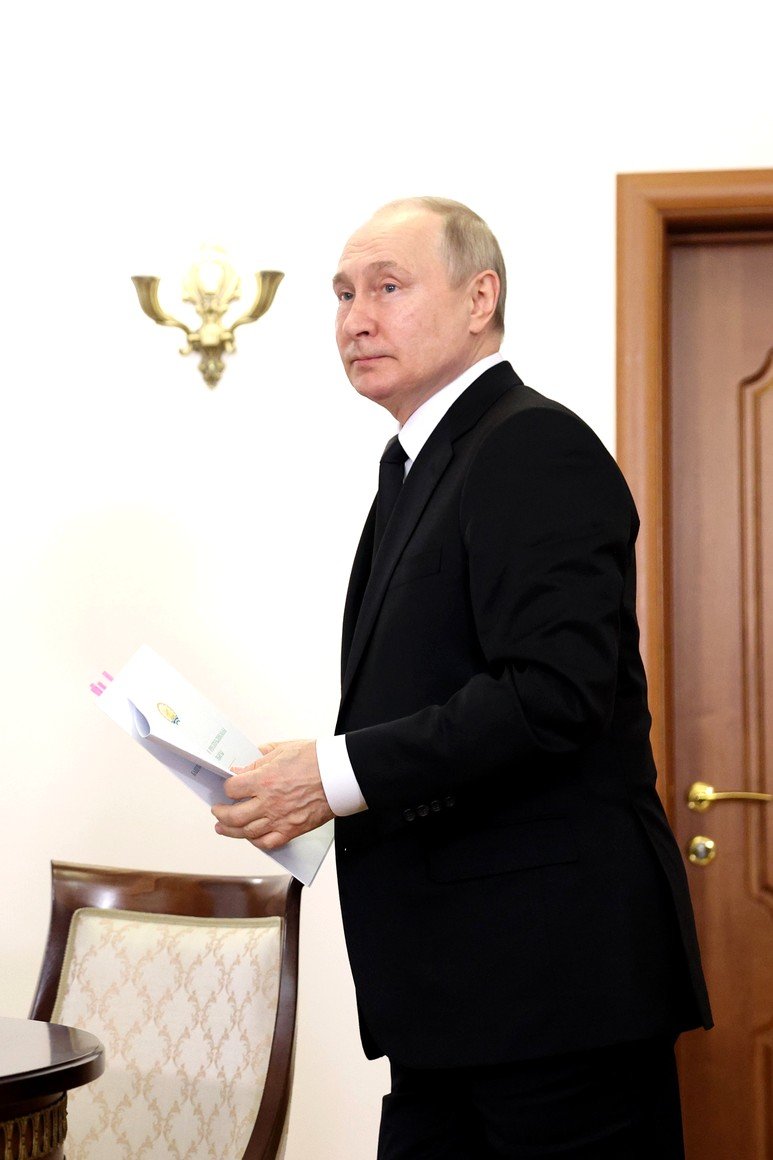
Photo by ALEXEI DRUZHININ/Sputnik/AFP via Getty Images
While much of the world condemned Russian President Vladimir Putin’s invasion of Ukraine and instituted crippling sanctions on the country, China has helped bankroll the Kremlin’s war effort.
This week, after several unnamed Chinese officials ripped into Putin in comments made to The Financial Times, some suggested that another of Putin’s allies was turning on him — but despite the criticism, China has stood by Russia.
“China may be trying to have it both ways,” Robert English, a professor at the University of Southern California who studies Russia, the Soviet Union, and Eastern Europe, told Insider. He said the key was for China to “appear” to criticize Russia, “but what about their deeds?”
China may be trying to distance itself from the war in Ukraine — while not actually taking any meaningful steps to deter Putin’s efforts — in order to better manage its own relationships with the West, according to English.
“The war benefits Beijing because it distracts the West from confrontation with China and they also enjoy discounted energy imports from Russia, both of which they want to continue,” he explained. “But they don’t want trade ties with Europe to suffer, so they must appear to be criticizing Russia.”
Twenty days before the invasion in February, Putin and Chinese leader Xi Jinping declared the relationship between the two countries had “no limits.” Since the invasion, China has served as a key trade partner for Russia, declining to institute any sanctions and continuing to buy up Russian energy. As Western nations cut ties with Russia, trade with China has been a lifeline to the Kremlin, helping to fund its war effort.
As of August, Chinese imports from Russia jumped by nearly 60% from the year prior, while exports to Russia increased by 26%, Reuters reported, citing customs data. The increase in imports was partly driven by a 22% rise in oil imports, just as European countries strategized to move away from Russian energy products.
China has also largely refrained from publicly condemning the war, even blaming NATO for pushing the Russia-Ukraine conflict to its “breaking point.” When the UN Security Council voted in September to condemn Russia’s annexation of Ukrainian territories as illegal, China abstained. And in December, China’s foreign minister said the country would “deepen strategic mutual trust and mutually beneficial cooperation” with Russia.
But there have been some hints that Beijing is dissatisfied with the situation in Ukraine. During a meeting in September, Putin acknowledged that Xi had “questions and concerns” about the war. And in the FT report published this week, several Chinese officials tried to distance China from the Ukraine invasion, even expressing mistrust in Putin directly.
“Putin is crazy,” one unnamed Chinese official told FT. “The invasion decision was made by a very small group of people. China shouldn’t simply follow Russia.”
Still, English suspects the criticism could simply amount to China strategically protecting its own interests, without taking tangible action to bring an end to the fighting.
“Their economic support for Russia has not flagged, nor have they altered their official position blaming NATO for the conflict,” he said. “I’m afraid some analysts are thinking with their hearts, not their heads. We want to see Russia’s influence dramatically reduced, so we look for signs of weakness and sometimes exaggerate them.”
Though reports have suggested Putin could be losing the support of his allies, English was skeptical.
“Putin’s allies are not ‘turning on him,’ only expressing dissatisfaction at the difficulties his war in Ukraine is causing them,” he said. “There’s a big difference.”
Advertisements – Advertising at The News And Times – advertising-newsandtimes.com | WE CONNECT!
Audio | Video | Top News | On Twitter | Security | FBI | Capitol Riot | JOSSICA | Trump | Russia | Putin | Russia – Ukraine War | Covid-19 | Brooklyn NY | Puerto Rico | World
September 3, 2026 10:14 am
The News And Times | Featured Posts | All Articles | Current News | Selected Articles | Shared Links | Opinions | In My Opinion | Sites | Blogs | Links | Twitter | Facebook

Contact Form | Blogs | Sites | News Reviews | Links | Advertising
All The News That’s Fit To Web