Categories
Audio Sources - Full Text Articles

Lisa Marine Presley Talked About How Dad Elvis Would Have Been Proud in Last Speech at Graceland

Lisa Marie Presley—singer-songwriter and only child of Elvis—gave one last speech on Jan. 8, her father’s birthday, before her death at age 54 on Thursday.

“Today, he would’ve been 88 years old,” she said at Graceland. “It’s hard to believe. And I think that he would be proud. I think this year has been an incredible year. And I think the movie was incredible.”

Presley was referring to Elvis, the biographical drama starring Austin Butler and directed by Baz Luhrmann that is currently making its rounds through awards show season. (Butler won for best actor in a drama motion picture at the Golden Globes on Tuesday night.)

[time-brightcove not-tgx=”true”]

“It’s just so moving how every year you come from all over the world,” Presley continued, addressing the throngs of fans outside of Graceland. “It’s moving to me and my family. Thank you.”

Presley had a cardiac arrest on Thursday at her home in Calabasas. Although her heart was restarted on the way to the hospital, she died later that day. Her last public appearance had been at the Golden Globes.

“It is with a heavy heart that I must share the devastating news that my beautiful daughter Lisa Marie has left us,” Priscilla Presley said in a statement. “She was the most passionate, strong and loving woman I have ever known.”

The singer-songwriter experienced more than her fair share of death and grieving: Elvis died when she was just nine years old, and she dedicated much of her life and career to her father’s legacy. Presley’s son, Benjamin Keough, died by suicide in 2020. In August 2022, Presley penned an essay in People about navigating loss and grief.

“Grief does not stop or go away in any sense, a year, or years after the loss,” she wrote. “Grief is something you will have to carry with you for the rest of your life, in spite of what certain people or our culture wants us to believe. You do not ‘get over it,’ you do not ‘move on,’ period.”

Categories
Audio Sources - Full Text Articles

Why Pakistan Is Facing a Growing Food Crisis

Last Saturday in Mirpur Khas, a city in Pakistan’s Sindh province, hundreds of people lined up for hours outside a park to buy subsidized wheat flour, offered for 65 rupees a kilogram instead of the current, inflated rate of about 140 to 160 rupees.

When a few trucks arrived, the crowd surged forward, leaving several injured. One man, Harsingh Kolhi, who was there to bring a five kg bag of flour home for his wife and children, was crushed and killed in the chaos.

As the dust settled, a group of people at the site took Kolhi’s body to the local press club and demanded the registration of a murder case against officials responsible for the stampede as well as the flour crisis across the province, according to Dawn.

[time-brightcove not-tgx=”true”]

The incident is just one example of how the impact of the country’s burgeoning food shortage and a looming economic crisis are already being felt by Pakistan’s poorest.

As the country still reels from the devastating floods that hit over the summer, which government officials estimate damaged more than 80% of the country’s crops, it’s also contending with economic uncertainty that has left food and medicine lingering in ports. The State Bank of Pakistan says that their foreign exchange reserves have fallen to a critical level of $4.3 billion—barely enough for three weeks of imports.

Pakistan’s economic crisis is twofold, says Uzair Younus, Director of the Atlantic Council’s Pakistan Initiative. Even before last year’s floods, food inflation was already high, especially in rural areas, and many struggled to keep up with the rise in prices.

“Over the last four years, blue collar workers in Pakistan have lost around 30% of their purchasing power,” says Younus. “These are lower-middle-class and lower-class citizens that basically earn $2 a day.”

Before former Prime Minister Imran Khan’s party came to power in 2018, the government borrowed heavily in dollars to fund growth, keeping an overvalued exchange rate. By 2018, the policy of using an overvalued exchange rate could not continue because the country’s foreign exchange reserves were sharply down. Khan’s party was forced to turn to the IMF in 2019 for a $6 billion economic bailout.

The IMF program was suspended in March 2020 due to the arrival of COVID-19, and has undergone many starts and stops since then, as Younus says the government failed to meet some of the IMF’s demands.

In an effort to stretch dollars, imports are being held at the ports, impacting everything from food to medicine. “Containers of onions are stuck at port because the payments are not being cleared by the bank, so onion prices are now soaring,” says Younus. “In a country of 230 million on the verge of default, shortages are bound to pop up across the supply chain, especially for imported food and medicine.”

TOPSHOT-PAKISTAN-WEATHER-MONSOON
Arif Ali—AFP/Getty ImagesWorkers carry sacks of onions in a flooded market after a heavy rain shower in Lahore on July 14, 2022.

In December, Pakistan’s Poultry Association protested a two-and-a-half-month pending shipment of soybeans, a staple in the diet of chickens, which they said was leading to an increase of 162 rupees in the price of poultry—a 45% price hike. The country’s Ministry of National Health Services, Regulations and Coordination issued a warning that the country could soon face a shortage of life-saving drugs in the new future, as local banks are refraining from opening letters of credit for the import of medicines’ raw material.

During the International Conference on Climate Resilient Pakistan, a pledging conference hosted by the Pakistani government and the United Nations in Geneva earlier this week, the international community—including France, the EU, and China—pledged over $10 billion in loans to help Pakistan recover from flood damages.

The one-day conference was held to present a plan for a climate-resilient recovery, and raise continued assistance from the public and private sectors, shaping up to be a test case for having large emitters pay loss and damages for smaller emitters bearing the brunt of climate change. For now, Younus notes that they’re just pledges; it might be months until the funds materialize, and they’re likely to be allocated towards specific reconstruction plans.

When a deal might be reached “is anyone’s guess,” according to Younus. Pakistan has been in a deadlock with the IMF over $1.1 billion in funding since last September. The country’s army chief, General Syed Asim Munir, recently visited the UAE and Saudi Arabia in the hopes of securing additional loans from them.

The funds were dependent on various conditions—such as raising energy prices and taxes—which the Pakistani government has yet to meet. On his way out the door last April following a vote of no confidence, former Prime Minister Khan subsidized energy prices, just as the war in Ukraine was causing sharp increases in energy prices worldwide. “He was basically laying a minefield for the incoming government.”

With elections on the horizon this August (or possibly earlier, as Khan’s Tehreek-e-Insaf party is pushing to dissolve provincial assemblies in a bid for earlier elections), the government is unwilling to make any moves that might put them out of favor with voters. “A political party that is in power would not want to impose upward adjustments of prices and more inflation in the run up to an election.” says Younus. “Why inflict more pain on your citizens?”

In the meantime, Younus says, routines and decisions once considered mundane have become a lot more difficult. “You hear stories from doctors beginning to see adult malnutrition in adults who have given up two meals a day. You hear from teachers in schools saying that parents come and say ‘I have four children, can you tell me which one to keep in school? I cannot afford to pay the school fees for the other three.’”

“People cannot make ends meet,” Younus says. “Life is unbearable.”

Categories
Audio Sources - Full Text Articles

The Dangers of Letting Donald Trump Back on Facebook

Two years ago, the social media giant Facebook finally banned then-President Donald Trump from its platforms. The decision came after he had repeatedly violated Facebook’s policies by spreading election disinformation and inciting the violence, which ultimately led to the January 6 Capitol insurrection.

Facebook’s decision was too little, too late. The platform had allowed the former president to violate its policies, spread misinformation, and stoke division and distrust for so long that the damage was already done. Until his ultimate removal, Trump barely suffered any consequences for his racist, conspiratorial, and antisemitic activity on the platform.

[time-brightcove not-tgx=”true”]

Facebook’s parent company, Meta, is now weighing one of its most consequential content moderation decisions of the last two years: whether to reinstate Trump. This decision could have serious ramifications for the future of online hate, harassment, and our very democracy. The real question we should be asking, however, is why Facebook allowed Trump to violate their policies for so long to begin with. Had Facebook held President Trump to the same standard as the rest of us, they might not have ever made it to this dramatic moment. 

Shortly after I joined Facebook in June 2018 as its “head of Global Elections Integrity Ops” for political advertising, it became clear to me that users with the largest platforms—including political leaders who themselves often spread lies and hateful content—were being given special treatment. When I questioned why we were not fact-checking political ads, including those that spread lies about the elections ahead of the U.S. midterms, I was sidelined and then pushed out. Since then, there has been continued evidence that Meta’s policies allow millions of high-profile users’ violative content to be amplified and spread.

I have long stated that Mark Zuckerberg’s exemptions for fact-checking politicians and the so-called “newsworthiness exception” that grew out of that are two of the most dangerous elections-related decisions the company has made. The exemptions given to the powerful at the expense of the rest of us, coupled with a business optimized for frictionless virality, were decisions that harmed our democracy. By refusing to fact-check politicians while also providing them sophisticated tools to grow their audiences and make their content go viral, Facebook tilted the scales to push more people to believe in these conspiracy theories about the election. And let’s be clear: Meta is not implementing these policies in the name of free speech. Policies that allow for corrosive content to flourish are good for business. Even Meta’s Oversight Board found that cross-check is primarily implemented to serve business needs.

Meta has an opportunity now to do the right thing by upholding its decision. But I’m deeply concerned that they are already looking for reasons to backtrack.

Meta has said that this decision will rest on whether or not Trump still poses a risk to public safety but, ultimately, Meta’s policy decisions thus far have been driven by the ruthless business model to optimize for engagement at any cost—including the cost of our democracy. Judging by Trump’s continued peddling of the false narrative that the 2020 election was “stolen,” the right choice seems obvious. One need to look no further than the bipartisan report from the January 6 Committee that directly blames Trump as being the key instigator behind the violent coup attempt.

And what about the risk Trump poses to those he targets? Any one post on Facebook or other mainstream platforms from Trump can trigger an entire ecosystem that spreads hate, harassment, and even incitement to violence. Throughout his presidency, Trump used social media platforms to spread hate and incite violence, both directly and indirectly. My team at ADL has documented how the online harassment ecosystem actually works, and the dangerous impact it can have.

There is no reason to believe Trump will behave differently now if allowed back on Facebook.

In fact, Trump’s recent posts on Truth Social—a platform he owns, but which has a fraction of Facebook’s user numbers—reflect a continuation of his reckless behavior, including making direct threats against Jews, slinging racist anti-Asian slurs at his political enemies, embracing QAnon, and singling out elections officials for his followers to harass. 

To be clear: I understand that when such a large and influential company with unchecked power over the public conversation suspends a world leader, it sets a potentially dangerous precedent for free speech. But Meta’s decision about Trump doesn’t exist in a vacuum. The political climate in the U.S. remains incredibly vulnerable to violent provocations: extremist incidents in 2022 have been on track to eclipse their 2021 levels, and antisemitism—historically a harbinger for other forms of hate and violence—is once again on the rise.

Moreover, Meta has repeatedly failed to protect its users from hate and harassment; in fact, internal documents leaked by whistleblower Frances Haugen in 2021 show Facebook only removes 3-5% of the hate speech on the platform.

For the leaders of Meta to assume Trump will suddenly abide by their terms of service would be a serious miscalculation at best, and a callous continuation of irresponsible corporate behavior at worst.

Facebook remains the largest social media platform in the world and has a track record as a damaging influence on democratic elections worldwide. Facebook should not be complicit in furthering the damage Trump and his followers have already done to our democracy.

Categories
Audio Sources - Full Text Articles

Jewish Republican House member joins calls for Santos resignation

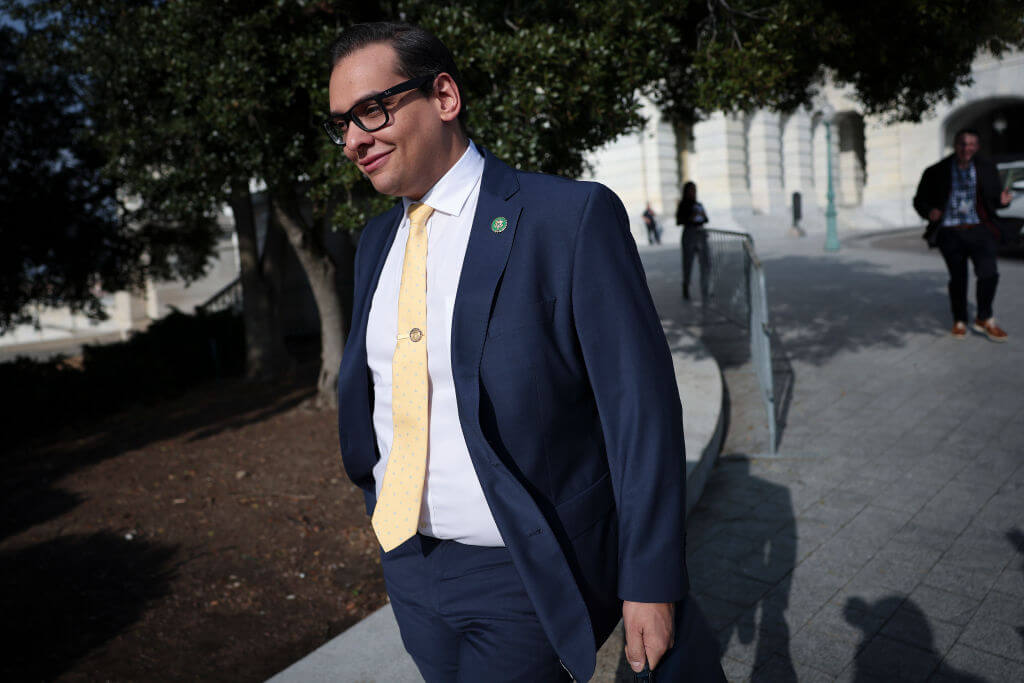
GettyImages-1456010455.jpeg

Rep. Max Miller of Ohio, a Jewish Republican, has added his voice to the chorus demanding the resignation of George Santos, singling out the beleaguered Santos’ false statements about descending from Holocaust survivors. 

On Thursday, Miller called on Santos to step down, saying that members of the House must be held “to the very highest standard of honesty and trustworthiness.”

“It is not okay to fabricate or lie for political gain,” he added. “This is especially true when the lie seeks benefit from the murder of millions of Jewish people. I do not believe George Santos can effectively serve and should resign.”

Since the Nov. 8 election, a staggering number of Santos’ exaggerations, untruths and outright lies have been uncovered. Among them is his claim to be Jewish — he later said he had actually called himself “Jew-ish” — and that his grandparents had fled to Brazil to escape Nazi persecution. Genealogical records indicated his grandparents were born in Brazil years before the Nazis came to power. 

On Wednesday, Rep. Anthony D’Esposito became the first House member to say Santos should resign and six others, including Miller, have since joined in. Miller is the only House Republican not from New York to say Santos should resign.

An email to a spokesperson for Rep. David Kustoff of Tennessee, the other Jewish House Republican, was not immediately answered. 

 On Wednesday, more than a dozen Long Island Republicans said Santos should resign immediately, adding he would not be welcome at Nassau County Republican headquarters for meetings or other events.  

Members of the party’s House leadership have said they are not currently considering any action against Santos. 

Santos has remained defiant, saying he will not step down unless he is defeated in the next election in two years. On Thursday, he said he would step down if 142 people called on him to do so, but corrected himself later in the day, saying he meant the 142,000 people who voted for him. Despite the clarification, a number of petitions have begun circulating calling on Santos to vacate his seat.

The post Jewish Republican House member joins calls for Santos resignation appeared first on The Forward.

Categories
Audio Sources - Full Text Articles

Pardon ends Meek Mill’s legal odyssey on drug, gun charges

HARRISBURG, Pa. — (AP) — Rapper Meek Mill, who spent most of his adult life on probation following a teenage arrest, celebrated the latest twist in his legal case Friday after he was pardoned by Pennsylvania Gov. Tom Wolf.

“I got pardoned today,” the 35-year-old rapper born Robert Williams tweeted, noting he has come a long way.

Under a photo of the pardon on Instagram, the Philadelphia rapper-turned-entrepreneur, who has been active in criminal justice reform for years, vowed to keep doing more for his community.

Wolf signed his final 369 pardons this week, adding to his Pennsylvania record of number of pardons granted since he took office in 2015. Williams was pardoned of gun and drug charges.

At a 2008 trial, a judge found Williams guilty of drug and gun charges and sentenced him to about one to two years in jail followed by 10 years of probation.

The case came to a head in 2017, when the judge sentenced Williams to two to four years in prison for violating probation, citing a failed drug test, failure to comply with an order restricting his travel and two unrelated arrests. The judge issued the ruling despite a prosecutor and a probation officer recommending that Williams not be incarcerated.

Williams spent months in prison before he was released, and a Pennsylvania appeals court overturned his conviction in 2019 because new evidence undermined the credibility of the arresting officer. The next month, he pleaded guilty to a misdemeanor gun charge in a deal that resolved the 2007 arrest.

Categories
Audio Sources - Full Text Articles

Montana man who brought young son to US Capitol riot charged

WASHINGTON (AP) — A Montana man who authorities say entered the U.S. Capitol with his juvenile son during the Jan. 6, 2021 riot was charged with misdemeanor crimes including disorderly conduct.

Patrick William O’Brien was arraigned Thursday by videoconference following his arrest last week in Great Falls, Montana, according to court records and the U.S. Department of Justice.

The 54-year-old man and his son drove for three days from Montana to Washington prior to the riot, according to prosecutors. Video footage from surveillance cameras showed the pair inside the Capitol for 28 minutes, where they walked through hallways and waved a flag, according to authorities.

O’Brien was charged in U.S. District Court in Washington with entering and remaining in a restricted building or grounds, disorderly and disruptive conduct in a restricted building or grounds, and disorderly conduct in a Capitol building, the Department of Justice said.

The criminal complaint was not immediately posted to the federal court website and it was unclear who represented O’Brien in court. A message left with the Federal Public Defender for the District of Columbia was not immediately returned.

O’Brien is among more than 950 people arrested in connection with the riot in which former President Donald Trump’s supporters stormed the Capitol while Congress was certifying President Joe Biden’s 2020 election victory.

Categories
Audio Sources - Full Text Articles

11 qualities in men that women find attractive, according to science

A young couple in a city street.A young couple in a city street.

Stephen Zeigler/Getty Images

  • Romantic attraction is one of the universe’s greatest mysteries.
  • We found 11 science-supported traits that women who are attracted to men find irresistible.
  • Note that these types of studies are often small, rely on self-reported feelings, and not very diverse.
Good looks can be a factor, but they’re not as important as you may think.Ryan Gosling

Getty Images/Frazer Harrison

Studies from Evolutionary Psychology and the Journal of Personality and Social Psychology found women typically choose better-looking guys for flings, not long-term relationships.

A sense of humor is important to women.man and woman at dinner

Shutterstock

Scientists have found a sense of humor makes men seem more intelligent, according to studies from Intelligence and Personal Relationships.

Helping others is a desirable trait in men.basketball players lay bricks to build a home with habitat for humanityRudy Gay and Garrett Temple of the Memphis Grizzlies participate in a Habitat for Humanity event as part of the Basketball Without Boarders Africa program in Johannesburg on August 2, 2018.

Copyright 2018 NBAE. Photo by Joe Murphy/NBAE via Getty Images

For long-term relationships, women tend to prefer altruistic men who are kind and do good deeds, according to a study from The Journal of Social Psychology.

Another study from 2019 that surveyed 68,000 people in 180 countries found 88.9% of women considered “kindness” a very important trait in a partner.

Women tend to like men surrounded by flashy stuff, according to science.man sitting behind the wheel of a car

Beau Lark/Getty Images

In studies from the British Journal of Psychology and Journal of Evolutionary Psychology, women chose men posing in front of expensive cars or apartments, versus ordinary ones, possibly because they make the men appear rich.

Women might prefer dating an older man.george clooney amal alamuddin married

PIERRE TEYSSOT/AFP/Getty Images

Women may like older men because they’ve had time to accumulate more resources, according to a study in Evolutionary Psychology.

Whether you have a beard or a clean-shaven is down to personal preference for the ladies.beard

Chris Pizzello/Invision/AP

Facial hair has been an attraction and a repellent in studies, so that feature is likely based on preference, a study from Behavioral Ecology concluded.

Do what you want with your face; you’ll attract the right mate.

When men are unavailable, that might make women want them more.man playing hard to get, backs turned, couple

Shutterstock

Older research concluded that people liked when other people liked them, but modern studies have found that “playing hard to get” could be an effective tactic, according to studies published in Psychological Science and the Journal of Experimental Psychology.

A canine companion might attract women.Man holding Dachshund dog outside of shop.Wondering whether pet insurance covers surgery? We explore your options.

SolStock

Small studies have indicated that men with dogs do better with the ladies, according to Journal of The Interactions of People & Animals and Journal of Evolutionary Psychology.

Being zen and mindful is an attractive quality, according to scientific studies.don draper meditation mad men

AMC

In one speed-dating experiment, women were more attracted to men who were mindful — present, attentive, and nonjudgmental.

Men dressed in red may be more desirable for women.Kolten Wong

Dilip Vishwanat/Getty Images

Women around the world perceived men as more attractive when they wore red, according to one study from the Journal of Experimental Psychology.

Risk takers tend to attract women.wildfire lower lake californiaGarden Valley firefighter Chris Schwegler walks by flames along Morgan Valley Road near Lower Lake, Calif., Thursday, Aug. 13, 2015. Crews battling the wind-stoked blaze took advantage of cooler temperatures Thursday to clear brush and expand containment lines with bulldozers and hand tools.

Jeff Chiu/AP

Women have rated men higher who take heroic and sometimes primal risks. These include saving people’s lives, hunting for food, and playing with fire, according to a study from the Journal of Applied Social Psychology.

Read the original article on Business Insider
Categories
Audio Sources - Full Text Articles

Missouri Republicans pass a rule requiring women to cover their arms in the state House chamber

The Missouri Capitol in Jefferson CityThe Missouri Capitol in Jefferson City

Jeff Roberson/AP

  • Missouri Democrats tore into their Republican colleagues over changes to the state House dress code.
  • Republicans passed a rule requiring female lawmakers to cover their arms in the chamber. 
  • “We are again fighting for a woman’s right to choose something and this time it is how she covers herself,” one Democrat said.

Missouri Democrats slammed their Republican colleagues for a move to impose a stricter dress code on female lawmakers in the state House.

“There are some very serious things within this package that we should be debating, but instead we are again fighting for a woman’s right to choose something and this time it is how she covers herself and the interpretation of someone who has no background in fashion,” state Rep. Raychel Proudie, a Democrat, said on the floor during at times heated debate earlier this week.

Video of the debate was posted on Twitter by Heartland Signal, a digital publication and an offshoot of WCPT 820AM, a left-leaning radio station based in Chicago.

—Heartland Signal (@HeartlandSignal) January 11, 2023


Proudie was speaking out against Republican state Rep. Ann Kelley’s push to amend the House’s formal rules by requiring women to wear a blazer while in the chamber. The GOP-led House later passed slightly amended rules that require female lawmakers to cover their arms but that allows for cardigans and other kinds of jackets, The Washington Post reported.

“You know what it feels like in this room to have a bunch of men in this room looking at your top to decide whether it’s appropriate or not?” said state Rep. Ashley Aune, a Democrat, adding that the entire debate was “ridiculous.”

At this point, Kelley appeared to have grown frustrated. She then retorted that it was indeed “ridiculous” that her colleagues were engaging in such a heated debate over her proposed changes.

“Lady, you’re right, it is ridiculous,” Kelley said. “It is absolutely ridiculous that we have to talk about it on the House floor in the House chamber. Why should we even talk about something like this?”

Aune responded by pointing out that it was Kelley’s proposal that started the debate.

“You brought this to the floor, lady. You tell me,” she said.

Kelley wasn’t done. She added, “You think all you would have to do is say dress professionally and women could handle it.”

Proudie and other lawmakers pointed out that the changes could pose difficulties for lawmakers who could be forced to scramble for new clothes to meet the requirements.

“Just finished floor debate explaining why knit blazers do not include cardigans on an amendment restricting what women can wear in the House,” Rep. Jamie J. Johnson, a Democrat, wrote on Twitter. “Why would we need to add additional class barriers to the idea that anyone could represent the people.”

Like most statehouse chambers, the Missouri House must pass new rules once it convenes the General Assembly every two years. The St. Louis Post-Dispatch reported that previous rules allowed for “dresses or skirts or slacks worn with a blazer or sweater and appropriate dress shoes or boots.”

Kelley’s office did not immediately respond to Insider’s request for comment.

Read the original article on Business Insider
Categories
Audio Sources - Full Text Articles

Tesla’s price cuts will cause earnings to plunge 25%, but the EV maker is repairing its brand for long-term gain, Loup’s Gene Munster says

tesla

AP Photo/Ng Han Guan

  • Tesla’s price cuts will cause earnings to dive 25% this year, according to Loup’s Gene Munster.
  • But the move could be favorable with consumers and heal brand issues stemming from Elon Musk.
  • “It’s a win for consumers and Tesla’s brand. Tesla is going to gain market share near term,” Munster said.

Tesla’s price cuts will cause the EV maker’s earnings to plunge 25% this year – but the company is repairing its brand for long-term gain, according to Loup’s Gene Munster.

Munster, a self-proclaimed bull on Tesla, warned that the company’s recently announced price cuts could damage profits in the near term.

“Tesla will take a big margin hit … the combined impact of global price cuts will reduce earnings this year by 25%,” Munster said in a thread on Twitter, echoing his previous earnings forecast for the struggling electric vehicle company. “This gives credibility to the bear case that Tesla margins are not sustainable.”

That came shortly after Tesla slashed prices for its Model 3, its Model Y SUV, and various other models in the US and Europe, causing the company’s stock to fall 6% Friday morning.

The EV maker has already cut prices in China twice on concerns of slowing demand, and recently fell short on its fourth-quarter delivery targets.

Those struggles have led Tesla stock to drop 70% from its all time high in late 2021 as high inflation, a strong US dollar, and the Fed’s aggressive rate hikes weighed. Losses have also been spurred by the antics of Tesla CEO Elon Musk, who dumped over $40 billion of his own shares amid his chaotic takeover of Twitter.

Musk’s cash-out and erratic behavior on the social media site are partly responsible for damaging Tesla’s brand, Munster said. But he thinks the Tesla’s image is now being repaired with price cuts, since the move will be favorable with Tesla’s customers.

“It’s a win for consumers and Tesla’s brand. Tesla is going to gain market share near term which has long term market share benefits as the EV market ramps,” Munster tweeted.

It also places pressure on Tesla’s competitors to lower prices competitively, he added, speculating that prices will drop in the overall EV market.

Meanwhile, Wedbush’s Dan Ives called Tesla’s price reductions a “strategic poker move,” as they show that Tesla “is not going to play nice” with fellow EV competitors.

Read the original article on Business Insider
Categories
Audio Sources - Full Text Articles

Guilt about leaving your job is natural. Here are 6 ways to set boundaries in your last weeks.

Frustrated employee cover face with hand feels unhappy having serious problems suffers from hostile co-workers. Stock photoWhen you move on to a new job, it’s natural to worry about letting your team down — but maintaining solid boundaries is still important.

fizkes/Getty Images

  • Many people struggle with irrational feelings of guilt when leaving one job for another.
  • Maintaining solid boundaries in your final days at work is important as you make your exit.
  • Say no to new requests, create an exit plan, and document everything for a successful transition.

Transitioning from one job to the next is exciting. You feel hopeful about your new role and look forward to a blank slate.

But many professionals struggle with irrational feelings of guilt while they navigate their shifts to new positions. A number of my coaching clients have confided in me that they’ve felt like they’re abandoning their colleagues and leaving them in the lurch. How will they manage without you? When you move on to a new job, it’s natural to worry about letting your team down. Everyone hates to feel like they’re failing people who matter to them.

Guilty feelings about exiting a position can be particularly intense for people who consider themselves sensitive strivers. Since their mirror neurons (also known as empathy neurons) are more active than average, sensitive strivers have heightened perceptions when it comes to sensing the emotions of others, including pain.

Between one quarter and over half of employees are preparing for post-pandemic job transitions. It’s important to recognize that maintaining solid boundaries is equally important in your final days at work as they were during the rest of your time there. The following tactics can help you limit your involvement with your soon-to-be-former employer and approach pitching in as you’re on your way out.

Here are six ways to set and keep boundaries in the last weeks of a job.

1. Shift your perceptions

How you feel impacts how you react, so be sure to moderate and temper any feelings of misplaced guilt. Sensitive strivers, like other high achievers, are meant to evolve and grow. Remind yourself that by changing jobs, you’re moving forward. You’re not bailing on your colleagues, and the fact that you’re stretching and growing does not reflect poorly on you.

It’s a good idea to take the pulse of your ego. Your contributions are valuable, but the company will not collapse when you’re gone. At times, the transition may be bumpy for the coworkers left behind, but your team will almost certainly bounce back. And the position you’re leaving could be an incredible opportunity for whoever replaces you.

As part of the process of releasing guilt, you might find it helpful to write a letter to your present self from your future self. Let your future self assure you that leaving your position was the right move for you, or let you know that your current emotions are only temporary and will pass within a few months.

2. Make your exit plan

Evaluate the projects you’re working on from a practical perspective. Right after you finalize your decision to leave, figure out which tasks you need to finish before you go. Then decide what your milestones will be, working backward from your final day. Since you won’t have time to complete everything, select the most important items to focus on. Aim to get your work into a stable state so someone else can take it on, and be prepared to downsize your deliverables if necessary.

Come up with a strategy for when and how you’ll make different stakeholders aware of your resignation. A granular approach will keep you from putting it off and keeping the information from anyone due to anxiety and fear. Consult with your supervisor to clarify who will be taking over your responsibilities. Determine how much bandwidth you’re willing to allocate to help with the transition while keeping your other priorities in mind. For instance, it might not be feasible for you to assist the team with hiring your replacement if you have another urgent, high-visibility project on your plate.

3. To protect your time, document everything

In many positions, training your replacement will be part of your exit. Being tactical about how you approach this can save you from doing extra work and added stress. A transition plan can be invaluable for outlining your upcoming deadlines, your existing projects, and the incumbent knowledge the new-hire should have (like contact info and client preferences.)

Record your processes and write out the standard operating procedures for your most important tasks. Documenting your work will curtail unnecessary demands on your time in the future by creating training resources for your successor.

4. Decline or reassign incoming requests

Despite your imminent exit, you may still receive new assignments from co-workers. When this happens, resist the urge to dive in and get it done, so it’s over with. You can offer to teach your colleague how to do it themselves or coach them through the process. This sets a clear boundary, while transferring ownership to your colleagues and preparing them to become self-sufficient once you’re gone.

If you need to flat-out say no to something, the following statements may come in handy:

  • “With my final day coming up, I’m not going to be able to take this on.”
  • “Since I won’t be able to see this through to completion, I have to decline.”
  • “Thanks for considering me for this. However, in order to follow through on my current commitments, I have to say no.”

5. Make the most of this opportunity to build good habits

Your transition-time gives you a perfect low-risk environment in which to practice setting healthy boundaries. What are they going to do if they don’t like it? Fire you in your last week on the job?

Set yourself up for success in your new position by setting limits, like not answering emails over the weekend or working past a certain hour. Then take that extra confidence you’ve just built, and use it to rock your new role.

6. Depart on your terms

It’s smart to offer to keep in contact with your supervisor and co-workers after your exit, but avoid creating a situation where you continue to help the company or give free consultations after your last day. Choose a date on the calendar that falls a few weeks after you leave, and let it be known that you won’t be available for questions or assistance after that time. If requests keep coming after that date, consider sending a note to say that due to your current commitments, you no longer have the bandwidth to respond and wish them success in the future.

Don’t forget that keeping good boundaries through the end of your time with a company is both an act of kindness and a way of respecting yourself and others. Though it can be uncomfortable in the short-term to set limits and say no, pushing through that discomfort frees you to say goodbye to your old position with your integrity intact.

Melody Wilding is an executive coach whose clients include high-performing managers and leaders at places like Google, Facebook, and HP.

Read the original article on Business Insider
WP Radio
WP Radio
OFFLINE LIVE