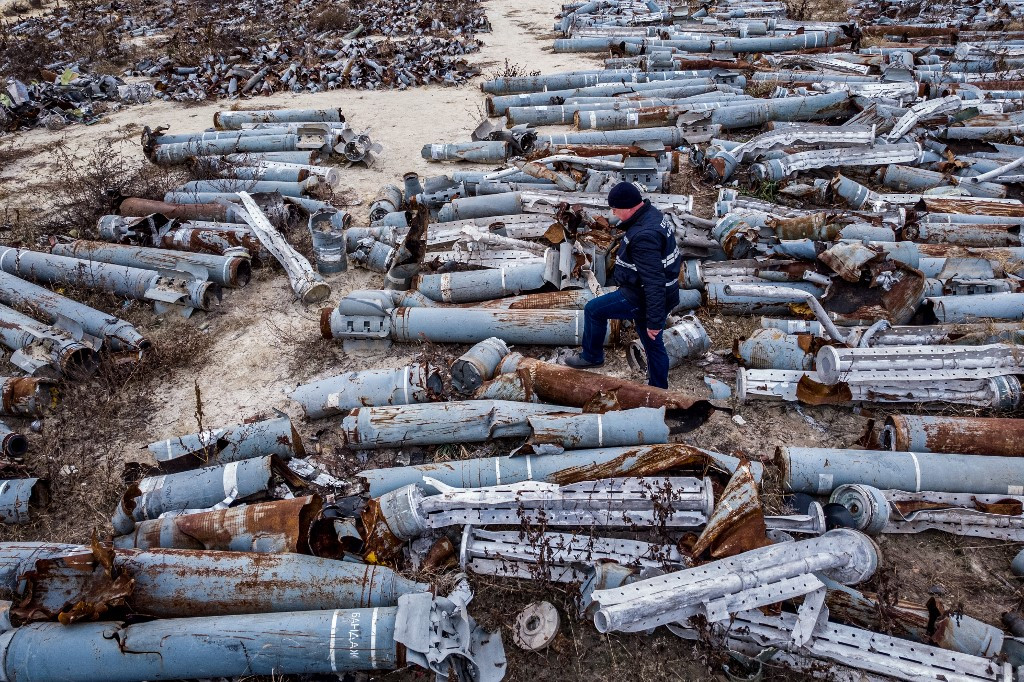
Ukraine’s defenses ready themselves as patterns indicate a new strike could be imminent.
 The Brooklyn Times - bklyntimes.com
Japanese director Hirokazu Kore-eda is no stranger to international acclaim as the country’s most prominent auteur. Two of his works earned awards at the prestigious Cannes Film Festival: a Jury Prize for Like Father, Like Son (2013), and the festival’s grand Palme d’Or prize for Shoplifters (2018)—which was also nominated at the 2019 Oscars and Golden Globes for Best Foreign Language Film.
Now, he’s turning his focus to the small screen, as showrunner, writer, and director of the new Netflix series The Makanai: Cooking for the Maiko House, which premiered globally on Jan. 12 and is based on a popular manga in Japan.
[time-brightcove not-tgx=”true”]
The nine-episode series tells the fictional modern-day story of 16-year-old Kiyo, a northern Japanese native who heads south to Kyoto to become a maiko, a young geiko—the Kyoto-specific term for geisha, Japanese traditional professional entertainers. The geiko mentors deem Kiyo unfit as a maiko due to her clumsiness, but she earns their hearts as the in-house cook, or the makanai.
In an interview with TIME, Kore-eda says he had little idea before making the show about the heavily-guarded culture of geiko and maiko, only having preconceived notions based on classical Japanese directors’ portrayals of the art performers in films.
“When I researched the all-women, communal living quarters, known as yakata, in Kyoto, where this story takes place, I was fascinated by how the women call each other mothers and sisters despite having no blood relations,” Kore-eda says. “Their way of life inspired me to recreate this world for the screen.”
Thanks to the power of the internet in enabling increasingly global audiences to find content from around the world, manga (Japanese comics) has seen a rise in popularity among non-Japanese readers. Polygon reports that sales of the top 50 manga titles in the U.S. tripled in 2021. And live-action adaptations are not a new phenomenon. South Korean director Park Chan-wook’s 2003 film Oldboy is loosely based on a Japanese manga of the same name by Garon Tsuchiya. Edge of Tomorrow, the 2014 Tom Cruise and Emily Blunt sci-fi action flick, was based on the manga All You Need Is Kill by Hiroshi Sakurazaka.
Manga adaptations geared toward Western audiences, however, have proven to be hit-or-miss. Spike Lee’s 2013 remake of Oldboy was a box-office flop. Netflix’s 2017 live-action movie Death Note was almost universally panned by critics. The 2017 blockbuster Ghost In the Shell, starring Scarlett Johansson, sparked controversy for white-washing. And the 2009 adaptation of Dragonball is often listed among the worst films of the early 2000s.
The Makanai is based on a best-selling manga by Aiko Kayama entitled Maiko-san chi no makanai-san, first published in 2016. Kayama’s comic won one of Japan’s time-hallowed manga awards, the Shogakukan Manga Award, in 2020, and has sold over 2.7 million copies. Because of its domestic popularity, the manga already had an anime series adaptation, which aired on Japanese national broadcaster NHK World in 2021.
The lives of Japan’s locally-revered artisans are shrouded in secrecy. Geiko and maiko as occupations date back to the 1600s. But the geisha population, some 80,000 in the 1920s, is now on the decline, even more so after the COVID-19 pandemic hit. There are estimated to be fewer than 1,000 geisha in Japan today.
In 1997, the world had a rarefied window into geisha life through Sayuri: Memoirs of a Geisha, an English novel by Arthur Golden, which eventually became a 2005 major motion picture by Rob Marshall that controversially starred non-Japanese women in Japanese roles. But the source material itself stirred controversy, too: retired geiko Mineko Iwasaki, whom Golden interviewed to write the novel, filed a suit against him and his publisher for supposedly breaking the code of silence about her community. The two eventually settled out of court.
If there was anything Mineko lamented most, it was the novel’s highly-sexualized depiction of geiko. For years, Western media have conflated geisha activity with dalliance and highly-stylized prostitution. Following the success of Golden’s novel, tourists fled to geisha districts in Japan, book in hand, wanting to catch a glimpse of the women. Soon, geiko in Kyoto’s Gion reported instances of harassment from tourists who wanted pictures (among other cultural taboos), prompting the district to enforce a ban on taking photographs in 2019.
Kore-eda is aware of the past controversy and hopes that his series will do better, though he also hopes that people don’t confuse fiction for reality “once again,” he says. There are no teenage makanai, like the character Kiyo, for example. “I heard that due to the influence of Sayuri: Memoirs of a Geisha, many tourists from overseas misunderstood that all maiko have been sold by their parents,” Kore-eda tells TIME. “Perhaps this series will at least dispel such misconceptions, although I never intended on it.”
The Makanai humanizes geisha culture mostly through Sumire, Kiyo’s best friend who trains to be a “one-in-a-million” maiko, and her other housemates, illustrating the effort and work required to be a maiko, the practices and rules and even superstitions they follow—down to the use of phones and lucky charms, while also shining light on the relatable aspects of their lives like having crushes, maintaining friendships, and navigating romantic relationships.
As a story about the house makanai—which means both the cook and the meal served in a boarding house—Kore-eda’s team indulged in detailed food scenes. Food is a grounding device in many of the director’s films, often used to propel narratives about family. His 2008 feature Still Walking begins with a mother and daughter preparing vegetables together. In a cramped shanty in Shoplifters, a motley band of thieves share dinner cooked from stolen groceries.
The other directors working with Kore-eda on the show see it as a celebration of Japan’s food culture. Audiences will be treated to Kiyo’s excitement over produce, and her joy after seeing people react to food she prepared. Fellow director Takuma Sato says the series is also a reflection of the wisdom of finding joy in the change of food, clothes, and seasons.
Hiroshi Okayuma, another director of the series, had read the manga source material and had found it influencing his own cooking. “I was trying to imitate Kiyo’s cooking and choosing the better quality ingredients,” Hiroshi tells TIME.
Both Hiroshi and Takuma hope whoever watches Makanai will enjoy how food in Japan is treated. Says Takuma: “I would be happy if the audience would pay attention to the aspects of eating that can excite and relax people, and inspire them to think what to cook or what to eat.”

Past evening Russian troops all over again shelled the Dnipropetrovsk region’s Nikopol district. The Marhanets local community came less than enemy fire.
The relevant statement was built by Dnipropetrovsk Regional Armed service Administration Head Valentyn Reznichenko on Telegram, an Ukrinform correspondent reviews.
“Russians again struck the district with major artillery at evening. The Marhanets neighborhood arrived underneath enemy hearth. Dozens of enemy projectiles strike there,” Reznichenko wrote.
In his words and phrases, civilians remained unharmed. Many detached residences and household buildings were significantly weakened. The injury caused is yet to be checked.
mk
The post Dozens of Russian projectiles fired at Nikopol district appeared first on Ukraine Intelligence.

On January 11, 2023, Russian invaders continued to assault the Kharkiv region’s border places.
The relevant assertion was created by Kharkiv Regional Military services Administration Head Oleh Syniehubov on Telegram, an Ukrinform correspondent studies.
“Yesterday, the enemy continued shelling the Kharkiv region’s border settlements. With mortars and artillery, the invaders struck Huriv Kozachok, Strilecha, Starytsia, Ohirtseve, Vovchansk, Vilcha and Novomlynsk,” Syniehubov wrote.
In the Kupiansk route, Russian troops once more opened fire on Dvorichna, Kupiansk, Kyslivka, Tabaivka and other settlements.
As a outcome, a trade pavilion, detached properties and house structures were broken. Enemy projectiles also strike an enterprise in Vovchansk. Luckily, no casualties among civilians ended up described, Syniehubov stressed.
A reminder that, on January 11, 2023, the Armed Forces of Ukraine repelled enemy assaults close to 12 settlements.
mk
The post Kharkiv region’s border areas remain under enemy fire appeared first on Ukraine Intelligence.
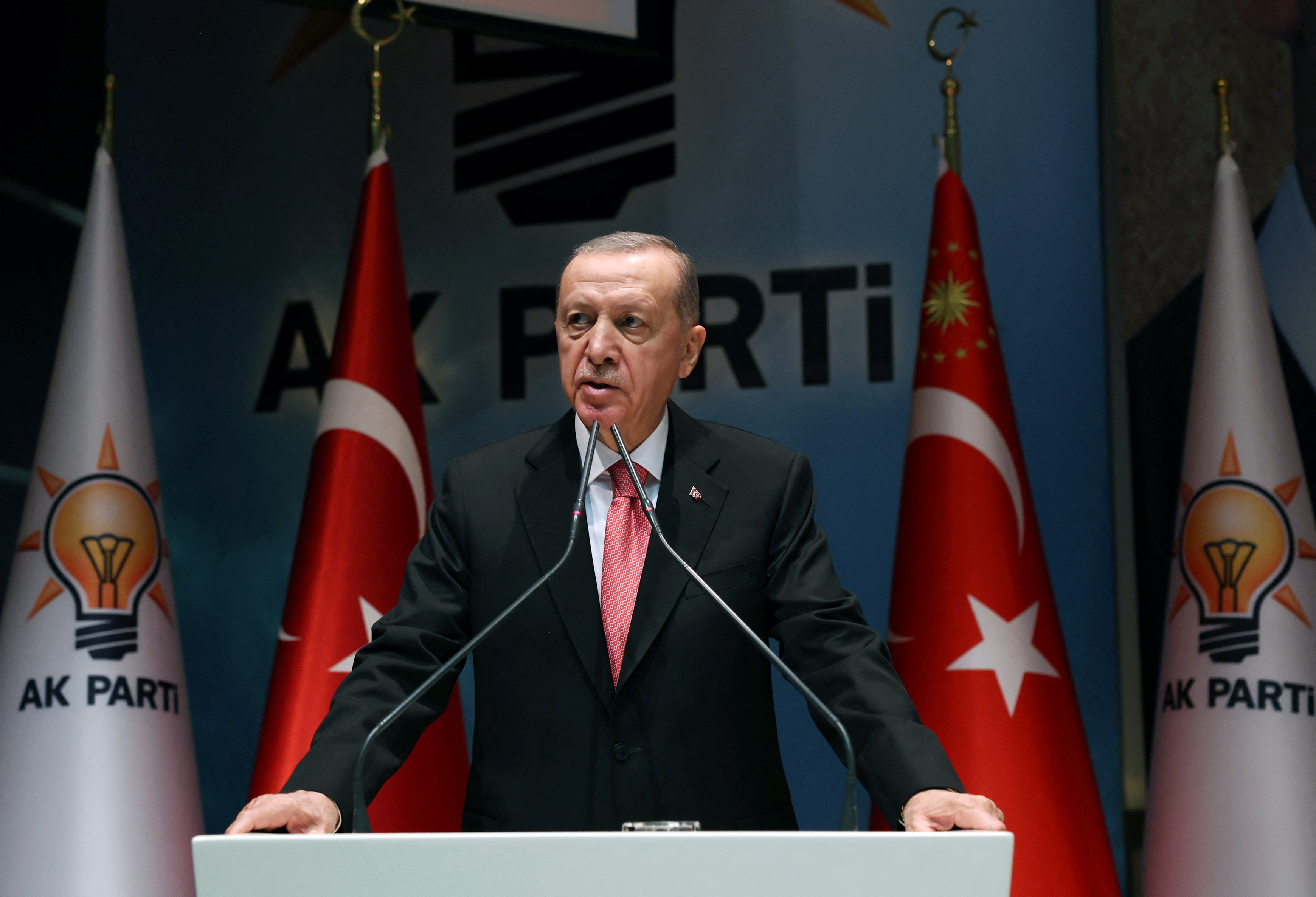
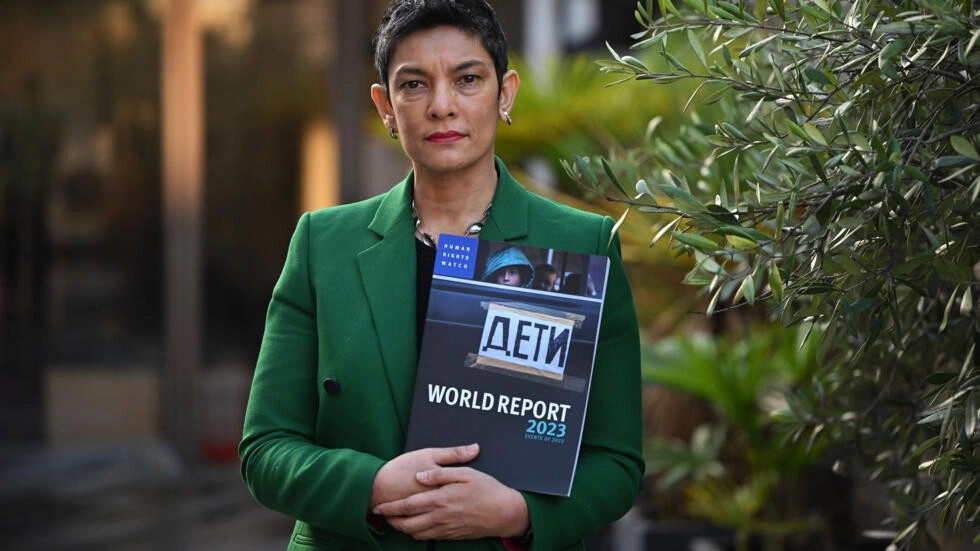
President Tayyip Erdogan’s government has cracked down more aggressively on dissent and political opponents ahead of Turkish elections with censorship and prison sentences, Human Rights Watch said on Thursday.
Presidential and parliamentary elections are set for no later than mid-June but Erdogan has said they could come earlier. Polls show he and his Islamist-rooted AK Party could lose after 20 years in power.
In its annual World Report, the rights watchdog said authorities were using online censorship and disinformation laws to muzzle independent media, the opposition and dissenting voices.
“The government has carried out highly abusive manoeuvres against the political opposition, blanket bans on public protest, and the jailing and conviction of human rights defenders and perceived critics by courts operating under political orders,” Hugh Williamson, the Europe and Central Asia director at Human Rights Watch, said in the report.
Turkey’s Directorate of Communications did not immediately respond to a request to comment on the report.
Last month, a court sentenced Istanbul Mayor Ekrem Imamoglu, a potential Erdogan challenger from the main opposition Republican People’s Party (CHP), to two years and seven months in prison and handed him a politics ban for insulting public officials in 2019, a verdict he has appealed.
Erdogan said in response that Turks have no right to ignore legal rulings and that courts would correct any mistakes in the appeal process.
This month, the top court froze the bank accounts of the pro-Kurdish Peoples’ Democratic Party (HDP), parliament’s third-biggest party, while it hears a case on shutting it down over alleged ties to militants. The party denies the claims.
In October, Turkey adopted a law proposed by the AK Party that would jail journalists and social media users for up to three years for spreading “disinformation”, sparking deep concerns over free speech.
Critics have said there is no clear definition of “false or misleading information”, leaving the law open to abuse by courts that are not independent. The government denies their claims that courts cracked down on open dissent and silenced opponents in recent years.
The government says the new law aims to regulate online publications, protect the country and combat disinformation.
PRAGUE (AP) — Populist billionaire Andrej Babis leads a field of eight candidates hoping to succeed Milos Zeman in the largely ceremonial but prestigious post of the Czech president.
Babis, a former prime minister, was recently acquitted in a fraud trial, boosting his chances of winning in the first round of the presidential election in voting on Friday and Saturday.
If no candidate achieves a majority, the top two finishers will face each other in a runoff in two weeks’ time.
The second and final five-year term of controversy-courting Zeman expires on March 8.
Zeman divided the nation with his pro-Russia stance — until the Russian invasion of Ukraine on Feb 24 — and support for closer ties with China.
Zeman was the first president elected by popular vote. The previous two presidents, Vaclav Havel and Vaclav Klaus, were elected by lawmakers.
Here’s a look at the vote:
WHAT’S AT STAKE
Under the Czech constitution, the president has the power to pick the prime minister, and to appoint members of the Central Bank board. The president also selects Constitutional Court judges with the approval of Parliament’s upper house.
Otherwise, the president has little executive power and the country is run by the government chosen and led by the prime minister, currently the conservative Petr Fiala.
EMBATTLED FAVORITE
Babis, 68, has been a divisive figure in politics.
With Zeman, his political ally, he espouses a strong anti-migrant rhetoric, which unites him with anti-migration champion Viktor Orban, the Hungarian prime minister.
During his campaign, Babis tended to avoid the subject of the war in Ukraine, saying he wants to focus on domestic issues, including high inflation for which he blames the current five-party ruling coalition.
A euroskeptic like Zeman, Babis has been critical, among other issues, of the 27-member European Union’s plan to tackle climate change, saying it would hurt the Czech Republic’s economy and is responsible for soaring energy prices.
A number of scandals hasn’t harmed his popular support, particularly with his base, older voters.
A quarter of a million people took to the streets — the biggest such demonstrations since the 1989 anti-Communist Velvet Revolution — twice in 2019 to demand that Babis step down as prime minister over scandals, including the conflict of interest over EU subsidies involving his former business empire.
Babis’ ANO (YES) movement lost the parliamentary election in October 2021. A coalition of five parties formed a new government, and ANO ended up in opposition after a turbulent term and the sometimes chaotic reaction of his government to the coronavirus pandemic.
Before that election, one of the richest Czechs was hit by yet another scandal that linked him and hundreds of other wealthy people to offshore accounts in findings by the International Consortium of Investigative Journalists dubbed the “Pandora Papers.” He denied wrongdoing.
A court in Prague acquitted him on Monday of fraud charges in a $2 million case involving EU subsidies. The prosecution still can appeal.
Babis pleaded not guilty and repeatedly said the charges against him were politically motivated.
The Slovakia-born Babis was a member of the Communist Party before the 1989 Velvet Revolution that brought in democracy. In Slovakia, he faces accusations of collaboration with the communist-era secret police, which he denies.
TWO MAIN CHALLENGERS
Retired army Gen. Petr Pavel, former chairman of NATO’s military committee, the alliance’s highest military body, and Danuse Nerudova, who was rector of Mendel University in Brno, are Babis’ main challengers.
The two political newcomers fully endorsed the country’s military and humanitarian support for Ukraine in its fight against Russia and see the Czech Republic’s future linked to membership in the EU and NATO.
Pavel, 61, who served as the chief of the general staff of the Czech army before working at NATO in 2015-18, has presented himself as the right person for the post in hard times amid Russia’s war in Ukraine.
After Russia annexed Ukraine’s Crimean Peninsula in 2014, Pavel said in an interview with The Associated Press in 2015 that NATO members should spend more on defense, conduct more military drills together and stand firm in the face of Russian moves.
As a member of the U.N. peacekeeping mission during the war in former Yugoslavia (UNPROFOR), he helped evacuate French peacekeepers in 1993, for which he received the French War Cross.
Polls favor him to advance together with Babis to the second round of the Czech presidential election.
Nerudova, 44, an economist by profession, is popular among the younger population. Many see her as the Czech answer to popular Slovak President Zuzana Caputova, who became the first woman to hold the post.
Nerudova’s campaign lost some steam recently, polls suggest, but it might be boosted again after one of the candidates, labor union leader Josef Stredula, bowed out of the race and asked his supporters to vote for Nerudova.
Polls indicate that none of the remaining candidates has a chance to make the runoff. They include former diplomat and adviser to Havel, Pavel Fischer, who finished third in the previous 2018 presidential ballot, and Jaroslav Basta, who is running as part of the country’s major anti-migrant force, the Freedom and Direct Democracy party.

On January 11, 2023, Russian troops opened hearth on the Kherson region 90 moments. 1 civilian was claimed killed and 5 injured.
The suitable assertion was made by Kherson Regional Armed forces Administration Head Yaroslav Yanushevych on Telegram, an Ukrinform correspondent reviews.
“According to the details from Kherson Regional Armed forces Administration, Russian invaders shelled the Kherson region’s territory 90 periods. They struck with artillery, various launch rocket programs (MLRS), mortars and tanks,” the report states.
The city of Kherson came less than enemy fire 27 occasions. In distinct, Russian troops qualified household areas. Enemy projectiles hit a maternity household, detached homes and condominium blocks.
Above the previous working day, owing to Russian attacks, a person civilian has been killed, and 5 persons have gained injuries of several severity stages.
A reminder that, on January 11, 2023, the Russian military services struck a essential infrastructure facility in the Kherson region’s Darivka community. 3 folks were described injured.
mk
The post Kherson region struck 90 times over past day, casualties reported appeared first on Ukraine Intelligence.
Australia and Papua New Guinea agreed to conclude negotiations over a comprehensive security agreement by April with hopes of a treaty signing by June following a meeting between the leaders of both countries in Port Moresby on Thursday.
The proposed Bilateral Security Treaty, which both parties committed to finish negotiating by April 30, will cover defence, with discussions underway over troop training and joint operations, in addition to issues like climate change and cyber security.
Australian Prime Minister Anthony Albanese said the economic and security interests of the Pacific neighbours were “indivisible”, hours after being the first foreign leader to address Papua New Guinea’s parliament.
“Our economic cooperation and our security cooperation is in both of our interests,” he said at a news conference where he raised hopes a deal could be signed by June.
“Our interests are indivisible. You can’t have a more secure Papua New Guinea without a more secure Australia and vice versa.”
Australia wants to strike a pact that would see navy, air force and army personnel from each nation working alongside each other more often, Defence Minister Richard Marles said in October.
The United States and its allies including Australia are seeking to counter Beijing’s growing influence in the strategically important region, after being alarmed by China striking a security pact with the Solomon Islands in April.
PNG Prime Minister James Marape said the proposed agreement would elevate the relationship with Australia, who he called a “forever friend”, without jeopardising Papua New Guinea’s bilateral relationship with other countries.
“So without compromising the peculiarity of our own bilateral relationships with others, our shared interests will be encapsulated in these security arrangements,” said Marape.
Australia remains the largest aid donor to the country which it once administered as a colonial power. Faced by growing Chinese aid and influence, Australia has scrambled to strengthen relations with its northern neighbour and the leaders have met multiple times since Albanese won an election last May.
Both leaders also agreed to streamline visa arrangements for the thousands of workers who move between both countries with Albanese announcing a new working holiday visa scheme to come into effect in June.
Advertisements – Advertising at The News And Times – advertising-newsandtimes.com | WE CONNECT!
Audio | Video | Top News | On Twitter | Security | FBI | Capitol Riot | JOSSICA | Trump | Russia | Putin | Russia – Ukraine War | Covid-19 | Brooklyn NY | Puerto Rico | World
September 24, 2026 9:15 am
The News And Times | Featured Posts | All Articles | Current News | Selected Articles | Shared Links | Opinions | In My Opinion | Sites | Blogs | Links | Twitter | Facebook

Contact Form | Blogs | Sites | News Reviews | Links | Advertising
All The News That’s Fit To Web