Categories
Audio Sources - Full Text Articles

Harvey Weinstein asks New York“s top court to toss 2020 rape conviction

2023-01-11T01:16:29Z

Former film producer Harvey Weinstein appears in court at the Clara Shortridge Foltz Criminal Justice Center in Los Angeles, California, USA, 04 October 2022. Etienne Laurent/Pool via REUTERS

The disgraced Hollywood movie producer Harvey Weinstein on Tuesday asked New York’s highest court to overturn his 2020 rape and sexual assault conviction, saying the Manhattan trial judge succumbed to inertia created by the #MeToo movement.

In a filing with the state Court of Appeals, lawyers for Weinstein accused trial judge James Burke of caving to “the pressure of an influential social movement determined to punish centuries of male misbehavior by setting an example in convicting one man, Harvey Weinstein.”

The lawyers said a series of errors by the judge, including letting four women testify about alleged conduct for which Weinstein was not charged, undermined the presumption their client was innocent.

They want the Court of Appeals to reverse his convictions and 23-year prison sentence, dismiss the rape charge because it was brought too late and order a new trial on a single count of criminal sexual act.

“A defendant cannot be tried based on his character — but must be tried based on the conduct for which he has been accused,” Weinstein’s lawyer Arthur Aidala said in a statement.

The office of Manhattan District Attorney Alvin Bragg, whose predecessor Cyrus Vance brought the Manhattan case, is expected to respond to Weinstein’s brief.

Weinstein has denied having non-consensual sexual encounters with anyone.

He is also awaiting sentencing, including a possible 18-year prison term, in Los Angeles after a jury there convicted him last month of raping and sexually assaulting a former model and actress in a hotel.

Jurors in Manhattan convicted Weinstein in February 2020 of sexually assaulting a former production assistant in 2006 and raping an aspiring actress in 2013.

That verdict was considered a milestone for #MeToo, where women have accused hundreds of men in entertainment, media, politics and other fields of sexual misconduct.

Weinstein co-founded the Miramax film studio, whose hit movies included “Shakespeare in Love” and “Pulp Fiction.” His own eponymous film studio filed for bankruptcy in March 2018.

A mid-level state appeals court unanimously upheld Weinstein’s Manhattan conviction in June.

Categories
Audio Sources - Full Text Articles

Biden “surprised“ about finding of classified documents, vows cooperation

2023-01-11T01:04:10Z

The White House came under fire from Republicans, demanding answers as to why classified documents from Joe Biden’s vice-presidential days were discovered in November by the U.S. president’s personal attorneys at a Washington think tank. This report produced by Jillian Kitchener.

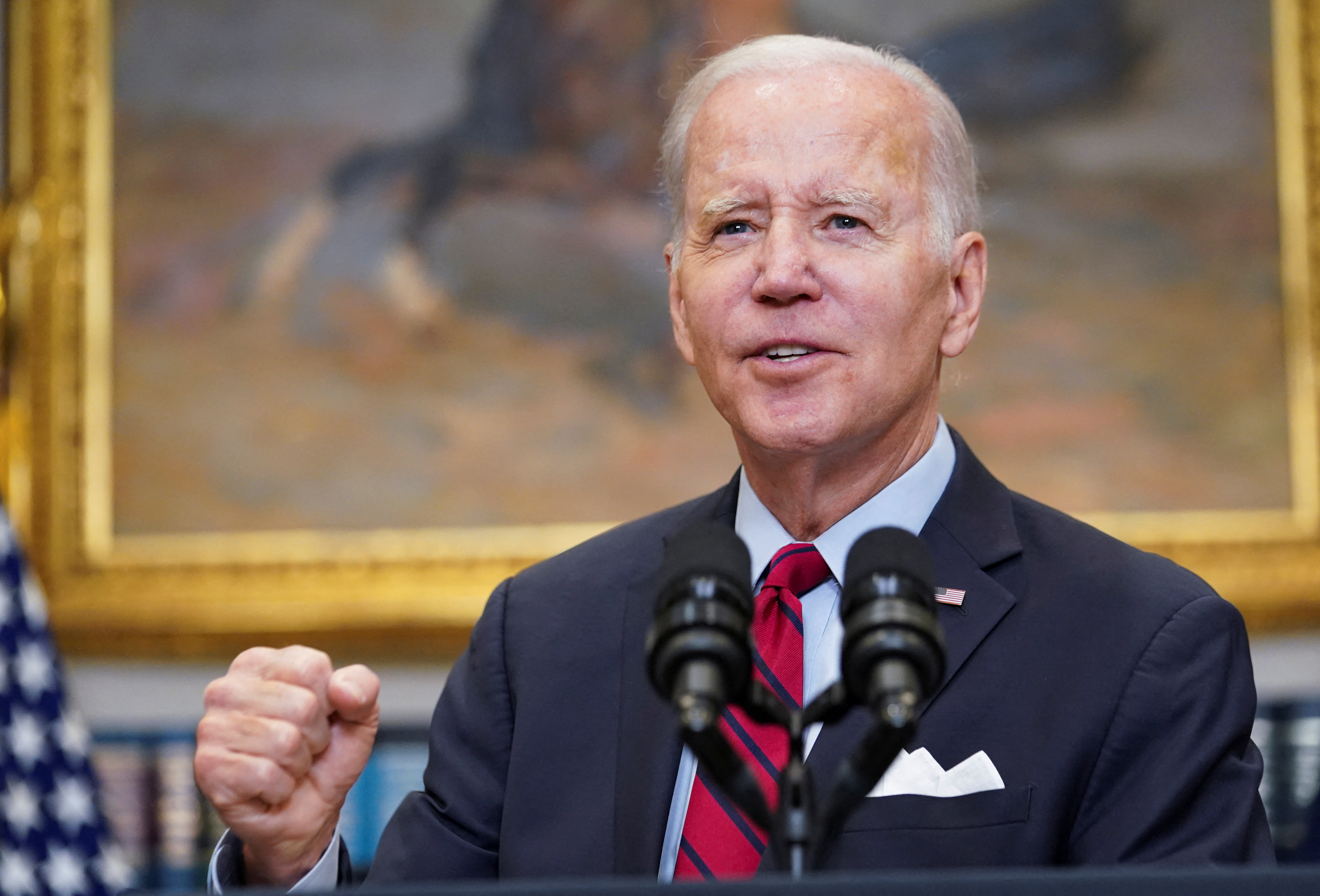
U.S. President Joe Biden speaks about U.S.-Mexico border security and enforcement, in the Roosevelt Room at the White House in Washington, U.S., January 5, 2023. REUTERS/Kevin Lamarque/File Photo

President Joe Biden said on Tuesday he was surprised to learn that classified documents were found in a think-tank office he once used and said he and his team are cooperating fully with a review into what happened.

Biden told reporters at a joint news conference with the leaders of Mexico and Canada that he takes classified documents seriously. He said he did not know what was in the documents.

“We are cooperating fully with the review, which I hope will be finished soon,” Biden said.

A Democrat, Biden has faced criticism from Republicans after his Justice Department launched an investigation last year into Republican former President Donald Trump’s handling of classified documents discovered at his Mar-a-Lago club in Palm Beach, Florida.

The cases differ in several ways.

Biden’s attorneys discovered fewer than a dozen classified records inside the office at the think-tank and informed the U.S. National Archives of their discovery, turned over the materials, and said they were cooperating with the Archives and the Justice Department.

Biden periodically used the think-tank office space from mid-2017, after his term as vice president for Democratic President Barack Obama ended, until the start of his 2020 presidential campaign.

By contrast, Trump kept thousands of government records, a few hundred of which were marked as classified, inside his Florida residence for more than a year after departing the White House, and did not return them immediately or willingly despite numerous requests by the National Archives.

When Trump finally handed over 15 boxes of records in January 2022, the Archives discovered more than 100 were marked as classified. It later referred the matter to the Justice Department.

Investigators tried to get Trump to return any remaining classified records through a grand jury subpoena and a visit to his Mar-a-Lago estate. On that visit, Trump’s advisers returned a few dozen additional classified records, and attested that no other classified material remained in the residence.

Suspecting possible obstruction of justice, the FBI sought and obtained court approval in August to search his Florida home, where agents found more than 13,000 additional records, about 100 of them highly classified.

U.S. Attorney General Merrick Garland appointed Special Counsel Jack Smith in November to investigate the matter.

To prove a crime occurred, investigators would need evidence to show that Trump or his associates knowingly and willfully retained the records and intentionally sought to obstruct the department’s investigation to get them returned.

Republican Representative Mike Turner of the House Permanent Select Committee on Intelligence sent a letter asking U.S. Director of National Intelligence Avril Haines for “an immediate review and damage assessment” of the Biden documents case.

“This discovery of classified information would put President Biden in potential violation of laws protecting national security, including the Espionage Act and Presidential Records Act,” Turner said in a statement on Tuesday.

Representative Elise Stefanik, a staunch Trump ally who chairs the House Republican caucus, said in a statement that the documents raised serious questions about national security. She called it “troubling” that they were turned over to the National Archives just before the November midterm elections “and the corrupt Biden DOJ covered it up for two months.”

Biden defended the handling of the documents.

“They found some documents in a box in a locked cabinet, or at least a closet. And as soon as they did, they realized there were several classified documents in that box. And they did what they should have done. They immediately called the Archives,” he said.

“I was briefed about this discovery and surprised to learn that there were any government records that were taken there to that office, but I don’t know what’s in the documents,” he said.

He said his lawyers have suggested he not ask what was in the documents.

“I’ve turned over the boxes, they’ve turned over the boxes to the Archives, and we are cooperating fully with the review, which I hope will be finished soon. And there’ll be more detail at that time,” he said.

Categories
Audio Sources - Full Text Articles

This is just embarrassing for Mike Pence

19121c5c768fb6ee35d5576afe2d9a7f?s=100&d

Help support Palmer Report! Our articles are all 100% free to read, with no forced subscriptions and nothing hidden behind paywalls. If you value our content, you’re welcome to pay for it:

Pay $5 to Palmer Report:

Pay $25 to Palmer Report:

Pay $75 to Palmer Report:


Have you ever wondered about best-selling books? Have you ever wondered about books on the best-seller list that sound so awful one cannot imagine who reads them? Well, in that regard, a little nugget of information has leaked. And it concerns the written words of one Mike Pence.

Pence’s book called “So help me God” (Oh, the irony) was released on November 15, 2022. His book shot to the top of the heap, becoming a bestseller on the best selling list of the New York Times.

But just who was buying this book? Could one of the buyers have been — Mike Pence? This is the question being asked. That is because records show that our delightful and charismatic former VP spent a heck of a lot of money on November 9 of that year. The money went to an online bookstore called Books on Call, LLC. Books on call is an off-site bookseller.

—

Click here to support Palmer Report! Our articles are all 100% free to read, with no forced subscriptions and nothing hidden behind paywalls. If you value our content, you’re welcome to pay for it:

Pay $5 to Palmer Report:

Pay $25 to Palmer Report:

—

Sign up for the Palmer Report mailing list

—

Follow Palmer Report on Facebook • Twitter • Post • Mastodon

—


Financial reports from the Federal Elections Commission show Pence spent about $91,000 at Books on call. Hmm. But surely now — surely now — he could easily have been buying something else. Perhaps Pence bought multiple copies of “How to stand up for myself toward the man who caused an insurrection.” No, that’s not a real book, but it should be.


And it sounds a heck of a lot more interesting than Pence’s book. Now let us look at the category Pence’s purchases at this bookstore fell into. That is “collateral materials.” Hmm. This is basically a term for promoting oneself. Hmm. I seem to be saying that quite a bit.

And what makes all of this a bit suspicious is that Pence’s book shot to best seller status only AFTER pence’s purchase. Hmm. So yes, this is a circumstantial case. But it is a STRONG circumstantial case. And I hope it isn’t true. Could Pence REALLY have spent so much money buying copies of his own book? I believe it is a definite possibility.

Support Palmer Report! Our articles are all 100% free to read, with no forced subscriptions and nothing hidden behind paywalls. If you value our content, you’re welcome to pay for it:

Pay $5 to Palmer Report:

Pay $25 to Palmer Report:

Pay $75 to Palmer Report:

Write for the Palmer Report Community Section.

Help support Palmer Report! Our articles are all 100% free to read, with no forced subscriptions and nothing hidden behind paywalls. If you value our content, you’re welcome to pay for it:

Pay $5 to Palmer Report:

Pay $25 to Palmer Report:

Pay $75 to Palmer Report:

The post This is just embarrassing for Mike Pence appeared first on Palmer Report.

Categories
Audio Sources - Full Text Articles

A View Into Web(View) Attacks in Android

jonathan-kemper-t6Wmvbw_MdI-unsplash.jpg

James Kilner contributed to the technical editing of this blog. Nethanella Messer, Segev Fogel, Or Ben Nun and Liran Tiebloom contributed to the blog.

Although in the PC realm it is common to see financial malware used in web attacks to commit fraud, in Android-based financial malware this is a new trend. Traditionally, financial malware in Android uses overlay techniques to steal victims’ credentials.

In 2022, IBM Security Trusteer researchers discovered a new trend in financial mobile malware that targets Android and is replacing the classic overlay M.O. (Modus Operandi). These new attacks use the good-old web attack tactics with adjustments made for Android. IBM Trusteer has dubbed these attack tactics Mobile Web(View) attacks because the attack vector is the Android WebView component, and not the browser application (for reasons that will be explained in the following sections).

In this blog, two extremely effective attack techniques are discussed: Web(View) injection attack (based on web injects in the browser) and mobile cookie stealing.

What is a Web Injection Attack?

A web injection attack is a technique used by malware to exfiltrate and manipulate the content of a website from the client side as it is being presented by the browser. During a web injection attack, the malware injects HTML or JavaScript code into the website by running code in the scope of the web browser process that is installed on the victim’s device.

In a web injection attack, what the victim sees in the browser might be different from what is intended by the web server. In addition, every private detail entered by the victim on the website is exposed to the malware.

For example, the JavaScript code that is injected by the malware can extract data from an HTML form that the user has filled in. Using this method, the malware can steal login credentials, credit card numbers, CVVs and so on. That data can then be sent to the command-and-control server (C2C) of the malware operator.

Another common example of a web injection attack is to manipulate the visuals of a website. This type of web injection attack can be used to insert new fields to steal additional personal identifiable information (also known as PII) that is not requested by the legitimate service or even to remove existing fields, which can prevent the user from seeing security warnings. This attack is also used by malware to perform on-device fraud (ODF) by changing the payee of a transaction initiated by the victim to the fraudster mule account.

Figure 1 — An example of injected JavaScript code. The injection creates a fake login form of an e-commerce company instead of the original content of the legitime website (left) versus the original HTML of the legitime website (right).

Figure 2 — The result of the injected JavaScript code: a fake login form of an e-commerce company (left) versus the original legitime website (right).

Due to all of these capabilities, the web injection technique is especially common among desktop financial malware, such as the Zeus Sphinx variant, IcedID and TrickBot.

Why Are There No Web Injection Attacks on Mobile?

Although the use of web injection attacks has become the standard for desktop financial malware, this is not the case for mobile. Instead, financial malware on Android mostly uses the overlay technique, and more recently RAT techniques to steal victims’ credentials.

The reason web injection is not used in mobile is that on a non-rooted Android phone (and without using exploits), code injection to the browser application process (or to any other application on the device) is not possible. The Android operation system enforces these restrictions with the implementation of Android sandboxing.

Android Sandbox

In general, in Android OS, a distinct Linux user ID (UID) is assigned to each installed application. Android uses this UID to set up a kernel-level Application Sandbox. The kernel-enforced process isolation prevents applications from injecting code into each other, accessing each other’s files and resources, and manipulation of their code. Due to the sandbox protections, mobile malware cannot inject code into other browser applications such as Google Chrome and cannot inject code into the real banking application. As a result, Android malware cannot perform classic web injection attacks on Android.

Figure 3 — An example showing the UID of three processes running on a device: a banking application, a malware application, and the Chrome browser application.

Challenge Accepted: Introducing the Web(View) Inject Attack

Android WebView

WebView is an embeddable browser inside an app that is used to load a URL. The WebView element is a part of the application it is running within; therefore, it is not protected by the Android Sandbox. In fact, Android allows an application to inject JavaScript code into its own WebView.

According to the malware analyzed by IBM Trusteer, to manipulate a banking website, the malware impersonates the banking application and runs a WebView that loads a legitimate URL of the bank. The malware injects JavaScript code that is required for the attack into its own WebView and uses that code to intercept text entered by the victim into the HTML fields such as the victim’s username and password.

The overall attack flow is shown in the following figure:

Figure 4 — Web(View) Inject attack flow.

*Smishing, also known as SMS-phishing, is a mobile text message containing a link to download malware or visit a malicious site via phishing.

How can malware inject its own code into a WebView element?

Introducing Android JavaScript Interface

Android provides developers with an interface that allows them to bind JavaScript code into an Android app that uses a WebView. Android developers who build a web application using WebView can create interfaces between the JavaScript code and native Android code.

The application must know the exact names of the fields within the HTML of the legitimate site to use this technique. In turn, the JavaScript code must know the exact names of the Android functions within the interface to interact with them.

In the malware that Trusteer analyzed, the names of the Android JavaScript interface functions can be seen: “sendCerd,” “closeFrom,” and “sendBalance.” When the user enters their username and password, the malware extracts the values using the val() jQuery function and sends the information to the C2C. The script can get values from text fields in the HTML that the user filled in, including special fields with type=”Password”.

To mark potentially interesting targets, the attacker is specifically interested in the balance of the victim’s account. The code to retrieve the balance has a timeout of 3 seconds.

Figure 5 — The malware JavaScript code.

Figure 6 — The malware corresponding JavaScript interface from the Android side.

After the malware exfiltrates the victim’s PII, the victim continues through the following web pages on the legitimate website without raising their suspicions.

WebView Settings

To inject the JavaScript code, the malware sets the WebView settings “setJavaScriptEnabled” and “setDomStorageEnabled” to “true”.

Figure 7 — The malware’s WebView settings. Note the use of a constant user-agent of a Samsung device (SM-A205U).

Injecting JavaScript

After setting up the Android JavaScript and the WebView, the malware can inject the JavaScript code into its own WebView with the loadUrl() function. In the malware analyzed by Trusteer, the JavaScript was Base64 encoded. Looking at the source of the injected page, the injection code is not human readable; however, since it is only Base64 encoded, it can be easily decoded.

Figure 8 — The malware’s Base64 encoded JavaScript injected code.

Web(View) Attack Versus Overlay Attack

In this attack dubbed Web(View) Injection by IBM Security Trusteer, the malware loads a legitime URL of the bank rather than a fake activity or a fake phishing site. In an overlay attack, the malware shows the victim a fake overlay screen mimicking the bank’s login page on top of the real banking app.

One advantage of the Web(View) Inject method is that the malware doesn’t need to change the design of the overlay screen every time the bank changes its UI since it is injecting straight into the legitimate banking site.

Another advantage is that this attack requires fewer permissions than an overlay attack, which usually requires at least the “android.permission.SYSTEM_ALERT_WINDOW” permission. In fact, Web(View) attack requires only the “android.permission.INTERNET” permission to be declared in the manifest. This permission is extremely common and therefore much less suspicious.

This is not the first time mobile malware has used the Web(View) inject technique, but this is the first time that IBM Trusteer researchers have identified it being used by mobile financial malware.

Web(View) Injection is not the only web attack technique IBM Trusteer detected that financial malware used in Android.

The next attack discussed in this blog is a Mobile Cookie Stealing attack that, much like the Web(View) Injection attack, targets the Android WebView component.

What is a Cookie Stealing Attack?

Cookies are strings of text and numbers that websites store in the browser to save the login state or track the user’s activity on the website.

Cookies are used as session identifiers. Various websites including banks and cryptocurrency sites use cookies as session identifiers for their login pages. If a fraudster steals a cookie from the browser after the user logged in, the fraudster might be able to use the cookie to steal the victim’s session (as long as the cookie hasn’t expired) without even having to know the victim’s credentials.

This attack has recently gained popularity among financial mobile malware, such as SOVA’s remake malware MailBot, FluBot, SharkBot, and Hydra, the newer version of BianLian.

Who Stole the Cookie From the Android Jar?

As stated in the Android Sandbox section, an Android application cannot manipulate the browser application directly and, as a result, can’t steal cookies from it without the victim’s knowledge. However, cookie stealing can be done from its own WebView.

BianLian is a piece of financial malware that has overlay capabilities as well as RAT capabilities. IBM Trusteer researchers have analyzed the BianLian malware, aka Hydra, and here BianLian’s implementation of the cookie stealing attack is unpacked. The overall attack flow is shown in the following figure:

Figure 9 — Cookie stealing attack flow

The malware creates an instance of CookieManager and then the “getCookie()” method is used with the legitimate URL loaded to get the cookie.

Figure 10 — BianLian’s cookie theft function.

BianLian steals cookies from e-mail, social networking and financial applications, using the real application’s URLs:

Figure 11 — BianLian’s cookie theft configuration list.

BianLian detects when the user opens one of the targeted apps using the accessibility service. It then overlays the legitimate application with its own WebView loaded with the real login URL of the targeted application. This way, from the victim’s perspective, everything seems to be as expected. However, any interaction the victim has from this point on is with the malware screen and not the actual application.

The malware WebView has the “setMixedContentMode” property set to load content from any other origin, even if that origin is insecure. It also has the “setCacheMode” property set to load no cache, which means loading from the network.

The malware then waits for the user to log in to the service. It makes sure the victim is successfully logged into their account by checking the loaded URL with the “onPageFinished” method and then grabs the session cookie using the Cookie manager.

Once it steals the cookie, BianLian sends the cookie to its C2C (at the time of writing, the malware sends requests to the server unencrypted via HTTP). Finally, the fraudster uses the stolen cookie to hijack the victim’s session.

Fewer Permissions, Fewer Suspicions

Similar to the Web(View) injection attack, the cookie stealing attack requires only the “android.permission.INTERNET” permission.

Note that even if the website uses HTTPS, the malware can still intercept the cookie value with the described technique.

Conclusion

Although it took more than a decade, web attack techniques have finally made their move to mobile. In this blog, we have detailed two such attack techniques translated from PC to Android in the form of WebView abuse attacks: the Web(View) injection attack and Mobile Cookie grabbing.

Every Android application is exposed to these attacks because malware can use a WebView to load any service URL that has an online login page and inject it with its own JavaScript, which effectively gains full control of the website (from the client perspective).

The biggest risk from the Web(View) Inject attack is the fact this attack might allow an attacker to perform ODF, where transactions are initiated from the same device that the victim uses daily. This is a known M.O. used by PC financial malware, where the attacker replaces the payee of each money transaction with their own account. The fraudulent transaction is initiated by the victim from the legitimate device, making it look less suspicious.

Because this technique requires only a few permissions and is relatively easy to implement for anyone familiar with Web attack in PC, IBM Trusteer expects WebView attacks in Android to be seen more frequently in financial malware in the future.

Malware IOCs

APK Hash (SHA256)

Malware

4f04c97924044427917b64fb271c1f98a09dad67572adceb75af5a2892b193be

Web(View) Inject malware

e74c08fd6ad250fa63e028ce7801eca99a460562107cc40727b0fbca80182196

BianLian aka Hydra

Scroll to view full table


The post A View Into Web(View) Attacks in Android appeared first on Security Intelligence.

Categories
Audio Sources - Full Text Articles

Meta’s technology chief reportedly told employees that higher headcount has led to ‘untenable’ slow movement, including meetings that take a month to schedule

Andrew Boz BosworthAndrew Bosworth is the CTO of Meta, and leads Reality Labs.

Andrew Bosworth / Facebook

  • Meta CTO Andrew Bosworth told employees in an email that “that adding headcount “makes everything slower,” according to The Verge.
  • He added that Meta had “solved too many problems by adding headcount.”
  • Meta laid off 13% of its workforce in November 2022.

In a massive company like Meta, things don’t always move quickly. Yet some in Meta’s top ranks believe that its massive size is directly responsible for its tendency to move too slow.

According to The Verge’s Command Line newsletter, Meta Chief Technology Officer Andrew Bosworth told the 18,000 employees in its Reality Labs division via an email before the holidays that the company has solved too many problems simply “by adding headcount.” The issue with that, Bosworth noted, is that more headcount usually means more overhead. 

“And overhead makes everything slower,” he wrote. 

Reality Labs is the division of Meta that contains its metaverse and virtual reality units.

According to Command Line, Bosworth believes Meta’s inflated ranks have led to scheduling delays, too. 

“A meeting with 50+ people that took a month to schedule. Sometimes there is even a ‘pre-meeting’ with its own document,” Bosworth wrote. “I believe the current situation is untenable.”

In November 2022, the company laid off more than 11,000 employees, or approximately 13% of its staff, with Reality Labs being one of the divisions that faced cuts. At the time, Meta’s CEO Mark Zuckerberg also noted that the company would cut discretionary spending, and its hiring freeze would extend into the first quarter of 2023. 

Meta’s market value has dropped 47% in the last 12 months. The company also said it expected losses from Reality Labs to grow in 2023, after reporting its financial results for the third quarter of 2022. 

Neither Bosworth nor Meta immediately responded to Insider’s request for a comment. 

Read the entire Command Line newsletter here.

Read the original article on Business Insider
Categories
Audio Sources - Full Text Articles

Biden didn’t have to publicly disclose classified documents: Legal expert

WASHINGTON, D.C. (NewsNation) — The White House announced Monday that some potentially classified documents from President Joe Biden’s time as vice president were found in his former office and were being reviewed by the Department of Justice. Meanwhile, investigations into classified documents seized from former President Donald Trump’s Florida home are ongoing.

The two high-profile cases have raised questions about how often classified documents are mishandled, how that can be prevented and what the consequences and next steps may be in each case.

“It is always serious when there is a mishandling of classified information. Nobody should denigrate or minimize that concern,” said National Security Attorney Mark Zaid. “The reality is it is very common that we see mishandling of classified documents.”

Zaid said that while the basic facts of Biden’s and Trump’s cases seem similar, they “diverge significantly” after that point.

“Everything that the Biden folks have done is drastically different than what the Trump personnel did at the time. (Biden’s team) immediately notified the White House, they immediately notified the (National Archives) and the Archives immediately retrieved the documents,” he said.

Though information is still preliminary, Zaid said it appeared in Biden’s case that there was “no evidence of any type of obstruction, delays, hiding of documents, all of which have led to where we are today with the Trump situation at Mar-a-Lago.”

NewsNation’s Kellie Meyer interviewed Zaid about the various questions swirling around the two investigations. The following has been edited for length and clarity:

National Security Lawyer Mark Zaid during his interview with NewsNation’s Kellie Meyer.

Q: What are the rules around the disclosure of mishandling of documents, and why did it take so long for Biden’s team to reveal it?

Zaid: There is no legal obligation that anyone had to disclose that this occurred, and if everyone remembers back to Mar-a-Lago, we didn’t know about that situation for quite a significant amount of time.

In the same vein, someone in both cases decided to let the media know that this situation happened. The National Archives just doesn’t publicize this information.

Now, people could debate whether the Biden administration should have said something sooner. But that is more of a political discussion. It’s not a legal one.

There’s going to be an extraordinary amount of politicization and partisanship trying to equate the two situations. But the reality is, other than politically and from a public relations standpoint, the situations couldn’t have been more different, at least based on what we know so far.

Q: How common is it for sensitive documents to be mishandled and what typically happens after that?

Zaid: The reality is it is very common that we see mishandling of classified documents. Folks will bring a stack of papers home from work, and didn’t realize that they grabbed the classified document at the bottom. Or they retired and packed up their office and five years later, they’re going through their garage and … (they) find some classified documents.

These are historically handled administratively. It could impact an individual’s security clearance or employment. It is rare that a case ever escalates to a criminal standpoint unless it is so egregious, by way of a hoarder … where their house is full of classified information, or as we may see with Mar-a-Lago, there’s evidence of obstruction and intentionality with respect to avoiding turning over the documents.

Q: How do you think this will unfold next?

Zaid: Well, from what I’ve seen in press reports, obviously we’re hearing about this now in January — it actually happened two months ago. And Attorney General Merrick Garland appointed a (Trump-era) U.S. attorney to investigate back in November. According to press reports, his investigation is almost complete.

I would imagine that the findings of that report in some summary fashion — if not in detail — will be released to the public. It will certainly will be sought by (lawmakers on) Capitol Hill, by the Republicans, for sure. And it should also be sought by the Democrats, quite frankly, because this is a serious allegation that should be investigated.

If it turns out that none of the documents were ever compromised, and there are no further documents that are in the possession of the Biden Center, I imagine that nothing will happen, quite frankly, from this case, as a legal matter. As a political matter, that’s a completely different story.

Q: How was the handling of Trump’s case different and why?

Zaid: So in Trump’s case, the National Archives decided first that ‘Hey, we’re missing documents,’ and approached the Trump team. The Trump team delayed for significant periods of time and refused to respond to a number of requests. Once they finally turned over the information and it was learned that there were classified documents within (the boxes), they then stalled in providing additional information about it.

There was a significant year-plus time period of going back and forth to gain access to information that wasn’t properly stored. We ultimately have learned that at least the factual allegations are that Trump intentionally directed information to be taken to Mar-a-Lago and for information to be taken from the storage room to his office, where once the FBI executed their search warrant, they found more classified documents in his private part of the residence at Mar-a-Lago.

So there is evidence of obstruction, theft and false statements, none of which are present so far in this recent case with the Biden Center.

Q: What is the potential fallout for Biden in this case?

Zaid: The political fallout is going to be the most severe consequence if the facts stay the way that they are.

Most people, I think, are not going to be able to distinguish between (the two cases) and they’re going to try and equate it on an equal basis. But the reality is these cases, based on what we know so far, are so fundamentally different, that a comparison is almost impossible to make.

Categories
Audio Sources - Full Text Articles

Zelenskiy strips Putin ally Medvedchuk, three others of Ukrainian citizenship

2023-01-11T00:44:36Z

Ukraine’s President Volodymyr Zelenskiy delivers his annual speech to lawmakers during a session of the Ukrainian Parliament, amid Russia’s attack on Ukraine, in Kyiv, Ukraine December 28, 2022. Ukrainian Presidential Press Service/Handout via REUTERS

President Volodymyr Zelenskiy stripped four political figures of their Ukrainian citizenship on Tuesday, including pro-Kremlin politician Viktor Medvedchuk who was transferred to Russia last year in a prisoner swap deal.

“I have decided to terminate the citizenship of four persons: Andriy Leonidovych Derkach, Taras Romanovych Kozak, Renat Raveliyovych Kuzmin and Viktor Volodymyrovych Medvedchuk,” Zelenskiy said in his nightly video address.

“If people’s deputies choose to serve not the people of Ukraine, but the murderers who came to Ukraine, our actions will be appropriate.”

Medvedchuk, a close ally of Kremlin leader Vladimir Putin, headed a banned pro-Russian party the “Opposition Platform – For Life” in Ukraine and was facing treason charges before being transferred to Moscow in September 2022.

Kozak and Kuzmin had been both elected to Ukraine’s parliament as members of Medvedchuk’s party.

The United States imposed sanctions on Kozak, the owner of three television channels, in January of 2022 for alleged spreading of Russian disinformation, after Kyiv sought his arrest on treason charges.

Ukraine has also charged Kuzmin with high treason.

Derkach, a Ukrainian lawmaker also sanctioned by Washington, was charged in the United States in December with money laundering and sanctions violations.

He had been accused of helping Russia interfere in the U.S. presidential election in 2020.

Categories
Audio Sources - Full Text Articles

Australian Cardinal George Pell, acquitted of child sex abuse, dead at 81

2023-01-11T00:34:32Z

Australian Cardinal George Pell, a leading Roman Catholic conservative and former top Vatican official who in 2020 was acquitted of sexual abuse allegations, died on Tuesday at the age of 81, his private secretary said.

Fr. Joseph Hamilton told Reuters that Pell died in a Rome hospital on Tuesday night. Archbishop Peter Comensoli, the Archbishop of Melbourne, said Pell had died from heart complications following hip surgery.

An Australian appeals court ruling in 2020 quashed convictions that Pell sexually assaulted two choir boys in the 1990s.

The ruling allowed the then-78-year-old Pell to walk free after 13 months in prison, ending the case of the most senior figure accused in the global scandal of historical sex abuse that has rocked the Roman Catholic Church worldwide.

Pell, a former archbishop of Melbourne and Sydney, served as Vatican as economy minister from 2014 until he took a leave of absence in 2017 to return to Australia to face the charges.

Even before the sexual assault allegations, Pell was a polarising figure in the two decades that he dominated the Australian Catholic hierarchy, revered by conservative Catholics but scorned by liberals for his staunch opposition to same-sex marriage and women’s ordination.

He had been living in Rome since his acquittal and had several meetings with Pope Francis. Pell often attended the pontiff’s Masses and Francis praised him publicly after his return.

On the day of Pell’s acquittal in 2020, Francis offered his morning Mass for all those who suffer from unjust sentences, which he compared to the persecution of Jesus.

After his return to Rome, Pell became a familiar face around the Vatican area even though he was retired. His home became a focal point for conservatives preparing their platform for the eventual election of Francis’s successor.

He was a close friend of former Pope Benedict, who died last month. But he disagreed with Benedict’s decision to continuing wearing white, saying it had confused the faithful. In an interview with Reuters after his return to Rome, he said the Church needed rules on the role of popes who retire.

In May 2018, Pell was committed to stand trial on multiple historical sexual offence charges relating to alleged incidents at a pool in his hometown of Ballarat in the 1970s and at Melbourne’s St Patrick’s Cathedral in the 1990s. The so-called swimmers case was dropped after a judge did not allow certain evidence.

Pell, who denied the allegations, did not take the stand at two trials, the first of which ended with a hung jury. At the re-trial, a jury unanimously convicted him on five charges of assaulting two teenage choirboys at the cathedral when he was archbishop of Melbourne.

Pell was sentenced to six years in jail, becoming the most senior Catholic official worldwide to go to prison for child sex assault. He lost his first appeal and was in solitary confinement for 404 days until Australia’s seven High Court judges unanimously overturned his conviction, saying it was not proven beyond reasonable doubt.

“Look, it was bad, it wasn’t like a holiday, but I don’t want to exaggerate how difficult that was. But there were many dark moments,” Pell told Reuters of his jail time.

Former Australia Prime Minister Tony Abbott said Australia had lost a great son and the Church had lost a great leader.

“His incarceration on charges that the High Court ultimately scathingly dismissed was a modern form of crucifixion; reputationally at least a kind of living death,” Abbott said on Twitter. “His prison journals should become a classic: a fine man wrestling with a cruel fate and trying to make sense of the unfairness of suffering.”

The high-profile case was one of the Australia’s most divisive and some media organisations went so far as to as to breach a court suppression order barring coverage of the trial.

Shine Lawyers said it is progressing a civil claim on behalf of the father of a former altar boy who alleged he was sexually abused by Pell.

“The claim will continue against the church and Pell’s estate,” Shine Lawyers Chief Legal Officer Lisa Flynn said in a statement. “There is still a great deal of evidence for this claim to rely on, and the court will be asked in due course to make its ruling on that evidence.”

The son of an Anglican gold miner and a devout Irish Catholic mother, Pell was talented both academically and at sports. At 18, he landed a contract to play professional Australian Rules football and played in the reserves for a club, but later chose to enter the seminary.

He went on to earn a doctorate in church history from Oxford and then became a parish priest in Ballarat.

A burly and imposing figure at 6.3 feet (1.9 metres), Pell rose to prominence in the mid-1990s first as archbishop of Melbourne, then archbishop of Sydney in 2001.

Through the 1990s, the church increasingly came under attack for protecting priests and other church personnel who had committed sexual offences and for failing to support their victims.

Pell took pride in having set up one of the world’s first schemes to compensate victims of child sexual abuse in Melbourne. Critics, however, later told a government-appointed inquiry that the scheme was designed to persuade victims not to pursue legal action.

The inquiry, known as a Royal Commission, began in 2013 a five-year investigation into child sex abuse in the Catholic Church and other institutions.

It found the church and other institutions had repeatedly failed to keep children safe with cultures of secrecy and cover-ups. It also found that Pell was aware of child sex abuse by at least two priests in the 1970s and 1980s and had failed to take steps to get the priests removed.

Related Galleries:

Australian Cardinal George Pell gestures as he speaks during an interview with Reuters in Rome, Italy December 7, 2020. REUTERS/Guglielmo Mangiapane/File Photo

Australian Cardinal George Pell looks on during an interview with Reuters in Rome, Italy December 7, 2020. Picture taken December 7, 2020. REUTERS/Guglielmo Mangiapane/File Photo

Head of the Catholic Church in Australia Cardinal George Pell leads the World Youth Day opening mass in Sydney, Australia July 15, 2008. REUTERS/Daniel Munoz/File Photo
Categories
Audio Sources - Full Text Articles

Brazil“s Bolsonaro released from hospital in Florida, source says

2023-01-11T00:46:10Z

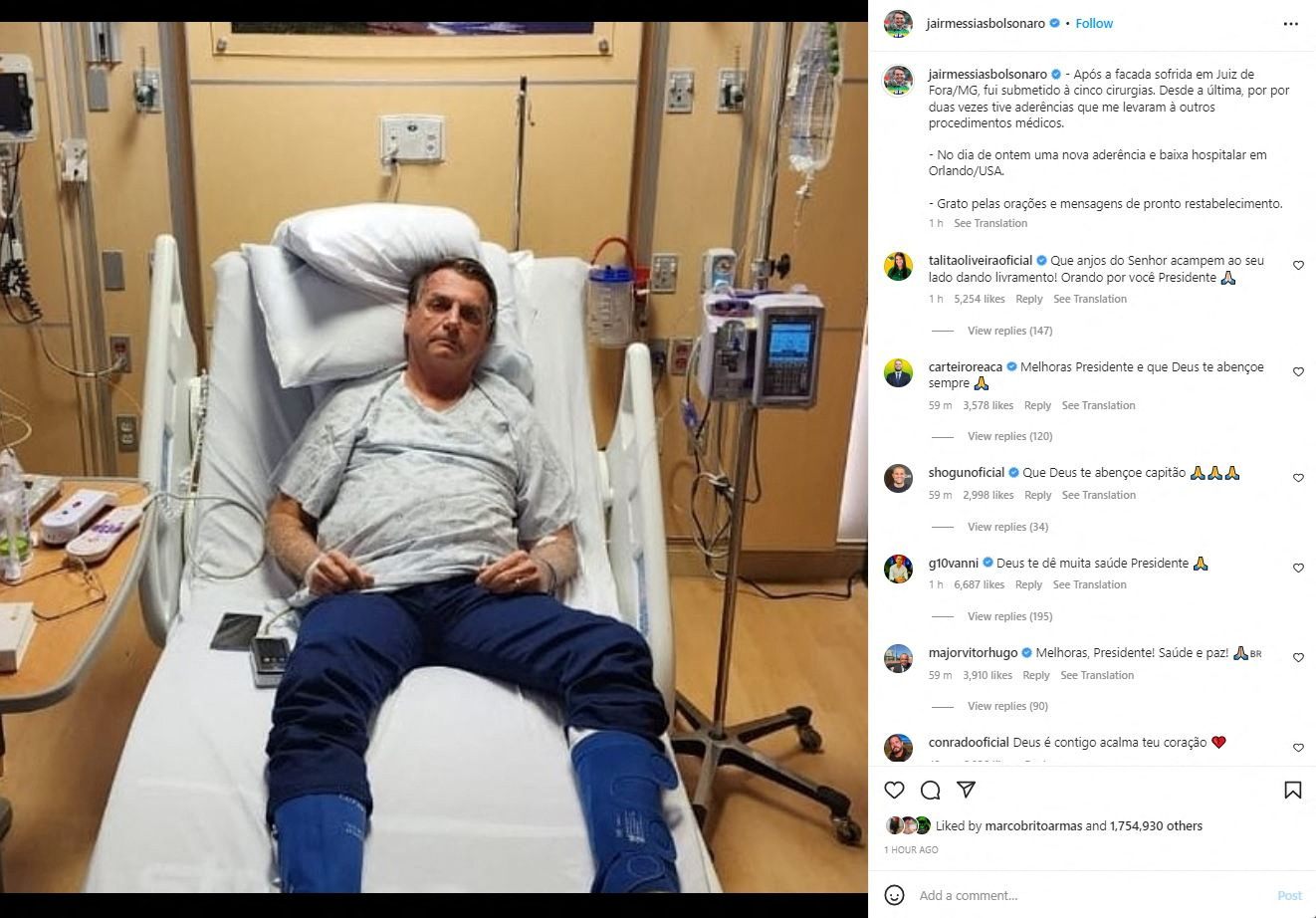
Brazil’s former President Jair Bolsonaro on Tuesday was released from a hospital near Orlando, Florida, where he had been admitted on Monday, a source close to the Bolsonaro family said.

Earlier, O Globo columnist Lauro Jardim had reported on the news.

Bolsonaro, who flew to Florida 48 hours before his term ended, was admitted to the hospital a day after hundreds of his supporters rampaged through key government buildings in the capital Brasilia.

Bolsonaro was treated for intestinal pains related to a stabbing he suffered during the 2018 election campaign. His doctor said it was not serious.

Related Galleries:

A screen grab of an image posted on Instagram shows Brazil’s former President Jair Bolsonaro on a hospital bed at an unspecified location in this picture released January 9, 2023 and obtained from social media. Jair Bolsonaro/Instagram/via REUTERS

View of Advent Celebration Hospital, where former Brazilian President Jair Bolsonaro was admitted for an illness, according to a family member, in Orlando, Florida, U.S. January 9, 2023. REUTERS/Joe Skipper
Categories
Audio Sources - Full Text Articles

ABL Space Systems“ rocket fails on maiden launch

2023-01-11T00:31:42Z

Space startup ABL Space Systems’ maiden RS1 rocket mission failed after it was launched on Tuesday from the Pacific Spaceport Center in Alaska, after delays late last year.

“After liftoff, RS1 experienced an anomaly and shut down prematurely,” ABL said in a tweet.

The startup’s previous attempt at launch was on Monday, but pushed the launch to Tuesday due to high winds. ABL faced a series of delays due to weather and technical reasons late last year.

ABL’s flagship RS1 rocket, standing 88 feet or nearly 12 storeys tall, is designed to lift 2,976 pounds (1,350kg) of small satellites into orbit, and is at the center of the startup’s aim to compete with a growing field of small rocket builders.

ABL, founded in 2017, raised $200 million in fresh capital in an October 2021 funding round that valued the startup at $2.4 billion at the time, the company said. The funding was used to scale development of the RS1 rocket.

The startup, in which Lockheed Martin Corp (LMT.N) is an investor, is racing to make its first trek to orbit and kick off a business tailored for small satellites, such as low-Earth orbiting internet satellite constellations.

Amazon.com Inc (AMZN.O) chose Boeing-Lockheed Martin (BA.N) joint venture United Launch Alliance to replace ABL’s contract for its first two prototype satellite launches early this year after delays over RS1 development.

The ecommerce firm’s contract for at least two launches with the startup is still valid, although Amazon is unsure which satellites will use those rockets.

Lockheed Martin inked a block-buy contract with ABL in 2021 for up to 58 rocket launches, a deal potentially worth hundreds of millions of dollars.

The California-based company looks to charge customers about $12 million per launch of its rocket or nearly $9,000 per kilogram for launch into low-Earth orbit.

While companies such as SpaceX and Rocket Lab USA Inc (RKLB.O) operate reusable rockets and others are developing similar launch vehicles, ABL aims to rapidly produce its low-cost RS1 rocket that cannot be used more than once.

WP Radio
WP Radio
OFFLINE LIVE