Categories
Audio Sources - Full Text Articles

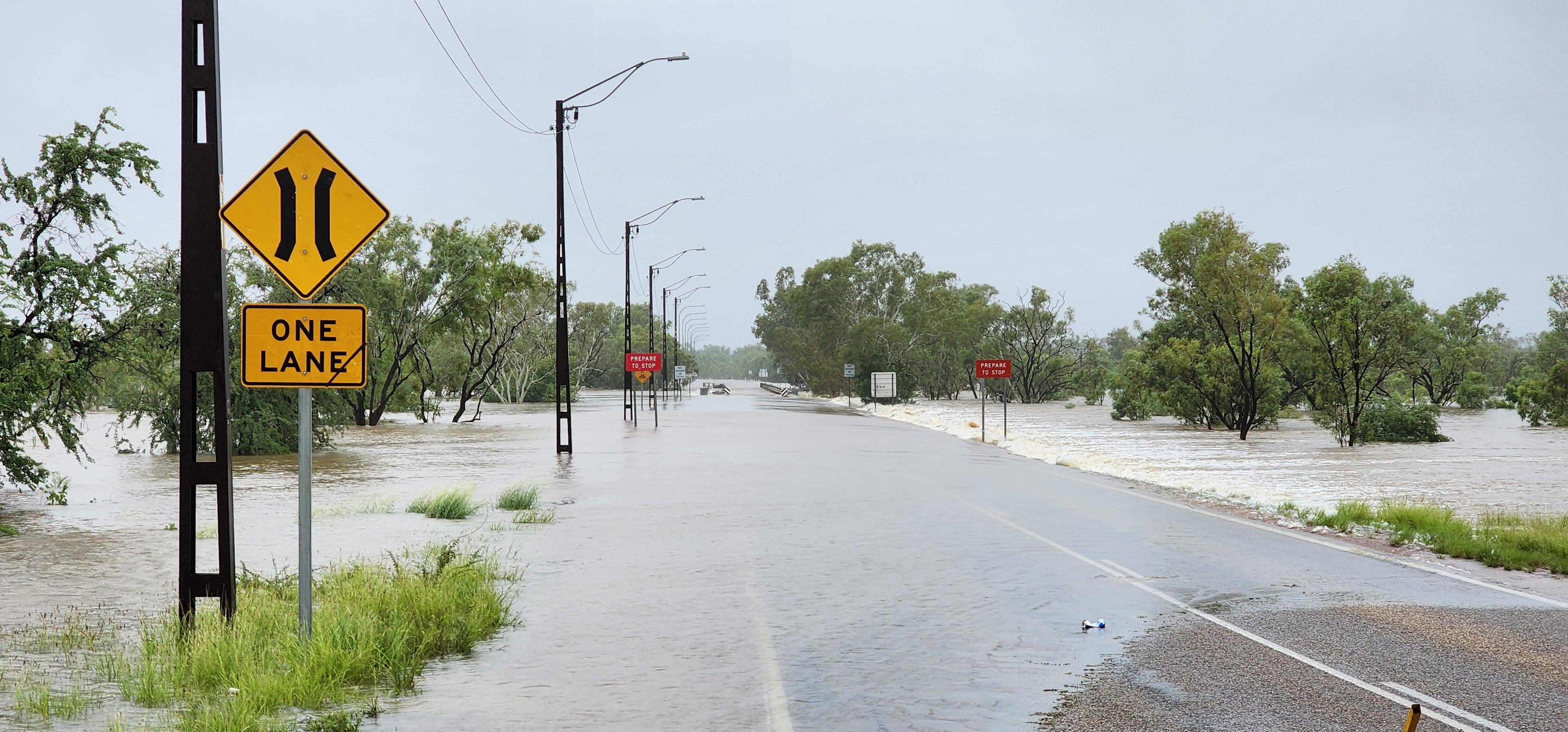
“Once in a century“ flood cuts off communities in northwestern Australia

2023-01-08T12:30:51Z

Military helicopters airlifted hundreds of people from communities cut off by “once in a century” floods in Australia’s northwest, an official leading relief efforts said on Sunday, noting water covered some places “as far as the eye could see”.

The crisis in the Kimberley – an sparsely populated area in Western Australia state about the size of California – was sparked last week by severe weather system Ellie, a former tropical cyclone that brought heavy rain.

“The water is everywhere,” Western Australia Emergency Services Minister Stephen Dawson told reporters in Perth.

“People in the Kimberley are experiencing a one-in-100-year flood event, the worst flooding Western Australia has had in its history.”

In some parts, he said flood waters stretched for 50 kilometres with inundation “as far as the eye can see”.

The emergency comes after frequent flooding in Australia’s east over the last two years due to a multi-year La Nina weather event.

Some eastern regions have endured four major flood crises since last year caused by the La Nina system, which is typically associated with increased rainfall.

The town of Fitzroy Crossing, a community of around 1,300 people, has been among the worst hit, with supplies having to be airlifted in due to flooded roads.

Across the Kimberley, where around 50% of residents are Aboriginal, 233 people had so far been evacuated due to flooding, authorities said.

The Bureau of Meteorology said on Sunday that rain had eased as the storm shifted eastwards to the Northern Territory, but warned that “record-breaking major flooding” continued in the Kimberley.

“Many roads are impassable and many communities are now isolated,” the forecaster said on its website.

The Fitzroy River hit 15.81 metres (52 feet) at Fitzroy Crossing on Wednesday, breaking its 2002 record of 13.95 metres, a bureau spokesperson said.

State emergency authorities have warned residents in other small communities of rising water in the region, which includes the resort town of Broome, about 1,240 miles (2,000 km) north of Perth.

While the extent of flood damage was difficult to assess, authorities expected the recovery effort to take months.

Prime Minister Anthony Albanese on Saturday described the flooding as “devastating” and pledged federal assistance.

Australian Defence Force (ADF) aircraft were being used to assist flood-hit communities, and Chinook helicopters were en-route to help relocate residents, according to authorities on Saturday.

Five ADF helicopters will start operations in the Kimberley by Thursday, a defence spokesperson said.

Related Galleries:

A view of flooding in Fitzroy Crossing, Australia January 3, 2023 in this picture obtained from social media. Callum Lamond/via REUTERS

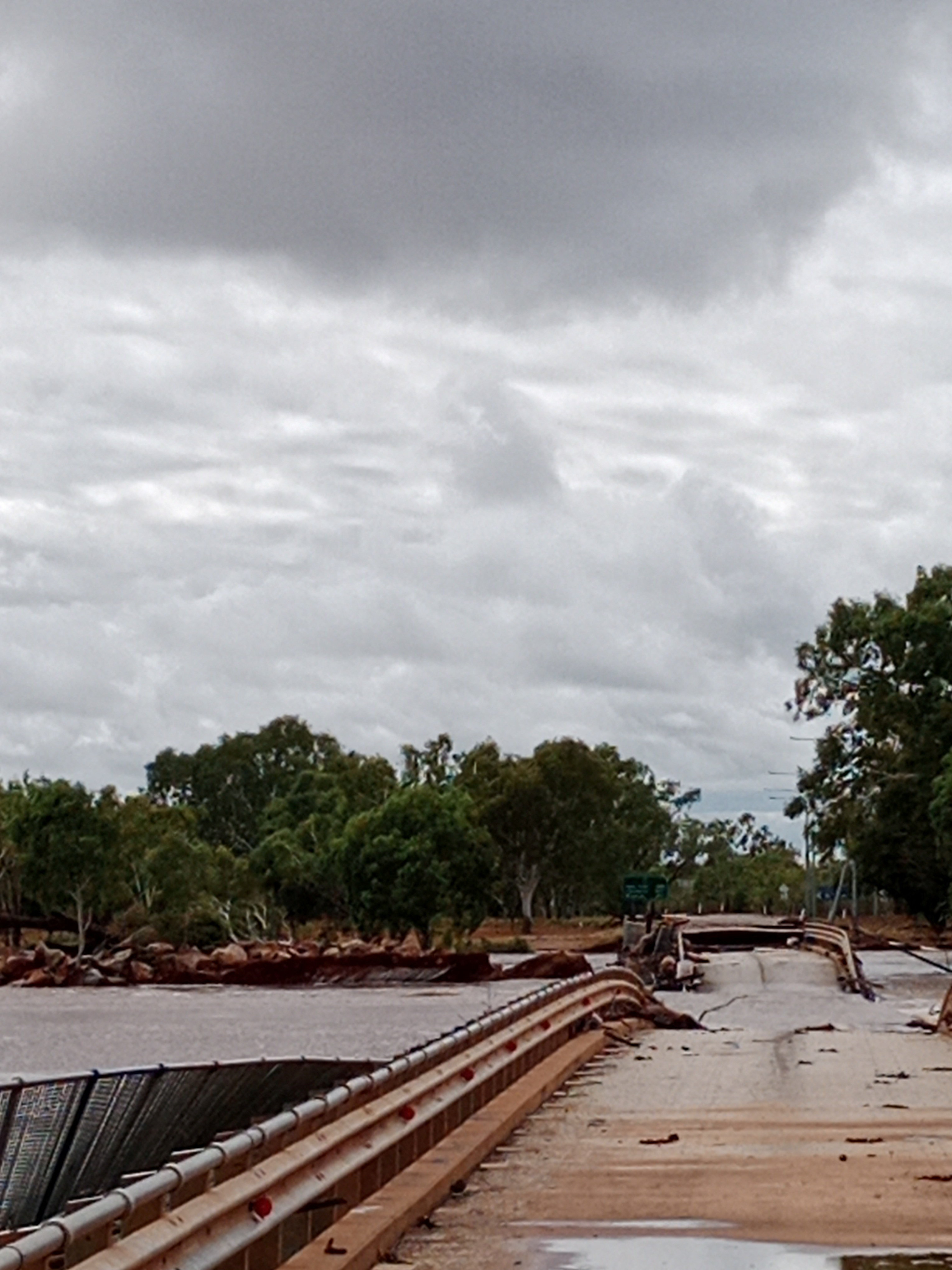
A view shows damaged Fitzroy Crossing bridge due to heavy flooding, in Fitzroy crossing, Australia January 7, 2023. Joe Ross/via REUTERS
Categories
Audio Sources - Full Text Articles

NATO declines Serbia“s request to deploy its troops in Kosovo

2023-01-08T12:27:15Z

Serbia’s President Aleksandar Vucic speaks during a joint news conference with former Czech Prime Minister Andrej Babis and Hungary’s President Katalin Novak, at the Hungarian-Serbian border barrier near Kelebia, Hungary, December 15, 2022. REUTERS/Marton Monus/File Photo

NATO’s mission in Kosovo, KFOR, has declined a Serbian government request to send up to 1,000 police and army personnel to Kosovo following a spate of clashes between Serbs and Kosovo authorities, President Aleksandar Vucic said on Sunday.

Serbia’s former province of Kosovo declared independence in 2008 following the 1998-1999 war during which NATO bombed rump-Yugoslavia comprising Serbia and Montenegro to protect Albanian-majority Kosovo.

“They (KFOR) replied they consider that there is no need for the return of the Serbian army to Kosovo … citing the United Nations resolution approving their mandate in Kosovo,” Serbia’s Vucic said in an interview with the private Pink television.

Last month, for the first time since the end of the war, Serbia requested to deploy troops in Kosovo during a spate of clashes between Kosovo authorities and Serbs in the northern region where they constitute a majority.

The U. N. Security Council resolution states that Serbia may be allowed, if approved by the KFOR, to station its personnel at border crossings, Orthodox Christian religious sites and areas with Serb majorities.

Vucic criticised the KFOR for informing Serbia of its decision on the eve of the Christian Orthodox Christmas, after Kosovo police arrested an off-duty soldier suspected of shooting and wounding two young Serbs near the town of Shterpce.

Kosovo authorities condemned the incident.

Police said both victims, aged 11 and 21, were taken to hospital and their injuries were not life threatening.

Serbian media reported that another young man was allegedly attacked and beaten up by a group of Albanians early on Saturday as he was returning from mass at church.

Serbian officials labelled the incidents as “terrorist acts”, saying they demonstrated that Serbs were unwanted in Kosovo and announced protests in Shterpce on Sunday.

International organisations condemned the attacks, expected to deepen mistrust between majority ethnic Albanians and around 100,000 ethnic Serbs that live in Kosovo. Half of them live in the north and most refuse to recognise Kosovo’s independence.

The other half live in other parts of the country, such as Shterpce, and most recognise the Pristina government and take part in political life.

Categories
Audio Sources - Full Text Articles

Prince Harry’s Bitter Feud With His Older Brother William Has Centuries of History

Ahead of the Jan. 10 release of his debut memoir Spare, Prince Harry has been opening up about how he’s grown apart from his father, King Charles III, and his brother William, the Prince of Wales and heir to the throne.

The tensions in the family boiled over in public when, in January 2020, Harry announced that he was taking a step back from his royal duties because of what he saw as a lack of support from the palace staff over racist tabloid coverage of his wife, the American actor Meghan Markle.

[time-brightcove not-tgx=”true”]

In a copy of Spare obtained by the Guardian, he described Prince William pushing him to the ground, resulting in scrapes and bruises on his back, during a fight about Markle, whom William allegedly called “abrasive.” Harry also says in the book that he begged Charles not to marry Camilla, who is now the Queen Consort, and recalls that when his mother Princess Diana died 25 years ago, his father was standoffish and didn’t hug him. Leaked passages from Spare suggest tensions go back to birth—an underlying resentment of being “the spare heir”, while his brother is next in line to the throne.

Alexander Larman, author of The Crown in Crisis: Countdown to the Abdication and The Windsors at War: The King, His Brother and a Family Divided, argues that the two brothers tended to butt heads even before Harry left for America, stating, “Both of them are strong personalities, committed to a variety of causes and initiatives, and inevitably there have been clashes and disagreements along the way.”

There’s also a long history of such feuds. As Larman puts it, “Think of James II, who began as Duke of York and then made a spectacular mess of being king [in the 1680s] after [his brother] Charles II died. Or Richard III, who, if Shakespeare is to be believed, brought about the deaths of both his brothers Edward IV and the Duke of Clarence to ascend the throne [in the 1480s], only to be forced off it by Henry VII. Nobody’s thinking that Harry has had anything quite so dramatic in mind… yet, anyway.”

In a new 60 Minutes interview airing in full on Jan. 8, Harry claims that one of the reasons he’s going public about the drama is because the royal family’s relationship to the British press has made it impossible for him to have the private conversations necessary to mend his relationship with his father and his brother.

“Every single time I’ve tried to do it privately, there have been briefings and leakings and planting of stories against me and my wife,” Harry tells Anderson Cooper.

In a separate interview on U.K. broadcaster iTV, which airs a few hours before 60 Minutes, Harry argues that his father and his brother do not want to make amends. “I would like to get my father back, I would like to have my brother back,” he says. “They’ve shown absolutely no willingness to reconcile.”

In a six-part Netflix docu-series Harry & Meghan that debuted in December, Harry revealed that William screamed at him during a family meeting with his father and his grandmother, the late Queen Elizabeth II, shortly after Harry announced his desire to give up royal duties. Harry also claimed that he didn’t consent to a joint statement that the royal family put out in the brothers’ name to debunk rumors that William was bullying Harry. He claimed that the royal family’s staffers were willing to “lie to protect my brother” and his alleged misdeeds, but “for three years they were never willing to tell the truth to protect us,” meaning Meghan and himself.

The feud between the brothers is also about more than just their relationship with one another.

“The traditional ascription to the ill-will between William and Harry is that neither of their wives like one another and that has driven a wedge between them, coupled with a sense on William’s part that his younger brother has behaved irresponsibly and selfishly in abandoning any sense of duty by staging his quasi-abdication,” says Larman.

Harry has not been totally cut off from his father and brother. Shortly after Oprah Winfrey interviewed Harry and Markle in March 2021, journalist Gayle King—a friend of Winfrey and Markle—told People that Harry talked to his father and brother after the interview, but that the conversation was “not productive.” Harry had told Oprah that his father stopped taking his calls at one point.

It remains to be seen whether the family will come together in a public show of unity before King Charles III’s coronation ceremony on May 6. Larman notes that Harry has chosen to air his family’s dirty laundry, arguing, “Today, we might not see royal brothers meeting on the field of battle, winner taking all, but instead we find them conducting their warfare via that rather more insidious weapon—the media—and hoping that the court of public opinion will favor one side over the other in a hopefully definitive way.”

Categories
Audio Sources - Full Text Articles

BMW latest concept car looks straight out of a cartoon

BMW iVisionDee changing colors (GIF V2)The i Vision Dee contains BMW’s E INK technology that can change the color of the car.

Courtesy of BMW.

  • BMW unveiled its latest version of its concept car called the i Vision Dee at the 2023 Consumer Electronics Show.
  • It’s full of the kind of wild features that concept cars are known for, and even some that are cartoon-like.
  • There’s color-changing E-Ink panels, facial expressions using the headlights and grill, and the car can even welcome you with an avatar in the window when you approach.
BMW said that the i Vision Dee is a futuristic interpretation of its classic sporty sedan that’s designed for simplicity and functionality. Adrian van Hooydonk, BMW’s design director, said that the i Vision Dee can be one’s “ultimate companion through real and virtual worlds.”BMW i Vision Dee at the 2023 CESA prototype of the BMW i Vision Dee displayed at the 2023 Consumer Electronics Show in Las Vegas.

Courtesy of BMW.

Source: BMW

BMW says the word “Dee” is short for Digital Emotional Experience and reflects its goal to foster a stronger emotional connection between the car and its owner.BMW i Vision Dee thats purple and yellow at the 2023 CESA demonstration of the i Vision Dee’s color changing feature at the 2023 Consumer Electronics Show in Las Vegas.

Courtesy of BMW.

Source: BMW

The concept car includes BMW’s Head-Up Display which projects digital information across its windshield once activated.bmw i vision dee windshieldA rendered simulation of an avatar driving the i Vision Dee.

Courtesy of BMW.

Source: BMW

The Head-Up display is controlled using the BMW Mixed Reality Slider, the main operating system of the car. Drivers can select how much information they want displayed by touching the sensors on the cockpit panel.BMW i Vision Dee slider gifBy sliding your finger across the sensor panel, drivers can curate what information they want to see projected onto the windshield.

Courtesy of BMW.

Source: BMW

Using the controls on the panel, drivers can select up to five windshield displays, from driving-related information all the way to graphics that cover the car’s surroundings to “gradually fade out reality.” BMW did not say whether it’ll work while the car is in motion.BMW i Vision Dee immersive realityBy adjusting the car’s sensor panels, drivers can choose to display a mixed reality simulation through the windows.

Courtesy of BMW.

Source: BMW

Reminiscent of Pixar’s “Cars,” the vehicle’s headlights and kidney grille can express nine different facial expressions — from joy to awe — using various combinations of light, graphics, and sounds.BMW i Vision Dee headlightsBMW i Vision Dee headlights

Courtesy of BMW.

Source: BMW

The i Vision Dee can also talk to the driver and will automatically open its doors as the driver gets closer. The car’s many motion sensors make these functions possible.BMW i Vision Dee car door opens by itselfThe i Vision Dee can automatically open doors and speak to welcome the driver.

Courtesy of BMW.

Source: BMW

The driver can even choose a digital avatar that will be projected on the car’s side windows as the vehicle welcomes one for a ride.BMW i Vision Dee avatarThe i Vision Dee can display an avatar that looks like the driver as part of its greetings.

Courtesy of BMW.

Source: BMW

Drivers can customize the car even further thanks to BMW’s latest version of its E Ink technology. Built-in e-ink panels can display and mix-and-match up to 32 colors across the car’s body and wheels.BMW iVisionDee changing colors (GIF V2)The i Vision Dee contains BMW’s E INK technology that can change the color of the car.

Courtesy of BMW.

Source: BMW

BMW’s new car is still in its research and development stages. Engineers involved in the project say that they are making changes to the e-ink panels so they can be protected by external factors like car washes.BMW i Vision Dee e-inkWheels of the i Vision Dee with e-paper panels that can change colors.

Courtesy of BMW.

Source: The Verge

BMW said that it expects to begin production of its i Vision Dee by early 2025 as part of its Neue Klasse line. But as with any concept car, don’t expect all the features you see here to ship if a production car is released.BMW i Vision Dee collageA collage of some of the ways the i Vision Dee can change colors.

Courtesy of BMW.

Source: BMW

Read the original article on Business Insider
Categories
Audio Sources - Full Text Articles

Hundreds of Tesla owners in China protested after missing out on big price cuts, report says

Protest at a Tesla showroom in Chengdu.Protest at a Tesla showroom in Chengdu.

Reuters

  • Tesla owners in China gathered at delivery hubs and outlets to protest price cuts, per Reuters.
  • Videos appear to show people shouting and carrying makeshift at Tesla stores.
  • The EV maker has cut prices in China for the second time in three months, with some missing out.

Tesla is facing a backlash in China from hundreds of owners who protested outside delivery centres and showrooms after missing out on big price cuts, a report said.

Reuters reported that about 200 people who recently bought Model Y and Model 3 cars gathered outside a Tesla delivery centre in Shanghai on Saturday, demanding rebates because they now cost less than what they paid. 

Tesla cut prices in China for the second time in three months on Friday as it struggles to make sales. Prices are between 13% and 24% lower than in September. A Tesla can be up to 43% cheaper to buy in China than the US, per Bloomberg.

Elon Musk’s company also cut prices in Japan, South Korea and Australia in a move intended to stoke demand for vehicles made at Tesla’s largest factory, a source told Reuters

A Reuters video also showed protests at Tesla’s Chengdu store. The news agency verified the location of the store but not the date of the protests.

Another video posted Saturday appeared to show further protests at a Tesla outlet in Xiaoshan, with several people seen shouting and one holding up a placard. Insider was unable to confirm the location of the store.

EV makers have been forced into sudden price changes in recent months as big car makers raise their game and the global economy sours. 

Early last year Tesla rival Rivian raised prices in response to rising supply chain costs, even for customers who had already placed orders, but eventually backtracked.

Ford also raised the price of its F-150 Lightning electric truck by up to $8,500 in August, blaming “significant material cost increases.” 

But Tesla’s move to cut prices in China more reflects depressed demand due to years of COVID-19 lockdowns, as well as Tesla’s floundering share price and its big bet on a Shanghai factory.

Tesla did not immediately respond to a request for comment from Insider.

Read the original article on Business Insider
Categories
Audio Sources - Full Text Articles

Israel takes Palestinian minister“s VIP pass in world court flap

2023-01-08T12:10:35Z

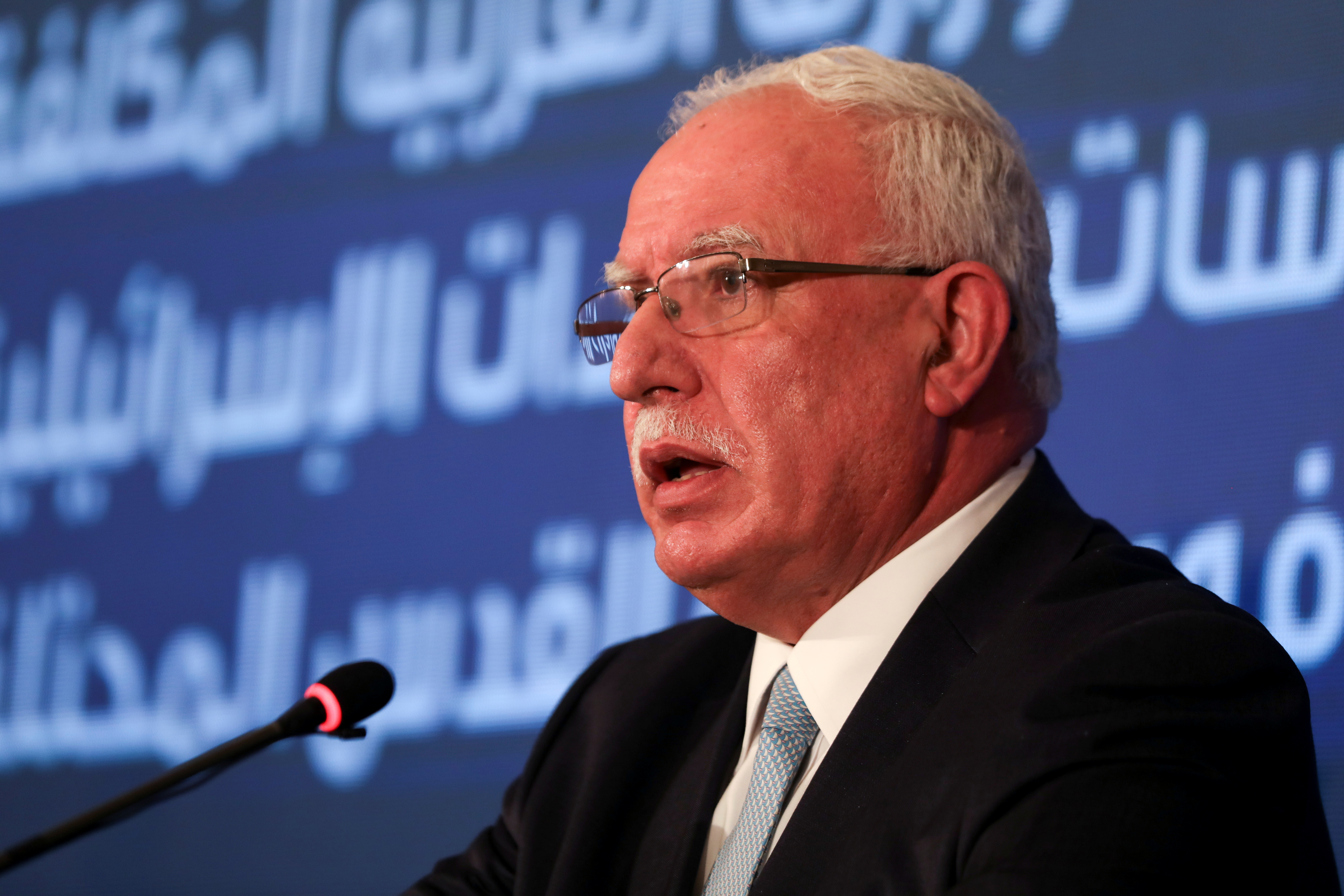
Palestinian Foreign Minister Riyad al-Maliki speaks during a news conference with Arab League Secretary-General Ahmed Aboul Gheit and Jordanian Foreign Minister Ayman Safadi, following the Arab Ministerial Committee meeting in Amman, Jordan April 21, 2022. REUTERS/Alaa Al Sukhni

Israel suspended on Sunday a VIP pass easing the Palestinian foreign minister’s travel in and around the occupied West Bank, among retaliatory measures for a Palestinian bid to involve the International Court of Justice (ICJ) in their decades-old conflict.

Entering the Israeli-occupied West Bank from Jordan, Foreign Minister Riyad al-Maliki was detained for 30 minutes by border guards who confiscated his “VIP” travel card, his office said.

A spokesperson for Israel’s Defence Ministry, which administers the West Bank, confirmed the move, calling it part of the implementation of a government decision on Friday.

In that decision, Israel announced retaliatory measures after the U.N. General Assembly, responding to an appeal by the Palestinians, asked the ICJ for an opinion on the legal consequences of Israel’s occupation of Palestinian territories.

Among the five measures listed was “revocation of benefits for VIPs leading the legal-diplomatic war against Israel”.

On Saturday, Israel’s Defence Ministry said the VIP cards of three other senior Palestinian officials had been revoked in response to them visiting a member of Israel’s Arab minority who had been imprisoned for killing an Israeli soldier.

Issued under interim accords with Israel from the 1990s, the cards ease travel across the Israeli-controlled West Bank border with Jordan and from Palestinian-ruled territory into Israel.

“The foreign minister will continue his job and his diplomatic activities with or without the card,” Ahmed Al-Deek, an aide to Maliki, told Reuters.

Israel had confiscated Maliki’s VIP card in 2021 after he returned from a meeting of the International Criminal Court. It was not immediately clear when and why the card had been restored.

Categories
Audio Sources - Full Text Articles

Moscow ends self-proclaimed ceasefire, vows to press ahead in Ukraine

2023-01-08T12:12:09Z

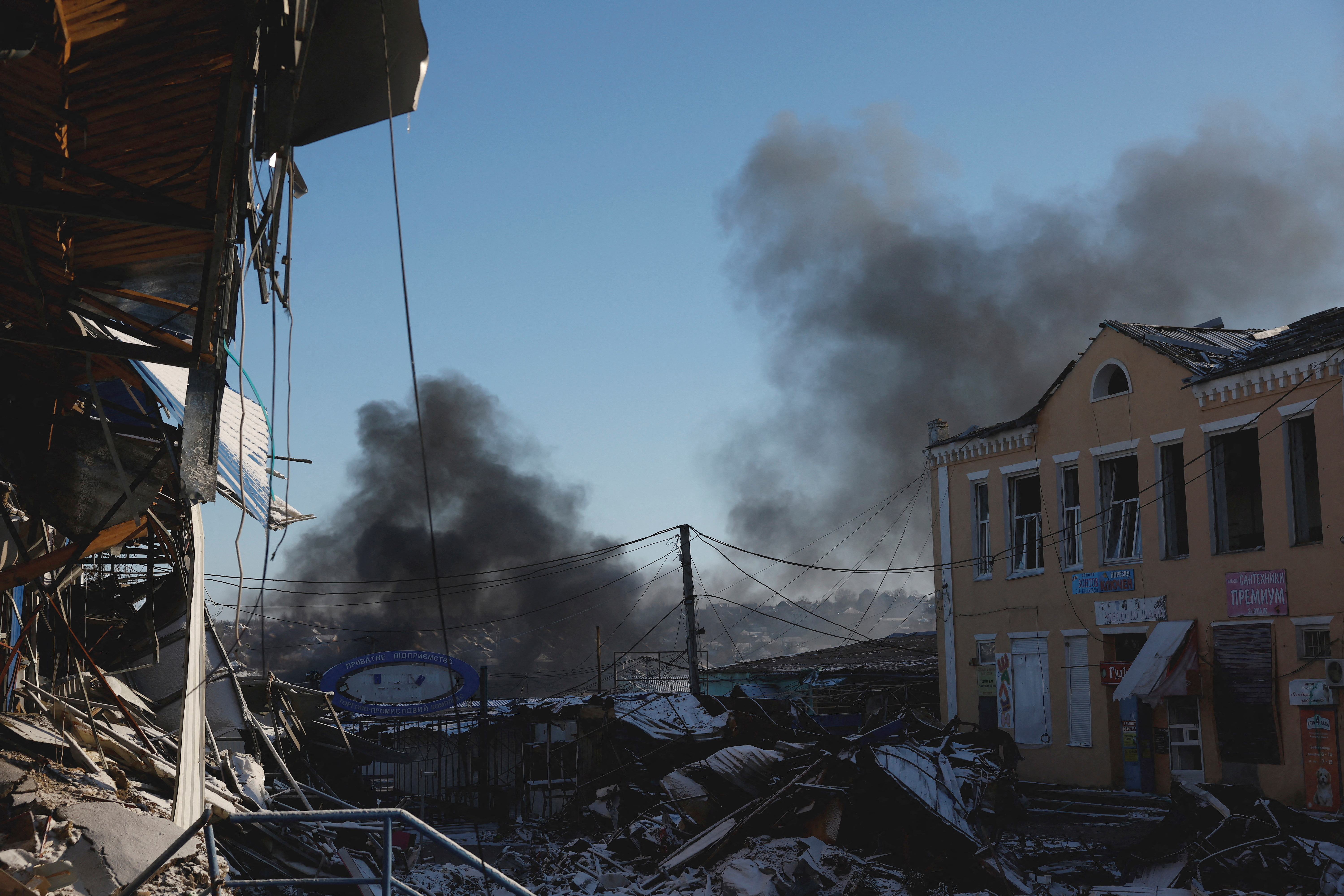
Plumes of smoke rise from a Russian strike during a 36-hour ceasefire over Orthodox Christmas declared by Russian President Vladimir Putin, as Russia’s attack on Ukraine continues, from the frontline Donbas city of Bakhmut, Ukraine, January 7, 2023. REUTERS/Clodagh Kilcoyne/File Photo

Russia’s bombing of regions in eastern Ukraine killed at least two people overnight, local officials said on Sunday, after Moscow ended a self-declared Christmas ceasefire and vowed to push on with combat until it reaches a victory over its neighbour.

President Vladimir Putin ordered a 36-hour ceasefire along the line of contact from Friday at midday to observe Russia and Ukraine’s Orthodox Christmas, which fell on Saturday.

Ukraine rejected the truce, and the general staff of Ukraine’s armed forces said Russian troops had shelled dozens of positions and settlements along the front line on Saturday.

A 50-year-old man died in the northeastern region of Kharkiv as a result of Russia’s shelling overnight, Oleh Synehubov, the governor of the region, said on the Telegram messaging app. The news came minutes after midnight in Moscow. One person was killed in another attack overnight on Soledar in the eastern Donetsk region, local officials said.

Reuters could not immediately verify this.

Most Ukrainian Orthodox Christians have traditionally celebrated Christmas on Jan. 7, as have Orthodox Christians in Russia. But this year, the Orthodox Church of Ukraine, the country’s largest, allowed also for a Dec. 25 celebration. Still, many observed the holiday on Saturday, flocking into churches and cathedrals.

The Kremlin said Moscow will press ahead with what it calls a “special military operation” in Ukraine, an invasion that it launched on Feb. 24 and that Kyiv and its Western allies call an unprovoked aggression to grab land.

“The tasks set by the president (Putin) for the special military operation will still be fulfilled,” the Russian state TASS agency quoted Putin’s first deputy chief of staff, Sergei Kiriyenko, as saying.

“And there definitely will be a victory.”

The war has killed tens of thousands and displaced millions of Ukrainians.

Ukrainian officials reported blasts in regions that make up the broader Donbas region – the war’s frontline where fighting has been raging for months.

Pavlo Kyrylenko, governor of Donetsk, said that there were nine missile strikes on the region overnight, including seven on the battered city of Kramatorsk.

Blasts were also heard in the city of Zaporizhzhia, the administrative centre of the Zaporizhzhia region, a local official said, without giving any immediate report on damage or casualties.

Shellfire echoed on Saturday around the near-deserted streets of Bakhmut, an eastern city that is currently the focus of the most intense fighting.

Serhiy Haidai, governor of Luhansk in eastern Ukraine, said on TV there was heavy fighting in the region and Russian forces had deployed their most combat-ready units and heavy equipment to the city of Kriminna that they occupy, which he said meant the Russians were slowly retreating in the region.

With nighttime temperatures dipping to minus 15-17 Celsius degrees (5 to 1 Fahrenheit), fighting activity would soon increase as hard frosts mean it is easier to move heavy equipment, Haidai added.

Ukraine’s President Volodymyr Zelenskiy said on Wednesday that Russia is planning a major new offensive. The Pentagon said on Friday that Putin’s aim of seizing Ukrainian territory has not changed, even if his military continues to suffer blows.

There has been growing concerns that Belarus – a staunch backer of Moscow – could be used as a staging post to attack Ukraine from the north after increasing military activity in the country and fresh transfer of Russian troops there.

Unofficial Telegram channels monitoring military activity in Belarus reported late on Saturday that some 1,400-1,600 Russian troops arrived from Russia into the northeastern city of Vitebsk in Belarus over the past two days.

Reuters was not able to independently verify the information.

Categories
Audio Sources - Full Text Articles

South Africa“s Eskom says police investigating alleged poisoning of CEO

2023-01-08T12:17:17Z

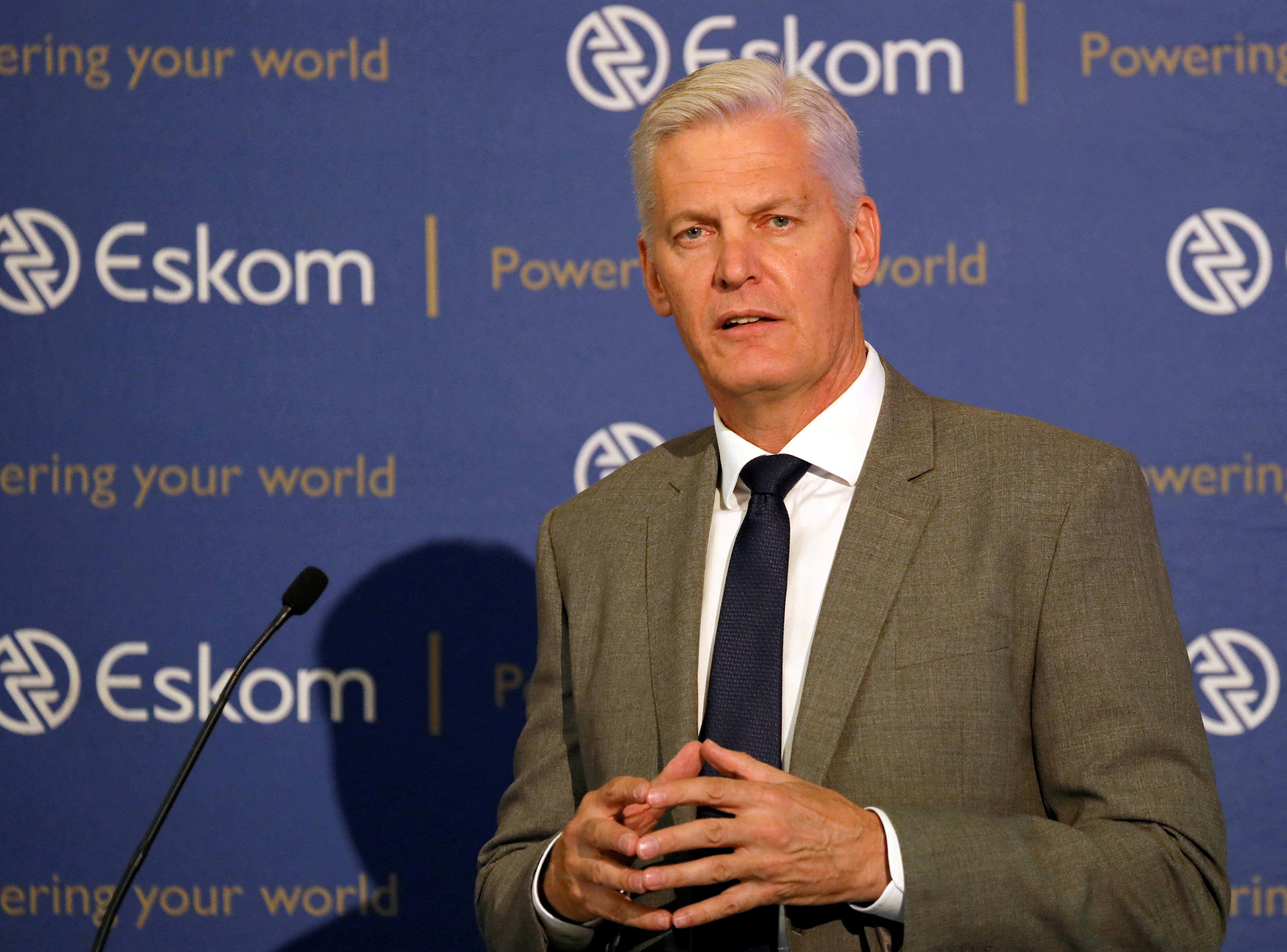
Andre de Ruyter, Group Chief Executive of state-owned power utility Eskom speaks during a media briefing in Johannesburg, South Africa, January 31, 2020. REUTERS/Sumaya Hisham//File Photo

South African power utility Eskom on Sunday said police were investigating whether an attempt was made to poison its outgoing Chief Executive Officer Andre de Ruyter.

Faced with political pressure, De Ruyter resigned on Dec. 14 after failing to solve a crisis in the company that has led to record levels of power cuts in Africa’s most industrialised economy.

After officially taking office in January 2020, De Ruyter led a company-wide clampdown on corruption and organised criminal behaviour, including sabotage of infrastructure, at Eskom plants. His last day in office will be March 31.

“Eskom cannot comment further on the poisoning incident involving the group chief executive, which occurred during December 2022, as the matter is subject to police investigation,” the utility’s head of security said in a statement.

The South African police services did not immediately respond to Reuters’ request for comment. Eskom’s board chairman Mpho Makwana was also unavailable.

The alleged poisoning of De Ruyter was first reported by specialist energy publication EE Business Intelligence on Saturday.

Categories
Audio Sources - Full Text Articles

German police detain Iranian suspected of planning “Islamist-motivated“ attack

2023-01-08T12:06:18Z

German police have taken into custody a 32-year-old Iranian citizen suspected of having procured deadly poisons cyanide and ricin to commit an “Islamist-motivated” attack, authorities in western Germany said on Sunday.

The residence of the suspect in the city of Castrop-Rauxel was searched as part of the investigation, according to a joint press release from the Duesseldorf public prosecutor’s office and police in the cities of Recklinghausen and Muenster.

“The suspect is suspected of having prepared a serious act of violence endangering the state by allegedly procuring cyanide and ricin to commit an Islamist-motivated attack,” the statement said.

This, police said, carries a prison sentence of between 6 months to 10 years.

Castrop-Rauxel is located in North Rhine-Westphalia, Germany’s most populous state, whose Interior Minister Herbert Reul said: “We had a serious tip-off that prompted the police to intervene during the night. The authorities are now investigating at full speed.”

Police said a second individual was detained as part of the searches, adding a decision on whether to issue an official arrest warrant would be made at a later date as the investigation is continuing.

A spokesperson for the public prosecutor’s office confirmed the person to be the suspect’s brother.

Ricin, found naturally in castor beans, can cause death within 36 to 72 hours from exposure to an amount as small as a pinhead. No known antidote exists.

According to German domestic intelligence services, the number of members or supporters of Islamist causes has shrunk by 1.5% to 28,290 individuals in 2021, citing the “military breakup” of the militant Islamic State group.

On Dec. 19, 2016, Anis Amri, a failed Tunisian asylum seeker with Islamist links, drove a truck into a crowded western Berlin Christmas market, killing 11 people and injuring dozens.

News about Sunday’s searches also comes a month after German authorities arrested 25 members and supporters of a far-right group that the prosecutor’s office said was preparing a violent overthrow of the state.

Related Galleries:

TV cameras are set up in front of a building where German police have taken a 32-year-old Iranian citizen into custody, suspected of having procured deadly poisons cyanide and ricin to commit an “Islamist-motivated” attack, in Castrop-Rauxel, Germany, January 8, 2023. REUTERS/Stephane Nitschke

A TV camera is set up in front of a building where German police have taken a 32-year-old Iranian citizen into custody, suspected of having procured deadly poisons cyanide and ricin to commit an “Islamist-motivated” attack, in Castrop-Rauxel, Germany, January 8, 2023. REUTERS/Stephane Nitschke

A cyclist passes a building where German police have taken a 32-year-old Iranian citizen into custody, suspected of having procured deadly poisons cyanide and ricin to commit an “Islamist-motivated” attack, in Castrop-Rauxel, Germany, January 8, 2023. REUTERS/Stephane Nitschke
Categories
Audio Sources - Full Text Articles

It’s Easy to Write a Memoir About War — but Hard to Write an Anti-War Memoir

War is hell, we hear that all the time. If the cliché is true, another one is too: Depictions of war’s brutality can entice people to seek it out.

The 9/11 wars have yielded a bumper crop of books and films about U.S. soldiers that often have the effect of glorifying combat. Some of these works are blunt odes to violence and chauvinism, such as “American Sniper,” the memoir by Navy SEAL Chris Kyle that was turned into a blockbuster film by Clint Eastwood. While many memoirs and movies are more honest and complex, there’s a dilemma that even the best war literature has a hard time avoiding. No matter how much a writer might emphasize the dehumanization of boot camp or the dreadfulness of killing, there’s usually enough of a heroic glint in their tales to make young Americans want to get some of the action themselves.

Lyle Jeremy Rubin deals with this conundrum in his thoughtful new memoir, published by Bold Type Books, about being a Marine in the time of the forever wars. “If there is one thing most agree on, it is that to die at war as an American is to be a hero,” he writes. “To almost die at war as an American is to be a hero. To go to war at all as an American is to be a hero. … American war is American heroism.” Anyone who might wish to write an anti-war book about soldiers in combat winds up staring into the smoking barrel of the quandary Rubin faces: How can he leave no pathway for readers to emerge from his book with a desire to get their own taste of that heroism?

Rubin chose as his title a Marine motto that would seem to promise his readers nothing but dumb machismo: “Pain Is Weakness Leaving the Body.” But the subtitle – “A Marine’s Unbecoming” – gets at the real business he undertakes, which is to subvert the traditional thrall and scope of war memoirs.

The book opens with a requisite combat scene from Afghanistan, though it’s just a few pages long. The reader must then leaf through nearly 200 pages before Rubin’s narrative settles back into Afghanistan. He charts how his slow epiphany began during a pre-deployment stint at the National Security Agency — the electronic spy agency where he saw how America could “eradicate anyone holding an earmarked SIM card” and used that power with insufficient restraint. He realizes that the wars in Iraq and Afghanistan were not innocent mistakes by a well-meaning superpower that happened to overreach. “Now I was prepared to accept the obvious – that U.S. militarism counted as a principal part of this problem,” he writes.

His book includes lengthy passages on how American militarism oppresses not just foreigners, but Americans too, and how he morphed from an eager college Republican before joining the military to a supporter of Occupy Wall Street after his service. It is, in many ways, a bildungsroman of the 9/11 generation, about his Jewish upbringing, his early political and sexual experiences, his initiation into a military culture that breaks down and reconstructs identity, and his unsuccessful efforts to remain connected to a civilian girlfriend. He is struggling, as so many young people do, to understand who he is and what he believes.

By the time he gets to Afghanistan in 2010, Rubin is already skeptical about his line of work. The Afghan war section of his memoir is less than 40 pages and is printed in a different font, creating a book within a book. It’s not so much to accentuate his front-line experiences, I think, but to separate them out, as though to tell us with a bit of distaste, “OK, the war genre requires that I provide some ‘bang bang,’ so here it is.” As combat material goes, it’s pretty mild. Rubin was a signals intelligence officer, so his exposure to bullets and bombs mostly occurred during visits to members of his unit who were on outlying bases.

Typical soldier narratives have once-innocent men and women waking up to the horror of war; picture in your mind Charlie Sheen in “Platoon.” In Rubin’s book, the horror that would gradually reveal itself is the condition and purpose of his homeland. Yet as he set off for Afghanistan, he still didn’t see everything. “I was not ready to fess up to the most wretched ramifications of my slow-going disillusionment,” he writes. “I was not yet equipped, mentally or intellectually, to see the empire, but I was becoming more sensitive to my own status as both its product and its guarantor, a crossroads fraught with conflicting excuses, self-deceptions, and escalations.”

PainIsWeakness-1

The cover of “Pain Is Weakness Leaving the Body” by Lyle Jeremy Rubin.

Photo: Courtesy of Bold Type Books

In Afghanistan, he finds that despite his new political consciousness, he is nonetheless susceptible to the brute attractions of inflicting violence on strangers. Just before going out on a patrol to hunt down insurgents, he gathers with other Marines for a chaplain-led prayer that, he writes, “includes phrases like ‘Please, Lord, allow us to track down and kill those cowardly little pricks.’” When the patrol is called off at the last minute, he is deflated: “The fact is, I want to get some like everyone else. And so I’m disappointed as fuck.”

The strength of this book is that its passages on his yearning for violence, and his embarrassment at that yearning, are not the endpoints of his exploration, as they might be in the hands of other veterans. Yes, he is soul-searching, but the soul he examines most intensely is America’s, not his own. I think you could put 100 war memoirs on a shelf and they would not contain as many references to Western intellectuals as Rubin’s 290-page book, which mentions Herbert Marcuse, Susan Sontag, Noam Chomsky, Simone Weil, Joan Didion, Dwight Macdonald, Carl Schmitt, Friedrich Hayek, Michel Foucault, Samuel Freeman, Sigmund Freud, H.L. Mencken, and Guy Debord, as well as the poets Sylvia Plath and Czesław Miłosz, among many others.

This is also a weakness, however. One of the reasons war memoirs tend not to stray from the battlefield or boot camp is that it’s easier to write a compelling narrative when you keep your readers anchored in these crazy and violent places. I’ve written about war before, perhaps too much, and one of the reasons might be that it’s relatively easy; how could I not find a way to entrap readers when there was so much gore and drama to draw upon? Rubin resists this easier path, while acknowledging that whatever approach he takes, “there is no way I can speak about my past or my politics without risking the encouragement and benefits of America’s cheap yet profitable obsession with war … to unveil the treachery of my service, I must first capitalize on it.” Yet by capitalizing as little as he can get away with, and trying to educate his readers, he is doing the literary equivalent of rowing upstream; instead of “bang bang,” he offers his readers Frantz Fanon.

Rubin’s narrative can at times feel choppy and baggy, the hallmarks of a too-indulgent editor, perhaps. But if Rubin does not produce Pulitzer-ready material on every page, he recognizes other writers who are masters of the word. One of the quotations in his book comes from James Baldwin, and though Baldwin wasn’t describing empire and war, his words fit perfectly into the final pages of Rubin’s memoir: “One of the reasons people cling to their hates so stubbornly is because they sense, once hate is gone, they will be forced to deal with pain.”

The post It’s Easy to Write a Memoir About War — but Hard to Write an Anti-War Memoir appeared first on The Intercept.

WP Radio
WP Radio
OFFLINE LIVE