Moscow Orthodoxy
art by Denis Zilber

 The Brooklyn Times - bklyntimes.com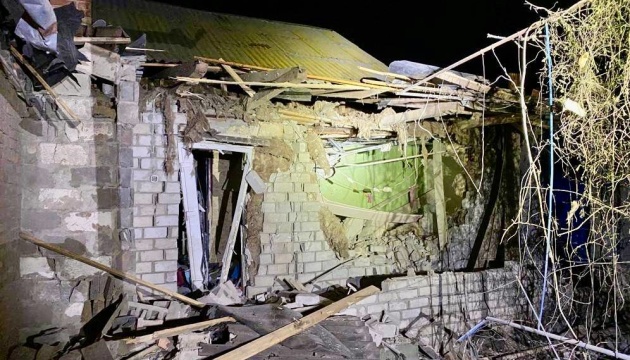
Russian troops shelled 16 settlements in Zaporizhzhia location in excess of the earlier day. Destructions have been noted.
“Above the previous day, the occupiers shelled the civilian infrastructure in the area of Huliaypole, Plavni, Kamyanske, Stepove, Pavlivka, Dorozhnianka, Shcherbaky, Poltavka, Novoandriivka, Olhivske, Malynivka, Luhivske, Tsvitkove, Zaliznychne, Mali Shcherbaky, Stepnohirsk settlements,” the Zaporizhzhia Regional Armed forces Administration posted on Telegram.
Thirteen studies ended up gained about the destruction of residences (residences) of citizens and infrastructure objects as a final result of shelling by Russian armed forces staff.
More than the past working day, the evacuation of the civilian inhabitants from the quickly occupied territories was not carried out.
As claimed, in the city of Enerhodar, Russian troops pressured about 3,000 staff of the Zaporizhzhia NPP to acquire so-named Russian passports. Threatening business people with fines and seizure of home, the Ukrainian hryvnia was taken out of circulation in the town.
ol
The post Russians hit 16 settlements in Zaporizhzhia region in past day appeared first on Ukraine Intelligence.
Sjoerd van der Wal/Getty Images
The owner of a Tesla said he used the car’s advanced driver-assistance system called Full Self-Driving to get home on Christmas after drinking.
“I admitted the other day, I was a little bit tipsy after Christmas,” the driver, whose Twitter handle is @denguyen73, said during a Twitter Spaces called “$TSLA – Musk Metldown Marathon.”
“I was probably drunk,” he added. “But with FSD, it drove me home, I mean, flawlessly.”
“Don’t do that,” another user, @eriz35, said while interrupting the driver and booing him. “Please don’t do that again.”
Tesla’s Full-Self Driving mode is beta software claiming to be a fully autonomous system, and “designed to provide more active guidance and assisted driving under your active supervision,” according to the company’s website. It works in conjunction with the Autopilot and Enhanced Autopilot systems tailored to freeways and highways.
The beta system has been the subject of a federal criminal investigation that began in 2021. The probe is considering whether Tesla’s claim to offer “full-self driving capabilities” defrauds consumers.
California lawmakers passed a bill last year that would prevent Tesla and other car makers from using the term “full self-driving” if the regulation becomes law.
Elon Musk’s company also faces another federal investigation into “phantom braking.” An eight-car pileup in the San Francisco Bay Area last month was blamed on the problem, CNN reported.
The National Highway Traffic Safety Administration said it received 758 reports from Tesla owners detailing instances in which their cars suddenly and violently braked while traveling at highway speeds. These incidents often appear to occur when drivers use Tesla’s Autopilot, which automatically accelerates, brakes, and steers on highways.
Tesla didn’t immediately respond to a request for comment by Insider.
Mario Tama/Getty Images Michael S. Schwartz/Getty Images
Podcaster Joe Rogan said that “the morons had a king” with former President Donald Trump.
Rogan commented on a Thursday episode of the Joe Rogan Experience podcast while speaking to Barstool Sports founder Dave Portnoy about politics.
The pair discussed newly sworn-in Republican Rep. George Santos, who has generated controversy after reports revealed he fabricated vast swaths of his resume while campaigning.
Rogan said there would be more candidates like Santos in the future and that politics is a “gross, compromised world.”
“I mean, who the fuck is gonna sign off on getting rid of all the special interest groups, getting rid of all the lobbyists? No one. So it’s like, that’s why it was fascinating to see a guy like Trump getting to power because he was such an outsider,” Rogan said in a clip published by Mediaite.
Portnoy agreed and said that the political establishment didn’t know how to react to Trump as he behaved in a way they did not expect.
“And the morons had a king. There’s a lot of morons,” Rogan said. “And it doesn’t matter what he’s saying, like, for them, he represents them.”
“‘He’s not perfect, but at least he’s real’ – like there’s that sort of thought process that he played with,” Rogan said while imitating a Trump supporter.
“And also people that didn’t, they didn’t feel represented by someone who was ever in charge. And now this guy is, and it’s their guy.”
Despite Rogan’s popularity in right-wing circles, he has previously been dismissive of Trump and has claimed that he has turned down multiple requests for him to appear on his podcast.
“I’m not a Trump supporter in any way, shape, or form. I’ve had the opportunity to have him on my show more than once. I’ve said no every time,” Rogan said in July. “I don’t want to help him. I’m not interested in helping him.”
Rogan has also expressed support for Trump’s biggest rival, Florida Gov. Ron DeSantis, who he said would be a “good president.”
Trump has previously spoken positively of Rogan, calling him an “interesting and popular guy” and defending him following controversy about the podcast host’s past use of the N-word.
Carolyn Cole/Getty Images
Lumber prices plunged 66% last year as the once red-hot US housing market faltered – and the commodity’s troubles will likely continue in 2023, according to strategists.
The Federal Reserve’s campaign to quell inflation fueled an unprecedented surge in mortgage rates in the past year, which weighed on homebuilding and the demand for lumber. Average 30-year mortgage rates more than doubled in 2022 to 6.42%, before extending the climb to 6.59% this week.
Westline Capital Strategies president Greg Kuta sees a “treacherous” first half for the lumber market, with the Fed widely expected to raise interest rates further. Vancouver-based commodity research firm Russ Taylor Global expects a brief rally in the new year that will eventually stall due to seasonal factors.
The price of lumber plummeted last year to $400 per 1,000 board feet, from $1,160. It has been a major underperformer among commodities, which were one of 2022’s best-performing asset classes as Russia’s invasion of Ukraine squeezed global supplies of crude oil, natural gas, metals and grain.
“At the start of 2022 we still had a demand-driven, pandemic-fueled housing boom,” Westline Capital’s Kuta told Insider in a recent interview. “Interest rates really flipped the market upside down on its head.”
“It’s not how you start, but how you finish – and the end of 2022 took lumber prices back to pre-pandemic levels,” he added.
Lumber traders – and homebuyers – appear unlikely to find much respite in 2023, either.
The Fed has signaled that it’ll carry on raising the cost of borrowing until inflation has fallen much closer to its 2% target level. The CME Group’s FedWatch tool shows that most investors expect the federal funds rate to top 5% later this year, from the current level of around 4.5%.
That is likely to drive up mortgage rates – and keep lumber prices low for much of 2023.
Russ Taylor, president of Russ Taylor Global, anticipates a brief rally that sees lumber stall at around $490.
The strategist expects traditional supply and demand dynamics to drive lumber prices in the coming year – with the pandemic-era housing boom that drove the commodity above $1,000 last year clearly having come to an end.
“Coming out of the year, we’re seeing much lower production levels as well as a slowdown in demand,” Taylor told Insider. “So at some point we’re going to get a bit of a rally.”
“But that’ll end in the second quarter – that’s always a slower period as seasonal demand slows down a little bit,” he added.
Westline’s Kuta still hopes that an eventual Fed policy pivot will support lumber prices – but acknowledged that it’s very unlikely that such a scenario happens within the next six months.
“Maybe we will start to see green shoots in the second half of 2023 if interest rates move back below 5%,” he said. “But the first half of the year is probably going to be very treacherous.”
Hal Beral /VW Pics/Universal Images Group via Getty Images
Researchers believe that ancient stone tools discovered in Brazil are the work of capuchin monkeys, not early humans, the art and design website Artnet reported, citing an academic article.
“We are confident that the early archeological sites from Brazil may not be human-derived but may belong to capuchin monkeys,” wrote archaeologist Agustín M. Agnolín and paleontologist Federico L. Agnolín in an article published in the peer-reviewed science journal The Holocene in November.
The article said that archeologists uncovered what they believe to be ancient stone tools, made from locally occurring quartz and quartzite cobbles during past excavations at Pedra Furada — a collection of over 800 archeological sites in Piauí in northeastern Brazil.
The oldest of the stone tools discovered appear to be up to 50,000 years old, according to the article, which led to some academics theorizing that it provided evidence of early human habitation of the region.
Unexpected findings from 2016, however, posed a challenge to that theory.
The findings showed that capuchin monkeys in northeastern Brazil are capable of making and using a large variety of stone tools. This raised the possibility, as was first suggested in 2017, that monkeys — not humans — could be responsible for producing the Pedra Furada discoveries.
And according to Agnolín and Agnolín, the researchers behind The Holocene article, there is now a convincing amount of evidence to suggest that the tools weren’t human-made.
“Our review of the evidence suggests that the ancient sites in Brazil do not actually belong to the first Americans, but are actually the product of monkey activity,” Federico L. Agnolín told Argentina’s National Scientific and Technical Research Council (CONICET).
The researchers compared the tools found at Pedra Furada to those that capuchin monkeys make today.
“The result was surprising: there was no difference between the supposed human tools from 50,000 years ago and those produced by monkeys today,” Agustín M. Agnolín told CONICET.
The researchers looked to past research and observations of capuchin monkey populations which show that the primates use small stones as hammers and large, flatter rocks as anvils to crack open nuts and seed pods.
“The result is that the rocks used often break, generating rock fragments that are very similar to those produced by humans when carving stone tools,” said Agustín M. Agnolín, per CONICET’S news release.
In addition to this, the researchers said in The Holocene article that there wasn’t evidence to suggest a trace of human presence, noting the lack of hearths or traces of dietary remains.
“Our study shows that the tools from Pedra Furada and other nearby sites in Brazil were nothing more than the product of capuchin monkeys breaking nuts and rocks some 50,000 years before the present,” Federico L. Agnolín told CONICET.
Koby Harati, City of David Archives.
The Pool of Siloam, which the New Testament Bible says is where Jesus healed a man who was born blind, will be fully excavated and open to the public for the “first time in modern history,” Israeli authorities said.
According to MailOnline, the public has been unable to visit most of the religiously significant site for approximately two millennia. The pool was destroyed and covered after the First Jewish–Roman War 70 years after the birth of Christ. A small section of it has been accessible for several years, however, the New York Post reported.
But, in the coming months, an excavation will completely expose the ancient pool, allowing visitors to view it as part of a tourist route, the Israel Antiquities Authority, Israel National Parks Authority, and the City of David Foundation said in a statement provided to Insider.
Located in the southern part of Jerusalem’s City of David, an important area for studying biblical archaeology, the Pool of Siloam was first constructed some 2,700 years ago, the statement said. It underwent multiple stages of development and reconstruction in its history, per Israeli authorities.
The pool originally functioned as part of Jerusalem’s ancient water system, later becoming a site of religious significance for ancient Jewish people. Religious pilgrims used it as a “mikveh,” or a ritual bath, to cleanse themselves before visiting the holy Temple, according to the statement.
It later took on a religious significance for Christians too. According to the Gospel of John, the fourth of the four New Testament narratives, a blind man gained sight after Jesus told him to wash in the Pool of Siloam.
A rendering of the Pool of Siloam during the Second Temple period.
Shalom Kveller, City of David Archives
The Pool of Siloam was destroyed and covered around 70 AD by the Romans, per the Los Angeles Times, and it was only rediscovered many years later in 2004. A water company carrying out infrastructure work for a sewage pipe accidentally discovered steps to the pool, Israeli authorities said in the statement.
An excavation commenced, and the Israeli Antiques Authority uncovered steps on three sides of the pool, the LA Times said.
Moshe Lion, Jerusalem’s mayor, described the Pool of Siloam in a statement as “a site of historic, national, and international significance.”
He added: “After many years of anticipation, we will soon merit being able to uncover this important site and make it accessible to the millions of visitors visiting Jerusalem each year.”
Quick on-the-field emergency care from well-rehearsed medical personnel is widely credited with helping save Damar Hamlin’s life. But whether his cardiac arrest could have been prevented is much less certain.
Doctors say they’re still evaluating what caused Hamlin’s heart to stop after a tackle during Monday night’s game in Cincinnati. One possibility — a fluke type of chest trauma called commotio cordis — is impossible to predict or prevent.
Existing heart conditions are the most common cause of sudden cardiac arrest in young athletes. Some of them can be detected through tests including EKGs, which measure the heart’s electrical activity, and echocardiograms, ultrasound imaging exams that show how the heart muscle and valves are working.
These tests can’t detect all heart conditions and sometimes overlook ones that can be deadly. They are routine in professional sports and used by about half of NCAA programs, said Dr. Andrew Peterson, a team physician for the University of Iowa.
The American Heart Association and American Academy of Pediatrics don’t recommend them for routine use in high school and youth sports because false-positive results would exclude too many athletes, Peterson said.
Routine physical exams should include questions about family history of heart disease and worrisome symptoms including fainting episodes, rapid heart rate and chest pain during activity, said Dr. Mariell Jessup, the heart association’s chief medical officer. Cardiac tests would be warranted to investigate those symptoms, she said.
“It’s possible for somebody to get all the way to adulthood and not have their diagnosis made,” she noted. “That particularly happens in populations that are under-resourced or don’t have the ability to see a physician on a regular basis.”
Hamlin’s health history has not been made public. The 24-year-old Buffalo Bills safety remains hospitalized, but doctors say he’s making remarkable progress, talking and breathing on his own.
Jessup said Hamlin “was extraordinarily lucky that there were people around who knew CPR” and that it was started right away.
He also benefited from the NFL’s routine emergency medical drills held at stadiums before each game.
“The meeting is an essential checkpoint to ensure officials, team medical staff and gameday medical personnel are aware of all in-game player health and safety procedures and resources,” according to online NFL player health and safety information.
Sudden cardiac arrest is among the things for which they try to prepare. It is the leading medical cause of death in young athletes, though it is rare, with an estimated 1 sudden cardiac death in 50,000 to 80,000 young athletes each year.
A rare cause of these deaths is commotio cordis, which occurs when someone receives a sharp blow to the chest in a certain spot during a specific time of the heart’s rhythm cycle. The trauma causes the heart to quiver and stop pumping blood efficiently. It used to be nearly always fatal but awareness has improved survival to about 60%, said Dr. Mark Link of UT Southwestern Medical Center in Texas.
One of the most common heart conditions involved in athlete cardiac arrests can often be detected in echocardiograms. Hypertrophic cardiomyopathy is a genetic condition that can cause part of the heart muscle to thicken, making it harder for the heart to pump blood. Affected people don’t always have symptoms and often go undiagnosed.
Former Baylor basketball player King McClure had no idea he was affected until he had a EKG and echocardiogram at the start of his freshman year in 2015.
The diagnosis was devastating: Doctors said he could die if he continued playing. One physician offered an option — an implanted defibrillator that shocks the heart to restore normal heartbeats.
The implanted device “has never activated, by the grace of God,” said McClure, now 26 and an ESPN analyst.
McClure said he saw Hamlin’s collapse and thought, “that could have been me. When you see things like that that hit so close to home, it kind of scares you,” he said. “I’m just thankful that Hamlin is OK and that he’s still here.”
Julie West, of La Porte, Indiana, became an advocate for routine heart testing in schools, more widespread use of automated external defibrillators and routine cardiac emergency drills after her 17-year-old son, Jake, died of sudden cardiac arrest during football practice in 2013.
“For Jake, no one really knew what to do right away,” she said. “The AED was in the coach’s office. The coaches stepped in and did CPR,” but it was too late.
AED awareness has increased since then, and AED procedures are emphasized at almost all level of sport, even high schools.
“It is part of our CPR renewal course,” said Eric McCauliffe, the girls varsity basketball coach at Indian Lake-Long Lake in upstate New York. “We absolutely run through it and quiz coaches on the locations of AEDs at each school as well.”
An autopsy revealed Jake had a rare hereditary heart condition that didn’t cause symptoms and wasn’t picked up during routine physical exams. His sister later had testing that revealed she has the same condition and she now wears an implanted defibrillator.
West was a teacher when Jake died and says she was trained for active shooters and fires, but not cardiac arrests.
“If they don’t have a cardiac response plan, they’re not prepared,” she said.
She formed a foundation that organizes EKG and echocardiogram screenings at Indiana schools.
West knows the tests aren’t perfect, but for her, saving one life is worth it.
___
AP sports writers Tim Reynolds, Ron Blum and Ralph Russo contributed.
___
Follow AP Medical Writer Lindsey Tanner at @LindseyTanner.
___
The Associated Press Health and Science Department receives support from the Howard Hughes Medical Institute’s Science and Educational Media Group. The AP is solely responsible for all content.
Advertisements – Advertising at The News And Times – advertising-newsandtimes.com | WE CONNECT!
Audio | Video | Top News | On Twitter | Security | FBI | Capitol Riot | JOSSICA | Trump | Russia | Putin | Russia – Ukraine War | Covid-19 | Brooklyn NY | Puerto Rico | World
September 4, 2026 4:15 pm
The News And Times | Featured Posts | All Articles | Current News | Selected Articles | Shared Links | Opinions | In My Opinion | Sites | Blogs | Links | Twitter | Facebook

Contact Form | Blogs | Sites | News Reviews | Links | Advertising
All The News That’s Fit To Web