Categories
Audio Sources - Full Text Articles

These Are the Top Global Stories to Watch in 2023

Russia’s invasion of Ukraine on Feb. 24, 2022 dominated last year like no other news—and for good reason. The conflict is the largest land war in Europe since World War II, it has upended the global economy, and has forced nearly 8 million Ukrainians to flee their country.

Still, there were no shortages of other major stories in 2022.

Iranians began protesting against their government at a scale not seen since the 1979 revolution. Queen Elizabeth II, Britain’s steadfast monarch, died after seven decades on the throne as King Charles III took over; meanwhile, the U.K. saw a record three Prime Ministers before Rishi Sunak was appointed. Unprecedented protests broke out in China as anger boiled over President Xi Jinping’s zero-COVID policies. Pakistan saw record flooding that inundated a third of the country. Shinzo Abe, who led Japan from 2006 to 2007 and 2012 to 2020, was assassinated. And, most recently of all, Lionel Messi bolstered his claim as soccer’s GOAT, after leading Argentina to a thrilling World Cup win in a historic tournament that was no stranger to controversy.

[time-brightcove not-tgx=”true”]

As was the case in 2022, this year is bound to have plenty of surprises. But in the meantime, a handful of TIME journalists from around the globe have some predictions for big stories to watch in 2023.

Read More: These Are the Elections to Watch in 2023

The COVID-19 pandemic could be officially over

But how long the economic fallout lingers is another question. While China’s abandonment of its “dynamic zero-COVID” policy has reduced fears of lockdown-related global supply chain snarl-ups, the nation’s hospitals are now straining under a deluge of infections, adding different pressures. Around 40% of Chinese people aged 80 and up have been triple-vaccinated, fueling concerns that roughly 1 million people could perish over the next few months. This grim projection could push President Xi Jinping to hit the brakes on China’s reopening. Either way, how the country navigates COVID-19 given its “immunity gap” will have profound impact not just on China but the world. — Charlie Campbell

The battle between autocracies and democracies ramps up further

A new cold war between China and the West is accelerating. Enmeshed in the interlocking economics of the capitalism that prevailed in the original Cold War, the contest is framed as the choice between liberty on the one hand, and technology (especially communications) that places its faith in a central authority on the other. It’s basically, as U.S. President Joe Biden called it, a challenge to demonstrate that democracy still has the most to offer the world. This competition is playing out not just between geopolitical rivals but also within democracies—most notably in India, but even in the U.S. — Karl Vick

Russia’s war in Ukraine grinds on

The forces of Russian President Vladimir Putin have faced major defeats in recent months, and they have retaliated by targeting key Ukrainian infrastructure as winter sets in. But while this tactic has had devastating effects, the war does not look poised to end in Moscow’s favor. Despite widespread assumptions that winter conditions favor the Russian military, experts suggest that poorly trained and equipped Kremlin troops may lead to a further plummeting of morale. Putin said in late September that he was “still open to talks” with Ukraine, but his Ukrainian counterpart, Volodymyr Zelensky, replied that he would only negotiate “if another President comes to power.” Still, difficult choices lie ahead for Zelensky, who has reiterated his aim to “return all lands” to Ukraine, including whether to open a front in Crimea following success in Donbas and elsewhere. — Charlie Campbell

The world continues to power ahead on renewable energy

Europe is building new natural gas infrastructure to try and replace what it lost after Russia’s invasion of Ukraine. But the war’s more lasting global effect may have been a dramatic worldwide shift toward renewable energy. As countries around the world come to terms with the costs of relying on imported fossil fuels, renewables are set to grow as fossil fuel power plants decline, with renewables expected to pass coal as the world’s largest electricity source by 2025, according to a December International Energy Agency report. That report dramatically revised renewables projections upwards in response to policy shifts in Europe, China, and the U.S. — Alejandro de la Garza

Iran bends toward democracy—or doesn’t

Save for Ukraine, the marquee international crisis might be the slow-motion rebellion in the Islamic Republic, the demise of which has been sought by Western powers, and especially Israel, for nearly a half century. While the mass protests show no sign of abating, it’s also unclear that they will prevail, at least in the short term. The mullahs may choose in the meantime to sprint for a bomb—either to actually acquire one, and the attendant insurance that comes with being a nuclear power—or to provoke an Israeli or U.S. attack that will rally Iranians around the flag. The latter may not actually work, given the scale and youth of the protesters, who are so confounding Iran’s security apparatus. As Azadeh Moaevni said of the rebels, “sometimes they seem more like transnational Gen Z than Iranian.” — Karl Vick

Recession hits much of the world

Inflation in rich countries has put poor ones in a tough spot. Countries like Sri Lanka and Ghana defaulted on their debt in 2022, felled by the combination of high inflation, a strong U.S. dollar, and slowing growth (if not recession) in many parts of the world. This could be the beginning of a global debt crisis; the World Bank estimates that around 60% of developing nations have debts that are unsustainable or could become unsustainable. The worry is not just that the debt crisis could serve as a headwind on tepid economic growth worldwide, but that people living in countries that default on their debt will continue to struggle without food, power, and other necessities that the rest of the world has long considered a basic right. — Alana Semuels

Latin America’s political tide shifts

The election of Luiz Inácio Lula da Silva as Brazil’s President in October and Gustavo Petro as Colombia’s in June cemented the “second Pink Tide.” Today, all six of Latin America’s largest economies are ruled by leftists. But trouble lies ahead. The problems that propelled many of them into office in recent years—stagnating economies, crime, and political crises—are still raging. They have already cut short honeymoon periods for Chile’s Gabriel Boric, Honduras’ Xiomara Castro, and Peru’s now-removed President Pedro Castillo. Some analysts argue that this Pink Tide was powered less by enthusiasm for leftists than by anger at right-wing incumbents. The first crack may be in October, when Argentina goes to the polls. President Alberto Fernández, from the nominally leftist Peronist movement, is deeply unpopular. — Ciara Nugent

India’s has a make-or-break year as an emerging power

As India gains ground on China economically and takes over hosting the G20, many are asking whether the country might be on its way to becoming the next global superpower. This year, India is set to overtake China as the most-populated country. Indian billionaires Gautam Adani and Mukesh Ambani have accumulated a staggering wealth built on ports, airports, media ownership, and clear energy investment—a steep rise that’s fast become the symbol of India’s growth. According to economists, India could even overtake Germany and Japan to become the third-largest economy in the world in the next decade. But India’s rise will depend on whether it can truly grow its manufacturing sector through its youth boom as China’s labor force ages out, while also taking advantage of China’s geopolitical conflict with the West to reshape international supply chains. — Astha Rajvanshi

Challenges to Taiwan’s sovereignty

Cross-strait tensions are at their highest since the 1996 Taiwanese presidential elections, when China conducted a series of missile tests just before the polls. Heightened scrutiny of China’s exit from zero-COVID and a sluggish economy may push President Xi Jinping to do something drastic; security officials in Taipei and Washington are sounding the alarm about a potential Chinese invasion of Taiwan as early as 2023. Or perhaps Beijing will draw from its playbook in Hong Kong, using the threat of military overtures to coerce the island democracy to submit to Xi’s rule. The U.S. has bolstered its presence in the Indo-Pacific region, with President Biden promising to defend Taiwan in the case of an attack. In the wake of Russia’s brazen invasion of Ukraine, nothing is out of the realm of possibility. — Chad de Guzman
Categories
Selected Articles

Телефонные переговоры Путина и Эрдогана 4 января 2023 г. – 4 января 2023 – Фонтанка.Ру

Телефонные переговоры Путина и Эрдогана 4 января 2023 г. – 4 января 2023  Фонтанка.Ру
Categories
Selected Articles

Ukraine war latest: ‘Stupid losses’: Russian military bloggers’ anger … – Sky News

Ukraine war latest: ‘Stupid losses’: Russian military bloggers’ anger …  Sky News
Categories
Selected Articles

Ukraine war latest: Russia says 89 of its troops killed in attack on … – Sky News

Ukraine war latest: Russia says 89 of its troops killed in attack on …  Sky News
Categories
Audio Sources - Full Text Articles

Pope Francis praises Benedict as Vatican prepares for funeral

2023-01-04T09:55:04Z

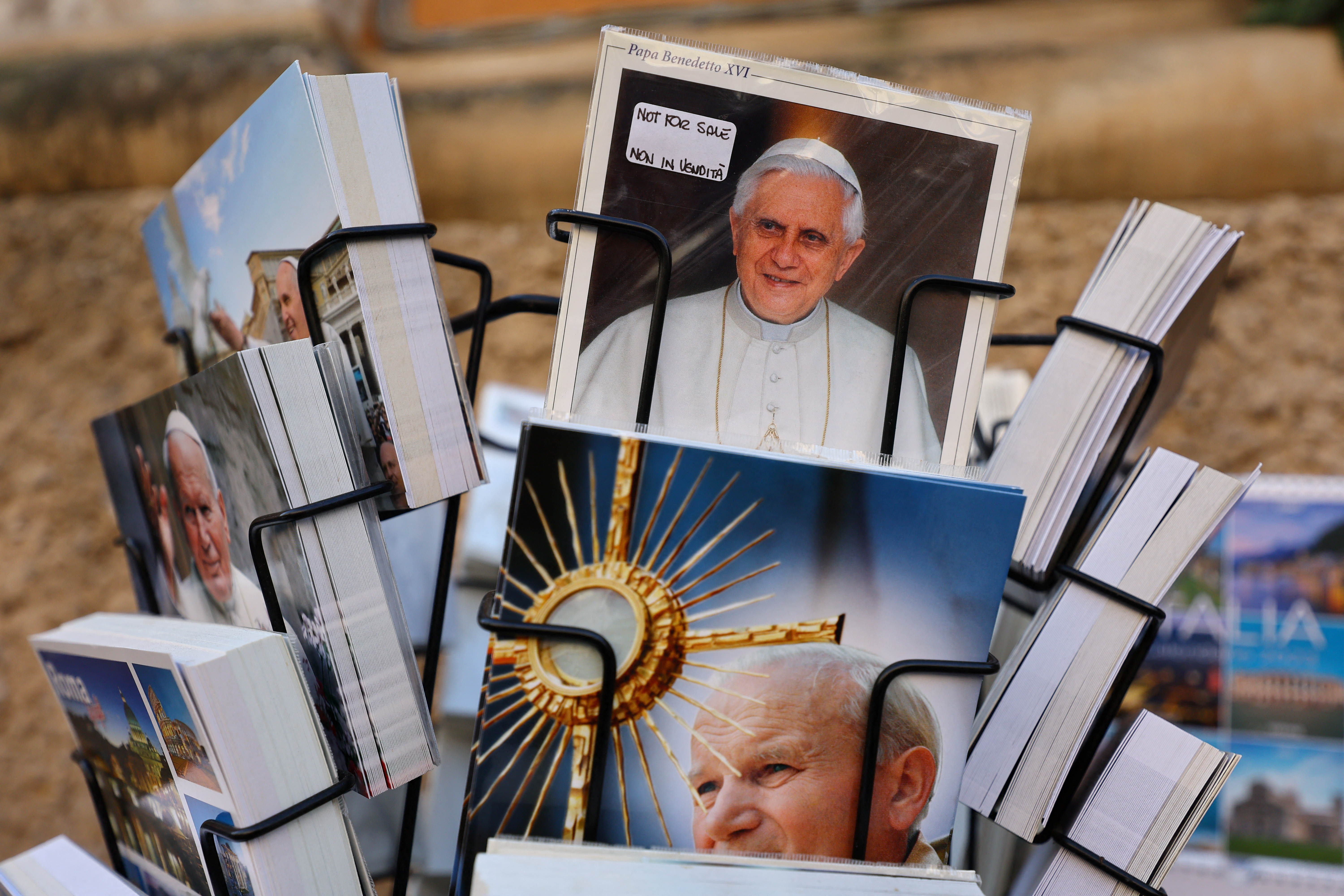
A picture of former Pope Benedict is displayed outside St. Peter’s Basilica, while faithful pay homage to former Pope Benedict as his body lies in state at the Basilica, at the Vatican January 4, 2023. REUTERS/Kai Pfaffenbach

The Vatican on Wednesday served up a surreal moment in which a living pope spoke to some of the faithful in one part of the tiny city-state while others a short distance way were honouring a deceased former pontiff.

Pope Francis held his general audience in a large modern hall, a routine event for a Wednesday.

“I would like us to join with those here beside us who are paying their respects to Benedict XVI,” Francis told several thousand people at the start of his audience, in which he is concluding a catechesis, or religious teaching.

Francis, 86, who will preside at Benedict’s funeral on Thursday, called his predecessor “a great master of catechesis.”

Benedict, a towering theologian and hero to conservative Catholics uncomfortable with Francis’ more progressive papacy, in 2013 became the first pope in 600 years to resign instead of reigning for life.

At about the same time as Francis was speaking and only several dozen metres (yards) away, the great doors of St. Peter’s Basilica were being opened to the public for the third and last day of public viewing of Benedict’s body.

As of Tuesday night, about 135,000 people had filed past the former pope, who has been lying in state without any papal regalia on a catafalque, a raised bier, before the basilica’s main altar.

The decision not to have them during the public viewing appeared to have been decided to underscore that he no longer was pope when he died last Saturday at the age of 95.

The viewing is due to end at 7 p.m. on Wednesday and shortly afterwards Benedict’s body will be placed in a coffin made of cypress wood.

With him will be coins and medals minted during his eight years as pope and a sealed lead tube holding a deed written in Latin describing his pontificate – all customary for funerals of popes.

Also placed inside will be three palliums – bands of wool cloth worn around the neck by popes, archdiocesan bishops and other bishops with territorial jurisdiction, to signify their roles as shepherds of their flocks. Popes are also bishops of Rome.

The coffin will be placed on the ground near the outside steps of St. Peter’s Basilica and the faithful will say the rosary before the funeral Mass begins.

Benedict had left word that he wanted his funeral to be simple.

The liturgy for the Mass will be based mostly on that for a reigning pope, with some minor modifications, Vatican spokesman Matteo Bruni said.

Some prayers that are specific to the death of reigning pope will be omitted but there will be prayers for both Benedict and Francis, he said.

In a private service after the funeral, the cypress coffin will be will be placed into a zinc coffin and sealed and then both will be placed into another coffin made of wood, according to tradition for the burial of a pope.

Benedict will be buried according to his wishes in the same spot in the crypts under St. Peter’s Basilica where Pope John Paul II was originally interred in 2005 before his body was moved up to a chapel in the basilica in 2011.

Categories
Audio Sources - Full Text Articles

Biden, McConnell visit to Kentucky bridge a roadmap for White House under split Congress

2023-01-04T10:07:08Z

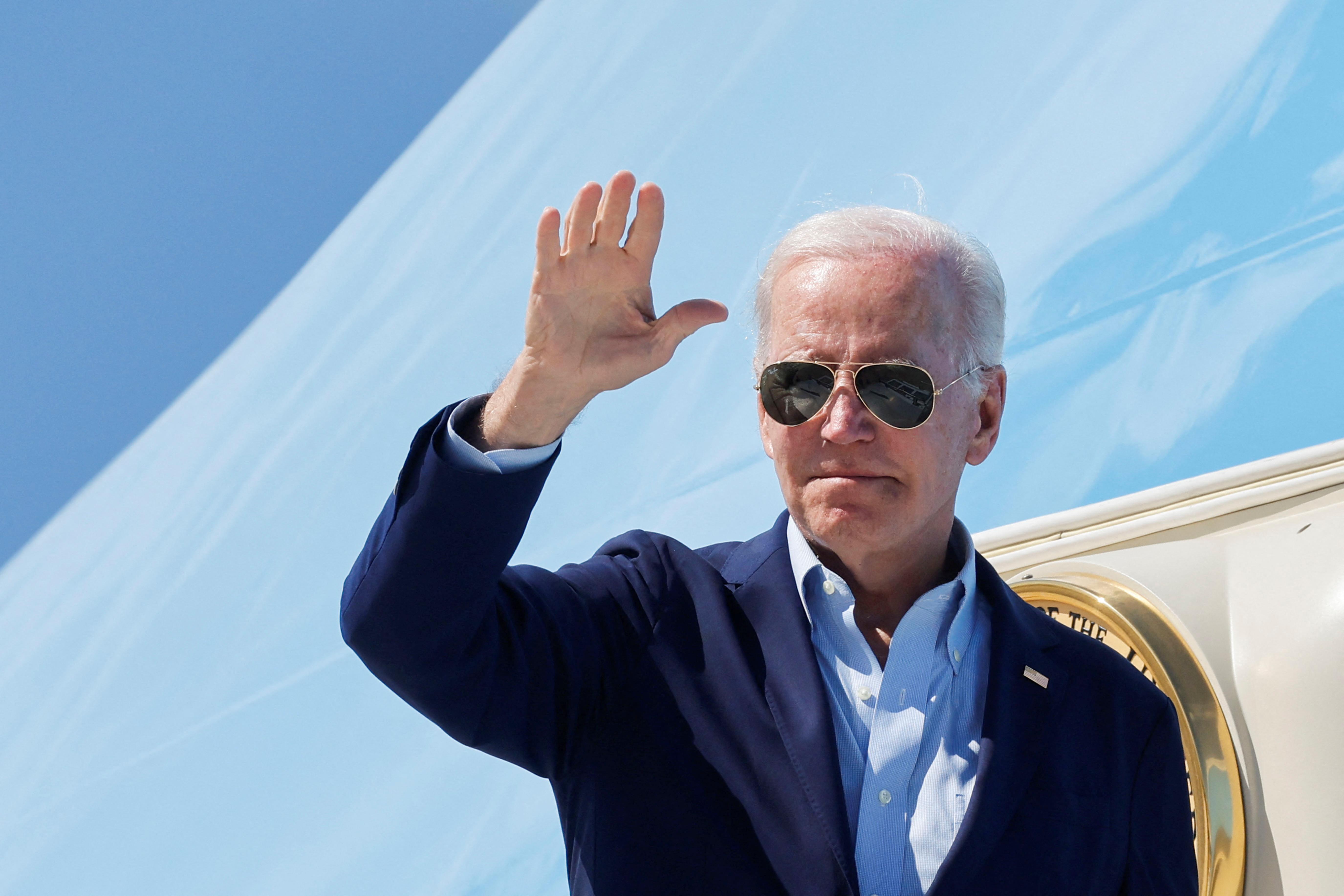
U.S. President Joe Biden gestures as he boards Air Force One at Rohlsen Airport to depart after a New Year holiday visit to Christiansted, St. Croix, U.S. Virgin Islands, U.S. January 2, 2023. REUTERS/Jonathan Ernst

President Joe Biden and Senate Republican leader Mitch McConnell will make a rare joint appearance on Wednesday at a bridge in Kentucky in a display of bipartisanship that offers a guide to how the White House hopes to govern in months to come.

As hardline Republicans create turmoil in the House of Representatives by blocking the rest of the party’s chosen leader, Kevin McCarthy, Biden and McConnell’s visit is likely to paint a sharp contrast – and that’s just what Biden aides and allies are hoping for.

Biden and McConnell, both 80, will visit the Kentucky side of the Brent Spence Bridge connecting Covington and Cincinnati, Ohio, to tout how funds from the $1 trillion infrastructure law that passed Congress with bipartisan support will be used to repair the congested crossing.

Both veteran politicians have their political reasons for appearing together. McConnell wants to get credit from voters in his home state of Kentucky for the spending project, while Biden wants to highlight the on-the-ground impacts of lawmakers working together.

Vice President Kamala Harris and other top administration officials are fanning out across the country for similar events in coming days.

Biden has enjoyed Democratic control of Congress during his first two years in office. But after midterm elections in November, Republicans now in control of the House plan to try to stall his agenda and launch investigations into his family and cabinet members.

That’s the opposite of what the White House thinks voters want.

Democrats’ unexpected success in the last midterms shows “the American people said very loudly and clearly they wanted us to come together and work for a common ground,” White House press secretary Karine Jean-Pierre told reporters on Wednesday.

Biden’s political aides’ strategy for the 2022 midterms was to paint the opposition party as beholden to its more extremist elements still wed to the legacy of former Republican president Donald Trump. They now see it as a dry-run for Biden’s own 2024 re-election campaign, as well.

Biden, who was a long-time Democratic senator from Delaware, has had sharp differences with McConnell on economic policy and the government’s role in America. McConnell’s decision to refuse to consider then-President Barack Obama’s nomination of Merrick Garland as a Supreme Court justice, when Biden was vice president and McConnell was Senate majority leader, was a source of tension.

Biden told reporters on Monday that while “we’ve been friends a long time,” the trip has nothing to do with his relationship with McConnell.

“It’s a giant bridge, man. It’s a lot of money. It’s important,” he said.

The two will be joined by Senator Sherrod Brown of Ohio, former Ohio Senator Rob Portman, Kentucky Governor Andy Beshear and Ohio Governor Mike DeWine.

The 2021 infrastructure law includes $27 billion over five years to fix and replace thousands of aging bridges.

Four moveable bridges crossing the Calumet River in Chicago, Illinois; the Gold Star Memorial Bridge in New London, Connecticut; and the famous Golden Gate Bridge in San Francisco, California, will also receive funding.

McConnell, of Kentucky, was among a handful of Republicans who voted for the infrastructure law while many House Republicans including McCarthy opposed it.

Categories
Audio Sources - Full Text Articles

2023 will make or break Tesla wannabes like Rivian and Lucid. Here’s what they need to do if they want to survive.

Rivian manufacturing in Normal, IllinoisStartups like Rivian are running out of room to make excuses for production woes.

Rivian

  • Electric vehicle startups have a big year ahead after a challenging 2022.
  • Investors are expected to lose patience with ‘stupid mistakes.’
  • Startups have to make good this year on promises that won them lofty valuations.

After a challenging and humbling 2022 riddled with supply chain constraints, production hurdles, stock drops, and talent turnover, EV startups Rivian, Lucid, and more are staring down some big deadlines for success in 2023.

After these startups made promises that won them several-billion-dollar valuations, investors may lose patience with their struggles — especially as legacy players like Ford and GM crowd into the market.

“Excuses around the production of new vehicles will grow tired for startups in the coming year,” said Sam Fiorani, vice president of global vehicle forecasting for AutoForecast Solutions. 

“As the pressure on the supply chain eases, investors can point to a General Motors and say, ‘They’re building without a problem, why can’t you?'”  

A brutish 2022

Essentially all of today’s budding startups have blamed a majority of their troubles on broader industry disruptions in 2022.

Some of these problems included getting enough supply or the right supply for flagship vehicles, exacerbated by less-established supplier relationships for startups just getting their assembly factories on line. 

On top of that, the pending battery crisis also worried the younger carmakers even more than it did companies such as Ford, GM, Volkswagen and more. 

And the turn of the calendar won’t wipe away the problems. During quarterly earnings calls, executives at Rivian and Lucid cautioned investors of more trouble heading into 2023 as they raced to ramp up production and their logistics processes in hand. 

Rivian, for example, warned of a “significant discrepancy” in the number of vehicles it produced in Q4 versus deliveries as it grapples with changes to the production schedule, a shift to using shipping vehicles by rain instead of by truck, and an expected slowdown in demand during the holiday season.

Others fought just to start production. Both Canoo and Fisker began building vehicles on November 17, while Faraday continued to struggle and was not able to start its assembly line. 

Accordingly, stock prices have been sinking from blockbuster IPO and SPAC highs, with many EV startups’ shares down as much as 80% from earlier last year. As investors begin to shy away, a cash crunch is materializing. Reserves are shrinking as startups burn cash on the pricey proposition of manufacturing expansions. 

Ways to find success this year

There are some bright spots for startups this year, experts say — if these companies can nail down production and conserve cash.

Rivian reported Tuesday it fell a few hundred vehicles short of its goal to build 25,000 electric cars in 2022. The startup built 10,020 vehicles in the fourth quarter to finish the year at 24,337 for the full year. Lucid, which has not yet released its Q4 deliveries, dropped its production target twice and churned out 3,687 by that period — while only delivering about 66% of those.

If the startups want to succeed and regain investor faith, they have to get closer to meeting their numbers in 2023.

On the cash front, Morgan Stanley’s Adam Jonas said in a December 28 note that 2023 will be a “reset year” for the EV space — so long as they have the money to do so.

“We believe players that are self-funded (non-reliant on external capital funding) with demonstrated scale and cost leadership throughout the value chain,” Jonas wrote, “can be relative winners.”

Finally, investor patience for returns is going to wear thin this year as the economic landscape becomes tougher and interest rates make investing a more expensive proposition, said Fiorani.

“Investors are going to expect more for their money,” he said. “Making sure there aren’t any stupid errors going forward will be the bare minimum.”

Not everyone, however, is confident the startups can do this.

“After an extremely difficult year of equity performance for upstart EV manufacturers,” Garrett Nelson, senior equity analyst at CFRA Research, said in a late December note, “we see little reason for optimism when looking ahead to 2023.”

Read the original article on Business Insider
Categories
Audio Sources - Full Text Articles

Howie: From bad to worse in Corner Office

And so farewell, Charlie Baker, worst governor in the history of the Commonwealth of Massachusetts.

Granted, he’s not likely to hold that worst-ever title for long. Maura Healey is more than likely to continue the downward spiral – these days that’s the way everything rolls in Massachusetts, downhill, from bad to worse to still worse yet.

For the last few days, you’ve had to wade through (or more likely, just avoid) all the slobbering puff pieces about “the most popular governor in America.”

Give me a break. Oddly, none of these hagiographies could cite one concrete accomplishment of these last eight benighted years, other than the one they refused to bring up — his son A.J. beating the rap on his alleged groping of a young woman on that infamous Jet Blue flight back in 2018.

You already know how dreadfully mismanaged just about every public agency in the state has been run on his watch, and not just the MBTA. The Baker-era rot has permeated every corner of Massachusetts government, from the RMV-caused massacres of motorcyclists to the endless scandals in the State Police and so on.

But all pale in comparison to his catastrophic mismanagement of the Panic of 2020. In those fawning farewell interviews, Charlie’s alibis have been that no one could have known, or that hindsight is 20-20, or that you don’t get do-overs etc. etc.

In other words, everybody was going to the same party. Of course, that’s what you told your parents about the post-prom all-nighter, and why you needed Dad’s car keys, because all the cool kids were going.

And dear old Dad shook his head and said, “Son, if Andy jumped off a cliff, would you follow him?”

Charlie watched Andy (Cuomo) jump off the cliff, and then he followed right behind him. And all of Baker’s calamitous missteps have devastated the state, for generations to come.

It was all so avoidable. Govs. Ron DeSantis and Brian Kemp didn’t fall for Fauci’s folderol. Even Jared Polis of Colorado – a Democrat – was less hysterical than Charlie.

Baker claimed he was just following “the science.” Yeah, the political science. Just like all Democrats, he was willing to do anything to get rid of Trump, by whatever means possible.

Charlie had to make all sorts of impactful decisions at the height of the hysteria. And in every one of his imperious executive orders — lockdowns, school and church closings, shutting down Main Street mom-and-pops while the big-box chains remained open, those preposterous curfews (an extra hour on weekends!), firing state employees who refused the untested vaccinations – he got everything exactly 100 percent wrong.

He ruined a generation of school kids, for no reason whatsoever given that they weren’t going to die from the virus. At least a third of the state’s restaurants are gone. The flight of taxpayers now rivals those of California and New York.

And in those COVID-related areas where his intervention might have saved lives, he was totally MIA.

For instance, would it have been too much for him to have appointed someone to run the Holyoke Soldiers Home who wasn’t an unqualified hack, who hadn’t given him and his dreadful lieutenant governor Karyn “Pay to Play” Polito a total of $1950?

If Charlie was so appalled by what was happening in the nursing homes his own Department of Public Health (DPH) had neglected to regulate, what didn’t he give back that $52,000 the long-term-care fat cats had lavished upon him?

Instead, all he did was have the DPH finagle the stats on nursing-home deaths, to make himself look slightly less incompetent.

The reality is, Charlie’s COVID insanity beggared the working people of this state, forcing them to flee the economic ruin he’d inflicted on them. And at the time he was simultaneously enriching the Democrat hackerama with what amounted to a two-year paid vacation, complete with big pay raises for staying home and not working.

Thanks Charlie.

You can argue that the Panic was beyond Baker’s power to control, but there’s one disaster that could have totally been avoided, and that’s the utter destruction of the Massachusetts state Republican party.

As you’re aware, the state GOP just suffered through its worst elections since 1854. This GOP debacle was engineered by two bust-out ex-state reps, Jim “Jones” Lyons and Geoff “DoorDash” Diehl.

They both retired from elective politics in 2018 due to ill health – the voters got sick of them.

Charlie’s been around the State House his entire adult life, so he understands better than most that almost everyone who’s been a rep for more than three terms is pretty much unemployable.

Charlie’s mistake was not taking care of these two loafers. I’m sure DoorDash could have been bought off with a $150,000 coat holder’s job in say, Labor. Labor’s always a nice dumping ground for hacks who need a job, as opposed to work. Consider the career of Marty Walsh.

Or Charlie could have interred Lyons and Diehl in some deserted courthouse, doesn’t matter which one. Outside the cities, nobody ever goes to work in any of them anymore, especially since the Panic.

Look at Ed Teague, former rep on Cape Cod — $174,532 a year as clerk magistrate. Hey, I’ll bet either Jones or DoorDash would have been happy to settle for being a first assistant clerk magistrate. Like, for instance, Charlie King – and he was never in the legislature, just on the GOP state committee, like them. Forgotten, but not gone, for $145,734 a year.

Charlie’s defense could be that no state party committee has ever been considered more than a legal apparatus for moving money around among party factions, benefactors and candidates.

Until Jim Jones Lyons, nobody had ever dreamed of using a state committee in the same way a terrorist uses a suicide-bomb vest – on their own party no less. But that nightmare has occurred and now the state GOP is on life support, and the income tax has been raised 80 percent.

And the fact is, Charlie does – did — know how to play the patronage game. On his way out the door he took care of two GOP state reps who lost their races in the wake of the Lyons-Diehl putsch.

Alas, ex-Rep. Shawn Dooley will make a mere $10,688 on the Civil Service Commission, and Tim Whelan gets zero on the Mass DOT board of directors.

Thanks Charlie!

Now Charlie moves on to his $3-million retirement sinecure as NCAA president. Those same simpering valedictories all asked the question, What will Charlie do at the NCAA?

What will he do? For God’s sake, he’s a hack. What will Charlie do? He’ll cash his $60,000-a-week paycheck and laugh all the way to the bank.

While everyone who voted for him cries all the way to the poorhouse. Unless they’ve fled, or soon will flee, to Florida. Which, thankfully, is most of us.


Categories
Audio Sources - Full Text Articles

Analysis: Deutsche Bank“s rollercoaster ride towards more stability

2023-01-04T09:38:08Z

(This Dec. 16 story has been refiled to correct currency unit to cents in paragraph 33)

In 2019, Deutsche Bank set out on a journey to cut dependence on its volatile investment bank and rely instead on more stable businesses that serve companies and retail customers as a way to restore profitability.

It didn’t quite turn out that way.

Germany’s biggest bank is back in profit and on course to meet some key targets pledged to shareholders, but that is thanks to the investment bank.

Deutsche’s bottom line has benefited from a surge in securities trading and dealmaking – the very businesses that the bank was trying to rely less on after years of scandals and fines.

A long period of low interest rates and the pandemic complicated Deutsche’s plan of making more money from the bread and butter business of lending to companies and individuals.

But the tide, buoyed by rising interest rates, is turning.

Higher interest rates are fattening profits from regular banking, while there has been a decline in M&A deals.

The bank said it is starting to see a rebalancing away from the investment bank to its other businesses.

“We do not expect that the majority of the bank’s growth between now and 2025 will come from investment banking,” board member Fabrizio Campelli said in an interview. He previously managed Deutsche’s overhaul process and now oversees the corporate division and investment bank.

The bet in 2019 was for the investment bank to make up 30% of revenues at Deutsche’s key divisions, as the company exited equities trading, with the focus more on corporate and retail banking.

But when the pandemic hit in 2020, this created volatile markets that favoured the bank’s bond trading business, where it is one of the world’s biggest players. This made the investment bank the group’s biggest profit engine. In 2021, a wave of global dealmaking gave it another boost.

In both those years, the investment bank made close to 40% of revenue and more than 75% of pre-tax profit.

The bank’s corporate and retail businesses, meanwhile, stagnated under ultra-low interest rates that lasted longer than expected.

“It would have been better if the stable areas had grown more than the investment bank,” said Andreas Thomae, a portfolio manager at Deka, a big Deutsche investor.

“Overall, however, the bank is on track to earn good money on a sustainable basis. Now the stable areas have to take on a greater role again in the future,” he said.

A collapse in dealmaking this year and central banks’ moves to raise rates to combat inflation have helped Deutsche’s other divisions.

Deutsche’s businesses outside the investment bank show “good momentum”, UBS said in a report this week that noted “upside potential” for the shares, which are down nearly 10% this year.

Deutsche, which ranks as one of the world’s most systemically important banks, had embarked on its four-year, nearly 9 billion euro ($9.59 billion) turnaround plan in 2019 after years of losses.

CEO Christian Sewing recalled the scale of Deutsche’s crisis at a conference last month in Berlin. “When I took over in 2018, we knew that we were in dire straits,” he said. “We knew that things had to change.”

Deutsche has hit or exceeded some of the targets in its turnaround plan as the deadline for its completion approaches with the end of 2022.

Deutsche, which lost about six billion euros over the past decade, has chalked up nine consecutive quarters of profit.

Regulators say the bank is on firmer footing than in 2016, when it became public that Deutsche would have to pay a multibillion dollar fine for its role in the U.S. mortgage crisis.

Bankers at Deutsche are relieved that for once the bank is mostly out of the headlines. They privately say they feel the pain of Swiss rival Credit Suisse (CSGN.S), which is facing its own crisis after losses and scandals.

Olivier Panis, analyst with Moody’s, said bank restructurings take time.

Deutsche’s management “took the right decisions, probably at the right time, benefiting also from favourable market conditions,” he said.

Ratings agencies, including Moody’s, have been upgrading Deutsche’s ratings in a sign of confidence that earnings are sustainable.

Regulatory issues have not entirely gone away. Deutsche Bank is under scrutiny for its controls to prevent money laundering, said a person with direct knowledge of the matter.

In November, Germany’s banking regulator BaFin said it had told Deutsche it would face fines if it did not meet specific measures to improve safeguards.

Deutsche said at the time that it has and will continue to invest the resources and management attention necessary to improve its controls and to meet regulatory expectations.

Deutsche’s asset management division, DWS, is under investigation by U.S. and German authorities for alleged “greenwashing”, allegations DWS has denied.

And the bank has said it would defend itself “vigorously” against allegations that it may have mis-sold risky investment bank products to customers in Spain and elsewhere, a matter the bank has investigated internally.

Deutsche Bank has also been under pressure from regulators to rein in its leveraged finance business, where credit is extended to already indebted borrowers.

Looking ahead, Deutsche has set new targets for 2025, including a cost-to-income ratio of less than 62.5%, meaning 62.5 cents spent for every euro earned.

With soaring inflation and high regulatory costs, analysts believe Deutsche will miss the goal. They predict a ratio of 69% in 2025, down from 73% this year.

Deutsche executives have said they see room for further cost savings.

For rivals JPMorgan (JPM.N) and Goldman Sachs (GS.N), analysts forecast a cost-to-income ratio of around 62% this year, based on Refinitiv data.

“Execution risk remains high…on the bank’s 2025 cost cutting plan,” Fitch analyst Marco Diamantini said, citing high inflation and a strong dollar.

The next phase of Deutsche’s plan comes as inflation and high energy prices take their toll on the German economy, raising questions over how its corporate and retail businesses will fare if loans turn sour.

($1 = 0.9382 euros)

Related Galleries:

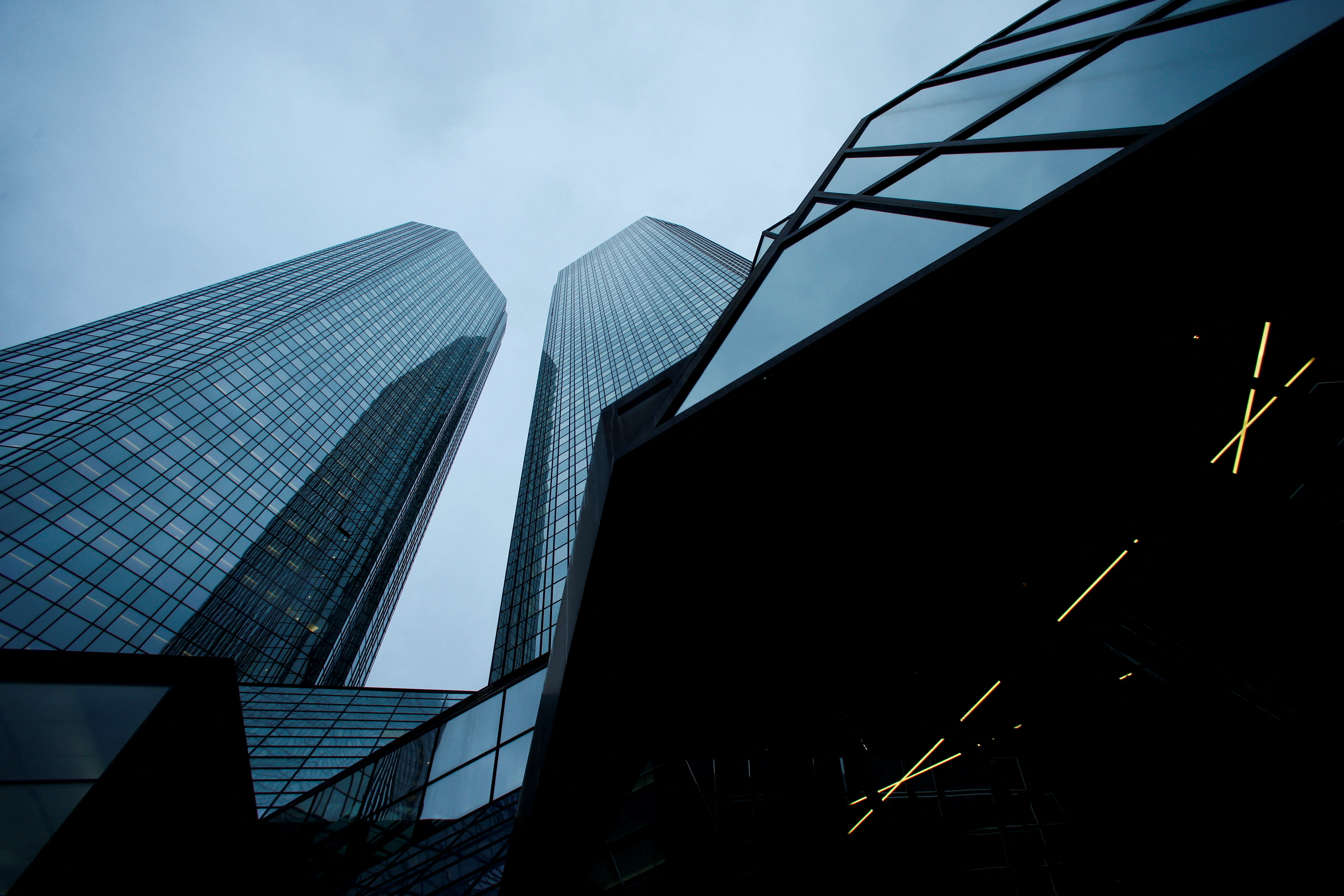
Deutsche Bank building in Frankfurt, Germany, February 2, 2018. REUTERS/Ralph Orlowski

Logo of Deutsche Bank AG in Frankfurt, Germany January 30, 2020. REUTERS/Ralph Orlowski

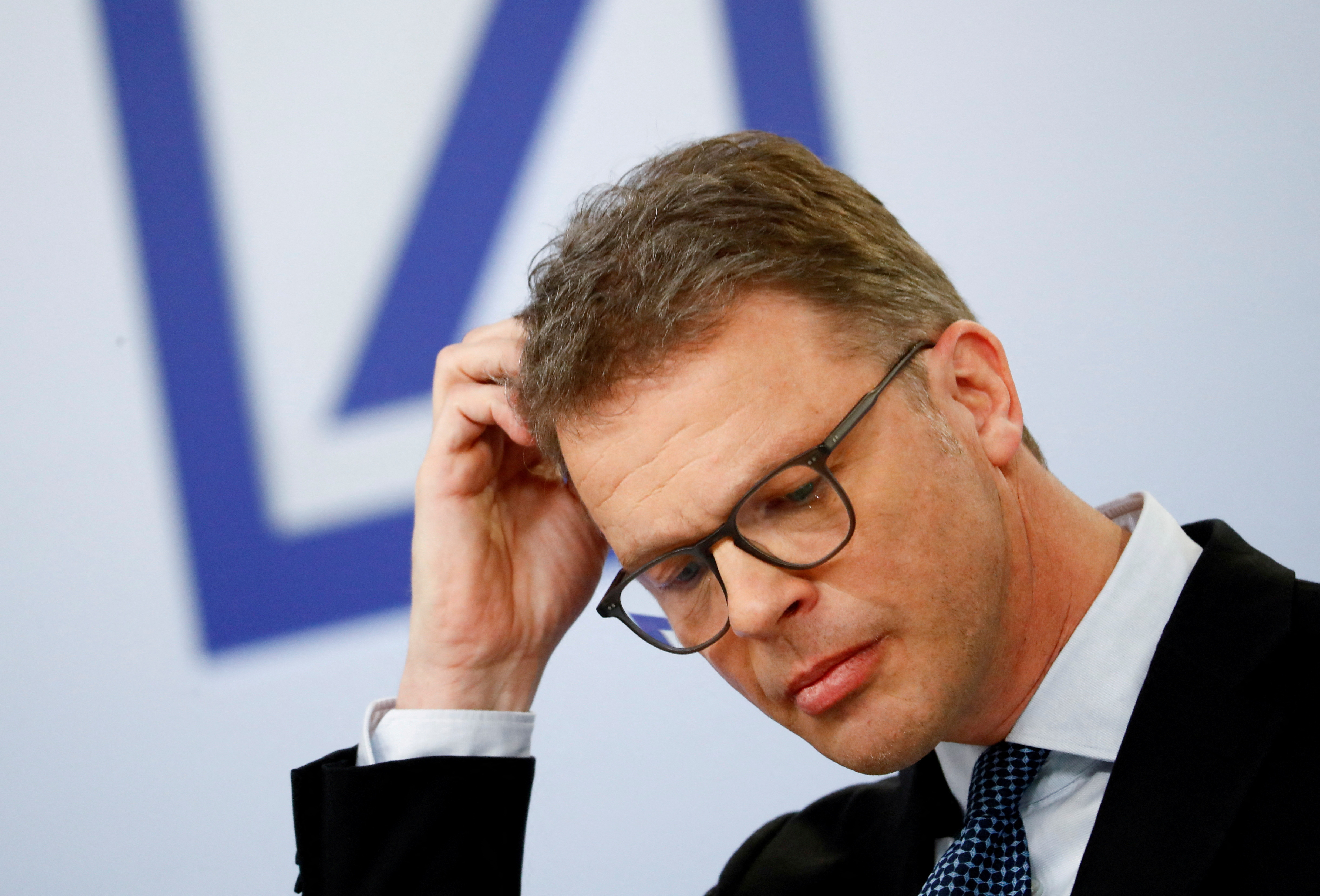
Christian Sewing, CEO of Deutsche Bank AG in Frankfurt, Germany January 30, 2020. REUTERS/Ralph Orlowski


Categories
Audio Sources - Full Text Articles

How a Video Game is Fuelling Misinformation About Russia’s Invasion of Ukraine

36b555d19139bddc6cc8e01c2530e091.jpg?w=1

Clips from the war-themed Arma 3 have appeared multiple times in fake videos.

WP Radio
WP Radio
OFFLINE LIVE