
Day: January 3, 2023
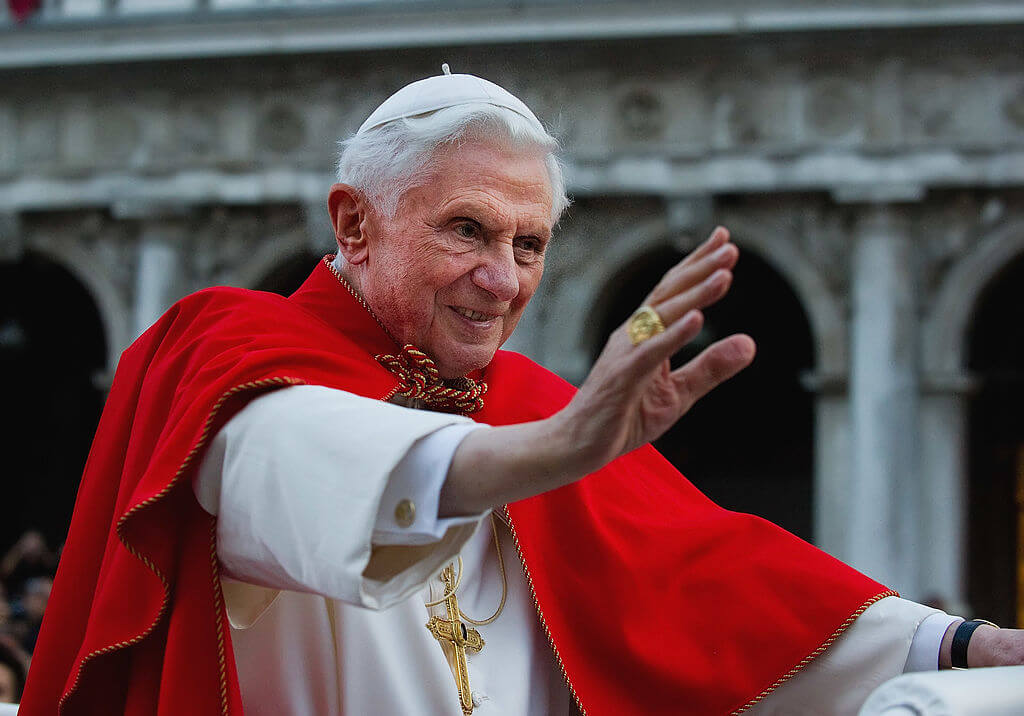
(JTA) — Jewish groups are among those marking the death of Benedict XVI, the Catholic pontiff who died Saturday at 95, a decade after shocking the world by becoming the first pope since the Middle Ages to resign.
“It is with great sadness that I learned today that Pope Emeritus Benedict XVI has passed away,” Ronald Lauder, president of the World Jewish Congress, said in a statement issued Saturday. “He was a towering figure of the Roman Catholic Church, both as pope and before that as the cardinal who gave the Catholic-Jewish relationship solid theological underpinning and enhanced understanding.”
During his eight years as pope, Benedict took many steps to advance Catholic-Jewish relations. visiting synagogues and Israel and condemning antisemitism on multiple occasions.
But he also reintroduced liturgy praying for the conversion of Jews, accepted back into the church an excommunicated priest who denied the Holocaust and never completely satisfied some who wished to see him more fully denounce his own Nazi past.
Born Joseph Ratzinger in Germany in 1927, Benedict spent a portion of his teenage years in the Hitler Youth organization, something that was mandatory for boys in Germany at the time and that he explained as necessary to obtain a tuition discount at his seminary. Those who knew him at the time attested after his election as pope in 2005 that his participation was reluctant, and Jewish groups who worked with him after the war said he had long worked to rectify the association.
“Though as a teenager he was a member of the Hitler Youth, all his life Cardinal Ratzinger has atoned for the fact,” the Anti-Defamation League said in a statement after his election as pope.
As priest and professor of theology in the 1960s, Ratzinger took part in the Second Vatican Council, a policy meeting of church leaders, as a theological advisor. It was at that council that the church’s leadership rejected centuries of Catholic dogma and declared that the Jewish people should not be blamed for the death of Jesus. Their 1965 declaration, known as Nostra Aetate, recast the church’s relations with the Jewish community.
Benedict’s predecessor, Pope John Paul II, is remembered as the first pope to visit a synagogue and, upon his ascension to the papacy, Benedict continued that tradition, making a habit of visiting with local Jewish communities on several of his international trips.
In 2008, on a papal visit to the United States, Benedict visited New York’s Park East Synagogue on the eve of Passover, in the first visit by a pope to an American synagogue.
“Shalom! It is with joy that I come here, just a few hours before the celebration of your Pesach, to express my respect and esteem for the Jewish community in New York City,” the pope said to the congregation, according to the church’s records. “I find it moving to recall that Jesus, as a young boy, heard the words of Scripture and prayed in a place such as this.”
The next year, Benedict visited Israel, in a trip that was largely focused around the common roots of Judaism, Christianity and Islam.
Related: Timeline of Pope Benedict XVI and the Jews (2013)
Upon Benedict’s resignation in 2013, he was praised by Israel’s Ashkenazi chief rabbi. “During his period there were the best relations ever between the church and the chief rabbinate, and we hope that this trend will continue,” said the rabbi, Yona Metzger. “I think he deserves a lot of credit for advancing inter-religious links the world.”
Despite the praise, Benedict’s papacy ignited multiple episodes of criticism from Jews alarmed by the effects of his religious conservatism.
Early in his papacy, Benedict allowed for the expanded use of the Tridentine Mass — the pre-Vatican II Catholic liturgy also known as the Latin Mass — which includes a Good Friday prayer that many view as antisemitic because it prays for the conversion of Jews to Christianity. (Benedict’s successor, Pope Francis, has curtailed the use of the Latin Mass, though not specifically because of its language about Jews.)
The ADL’s then-leader, Abraham Foxman, was among many Jewish leaders to condemn Benedict’s move.
‘We are extremely disappointed and deeply offended that nearly 40 years after the Vatican rightly removed insulting anti-Jewish language from the Good Friday mass, it would now permit Catholics to utter such hurtful and insulting words by praying for Jews to be converted,’ Foxman said. “’It is the wrong decision at the wrong time. It appears the Vatican has chosen to satisfy a right-wing faction in the church that rejects change and reconciliation.”
In response to the criticism, Benedict altered the Good Friday liturgy to drop a reference to the “blindness” of the Jews, but he maintained language praying for Jews to convert to Christianity.
Benedict also drew criticism for his refusal to acknowledge the Catholic church’s role in the Holocaust, and in particular, the role of the pope at the time, Pius XII — whose path to sainthood Benedict approved in 2009.
Pius has long been accused by Jewish groups of at best remaining silent, and at worst, being “Hitler’s pope” as the Holocaust raged across Europe. While Catholics were involved in many cases of rescue across the continent, initiatives coming from the Vatican itself often applied only to practicing Catholics of Jewish descent, or required Jews to convert to Catholicism.
After the war, Pius’ Vatican sheltered Ante Pavelic, the exiled leader of the Ustaše regime in the former Independent State of Croatia, a Catholic supremacist movement and Nazi puppet state that implemented the Holocaust in Western Yugoslavia. Jasenovac, the third-largest concentration camp in Europe, was built under the Ustaše rule and was the site of death for at least 100,000 people, including between 12,000 and 20,000 Jews.
The Vatican has long maintained that Pius worked to save Jews. Pius, Benedict said in 2008, “acted in a secret and silent way because, given the realities of that complex historical moment, he realized that it was only in this way that he could avoid the worst and save the greatest possible number of Jews.”
Benedict faced the decision of whether to declare Pius “venerable,” a crucial step in the path to sainthood. After initially deferring, he made the declaration in 2009. Now, the decision about whether Pius will be beatified, or declared a saint, could hinge on the contents of an archive that the Vatican is in the process of opening that includes materials about Pius’ handling of the Holocaust.
“The Pope at War,” a recent book by Pulitzer Prize-winning historian David Kertzer, the son of a rabbi, draws on these new archives to make the case that Pius largely ignored pleas from Jews (while keeping a secret back channel to Hitler); Pius’ advisor used antisemitic language in urging him not to act on behalf of the Jews and the pope personally intervened to prevent Jewish children and their parents from being reunited, Kertzer concluded.
Benedict, who had access to the archive, worked to heal friction with the International Society of Saint Pius XII, a conservative faction within the Vatican that named itself after the wartime pope and added the “Saint” even though he lacked the title.
In early 2009, Benedict removed the excommunication of four priests from the society. Among them was Holocaust denier Richard Williamson, who claimed the Nazis’ use of gas chambers to be a lie.
German Jewish leaders called Benedict’s decision “a slap in the face for the Jewish community.”
“The result of this move is very simple: to give credence to a man who is a Holocaust denier, which means that the sensitivity to us as Jews is not what it should be,” Elie Wiesel said at the time.
“The Vatican has done far more than set back Vatican-Jewish relations,” the scholar (and current U.S. antisemitism monitor) Deborah Lipstadt wrote at the time. “It has made itself look like it is living in the darkest of ages.”
Benedict said he had not known about Williamson’s views and pressed him to recant them, but Williamson did not; the pope later said he had mishandled the situation.
Months later, during his visit to Israel, Benedict spoke outside of Yad Vashem, Israel’s Holocaust memorial and museum. Though he denounced antisemitism in his remarks, he did not mention the words Germany or Nazi, nor did he reference any church involvement or his own experience in the Hitler Youth, or refer to the deaths of Europe’s Jews as murder.
Benedict ultimately refused to enter the museum, due to its negative depiction of Pope Pius XII.
The post Pope Benedict XVI, who went from Hitler Youth to advancing Catholic-Jewish relations, dies at 95 appeared first on The Forward.
Threats to the future of democracy look overrated these days, given the glaring leadership weaknesses now evident in Russia, China, and Iran. Add relief that the U.S. midterm election came off with few of the stresses we saw in 2020. And don’t overlook increasingly strong cohesion in EU policymaking.
But there are still important (and growing) risks to preoccupy world leaders, business decisionmakers, and the rest of us in 2023. Here are the ten most important.
1- Rogue Russia
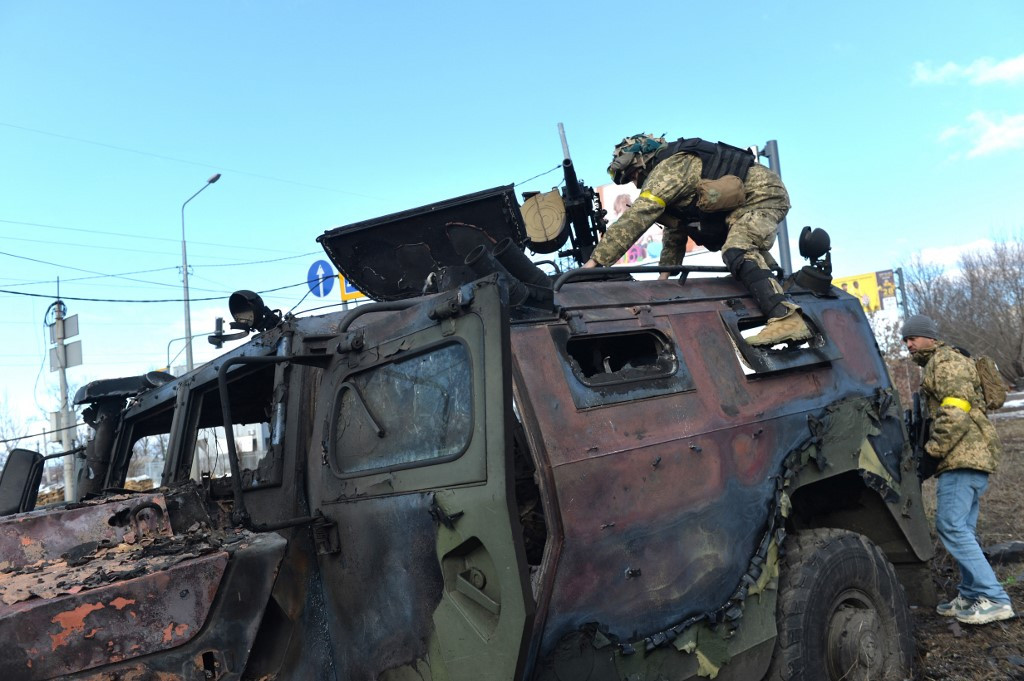
A cornered Russia will turn from global player into the world’s most dangerous rogue state, posing a serious and pervasive danger to Europe, the U.S., and beyond. Bogged down in Ukraine, with little to lose from further isolation and Western retaliation, and facing intense domestic pressure to show strength, Russia will turn to asymmetric warfare against the West to inflict damage through a thousand “paper cuts” rather than by overt aggression that depends on military and economic power that Russia no longer has.
[time-brightcove not-tgx=”true”]
Putin’s nuclear saber-rattling will escalate. Kremlin-affiliated hackers will ramp up increasingly sophisticated cyberattacks on Western firms, governments, and infrastructure. Russia will intensify its offensive against Western elections by systematically supporting and funding disinformation and extremism. Attacks on Ukrainian infrastructure will continue.
In short, Rogue Russia is a threat to global security, Western political systems, the cybersphere, and food security. Not to mention every Ukrainian civilian.
2- Maximum Xi
Xi Jinping now has a command of China’s political system unrivaled since Mao with (very) few limits on his ability to advance his statist and nationalist policy agenda. But with no dissenting voices to challenge his views, his ability to make big long-term mistakes is also unrivaled. That’s a massive global challenge given China’s outsized role in the world economy.
We see risks in three areas this year, all stemming from Maximum Xi. The ill-effects of centralized decision-making on public health will continue with COVID’s spread. Xi’s drive for state control of China’s economy will produce arbitrary decisions, policy volatility, and heightened uncertainty for a country already weakened by two years of extreme Covid controls. Finally, Xi’s nationalist views and assertive foreign policy will increasingly provoke resistance from the West and from China’s Asian neighbors.
3- Weapons of mass disruption
Recent advances represent a step-change in the potential of artificial intelligence (AI) to manipulate people and disrupt society, and 2023 will be a tipping point for this trend. A new form, known as generative AI, will allow users to create realistic images, videos, and text with just a few sentences of guidance. Large language models will pass the Turing test—a Rubicon for machines’ ability to imitate human intelligence. Advances in deepfakes, facial recognition, and voice synthesis software will render control over one’s likeness a relic of the past.
These tools will help autocrats undermine democracy abroad and stifle dissent at home, and enable demagogues and populists within democracies to weaponize AI for narrow political gain at the expense of democracy and civil society.
4- Inflation shockwaves
The global inflation shock that began in the U.S. in 2021 and took hold worldwide in 2022 will have powerful economic and political ripple effects in 2023. It will be the key driver of global recession, add to market volatility and financial stress, and produce disruptive effects on politics in every region of the world.
5- Iran in a corner
Nationwide anti-government protests continue. At the same time, Tehran has escalated its nuclear program in dramatic ways, all but ending any chance of reviving the nuclear deal. And now Iran is supplying Vladimir Putin’s military with deadly weapons. This year will feature new confrontations between the West and the Islamic Republic, as it faces convulsions at home and lashes out abroad.
6- Energy crunch
A combination of geopolitics, economics, and production factors will create much tighter energy market conditions, particularly in the second half of 2023, raising costs for households and businesses, increasing the fiscal burden on importing governments and widening the rift between OPEC+ and major consumers.
7- Arrested global development
Over the past two generations, global GDP tripled, almost every country grew richer, and more than a billion people escaped extreme poverty to join the ranks of history’s first global middle class. That progress has been thrown into reverse by mutually reinforcing shocks: the Covid-19 pandemic, the Russia-Ukraine war, and the global inflation surge. In 2023, billions of people will become more vulnerable as economic, security, and political gains are lost. The global middle class will shrink, and greater political instability, within and among countries, will follow.
8- Divided States of America
The 2022 midterm elections halted the slide toward a constitutional crisis at the next U.S. presidential election as voters rejected virtually all candidates running for state governor or state attorney general who denied or questioned the legitimacy of the 2020 presidential election. But the U.S. remains one of the most politically polarized and dysfunctional of the world’s advanced industrial democracies heading into 2023. Extreme policy divergences between red and blue states will make it harder for U.S. and foreign companies to treat the U.S. as a single coherent market, despite obvious economic strengths. And the risk of political violence remains high.
9- Tik Tok boom
Born between the mid-1990s and the early 2010s, Generation Z is the first with no experience of life without the internet. Digital devices and social media have connected them across borders to create the first truly global generation. And that makes them a new political and geopolitical actor, especially in the U.S. and Europe. Gen Z has both the ability and the motivation to organize online to reshape corporate and public policy, making life harder for companies everywhere and disrupting politics with the click of a button.
10- Water stress
This year, water stress will become a global and systemic challenge… while governments will still treat it as a temporary crisis. Water stress requires a transition from water crisis to water risk management. That shift will not materialize in 2023, leaving investors, insurers, and private companies to figure out how to handle this challenge on their own.
Red Herrings
Western support for Ukraine will not fade in 2023 as economic conditions worsen in the U.S. and Europe.
The European Union will defy predictions of dysfunction this year to remain remarkably unified on priority challenges.
There will be no security crisis over Taiwan in 2023.
Domestic challenges in both countries will keep U.S.-China tech war tensions in check.
Impossible Kicks
- Sneaker resale shop Impossible Kicks is selling a 122-pair collection of rare sneakers it recently acquired from an undisclosed seller. The collection, valued at $1.3 million, includes some shoes that rarely hit the market.
- The entire collection will be available online and on display at the Mall at Millenia in Orlando on January 11. The target customers are celebrities, influencers, and athletes, but all sneakerheads will get a chance to purchase the shoes. About one-third of the collection offers sneakers that are more attainable — at about $500-$3,000 per pair.
- Insider spoke with CEO Impossible Kicks CEO John Mocadlo about some of his favorites high-price and limited shoes in the collection. Impossible Kicks operates 17 locations across the US. The company expects to surpass $50 million in sales in 2022.
Nike SB Dunk Low “Jeff Staple Pigeon NYC” A Nike SB Dunk Low “Jeff Staple Pigeon NYC” for sale by Impossible Kicks
Courtesy Impossible Kicks
Pairs Available: 1
Cost: $100,000
Size: 9
The “Pigeon” Dunk “changed sneaker history,” according to HighSnobiety. The 2005 release made the cover of the New York Post, introducing many to sneaker culture.
“It was really the sneaker that ignited the resell market, where people were saying, ‘Hey, there’s hype sneakers, limited edition, very fashion and trendy, and we want it,'” Mocadlo said.
Nike SB Dunk Low “Paris” A Nike SB Dunk Low “Paris” for sale by Impossible Kicks
Impossible Kicks
Pairs Available: 2
Cost: $100,000 each
Sizes: 9 and 9.5
The Nike SB Dunk Low “Paris” is an incredibly rare sneaker. The last pair that sold on StockX went for $20,000, Right now, sizes are limited, and the cheapest pair on StockX is priced at $81, 200.
“There are pairs on StockX available right now for $250,000. So we figured that the pricing was right,” Mocadlo said. “It’s super rare. It’s going to be a piece that people are going to come in and just want to see, and then the right collector will certainly buy it. It’s something that’s never gonna depreciate in value. It’s almost the equivalent of buying a Monet painting.”
Nike Yeezy “Red October” A Nike Yeezy “Red October” for sale by Impossible Kicks
Courtesy Impossible Kicks
Pairs Available: 2
Cost: $20,000 each
Sizes: 11.5 and 13
The “Red October” drop is another signature moment in recent sneaker history.
In 2014, Nike shocked sneaker collectors by tweeting on a Sunday morning that the hotly anticipated shoe was on sale. It quickly sold out for $245 per pair. The last pair sold on StockX went for $15,000.
“It’s just an iconic shoe,” Mocadlo said. “It’s another shoe that kind of changed the trajectory of sneaker reselling. That shoe came out and just ignited the whole market. And that shoe went from $240 to now $20,000.”
Jordan 1 “What the Doernbecher” A pair of Jordan 1 “What the Doernbecher” sneakers for sale by Impossible Kicks
Courtesy Impossible Kicks
Pairs Available: 1
Cost: $140,000
Size: 9
Since 2004, Nike designers have worked with patients at Doernbecher Children’s Hospital in Portland, Oregon, on small collections of footwear and apparel. The merchandise is auctioned at a gala event, then sold in limited quantities.
In 2021, Nike made 17 pairs of Jordan 1 “What the Doernbecher” sneakers.
Online bidding in February 2021 had to be halted after trolls drove up prices. The shoes subsequently sold for $50,000 online. The sneakers are so rare that there’s no sales history for them on StockX.
“There are no more ever going to be made,” Mocadlo said.
The pair is priced at $140,000, which would set a record for Impossible Kicks on a single purchase. The chain’s highest transaction to date was $112,000 for a pair of Travis Scott Air Jordan 4 “Friends and Family Olive” and a pair of Jordan 11 “OVO Gold.”
Nike Dunk Low Pro SB” “What The Dunk” A Nike SB Dunk Low Pro “What The Dunk” for sale by Impossible Kicks
Courtesy Impossible Kicks
Pairs for sale: 1
Cost: $40,000
Size: 9
Nike SB has had a lot of collaborative releases over the years, including with streetwear brand Supreme and Jordan brand. The “What the Dunk” Low Pro SB is a combination of 31 separate Nike SB Dunks. According to the Nike SB site, the shoe was intended to be the “Dunk to end all Dunks.”
“What they did was just like a ‘What the Doernbecher,’ they took all the popular Dunk lows that had come out in that handful of years previously, and they made a Dunk shoe of all of the collabs, and it was a very limited release, and it just went crazy,” Mocadlo said.
Jordan 4 “Manila” A Jordan 4 Manila for sale by Impossible Kicks
Courtesy Impossible Kicks
Pairs Available: 1
Cost: $30,000
Size: 9
The Jordan 4 “Manila” was released in December 2020 to mark the opening of a new Nike store in the Philippines. Only 150 pairs of the sneaker were made.
“The caveat of purchasing that shoe was you had to wear it out,” Mocadlo said. “So what was happening was people were putting them on their feet, walking to the counter, paying for them, walking out of the store, and jumping out of their sneakers and putting them back in the box.”
Read the original article on Business Insider
2023-01-03T09:58:39Z
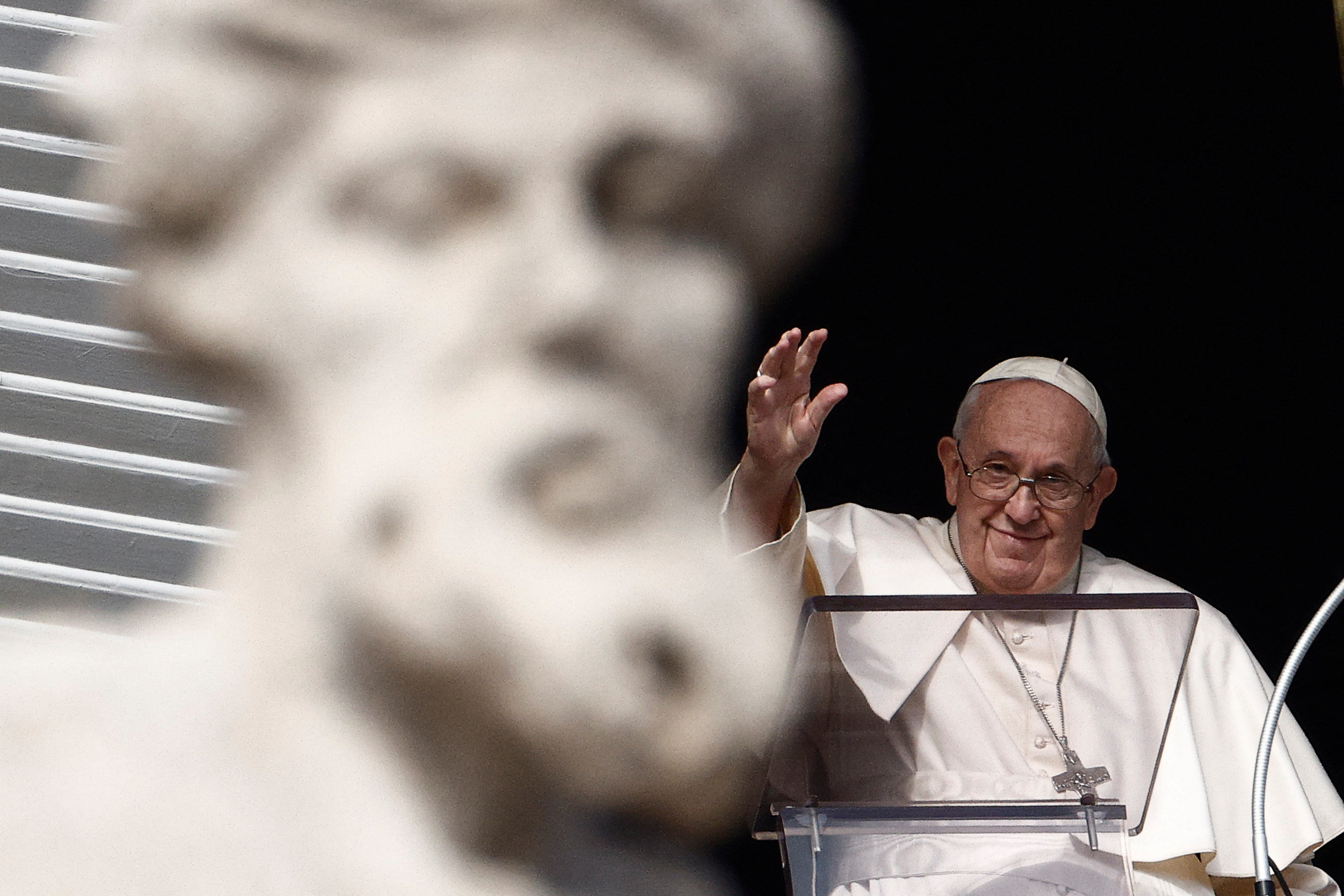
Pope Francis leads the Angelus prayer as the Roman Catholic Church marks its World Day of Peace, at the Vatican, January 1, 2023. REUTERS/Guglielmo Mangiapane
Six months ago Pope Francis brushed off speculation he was about to resign due to health problems, but even if he had toyed with the idea, he faced one major obstacle: there was already another ex-pope in retirement.
The death on Saturday of Benedict, who in 2013 became the first pontiff in 600 years to step down instead of reigning for life, should make any decision to step down easier on Francis and the Church, which has struggled enough with having “two popes”, let alone three – two retired and one reigning.
It could also prompt the current pontiff to review what happens to future popes who decide to shuffle away from office because of old age rather than holding on until they die.
Francis is now 86, one year older than Benedict was when he retired. Despite needing a cane and a wheelchair, he shows no sign of slowing down. Trips are planned for Africa this month and Portugal in August.
He has made it clear that he would not hesitate to step down someday if his mental or physical health impeded him from leading the 1.3 billion-member Church.
In an interview with Reuters on July 2, he dismissed rumours of imminent resignation. “It never entered my mind,” he said, also denying rumours among diplomats that he had cancer.
The previous month, the Catholic media world and some secular outlets were caught up in a frenzy of unsubstantiated reports and frivolous tweets speculating he would be out within a few months.
But as he now approaches the 10th anniversary of his election in March, and in four years his life’s ninth decade, the chances of resignation will increase.
Church law says a pope can resign but the decision must be without outside pressure, a precaution that harkens back to the centuries when European potentates influenced the papacy.
Now that longer life spans have made papal resignations no longer unthinkable, there have been repeated calls from Church leaders to regulate the role of former pontiffs, in part because of the confusion stemming wrought by two men wearing white living in the Vatican.
Francis told a Spanish newspaper last month that he did not intend to define the juridical status of popes emeritus, although he had previously indicated privately that a Vatican department could script such rules.
Australian Cardinal George Pell, a conservative who was close to Benedict, has written that while a retired pontiff could retain the title of “pope emeritus”, he should return to being a cardinal, and be known as “Cardinal (surname), Pope Emeritus”.
Pell also said a former pontiff should not wear white, as Benedict did, telling Reuters in a 2020 interview that it was important for Catholics to be clear that “there is only one pope”.
Academics and canon lawyers at Italy’s Bologna University who have studied the issue say the Church cannot risk even the appearance of having “two heads or two kings” and have proposed a set of rules.
They say a former pope should not return to being a cardinal, as Pell proposes, but be called “Bishop Emeritus of Rome”.
Francis told Reuters in July that is precisely what he would want to be called.
In that case there might not be any need for new legislation he would then be subject to existing rules covering retired bishops.
Existing rules say bishops emeritus should “avoid every attitude and relationship that could even hint at some kind of parallel authority to that of the diocesan bishop, with damaging consequences for the pastoral life and unity of the diocesan community”.
Although he had retired, Benedict wrote, gave interviews and, unwittingly or not, became a lightning rod for opponents of Pope Francis, either for doctrinal reasons or because they were loath to relinquish the clerical privileges the new pope wanted to dismantle.
Francis told Reuters that he would not stay in the Vatican or return to his native Argentina but live modestly in a home for retired priests in the Italian capital “because it’s my diocese”. He said he would want it to be near a large church so he could spend his final days hearing confessions.
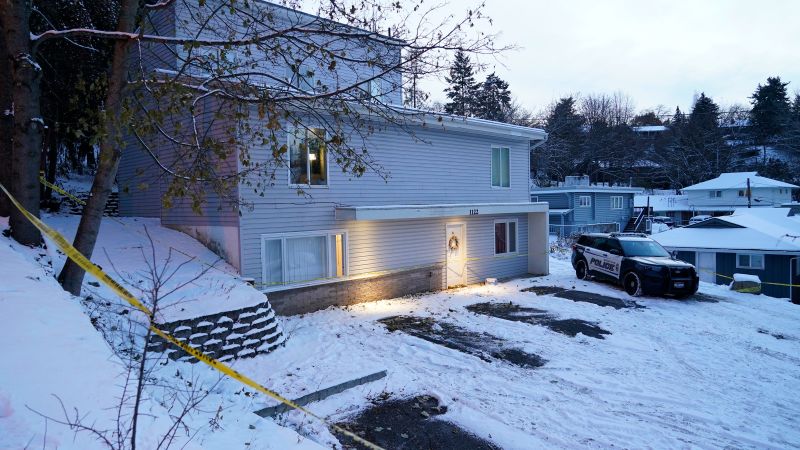
The suspect in the November slaying of four University of Idaho students may soon be in Idaho to face first-degree murder charges if, as expected, he doesn’t challenge his extradition to the Gem State in a Tuesday hearing.
Bryan Kohberger’s state-appointed attorney has indicated his client plans to waive extradition from his home state of Pennsylvania and has called the hearing a “formality proceeding.”
All the commonwealth needs to prove is that his client resembles or is the person on the arrest warrant and that he was in the area at the time of the crimes, Monroe County Chief Public Defender Jason LaBar told CNN’s Jean Casarez.
Kohberger was arrested Friday in Pennsylvania, almost seven weeks after Kaylee Goncalves, 21; Madison Mogen, 21; Xana Kernodle, 20; and Ethan Chapin, 20, were found dead November 13 in an off-campus home in Moscow, Idaho.
Kohberger was “shocked a little bit,” LaBar told CNN a day after his client was arrested.
Kohberger is presumed innocent until proven guilty, LaBar said in a statement, and he is “eager to be exonerated of these charges and looks forward to resolving these matters as promptly as possible.”
LaBar said he expects Kohberger to be returned to Idaho within 72 hours of Tuesday’s hearing.
The 28-year-old suspect last month finished his first semester as a PhD student in the criminal justice program at Washington State University’s campus in Pullman, about a 15-minute drive west of Moscow.
Suspect in the Idaho college student killings returned home for the holidays weeks after the crime. Here’s what we know about him
Kohberger drove home to Pennsylvania for the holidays, accompanied by his father, LaBar told CNN on Saturday. The two arrived in the commonwealth around December 17.
A white Hyundai Elantra authorities had been looking for in connection with the killings was found at Kohberger’s parents’ house, LaBar confirmed.
Investigators focused on Kohberger as a suspect after tracing ownership of the Elantra, which had been seen in the area of the killings, to him, according to two law enforcement sources briefed on the investigation. Also, his DNA was matched to genetic material recovered at the home where the students were slain, the two sources said.
An FBI surveillance team tracked Kohberger for four days before his arrest while law enforcement worked with prosecutors to develop enough probable cause to get a warrant, the two law enforcement sources said.
Other than the DNA and the car, details such as whether Kohberger knew the victims or a possible motive are not publicly known. The probable-cause affidavit, which would contain information to justify the suspect’s arrest, remains sealed until he appears in an Idaho court.
With those details still unknown, much public interest has focused on Kohberger’s criminal justice studies.
He graduated with a bachelor’s degree in 2020 and this year completed his Master of Arts in criminal justice at DeSales University in Pennsylvania, according to a spokesperson for the university.
In a post removed from Reddit after his arrest was announced, a student investigator associated with a DeSales University study named Bryan Kohberger sought participants for a research project “to understand how emotions and psychological traits influence decision-making when committing a crime.”
“In particular, this study seeks to understand the story behind your most recent criminal offense, with an emphasis on your thoughts and feelings throughout your experience,” the post read.
Moscow Police Department Chief James Fry said after the arrest that the investigation of the complex, extensive case was not over.
Investigators are still searching for pieces of evidence, Fry said, including the weapon, believed to be a fixed-blade knife.
“We developed a clear picture over time,” he said, “(but) be assured that the work is not done. This is just started.”
Kohberger is being held without bail in Pennsylvania, Latah County Prosecutor Bill Thompson said Friday.
Once Kohberger is in Idaho, he is expected to make an initial appearance before a magistrate, and further hearings will be scheduled.
CNN’s Josh Campbell, Jim Sciutto, Lauren del Valle, Mark Morales, John Miller, Jean Casarez, Paul P. Murphy, Veronica Miracle, Stephanie Becker, Pamela Brown, Elizabeth Joseph, Brynn Gingras, Rebekah Riess and Jay Croft contributed to this report.

