Categories
Audio Sources - Full Text Articles

I worked a seasonal job at Disney so I could have extra money to travel the world

DjenebaDjeneba, 26, worked a seasonal job at Disneyland Paris so she could earn extra money to travel the world.

Djeneba

  • I was paid a little bit more than the minimum wage in France at the time, around $300 a week. 
  • Some people who worked there were obsessed with Disney, but I hadn’t even heard of most of the Disney movies.
  • The job also came with perks, like free Disneyland Paris park passes, and food discounts.

This as-told-to essay is based on a conversation with Djeneba, 26, who worked a seasonal job at Disneyland Paris so she could earn extra money to travel the world. The following has been edited for length and clarity.

In 2018, I was studying for my French-English literature degree and decided I wanted to take a temporary job, so I could earn some extra cash and use it to travel the world. 

I grew up in France, but I’ve always been fascinated by different cultures. At the time, I was eager to travel to Hong Kong and Taiwan, so I wanted to work a 3-month seasonal job to help me pay for that.

I decided to try to work at the same place my brother worked a few years prior, Disneyland Paris. He had a variety of jobs there, including receptionist and restaurant server. He had a good experience, plus because of him, I knew how the job application process worked.

I first applied on the website for jobs in restaurants and in stores, since I had a background in hospitality. I received an invitation for an in-person group interview where candidates learned about the company then did team-building exercises. 

It seemed like they offered two types of contracts to applicants. One was for people who had specific skills, like being a cook or a ride technician. The other was more seasonal. It also seemed like if you spoke English, they offered you jobs where you could interact with customers.

In four months, I got an offer to work at a restaurant at a Disneyland Paris hotel. 

I knew from my brother that the long wait was normal, especially because I was applying for a summertime job (July to October). Once I got my offer, I started working a few weeks later.

In the first week of training you learn about Disney history. The second week is for your specific job, which was more fun than I expected because you get to meet other new employees. By th

DjenebaDjeneba, 26, worked a seasonal job at Disneyland Paris so she could earn extra money to travel the world.

Djeneba

e time you start, you know lots of familiar faces. 

The job came with perks 

I worked the night shift, usually from 4 p.m. until midnight and was paid a little more than France’s minimum wage at the time, around $300 a week. 

The job also came with perks, like two free Disneyland Paris park passes a month, discounts on food and products at the park, and schedule flexibility. Plus, for people who didn’t live in Paris, Disney paid for their travel, and offered accommodations, which were deducted from their salary. I already was living in Paris, so I didn’t need that.

However, we didn’t get tips at the restaurant. Because it was buffet-style, customers would pay a flat rate before entering, and didn’t usually think about tipping.  

The night went pretty fast — and Disney cleaned my uniform 

I’d arrive at 4 p.m. and change into my uniform: cowboy-style long jean skirts, jeans, and a blouse (to go with the theme of the restaurant). At the end of every shift, we’d leave our uniforms there, and Disney cleaned them for us. 

We’d do a walk-through of the restaurant, and set up. Staff didn’t have to wait on guests since it was a buffet. The manager would give each person a position for the day, like operating the cash register, busing tables, or guiding guests around the restaurant. 

There was a lot of standing, but because I moved around a lot, the night went fast and I didn’t feel exhausted.

I got to meet people from all over the world 

The job was exciting mostly because you’re working at a restaurant that attracts people from all over the world. Disney encouraged us to talk to guests and make them feel special (also known as the Disney Magic), so the best part of my job was learning about new cultures. A lot of guests were from Nordic countries, Spain, and Italy. 

These might seem like generalities, but I noticed that a lot of people from the UK ate fast and left, while people from Latin countries and Spain usually took their time.

Customers wasted a lot of food 

Perhaps one of the most frustrating parts of the job was seeing how much food goes to waste. Because it’s a buffet, we always tried to encourage guests not to take too much and instead go back for seconds. We didn’t do take away for leftovers wasn’t allowed because of food safety measures. People seemed to pile as much as they could onto their plates then leave without finishing it.  

Working at Disneyland Paris was better than I expected

I wasn’t sure what to expect working for such a big and well-known company, but Disneyland hired people who were friendly, outgoing, and purely themselves. It was easy to get along with other employees and that made for a welcoming environment.

Some people who worked there were obsessed with all-things Disney, but I was the opposite. I hadn’t even heard of most of the Disney movies or characters.

If you want to work there, I advise applying way before you actually want to start. The recruitment process can take a few months. But it’s an easy seasonal job, and by the end of it, you’ll understand the Disney magic or, at least whatever it means to you. 

Read the original article on Business Insider
Categories
Audio Sources - Full Text Articles

Russians kill 452 children in Ukraine

630_360_1648115084-711.jpg

Russian troops have killed 452 children in Ukraine considering that the war started, leaving a different 876 hurt.

In accordance to Ukrinform, the Prosecutor General’s Office environment said this in a write-up on the messaging app Telegram.

“As of the morning of January 1, 2023, extra than 1,328 youngsters were being influenced in Ukraine as a outcome of full-scale armed aggression by the Russian Federation. According to formal data from juvenile prosecutors, 452 little ones were being killed and additional than 876 were wounded,” the report explained.

The figures are not last as operate is ongoing to build them in areas of active hostilities, in briefly captured and liberated territories.

The greatest amount of small children killed and injured was recorded in the Donetsk area – 429, Kharkiv area – 268, Kyiv location – 117, Mykolaiv region – 81, Zaporizhzhia location – 81, Kherson location – 81, Chernihiv location – 68, Luhansk region – 65, and Dnipropetrovsk region – 40.

Whilst recording crimes committed by the Russian invaders in the Kherson location, prosecutors set up the death of two boys aged 13 and 17.

On December 31, a 14-year-outdated woman was injured in an enemy missile attack on Zaporizhzhia.

Also, on December 31, two young children, aged 12 and 13, had been hurt in Russia’s shelling of Kherson.

On December 30, a 13-12 months-old woman was injured in Russian forces’ shelling of the village of Dalnie, Donetsk location.

Some 3,126 instructional establishments were being weakened because of to bombardment and shelling by the Russian armed forces., and 337 of them had been wholly ruined.

Source link

The post Russians kill 452 children in Ukraine appeared first on Ukraine Intelligence.

Categories
Audio Sources - Full Text Articles

It’s hard to believe, but things are getting better. They will continue to if we keep up the fight | Robert Reich

Setbacks notwithstanding, we are better today than we were 50 years ago, 20 years ago, even a year ago

It was quite a year. Some of the regressive forces undermining our democracy, polluting our planet, widening inequality and stoking hatred have been pushed back.

This is a worthy accomplishment and cause for celebration. It offers hope that the Trump years are behind us and the hard work of building a decent society can resume.

Continue reading…

Categories
Audio Sources - Full Text Articles

Idaho murders – update: ‘Bright and awkward’ suspect Bryan Kohberger ‘eager to be exonerated,’ lawyer says


Idaho Murders: News Review, Analysis, InvestigationsIdaho Murders: News Review, Analysis, Investigations
Idaho Murders: News Review, Analysis, Investigations | The News And Times Information Network | RSS Pages, Video, Audio

Kohberger’s attorney, chief public defender Jason LaBar, said Kohberger is eager to be exonerated and plans to tell a judge in Monroe County, Pennsylvania on Tuesday that he will waive his extradition hearing so he can be quickly brought to Idaho. 

LaBar also cautioned people against passing judgment on the case until a fair trial is held. The case has generated massive amounts of speculation on social media, with would-be sleuths suggesting possible motives and frequently trying to pin the blame for the deaths on various friends and acquaintances of the victims.

“Mr. Kohberger has been accused of very serious crimes, but the American justice system cloaks him in a veil of innocence,” LaBar wrote in a prepared statement. “He should be presumed innocent until proven otherwise — not tried in the court of public opinion.”

Police are now trying to understand “every aspect” of Kohberger, Dahlinger said. When the arrest was announced, investigators asked that anyone that knows Kohberger call a tip line to share information. … 

“We interacted in class, but personally I was not a fan of Bryan because of comments he had made about LGBTQ+ individuals,” they said in an email to The Associated Press. “He was a little off, but I always thought it was because he was awkward and wanted to fit in.” 

Genetic genealogy techniques were used to connect Kohberger to unidentified DNA evidence, another source with knowledge of the case tells CNN. The DNA was run through a public database to find potential family member matches, and subsequent investigative work by law enforcement led to him as the suspect, the source said. 

Steve Goncalves, Goncalves’ father, told ABC News after Kohberger’s arrest that neither he, nor anyone else in the family knew Kohberger. But he noted that after learning the suspect’s identity, they have started to see connections between Kohberger and Goncalves, though they couldn’t discuss them yet. …

Cops also continue to ask the public for any information they might have about Kohberger, whose former classmates described him to The Daily Beast on Friday as a “very intelligent” amateur boxer who could be “detached” but also “aggressive.”

News Reviews – The News and Times – Links And Pages | January 1, 2023 5:59 am

All Articles Review – TNT | Selected Articles | Saved Web Pages | Audio Review | Audio Sources – Full Text Articles | Biden and Putin | Blogs | Capitol Riot of 1.6.21 | Counterintelligence News Review | Cybersecurity, Cyberattacks and Ransomware | FBI News Review | Intelligence News Review | Mass Shootings | NATO | Opinions Review | On Twitter | Police News Review | Putin and Putinism | Russia News | Russia – Ukraine war | Security News Review | Sites | Trump News | Tweets | Ukraine News | World News Review | Video Review | The News And Times Blog | Links and Pages 

The News And Times Information Network – Blogs By Michael Novakhov – thenewsandtimes.blogspot.com
Categories
Audio Sources - Full Text Articles

Biden’s “Diplomacy” in Yemen Means Taking Saudi Arabia’s Side — and Could Spark All-Out War

When Sen. Bernie Sanders, I-Vt., called for a vote on a war powers resolution that would block U.S. support for the Saudi-led war effort in Yemen, the Biden administration immediately pushed back. The resolution, the White House warned, would upset diplomatic efforts and bring about the war it was trying to end.

“The Administration strongly opposes the Yemen War Powers Resolution on a number of grounds, but the bottom line is that this resolution is unnecessary and would greatly complicate the intense and ongoing diplomacy to truly bring an end to the conflict,” read White House talking points circulated privately. “In 2019, diplomacy was absent and the war was raging. That is not the case now. Thanks to our diplomacy which remains ongoing and delicate, the violence over nearly nine months has effectively stopped.”

The White House’s claims that its diplomacy is working, however, are undercut by its own political moves and the reality on the ground. President Joe Biden’s envoy for the conflict has consistently sided with the Saudi coalition against the Houthi movement that controls much of the country. And though a ceasefire during the spring and summer provided a respite in civilian casualties due to bombings, the ongoing Saudi blockade and economic warfare against Yemenis perpetuates the humanitarian crisis in the country — which the United Nations has deemed the worst in the world.

Without taking an even-handed approach to the conflict in search of a political solution and the mitigation of the humanitarian crisis, the Biden administration’s machinations can hardly be considered good-faith efforts at diplomacy, critics of U.S. policy in the conflict said.

“There’s been no diplomatic progress whatsoever,” Jamal Benomar, the U.N. special envoy for Yemen until 2015, told The Intercept. “There’s been no political process, no negotiations, or even a prospect of them. So an all-out war can resume at any time.”

“There’s been no diplomatic progress whatsoever. There’s been no political process, no negotiations, or even a prospect of them.”

The divisions in Yemen — with the Saudi coalition controlling southern oil fields and ports, and the Houthi-led government controlling territory in the north that houses some 80 percent of the country’s 30 million residents — are only growing more entrenched. Instead of asking concessions of its allies in the Saudi coalition, the administration’s one-sidedness has contributed to the breakdown of diplomacy.

Though violence has not returned to earlier levels since the expiration of the ceasefire in October, fighting continues along some of the war’s frontlines. The Houthis have warned that their restraint won’t last long amid the current impasse and continued blockade of fuel imports; if the embargo is not eased, they said, they will reciprocally blockade a nearby waterway crucial to the global oil markets. The situation is only growing more explosive.

“There’s been a lull in the fighting, but since there was no concerted effort to move the political process forward, the lull is a temporary one and all sides are preparing for the worst,” said Benomar. “The situation is extremely fragile because Yemen has fragmented now and you have different areas of Yemen under the control of different warlords.”

Truce

The largely diplomatic push cited by the White House in opposing the Sanders war powers resolution — a so-far ineffective push that gives Saudi Arabia room to maneuver — follows a pattern it has held since early in the administration, when Biden pledged to work toward ending “offensive operations” to the Yemen war, and Saudi Arabia engaged in its most aggressive bombing campaign under the rubric of “defensive operations.”

Under such conditions, progress toward a treaty has remained elusive. While the Houthi movement has steadily gained territory — and political support in the country — the Saudi-backed government and other allied militia groups maintained control of oil-rich areas and ports in the south, enabling the punishing blockade. Biden balked at calls to pressure Saudi into easing the blockade when it sparked the worst fuel crisis in Yemeni history. Instead, when administration officials have commented, they have avoided naming the Saudis, calling instead on “all parties” to allow unhindered import of fuel.

As the blockade continued and the fuel crisis worsened, the Houthis attacked the Emirate of Abu Dhabi in late January 2022 in two separate attacks, with one reaching a U.S. military base. In March, the Houthis targeted a storage site belonging to the Saudi national oil company, marking the second boldest attack against Saudi oil facilities. Instead of convincing the Saudis to deescalate, the Biden administration pledged to defend Riyadh and Abu Dhabi against what they’ve called the “terrorist” attacks.

Yet the threat to the global oil supply was becoming clear, a risk the White House was uninterested in running amid both a midterm election and a war between Russia and Ukraine. A week after the attack on Saudi’s oil infrastructure, the United Nations, backed by the U.S., managed to have all parties agree on a truce that would allow for talks on a settlement to the yearslong conflict. “The Saudis accepted the truce after belatedly realizing that they were losing in an expensive quagmire,” said Bruce Riedel, a veteran CIA analyst and Brookings Institution senior fellow, in an email. “Biden’s team helped get them to that point along with a lot of help from the UN and Oman.”

The two-month truce allowed for a halt to all Saudi airstrikes and ground fighting and an ease on fuel imports to north Yemen, in return for a halt to Houthi missile and drone strikes on Saudi Arabia.

No Renewal

The ceasefire largely held up and kept getting renewed until October 2, when the Houthi government refused to renew it again.

The Houthi government laid blame with Riyadh and the U.S. for avoiding the issue most important to the Houthi-led coalition: monthly salary payments of the state employees. Since 2016, the Saudi-backed government relocated the Central Bank of Yemen to territory it controls, accusing the Houthi government of diverting the bank’s funds to the war effort, a charge international observers and aid groups found baseless. The Saudi-backed government promised to keep the bank’s policy of paying all public servants, estimated at 1 million employees who support around 10 million others, but it broke its word, denying millions of Yemenis their only source of income.

The Houthi-led coalition put the salary payment issue as a condition to renew the deal, but the Saudis agreed only on paying workers in the health and educational sectors. The Houthis maintained that the revenues from oil exports in areas under the Saudi-backed government, which would account for nearly 70 percent of Yemen’s budget, should be allocated for the pay of all public servants. No Biden-led diplomacy — intense, delicate, ongoing, or otherwise — could persuade the Saudis to stop diverting Yemeni public-servant money back to Riyadh.

Little progress has been made on the question of paying public servants. The U.N. Security Council, Britain, the European Union, and the U.S. called the Houthi government demand to pay all public servants “unrealistic” and “maximalist.” During a congressional hearing in December, Biden’s Yemen envoy Tim Lenderking blamed the Houthi government for the current impasse, slamming “the last-minute Houthi demand that the Yemeni Government divert its limited oil export revenues to pay the salaries of active Houthi combatants.”

What the U.S. deemed unrealistic has in fact been a demand of Democrats on Capitol Hill. What Sanaa demanded as a condition to renew the deal wasn’t impossible or even unrealistic. A group of 16 senators — along with many aid groups — called on Biden in May 2021 to end the Saudi blockade. While the Biden administration angled to keep the blockade as leverage in negotiations, the senators said the embargo “must end today and be decoupled from ongoing negotiations.”

For critics, the Biden administration’s stance — considering the payments to Yemeni public servants too great a cost for establishing a new ceasefire — isn’t a serious approach to ending the war.

“These demands benefit ordinary Yemeni workers, not the Sana’a government itself,” said Shireen Al-Adeimi, an assistant professor at Michigan State University and a nonresident fellow at the Quincy Institute, referring to the Houthi government in the capital of Sana’a. “What’s ‘unrealistic’ and even cruel, however, is to continue denying millions of public servants their salaries for multiple years and to derail ceasefire negotiations because of a humanitarian, not a political or military, demand.”

Diplomacy to Nowhere

The relative calm in fighting and a halt to bombing witnessed since April has been rare. Its impact on the most vulnerable, however, has been small. Much of the Yemeni suffering has been caused by the blockade and other economic warfare tactics, not the bullets and bombs.

The status quo leaves the Houthis little incentive to maintain a truce that delivers misery to the population it governs without any serious concessions around the blockade or payments to public-service employee payments. In return, the Houthi government has offered to cease its bombings of Saudi Arabia and its coalition partners. Saudi, emboldened by White House support, agreed on only easing restrictions on fuel imports.

Late last month, Omani negotiators were back in northern Yemen, urging the Houthis to sit down with the Saudis to discuss both issues. Abdulmalik al-Houthi, the Houthi movement’s leader and the one calling the shots, rejected the offer as another Saudi bid to evade addressing the economic crisis first, which he and his aides stressed should be decoupled from any other issues being negotiated. The Houthi message was simple, according to a source briefed on the talks: Pay the salaries of all public servants, lift the blockade on the northern port of Hodeidah and Sanaa airport, and then the parties can sit together to negotiate other terms.

The Saudis and the Emirates, however, seem unlikely to budge. So far, they have only granted concessions in the face of violence directed at Abu Dhabi and at Saudi oil fields, not through Biden-led negotiations.

That may be the dynamic at the heart of the White House’s opposition to the Sanders war powers resolution: Without U.S. support for its warplanes, the Saudis would be effectively grounded, perhaps emboldening the Houthis, who are poised to relaunch strikes and send global oil markets spinning to win an end to the blockade. So far, Houthi attacks intended as warnings have dissuaded tanker captains from offloading millions of barrels of crude oil that would have otherwise benefited the Saudi-backed government.

Facing the reality of the Houthis escalating their attacks, the Biden administration could dig in and refuse to meet reasonable Houthi demands while fending off congressional opposition to the war. Or the White House could pressure the Saudis into a genuine end to the war. In fighting the Sanders resolution, the White House has chosen to dig in. The Biden administration diplomacy is “ongoing,” but it’s not clear it’s going anywhere — making a resurgence of violence now seem inevitable.

The post Biden’s “Diplomacy” in Yemen Means Taking Saudi Arabia’s Side — and Could Spark All-Out War appeared first on The Intercept.

Categories
Audio Sources - Full Text Articles

Death of former Pope Benedict overshadows New Year at Vatican

2023-01-01T10:25:26Z

Pope Francis marked the Roman Catholic Church’s traditional World Day of Peace on Sunday but the start of the new year at the Vatican was overshadowed by the death of his predecessor, Benedict.

Francis presided at a Mass in St. Peter’s Basilica as the body of Benedict, who died on Saturday at the age of 95, was being prepared for three day of public viewing in the same church starting Monday.

In accordance with Benedict’s wishes, his funeral on Thursday will be simple, solemn and sober. It will be the first time in many centuries that a sitting pope will preside at the funeral of his predecessor. Benedict, who stepped down in 2013, had been the first pontiff in 600 years to resign.

Jan. 1 is also the feast of the Mother of God and in his homily, Francis asked the Madonna to accompany “our beloved” Pope Emeritus Benedict “on his passage from this world to God”.

Benedict was also remembered in one of the prayers at the Mass.

Francis also appealed for peace, alluding to war-torn countries, including Ukraine, where Russia continued intense attacks on New Year’s Day.

“Let us pray to our Mother in a special way for her sons and daughters who are suffering and no longer have the strength to pray, and for our many brothers and sisters throughout the world who are victims of war, passing these holidays in darkness and cold, in poverty and fear, immersed in violence and indifference,” he said.

Francis urged his listeners to work actively for peace, and not “waste time glued to a keyboard in front of a computer screen” but to “dirty our hands and to do some good”.

On Saturday night the Vatican released Benedict’s two-page “spiritual testimony” written in 2006, a year after his election as pope. There was no explanation why Benedict did not update it as he became older and more frail.

In it, he asked in a general, spiritual way, that God would welcome him to internal life “despite all my sins and insufficiencies”.

Francis on Saturday called Benedict a noble, kind man who was a gift to the Church and the world.

While tributes to the former pope continued to be made by world leaders, and conservative members of the faithful, others were highly critical of his pontificate.

Some recalled the severe discipline he meted out to progressive theologians, particularly in Latin America, when he was head of the Vatican’s doctrinal department under Pope John Paul II. Those actions prompted liberal Catholics to dub then Cardinal Joseph Ratzinger “God’s Rottweiler”.

And while some have credited Benedict with taking important steps to formalise the Vatican’s response to clergy sexual abuse, victims groups accused him of protecting the institution at all costs.

“In our view, the death of Pope Benedict XVI is a reminder that, much like John Paul II, Benedict was more concerned about the Church’s deteriorating image and financial flow to the hierarchy versus grasping the concept of true apologies followed by true amends to victims of abuse,” the anti-abuse group SNAP said.

Like many Vatican officials who worked with Benedict, Canadian Cardinal Marc Ouellet said he believed the German pontiff had left behind “a great legacy” as a man of God and a man of culture.

“I believe this is also a task for the future, to deeply rethink the Christian faith in the face of the challenges of our time,” Ouellet told Reuters Television.

Related Galleries:

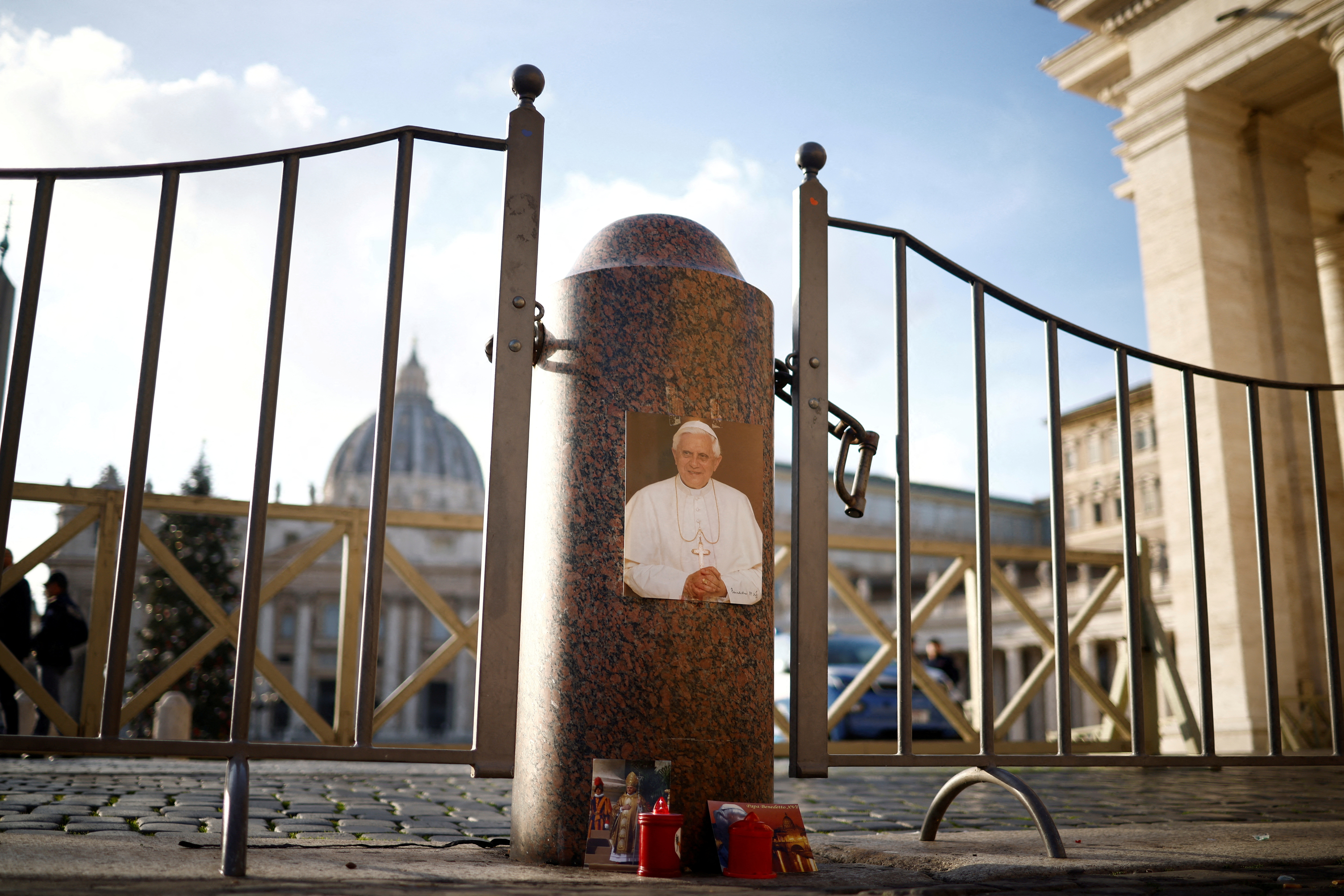
Candles stand next to St. Peter’s Square after former Pope Benedict died in the Vatican, in Rome, Italy, December 31, 2022. REUTERS/Guglielmo Mangiapane

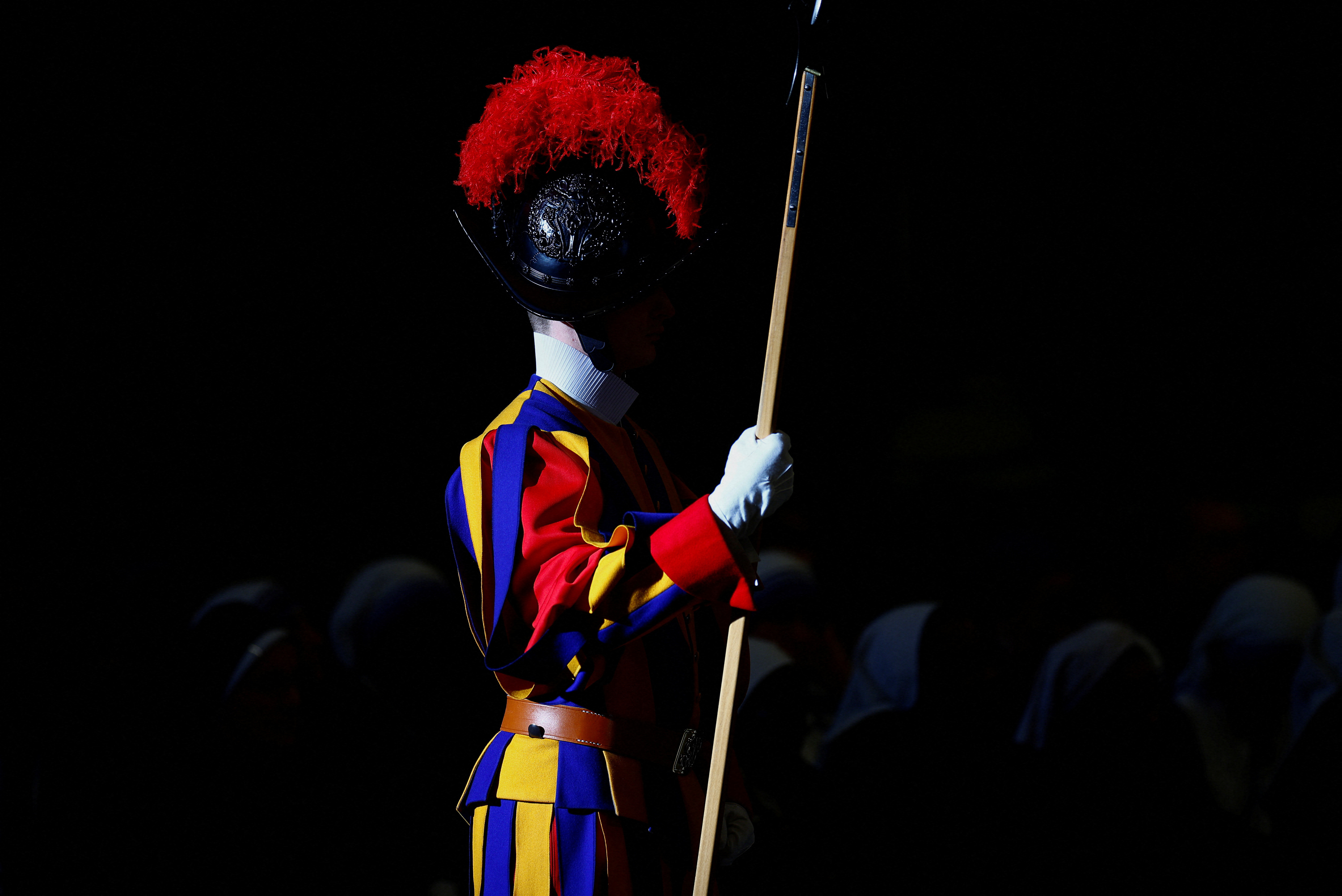
A member of the Swiss Guard stands, at the Mass to mark the World Day of Peace in St. Peter’s Basilica, at the Vatican, January 1, 2023. REUTERS/Guglielmo Mangiapane

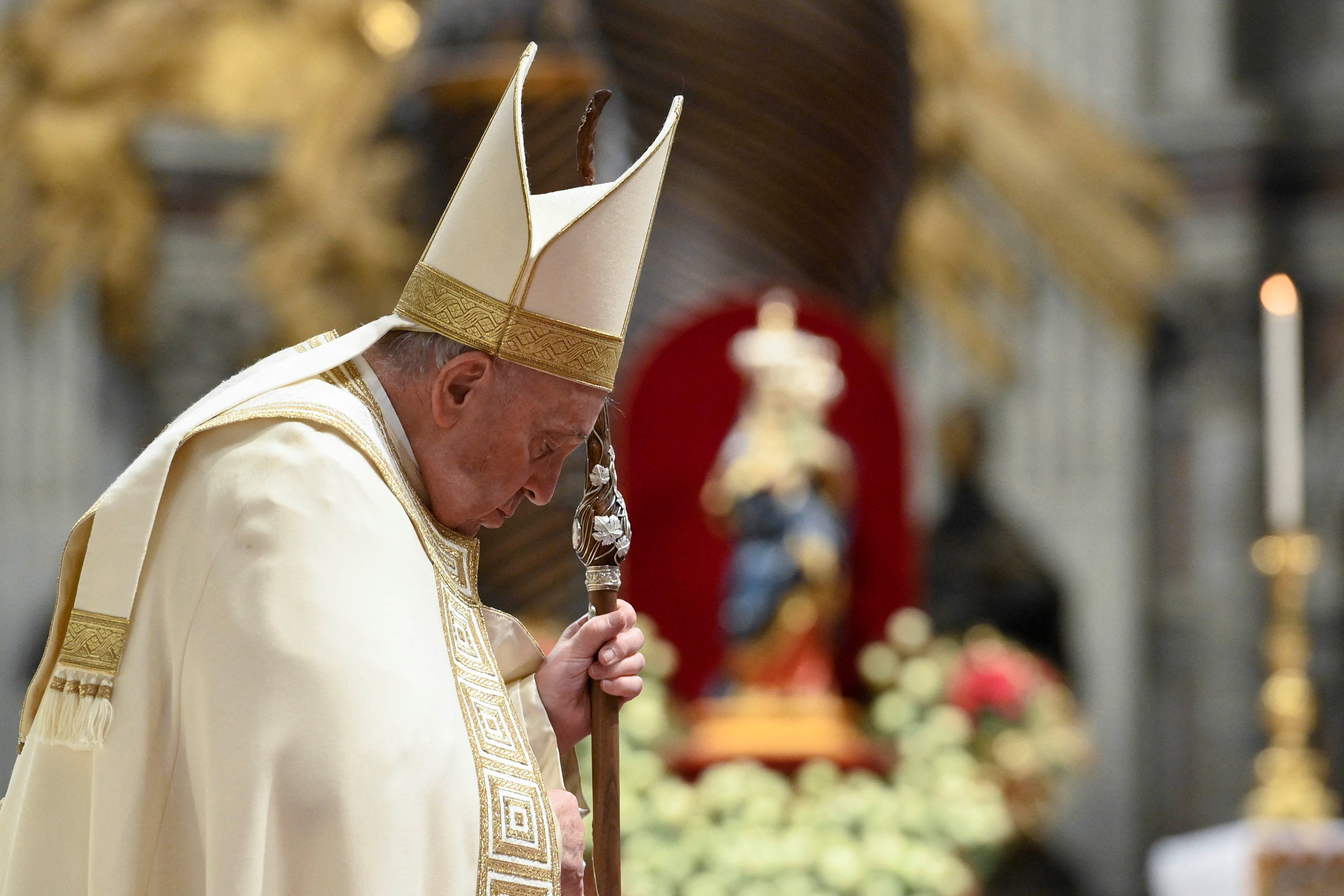
Pope Francis leads the Vespers and Te Deum prayer on New Year’s Eve in St. Peter’s Basilica after the death of former Pope Benedict at the Vatican, December 31, 2022. Vatican Media/­Handout via REUTERS

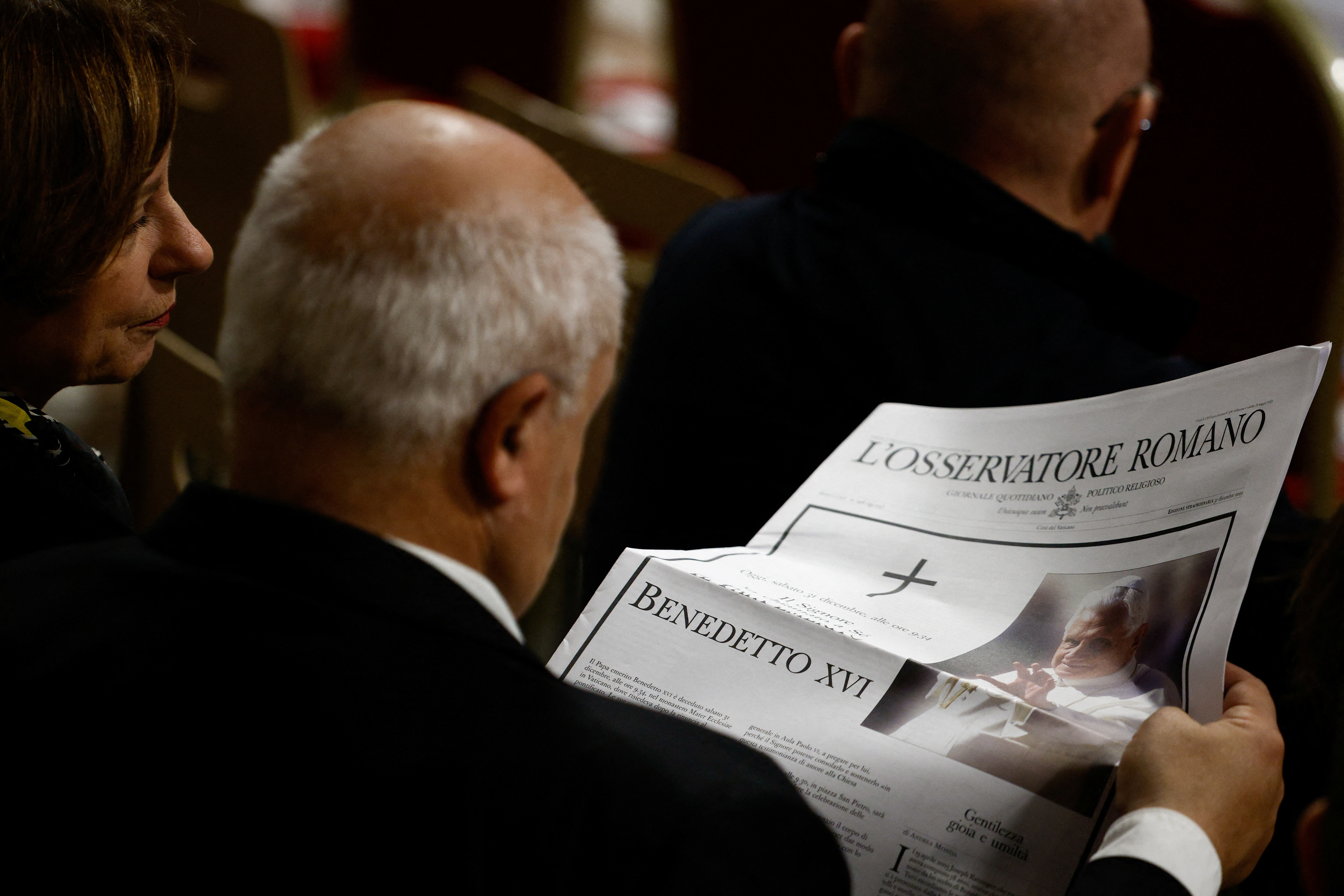
A faithful reads “Osservatore Romano” newspapers with the news of the death of former Pope Benedict at in St. Peter’s Basilica, at the Vatican, December 31, 2022. REUTERS/Guglielmo Mangiapane
Categories
Audio Sources - Full Text Articles

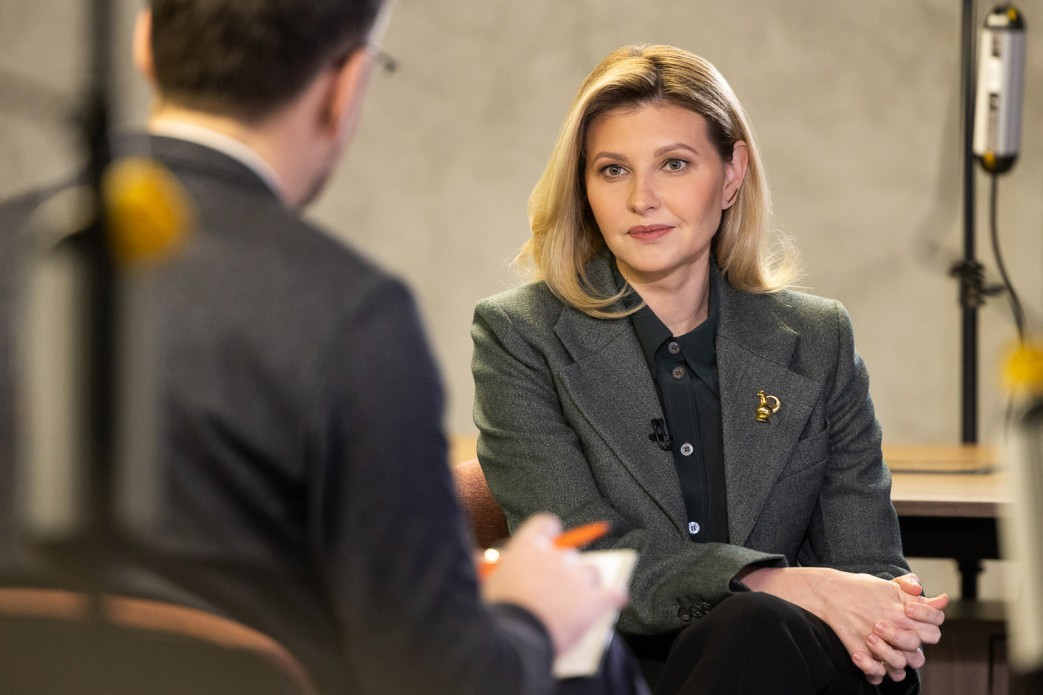
In Year-End Interview Olena Zelenska Talks About Her Work During The War

d722ecf0ecff4509d299689136a65287.jpeg?w=

Zelenska said that Ukraine, its citizens and culture should now be heard in a loud voice.

Categories
Audio Sources - Full Text Articles

Ukraine Shoots Down 45 Drones: Air Force

d7da55b6a53230e72c56bd2b4dca8633.jpeg?w=

In a New Year’s Eve assault, Moscow attacked Kyiv and other Ukrainian cities with missiles and drones.

Categories
Audio Sources - Full Text Articles

Capturing the Soul of a Nation: Arts Year in Review

28549d362e8d1b505198bad700bc2786.jpg?w=1

For Ukrainians, 2022 has been a year of immeasurable challenge. For its part, the arts scene has shown its own brand of resilience and captured people’s hearts and minds in unique ways.

Categories
Audio Sources - Full Text Articles

How Saudi Arabia’s crown prince snubbed Biden repeatedly to forge ties with authoritarian China and Russia

Xi, MBSChinese President Xi Jinping with Saudi Crown Prince Mohammed bin Salman at the royal palace in Riyadh, Saudi Arabia, December 8, 2022.

Yue Yuewei/Xinhua via Getty Images

  • In 2022, Saudi Arabia sought closer ties with Russia and China. 
  • At the same ties its relations with traditional ally the US have been turbulent. 
  • Experts say Saudi Arabia is seeking to steer a new path amid waning US influence. 

In Riyadh in early December, China’s President Xi Jinping met with Saudi Arabia’s de-facto ruler, Mohammed bin Salman, to announce a “new era” in relations between the countries. 

They touted sweeping new trade and energy deals, and alignment on issues ranging from the war in Yemen, to digital infrastructure and space research. 

It was the culmination of years of alliance-building between Beijing and Riyadh in their increasingly brazen opposition to US global dominance. 

“Saudi Arabia and China each find each other useful. They have significant economic ties, and they expect those to grow,” the analyst Jon Alterman told Insider in an interview.

“While their concerns about US global leadership are very different, they both agree that a unipolar world led by the United States would undermine their interests,” said Altermann, a senior vice president at the Center for Strategic and International Studies in Washington, DC.

For China, the US stands in the way of further expanding its global influence.

For Saudi Arabia, it sees economic opportunity and the possibility of taking a bigger global role where several great powers are competing.

MBS and PutinRussia’s President Vladimir Putin (R) and Saudi Arabia’s Crown Prince Mohammed bin Salman attend the G20 Leaders’ Summit in Buenos Aires, on November 30, 2018.

LUDOVIC MARIN/AFP via Getty Images

And it’s not just China that Saudi Arabia has been growing closer to, provoking US concern, but another authoritarian superpower and US adversary: Russia. 

Back in October, Riyadh infuriated the Biden administration by announcing in tandem with Russia that it would be cutting oil production. The deal was reportedly a shock to Biden administration officials, who believed they had secured a secret agreement with Saudi Arabia to increase production in a bid to ease domestic inflation. 

The deal also frustrated attempts by Biden to choke off Russia’s income from international oil sales, part of the wave of sanctions imposed on Russia over its invasion of Ukraine. 

Saudi Arabia has refused to join in sanctioning Russia over Ukraine, though in a possible concession to the US condemned the Russian invasion of Ukraine at a UN summit in October. 

US criticisms infuriate Riyadh 

To top it off, Crown Prince Mohammed has made no secret of his contempt for Biden, reportedly mocking Biden in private, and telling The Atlantic in March he doesn’t care if Biden misunderstands him. 

The lavish welcome he gave Xi contrasted with the muted one for Biden when he visited in July. 

Analysts say that US criticism of Saudi Arabia’s human-rights record and its suppression of domestic dissent infuriate Riyadh.

Biden’s pledge on the campaign trail in 2020 to make the kingdom a “pariah” over the assassination of dissident Jamal Khashoggi was similarly greeted with fury by Saudi Arabia’s leadership. 

Crown Prince Mohammed has more affinity with the ideology of fellow strongmen Xi or Putin than with the US, said Alterman. 

“They share a belief that a significant liberalization of domestic life would lead to social chaos, the collapse of morality, and political polarization,” said Alterman.

“The Saudi leadership is much more comfortable with Saudi Arabia pursuing the Chinese path of tightly managed politics, strong state-owned companies, and limited social freedoms than pursuing the US model,” he said. 

Xi and Putin are silent on Saudi human rights abuses, and Crown Prince Mohammed has largely been happy to reciprocate by remaining silent on China and Russia’s domestic repressions, said Giorgio Cafiero, CEO of Gulf State Analytics.

Particularly notable is Crown Prince Mohammed’s silence on China’s brutal treatment of the Uyghur Muslims in Xinjiang province.

The US and several Western allies have labelled China’s repression as a genocide, but Saudi Arabia has not intervened despite its role as the birthplace and spiritual center of Islam.

“Saudi Arabia, China, and Russia all believe in the model of ‘authoritarian stability’. This factor helps explain why Riyadh never presses China’s government on the human rights situation in Xinjiang despite the King of Saudi Arabia officially being the Custodian of the Two Holy Mosques [situated in Mecca and Medina],” said Cafiero.

“These governments prioritize stability above individual rights and their approaches to security resonate with each other in some remarkable ways,” he said. 

As well as sharing ideological affinities with Russia and China, Saudi Arabia sees forming ties with them as sound diplomatic and economic sense, analysts say.

The nation is essentially hedging its bet, reacting to shifting rhetoric from Washington, DC, and declining US commitment to the Middle East.

“The Saudis fear it is reckless to rely entirely on the United States, whose long-term intentions they distrust and whose attitude toward Saudi Arabia has shifted dramatically between the Obama, Trump, and Biden administrations,” said Alterman. 

But for all their differences, the US and Saudi Arabia share common interests that will ensure the survival of the alliance for the near future, analysts generally agree.

Saudi Arabia is reliant on US military protections and arms sales, while for the US, the Saudis are an important ally in a turbulent region, and a crucial counterweight against Iran.

“The United States remains Saudi Arabia’s most important strategic partner. There is no country or collection of countries that can defend the country from external threats like the United States can,” said Alterman. 

Read the original article on Business Insider
WP Radio
WP Radio
OFFLINE LIVE