Categories
Audio Sources - Full Text Articles

Pace of fighting in Ukraine may increase in coming weeks

630_360_1656561602-315.jpg

The overall speed of functions alongside the frontline has slowed in new times because of to deteriorating temperature conditions but is very likely to enhance beginning in the future number of months as temperatures drop and the floor freezes during the theater.

The Institute for the Research of War (ISW) said this in its most current update, Ukrinform reviews.

In accordance to U.S. analysts, Ukrainian and Russian reporting from vital frontline places throughout jap and southern Ukraine, including Svatove, Bakhmut, and Vuhledar, suggests that functions on equally sides are at present bogged down by major rain and ensuing weighty mud.

However, temperatures are forecasted to drop through Ukraine in excess of the next week, which will probably freeze the ground and expedite the rate of combating as mobility increases for the two sides.

The ISW report states that The temperature in regions in Ukraine’s northeast, these as alongside the Svatove-Kreminna line, will dip to near-or-under-freezing day by day highs between November 28 and December 4. It will very likely take the floor some days of dependable freezing temperatures to solidify, which means that ground situations are most likely to be established to make it possible for the rate of operations to boost in the course of Ukraine about the class of the weekend of December 3-4 and into the adhering to week.

ISW’s key takeaways:

  • The overall speed of operations in Ukraine is probable to maximize in the approaching months as the floor freezes in the course of the theater.
  • Russian officers are continuing initiatives to deport Ukrainian little ones to Russia.
  • Russian officials could be hoping to counteract Wagner financier Yevgeny Prigozhin’s escalating affect as a result of the marketing of other parallel Russian navy constructions.
  • Russian forces are likely working with inert Kh-55 missiles built exclusively to have nuclear warheads in its campaign towards Ukrainian infrastructure, highlighting the Russian military’s depletion of large-precision weapons.
  • Russian forces ongoing defensive functions versus ongoing Ukrainian counteroffensive functions together the Svatove-Kreminna line.
  • Russian forces continued offensive operations in the directions of Bakhmut and Avdiivka.
  • Russian forces continued creating fortifications in jap Kherson Oblast.
  • Russian tactical, logistical, and equipment failures proceed to lower the morale of Russian troops and push lookups for scapegoats.

Source link

The post Pace of fighting in Ukraine may increase in coming weeks appeared first on Ukraine Intelligence.

Categories
Audio Sources - Full Text Articles

ISW Russian Offensive Campaign Assessment, November 26 – Kyiv Post

Important Takeaways

  • The general speed of functions in Ukraine is probable to boost in the upcoming months as the floor freezes throughout the theater.
  • Russian officers are continuing endeavours to deport Ukrainian young children to Russia.
  • Russian officials may perhaps be striving to counteract Wagner financier Yevgeny Prigozhin’s expanding impact by the advertising of other parallel Russian military structures.
  • Russian forces are possible working with inert Kh-55 missiles built solely to carry nuclear warheads in its marketing campaign against Ukrainian infrastructure, highlighting the Russian military’s depletion of higher-precision weapons.
  • Russian forces ongoing defensive operations versus ongoing Ukrainian counteroffensive functions alongside the Svatove-Kreminna line.
  • Russian forces continued offensive operations in the directions of Bakhmut and Avdiivka.
  • Russian forces ongoing developing fortifications in eastern Kherson Oblast.
  • Russian tactical, logistical, and devices failures proceed to lower the morale of Russian troops and drive searches for scapegoats.

The general speed of functions along the frontline has slowed in the latest days owing to deteriorating weather conditions conditions but is probable to enhance starting in the next number of months as temperatures fall and the floor freezes through the theater. Ukrainian and Russian reporting from important frontline spots all through japanese and southern Ukraine, together with Svatove, Bakhmut, and Vuhledar, suggests that functions on both equally sides are currently bogged down by weighty rain and ensuing major mud.[1] Temperatures are forecasted to drop throughout Ukraine about the next week, which will probably freeze the floor and expedite the rate of combating as mobility boosts for each sides. The temperature in areas in Ukraine’s northeast, such as alongside the Svatove-Kreminna line, will dip to near-or-down below-freezing each day highs between November 28 and December 4. It will possible take the floor some times of steady freezing temperatures to solidify, which implies that floor problems are likely to be set to enable the rate of functions to enhance during Ukraine in excess of the system of the weekend of December 3-4 and into the pursuing week. It is unclear if both side is actively arranging or making ready to resume main offensive or counter-offensive functions at that time, but the meteorological factors that have been hindering this sort of functions will start off lifting.

Russian officers are continuing attempts to deport young children to Russian below the guise of medical rehabilitation schemes and adoption applications. The Ukrainian Resistance Center reported on November 26 that the Russian occupation administration in Luhansk Oblast done professional medical exams of 15,000 kids concerning the ages of two and 17 and located that 70% of the young children (10,500) are in want of “special health care care” that necessitates them to be eradicated to Russia for “treatment.”[2] The Resistance Heart stated that Russian officials intend these forced deportation strategies to entice children’s households to Russia to obtain their youngsters immediately after the small children receive therapies, at which level the Resistance Middle assessed Russian officials will avoid individuals households from returning house to Ukraine. The Center‘s report is dependable with ISW’s prior assessment that Russian officers are conducting a deliberate depopulation marketing campaign in occupied Ukrainian territories.[3]

Russian Commissioner for Children’s Rights Maria Lvova-Belova additionally posted an excerpt from a documentary film chronicling the tale of the little ones she adopted from Mariupol.[4] Lvova-Belova has mostly been at the forefront of the concerted Russian hard work to remove Ukrainian small children from Ukrainian territory and adopt them into Russian families, which may represent a violation of the Geneva Convention as well as a deliberate ethnic cleaning marketing campaign.[5] Lvova-Belova’s documentary is possible intended to lend legitimacy to the ongoing adoption of Ukrainian small children into Russian households, just as the guise of health-related requirement is most likely meant to justify mass deportations of Ukrainian kids to Russian territory.

Russian officers may perhaps be trying to counterbalance the affect of Wagner Group financier Yevgeny Prigozhin by means of the advertising of other parallel military services constructions. The Ukrainian Most important Intelligence Directorate (GUR) reported on November 26 that Russian officials appointed a Viktor Yanukovych-joined, pro-Kremlin businessman, Armen Sarkisyan, as the new administrator for prisons in Russian-occupied territories in Ukraine and that Sarkisyan intends to use the purpose to build a new “private military services company.”[6] The GUR reported that Sarkisyan modeled his work to build a new personal navy enterprise on the Wagner Group’s recruitment of prisoners in the Russian Federation and that Russian-Armenian businessman Samvel Karapetyan is sponsoring the work.[7] Karapetyan is the operator of Tashir Holding organization, a longtime subcontractor for Russian condition-owned strength firm Gazprom.[8] The GUR noted that Sarkisyan’s try to develop a new private armed service construction is an endeavor to create a counterweight to Prigozhin’s de facto monopoly in the area of Russian non-public military providers.[9] It is likely that higher-ranking Russian officers have authorised Sarkisyan’s endeavours as personal military organizations are illegal in Russia.

Head of the Chechen Republic Ramzan Kadyrov reported that he fulfilled with Russian President Vladimir Putin on November 25 and claimed that they mentioned the participation of Chechen units in the war in Ukraine and the development of new Russian navy and Rosgvardia models comprised of Chechen personnel.[10] ISW has previously noted that Kadyrov routinely encourages his initiatives to build Chechen-based parallel military services constructions.[11] Russian officers may be further more promoting Kadyrov’s current parallel army buildings and Sarkisyan’s endeavours to create a non-public military business to counteract the escalating influence of Prigozhin, whom ISW has beforehand assessed utilizes his possess parallel military services structures to build himself as a central figure in the Russian pro-war ultranationalist group.[12]

Russian forces are probable making use of inert Kh-55 cruise missiles in their large missile strike marketing campaign in opposition to Ukrainian vital infrastructure, more highlighting the depletion of the Russian military’s significant-precision weapons arsenal. The United Kingdom Ministry of Defense (MoD) described on November 26 that Russia is probable removing nuclear warheads from growing older Kh-55 missiles and launching the missiles devoid of warheads at targets in Ukraine.[13] The United kingdom MoD instructed that Russian forces are very likely launching the inert missiles as decoys to divert Ukrainian air defenses.[14] Ukrainian officials have formerly claimed that due to the fact mid-Oct, Russian forces have extensively made use of the non-nuclear variant of the missile method, the Kh-555, to carry out strikes on important Ukrainian infrastructure.[15] The Russian military’s probable use of a much more strategic weapon program in the function of a decoy for Ukrainian air defenses corroborates ISW’s previous reporting that the Russian armed service has substantially depleted its arsenal of large-precision missiles.[16] The use of far more strategic weapons techniques in support of the marketing campaign towards Ukrainian infrastructure indicates that the Russian military services is intensely committed to the strike campaign and however mistakenly thinks that it can deliver strategically major consequences via that campaign.

See the complete report in this article.

Source hyperlink

The post ISW Russian Offensive Campaign Assessment, November 26 – Kyiv Post appeared first on Ukraine Intelligence.

Categories
Audio Sources - Full Text Articles

Zelensky Announces Launch of Grain From Ukraine Program

President of Ukraine Volodymyr Zelensky has announced the launch of the Grain from Ukraine program, under which food will be delivered from Ukraine to the poor countries of Asia and Africa.

He announced this in Kyiv, opening the Global Food Security Summit. It is attended online and offline by President of the European Commission Ursula von der Leyen, French President Emmanuel Macron, German Chancellor Olaf Scholz, UN Secretary-General António Guterres, the prime ministers of Poland, Lithuania, Romania, Belgium, as well as the president of Hungary.

Zelensky said that “as part of the initiative, by the beginning of next spring, it is planned to send at least 60 ships from the ports of Ukraine to countries that are under the threat of famine and drought, all of which are in dire need of help.”

As of today, he said, “almost 50 ships have left our ports, this is 12 million tonnes of agricultural products for 40 countries of the world.” Zelensky noted that Russia is trying to “drag out the way of ships – their queue in the Bosphorus is 80 ships. We are in favor of an increase in the number of ports and the indefinite continuation of this initiative.”

International Summit on Food Security. Photo credit: Presidential Office.

Following the summit, Zelensky said a joint statement will be issued.

“We will welcome any format of participation in this program,” he said.

Zelensky also proposed the creation of “a new international institution to respond to all global threats – humanitarian, in the field of security, headquartered in Kyiv or Odesa, from where a ship will soon depart as part of the program.”

The post Zelensky Announces Launch of Grain From Ukraine Program appeared first on Kyiv Post.

Categories
Audio Sources - Full Text Articles

British Defence Intelligence Update Ukraine – 27 November 2022

73639e63-c8f0-4a86-b0a0-d184c2dbd554.jpe

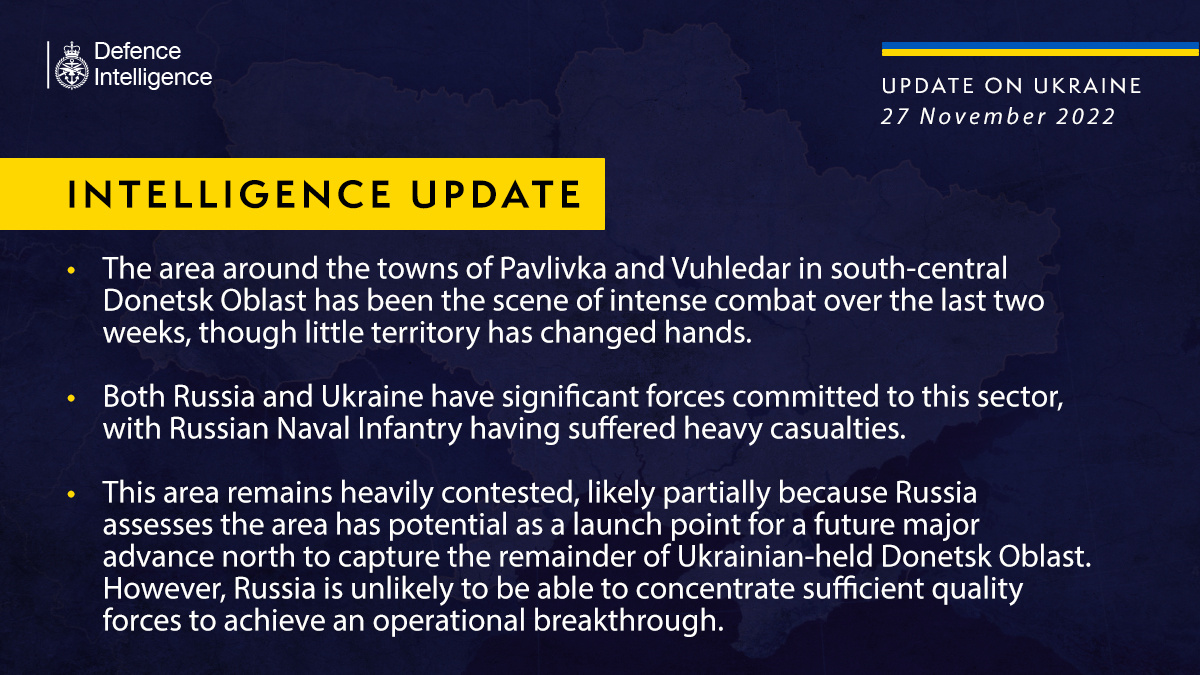
  • The area around the towns of Pavlivka and Vuhledar in south-central Donetsk Oblast has been the scene of intense combat over the last two weeks, though little territory has changed hands.
  • Both Russia and Ukraine have significant forces committed to this sector, with Russian Naval Infantry having suffered heavy casualties.
  • This area remains heavily contested, likely partially because Russia assesses the area has potential as a launch point for a future major advance north to capture the remainder of Ukrainian held Donetsk Oblast. However, Russia is unlikely to be able to concentrate sufficient quality forces to achieve an operational breakthrough.

The post British Defence Intelligence Update Ukraine – 27 November 2022 appeared first on Kyiv Post.

Categories
Audio Sources - Full Text Articles

ISW Russian Offensive Campaign Assessment, November 26

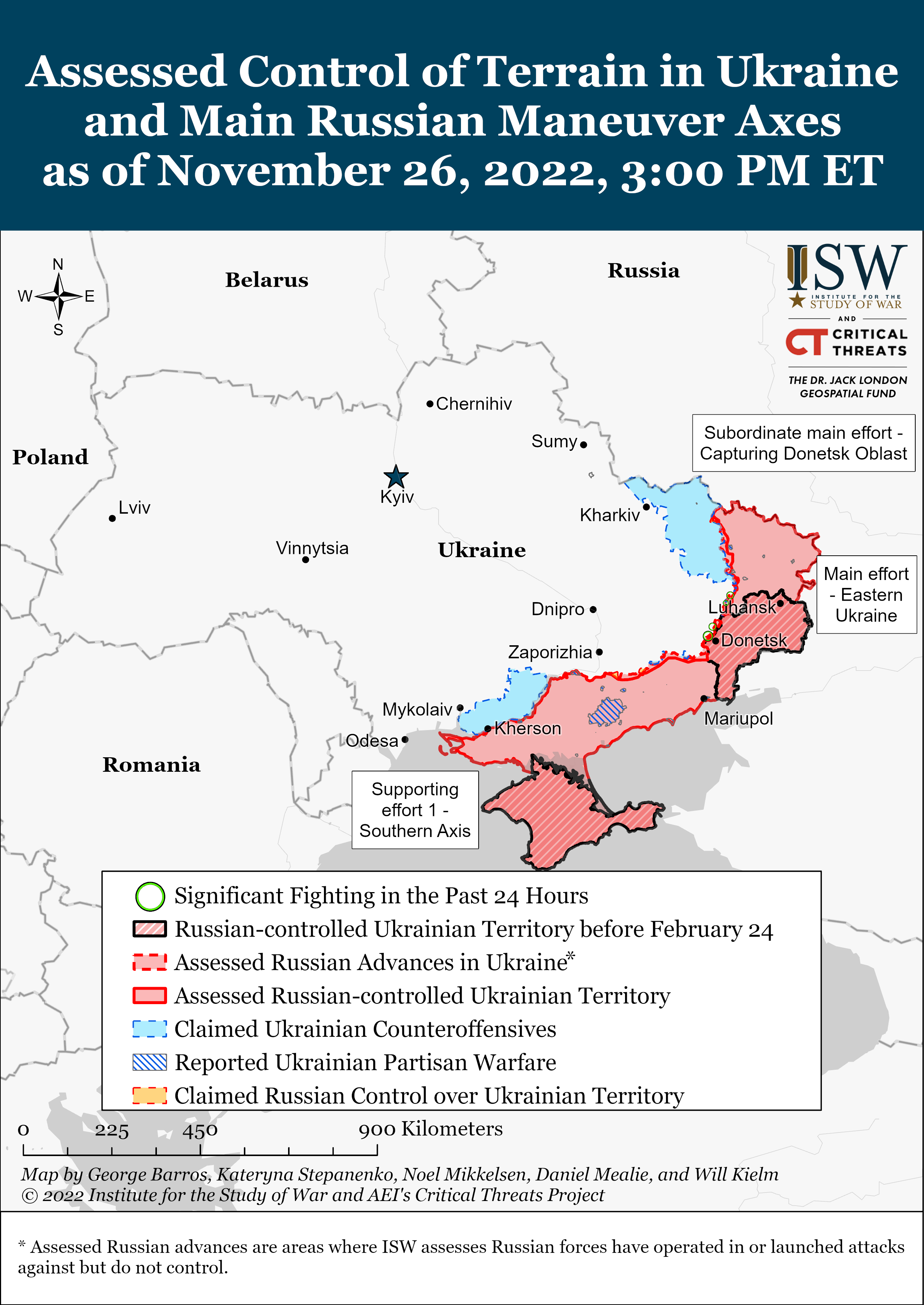
1-4.png

Key Takeaways

  • The overall pace of operations in Ukraine is likely to increase in the upcoming weeks as the ground freezes throughout the theater.
  • Russian officials are continuing efforts to deport Ukrainian children to Russia.
  • Russian officials may be trying to counteract Wagner financier Yevgeny Prigozhin’s growing influence through the promotion of other parallel Russian military structures.
  • Russian forces are likely using inert Kh-55 missiles designed solely to carry nuclear warheads in its campaign against Ukrainian infrastructure, highlighting the Russian military’s depletion of high-precision weapons.
  • Russian forces continued defensive operations against ongoing Ukrainian counteroffensive operations along the Svatove-Kreminna line.
  • Russian forces continued offensive operations in the directions of Bakhmut and Avdiivka.
  • Russian forces continued establishing fortifications in eastern Kherson Oblast.
  • Russian tactical, logistical, and equipment failures continue to decrease the morale of Russian troops and drive searches for scapegoats.

The overall pace of operations along the frontline has slowed in recent days due to deteriorating weather conditions but is likely to increase starting in the next few weeks as temperatures drop and the ground freezes throughout the theater. Ukrainian and Russian reporting from critical frontline areas throughout eastern and southern Ukraine, including Svatove, Bakhmut, and Vuhledar, indicates that operations on both sides are currently bogged down by heavy rain and resulting heavy mud.[1] Temperatures are forecasted to drop throughout Ukraine over the next week, which will likely freeze the ground and expedite the pace of fighting as mobility increases for both sides. The temperature in areas in Ukraine’s northeast, such as along the Svatove-Kreminna line, will dip to near-or-below-freezing daily highs between November 28 and December 4. It will likely take the ground some days of consistent freezing temperatures to solidify, which means that ground conditions are likely to be set to allow the pace of operations to increase throughout Ukraine over the course of the weekend of December 3-4 and into the following week. It is unclear if either side is actively planning or preparing to resume major offensive or counter-offensive operations at that time, but the meteorological factors that have been hindering such operations will begin lifting.

Russian officials are continuing efforts to deport children to Russian under the guise of medical rehabilitation schemes and adoption programs. The Ukrainian Resistance Center reported on November 26 that the Russian occupation administration in Luhansk Oblast conducted medical examinations of 15,000 children between the ages of two and 17 and found that 70% of the children (10,500) are in need of “special medical care” that requires them to be removed to Russia for “treatment.”[2] The Resistance Center stated that Russian officials intend these forced deportation schemes to lure children’s families to Russia to collect their children after the children receive treatments, at which point the Resistance Center assessed Russian officials will prevent those families from returning home to Ukraine. The Center‘s report is consistent with ISW’s previous assessment that Russian officials are conducting a deliberate depopulation campaign in occupied Ukrainian territories.[3]

Russian Commissioner for Children’s Rights Maria Lvova-Belova additionally posted an excerpt from a documentary film chronicling the story of the children she adopted from Mariupol.[4] Lvova-Belova has largely been at the forefront of the concerted Russian effort to remove Ukrainian children from Ukrainian territory and adopt them into Russian families, which may constitute a violation of the Geneva Convention as well as a deliberate ethnic cleansing campaign.[5] Lvova-Belova’s documentary is likely meant to lend legitimacy to the ongoing adoption of Ukrainian children into Russian families, just as the guise of medical necessity is likely intended to justify mass deportations of Ukrainian children to Russian territory.

Russian officials may be attempting to counterbalance the influence of Wagner Group financier Yevgeny Prigozhin through the promotion of other parallel military structures. The Ukrainian Main Intelligence Directorate (GUR) reported on November 26 that Russian officials appointed a Viktor Yanukovych-linked, pro-Kremlin businessman, Armen Sarkisyan, as the new administrator for prisons in Russian-occupied territories in Ukraine and that Sarkisyan intends to use the role to create a new “private military company.”[6] The GUR reported that Sarkisyan modeled his effort to create a new private military company on the Wagner Group’s recruitment of prisoners in the Russian Federation and that Russian-Armenian businessman Samvel Karapetyan is sponsoring the effort.[7] Karapetyan is the owner of Tashir Holding company, a longtime subcontractor for Russian state-owned energy company Gazprom.[8] The GUR reported that Sarkisyan’s attempt to create a new private military structure is an attempt to create a counterweight to Prigozhin’s de facto monopoly in the field of Russian private military companies.[9] It is likely that high-ranking Russian officials have approved Sarkisyan’s efforts as private military companies are illegal in Russia.

Head of the Chechen Republic Ramzan Kadyrov reported that he met with Russian President Vladimir Putin on November 25 and claimed that they discussed the participation of Chechen units in the war in Ukraine and the creation of new Russian military and Rosgvardia units comprised of Chechen personnel.[10] ISW has previously reported that Kadyrov routinely promotes his efforts to create Chechen-based parallel military structures.[11] Russian officials may be further promoting Kadyrov’s existing parallel military structures and Sarkisyan’s efforts to create a private military company to counteract the growing influence of Prigozhin, whom ISW has previously assessed uses his own parallel military structures to establish himself as a central figure in the Russian pro-war ultranationalist community.[12]

Russian forces are likely using inert Kh-55 cruise missiles in their massive missile strike campaign against Ukrainian critical infrastructure, further highlighting the depletion of the Russian military’s high-precision weapons arsenal. The United Kingdom Ministry of Defense (MoD) reported on November 26 that Russia is likely removing nuclear warheads from aging Kh-55 missiles and launching the missiles without warheads at targets in Ukraine.[13] The UK MoD suggested that Russian forces are likely launching the inert missiles as decoys to divert Ukrainian air defenses.[14] Ukrainian officials have previously reported that since mid-October, Russian forces have extensively used the non-nuclear variant of the missile system, the Kh-555, to conduct strikes on critical Ukrainian infrastructure.[15] The Russian military’s likely use of a more strategic weapon system in the role of a decoy for Ukrainian air defenses corroborates ISW’s previous reporting that the Russian military has significantly depleted its arsenal of high-precision missiles.[16] The use of more strategic weapons systems in support of the campaign against Ukrainian infrastructure suggests that the Russian military is heavily committed to the strike campaign and still mistakenly believes that it can generate strategically significant effects through that campaign.

See the full report here.

The post ISW Russian Offensive Campaign Assessment, November 26 appeared first on Kyiv Post.

Categories
Audio Sources - Full Text Articles

Russian military death toll in Ukraine climbs to 87,310

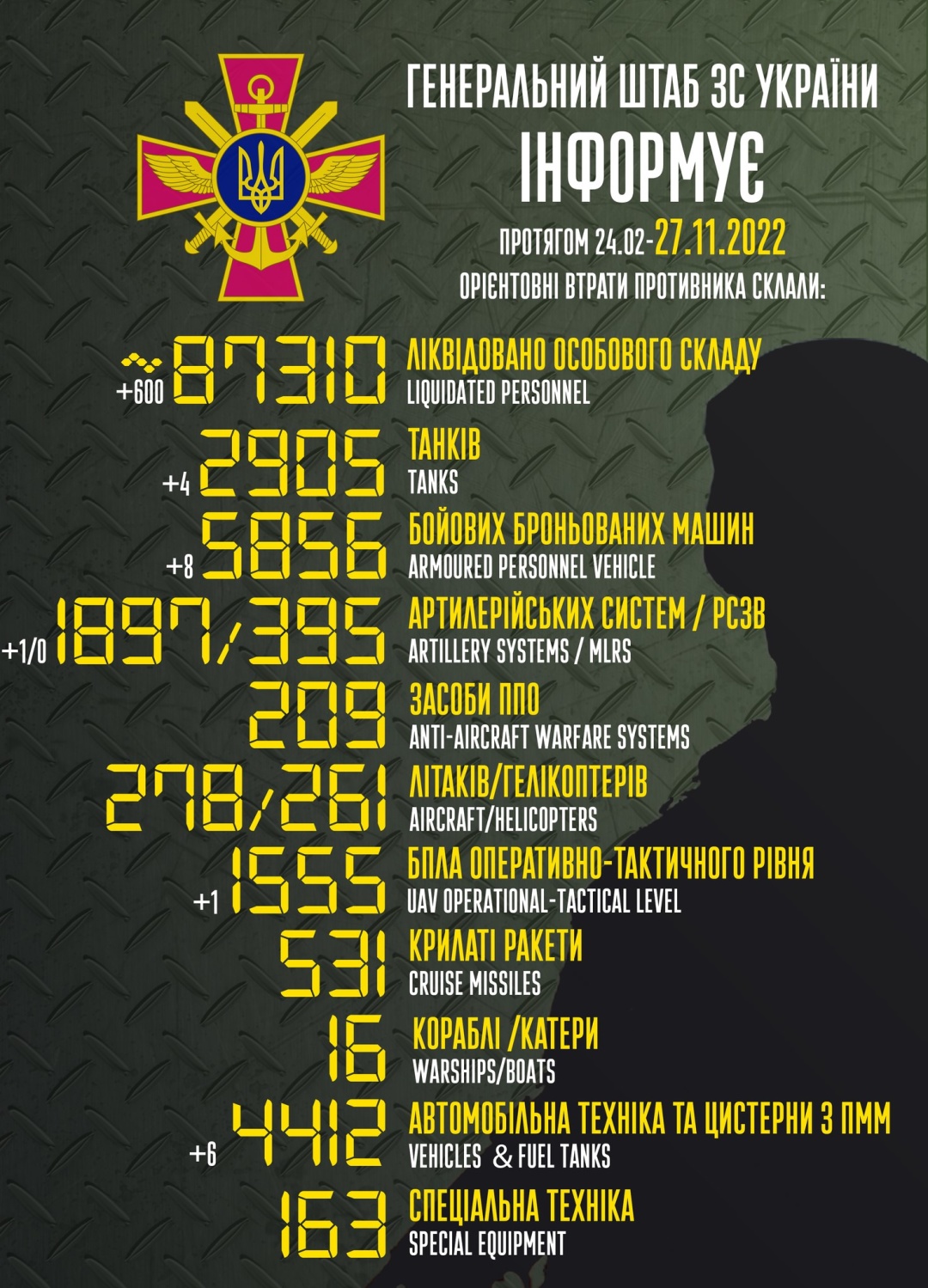
The Armed Forces of Ukraine have by now eradicated about 87,310 Russian troops in Ukraine from February 24 to November 27, like 600 over the previous working day on your own.

The Typical Staff of the Armed Forces of Ukraine claimed this in a submit on Fb, in accordance to Ukrinform.

The enemy’s complete battle losses include also 2,905 tanks (+4 about the past working day), 5,856 armored beat motor vehicles (+8), 1,897 artillery programs (+1), 395 numerous launch rocket programs, 209 air defense units, 278 warplanes, 261 helicopters, 1,555 operational and tactical unmanned aerial units (+1), 531 cruise missiles, 4,412 trucks and tankers (+6), 16 warships/cutters, and 163 parts of unique tools.

Info on enemy losses is getting further more clarified.

Source link

The post Russian military death toll in Ukraine climbs to 87,310 appeared first on Ukraine Intelligence.

Categories
Audio Sources - Full Text Articles

Russian troops strike agricultural enterprise in Zaporizhzhia suburbs

630_360_1669529487-242.jpg

At evening, the enemy fired S-300 missiles at an agricultural organization in the suburbs of Zaporizhzhia town.

“This night time, Russian savages released yet another missile attack on the suburbs of Zaporizhzhia. As two missiles (probably S-300) exploded, a hearth broke out in the territory of 1 of the agricultural enterprises, a fence and a developing ended up destroyed,” Oleksandr Starukh, Head of the Zaporizhzhia Regional Military Administration, posted on Telegram.

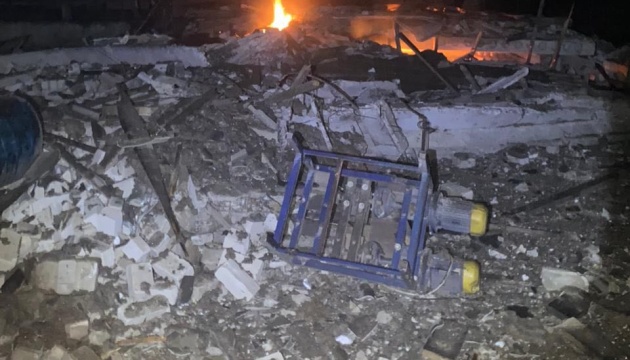
According to preliminary data, an ostrich farm was hit. People today ended up not injured.

As reported, the enemy was shelling communities in Dnipropetrovsk region for 5 hrs at evening.

ol

Source link

The post Russian troops strike agricultural enterprise in Zaporizhzhia suburbs appeared first on Ukraine Intelligence.

Categories
Audio Sources - Full Text Articles

Russia“s war on Ukraine latest news: Harsh winter looms as Russian strikes hobble Ukraine“s power capacity

2022-11-22T19:47:14Z

Russian drones hit Dnipro early on Wednesday (November 9), damaging a warehouse and wounding four workers, according to Ukraine officials.

Ukraine’s government appealed to people to conserve energy amid relentless Russian strikes that have halved the country’s power capacity, as the United Nations health body warned of a humanitarian disaster in Ukraine this winter.

* Ukraine’s national power grid operator said the damage dealt to Ukrainian power-generating facilities by Russian missile attacks was “colossal” but he dismissed the need to evacuate civilians.

* The Kremlin said no substantive progress had been made towards creating a security zone around Zaporizhzhia nuclear power plant in southern Ukraine, once again accusing Kyiv of shelling at the plant and risking a nuclear incident.

* There are no immediate nuclear safety or security concerns at the Russian-held Zaporizhzhia reactor complex despite shelling at the weekend that caused widespread damage, the U.N. atomic watchdog said after its experts toured the site.

* Moscow and Kyiv blame each other for repeated shelling in the immediate area of the facility.
CONFLICT

* Battles continued to rage in the east, where Russia has sent some of the forces it moved following its withdrawal from around the city of Kherson in the south. Moscow is pressing an offensive of its own along a stretch of frontline west of the city of Donetsk, held by its proxies since 2014.

* “The enemy does not stop shelling the positions of our troops and settlements near the contact line (in the Donetsk region),” the General Staff of the Ukrainian Armed Forces said.

* Russian air defences repelled two drone attacks in Crimea, annexed from Ukraine in 2014, including one targeting a thermal power station near Sevastopol, the home port of Russia’s Black Sea fleet, the regional governor said.

* Russian shelling hit a humanitarian aid distribution centre in the town of Orihiv in southeastern Ukraine, killing a volunteer and wounding two women, the regional governor said.

* Reuters could not independently verify the battlefield accounts.

* Ukraine’s SBU security service and police raided a 1,000-year-old Orthodox Christian monastery in Kyiv as part of operations to counter suspected “subversive activities by Russian special services”, the SBU said.

* Russia’s Orthodox Church condemned the raid as an “act of intimidation”.

* Russian President Vladimir Putin will in the coming days meet the mothers of reservists called up to fight in Ukraine, the Kremlin said.

* Chancellor Olaf Scholz said Germany must be ready for the situation in Ukraine to escalate but that his recent trip to China was worth it alone for spelling out the two countries’ joint stance against using nuclear weapons.

* Disbursement of $4.5 billion in U.S. economic aid for Ukraine will begin in the coming weeks, Treasury Secretary Janet Yellen said.

“Stock up on warm clothes, blankets, think about options that will help you wait a long outage. It’s better to do it now than to be miserable.” –Sergey Kovalenko, the head of YASNO, which provides energy for Kyiv.

Related Galleries:

Light is seen inside an apartment in a residential building during a power cut amid Russia’s attack on Ukraine, in Kyiv, Ukraine November 20, 2022. REUTERS/Valentyn Ogirenko
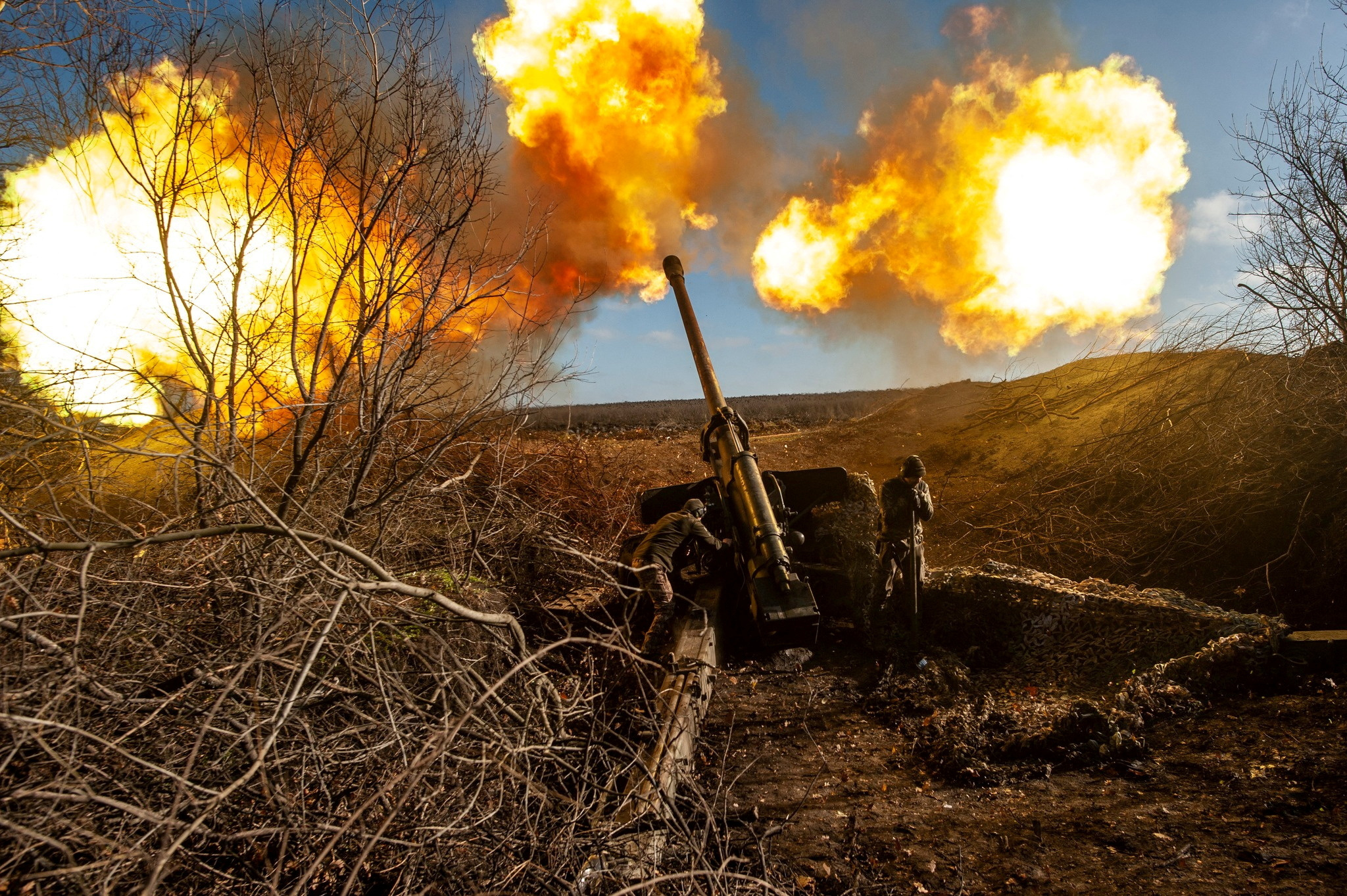
Ukrainian servicemen fire a 130 mm towed field gun M-46 on a front line, as Russia’s attack on Ukraine continues, near Soledar, Donetsk region, Ukraine, in this handout image released November 10, 2022. Iryna Rybakova/Press Service of the 93rd Independent Kholodnyi Yar Mechanized Brigade of the Ukrainian Armed Forces/Handout via REUTERS ATTENTION
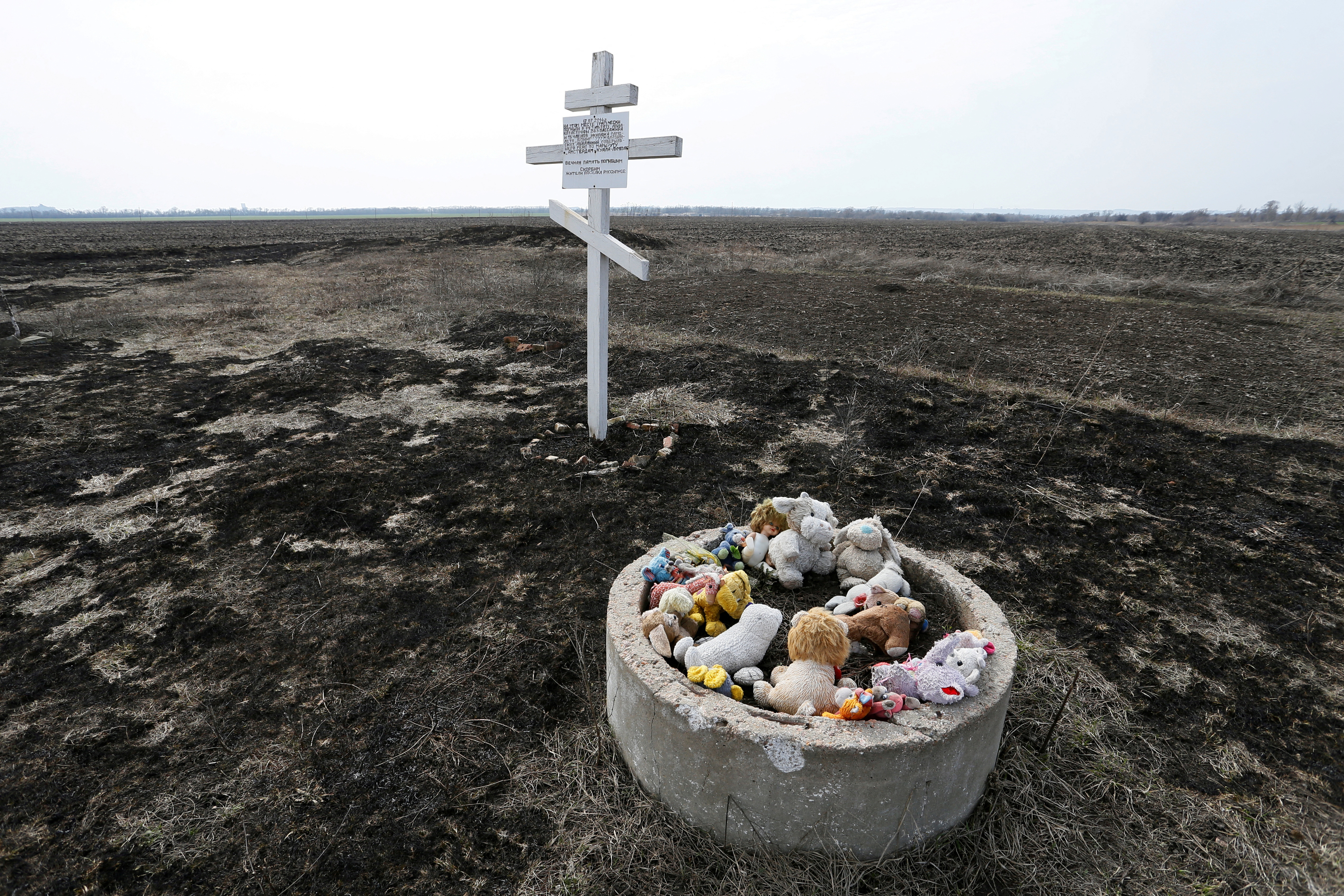
Toys are placed near the cross in memory of victims of Malaysia Airlines Flight MH17 plane crash in the village of Rozsypne in Donetsk region, Ukraine March 9, 2020. REUTERS/Alexander Ermochenko
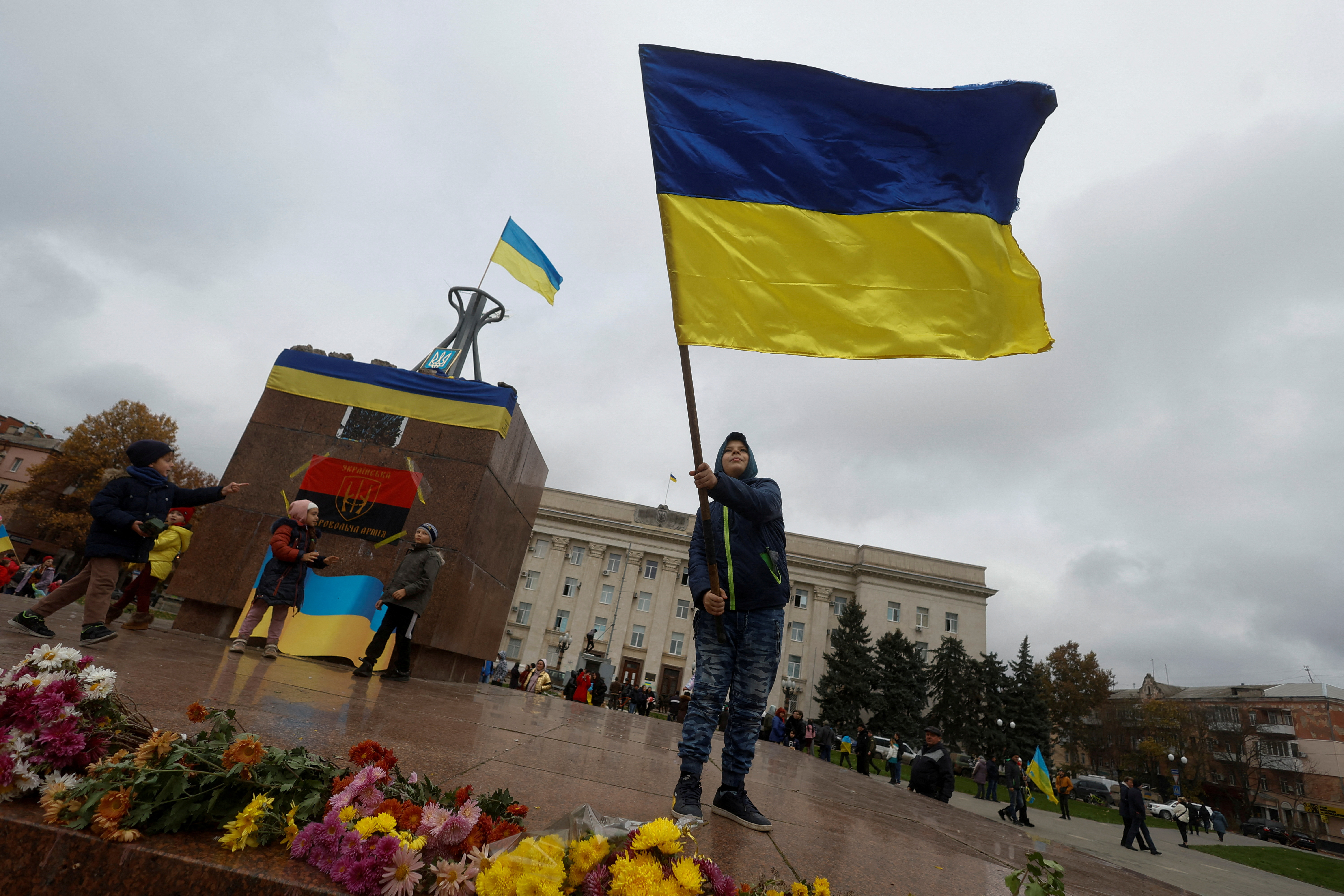
A boy waves a national flag as he celebrates after Russia’s retreat from Kherson, in central Kherson, Ukraine November 13, 2022. REUTERS/Valentyn Ogirenko
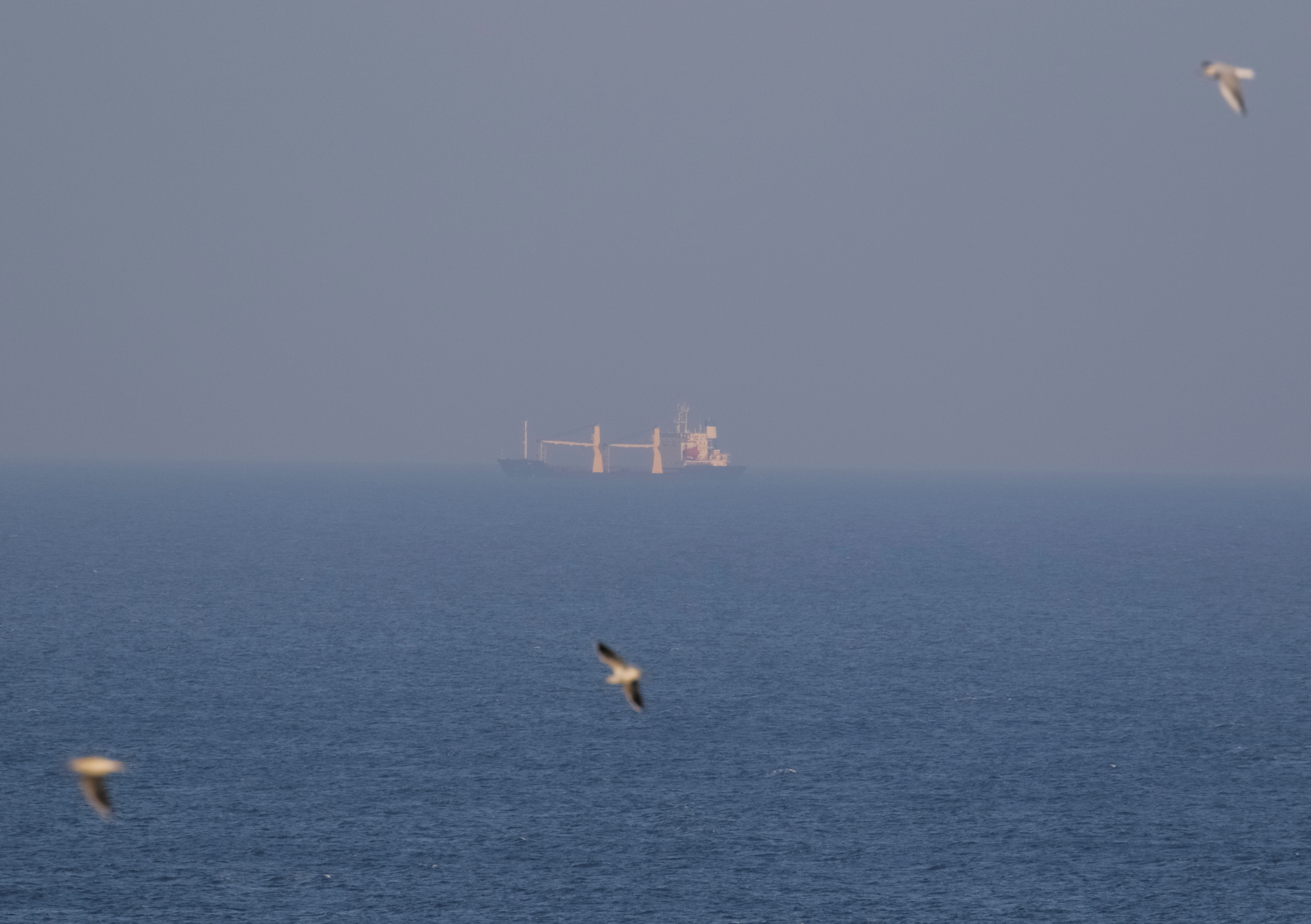
A grain ship carrying Ukrainian grain is seen in the Black Sea, amid Russia’s attack on Ukraine, near Ukrainian port of Odesa, Ukraine November 2, 2022. REUTERS/Serhii Smolientsev
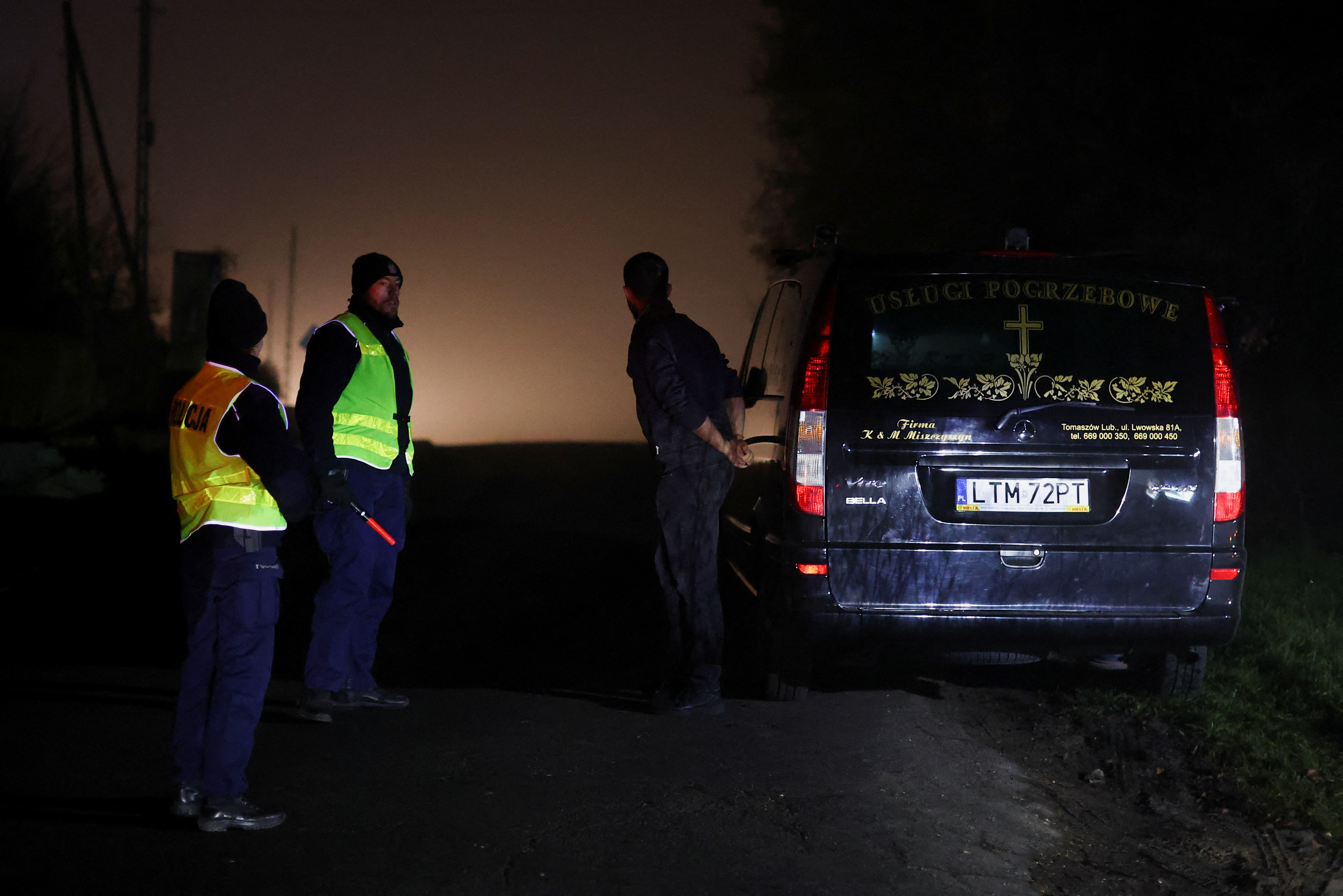
Police officers stand at a blockade after an explosion in Przewodow, a village in eastern Poland near the border with Ukraine, November 16, 2022. REUTERS/Kacper Pempel
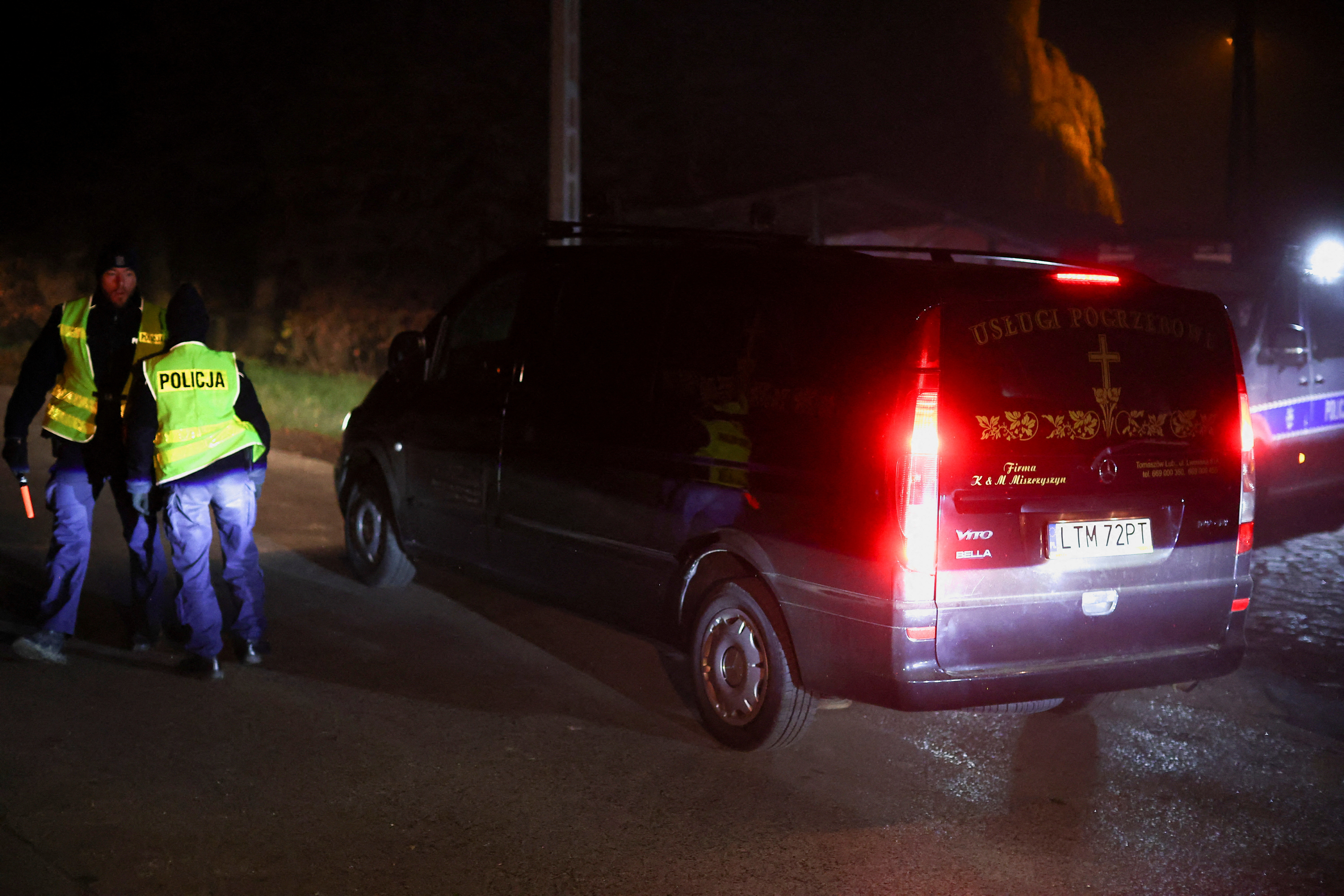
A hearse drives past a police blockade after explosions in Przewodow, a village in eastern Poland near the border with Ukraine, November 16, 2022. REUTERS/Kacper Pempel
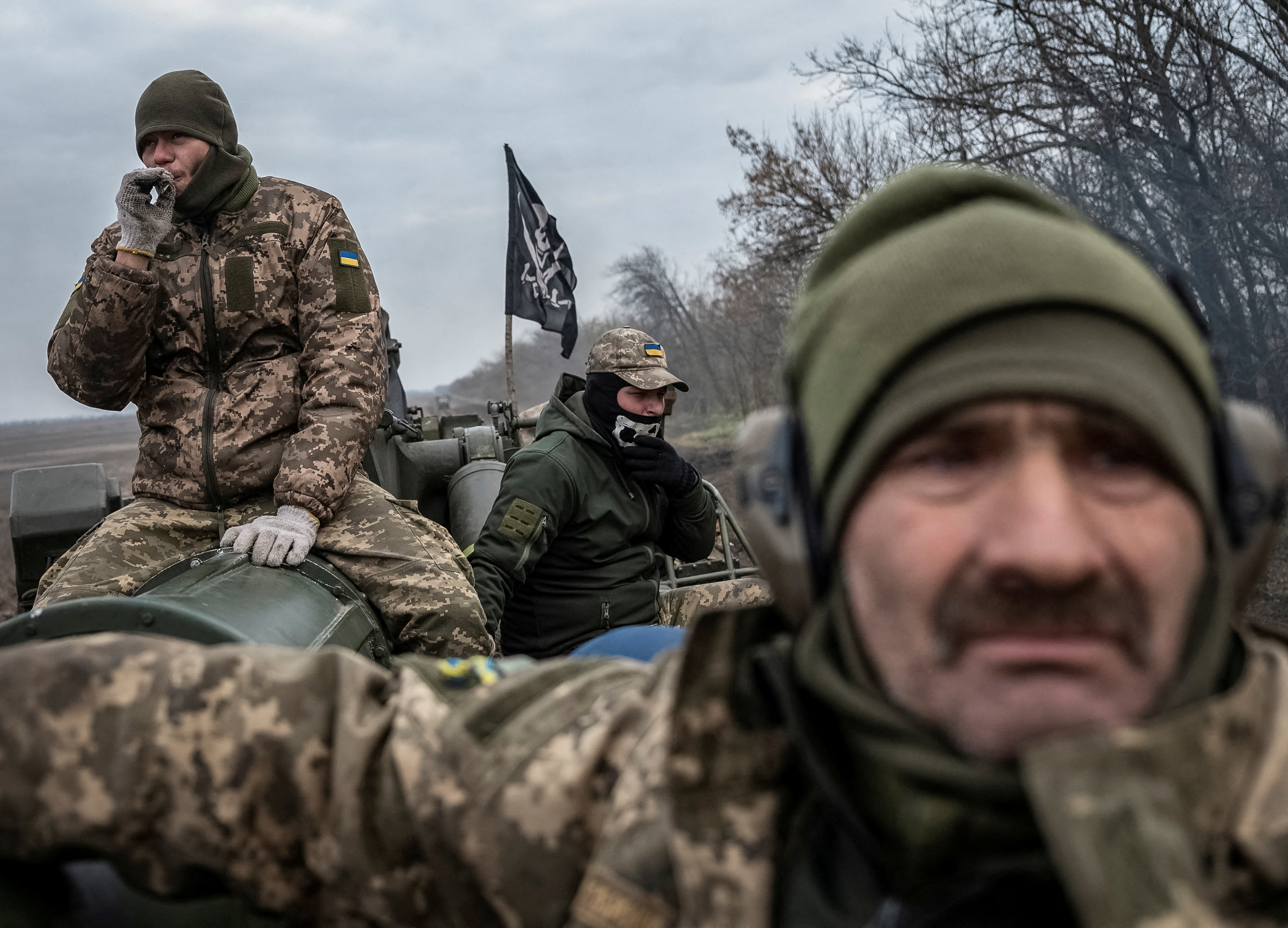
Ukrainian servicemen ride a 2S7 Pion self-propelled gun, as Russia’s attack on Ukraine continues, near a frontline in Kherson region, Ukraine November 9, 2022. REUTERS/Viacheslav Ratynskyi
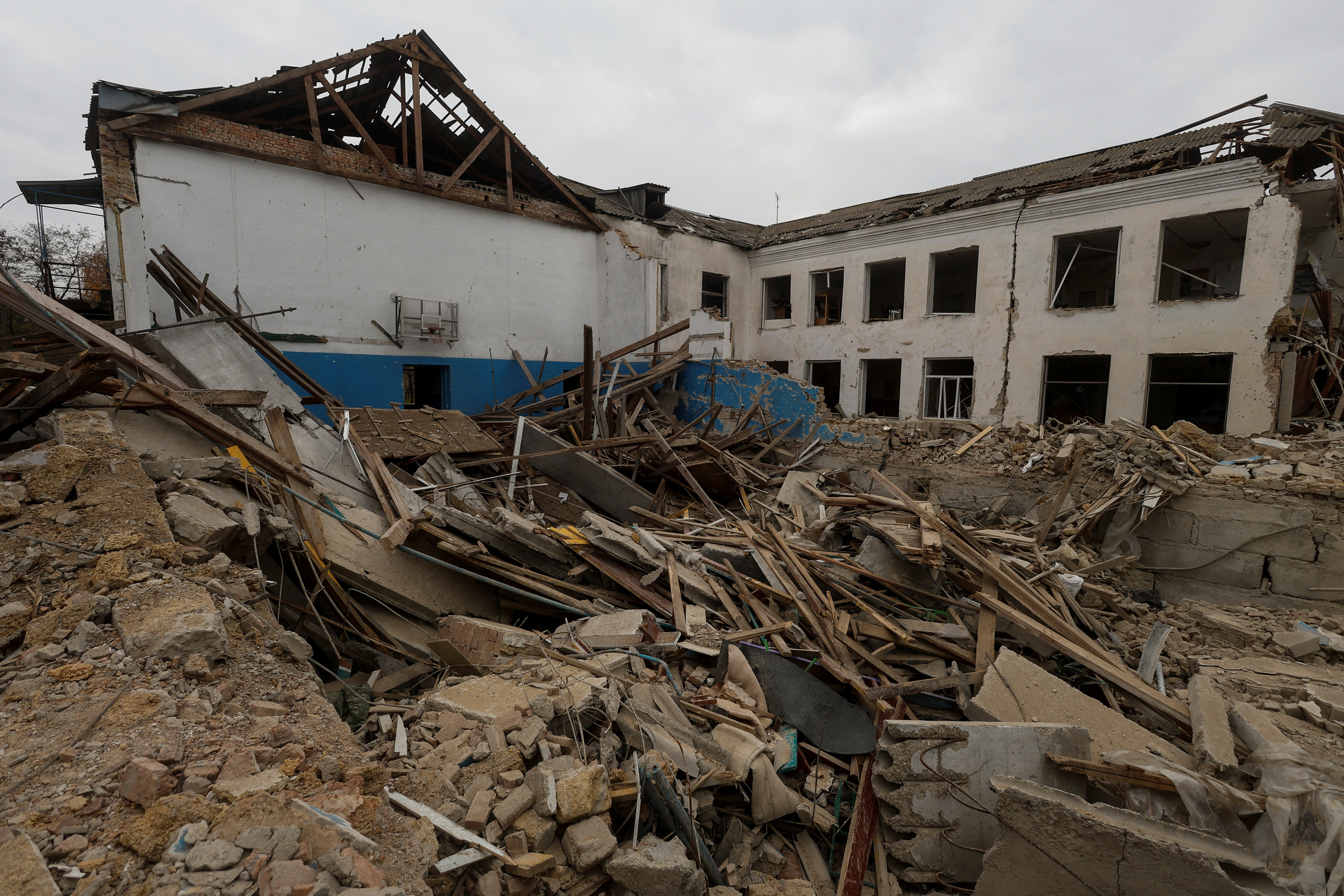
A view shows a building of a local school destroyed during a Russian missile attack in the village of Novooleksandrivka, in Kherson region, Ukraine November 9, 2022. REUTERS/Valentyn Ogirenko
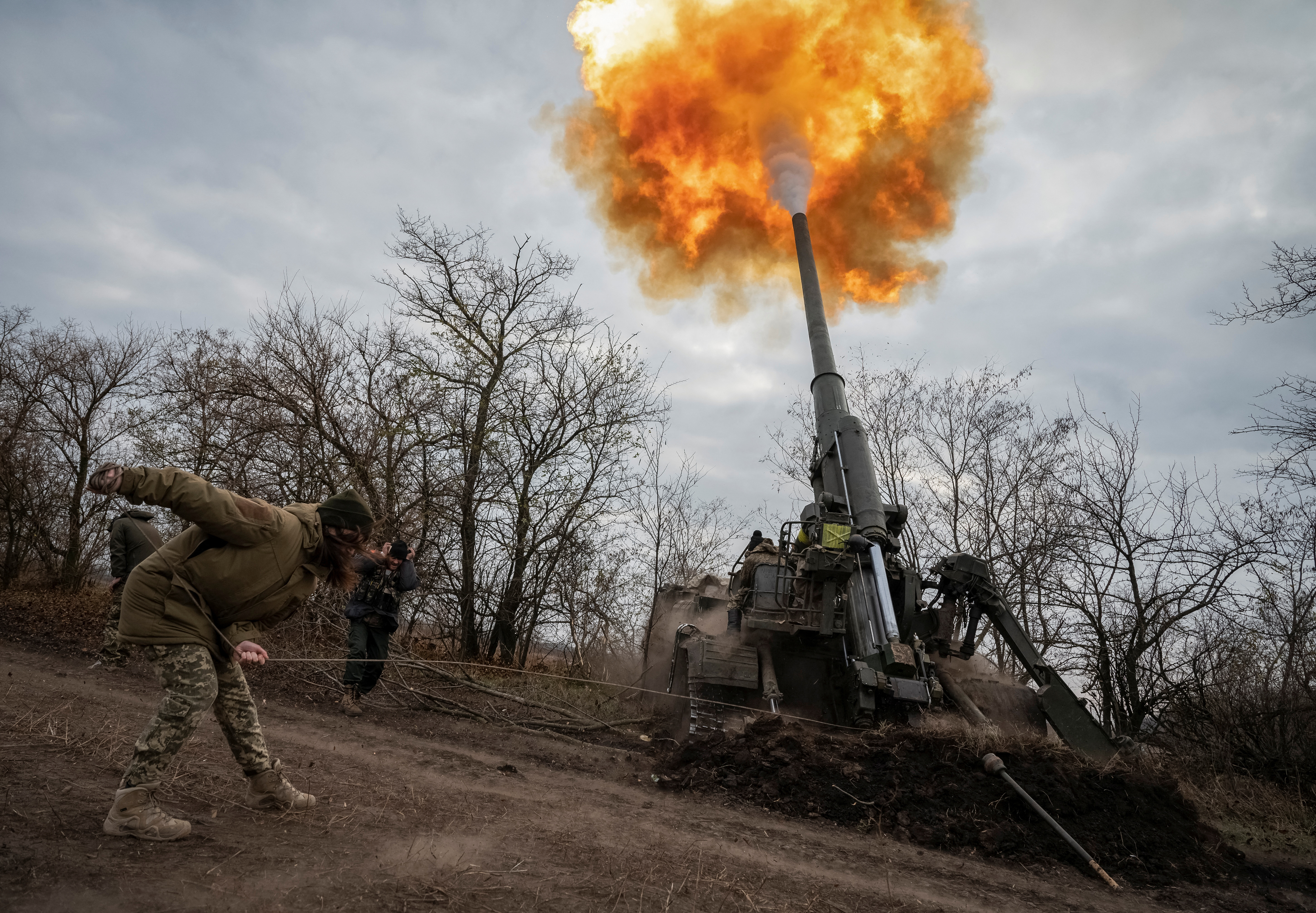
Ukrainian servicemen fire a 2S7 Pion self-propelled gun at a position, as Russia’s attack on Ukraine continues, on a frontline in Kherson region, Ukraine November 9, 2022. REUTERS/Viacheslav Ratynskyi
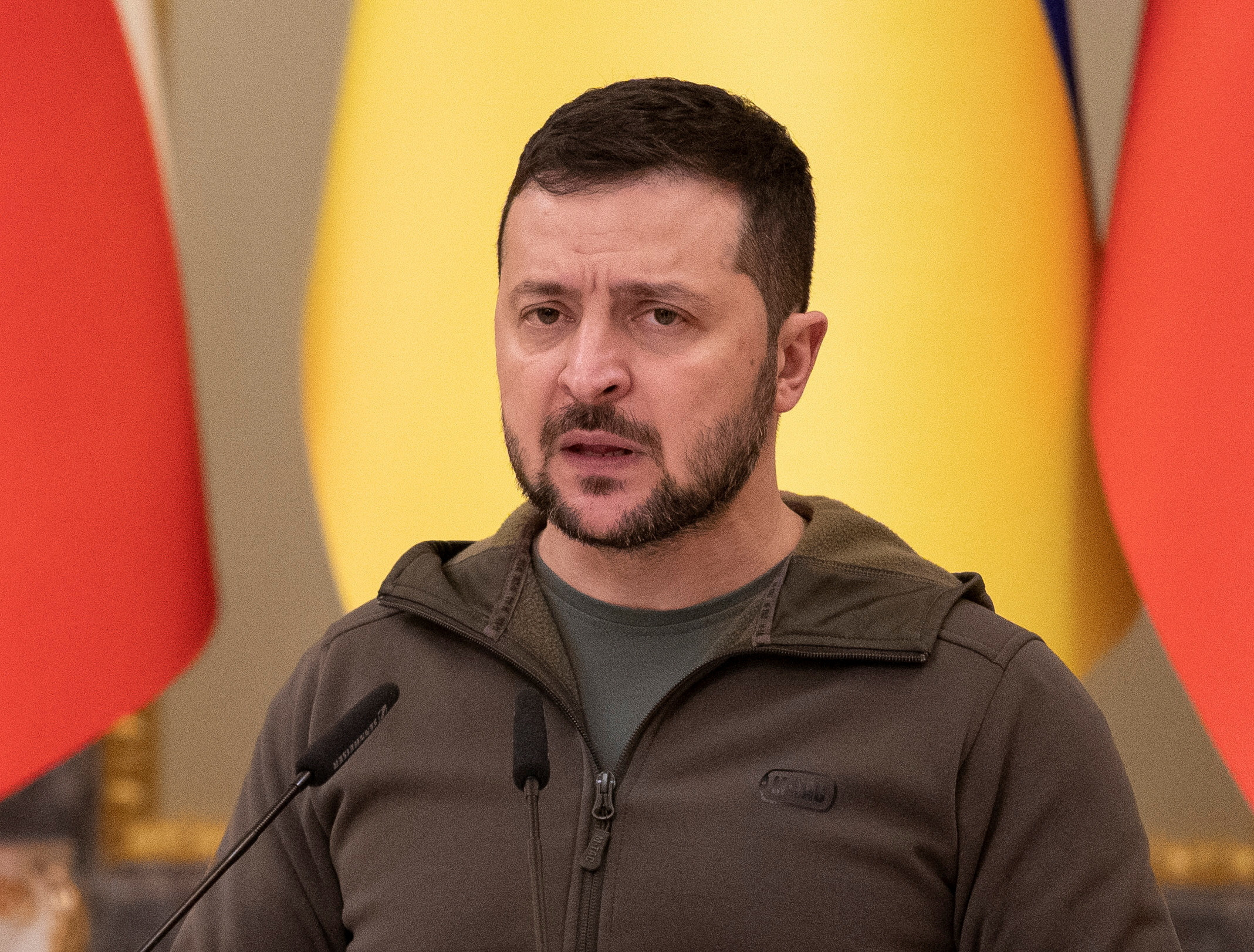
Ukraine’s President Volodymyr Zelenskiy speaks during a joint news conference with Czech Prime Minister Petr Fiala (not seen), as Russia’s attack on Ukraine continues, in Kyiv, Ukraine October 31, 2022. REUTERS/Viacheslav Ratynskyi

Combine harvesters load a truck with wheat in a field near the village of Tomylivka, as Russia’s attack on Ukraine continues, in Kyiv region, Ukraine August 1, 2022. REUTERS/Viacheslav Ratynskyi/File Photo

Categories
Audio Sources - Full Text Articles

Beirut “neighbourhood watch“ echoes troubled past

2022-11-27T06:03:59Z

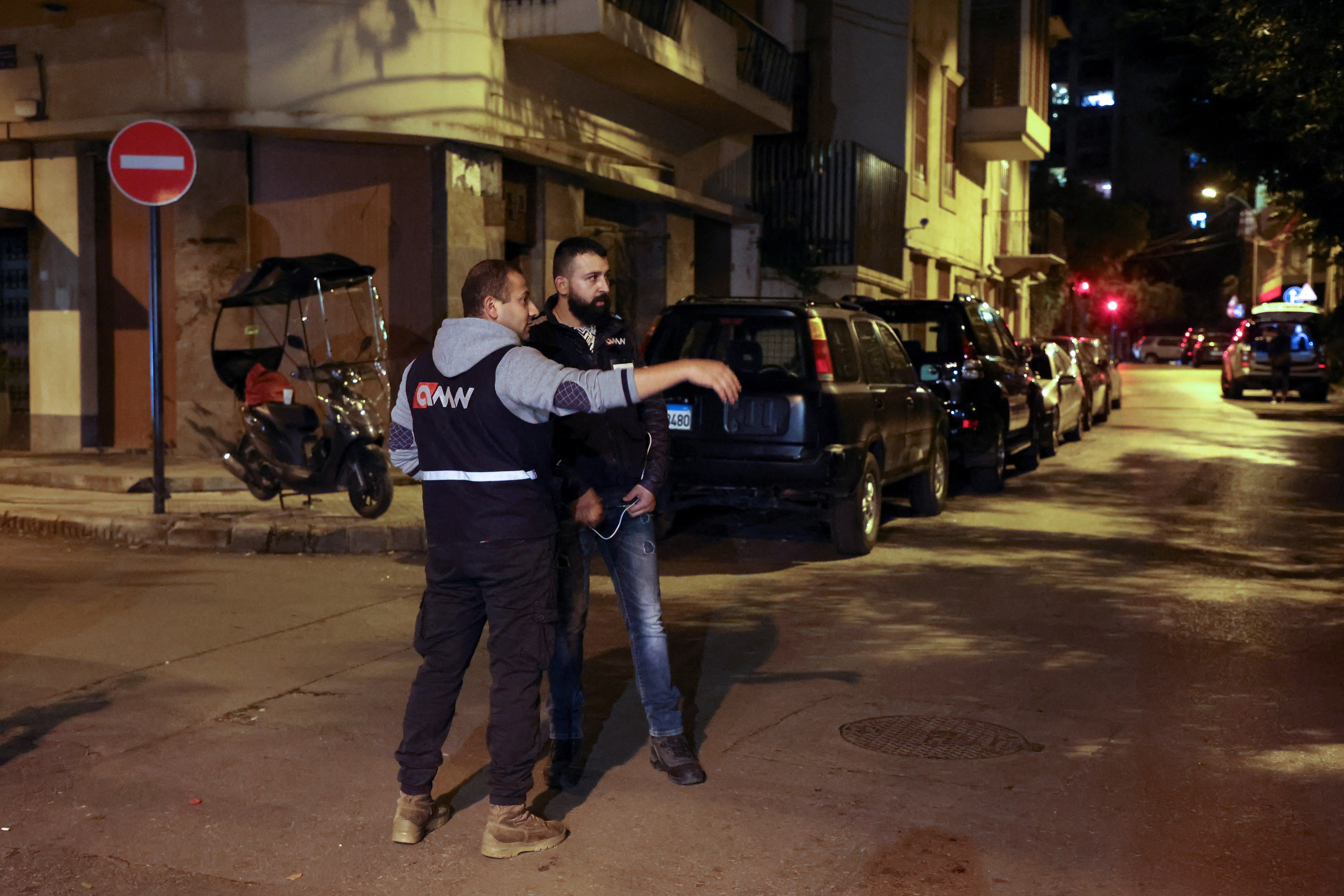
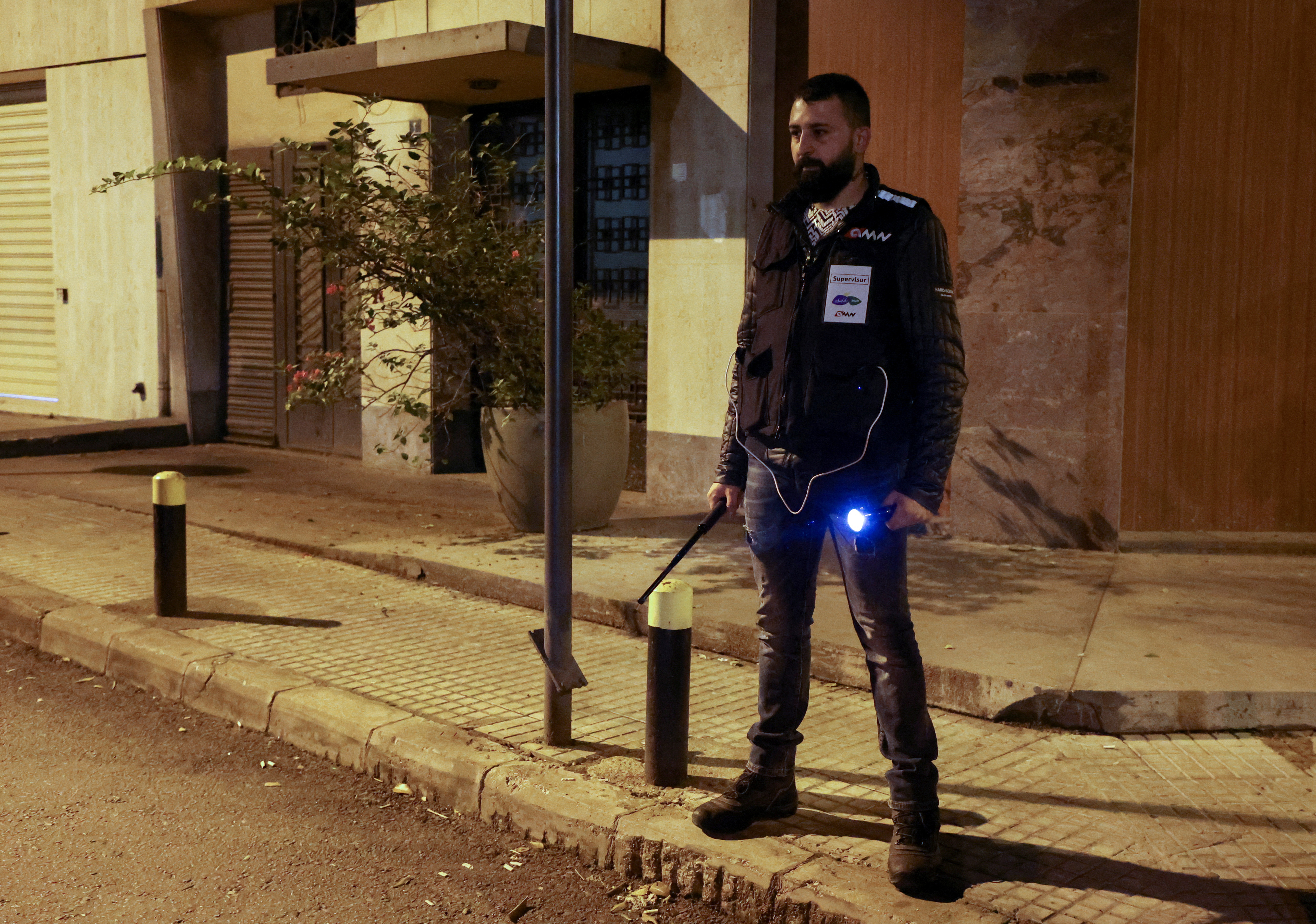
In the darkness of Beirut’s unlit streets, men wielding batons and torches are taking security into their own hands in an initiative they hope will keep neighbourhoods safe but critics see as a worrying echo of Lebanon’s troubled past.

The neighbourhood watch, launched earlier this month in some of Beirut’s most salubrious streets, is the latest symptom of the crisis that has afflicted Lebanon since its economy collapsed in 2019, paralysing much of the state and fuelling poverty in the worst shock since the 1975-90 civil war.

To supporters of the scheme – the idea of Christian politician Nadim Gemayel and organised by a civil society group he founded – the men deployed in the city’s Ashrafieh district offer reassurance to residents worried about crime.

But among critics, their appearance has evoked parallels with the civil war when the state collapsed, militias controlled the streets and Beirut split into cantons. The mayor has expressed concern it could prompt others to follow suit.

Such criticisms are rejected by Gemayel, a lawmaker in the Kataeb Party whose father, Bashir, led the main Christian militia in the civil war until he was assassinated in 1982 after being elected president.

“We are not a militia, we are not armed, we don’t have rockets or drones,” he said, referring to the heavily armed, Iran-backed Shi’ite group Hezbollah.

“The big problem we are suffering today in Beirut and all Lebanon is that there’s no electricity, there’s no security, no feeling of reassurance, and all the streets are dark,” he said, describing the state as “absent”.

“If they had done their duty and lit the streets, we would not have been forced to light the streets, and if they … had not allowed the country to collapse, we would not be forced today to stand in the streets to reassure our people,” he said.

The initiative – which currently has 98 recruits – was launched in coordination with the security services and aimed to complement their work, Gemayel said, adding the security forces were suffering a manpower shortfall due to the crisis.

Lebanon’s security services, like the rest of the state, have been hit hard by a 95% currency collapse which has destroyed the value of wages paid to soldiers and police.

The United States is buttressing them with aid, including salary support.

A spokesman for the Internal Security Forces (ISF) did not respond to a request for comment.

The crisis has driven a spike in crimes, including armed robberies, carjackings, handbag snatches and thefts of internet and telephone cables.

Still, army chief General Joseph Aoun said the army, the backbone of civil peace in Lebanon, was able to maintain order. “The security situation is under control… we have not previously accepted any violation of security and stability, and we will not accept it today,” he said.

Beirut Mayor Jamal Itani said he learnt about the initiative on the news, and was worried it could cause tension.

“Say they catch a thief from one party or people intervene with guns, then things could get out of hand,” he told Reuters.

“My second fear is that other areas will also ask for this and then each area will have a group for itself managing security in their area.”

Lebanon’s sectarian parties disarmed at the end of the war, bar Hezbollah, which kept its arsenal to fight Israel. Their pervasive influence is never far from the surface and tensions are common in a country awash with guns.

Supporters of different groups fought deadly clashes in Beirut as recently as last year.

Mohanad Hage Ali of the Carnegie Middle East Center said the initiative was a clear example of security being organised locally under a political umbrella, adding that this trend had surfaced earlier in the crisis and was unfolding less visibly elsewhere.

Security, like electricity, would increasingly be enjoyed by those who could afford it, he added.

Gemayel said the finance came from local donors, with logistics organised by a security company. Recruits earn $200 a month for a six-hour shift – much needed income for many.

He expects expansion.

Shopkeeper George Samaha welcomed it.

“We were more assured because nothing is guaranteed given this bad situation we’re living,” said Samaha, 51.

But lawmaker Paula Yacoubian called it “short-sighted”.

“Are we back to the time of militias?” she said.

“This country is disintegrating and falling apart, and this is one of the things that will contribute to the fall of the country and the state.”

Related Galleries:

Members of ‘neighborhood watch’ are deployed in Ashrafieh district, Lebanon November 17, 2022. REUTERS/Mohamed Azakir

A member of ‘neighborhood watch’ carries a baton and a torch light as he stands guard on a street in Ashrafieh district, Lebanon November 17, 2022. REUTERS/Mohamed Azakir

A view shows the exterior of Lebanon’s Electricity Company and residential buildings during sunset in Beirut, Lebanon November 19, 2022. REUTERS/Issam Abdallah
Categories
Audio Sources - Full Text Articles

The Observer view on Britain’s feeble response to China’s assault on human rights | Observer editorial

Xi Jinping’s repressive policy on dissent in the former colony is starting to resemble a vendetta as Jimmy Lai faces a new trial

The trial of Jimmy Lai, the Hong Kong pro-democracy campaigner and media tycoon, which is due to begin this week, marks another low point in China’s relentless assault on individual and civil rights in Britain’s former colony – whose traditional freedoms Beijing is legally bound to uphold.

Lai, a UK citizen who founded the popular Apple Daily newspaper, faces charges of conspiracy to publish seditious material and collusion with foreign powers under Beijing’s draconian 2020 national security law. The accusations are offensive and ridiculous. In effect, China’s Communist party is mounting a show trial.

Continue reading…

WP Radio
WP Radio
OFFLINE LIVE