Categories
Saved Web Pages

In an Era of Confrontation, Biden and Xi Seek to Set Terms

12us-china1-facebookJumbo.jpg

Their first in-person presidential meeting, coming after both warned of deepening military, economic and diplomatic rivalry, will show how they address a range of U.S.-China tensions.

  • Send any friend a story

    As a subscriber, you have 10 gift articles to give each month. Anyone can read what you share.

    Give this articleGive this articleGive this article
President Biden in Egypt on Friday.

President Biden in Egypt on Friday.Credit…Doug Mills/The New York Times

Nov. 12, 2022Updated 6:04 p.m. ET

Just weeks after President Biden and his Chinese counterpart, Xi Jinping, laid out competing visions of how the United States and China are vying for military, technological and political pre-eminence, their first face-to-face meeting as top leaders will test whether they can halt a downward spiral that has taken relations to the lowest level since President Nixon began the opening to Beijing half a century ago.

Their scheduled meeting Monday in Indonesia will take place months after China brandished its military potential to choke off Taiwan, and the United States imposed a series of export controls devised to hobble China’s ability to produce the most advanced computer chips — necessary for its newest military equipment and crucial to competing in sectors like artificial intelligence and quantum computing.

Compounding the tension is Beijing’s partnership with Moscow, which has remained steadfast even after Russia’s invasion of Ukraine. Yet that relationship, denounced by the Biden administration, is so opaque that U.S. officials disagree on its true nature.

Whether it’s a partnership of convenience or a robust alliance, Beijing and Moscow share a growing interest in frustrating the American agenda, many in Washington believe. In turn, many in China see the combination of the U.S. export controls and NATO support for Ukraine as a foreshadowing of how Washington could try to contain China, and stymie its claims to Taiwan, a self-ruled island.

Xi Jinping of China and Vladimir V. Putin of Russia at the Shanghai Cooperation Organization summit in Samarkand, Uzbekistan, in September.Credit…Sergei Bobylyov/Sputnik, via Agence France-Presse — Getty Images

“This is in a sense the first superpower summit of the Cold War Version 2.0,” said Evan S. Medeiros, a Georgetown University professor who was President Obama’s top adviser on Asia-Pacific affairs. “Will both leaders discuss, even implicitly, the terms of coexistence amid competition? Or, by default, will they let loose the dogs of unconstrained rivalry?”

Tamping down expectations about the summit with Mr. Xi, American officials recently told reporters that they expected no joint statement on points of agreement to emerge. Still, Washington will dissect what Mr. Xi says publicly and privately, especially about Russia, Ukraine and Taiwan.

This month, Mr. Xi told the visiting German chancellor, Olaf Scholz, that China opposes “the threat or use of nuclear weapons,” an oblique but unusually public reproach to the Russian president Vladimir V. Putin’s saber rattling with tactical nuclear weapons.

If Mr. Xi cannot say something similar with an American president next to him, one senior administration official noted, it will be telling. China sees Russia as a vital counterweight to Western power, and Mr. Xi may hesitate to criticize Mr. Putin in front of Mr. Biden.

“If Putin used nuclear weapons, he would become the public enemy of humankind, opposed by all countries, including China,” said Hu Wei, a foreign policy scholar in Shanghai. But, he added, “If Putin falls, the United States and the West will then focus on strategic containment of China.”

A Ukrainian soldier in a former Russian base in the Kherson region of Ukraine on Friday. China has declined to rebuke Russia for the invasion, but Mr. Xi has obliquely criticized Mr. Putin’s nuclear hints.Credit…Lynsey Addario for The New York Times

For American officials, the Xi-Putin relationship is a topic of internal debate. Colin Kahl, the No. 3 official in the Pentagon, told reporters Tuesday that Chinese leaders have “been much more willing to signal that this thing is edging toward an alliance as opposed to just a superficial partnership.” Mr. Biden seems doubtful. “I don’t think there’s a lot of respect that China has for Russia or for Putin,” he said the next day.

Mr. Xi and Mr. Biden have talked on the phone five times in the past 18 months. This will be different: For the first time since assuming the presidency, Mr. Biden will “sit in the same room with Xi Jinping, be direct and straightforward with him as he always is, and expect the same in return from Xi,” Jake Sullivan, the National Security Adviser, said at a White House briefing Thursday.

“There just is no substitute for this kind of leader-to-leader communication in navigating and managing such a consequential relationship,” Mr. Sullivan said.

During the past three decades, trips by American presidents to Beijing and Chinese presidents to Washington became relatively commonplace. Testy exchanges over disputes were often balanced by promises to cooperate on areas of mutual interest, whether climate change or containing North Korea’s nuclear program. For now, it is hard to imagine a meeting taking place in either capital, especially with China still under heavy Covid controls.

Summits on neutral ground, like this one in Bali ahead of the Group of 20 meeting of leaders, have an increasingly Cold War feel: more about managing potential conflict than finding common ground. The rancorous distrust means that even short-term stabilization and cooperation on shared challenges, like stopping pandemics, could be fragile.

A production line of circuit boards at a factory in Nantong, China, in September. New U.S. restrictions on selling semiconductor technology to China could slow its technological progress.Credit…Visual China Group, via Getty Images

Neither side calls it a Cold War, a term evoking a world divided between Western and Soviet camps bristling with nuclear arsenals. And the differences are real between that era and this one, with its vast trade flows and technological commerce between China and Western powers.

The Apple iPhone and many other staples of American life are assembled almost entirely in China. Instead of trying to build a formal bloc of allies as the Soviets did, Beijing has sought to influence nations through major projects that create dependency, including wiring them with Chinese-made communications networks.

Even so, the declarations surrounding Mr. Xi’s appointment to a third term and Mr. Biden’s new national security, defense and nuclear strategies have described an era of growing global uncertainty heightened by competition — economic, military, technological, political — between their countries.

The anxieties have been magnified by China’s plans to expand and modernize its still relatively limited nuclear arsenal to one that could reach at least 1,000 warheads by 2030, according to the Pentagon. China sees threats in American-led security initiatives, including proposals to help build nuclear-powered submarines for Australia.

“It may not be the Cold War, with a capital C and capital W, as in a replay of the U.S.-Soviet experience,” Professor Medeiros said. But, he added, “because of China’s substantial capabilities and its global reach, this cold war will be more challenging in many ways than the previous one.”

Chinese military helicopters off the shore of Fujian Province, just across the strait from Taiwan, during military drills in August.Credit…Hector Retamal/Agence France-Presse — Getty Images

The Biden administration last month issued extensive new restrictions on selling semiconductor technology to China, focusing on the multi-million dollar machines needed to make the chips with the smallest circuitry and the fastest speeds. It was a clear effort to slow China’s progress in one of the few technological areas where it is still playing catch up.

In a 48-page National Security Strategy document, Mr. Biden wrote that China “is the only country with both the intent to reshape the international order and, increasingly, the economic, diplomatic, military and technological power to advance that objective.” The U.S. National Defense Strategy paper, weeks later, declared that China “remains our most consequential strategic competitor for the coming decades.”

The stakes rose for the relationship after Mr. Xi, 69, secured a third five-year term as Communist Party leader in October, and set in place a resolutely loyal leadership lineup likely to keep him in power even longer than that. At the party congress that crowned Mr. Xi, he warned of an increasingly perilous world, where unnamed foes — implicitly, the United States and allies — were trying to “blackmail, contain, blockade, and exert maximum pressure on China.”

Since then, Mr. Xi and his officials have repeated similar warnings. Wearing camouflage to visit a People’s Liberation Army command center, Mr. Xi told China’s military to steel for the intensifying challenges. “Hostile forces” were bent on blocking China’s rise, Ding Xuexiang, a top aide to Mr. Xi, wrote in People’s Daily, the party’s main newspaper.

Mr. Xi, center, on a recent visit to a People’s Liberation Army command center, in a photo provided by Chinese state media.Credit…Li Gang/Xinhua, via Associated Press

“The United States regards our country as its main strategic rival and most severe long-term challenge, and is doing its utmost to contain us and beat us down,” said an article in Guangming Daily, another prominent party-run newspaper.

Mr. Xi’s speech to the congress last month suggested that his assessment of international trends has grown bleaker. That shift may reflect worries about the repercussions of the war in Ukraine, and vanished hopes that Mr. Biden would take a milder approach to China than the Trump administration did.

The Biden administration’s support for Taiwan has become a sore point.

In early August, China launched menacing military drills around Taiwan after House Speaker Nancy Pelosi visited the island as a show of support. Mr. Biden has suggested that the United States would support Taiwan militarily if China attempted to take it by force, firmer wording than Washington’s formal position. Each time he has talked about direct involvement in Taiwan’s defense, his aides have rushed to assure that policy has not changed, while not disputing Mr. Biden has made it less ambiguous.

“The difference between Biden and Trump is that Trump wanted to fight China single-handed,” said Mr. Hu, the foreign policy scholar. By contrast, he said, Mr. Biden “has attached particular importance to alliances in strategic competition with China.”

Mr. Sullivan, the national security adviser, indicated that the Biden administration would brief Taiwan on the results of the Xi meeting.

Celebrating Taiwan’s National Day at the home of the de facto Taiwanese ambassador in Washington last month.Credit…Valerie Plesch for The New York Times

Despite their differences, Mr. Biden and Mr. Xi want to avoid pent-up tensions exploding into a crisis that could wreak economic havoc.

“I’ve told him: I’m looking for competition, not — not conflict,” Mr. Biden told reporters at the White House on Wednesday about his relationship with Mr. Xi. Their ties go back more than a decade, to when both were vice presidents.

Mr. Biden said that he and Mr. Xi may discuss “what he believes to be in the critical national interests of China, what I know to be the critical interests of the United States, and to determine whether or not they conflict with one another. And if they do, how to resolve it and how to work it out.”

Ahead of the meeting, Mr. Xi has also put on a somewhat friendlier demeanor.

He told the National Committee on U.S.-China Relations that he wants to “find the right way to get along.” Zhao Lijian, a Chinese foreign ministry spokesman, repeated that point at a regular briefing on Friday, and said Beijing would defend its “sovereignty, security and development interests,” while adding that “the U.S. and China should move toward each other, managing and controlling disagreements in a proper way and promoting mutually beneficial cooperation.”

Mr. Xi wants to put China’s growth back on track after heavy blows from Covid restrictions and problems in the housing market. He also wants to prevent tighter rules on purchases of high-end technology, which could spook investors and slow his plans for upgrading the economy.

Mr. Xi is “preparing for a spectrum of tensions and conflict, but China is not going to fix all the vulnerabilities in its system — in the financial sector, exposure to the U.S. dollar system, exposure to tech dependencies — in just a few years,” said Andrew Small, author of “No Limits: The Inside Story of China’s War With the West.”

He added, “They want to prevent this from sliding too far and too fast, and this may be a moment to explore whether they can stabilize things.”

Claire Fu contributed reporting.
Categories
Saved Web Pages

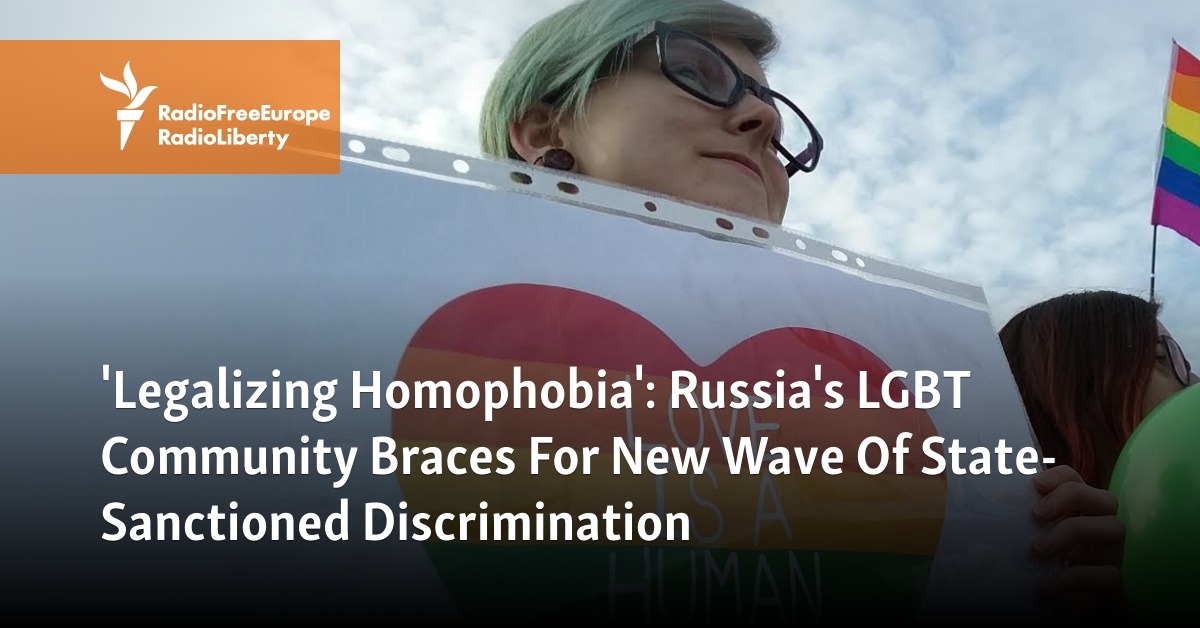
‘Legalizing Homophobia’: Russia’s LGBT Community Braces For New Wave Of State-Sanctioned Discrimination

52E5C8BB-13BE-410B-B556-75C9E540A6C2.jpg

“Our ability to simply go out onto the street will be threatened, as well as our safety,” said Anna Kosvintseva, a web designer in the southern Russian city of Astrakhan, when asked about legislation currently making its way through parliament that would virtually ban any mention of same-sex relationships or transgender issues. “After all, we can’t expect help from anywhere or anyone.”

Many activists and people in Russia’s LGBT community link the draconian legislation with the country’s grinding war of aggression against neighboring Ukraine and the government’s efforts to rally broad support by insisting the country’s “traditional values” are under assault by “Satanists” at home and abroad.

“The war is not going well,” said Vsevolod Galkin, a photographer and director who formerly worked for the LGBT magazine Kvir in Moscow. “So they are trying to turn the public discourse to some sort of scandal, some sort of divisions. This isn’t the first time this has happened. We see it every seven years or so.”

“The bill is complete nonsense that the government is throwing like a bone to conservative-minded citizens to distract them from military mobilization and economic problems,” said Dina Nurm, a feminist activist from Kazan, capital of the Tatarstan region. “It is a new tool for denunciations.”

‘The Morality Of A Country At War’

President Vladimir Putin signed a law banning the “propagandizing of nontraditional sexual relationships to minors” in 2013. In addition, many LGBT activists have been targeted in recent years under Russia’s so-called “foreign agent” laws. Since the 2013 law was adopted, Russia has seen a dramatic spike in homophobic vigilante violence.

The proposed new legislation, which was given preliminary approval on October 27 by the State Duma – the lower house of Russia’s legislature – is expected to pass through parliament by the end of this month. It would radically expand the ban on “propaganda” of homosexual and transgender relations to all audiences. It would ban spreading information “that might foster in minors the desire to change their gender.” It would ban advertisements, films, books, art, and other materials hat “propagandize nontraditional sexual relations or desires.” Fines for violations would be significantly increased up to 400,000 rubles ($6,700).

“We have traditions, conscience, and an understanding of how we must think about children, families, the country, and how to preserve what was handed down to us by our parents,” said Duma speaker Vyacheslav Volodin just before the initial vote on the new law. He added that even more restrictions might be introduced to the bill before its second reading.

Everything besides “normal life,” Volodin added, “is sin, sodomy, and darkness, and our country will fight against it.”

Everything besides “normal life is sin, sodomy, and darkness, and our country will fight against it.”

The representative of the Russian Orthodox Church at the session said: “The morality of a country at war is a matter of our future victory. We have our own path of development, and we don’t need Europe’s nontraditional relations.”

On November 9, Putin signed a document titled The Foundations Of State Policy To Preserve And Strengthen Russian Traditional Spiritual And Moral Values. The text says: “This is a strategic planning document in the sphere of the national security of the Russian Federation.

“The Russian Federation considers its traditional values to be the foundation of Russian society, enabling it to defend and strengthen Russia’s sovereignty,” it reads.

‘I Will Continue Speaking Out’

Yelena, 35, lives with her wife — they were married three years ago in Portugal — in the Siberian city of Novosibirsk and volunteers at an organization that provides assistance to LGBT people. Like many of the people interviewed for this article, she asked that her identity be concealed out of safety concerns. She says the government is intentionally fostering homophobia.

“Most Russians aren’t homophobes…but in recent years at the political level they have whipped up such a hysteria around ‘other’ people that it is really getting scary,” Yelena said. “At any moment, a witch hunt could begin, and no one is going to defend you. So people are already living as unnoticeably as possible.”

“The bill is...a new tool for denunciations,” says Dina Nurm, a feminist activist from Kazan, capital of the Tatarstan region.


“The bill is…a new tool for denunciations,” says Dina Nurm, a feminist activist from Kazan, capital of the Tatarstan region.

Mikhail is an activist in the Volga River city of Samara who volunteers at several civic organizations providing assistance to LGBT people. He agrees that even in rural areas, many Russians are tolerant of gays as neighbors and members of their community.

“But the new law is aimed at preventing gays and lesbians from living openly and showing that they don’t pose any danger,” Mikhail said. “As a result, heterosexuals will interact less with gays or won’t know about their orientation. Over time, even for those who might be open to being tolerant, the LGBT community will be transformed into an enemy.”

Alla Chikinda, an LGBT activist in the Urals region city of Yekaterinburg, offered a similar take.

“Those who have been living more or less openly will shut themselves off, and those who have not yet come out, won’t,” she said. “People who support the LGBT community and donate to organizations or participate in joint projects, or simply openly proclaim their support, will stop doing so. This is the main danger of the law.”

‘I Have No Idea How To Continue’

Yulia Alyoshina, a woman in Siberia’s Altai region who was Russia’s first openly transgender politician, was barred from the ballot in a 2021 city council election in the regional capital, Barnaul. The day after the Duma backed the new bill in the first of three required votes, she announced her withdrawal from politics.

“I have no idea how to continue conducting public political activities as an openly transgender woman,” she said, adding that the LGBT community could expect “even more serious hostility” if the “discriminatory” new law is adopted.

Activist Aleksei Sergeyev at a rally against homophobia in St. Petersburg: “There have been many television talk shows and films equating gays and pedophiles.”


Activist Aleksei Sergeyev at a rally against homophobia in St. Petersburg: “There have been many television talk shows and films equating gays and pedophiles.”

LGBT citizens say they already see increased hostility on the Internet and in real life. Aleksei Sergeyev, an LGBT activist in St. Petersburg, said that after one local LGBT organization was prevented from holding its meetings in a community center, it resorted to meeting in a public park.

Aleksandra of Krasnodar


Aleksandra of Krasnodar

“They were attacked by young nationalists and one of them got a head injury,” Sergeyev said. “There have been many television talk shows and films equating gays and pedophiles.”

Aleksandra, a 20-year-old lesbian in the southern city of Krasnodar, said the new law will “legalize homophobia.”

“Queer people have become enemies and criminals in their own country,” she said. “But I will continue speaking out against homophobia. and I won’t conceal my orientation. I am who I am.”

Based on reporting by RFE/RL’s Idel.Realities, Siberia.Realities, and North.Realities
Categories
Saved Web Pages

Шольц: Мира под диктовку Кремля не будет – DW – 12.11.2022

63733967_6.jpg

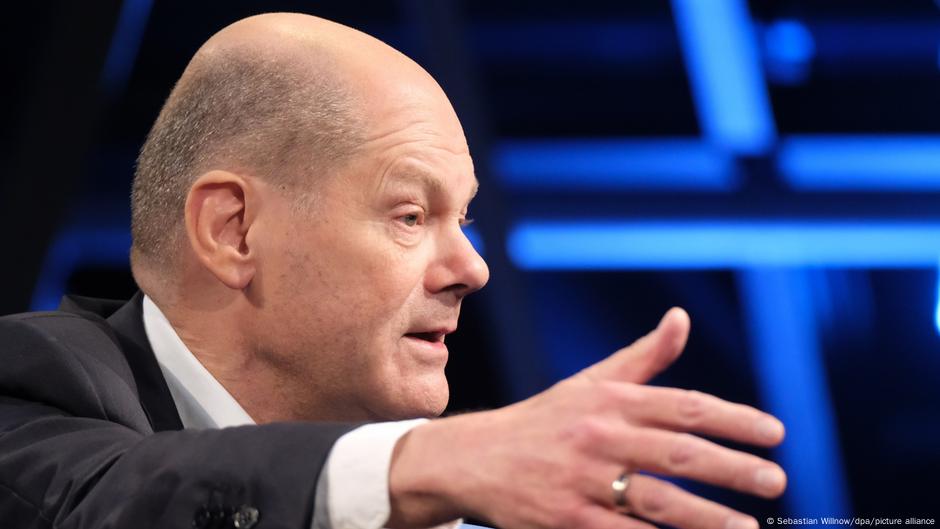
Канцлер Германии Олаф Шольц (Olaf Scholz) высказался против прекращения огня в Украине на условиях Кремля. Соответствующее заявление глава германского правительства сделал в пятницу, 11 ноября, в ходе подиумной дискуссии “RND vor Ort” в Лейпциге (федеральная земля Саксония), организованной медиагруппой RedaktionsNetzwerk Deutschland (RND).

“Россия прежде всего должна понять, что идея мира под диктовку ни к чему не приведет и что нельзя просто провести фломастером по карте и сказать: это – теперь мое, – подчеркнул канцлер. – Так что мира под диктовку не будет, должно быть другое понимание”. По словам Шольца, он “неустанно работает совместно со многими другими” сторонами над тем, чтобы Россия осознала это, потому что подобный подход – основа для успешных мирных переговоров.

Канцлер ФРГ также отметил, что военные действия президента РФ Владимира Путина препятствуют любому дипломатическому сближению. В условиях “этой смертоносной войны, которую мы сейчас переживаем”, Путин, в первую очередь, препятствовал всем тем процессам, направленным на диалог, которые ранее были в развитии, указал Шольц.

“Сидел за этим семиметровым столом и разговаривал с Путиным”

“Мы все хотим, чтобы эта война закончилась и чтобы мир стал возможным”, – констатировал канцлер. Он также напомнил, что не прерывал телефонных контактов с российским лидером. “Это (достижение мира. – Ред.) являлось темой всех переговоров, которые я вел с российским президентом до сих пор, и я не позволил никакой критике сделать так, чтобы я отказался от разговоров с российским президентом по телефону через определенные промежутки времени – зачастую от очень длительных разговоров”, – признался Шольц. Он добавил, что соответствующие консультации велись и с украинской стороной.

Олаф Шольц напомнил и о своем визите в Москву – незадолго до полномасштабного вторжения России в Украину. “Я также был в Москве незадолго до начала войны и сидел за этим семиметровым столом и разговаривал с ним (Путиным. – Ред.)”, – напомнил канцлер. По его словам, в ходе четырехчасовой беседы российский лидер требовал, чтобы в Украине “не было ракет, угрожающих Москве”, и чтобы Украина не вступала в НАТО. Шольц указал, что в свою очередь предлагал соглашения с Киевом о контроле над вооружениями, исключающие размещение ракет, и подчеркивал, что членство Украины в НАТО вообще не стоит на повестке дня “в ближайшие десять, 20, 30 лет”. К чему подобные требования, спрашивал он Путина.

Канцлер Германии добавил, что обсуждались некоторые предложения об автономном положении для ряда восточных областей Украины. “Я работаю каждый день, чтобы обеспечить прогресс в этих вопросах”, – констатировал он, указав, что “определенные подвижки” есть. При этом “ни одна из причин, сыгравших свою роль, не смогла бы оправдать эту войну, потому что ничего из заявленного просто не происходило”, добавил Олаф Шольц.

Шольц – о промежуточных выборах в Конгресс США

В ходе дискуссии глава германского кабмина также коснулся результатов промежуточных выборов в Конгресс США. “Считаю, что Джо Байден может записать на свой счет, что выборы, которые обычно заканчиваются не очень благоприятно для только что избранного президента, прошли для него гораздо лучше, чем прогнозировалось”, – констатировал Шольц.

По мнению канцлера Германии, – “очень удачно”, что Байден рассчитывает на тесное сотрудничество с Германией и Европой. “Считаю, что американский президент – это действительно очень умный политик с очень, очень большим опытом”, – добавил глава кабмина Германии. Он также подчеркнул, что Берлин готов к тесному сотрудничеству с США – независимо от результатов выборов.

Ранее, 5 ноября, Олаф Шольц (Olaf Scholz) потребовал от России исключить применение ядерного оружия в войне против Украины. “Непозволительно и недопустимо использовать в этом конфликте ядерное оружие”, – отметил Шольц на дискуссионном съезде Социал-демократической партии Германии (СДПГ) в Берлине. “Мы требуем от России, чтобы она четко заявила, что не будет этого делать. Это стало бы границей, которую нельзя переступать”, – добавил канцлер ФРГ.

Комментируя свой визит в КНР, Шольц заявил, что существенным успехом этой поездки была выработка общей с китайским руководством позиции по вопросу угроз России применить ядерное оружие в войне против Украины. “Только ради этого стоило совершить этот визит“, – резюмировал канцлер ФРГ.

Смотрите также:

WP Radio
WP Radio
OFFLINE LIVE