
His posts cover a range of subjects, including unsubstantiated theories that the 2020 election was stolen, the 6 January Capitol riot, claims that Covid vaccines were harmful, support for the QAnon conspiracy theory, as well as racist and anti-Semitic posts.
Day: November 1, 2022
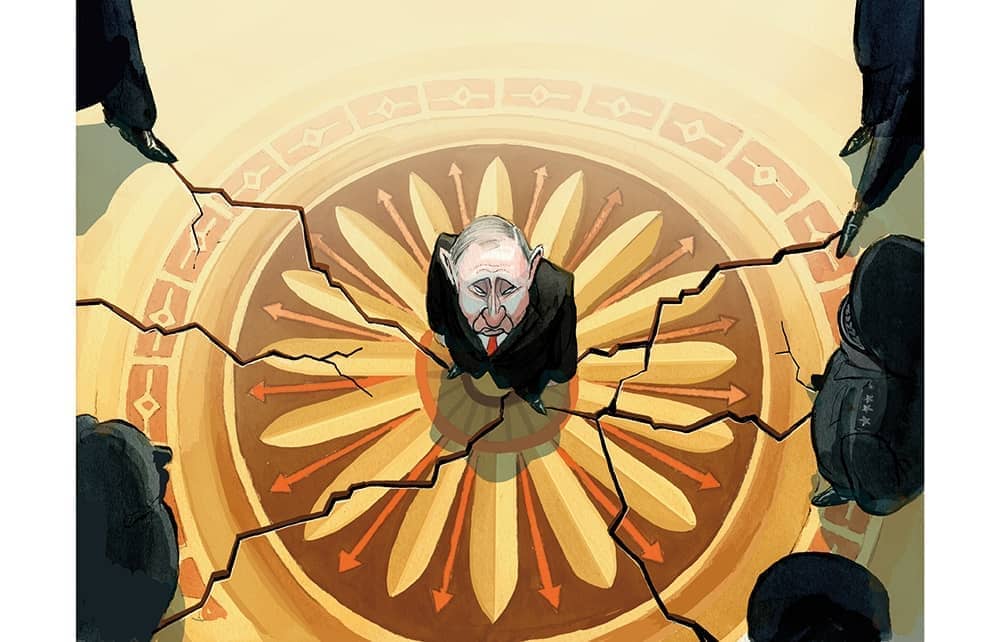
The soldier with the Kalashnikov wasn’t happy. Neither were the hundreds of comrades who had chosen him as the spokesman for their angry complaints as they milled about on a train platform somewhere in Russia. ‘There are 500 of us, we are armed, but we haven’t been assigned to any unit,’ the newly mobilised soldier complained on a video that went viral earlier this month. ‘We’ve been living worse than farm animals for a week… Nobody needs us, we’ve had absolutely no training.’ Other soldiers, most of them masked, chipped in with more grievances. ‘The officers treat us like animals,’ shouted one. ‘We’ve spent a fortune on buying food for ourselves.’
The video – and others like it – was rightly cited in the western press as evidence of the chaos that followed the ‘partial’ mobilisation announced by Vladimir Putin on 21 September. But the video also revealed something much more significant about how defeat in the field is sending cracks running through the ‘power vertical’ over which Putin presides.
Watch carefully and you can see among the ordinary forest-green camouflage army-issue uniforms several of the soldiers wearing more sophisticated kit, marked with the distinctive death’s-head badge of the Wagner private military company. The video was distributed by social media channels associated with Wagner’s founder and public face Yevgeny Prigozhin – a billionaire St Petersburg caterer and businessman better known as Putin’s chef. In other words, this video shows not only discontented soldiers but also a private army engaged in political manoeuvres.
It’s not hard to guess Prigozhin’s agenda in distributing – and possibly orchestrating – the video. The head of Russia’s largest private army is trying to undermine Russia’s beleaguered Minister of Defence, Sergei Shoigu. And Prigozhin is far from alone. Since Ukrainian advances near Kharkiv last month, Shoigu and his generals have come under heavy and public attack from patriotic pro-war bloggers, Wagner-affiliated media and the hawkish Chechen President Ramzan Kadyrov and even state-controlled TV. ‘The guilty should be punished [though] we don’t have capital punishment unfortunately,’ the ultra-nationalistic TV host Vladimir Solovyov told his viewers. ‘They don’t even have an officer’s sense of honour because they are not shooting themselves.’ Aleksey Slobedenyuk, who runs a network of Telegram channels for Prigozhin’s patriot media group, was arrested by a squad of paramilitary police, and the footage was widely broadcast by pro-Shoigu media factions.
Modern Russia is not just a security state but a state that has been taken over by its own security services
So far, only Russia’s military command, not Putin himself, have come in for public criticism. But the obvious question is whether, or when, Putin will come into the firing line. The image of the good tsar surrounded by bad advisers is as old as Russian history. But history also shows that military defeat – from the Russo-Japanese war to Afghanistan – rarely ends well for regimes whose corruption and incompetence are brutally exposed by the stress-test of war.
To date, Putin has stayed one step ahead of the rising tide of military humiliation and criticism by constantly escalating the conflict. In response to the collapse of the Kharkiv front, he announced partial mobilisation and ordered hasty referendums in the occupied territories, followed by formal annexation. In response to the partial destruction of the Kerch Bridge, Putin launched more than 100 cruise missiles in two days at mostly civilian targets in more than a dozen Ukrainian cities. In July, Putin dismissively said that: ‘We haven’t even started [fighting] in earnest yet.’ Now, in response to a rising chorus of critics urging the Kremlin to take off the kid gloves, Putin has publicly gone all-in.
Suella Braverman’s critics ignore an uncomfortable truth
But what happens if the Ukrainians keep winning? Putin can continue firing commanders (as he did after the Kerch attack). He can organise some public show trials of alleged Ukrainian ‘Nazis’ from among the unfortunate Azov battalion prisoners taken after the battle of Mariupol. And he could, theoretically, make good on the renewed promise he made last month that he was ‘not bluffing’ about the use of nuclear weapons – though the West has made clear that their conventional response to a nuclear attack would make it a suicide strategy for the Kremlin.
The good news, for Putin, is that 20 years of efficient repression and media control have meant that so far there has been little public resistance to the Ukraine war. On the evening of Putin’s mobilisation call, I saw some 200 people gathered on the Old Arbat for a brave but futile protest that was almost instantly extinguished by riot police who outnumbered the protestors by at least two to one. Two mass exoduses – one following the outbreak of war and another after the 21 September mobilisation – have seen between 500,000 and 700,000 people leave Russia for good. Among them were the bulk of the urban, politically engaged ‘protesting classes’. Currently, as historian Anatol Lieven recently wrote, ‘There is no coherent or organised force in Russian society that could bring about… revolution.’
The main challenge to Putin’s power, then, comes not from the street but from within the regime itself. Putin turned 70 on the eve of the Kerch Bridge attack. Whether rumours of his chronic illness are correct or not (CIA director William Burns said in August that he believed that Putin was ‘far too well’), the debate over Putin’s successor has been at the forefront of the minds of Russia’s top power-brokers for at least three years. In February 2019 the chief Kremlin ideologue Vladislav Surkov dared to publish a long essay discussing what a post-Putin Russia might look like. ‘Putinism’ would outlast Putin himself, Surkov argued, attempting to reassure the ex-KGB men who were Putin’s closest confidants that they had nothing to fear from a transition of power. They were not reassured. It was Surkov rather than Putin who was later shown the door.
Institutionally, the Kremlin has for years been effectively an extension of the Federal Security Service, or FSB. The three most powerful men in Russia today are all current or former FSB chiefs – Putin himself, the Security Council chairman Nikolai Patrushev and the current FSB head Alexander Bortnikov. They met in the Leningrad KGB in the mid-1970s and have known and worked with each other for nearly half a century. Most other top Kremlin mandarins – for instance the Rosneft head Igor Sechin, the foreign intelligence chief Sergei Naryshkin and many more – are also drawn from that same tiny Leningrad KGB circle, leavened by a few of Putin’s old friends from his time as deputy mayor of St Petersburg in the 1990s.
For these people, the question of who is eventually chosen to succeed Putin is much less important than who does the choosing. In 2000 Patrushev – newly appointed as head of the FSB by his former subordinate Putin who had just become President – wrote an essay comparing the FSB to Russia’s ‘new nobility’. And over the subsequent 20 years the FSB did indeed proceed not only to take over swaths of Russia’s state and private business but also to appoint their children as ministers and even – just like the aristocracy of tsarist Russia – make dynastic marriages among themselves.
Modern Russia is not just a security state but literally a state that has been taken over by its own security services. Putin is the ultimate decision-maker and arbiter in various disputes between rival factions inside that extended FSB-connected ruling class. And insofar as a ‘collective Putin’ exists, it’s composed of a tiny group of very closely connected, very paranoid old men whose chief goal is to preserve their wealth and power and pass it on to their children and protégés.
So when we consider whether regime change is possible in Russia, what we are really wondering is whether some outside force could ever challenge the rule, not of Putin himself, but of the extended FSB clan that currently holds ultimate political and economic power.
The army has not played a decisive political role in Russia since the aftermath of Stalin’s death in 1953, when Marshal Georgy Zhukov effectively pulled off an armed coup by arresting and soon after murdering KGB boss Lavrentiy Beria. Ever since that painful showdown between soldiers and secret police, the KGB and FSB made very sure that Russia’s military had no role in internal security – most recently by creating the Russian National Guard, headed naturally by a former KGB man, Putin’s former body-guard Viktor Zolotov. The silent majority of Russia’s elite – the mid-level bureaucrats, professionals and business-people who have been robbed of their futures and their wealth by the war – are by all accounts collectively horrified by it. Notionally these people represent significant economic and bureaucratic power. But they have no organised political voice and generally have too much to lose to risk rebellion.
So when Kadyrov, Prigozhin and the other heavily armed patriotic critics attack the failed war effort, they are not so much challenging the status quo as jockeying for advantage within it. And they succeed in advancing up the chain of command to positions of greater influence. There are other critical voices – for instance the ultranationalist philosopher Aleksandr Dugin, the Orthodox Christian fundamentalist billionaire and TV station owner Konstantin Malofeev, or the novelist-turned-Donbas rebel commander Zakhar Prilepin or former Donetsk People’s Republic defence minister Igor Strelkov – who were once in the nationalist opposition to the Kremlin but now find themselves more or less aligned with the newfound radical nationalism of the Putin regime. All have called for Putin to be more ruthless and aggressive in Ukraine. Strelkov has been a vocal critic of the Russian military’s failures from the start, and last month said that the war is already lost. Such radical nationalists are the true believers, they are armed, and they have spilled blood for their country. And they will not forgive further failure on the front lines.
If the Russian army suffers a serious collapse and the country moves into a revolutionary situation, such nationalist firebrands will be the Kremlin elite’s most dangerous foes. It is much more likely, however, that the FSB clique around Putin will respond to a rising tide of nationalist anger and frustration by becoming more nationalist and authoritarian themselves. They may make Kadyrov defence minister or appoint Prigozhin to a senior ministerial post. But Kadyrov’s and Prigozhin’s ambitions in themselves do not present a fundamental challenge to the power of the ruling FSB clan which controls serious military force, and has a stronghold on Russia’s media and politics.
The power of the extended FSB dwarfs that of any potential challengers except for one: a rising, angry people who feel cheated of victory by their corrupt leaders. That revolution is likely to be as chaotic and ugly as the one which followed Russia’s last catastrophic military defeat in 1917 – and will doubtless begin, as the previous one did, with angry soldiers on remote train platforms railing against the tsar’s corrupt ministers.

The man accused of breaking into the home of House Speaker Nancy Pelosi and assaulting her husband told the police that he also planned to confront other state and federal politicians.
-
Send any friend a story
As a subscriber, you have 10 gift articles to give each month. Anyone can read what you share.
Give this articleGive this articleGive this article

District Attorney Brooke Jenkins and Chief Bill Scott of the San Francisco Police Department announced the state’s charges against David DePape.Credit…Jim Wilson/The New York Times
By Tim Arango, Holly Secon and Kellen Browning
Nov. 1, 2022Updated 7:47 p.m. ET
SAN FRANCISCO — After an intruder broke into the San Francisco home of House Speaker Nancy Pelosi and bludgeoned her husband with a hammer, leaving him unconscious for three minutes as he lay in a pool of blood, the attacker told the police that he had other targets: a local professor, and several prominent state and federal politicians.
The new details of the attack that police officers say was motivated by the assailant’s desire to take Ms. Pelosi hostage, interrogate her and break her kneecaps if she “lied” emerged Tuesday in a court filing, as the suspect appeared in court for the first time.
David DePape, 42, pleaded not guilty to several state felony charges after investigators say he broke into the Pelosi residence last week in the well-to-do Pacific Heights neighborhood and demanded to see Ms. Pelosi, the country’s third most powerful politician, who was in Washington at the time.
The filing by local prosecutors on Tuesday provided new and chilling details about the attack, including how Mr. Pelosi, in a terrifying situation, was able to surreptitiously call 911 while he was in the bathroom and the intruder was in the house. It also offers insights into a disturbed man seemingly enthralled by the conspiracy theories that have portrayed Ms. Pelosi as an enemy of the country.
After breaking into the home by busting a glass door on the back porch, the intruder found Mr. Pelosi asleep in his bedroom just after 2 a.m., according to the filing. He demanded to see Ms. Pelosi, and when he was told she wouldn’t be back for days, the suspect said he would wait for her.
Mr. Pelosi, sitting on his bed, asked him why.
“Well, she’s No. 2 in line for the presidency, right?” the intruder said, according to the police.
At another point, when Mr. Pelosi asked if he could call anyone for Mr. DePape, the suspect “ominously responded that it was the end of the road for Mr. Pelosi.”
The police said that without any questioning, Mr. DePape told them that he was on a suicide mission. The authorities said he believed he had been captured by home security cameras and recorded on the 911 call, but remain undeterred.
The “defendant’s intent could not have been clearer: he forced his way into the Pelosi home intending to take the person third in line to the presidency of the United States hostage and to seriously harm her,” prosecutors wrote as they asked the court to detain Mr. DePape without bail.
The latest filing came a day after federal prosecutors filed a complaint against Mr. DePape that said he directly targeted Ms. Pelosi and intended to make an example of her to other members of Congress.
“I’m sick of the insane fucking level of lies coming out of Washington, D.C.,” he told officers at the scene, according to the local filing. “I came to have a little chat with his wife.”
During the 911 call that prompted a dispatcher to send officers, Mr. Pelosi left the phone on speaker and, trying to keep the assailant calm once he realized the police were on the line, was able to gently imply to dispatch that something was amiss.
At one point, “to defuse the situation,” prosecutors wrote, Mr. Pelosi told dispatch he didn’t need the police. When dispatch told him to call back if he changed his mind, he said, “No, no, no, this gentleman just uh came into the house uh and he wants to wait for my wife to come home.”
In the days since the attack, those who know Mr. DePape have described a shy man who once seemed to live the lifestyle of a Bay Area hippie but who in recent years fell into homelessness, isolation and darkness, spending his time immersed in an online world of conspiracy theories and bigotry.
About six years ago, according to his most recent employer, Mr. DePape was down on his luck, living under a tree in a park and hanging around outside a lumber store in Berkeley, Calif., looking for work.
“You know how people sit outside and wait for someone to come and offer them work?” recalled Frank Ciccarelli, a carpenter who builds houses and makes furniture. “He was sitting there. So I picked him up. So he started working for me. And he really worked out well.”
For the next several years Mr. Ciccarelli became close to Mr. DePape, even as he worked less and seemed to spend more time online, immersed in right-wing conspiracy theories — right up until a week ago, when he paid Mr. DePape his most recent wages.
Mr. DePape was assigned a public defender, Adam Lipson, to represent him. In comments after Tuesday’s court appearance, Mr. Lipson said Mr. DePape was recently moved to the county jail from a hospital, where he was treated for a dislocated shoulder he sustained during the arrest.
Mr. Lipson promised to mount a “vigorous defense” and signaled that one possible strategy could be to highlight his client’s “vulnerability” to the misinformation and conspiracy theories that have become so prominent in American political life.
Mr. Ciccarelli, 76, described Mr. DePape as a quiet person and a diligent worker — an easygoing guy, at least until the topic of politics came up. He said he spent several hours a day with Mr. DePape four or five days a week. “I think I know him better than anyone does.”
Over the six years he has known Mr. DePape, Mr. Ciccarelli said, he witnessed a transformation from a shy and hardworking, but troubled, man into someone who was increasingly isolated and captive to his darkest thoughts.
“If you got him talking about politics, it was all over,” Mr. Ciccarelli recalled in an interview this week. “Because he really believed in the whole MAGA, ‘Pizzagate,’ stolen election — you know, all of it, all the way down the line.”
Frank Ciccarelli helped the landlord of Mr. DePape, Malcolm Lubliner, not pictured, remove Mr. DePape’s belongings from a home in Richmond, Calif.Credit…Jane Tyska/Bay Area News Group, via Associated Press
Mr. DePape’s sympathies for the most extreme right-wing conspiracy theories are one piece of the growing investigation into his background.
On Monday, Mr. DePape was charged with multiple state and federal felonies, including the attempted murder of Mr. Pelosi, 82, who remains at a local hospital after undergoing surgery. In a statement on Monday, Ms. Pelosi said her husband, “is making steady progress on what will be a long recovery process.”
For a time, Mr. DePape, who grew up in British Columbia in Canada and moved to California about two decades ago to pursue a relationship with a woman he had met in Hawaii. For a time, he house-sat for a woman in the East Bay area who ran an urban farm for low-income residents, and sometimes helped take care of the chickens.
But in the years leading up to the attack on the Pelosi family, Mr. DePape seemed to be spending more and more time in the darkest corners of the internet, according to Mr. Ciccarelli. After working together for a few years, Mr. Ciccarelli helped Mr. DePape get away from the streets, moving him into a friend’s garage studio in Richmond, Calif.
“Once he was housed, he had much more time to spend on his computer,” Mr. Ciccarelli said. “Because when you’re living under a tree, you don’t have a plug.”
On Saturday, the F.B.I. raided the garage in Richmond and seized two hammers, a sword and a pair of gloves.
As he spent more time on his computer in recent months, Mr. DePape appeared to have produced a voluminous record of his political leanings — ranting about the 2020 election being stolen, appearing to deny the gassing of Jews at Auschwitz and claiming that schoolteachers were grooming children to be transgender. Mr. DePape’s blog was registered at the Richmond address where he resided.
Mr. Ciccarelli, who said he was scheduled to work with Mr. DePape on Monday, said he never heard Mr. DePape make racist comments, but said he had become increasingly isolated the last few years and wanted to work less in the carpentry business.
“He was completely caught up in the fantasy, in the MAGA fantasy,” he said.
Over the last few days, Mr. Ciccarelli has struggled to make sense of the news about his friend. “He did a monstrous thing, but he’s not a monster,” he said. “He’s really decent, gentle — it sounds crazy to say gentle — but he was a very gentle soul. But he was going downhill. He went down the rabbit hole.”
Charlie Savage, Alan Feuer and Livia Albeck-Ripka contributed reporting.

SAN FRANCISCO (KGO) — The man accused of breaking into House Speaker Nancy Pelosi’s home, beating her husband and seeking to kidnap her had allegedly said he was on a “suicide mission” and had plans to target other California and federal politicians, according to a Tuesday court filing.
David DePape was ordered held without bail during his arraignment Tuesday in San Francisco Superior Court. His public defender entered a not-guilty plea on his behalf. It was the first public appearance since the early Friday attack for DePape, a fringe activist drawn to conspiracy theories.
In court papers filed Tuesday, prosecutors detailed the attack in stark terms as part of their bid to keep DePape behind bars.
EXCLUSIVE: Former partner of accused Paul Pelosi attacker DePape reveals new details about suspect
DePape allegedly said he had other targets, including a local professor as well as several prominent state and federal politicians – and members of their families.
“This case demands detention,” Jenkins wrote in the court filing. “Nothing less.”
The filing also said that Paul Pelosi was knocked unconscious by the hammer attack and woke up in a pool of his own blood.
Depape walked into the courtroom Tuesday with his right arm in a shoulder sling, having reportedly dislocated his shoulder in the attack at the Pelosi home. He only spoke to tell Judge Diane Northway how to pronounce his last name (dih-PAP’). The 42-year-old defendant is scheduled to return to court Friday.
After the hearing, Lipson said he looks forward to providing DePape with a “vigorous defense.” He also said he met DePape on Monday night for the first time and had not seen the police reports yet.
The violent attack that left Nancy Pelosi’s husband hospitalized was officially labeled “politically motivated” by authorities Monday after disturbing new details involving zip ties and rope revealed how the attempted kidnapping attempt unfolded.
The San Francisco District Attorney’s office announced a slew of felony charges against 42-year-old DePape of Richmond, including — attempted murder, assault with a deadly weapon, elder abuse, residential burglary, false imprisonment and threatening the life or serious bodily harm to a public official. DePape also faces federal assault and attempted kidnapping charges.
“Mr. DePape specifically targeted the Pelosi home to confront Speaker Pelosi,” said District Attorney Brooke Jenkins. “There was no security present and he was able to break the window to a glass door to gain entry into the home.”
According to the criminal complaint released Monday, Paul Pelosi was asleep when DePape entered his bedroom allegedly telling him to “wake up” and that he was looking for Nancy. “It was at some point after that Mr. Pelosi asked to go to the bathroom which is where he was able to call 911 from his cellphone.”
Police arrived on scene minutes after the 911 call to see the two men struggling for control over the hammer, according to the affidavit.
Officers asked, “What was going on?” DePape responded by saying “Everything is good.”
VIDEO: Who’s David DePape? What we know about suspect in attack on Nancy Pelosi’s husband at SF home
Investigators said officers told both men to drop the hammer before DePape allegedly gained control of it and swung it striking Pelosi on the head. The complaint indicated the Speaker’s husband appeared unconscious on the floor as DePape was detained.
According to the affidavit, Paul Pelosi told DePape “Nancy was not there,” but DePape responded by saying he would “sit and wait.” Pelosi persisted saying his wife wouldn’t be home for several days, but DePape still said: “he would wait.”
According to DePape, around that time he started taking out twist ties from his pocket with the intention of restraining Pelosi. He said the two kept talking, when Pelosi went to the bathroom to call 911.
“Two police officers arrived at the front door two minutes after that 911 call,” said Jenkins. “When that door was opened the defendant was holding his hammer.”
RELATED: As Election Day looms, Bay Area leaders say tone, tenor of politics needs change amid Pelosi attack
DePape told SFPD in a follow-up interview he was going to hold Nancy hostage and talk to her. He added he would only let her go “if she told the truth” and if she lied he was going to “break her kneecaps.” DePape later explained to investigators he believed she would lie and would have to be “wheeled into Congress which would show other members of Congress there were consequences to actions.”
Former prosecutor and legal analyst Steven Clark commented on the first steps that DePape’s lawyer will take.
“If half of what you read online about this individual is true, it’s someone that clearly has psychological issues that need to be addressed and considered by the defense team before they enter a plea in this case, and decide how they are going to approach the case,” says Clark.
He says the fact that there are already federal charges along with the state’s charges, says something.
“The Federal Government stepping in this early filing charges is somewhat unusual in what appears to be a state court case, but this is very much in response to the events of Jan. 6 because the Federal Government is now saying we are going to protect our members of Congress, and this kind of behavior is going to be prosecuted vigorously,” says Clark.
“It really hits very hard,” said Rep. Anna Eshoo. “There’s such disbelief to the viciousness of this.”
San Francisco Police recovered zip ties in Pelosi’s bedroom and in the hallway near the front door, according to the affidavit. A roll of tape, white rope, one hammer, gloves along with a journal was found in DePape’s backpack.
RELATED: Local, nation’s top political leaders respond to violent attack on Speaker Pelosi’s husband
Investigators also found evidence DePape was living in the garage of a home on Shasta Street in Richmond for roughly two years before the attack. Among other things, investigators seized two hammers and a sword in that garage.
The ABC7 News I-Team confirmed Monday there is no Memorandum of Understanding (MOU) or formal agreement between SFPD and U.S. Capitol Police for security measures. Speaker Pelosi is provided a 24-hour protective detail from U.S. Capitol Police but that protection does not necessarily extend to the family. Chief Scott told ABC7 the department used to have a security detail at the Pelosi residence, but didn’t specify when that ended.
DePape was charged in federal court with assault on the immediate family member of a federal official which carries a maximum sentence of 30 years in prison. He was also charged with the attempted kidnapping of a federal official, which carries a maximum sentence of 20 years in prison. DA Jenkins says the other six felony charges filed in state superior court carry sentences of 13 years to life in prison.
“We will be prosecuting this case to the highest extent of the law,” said Jenkins. “There is no place for violence in San Francisco or in politics.”
Elon Musk over the weekend tweeted, then deleted, a fringe website’s conspiracy theories to his millions of followers, as his purchase of Twitter has raised concerns that the social media platform would no longer seek to limit misinformation and hate speech.
VIDEO: Why Elon Musk’s conspiracy theory tweet about Paul Pelosi attack is ‘dangerous’
Trump’s son, Donald Trump Jr., was among those making light of the attack on Paul Pelosi, tweeting out crude jokes about it.
Paul Pelosi remains hospitalized in San Francisco after undergoing surgery for a fractured skull and other injuries. Speaker Pelosi, who was in Washington, D.C., at the time of the attack, returned swiftly to California. Unlike presidents, congressional leaders have security protection for themselves, but not their families.
With nearly 10,000 threats against members of Congress in the last year, U.S. Capitol Police have advised lawmakers to take precautions. Chief Tom Manger, who leads the U.S. Capitol Police, has said the threat from lone-wolf attackers has been growing and the most significant threat the force is facing is the historically high number of threats against lawmakers, thousands more than just a few years before.
The beating of the speaker’s husband follows other attacks and threats. This summer, a man carrying a gun, a knife and zip ties was arrested near Justice Brett Kavanaugh’s house in Maryland after threatening to kill the justice. In 2017, Republican Rep. Steve Scalise was seriously injured when a Bernie Sanders supporter opened fire on Republicans at a congressional baseball game practice.
The Associated Press contributed to this article.

If you’re on the ABC7 News app, click here to watch live
Amid misinformation about the Oct. 28 assault of House Speaker Nancy Pelosi’s husband, Paul, in their San Francisco home are unfounded claims about security footage.
We previously debunked an Instagram post that said the Pelosis refused to “turn over surveillance video of their home.” Another Instagram post alleges there was no footage at all.
“BREAKING,” the Oct. 30 post says. “Unfortunately all 28 security cameras at the Pelosi residence malfunctioned for the duration of the break-in, so officials have ended their investigation and concluded UltraMAGA white supremacy was the motivation.”
This post was flagged as part of Facebook’s efforts to combat false news and misinformation on its News Feed. (Read more about our partnership with Meta, which owns Facebook and Instagram.)
Drew Hammill, a spokesperson for Nancy Pelosi, told PolitiFact this claim was fabricated.
We found no credible reports, from the government, police or media, to suggest otherwise.
Politico reported that the U.S. Capitol Police has access to the security camera feed from the San Francisco home. The police are conducting a review of the Oct. 28 incident, including looking at their command center, “which was monitoring the security camera feed from Pelosi’s home, according to a person familiar,” Politico said.
Officials have not ended their investigation into the attack. The FBI San Francisco field office, the Capitol Police and the San Francisco Police Department are all investigating. David DePape, 42, the man accused in the assault, faces state and federal charges including assault, attempted kidnapping, attempted murder and elder abuse.
We rate this post Pants on Fire!

San Francisco district attorney Brooke Jenkins speaks during a news conference on October 31, 2022 in San Francisco, California. Jenkins announced state level charges against David Wayne DePape who attacked Paul Pelosi, husband of U.S. Speaker of the House Nancy Pelosi, after breaking into their home. DePape is being charged with attempted murder, residential burglary, assault with a deadly weapon, elder abuse, false imprisonment of an elder and threats to a public official and their family. The U.S. attorney has also filed federal charges against DePape. (Photo by Justin Sullivan/Getty Images)
(Photo by Justin Sullivan/Getty Images)
We now have the official FBI version of the attack on Nancy Pelosi’s husband, and it turns out to be a lot more interesting than all that rehashed false flag conspiracy stuff.
Last Friday, at 2:23 a.m., a private security guard noticed someone carrying a backpack…walking near the Pelosis’ San Francisco home.
More from Dave Ross: Halloween horror trailers aren’t the only ads trying to scare you
It turned out to be David Wayne DePape, who had been living in a garage in Richmond for the past two years – a garage where agents later found two hammers, a sword, and two letters from the IRS.
He broke in through a glass door, walked to the upstairs bedroom where Paul Pelosi was asleep, woke him up, and demanded to talk to “Nancy”.
Mr. Pelosi said she wasn’t there. The man with the hammer said he would sit and wait. Mr. Pelosi said it could be several days. The man said, no problem – he’d still wait.
But, being tired from carrying his backpack, he was going to tie up Mr. Pelosi and take a nap, at which point he pulled out his zip ties.
Now – what would you do in that situation? Here’s a guy with a hammer in your bedroom at 2 a.m. who is going to tie you up while he waits for your wife.
I will admit– this might be one of those situations where you’d want a gun under your pillow. This is everybody’s nightmare – the 2 a.m. visit from a wacko.
But instead, Mr. Pelosi engages the guy in conversation and manages to slip into a bathroom where he calls 911.
The officer is there within minutes, there’s the hammer struggle, and Mr. Pelosi is lucky enough to escape with a non-life-threatening injury.
And then the man with the hammer tells his story, it turns out he wasn’t just crazy; he was drunk on American history.
Because here’s what he tells the cops: that he was going to hold “Nancy” hostage and force her to “tell the truth.” And if she lied, which he was sure she’d do, he was going to break “her kneecaps” so she’d have to be wheeled into Congress, and everybody would see that lies… have consequences.
And when police asked him why didn’t just run off when he saw Mr. Pelosi call 911, he told the cops that, much like the American founding fathers who fought the British, he was fighting against tyranny without the option of surrender.
So, if we’re going to point the finger at some underlying ideology this guy was ultimately motivated by the Founding Fathers. Who founded this nation the way many others were founded, through the use of violence in service of a higher cause.
It’s a concept we celebrate, but it comes with a flip side, which is: you never know when some yahoo at the Capitol with a guillotine, or a confused person living in a garage with his hammers, might suddenly decide he’s Thomas Jefferson.
Listen to Seattle’s Morning News with Dave Ross and Colleen O’Brien weekday mornings from 5 – 9 a.m. on KIRO Newsradio, 97.3 FM. Subscribe to the podcast here.
Categories
Bloomberg

The Justice Department is examining ties among the far-right Proud Boys, Roger Stone and others over their roles in 2018 “Stop the Steal” demonstrations.
-
Send any friend a story
As a subscriber, you have 10 gift articles to give each month. Anyone can read what you share.
Give this articleGive this articleGive this article

Prosecutors involved in the Jan. 6 investigation have also been asking questions about connections between Roger J. Stone Jr. and a protest related to the 2018 elections in Florida.Credit…Al Drago for The New York Times
By Alan Feuer and Michael S. Schmidt
Nov. 1, 2022, 1:40 p.m. ET
President Donald J. Trump and other top Republicans were stoking claims that the election had been stolen, and their supporters were protesting in the streets. Members of the far-right group the Proud Boys and people close to Roger J. Stone Jr., including Representative Matt Gaetz, took part in the action as the crowd was chanting “Stop the Steal.”
The time was 2018, the setting was southern Florida, and the election in question was for governor and a hotly contested race that would help determine who controlled the United States Senate.
Now, four years later, the Justice Department is examining whether the tactics used then served as a model for the attack on the Capitol on Jan. 6, 2021.
In recent months, prosecutors overseeing the seditious conspiracy case of five members of the Proud Boys have expanded their investigation to examine the role that Jacob Engels — a Florida Proud Boy who accompanied Mr. Stone to Washington for Jan. 6 — played in the 2018 protests, according to a person briefed on the matter.
The prosecutors want to know whether Mr. Engels received any payments or drew up any plans for the Florida demonstration, and whether he has ties to other people connected to the Proud Boys’ activities in the run-up to the storming of the Capitol.
Different prosecutors connected to the Jan. 6 investigation have also been asking questions about efforts by Mr. Stone — a longtime adviser to Mr. Trump — to stave off a recount in the 2018 Senate race in Florida, according to other people familiar with the matter.
Mr. Gaetz, Republican of Florida, participated in the 2018 demonstration, but the extent and nature of his involvement remain unclear.
Fritz Scheller, a lawyer for Joel Greenberg, a local Florida tax collector who is cooperating with the government in an investigation into Mr. Gaetz, declined in response to questions to discuss the specifics of what his client told the authorities about the 2018 incident. Still, Mr. Scheller said, “A significant aspect of Mr. Greenberg’s cooperation has been his assistance in matters involving efforts to subvert the democratic process.”
In weeks after the 2020 election, Mr. Gaetz took part in Mr. Trump’s attempts to challenge the certification of the vote count, but there is no indication that he is part of the Proud Boys inquiry. Mr. Gaetz did not respond to text messages seeking comment.
The expanded investigation of the Proud Boys emerged as five members of the group — including its former leader, Enrique Tarrio — are set to be tried on charges of seditious conspiracy in Federal District Court in Washington. The trial is scheduled to begin on Dec. 12.
Enrique Tarrio, the former leader of the Proud Boys, in Miami in 2021.Credit…Eva Marie Uzcategui/Agence France-Presse — Getty Images
As a part of the investigation, prosecutors are seeking to understand whether Mr. Engels has ties to a little-known Miami-based cryptocurrency promoter who may have played a role in the Capitol attack.
A week before the building was stormed, the promoter, Eryka Gemma, gave Mr. Tarrio a document titled “1776 Returns,” according to several people familiar with the matter. The document laid out a detailed plan to surveil and storm government buildings around the Capitol on Jan. 6 in a pressure campaign to demand a new election.
Neither Mr. Stone nor Mr. Engels nor Ms. Gemma responded to messages seeking comment.
The 2018 demonstrations in Florida did not come close to the scale or intensity of the assault on the Capitol by a pro-Trump mob, but the overlap in tactics and in those involved was striking enough to have attracted the attention of federal investigators.
Information obtained by investigators shows that some of those on the ground in 2018 called the protests “Brooks Brothers 2.0,” a reference to the so-called “Brooks Brothers riot” during a recount of the presidential vote in Florida in 2000. During that event, supporters of George W. Bush — apparently working with Mr. Stone — stormed a local government building, stopping the vote count at a crucial moment.
How Times reporters cover politics. We rely on our journalists to be independent observers. So while Times staff members may vote, they are not allowed to endorse or campaign for candidates or political causes. This includes participating in marches or rallies in support of a movement or giving money to, or raising money for, any political candidate or election cause.
The 2018 protests were triggered by the tight outcome of the races for United States Senate and Florida governor. On election night, the Republican Senate candidate, Rick Scott, declared victory over the Democrat, Bill Nelson, but the race was close enough that local officials were set to hold recounts in key locations like Broward County.
Prominent Republicans, including Mr. Trump and Senator Marco Rubio of Florida, suggested on social media that the Democrats were trying to steal the election. Mr. Engels promoted an event in Broward County, writing on Twitter that he was headed there “to handle this situation” and was going to “STOP THE STEAL.”
On Nov. 9, a group of about 100 angry protesters, including members of the Proud Boys, descended on the Broward County elections office, carrying pro-Scott and pro-Trump signs and protesting the recount.
The event drew support from several far-right activists in Florida linked to Mr. Stone — among them, Ali Alexander, who later organized Stop the Steal events around the 2020 election, and Joseph Biggs, a leader of the Proud Boys who has since been charged alongside Mr. Tarrio in the Jan. 6 seditious conspiracy case.
“Many of my friends are down there,” Mr. Stone told The Daily Beast about the event at the time.
Mr. Gaetz turned up at the Broward County protest too and was photographed with a member of the Proud Boys. He stood on the back of a rental truck with boxes labeled “ballots” and made an allusion to the crowd about the 2000 recount.
Representative Matt Gaetz participated in the 2018 demonstration, but there is no indication that he is part of the Proud Boys inquiry.Credit…Pete Marovich for The New York Times
“For all I know, they’re still counting ballots for Al Gore back there!” Mr. Gaetz said.
The boxes labeled “ballots” were props, but some protesters appeared to believe they were real. One woman in the crowd demanded that he open them.
Over several days, the protests drew dozens of people. One man carried a “Don’t Tread on Me” flag. Handwritten signs denounced nonexistent fraud.
“Don’t steal our election,” one sign said.
One morning, the crowd increased in size and pushed a group of reporters, lawyers and others involved in the recount against the doors of the elections office. Security guards were far outnumbered. While the demonstration almost turned hostile, it stopped short of becoming violent.
Mr. Stone denied at the time that he had anything to do with the Florida protests. He has also denied that he played any role in the chaos that erupted at the Capitol on Jan. 6.
Still, he has long maintained close relations with the Proud Boys — especially with Mr. Tarrio, who took over the group in 2018, and Mr. Engels, who runs a website called Central Florida Post and has long been involved in state Republican politics.
Mr. Engels served, among other things, as a spokesman for Mr. Tarrio’s unsuccessful 2020 congressional campaign. In March of that year, Mr. Engels published a photograph in the Central Florida Post, showing Andrew Gillum, who lost the 2018 Florida governor’s race to Ron DeSantis, lying naked on the floor of a Miami hotel room. He claimed in an article accompanying the photo that Mr. Tarrio had helped him get the picture.
In 2019, during his prosecution related to the investigation into Russian efforts to sway the 2016 presidential race, Mr. Stone posted an image on social media of the federal judge in his case, Amy Berman Jackson, with cross hairs next to her head. When questioned in court about the image, he acknowledged that both Mr. Tarrio and Mr. Engels helped him run his social media accounts.
Both Mr. Engels and Mr. Tarrio were members of an encrypted group chat called F.O.S. — for “Friends of Stone”— that Mr. Stone used in the months that followed the 2020 election. Mr. Engels went with Mr. Stone to Washington on Jan. 5 and Jan. 6, 2021, accompanying him around the city over the course of two days.
Prosecutors are interested in whether a written plan existed setting out details for the “Brooks Brother 2.0.” protests in the same way that “1776 Returns” described a plan for occupying six House and Senate office buildings and the Supreme Court on Jan. 6, according to a person familiar with the matter.
Broken into five parts — infiltrate, execution, distract, occupy and sit-in — the “1776” document recommended recruiting at least 50 people to enter each of the seven government buildings and advised protesters to appear “unsuspecting” and to “not look tactical.”
After ensuring that crowds at the buildings were “full and ready to go,” the document suggested that “leads and seconds” should enter and open doors for others to go in, “causing trouble” to distract security guards, if necessary.
The federal indictment of Mr. Tarrio says that the person who provided him with “1776 Returns” told him, shortly after it was sent, “The revolution is more important than anything.” That person was Ms. Gemma, according to several people familiar with the matter.
But Ms. Gemma was not the author of “1776 Returns,” which was written by others, first as a shared document on Google, the people said.
It remains unclear who the original authors were.
Patricia Mazzei and Matthew Cullen contributed reporting.
Categories
The Job the FBI Can’t Do
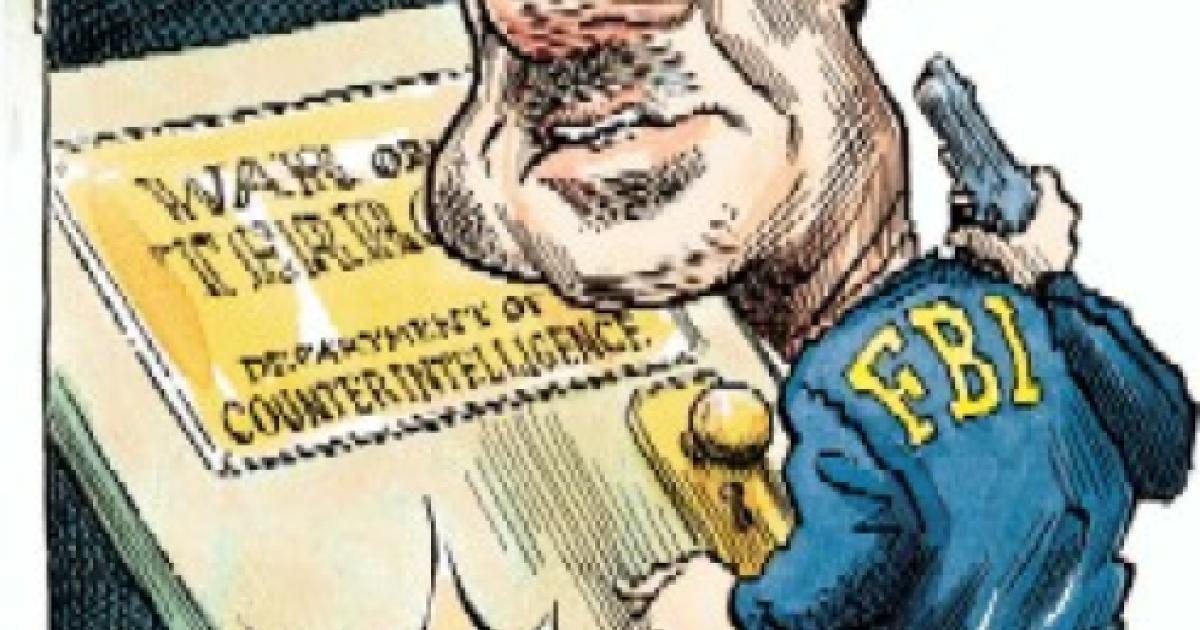
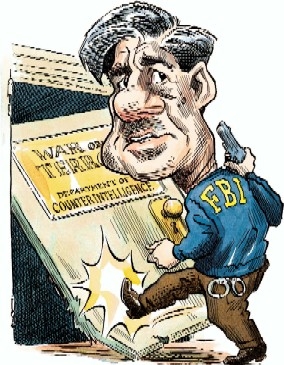
The FBI is not the answer to the problem of domestic intelligence. As demonstrated by the 9/11 Commission’s report, the bureau turned in the most lackluster performance of any agency in the run-up to 9/11, even though it had (and has) the primary responsibility among police and intelligence services for preventing terrorist attacks on the nation from within. A request by one of the FBI field offices to apply for a warrant to search the laptop of Zacarias Moussaoui (a prospective hijack pilot) was turned down. A prescient report on flight training by Muslims in Arizona was ignored by FBI headquarters. There were only two analysts on the bin Laden beat in the entire bureau. Director Louis Freeh’s directive that the bureau focus its efforts on counterterrorism was ignored.
As Senator Richard Shelby, the vice chairman of the Senate Select Committee on Intelligence, pointed out in the wake of 9/11: “The bureau did not know what information it possessed, it did not approach this information with an intelligence analysis mind-set, and it too often neglected to inform other agencies of what it did know or believe.”
After 9/11 the bureau, under a new director, Robert Mueller, vowed to do better, but its efforts have fallen far short of success. In part because the bureau has been plagued by excessive turnover in the executive ranks of its intelligence and antiterrorism sections, and even more so in its information technology staff, it took the bureau two years after 9/11 just to devise a plan to reform its counterterrorism program. We know now that the plan was a failure, otherwise President Bush would not have forced the bureau, over its fierce opposition, to create (in 2005) the National Security Branch—a consolidation of the intelligence, counterterrorism, and counterintelligence divisions of the bureau. The NSB, however, has so far failed to change the bureau’s traditional culture.
The Structural Roots of the Problem
I am generally skeptical of organizational solutions to intelligence problems, most of which are not organizational problems. But the FBI’s inadequate performance of the domestic intelligence function is a genuine and serious organizational problem. Placing the domestic intelligence function in a criminal investigation agency ensures, as other nations realize, a poor fit.
| Criminal investigation is case oriented, backward looking, information hugging, and fastidious. Intelligence, in contrast, is forward looking, threat oriented rather than case oriented, and freewheeling. |
Criminal investigation is retrospective. A crime has been committed and the investigators go about trying to find the criminal; when they do, they arrest him and continue gathering evidence that will be admissible in court to prove his guilt. If the criminal activity under investigation is by nature ongoing, as in the case of gang activity, the investigator may decide to allow it to continue until the activity generates irrefutable evidence of guilt. But then he will pounce. And at every stage he’ll take great care not to commit a procedural violation that might jeopardize a conviction. He will also balk at sharing with others any of the information that he obtains in his investigation, lest a leak tip off a suspect or make it easier for the suspect to defend himself in court should he be prosecuted. All that the sharing of information about a case can do from the FBI agent’s perspective (as well as that of the local U.S. Attorney, for whom the agent works, in effect) is to weaken his ability to control the future of the case.
Criminal investigation is case oriented, backward looking, information hugging, and fastidious (for fear of wrecking a prosecution). Intelligence, in contrast, is forward looking, threat oriented rather than case oriented, and freewheeling. Its focus is on identifying, and maintaining surveillance of, suspicious characters and on patiently assembling masses of seemingly unrelated data into patterns that are suggestive of an emergent threat but that may be based on speculative hypotheses far removed from probable cause, let alone from proof beyond a reasonable doubt.
| Criminal law enforcement is oriented toward punishment, but punishment cannot undo the consequences of a catastrophic attack. |
When intelligence is working well, the spy or traitor or terrorist is detected early, before he or she does damage, and often he or she can be turned to our advantage. The orientation of intelligence toward preventing crimes from occurring or even from being contemplated, rather than toward prosecution after they occur, would prevent a domestic intelligence agency from obsessing over procedural missteps that might jeopardize a conviction.
The FBI argues that because terrorist acts are criminal and intelligence is an element of criminal law enforcement, counterterrorism intelligence can be assimilated to the FBI’s criminal law enforcement responsibilities. But the activities with which national security intelligence is concerned differ greatly from ordinary federal crimes. Terrorist activities are politically motivated (in a broad sense of “political” that includes motivations founded on religious, class, racial, or ethnic hostility) and are potentially much more dangerous than nonpolitical crimes because they aim to injure or destroy the nation as a whole or otherwise wreak havoc on a large scale. To counter terrorist activity requires knowledge—of political movements; foreign countries and languages; the operational methods of terrorists, spies, and saboteurs; and the characteristics and availability of weapons of mass destruction—that criminal investigators do not possess. It also requires a different mind-set.
Good police officers learn to think like criminals; good intelligence officers learn to think like terrorists and spies. The hunter must be empathetic with (as distinct from sympathetic to) his quarry, but cops and spies have different quarry.
As explained by intelligence veteran William Odom,
FBI officials want arrests and convictions. They want media attention and lots of it. . . . They have little patience for sustained surveillance of a suspect to gain more intelligence. To them, sharing intelligence is anathema. Intelligence is something to be used, not shared. . . . Intelligence officials do not want public attention. They want to remain anonymous. They do not need arrest authority. They want to follow spies and terrorists secretly, allowing them to reveal their co-conspirators. Their reward comes from providing intelligence to others, not hiding it. . . . [They] tend to be more thorough, taking their time to develop evidence both for trials and for operational use. They know that they cannot let spies or terrorists get away without risking considerable danger to the country. Cops worry much less that a criminal will get away. Criminals are abundant and there are plenty more to arrest. Spies and terrorists will almost always defeat police officers.
Punishment and Prevention
Criminal law enforcement is oriented toward punishment, but punishment cannot undo the consequences of a catastrophic attack. Criminal law aims to deter crime by punishing a large enough fraction of offenders to make the threat of punishment credible, as well as to incapacitate those offenders whom the threat of punishment did not deter from committing crimes, by locking them up or in extreme cases by executing them. Especially because many of the most dangerous modern terrorists are largely undeterrable, notably suicide bombers, law enforcement alone cannot defeat terrorism.
| Good police officers learn to think like criminals; good intelligence officers learn to think like terrorists and spies. The hunter must be empathetic with his quarry to catch him, but cops and spies have different quarry. |
Law enforcement can actually impede the struggle against terrorism: sometimes by prematurely revealing what the government knows, thus giving the terrorists a chance to elude capture by changing their methods or locale; at other times by failing to intervene early enough (that is, before a crime has been committed). Identifying, assessing, and tracking activities in the preparation stage are quintessential intelligence tasks, but the activities themselves often are too ambiguous to be readily provable as crimes. Some are only minor crimes, some not crimes at all. Prosecuting persons suspected of being involved in the early stage (discussion, target surveillance, etc.) of preparing a terrorist attack may, when feasible, have value in deterring entry into that stage. Yet often the more effective strategy is not to arrest and prosecute at that stage but rather to monitor the suspects in an effort to learn the scope, intentions, membership, and affiliations of the terrorist or prototerrorist cell.
| The two worlds of law enforcement and intelligence don’t fit comfortably together in the same agency—let alone in the same individual. |
An agency that is not responsible for bringing criminals to justice can concentrate full time on pursuing terrorists without any of the distractions created by the complex demands of criminal justice (including concerns with discovery and proof). Success from the standpoint of intelligence can be chasing terrorists out of the country and making sure they don’t return, or even leaving them in place but turning them into government infor-mants. But detecting threats and preempting them before they are carried out may leave no room for successful prosecution—which is a clue to the difficulty of adapting a law enforcement agency to the intelligence role. Prosecutable crime is the lifeblood of law enforcement.
The proper aim of counterterrorism is to penetrate and control terrorist cells, not to cause their members to scatter as soon as the arrest of one rings a warning bell to the others. Penetration, “turning,” control, and disinformation are delicate intelligence operations requiring specialized skills, training, and aptitudes unlikely to be acquired and honed by FBI special agents converted temporarily into intelligence operatives.
Consider the FBI’s 2002 arrest in Lackawanna, New York, of six men of Yemeni descent who had attended an Al Qaeda training camp in Afghanistan. A domestic intelligence agency might have tried to infiltrate the group or to “flip” one of its members, turning the group into an asset against Al Qaeda. Instead, the suspects were arrested and charged in a highly publicized case. The same pattern of premature arrest and prosecution recurred with the “Miami 7,” a group of wannabe terrorists apprehended earlier this year.
| An agency that is not responsible for bringing criminals to justice can concentrate full time on pursuing terrorists without any of the distractions created by the complex demands of criminal justice. |
The law enforcer’s approach to terrorism has the further disadvantages of causing intelligence data to be evaluated from the too-limited perspective of its utility in building a criminal case, and of retarding the sharing of information lest full credit for a successful prosecution be denied the field office that began the investigation. These disadvantages illustrate the difference, which is fundamental, between collecting information for the sake of knowledge and collecting it for the sake of building a case.
An incident involving the arrests in New York of two Muslim teenage girls whom the FBI suspected of wanting to become suicide bombers, and held in custody for six weeks, illustrates how emphasis on a criminal-law response to terrorism can impair vital “hearts and minds” strategies as well as (as may have happened in the Lackawanna case) shut down inquiry prematurely. The arrest of the two girls caused indignation in the New York Muslim community—whose loyalty and goodwill (as the FBI recognizes) are vital safeguards against domestic terrorism. It is natural for a law enforcement agency to want to arrest a person suspected of criminal activity. An intelligence agency, rather than wanting the girls arrested, would want to discover who had put the idea of becoming suicide bombers in their minds (maybe no one). Its low-key investigation might culminate in simply a chat with the girls’ parents. If the girls had a connection, however indirect, with a terrorist cell, the publicity from their arrest doubtless caused the members to scatter—and to reconstitute the cell elsewhere, out of sight of the FBI.
Clashing Cultures
The problem at base is related to the very different “cultures” of law enforcement and intelligence. The performance of criminal investigators, unlike that of intelligence officers, can be evaluated by objective, indeed quantitative, criteria, such as number of arrests weighted by successful convictions, with successful convictions weighted in turn by length of sentence imposed, amount of property recovered, and amount of favorable publicity generated. Intelligence officers cannot be evaluated by such objective criteria; their successes are often invisible, indeed unknowable. For example, the earlier a plot is detected and disrupted, the more difficult it is to know whether it ever had a chance of success. And information obtained by intelligence officers may be only a small part of the total information that enabled a threat to be detected and thwarted.
This asymmetry of performance measurement makes it difficult for a police department to hire and retain able intelligence officers. Able employees prefer objective to subjective performance criteria; they know they’ll do better if they are judged by such criteria than if their performance is evaluated by nonobjective, nonquantifiable, criteria that may include personality, appearance, personal connections, and sheer luck. Thus in an agency such as the FBI that combines criminal investigation with intelligence, the abler recruits will gravitate toward criminal investigation. They may be required to undergo some intelligence training and to do stints in intelligence jobs, but always they will be looking to return to the main career track.
| Because of the gravity of threats to national security, intelligence officers must track down any lead, however implausible, that might point to an attack that would endanger national security. Chasing such will-o’-the-wisps is simply alien to the police mentality. |
Henry Kissinger has remarked that “intelligence personnel in the real world are subject to unusual psychological pressures. Separated from their compatriots by security walls, operating in a culture suspicious of even unavoidable secrecy, they are surrounded by an atmosphere of cultural ambiguity. Their unadvertised and unadvertisable successes are taken for granted, while they are blamed for policies that frequently result from strategic rather than intelligence misjudgments.” This does not sound like the description of an FBI agent, and it casts grave doubt on the wisdom of the FBI’s method of obtaining intelligence officers, which is to provide intelligence training to its special agents, all of whom are hired and trained as criminal investigators.
The two worlds of law enforcement and intelligence don’t fit comfortably together in the same agency—let alone in the same individual, the special agent with intelligence training who shuttles between the two worlds.
Most of the FBI’s employees, including 90 percent of its special agents, as distinct from its support staff, are stationed in the bureau’s 56 field offices rather than in its Washington headquarters. This geographic dispersal is another reflection of the bureau’s emphasis on criminal investigation and another impediment to the conduct of national security intelligence. Most federal crime is local and is prosecuted locally by one of the 96 U.S. Attorneys’ offices, which like the FBI’s field offices are scattered across the nation. The FBI agents in these offices essentially work for the U.S. Attorney, who is a prosecutor, not an intelligence official. But although most federal crime is local, the principal dangers to domestic security at present emanate from international terrorist groups. Clues to their activities may be scattered all over the world. Effective intelligence requires combining scraps of information regardless of geographic origin rather than allowing information to be sequestered in local offices.
I use “scraps” advisedly; it brings out still another problem with confiding domestic intelligence to the FBI. Because of the gravity of threats to national security, intelligence officers must track down any lead, however implausible, that might point to an attack that would endanger national security. Most of those leads lead nowhere, let alone to an arrest, prosecution, conviction, and sentence. Chasing such will-o’-the-wisps is simply alien to the police mentality.
The marriage of criminal investigation and domestic intelligence within the FBI has complicated the coordination of domestic and foreign intelligence. Often the same suspects are tracked outside the United States by the CIA and inside by the FBI’s intelligence divisions. Yet the CIA and FBI have a history of mutual suspicion and antipathy. This had begun to diminish even before 9/11, especially at the top of the two agencies. But the cultural and procedural gulf between criminal investigations and intelligence operations remains, has been aggravated by recent efforts of the bureau to snatch turf from the embattled CIA, and impairs coordination between the two agencies, just as it does within the FBI.
An agency 100 percent dedicated to domestic intelligence would do better at it than the FBI, which is at most 20 percent intelligence and thus dominated by the criminal investigators.
All this is unlikely to change. The effective control of an organization requires some uniformity in compensation methods, recruitment, evaluation, promotion, and working conditions in order to minimize conflict, foster cooperation, and avoid confusion and uncertainty.
If the missions assigned to the organization are too disparate—if their optimal performance requires different methods, personnel policies, supervisory structures, information technology, and so on; if indeed, as in the case of criminal investigation and domestic intelligence, the missions are incompatible—the compromises necessary to impose the requisite minimum uniformity will cause performance of the missions to be suboptimal.
If shoes came in only one size, they would be cheap to manufacture but most people would be poorly shod. Because criminal investigation is the dominant mission and prevailing culture of the FBI, the inherent tensions between criminal investigation and national security intelligence will continue to be resolved in favor of criminal investigation.
Adapted from Remaking Domestic Intelligence, by Richard A. Posner, published by the Hoover Press.
Available from the Hoover Press is Remaking Domestic Intelligence, by Richard A. Posner. To order, call 800.935.2882 or visit www.hooverpress.org.
Categories
What should become of the FBI?

Current polls show a growing mistrust of the FBI among nearly half of America due to a spate of investigative activities that appear politically one-sided. Some pundits and politicians have piled on with invidious characterizations of the entire bureau as “fascist,” “Gestapo-like,” “thoroughly corrupt,” and a tool of the Democratic Party that should be completely disbanded.
While the hyperbole is not helpful, the public’s frustration is certainly understandable following disclosures by special counsel John Durham of abuses stemming from the Crossfire Hurricane investigation, the shocking search of a former Republican president’s home over a document dispute, the highly tactical home arrests of pro-life protesters and other conservatives, and the unjustified early morning search of journalists’ homes for the politically embarrassing diary of President Biden’s daughter — to name just a few.
A prominent over-rotation proposal fronted by some in the media and on Capitol Hill is the complete dissolution of the FBI and distribution of its mission to other federal law enforcement agencies. This is a feel-good sound bite, but it will never happen. It is irresponsible to feed it as a possibility to that half of the country that traditionally admired the FBI but now is deeply concerned. Here’s why.
Keep in mind that 99 percent of the FBI had no involvement in any of the troubling investigations and actions listed above. The majority go about their daily business working the kinds of cases we would want them to. If whistleblower and other anecdotal reporting is to be believed, there is significant concern among current and retired FBI agents that some in the bureau are unduly cooperating with abusive Department of Justice (DOJ) political agendas. The responsibility for the present erosion of trust in the FBI by millions in this country lies at the feet of a very few.
Second, parceling out the FBI’s investigative and intelligence jurisdictions to other agencies is immensely impractical. These agencies are small compared to the FBI, are single threaded in their missions, and would be years if not decades away from being able to absorb authorities with which they have no experience or training.
Some have suggested simply reconstituting the FBI under a different name. This makes no sense. Like it or not, the FBI is a brand cultivated over a century, generating deep cooperation domestically and around the world that helps solve tough cases and save lives. The FBI, because it’s the FBI, is still attractive to tens of thousands of good candidates for very few positions every year. Effective reforms that don’t blow up the positive effects of the FBI are possible.
What is clear is that some type of prudent reform mitigating concerns that the FBI can be manipulated politically is in order. A historical perspective may be useful.
Eighty percent of Americans were not born or are too young to remember the last time the FBI came under intense fire for politically motivated investigations that were found to be constitutionally out of bounds. These investigations came to a head in the 1960s and early ’70s under the Kennedy/Johnson/Nixon administrations. At that time, the executive branch launched intelligence investigations and operations with little constraint.
As a result, wiretaps ordered by the DOJ of Martin Luther King Jr. came to light, as well as surveillance and undercover penetration of anti-Vietnam War and civil rights protest groups. Protections guaranteed by the First and Fourth Amendments were abused. And it wasn’t just the FBI that drew attention as it was revealed that the CIA was attempting sanctioned assassinations overseas, the National Security Agency (NSA) was routinely listening in on American conversations, and the IRS was casually sharing taxpayer records of perceived administration enemies.
In 1975, a bipartisan special Senate committee colloquially known as the “Church Committee” was formed and subsequently exposed all these adventurous executive branch excesses. Arising from that were a number of reforms ranging from presidential executive orders to the establishment of the Foreign Intelligence Surveillance Act (FISA) court and its protocols and, eventually, to the articulation and promulgation of Attorney General Guidelines that dictated the constitutionally safe thresholds the FBI needs to meet to start an investigation.
All of this was good because it led to measures that strengthened constitutional protections while preserving the positive native capabilities of key national security agencies. There was understandable public indignation and loss of trust at that time 50 years ago because of these exposed abuses, but prudent reforms reigned, and we were better for it as a nation.
Now, generations have passed, and the imperatives of those old reforms have seemingly turned evanescent. And so, further reform is necessary to curb a current executive branch that appears to be targeting political opposition with an inordinate forcefulness that insults and possibly violates constitutional protections. Refreshed reforms are now likely as power is poised to shift in Washington, but the FBI can get out ahead of some of this by unilaterally instituting a few basic new protocols designed to restore trust.
First, any high-profile investigation involving political campaigns, candidates and political figures should be subject to objective General Counsel review to ensure adequate predication required by the Attorney General Guidelines is clearly present in order to avoid another Crossfire Hurricane debacle. Contrary to Inspector General assertions, the Crossfire Hurricane case file articulated no basis for legitimate initiation required by the guidelines.
Second, FBI agents and analysts should be required to sign employment contracts agreeing to avoid politically charged or revealing statements on internal communications and social media platforms under penalty of discipline, to include dismissal. The public should have faith that the FBI is apolitical.
COVID is down, but far from out: It might be time for a booster shot How Wes Moore and Kari Lake could redefine America’s political future
Third, arrest and search plans involving politically sensitive suspects should undergo prior review by an independent entity within the FBI to ensure that the level of tactical response fits the violation and relative risk presented by the subject. Safety is important but so is a response strategy that doesn’t foster perceptions of heavy-handedness, if not extrajudicial punishment or “message sending.”
Trust is the currency that enables successful FBI investigations that all law-abiding Americans desire. Less trust, less success. Hyperbolic caricatures and impractical “disband the FBI” drumbeats are useless. Positive reform is normally helpful, welcome, and vitally needed to reestablish lost trust.
Kevin R. Brock is a former assistant director of intelligence for the FBI and principal deputy director of the National Counterterrorism Center (NCTC). He independently consults with private companies and public-safety agencies on strategic mission technologies.