Categories
Saved Web Pages

Russia says United States is directly involved in Ukraine war

NOYKPMUDORM3XHQYGD75VOS36Q.jpg

LONDON, Aug 2 (Reuters) – Russia on Tuesday said that the United States, the world’s top military power, was directly involved in the conflict in Ukraine because U.S. spies were approving and coordinating Ukrainian missile strikes on Russian forces.

Russia’s invasion of Ukraine has triggered the most serious crisis in relations between Russia and the West since the 1962 Cuban Missile Crisis, when many people feared the world was on the brink of nuclear war.

Russia’s defence ministry, headed by a close ally of President Vladimir Putin, said Vadym Skibitsky, Ukraine’s deputy head of military intelligence, had admitted to the Telegraph newspaper that Washington coordinates HIMARS missile strikes.

Register now for FREE unlimited access to Reuters.com

“All this undeniably proves that Washington, contrary to White House and Pentagon claims, is directly involved in the conflict in Ukraine,” the defence ministry said.

U.S. President Joe Biden has said he wants Ukraine to defeat Russia and has supplied billions of dollars of arms to Kyiv but U.S. officials do not want a direct confrontation between U.S. and Russian soldiers.

Russia said the Biden administration was responsible for missile attacks on civilian targets in areas controlled by Russian-backed forces in eastern Ukraine.

“It is the Biden administration that is directly responsible for all Kiev-approved rocket attacks on residential areas and civilian infrastructure in populated areas of Donbas and other regions, which have resulted in mass deaths of civilians,” the defence ministry said.

Russia and the West frame the conflict in Ukraine very differently.

Putin calls it a “special military operation” aimed at preventing what he says is a Western attempt to use Ukraine to threaten Russia and at protecting Russian speakers from persecution from dangerous nationalists in Ukraine.

The 69-year-old Kremlin chief increasingly casts the conflict as an existential battle with the West whose outcome will reshape the global political order.

Kyiv and its Western backers say Putin’s claims are without foundation and that there is no justification for waging an unprovoked war against a sovereign state whose borders Russia recognised.

Russian Defence Minister Sergei Shoigu, who sometimes holidays with Putin in the Russian wilderness, said the operation in Ukraine was going to plan with Russian and Russian-backed forces pushing back Ukrainian forces in the eastern Donetsk region.

“After taking control of the territory of the Luhansk People’s Republic, the Donetsk People’s Republic is being liberated as planned,” Shoigu told top generals.

He said the settlements of Hryhorivka, Berestove, Stryapivka, Pokrovske, Semyhirya and Novoluhanske had been taken recently, including the largest thermal power plant in Europe.

Neither Russia nor Ukraine discloses its losses.

U.S. intelligence estimates that some 15,000 Russians have been killed so far in Ukraine – equal to the total Soviet death toll during Moscow’s occupation of Afghanistan in 1979-1989.

Ukrainian losses are probably a little less than that, U.S. intelligence believes, according to U.S. estimates. Neither Ukraine nor Russia has given detailed estimates of its own losses.

Register now for FREE unlimited access to Reuters.com

Reporting by Reuters; editing by Guy Faulconbridge and Nick Macfie

Our Standards: The Thomson Reuters Trust Principles.

Categories
Saved Web Pages

Ayman al-Zawahiri: How US spies found al-Qaeda’s top man in Kabul

By Matt Murphy
BBC News

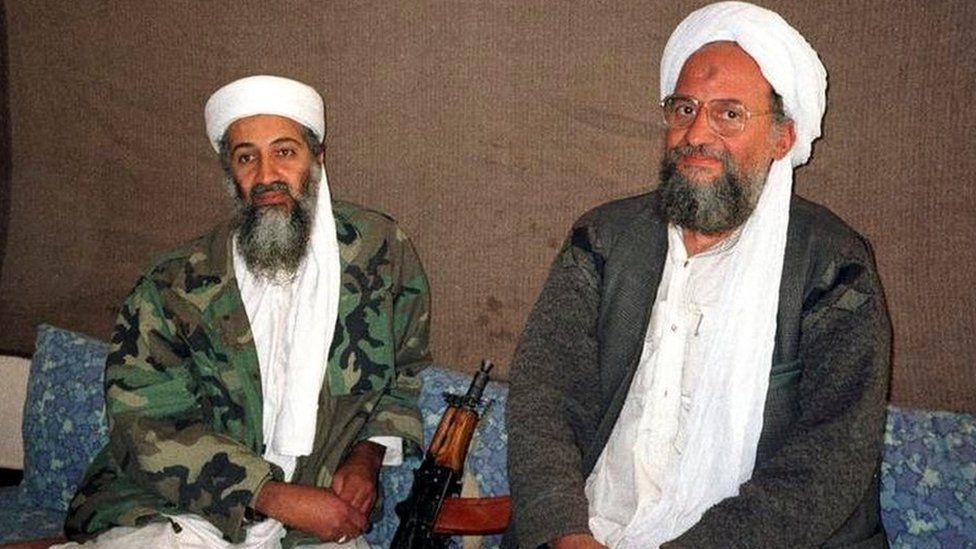
Osama Bin Laden and Ayman al-Zawahiri - 2001Image source, Reuters

Image caption,

Zawahiri (R) was considered Bin Laden’s right-hand man and then became al-Qaeda’s leader

Last year, during the chaotic US withdrawal from Afghanistan, President Joe Biden pledged his administration would not allow the new Taliban-led regime to make the country a safe-haven for terrorists.

The remarks were intended to indicate that, as far as Mr Biden’s White House was concerned, the decades-old war on terror was far from over.

Almost a year later, the president’s top security advisers approached him and suggested that intelligence officials may have located the leader of al-Qaeda, Ayman al-Zawahiri, in Afghanistan.

Identifying a high-value target

In background briefings, senior administration figures told reporters that they believed Zawahiri had returned to Afghanistan in the past year, following the collapse of the Western-backed government.

US spies had been carefully watching Afghanistan ever since the US withdrawal for signs that al-Qaeda leaders were slowly filtering back into the country, an adviser to Mr Biden said.

Image source, AFP

Image caption,

It’s unclear what happened to Zawahiri’s body in the wake of the strike

Zawahiri is said to have settled in a large compound with high, protective walls, in downtown Kabul with his wife and daughter.

The neighbourhood Zawahiri chose, a relatively well-to-do area called Choorpur, was home to foreign embassies and diplomats under the previous administration. Now, most of the Taliban’s senior officials live in its plush surroundings.

In early April, CIA officers first briefed Mr Biden’s advisers, and then the president himself, informing him that they had identified a network supporting the al-Qaeda leader and his family through multiple streams of intelligence, according to the briefings.

The spies had slowly established patterns of behaviour from the house’s residents, including the unique mannerisms of a woman that spies identified as Zawahiri’s wife.

Officials said they had recognised her use of terrorist “tradecraft”, which she used in an attempt to avoid leading anyone to her husband’s safehouse in Kabul.

They observed that after arriving at the house, Zawahiri never personally left the premises. But they did note his habit of appearing periodically on a balcony overlooking the property’s walls for short periods of time.

Plotting an historic raid

For Mr Biden, the opportunity to kill one of America’s most wanted men was fraught with risk.

Zawahiri was living in a dense residential neighbourhood, and the drone strike that accidentally killed 10 innocent people in Kabul, including an aid worker and seven children during the final days of the US presence in Afghanistan, will undoubtedly have played on his mind.

Throughout May and June, the US leader was focussed on the war in Ukraine and pushing through landmark legislation on gun control and climate change. But secretly a “very small and select” group of top intelligence officers began preparing several options to present to him.

Mr Biden had tasked intelligence officers with ensuring that civilians – including Zawahiri ‘s family and Taliban officials – weren’t accidentally killed in the attack.

On 1 July, Mr Biden gathered several top officials, including CIA Director William Burns and Director of National Intelligence Avril Haines, for a briefing.

Mr Biden was said to be “deeply engaged in the briefing and immersed in the intelligence” as he and his advisers gathered around a scale model of Zawahiri’s home that intelligence officials had constructed and brought to the White House.

“He was particularly focused on ensuring that every step had been taken to ensure the operation would minimise that risk,” a senior adviser said.

Mr Biden asked for information about the building’s structure and how a strike could affect it, before flying to Camp David for a weekend break.

Over the next few weeks, officials met at the White House situation room – a bunker-like command centre below the White House set up to allow the president to monitor crises at home and abroad.

They methodically planned the operation, trying to anticipate any questions the president could ask.

Meanwhile, a small team of lawyers came together to assess the legality of a strike, ultimately concluding that Zawahiri was a legitimate target based on “his continuing leadership role in al-Qaeda and his participation and operational support for al-Qaeda attacks”.

On 25 July, after convening his team one final time and asking his top advisers for their views, Mr Biden authorised the strike.

Taliban leaders scramble as US strikes

At 06:18 local time (01:38 GMT), two hellfire missiles fired by a drone smashed into the balcony of Zawahiri ‘s home, killing the al-Qaeda leader. Members of his family were unharmed, intelligence officials said.

In the aftermath of the raid, the windows of the house appeared to have been blown out, but astonishingly little other damage seemed to have been done.

There are suggestions a little-known version of the Hellfire missile was used, one without an explosive warhead. This version – called the AGM-114R9X – instead deploys six blades which swing out from the side of the missile as it approaches the target.

It is the kinetic energy from this multi-bladed weapon’s speed that causes the destruction, as they slice through whatever they hit and minimises collateral damage.

Thousands of miles away in Washington, the president was informed of the strike’s success.

On Sunday, the Taliban’s ministry of the interior told the local Tolo news outlet that a rocket strike had hit an empty house, causing no casualties. They refused to provide additional details at the time.

But the Biden administration said soon after, fighters from the Haqqani network, an ultra-violent wing of the Taliban, rushed Zawahiri’s family away from the site and engaged in a broader effort to cover-up his presence.

When a BBC reporter arrived at the house on Monday morning a Taliban cordon sharply brandished him away, aiming rifles at him and insisting that there was “nothing to see”.

Image caption,

This is the suspected location of the strike in Kabul

US officials said “multiple streams of intelligence” had confirmed Zawahiri ‘s death, but emphasised that no American personnel were on the ground in Kabul. They refused to elaborate as to how they had confirmed the attack’s success.

Intelligence agencies jealously guard the identities of their spies, and James Clapper, a former director of national intelligence under President Obama, told the BBC that former US allies in Kabul may have provided some information.

It’s unclear what happened to Zawahiri’s body in the wake of the strike. Biden administration figures said the US had made no effort to retrieve Zawahiri’s remains, as they did in the wake of the raid that killed Osama Bin Laden.

Special forces retrieved Bin Laden’s body to confirm his identity, before burying it at sea to prevent his grave becoming a shrine to Islamists.

However, given the Taliban have cleaned the area, it is possible his remains have been retrieved.

As Mr Biden’s television address from a balcony of the White House beamed around the world, Taliban leaders issued a sharp condemnation of the US incursion into their territory. But their comments made no mention of Zawahiri.

There will now be speculation about how much knowledge senior Taliban leaders had about Zawahiri’s presence in Kabul and what assistance they might have been providing.

One resident told the BBC that Taliban fighters had been guarding the street and that the presence of “non-Afghan residents” was common knowledge among locals.

The suggestion seems likely to raise tricky questions for Taliban leaders.

Media caption,

Biden on Zawahiri killing: ‘Justice has been delivered’

Additional reporting from Chris Partridge on the Hellfire system

Categories
Saved Web Pages

Erosion of public trust mounting for FBI as allegations of partisanship emerge in Hunter Biden probe

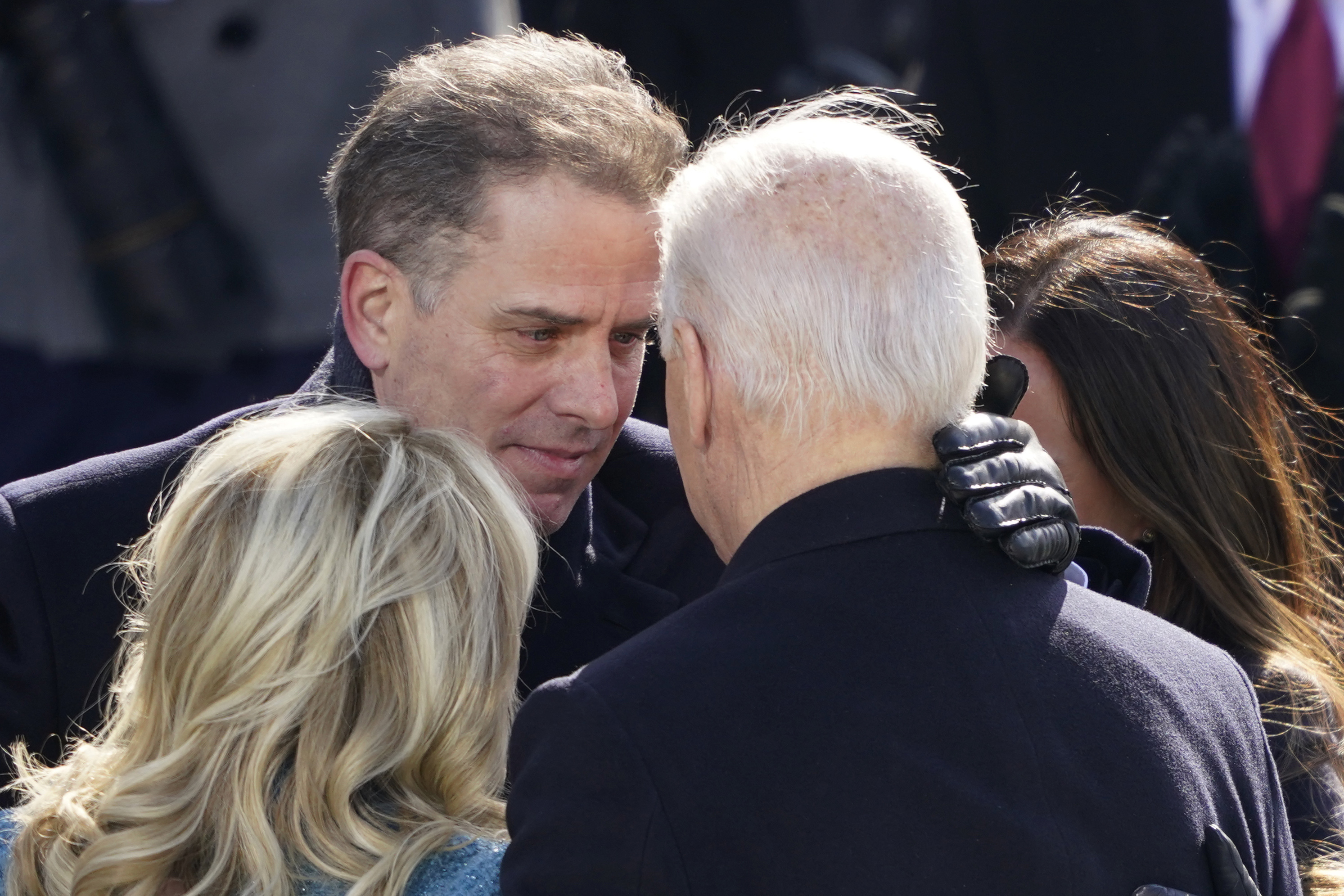
Hunter_Biden_Taxes_14076.jpg-eed83.jpg

Sen. Charles E. Grassley’s accusation of partisan interference by top FBI officials in the Hunter Biden probe is the latest crisis of credibility for the nation’s premier law enforcement agency, making its job of collaring crooks that much more difficult.

The Iowa Republican made the accusation in the middle of an embarrassing summer for the storied bureau, which has been struggling to shake off complaints of political bias since the 2016 presidential election.

In May, the criminal trial of former Hillary Clinton campaign attorney Michael Sussmann laid bare multiple mistakes and subterfuge by FBI officials investigating accusations of links between Russians who interfered in the 2016 election and members of President Trump’s campaign.

Former FBI agents said they fear the bureau’s woes will seep into its critical terrorism and organized crime investigations. They worry that informants will be less willing to come forward or that jurors may not give an agent testifying at trial the same expectation of truth they once would have.

“There is no greater backbone for any law enforcement organization than having the trust of the American people,” said Lewis Schiliro, a former head of the agency’s New York office. “It’s through the trust of the people that you get cooperation from witnesses and victims, the credibility to testify on the witness stand, and even the ability to infiltrate terrorist organizations.”

FBI Director Christopher A. Wray will get a chance to explain Thursday when he testifies before the Senate Judiciary Committee. The FBI did not respond to multiple requests for comment by The Washington Times about its loss of public trust.

SEE ALSO: Whistleblower reveals FBI wrongly labeled Hunter Biden evidence as disinformation

A Rasmussen poll released this year showed plunging public support for the FBI. The survey found that 47% of likely U.S. voters had an unfavorable view of the bureau, including 26% who had a “very unfavorable” impression.

About 46% of respondents said they had a favorable view of the FBI, down from 60% in the same survey in May 2020.

The poll showed that 46% of voters viewed the FBI as President Biden’s “personal Gestapo,” and 50% said the president was influencing the FBI.

That lack of confidence is reflected in jury rooms across the country. The number of convictions in FBI-led investigations has dropped by 4% over the past five years and 14% over the past 10 years, according to data from Syracuse University.

Kevin Brock, a former FBI assistant director of intelligence, said the erosion of public trust is the “inevitable legacy” of former FBI Director James B. Comey and Deputy Director Andrew McCabe. He said accusations that they mishandled the Trump-Russia probe and the investigation into Mrs. Clinton’s use of a private email server gave rise to public suspicion of the bureau across the political spectrum.

“These allegations [of political taint] are going to persist and will hurt the FBI because they will lose the trust of the American people,” he said. “They’ve already lost a large swath of the American people.”

The accusations against the bureau this summer have revived complaints of top FBI officials’ partisan ties and other embarrassments from the Trump era.

Mr. Grassley revealed last week that FBI whistleblowers told lawmakers that FBI officials inaccurately labeled verified evidence in the Hunter Biden case as disinformation, grinding the probe to a halt.

Current and former “highly credible whistleblowers” within the FBI told Congress that agents conspired to discredit the probe against the president’s son.

The agent in charge of the probe, Timothy Thibault, has come under fire for reported partisan social media posts, including retweeting anti-Trump groups and criticizing Republicans.

Sen. Ron Johnson, Wisconsin Republican, accused the FBI on Sunday of extreme political bias. He accused Mr. Wray, who was appointed by Mr. Trump, of slow-walking the Hunter Biden investigation.

“I’m not shocked, but it’s outrageous that the FBI would be tipping the scales of justice the way they’re doing,” he said in a Fox News interview.

“I have no faith in Christopher Wray conducting this investigation, but it’s important that the American public understand the FBI had Hunter Biden’s laptop in December 2019. They certainly saw the evidence of what I think is criminal activity on that laptop,” Mr. Johnson said.

Mr. Johnson suggested that the FBI obstructed Senate Republicans’ 2020 probe into Hunter Biden’s foreign business dealings.

The FBI faced two weeks of humiliating testimony in the trial of Mr. Sussmann, who was acquitted in May of lying to the agency about his ties to the Clinton campaign when he offered a false tip about the Trump Organization’s ties to Russia.

The trial revealed that FBI leaders concealed from field agents that information provided by the Clinton campaign triggered the investigation. An agent testified that a “typo” led other agents to believe that the anti-Trump accusations were based on a referral from the Justice Department, not from a Clinton campaign attorney.

The agent also testified under oath that he is under an internal FBI investigation for withholding key evidence in the Trump-Russia probe.

As the bureau tries to navigate away from political scandal, a series of self-inflicted wounds have raised questions of competency.

A group of 90 women, including several U.S. Olympic team gymnasts, has filed a $1 billion lawsuit against the FBI for its botched investigation into former Team USA doctor Larry Nassar, allowing him to continue to sexually abuse them.

The Justice Department released a report that found USA Gymnastics contacted the FBI twice about Nassar, but the FBI did not take any action. Nassar abused about 70 women and girls from the time the FBI was first told of the accusations in July 2015 to December 2016, when he was arrested.

The FBI has also come under fire for failing to follow up on a tip about mass shooter Nikolas Cruz in 2018. Roughly six weeks after the tip, Cruz fatally shot 17 students and injured more at Marjory Stoneman Douglas High School in Parkland, Florida.

Last year, prosecutors charged FBI agent Eduardo Valdivia with attempted second-degree murder in a shooting aboard a Washington Metropolitan Area Transit Authority train after a five-month investigation by Montgomery County State’s Attorney John McCarthy. Mr. Valdivia has pleaded not guilty, and the case is pending.

A recent Justice Department inspector general’s report found that two FBI officials “engaged in unprofessional conduct by exhibiting favoritism in granting promotions.”

“It’s not helping,” Mr. Brock said of the spate of black eyes for the bureau. “Parkland was a horrible FBI breakdown in processes, and the gymnast case was a real failure on the part of the FBI. Those things might have had less of an impact a few years ago as isolated mistakes, but in this environment, everything the FBI does is now being amplified by both sides of the political spectrum for leverage.”

The former agent said it would take major overhauls for the bureau to win back the public’s confidence.

Mr. Brock called on FBI brass to be more transparent in politically tinged cases to prevent second-guessing and finger-pointing by lawmakers and the public.

He said the bureau should acknowledge when agents are working on major cases like the Hunter Biden probe and make a public pledge to rigorously document that bureau procedures are followed. He said increasing transparency is a difficult balance because the bureau needs to keep mum about witnesses and evidence. Still, he said, it will pay off in the long run.

“No one is saying increasing transparency is easy, but the risk is that there will be a substantial loss in confidence and the FBI will become ineffective,” he said.

Mr. Schiliro said Congress should stop making the FBI director a politically appointed position and instead have the person appointed by a bipartisan panel for a 10-year term.

“As long as we have politically appointed FBI directors, their loyalty becomes more political than to the FBI as an institution. It needs to be independent,” he said.

• Jeff Mordock can be reached at jmordock@washingtontimes.com.

Categories
Saved Web Pages

Russia faces ‘economic oblivion’ despite claims of short-term resilience, economists say

107086134-16572801282022-07-07t190843z_1

Russian President Vladimir Putin attends a meeting with parliamentary leaders in Moscow, Russia July 7, 2022. 

Russia is facing “economic oblivion” in the long-term because of international sanctions and the flight of businesses, several economists have said.

The International Monetary Fund last week upgraded Russia’s gross domestic product estimate for 2022 by 2.5 percentage points, meaning the economy is now projected to contract by 6% this year. The IMF said the economy seemed to be weathering the barrage of economic sanctions better than expected.

The Central Bank of Russia surprised markets in late July by cutting its key interest rate back to 8%, below its pre-war level, citing cooling inflation, a strong currency and the risk of recession.

The ruble recovered from historic early losses in the aftermath of the invasion of Ukraine to become a top performer on the global foreign exchange market this year, prompting Russian President Vladimir Putin to declare that Western sanctions had failed.

Meanwhile, Russia has continued to export energy and other commodities while leveraging Europe’s dependency on its gas supplies.

However, many economists see long-lasting costs to the Russian economy from the exit of foreign firms – which will hit production capacity and capital and result in a “brain drain” – along with the loss of its long-term oil and gas markets and diminished access to critical imports of technology and inputs.

Ian Bremmer, president of Eurasia Group, told CNBC on Monday that while short-term disruptions from sanctions are less than originally anticipated, the real debate goes beyond 2022.

“Anecdotal evidence suggests the manufacturing dislocations are rising as inventories are depleted and scarcity of foreign parts becomes binding. Chips and transport are among the sectors cited, in some cases reflecting dual-use military demand,” Bremmer said.

“Governmental arrears may be contributing to broader shortages. Imports of consumer goods are increasing, but less so intermediate/investment goods.”

Bremmer highlighted that as sanctions intensify and popular discontent grows, the educated are leaving Russia, underscoring the importance of trade sanctions on sensitive technologies and the “longer timeline by which sanctions undermine trend productivity and growth.”

“Brain drain leads to a direct decline in the working age population, especially high-productivity workers, reducing GDP,” he said.

“It affects overall productivity, reducing innovation and affects overall confidence in the economy, reducing investment and savings.”

Eurasia Group projects a sustained, long-term decline in economic activity to eventually result in a 30-50% contraction in Russian GDP from its pre-war level.

‘Catastrophically crippling’

A Yale University study published last month, which analyzed high-frequency consumer, trade and shipping data that its author’s claim presents a truer picture than the Kremlin is presenting, argued that rumors of Russia’s economic survival had been greatly exaggerated.

The paper suggested international sanctions and an exodus of more than 1,000 global companies are “catastrophically crippling” the Russian economy.

“Russia’s strategic positioning as a commodities exporter has irrevocably deteriorated, as it now deals from a position of weakness with the loss of its erstwhile main markets, and faces steep challenges executing a ‘pivot to Asia’ with non-fungible exports such as piped gas,” the Yale economists said.

They added that despite some “lingering leakiness,” Russian imports have “largely collapsed,” with Moscow now facing challenges in securing inputs, parts and technology from increasingly jittery trade partners and as a result, seeing widespread supply shortages in its domestic economy.

“Despite Putin’s delusions of self-sufficiency and import substitution, Russian domestic production has come to a complete standstill with no capacity to replace lost businesses, products and talent; the hollowing out of Russia’s domestic innovation and production base has led to soaring prices and consumer angst,” the report said.

“As a result of the business retreat, Russia has lost companies representing ~40% of its GDP, reversing nearly all of three decades worth of foreign investment and buttressing unprecedented simultaneous capital and population flight in a mass exodus of Russia’s economic base.”

No path out of ‘economic oblivion’

The apparent resilience of the Russian economy and the resurgence of the ruble was largely attributed to soaring energy prices and strict capital control measures – implemented by the Kremlin to limit the amount of foreign currency leaving the country – along with sanctions restricting its capacity to import.

Russia is the world’s largest exporter of gas and second-largest exporter of oil, and thus the hit to GDP from the war and associated sanctions has been softened by high commodity prices and Europe’s continued dependence on Russian energy for the time being.

Russia has now relaxed some of its capital controls and cut interest rates in a bid to bring the currency down and shore up its fiscal account.

“Putin is resorting to patently unsustainable, dramatic fiscal and monetary intervention to smooth over these structural economic weaknesses, which has already sent his government budget into deficit for the first time in years and drained his foreign reserves even with high energy prices – and Kremlin finances are in much, much more dire straits than conventionally understood,” the Yale economists said.

They also noted that Russia’s domestic financial markets were the worst performing markets in the world so far this year despite the strict capital controls, with investors pricing in “sustained, persistent weakness within the economy with liquidity and credit contracting,” along with Russia’s effective ostracization from international financial markets.

“Looking ahead, there is no path out of economic oblivion for Russia as long as the allied countries remain unified in maintaining and increasing sanctions pressure against Russia,” the report concluded.

“Defeatist headlines arguing that Russia’s economy has bounced back are simply not factual – the facts are that, by any metric and on any level, the Russian economy is reeling, and now is not the time to step on the brakes.”

Categories
Saved Web Pages

NY Mag highlights Kamala Harris’ ‘slip in political traction,’ says she ‘reached an unparalleled low point’

GettyImages-1241726237.jpg

In an article headlined “The Kamala Harris Conundrum,” New York Magazine highlighted Vice President Kamala Harris’ “slip in political traction” and said the vice president has reached an “unparalleled low point.”

The article, written by Gabriel Debenedetti, said that Harris was “partly a victim of the enormous expectations” the Biden administration placed on her while “selecting the future leader of a vibrant, thriving post-Trump Democratic Party.”

Debenedetti said some of Harris’ supporters would argue she was “one of the few things” keeping the Biden administration’s plummeting popularity at bay. 

It leaves “Democrats with a conundrum: a successor-in-waiting who is just as disliked as the standard-bearer but is also exactly as irreplaceable,” Debenedetti wrote. 

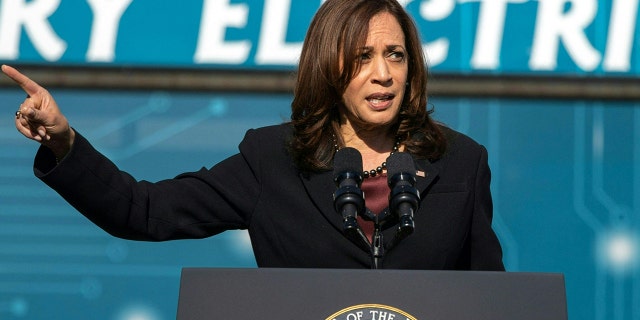
New York Magazine said Vice President Harris was the "most scrutinized" person to hold the position in recent administrations.

New York Magazine said Vice President Harris was the “most scrutinized” person to hold the position in recent administrations. (Logan Cyrus/AFP via Getty Images)

POTENTIAL 2024 DEMOCRATS MAKE EARLY MOVES

Harris has seen a lot of staff turnover in the last year as two more aides, domestic policy adviser Rohini Kosoglu and director of speechwriting Meghan Groob, decided to depart the vice president’s office in July. 

New York Magazine also said the vice president was the “most scrutinized” person to hold the position in recent administrations. The report said that in viewing from a “sympathetic perspective,” Harris had “hit her stride” in taking on abortion rights. 

“It took one and a half uncomfortable years for her set of skills to align with the administration’s strategic needs,” Debenedetti wrote. 

The article said that Harris’ “thankless portfolio” was the reason for “slip in political traction.” 

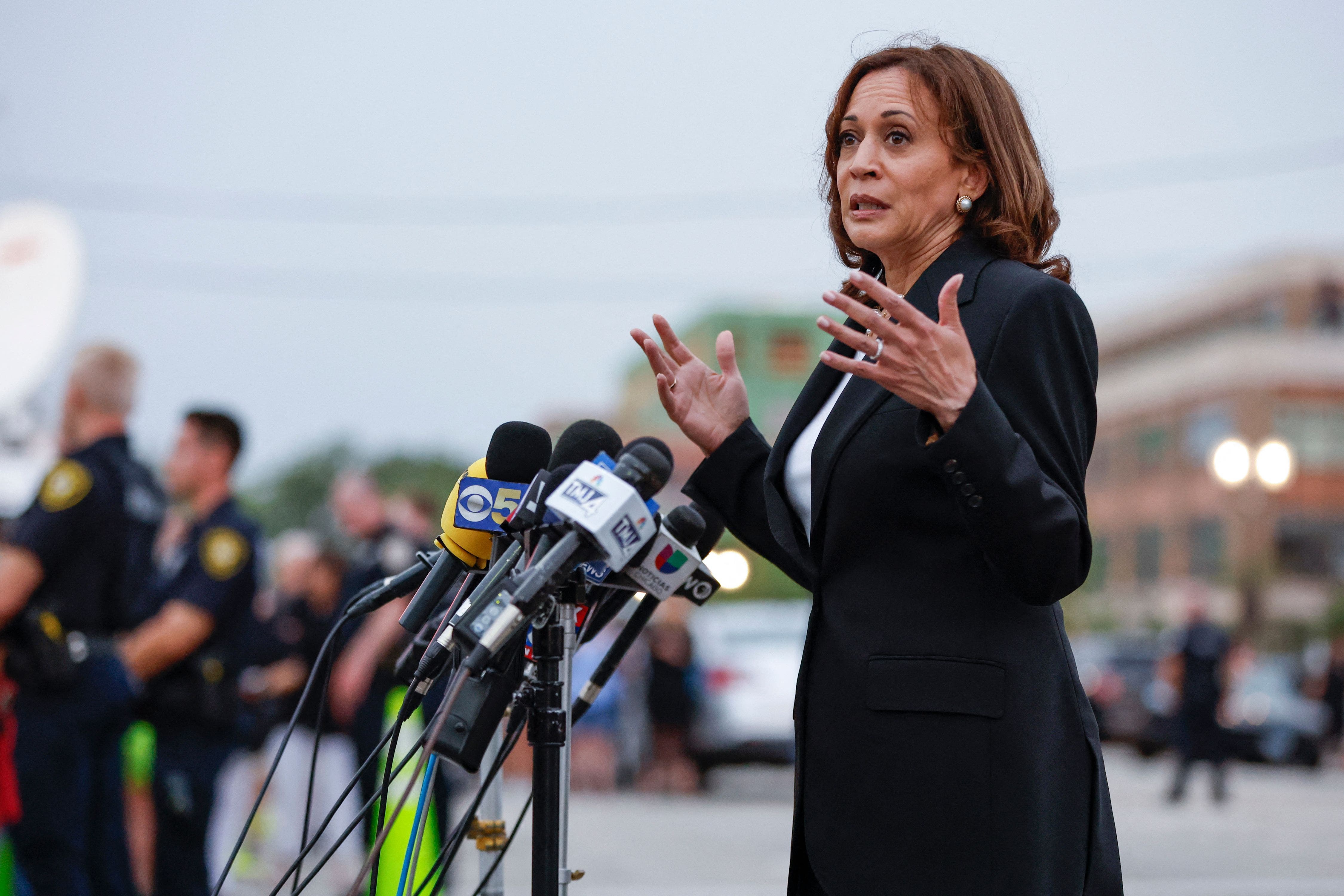
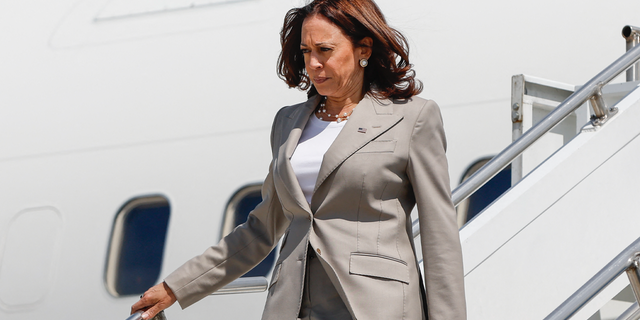
Vice President Kamala Harris steps off Air Force Two after arriving in Aurora, Illinois, on June 24, 2022.

Vice President Kamala Harris steps off Air Force Two after arriving in Aurora, Illinois, on June 24, 2022. (Getty Images)

BIDEN-HARRIS STAFF EXODUS: AT LEAST 25 KEY STAFFERS HAVE DEPARTED FROM SENIOR WHITE HOUSE ROLES SINCE 2021

The piece added that Harris’ popularity decline started with her visit to Central America and “appeared dismissive of a suggestion that she visit the border.” 

The vice president laughed at a question by a reporter in March 2021, who wondered if Harris was planning to visit the border. “Not today,” she said, chuckling. She added that she had visited before and probably would again. 

The report said that Harris was concerned that taking on the border crisis was a “clear political loser.” 

“She remained silent at a tense meeting with Biden, letting other officials speak when he asked for updates. Afterward, she told aides to underscore that she was focused on the origins of migration, not the border itself,” the New York Magazine article said. 

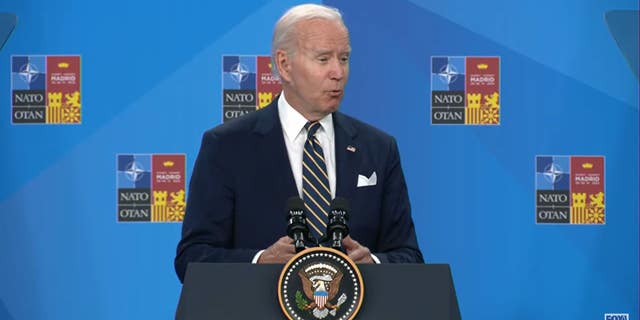
President Joe Biden holds a press conference.

President Joe Biden holds a press conference. (Fox News )

CLICK HERE TO GET THE FOX NEWS APP

Harris’ supporters and advocates are most frustrated with questions concerning her “preparedness” for the “top job” as President Biden tested positive for COVID-19. 

“The concern comes mostly from her occasionally stumbling responses to journalists,” according to New York Magazine. Party donors have expressed concern for Harris as a potential presidential candidate due to the “implosion” of her 2020 campaign as well, Debenedetti wrote. 

Categories
Saved Web Pages

The Kamala Conundrum

9c233b25d3549d0425ac222e9c6ce92920-kamal

Photo: Tom Brenner/The New York Times/Redux

Political news rarely gets much grimmer than it did for Joe Biden on July 26, when he was greeted by a surprise poll showing that, were he to run again in a contested primary in New Hampshire, he might command less than one-fifth of the vote. It was a far-fetched hypothetical — the likes of Pete Buttigieg and Elizabeth Warren won’t challenge him if he runs for reelection — but the dearth of support for a sitting president was still galling. And yet, improbably, the news was even worse for his presumptive heir: Kamala Harris was all the way down in the single digits.

The vice-presidency is, by definition, a nearly impossible job. There’s the prestige and the “one heartbeat away” of it all but few defined responsibilities and political pitfalls at every turn. Eighteen months in, thanks to a combination of Biden’s age and unpopularity, the lingering pandemic and punishing inflation, a relentless opposition, and — most visibly — her own struggles to communicate a satisfactory role for herself, Harris has reached an unparalleled low point.

“There’s a cruel irony to the thing, which is you are almost as big a target as the president for the opposition and critics, but by definition you need to keep a lower profile because no one wants to upstage the boss, and you don’t ever want to be in a position where you’re saying anything even a millimeter differently,” said a veteran operative who has worked with three Democratic vice-presidents. Harris is partly a victim of the enormous expectations placed on her when Biden thought he was selecting the future leader of a vibrant, thriving post-Trump Democratic Party. And if you ask some of her supporters, she may be one of the few things keeping the Biden administration’s languishing popularity barely afloat, leaving Democrats with a conundrum: a successor-in-waiting who is just as disliked as the standard-bearer but is also exactly as irreplaceable.

Harris is the most scrutinized vice-president in memory, and those around her have no doubt her coverage has been heavily warped by sexism and racism. Viewed from the most sympathetic perspective, the Harris who emerged as the administration’s foremost advocate of abortion rights this summer has hit her stride. She’s sat for high-profile interviews and condemned Republicans in speeches. She’s met with state legislators facing the most immediate threats, as in Indiana and Florida, and campaigned in states where the midterms will determine the fate of legal abortion, as in Pennsylvania. Her role now resembles one Biden envisioned for her in the summer of 2020 — aggressive partisan warrior selling the administration’s popular line.

But that was a different political universe, and it took one and a half uncomfortable years for her set of skills to align with the administration’s strategic needs. Harris set up her office with the instruction that maintaining close ties to the president was a priority, believing that to be a guarantee of internal influence. That proved unexpectedly complex, partly owing to their different operating styles. Whereas Biden has been surrounded by a core of the same staffers for decades, Harris’s office has seen enough turnover to make it a much-whispered-about story line in Washington and beyond. She has replaced her chief of staff, deputy chief of staff, communications director, spokeswoman, national security adviser, and speechwriter (twice), and her longest-serving senior aide, domestic-policy adviser Rohini Kosoglu, will depart this summer. Though Biden and Harris get along and meet regularly, it is rarely in the kind of one-on-one setting like the lunches that famously formed the cornerstone of Biden’s relationship with Barack Obama.

Harris has leaned on a rotating group of outside counselors. This includes some elected officials, such as Representative Barbara Lee, and others in the administration, such as Housing Secretary Marcia Fudge, but also longtime party operatives including Minyon Moore, the Reverend Leah Daughtry, and EMILY’s List leader Laphonza Butler as well as — occasionally — Hollywood power agent Bryan Lourd. She has also kept in sporadic touch with Hillary Clinton. But Harris’s sister, policy expert Maya Harris, is known to be her closest confidante, though she has no formal role in the White House.

The vice-president’s thankless portfolio is more to blame for her slip in political traction than staff turnover. Her popularity started sinking when she first visited Central America and appeared dismissive of a suggestion that she visit the border. Behind the scenes, she was worried the assignment to take on the migrant crisis was a clear political loser. When critics latched on to her admonition to would-be migrants — “Do not come” — her frustration grew, as this was the administration line. Later, she remained silent at a tense meeting with Biden, letting other officials speak when he asked for updates. Afterward, she told aides to underscore that she was focused on the origins of migration, not the border itself. Her other top priority — voting rights — was no less publicly frustrating when the administration’s preferred legislation predictably failed in the split Senate. Some close to her wonder why she didn’t muscle her way into leading more popular projects: implementation of the COVID-relief-bill spending or, later, the infrastructure package.

Most exasperating to her advocates, however, have been the questions about her preparedness for the top job, an especially sensitive line of inquiry ever since the 79-year-old Biden contracted COVID earlier in July. The concern comes mostly from her occasionally stumbling responses to journalists. She told a CBS interviewer who asked if Democrats had erred in not codifying Roe v. Wade into law, “I think that, to be very honest with you, I — I do believe that we should have rightly believed, but we certainly believe, that certain issues are just settled. Certain issues are just settled.” It was one genuinely cringeworthy moment in a straightforward interview, but it was shared far and wide, especially on the left. “Often Democrats are their own worst fucking enemies,” said Democratic pollster Cornell Belcher. “Democrats will stab each other up at the drop of a dime.”

None of it has dimmed the confidence of Harris’s closest aides that she can regain her political footing by traveling more, and her new staff has suggested she take advantage of interviews with celebrities and influencers to reach nonpolitically focused audiences. Plenty of supporters also believe the administration would be in worse shape if not for her sustained popularity with Black women in particular — Democrats’ most reliable voting base and the group that won Biden the nomination in 2020. Belcher recently found that this group gave Harris a “thermometer rating” in the 70s, meaning they viewed her far more warmly than most politicians. A Fox News poll had her overall approval rating just below 40 percent but as high as 65 percent among Black voters.

Top party donors have privately worried to close Obama allies that they’re skeptical of Harris’s prospects as a presidential candidate, citing the implosion of her 2020 campaign and her struggles as VP. Jockeying from other potential competitors, like frenemy Gavin Newsom, suggests that few would defer to her if Biden retired. Yet Harris’s strength among the party’s most influential voters nonetheless puts her in clear pole position.

Harris is careful not to be seen as overtly angling for the presidency. But it was no coincidence that this summer she visited the early-voting and often decisive state of South Carolina, in which Black voters make up most of the primary electorate.

For now, anything beyond her role as a booster for Biden is moot while the president clings to the notion that only he can beat Trump and that he therefore must run again. But that posture may be sustainable for only so long. Just hours after the New Hampshire poll dropped, the cloud over the White House darkened further. A new CNN survey found the number of Democrats prepared to turn the page on Biden had risen. Now it’s three out of every four.

Thank you for subscribing and supporting our journalism.
If you prefer to read in print, you can also find this article in the August 1, 2022, issue of
New York Magazine.

Want more stories like this one? Subscribe now
to support our journalism and get unlimited access to our coverage.
If you prefer to read in print, you can also find this article in the August 1, 2022, issue of
New York Magazine.

Daily news about the politics, business, and technology shaping our world.

Vox Media, LLC Terms and Privacy Notice

By submitting your email, you agree to our Terms and Privacy Notice and to receive email correspondence from us.

WP Radio
WP Radio
OFFLINE LIVE