Categories
Saved Web Pages

Allegations of political bias, widespread misconduct prompt FBI agents to call for Wray to step down

trump_fbi_64971_c0-341-6907-4370_s1200x7

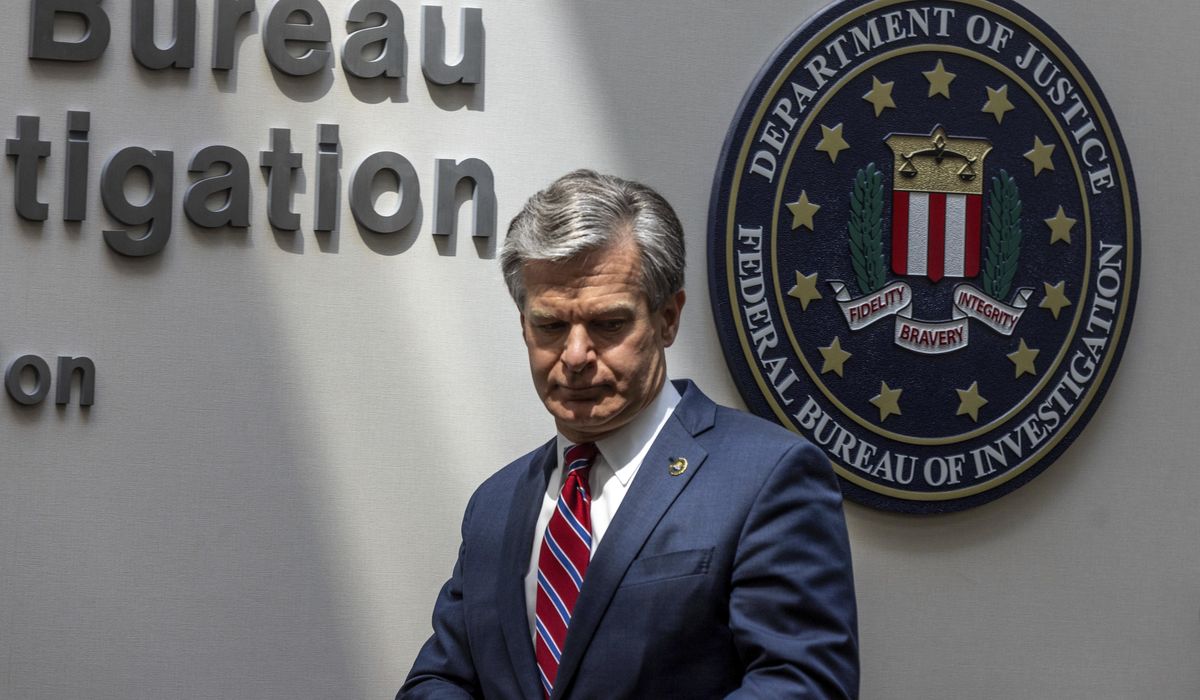
Rank-and-file FBI agents say they cannot see how FBI Director Christopher A. Wray stays in his position after The Washington Times’ exclusive report about a senior bureau official stepping down under scrutiny for suspected political bias affecting investigations.

Kurt Siuzdak, a lawyer and former FBI agent who represents whistleblowers at the bureau, said agents tell him that Mr. Wray has lost control of the agency and should resign.

“I’m hearing from [FBI personnel] that they feel like the director has lost control of the bureau,” he said. “They’re saying, ‘How does this guy survive? He’s leaving. He’s got to leave.’”

FBI whistleblowers talking to Congress about corruption and retaliation say in disclosures that Mr. Wray was often notified of the problems within the bureau but never took action to resolve them.

That includes recent whistleblower disclosures to House Judiciary Committee Republicans about agents being forced or coerced into signing false affidavits and claims of sexual harassment and stalking. It also includes fabricated terrorism cases to elevate performance statistics, as reported this month by The Times.

“[The FBI agents] are telling me they have lost confidence in Wray. All Wray does is go in and say we need more training and we’re doing stuff about it, or we will not tolerate it,” Mr. Siuzdak said.

SEE ALSO: Top agent exits FBI amid charge of political bias undermining Hunter Biden probe, sources say

In response, the FBI released this statement to The Times:

“The men and women of the FBI work hard every day to protect the American people and uphold the Constitution. All employees are held to the highest standards of professional and ethical conduct, and we expect them to focus on process, rigor, and objectivity in performance of their duties. Allegations of misconduct are taken seriously and referred to the Inspection Division or appropriate investigative body. In reality, the FBI is comprised of 37,000 employees who do it the right way on a daily basis to keep our nation safe by fighting violent crime, preventing terrorist attacks and defending America from espionage and cyber threats.”

The increased scrutiny on the conduct of FBI agents, including accusations of politicized investigations, led to the exit of a top official last week, as first reported by The Times on Monday.

Timothy Thibault, an assistant special agent in charge at the FBI’s Washington field office, was forced to leave his post last week, according to information from two former FBI officials familiar with the situation.

At a recent Senate hearing, Republicans questioned Mr. Wray about Mr. Thibault, who made anti-Trump statements in social media posts in 2020. At the time, Mr. Thibault led the FBI’s investigation of Hunter Biden, whose father was running for the White House.

In February and September of 2020, Mr. Thibault liked separate Washington Post opinion pieces criticizing Attorney General William Barr for not being more aggressive in prosecuting President Trump’s political allies and close associates.

Mr. Thibault also retweeted a post by the Lincoln Project, a Republican group that called Mr. Trump “a psychologically broken, embittered and deeply unhappy man.”

Mr. Wray was evasive about Mr. Thibault and his social media posts. He called them “ongoing personnel matters.”

Rank-and-file agents are now privately urging Mr. Wray to step down.

Republican lawmakers have previously called for the resignation of Mr. Wray, whom Mr. Trump appointed in 2017.

The first call for his resignation was in 2018. Florida Gov. Rick Scott, a Republican who is now a U.S. senator, criticized the FBI for failing to properly investigate a tip about the Parkland shooter. In 2020, then-Rep. Doug Collins, Georgia Republican, called for Mr. Wray’s resignation for the way he handled the Trump-Russia investigation.

“For Wray, not tolerating it means he doesn’t do anything. And that’s what I think people are people reacting to because at this point you need to have leadership’s stepping-up and taking charge, and there is a complete leadership vacuum.”

The increased scrutiny of the FBI includes accusations that bureau officials routinely violate federal whistleblower protections for employees. Senate Judiciary Committee Chairman Richard J. Durbin, Illinois Democrat, and Sen. Chuck Grassley of Iowa, the committee’s top Republican, recently introduced legislation to improve those protections.

The legislation would allow FBI whistleblowers to appeal retaliation cases to the Merit Systems Protection Board, a quasi-judicial agency that oversees most other federal whistleblower cases.  

The act also would allow FBI whistleblower retaliation cases to proceed to the board if the FBI has not issued a ruling within 180 days, the length of time the FBI attempts to complete an investigation and adjudication of a misconduct case. FBI whistleblowers are not given the same anti-retaliation protections as most other federal employees.

• Kerry Picket can be reached at kpicket@washingtontimes.com.

Click to Read More and View Comments

Categories
Saved Web Pages

Frustrations Mount at Washington Post as Its Business Struggles

00wapo-1-facebookJumbo.jpg

With digital subscriptions and digital advertising revenue stagnating, the company is on a pace to lose money this year.

  • Send any friend a story

    As a subscriber, you have 10 gift articles to give each month. Anyone can read what you share.

This article is part of our Daily Business Briefing

Fred Ryan, the chief executive and publisher of The Washington Post, with Sally Buzbee, the executive editor, left.

Fred Ryan, the chief executive and publisher of The Washington Post, with Sally Buzbee, the executive editor, left.Credit…Kevin Dietsch/Getty Images

In the years after Jeff Bezos bought The Washington Post in 2013, business boomed. Droves of readers bought digital subscriptions, and the newsroom roughly doubled in size, adding hundreds more journalists.

But The Post’s business has stalled in the past year. As the breakneck news pace of the Trump administration faded away, readers have turned elsewhere, and the paper’s push to expand beyond Beltway coverage hasn’t compensated for the loss.

The organization is on track to lose money in 2022, after years of profitability, according to two people with knowledge of the company’s finances. The Post now has fewer than the three million paying digital subscribers it had hailed internally near the end of 2020, according to several people at the organization. Digital ad revenue generated by The Post fell to roughly $70 million during the first half of the year, about 15 percent lower than in the first half of 2021, according to an internal financial document reviewed by The New York Times.

Fred Ryan, the chief executive and publisher, in recent weeks has floated with newsroom leaders the possibility of cutting 100 positions, according to several people with knowledge of the discussions. The cuts, if they happen, could come through hiring freezes for open jobs or other ways. The newsroom now has about 1,000 people.

A spokeswoman for The Post said the organization was not reducing head count, and instead would be adding steadily to the newsroom and “exploring positions that should be repurposed to serve a larger, national and global audience.” She said the document showing ad revenue declines depicted an incomplete picture of The Post’s business, but she declined to detail how.

More than 20 people with knowledge of The Post’s business operations spoke for this article. Most of them would do so only on the condition of anonymity, to protect their relationships inside the organization.

The Post’s newsroom remains one of the most formidable in the country. This year, it won the coveted Pulitzer Prize for Public Service for reporting on the Jan. 6 riot at the U.S. Capitol. The publication has also, in recent years, opened hubs in Seoul and London to enable round-the-clock editing, and it has invested in coverage of topics such as personal technology, climate, and health and wellness.

Many news outlets, in addition to The Post, have experienced declining readership since former President Donald J. Trump left office. But two of The Post’s top competitors — The New York Times and The Wall Street Journal — have added subscriptions since Mr. Trump left office.

The downturn at The Post has set off frustration internally. Some top executives are concerned that Mr. Ryan, picked by Mr. Bezos to be the publication’s top business executive, hasn’t moved decisively enough to expand coverage. Some have also become irritated by the company’s halting marketing efforts, which are guided by Mr. Ryan, and inconclusive talks about acquiring another large news organization.

Mr. Ryan’s focus on productivity and office attendance in the newsroom has also been a source of tension. He has expressed his belief to members of his leadership team that there were numerous low performers in the newsroom who needed to be managed out. He has monitored how many staff members come into the office, and has weighed new measures to compel people to return to work, including threats of firings, several people at The Post said.

Many of the publication’s top leaders, including its top editor, Sally Buzbee, are urging patience. They say the company’s efforts to broaden coverage will eventually attract new readers and lead to financial success.

Ms. Buzbee said the newsroom was in the process of adding 150 positions. Mr. Ryan; Joy Robins, The Post’s chief revenue officer; and Ms. Buzbee, who joined in 2021, are overseeing a new initiative called “5 by 25,” an effort to reach five million total digital subscribers by 2025.

“There’s no question that we need to diversify what people come to us for,” Ms. Buzbee said in an interview. “That’s our whole strategy.”

Mr. Ryan declined to comment for this article. The spokeswoman for The Post noted that Mr. Ryan had championed investment, citing the creation of international news hubs, an initiative aimed at younger readers and a partnership with Imagine Entertainment, the Hollywood studio.

“These investments are aligned with our strategic road map, and we expect to see returns, both in consumer and advertising revenue, on this work in the coming year,” the spokeswoman said.

Jeff Bezos, center, bought The Washington Post in 2013. He picked Mr. Ryan, right, to be the publication’s top business executive.Credit…Bill O’Leary/The Washington Post via Getty Images

Mr. Bezos, one of the world’s richest people, has said an independent newsroom should be self-sustaining. He was a regular presence at The Post for the first few years after he purchased the company, but receded somewhat from the newspaper’s operations during the Covid-19 pandemic, according to a person with knowledge of his interactions. Zoom and phone meetings with Mr. Bezos, once held every other week, have become less frequent, as have trips by Post executives to Seattle, where Mr. Bezos lives, to solicit his input.

Mr. Bezos is still engaged, however, weighing in during budgeting season and participating in calls. He declined to comment for this article, but the Post spokeswoman said any suggestion that Mr. Bezos had become less interested in The Post was “absolutely false.”

What we consider before using anonymous sources.
How do the sources know the information? What’s their motivation for telling us? Have they proved reliable in the past? Can we corroborate the information? Even with these questions satisfied, The Times uses anonymous sources as a last resort. The reporter and at least one editor know the identity of the source.

Much of the decision-making, though, falls on Mr. Ryan, 67. A former official in the Reagan administration and chief executive of Politico, he came to The Post in 2014. He replaced Katharine Weymouth, a scion of the Graham family, which was The Post’s longtime owner. When Mr. Bezos selected him in 2014, he thanked him for taking the job, adding that Mr. Ryan was “excited to roll up his sleeves.”

The Post’s efforts to diversify its journalism beyond political coverage extends back until at least the summer of 2016. At that time, senior editors considered a plan that would expand the newspaper’s coverage to temper a decline in readership during what they thought would be the presidential administration of Hillary Clinton, according to two people with knowledge of the proposal.

The plan, code-named Operation Skyfall, was set aside after Mr. Trump won the presidential election.

As the importance of moving beyond Washington coverage became more urgent over the past year, Mr. Ryan has given some mixed signals about how ambitiously he wanted to move.

Late last year, as part of a monthslong review of the company done by an internal group called the Strategic Review Team, Mr. Ryan told executives that The Post could be the definitive source of news and information for the English-speaking world, according to people with knowledge of the meeting. At a subsequent gathering of the executives, he said The Post should be an essential source of news, which at least one person interpreted as a less ambitious goal. Others in attendance, including Ms. Buzbee, said they did not see his comments that way.

The Post’s executives have had extensive internal talks about whether to buy other major news organizations, according to five people familiar with the matter. The outlets discussed have included The Associated Press, The Economist and The Guardian, some of the people said. The Strategic Review Team noted in a multipage memo that an acquisition might make sense to expand The Post’s audience internationally, where it is not as well known.

So far, Mr. Ryan has focused on building The Post’s capacity for covering new areas rather than acquiring rivals.

Mr. Ryan’s decision to scrap some of the newspaper’s brand marketing campaigns has been another source of tension among executives at The Post, according to two people with knowledge of the paper’s branding strategy. The newspaper hired the firms Ogilvy and Buddha Jones to create advertising for The Post, but some of those campaigns were never widely distributed.

Mr. Ryan’s focus on productivity and office attendance in the newsroom has been a source of tension.Credit…Justin T. Gellerson for The New York Times

A rendering of one of those campaigns, which was never used, showed a sleek subway ad featuring the slogan: “We don’t just break news. We break ground.” The Post also filmed two reporters, Sarah Kaplan and Darryl Fears, for an ad about the newspaper’s efforts to cover the changing climate, but that spot hasn’t run.

One person familiar with The Post’s marketing strategy said the company was planning a major brand marketing push to promote its new coverage areas, including climate. Last year, The Post aired a campaign on “Jeopardy!” around the Afghanistan Papers, its investigation into the secret history of the war in Afghanistan.

The discussions about budget reductions come as Mr. Ryan has expressed annoyance with senior newsroom leaders at what he sees as a lack of productivity by some journalists at the paper. Last fall, he asked for the company’s chief information officer to pull records on which days employees held videoconference meetings, as a way to judge production levels, and found that fewer meetings occurred on Fridays, according to two people with knowledge of the matter.

He has also grown increasingly frustrated that some Post staff members are still not in the office at least three days a week, the company’s policy.

In recent weeks, Mr. Ryan asked for disciplinary letters to be drafted and sent to employees who had not made any appearance in the office this year, according to three people with knowledge of the discussions. He ultimately decided that the letters should not be sent, and that the people should be called instead. The Post spokeswoman said Mr. Ryan welcomed employee input on the return-to-office policy.

Some employees have taken their frustrations directly to Mr. Ryan. A letter addressed to Post management and sent to Mr. Ryan this month from journalists who covered the Covid-19 pandemic cited “grave concerns” about the policy.

“Such decisions are extremely personal and consequential,” the letter said, “and we urge management to allow employees to make these decisions without fear of punishment from their employer.”

Categories
Saved Web Pages

Обыски в Германии: сырье для “Новичка” поставляли из ФРГ? – DW – 30.08.2022

16336220_6.jpg

Власти Германии подозревают немецкие компании Riol Chemie и R.R. Rhein Reserve в том, что они могли на протяжении последних трех с половиной лет без соответствующего разрешения поставлять в Россию ядовитые субстанции и товары специального назначения для лабораторий. Ранним утром во вторник, 30 августа, в помещениях этих фирм – в поселке Лилиенталь в федеральной земле Нижняя Саксония и городе Констанце в земле Баден-Вюртемберг – прошли масштабные обыски в рамках расследования, которое ведет прокуратура города Штаде.

Следователи полагают, что среди ядовитых субстанций могли быть и химикалии, служащие основой для производства химического и биологического оружия – такого, как горчичный газ (иприт) и “Новичок”, сообщают немецкие общественно-правовые медиакомпании NDR и WDR, а также газета Süddeutsche Zeitung. Судя по документам, оказавшимся в распоряжении журналистов, эти субстанции могли экспортировать в мизерных объемах, в частности, на предприятие “Химмед” в Москве.

На сайте российской компании указывается, что она является “официальным дистрибьютором крупнейших мировых производителей реактивов и оборудования для лабораторий” и “активно сотрудничает со многими российскими и зарубежными партнерами в области поставок химических реактивов, фармацевтических субстанций, оборудования, расходных материалов”. При этом название компании Riol Chemie GmbH в обнародованной на сайте выборке основных партнеров “Химмеда” не значится.

Компании из санкционного списка США

Между тем еще в марте 2022 года “Новая газета” опубликовала расследование, согласно которому “Химмед” является поставщиком материалов для спецлабораторий Минобороны РФ и ФСБ. Издание отмечает, что эта компания входит в список из 13 российских, швейцарских и немецких фирм, санкционированных США за “участие в поддержке российских программ по разработке оружия массового уничтожения”.

Как указано на сайте немецкой новостной программы Tagesschau, Rio Chemie также находится в этом списке. При этом ЕС поддерживать санкционный список США не стал.

Одна из жертв отравлений28G:><“>AA89A:89 >??>78F8>==K9 ?>;8B8: ;5:A59 020;L=K9″ style=”padding-bottom: 56.25%; height: 0; max-height: 0;”>Одна из жертв отравлений “Новичком” – Алексей НавальныйФото: Daria Nawalny/privat/Instagram/dpa/picture alliance“>

Ряд химикалий, которые Riol Chemie могла поставлять российскому закупщику, – так называемые товары двойного назначения, то есть те, которые могут использоваться как для мирных, так и для военных целей. Кроме того, речь идет о поставках защитного оборудования, применяющегося при производстве био- и химического оружия. Экспорт такого оборудования из Германии подлежит строгому регулированию.

Как Россия пытается обойти санкции

По данным германских служб безопасности, на протяжении последних лет Россия активно предпринимала усилия по скрытой закупке на мировом рынке материалов и веществ, которые могут быть использованы в военных целях, однако являются для Москвы труднодоступными из-за западных санкций.

Так, в середине июля высший земельный суд Дрездена приговорил гражданина Германии – предпринимателя из округа Лейпциг – к трем годам и трем месяцам лишения свободы, посчитав доказанным, что в период с 2017 по 2020 годы тот в семи случаях экспортировал в Россию без лицензии лабораторное оборудование на сумму около миллиона евро. Согласно обвинительному заключению, мужчина делал это через подставную компанию, которой руководила российская спецслужба.

Намеренное введение таможни в заблуждение

Компания Riol Chemie оказала в фокусе внимания германской таможни в 2021 году во время одной из проверок. В прошлом против этой фирмы уже велось расследование в связи с подозрением в нарушении закона о регулировании внешнеэкономической деятельности.

После того как Riol Chemie попала в американский санкционный список, ряд ее бывших сотрудников зарегистрировали в городе Констанце еще одну компанию – R.R. Rhein Reserve. В настоящий момент прокуратура города Штаде проверяет, не использовалась ли эта фирма для осуществления незаконного экспорта в Россию.

По данным следствия, компания Riol Chemie, сотрудничая с фирмой по перевозкам из Бремена, намеренно вводила таможню в заблуждение, утверждая, что осуществляет вывоз лабораторного оборудования, экспорт которого подвержен ограничениям, вовсе не в Россию, а в Литву. Об этом говорит содержание телефонных разговоров сотрудников немецкой фирмы, прослушанных следователями.

Судя по всему, и руководители компаний Riol Chemie и R.R. Rhein Reserve  имели связи с Россией. Из российского торгового регистра следует, в частности, что бывший управляющий компании Riol Chemie ранее был совладельцем дочернего предприятия “Химмеда”. Ту же роль в свое время играл и нынешний директор этого немецкого предприятия. По мнению Федерального ведомства по охране конституции, управление немецкими компаниями по сути осуществлялось из России.

На данный момент компании Riol Chemie, R.R. Rhein Reserve и “Химмед” не прокомментировали выдвинутые против них обвинения.

Смотрите также:

Categories
Saved Web Pages

Trump’s possession of intelligence documents raises fears for national security

maralago_2019ap.jpg?w=1280

The revelation that former President Trump had some of the nation’s most closely guarded forms of intelligence at his Florida home is renewing questions over the potentially grave risks to U.S. national security.

The affidavit used to secure a search warrant for Trump’s home released Friday reveals why the government was so alarmed: Among an initial batch of 184 classified documents retrieved from Mar-a-Lago in January were secrets gained from “clandestine human sources,” information prohibited from being shared with foreign governments and information obtained by monitoring “foreign communications signals.”

Finding 25 sets of highly classified materials was enough to spur the Justice Department — after months of failed negotiations and a subpoena to Trump — to seek a search warrant, securing another 11 sets of documents that included more highly sensitive materials.

The Office of the Director of National Intelligence (ODNI) alerted lawmakers over the weekend that it would begin work on a damage assessment to evaluate the fallout from what the Justice Department in June told Trump’s legal team were documents not “handled in an appropriate manner or stored in an appropriate location.” 

Former intelligence officials describe a painstaking process that will involve officials evaluating whether the classified documents were compromised and by whom in order to take steps to prevent further damage.

“They will proceed from the worst-case assumption: that any/all of the classified material could have been exposed to a sophisticated adversary intelligence service, and look at the documents from the standpoint of what can be gleaned about what the US knows (or doesn’t know) about a given topic,” James Clapper, who served as director of national intelligence under the Obama administration, wrote in an email to The Hill.

Clapper also said the intelligence community will need to examine the “chain of custody” of the documents, which will involve evaluating how they were handled since they were in the White House and by whom as well as who had access to the documents and whether they were photographed or copied.

The federal government has strict rules governing classified information, and the Justice Department has prosecuted individuals for unauthorized disclosures of the nation’s secrets. 

A search warrant unsealed earlier this month suggested that the Mar-a-Lago search is linked to an investigation of possible violations of the Espionage Act, in addition to other laws. 

In an interview, former Director of National Intelligence Dan Coats, who served under Trump, recalled instructions he received when he entered government about not being able to publicly release classified documents without proper certification and the prohibition against moving classified information outside government buildings or taking it with you when you leave service.

“You don’t want to breach that requirement,” he said. “It can be dangerous if some of that is not handled the way it’s supposed to be handled.”

“Everybody knows that coming in. I’m sure the president was reminded of that by his legal team,” Coats said.

There is little known about the documents themselves, but experts say the classification markings disclosed in the unsealed documents suggest the information could present a severe danger were it to fall into the wrong hands. 

“That tells me that, by legal definition of top secret, somebody in a position of authority and knowledge classified that material because they thought its disclosure of such information could reasonably be expected to cause exceptionally grave damage to the national security — that is the definition in the Executive Order of Top Secret material,” said Steven Cash, a lawyer at Day Pitney specializing in national security who served at the CIA.

A letter from Director of National Intelligence Avril Haines to the chairs of the House’s Oversight and Reform Committee and Intelligence Committee indicates the agency that oversees the nation’s 18 intelligence agencies will begin a “classification review” of the documents, including an “assessment of the potential risk to national security that would result from the disclosure of the relevant documents.”

It’s a remarkable effort made all the more extraordinary by the unusual circumstances. 

Such assessments usually follow the known leak of information. But in this case, it’s not clear who may have accessed the documents.

Mar-a-Lago may have an exclusive membership list, but it’s hardly the restricted area the intelligence community seeks for cordoning off classified materials, with members of the public on-site to play golf.

Reporting from the Pittsburgh Post-Gazette recently noted a woman under FBI investigation after posing as a wealthy socialite was spotted on the grounds at Mar-a-Lago, taking a photo with Trump and Sen. Lindsey Graham (R-S.C.) on the course. 

The Justice Department subpoenaed security footage from Mar-a-Lago in June. But the footage goes back only about 60 days, according to reporting from The New York Times, and it’s not apparent how extensive the footage is and whether it includes video of the room or rooms where the documents were stored.

Experts warn the intelligence community may not be able to perform a full-fledged damage assessment, which usually requires producing a report detailing what information leaked, steps to mitigate the damage, and how to stop something similar from happening again.

“The utility of conducting a damage assessment here is overstated for two reasons. One is they’re not going to have good clarity on who accessed the documents, which is critical to assessing damage. And then, two, most assessments look at ‘lessons learned’: How did this happen? And how can we prevent it from happening again? There’s no good answer to that question here. You can’t just say we won’t share sensitive intelligence with the president in the future if he’s someone like Trump. That’s not viable in our system of government,” said Brian Greer, a former CIA attorney.

But even if ODNI undertakes a less formal review, it still has questions to answer, mainly in an effort to protect numerous sources of information — including informants — that are now likely at risk. 

“Separate from a formal damage assessment, the IC [intelligence community] will also consider near-term risk mitigation measures. Do they need to undertake some sort of immediate damage control effort? For instance, if there was information in the documents that could identify a human source, do we need to pull the source? Do we need to exfiltrate them? Or do we just need to at least give them a warning so they can stand down on meeting with their handlers for a little while? Do we need to go cover our tracks?” Greer said. 

“And then the same thing with a surveillance platform. Do we need to consider taking it down so that an adversary can’t discover it?” he added.

The intelligence community has had access to some of the tranche of documents stored at Trump’s home since May. 

But the recovery earlier this month adds another batch of documents to the 184 already shared by the Justice Department. 

Energy & Environment — Court rules two Trump-era Gulf oil leases unlawful Equilibrium/Sustainability — An eco-friendly dishwashing solution

Greer warns, however, that the damage is already done.

“They’re going to err on the side of caution. In the absence of concrete information about who accessed the documents, they’re going to have no choice but to assume a compromise and take proactive measures to protect our sources and collection capabilities,” he said.

“That step alone will harm national security,” he added.  

Categories
Saved Web Pages

Biden defends FBI, promotes ban on assault-style weapons

logo-bg.jpg?d=358

He’ll return again to that crucial battleground state, this time in Pittsburgh, on Monday, to highlight workers on Labor Day. Then Biden will carry that message to another swing state, Wisconsin, where he will visit Milwaukee.

Biden and his fellow Democrats are more hopeful about their ability to hold the party’s slim congressional majorities this November after a string of recent legislative successes and the renewed attention on abortion rights following the Supreme Court decision overturning Roe v. Wade.

Analysts said they still have an uphill fight, particularly in the House, given the history of a president’s party almost always losing seats in his first midterm election. But Democrats have been buoyed by strong performances in out-of-cycle House elections and new accomplishments to tout on the campaign trail, coinciding with a rise in Biden’s still-low approval rating.

Biden’s upcoming travel was designed to “speak directly to the American people on how congressional Democrats and this president delivered,” Jean-Pierre said Monday.

Biden traveled to Massachusetts last month to talk about climate change at a shuttered coal-fired power plant in Somerset. He tested positive for COVID-19 after that trip, derailing some additional travel plans and causing some concern about the Massachusetts officials who accompanied him, none of whom later reported testing positive.

The Boston visit on Sept. 12 will highlight the wide-ranging investments being made by the $1.2 trillion infrastructure law, one of Biden’s major legislative accomplishments. After Biden signed the law last November, his first stop in celebrating it was in Woodstock, N.H.

During his Wilkes-Barre visit Tuesday, Biden forcefully defended the FBI as the agency and its employees have come under withering criticism and threats of violence since executing a search warrant at former president Trump’s Florida residence earlier.

“It’s sickening to see the new attacks on the FBI, threatening the life of law enforcement and their families, for simply carrying out the law and doing their job,” Biden said before a crowd of more than 500 at Wilkes University. “I’m opposed to defunding the police; I’m also opposed to defunding the FBI.”

Biden also used his remarks to promote his administration’s crime-prevention efforts and to continue to pressure Congress to revive a long-expired federal ban on assault-style weapons. Democrats and Republicans worked together in a rare effort to pass gun safety legislation earlier this year after massacres in Buffalo and Uvalde, Texas. They were the first significant firearm restrictions approved by Congress in nearly three decades, but Biden has repeatedly said more needs to be done.

“We beat the NRA. We took them on and beat the NRA straight up. You have no idea how intimidating they are to elected officials,” an animated Biden said. “We’re not stopping here. I’m determined to ban assault weapons in this country! Determined. I did it once before. And I’ll do it again.”

As a senator, Biden played a leading role in temporarily banning some assault-style weapons, including firearms similar to the AR-15 that have exploded in popularity in recent years, and he wants to put the law back into place. Biden argued that there was no rationale for such weapons “outside of a war zone” and noted that parents of the young victims at Robb Elementary School in Uvalde had to supply DNA because the weapon used in the massacre rendered the bodies unidentifiable.

“DNA, to say that’s my baby!” Biden said. “What the hell is the matter with us?”

GLOBE STAFF AND ASSOCIATED PRESS

Trump adds high-profile lawyer to team

Former president Donald Trump has hired a high-profile lawyer to help him with the aftermath of the FBI search of his club and home in Florida and the criminal investigation into his handling of sensitive government documents.

The lawyer, Christopher Kise, is a former solicitor general for the state of Florida who has argued cases before the Supreme Court and worked as a transition adviser for Governor Ron DeSantis of Florida, a Republican. Kise, who is now in private practice, formally joined the team in recent days, according to two of Trump’s associates. His hiring was earlier reported by NBC News.

Kise is joining a team that a number of other high-profile lawyers have steered clear of, concerned about Trump’s history of nonpayment or his insistence on trying to run his own legal efforts.

Kise will join two lawyers who are not licensed in Florida — James Trusty and M. Evan Corcoran — on the case, which is related to the handling of hundreds of pages of government documents, many marked as highly classified. Trump had been keeping the documents at his members-only club and home in Florida, Mar-a-Lago, since he left the White House on Jan. 20, 2021, at the end of his term.

Kise is expected to be part of the team appearing in federal court in Florida on Thursday before Judge Aileen Cannon, a Trump appointee. Cannon has signaled her intention to allow the appointment of a special master Trump is seeking to review whether any of the material taken by the federal agents is covered under executive privilege.

The request has raised questions, as Trump is no longer the sitting president and executive privilege covers the office of the presidency.

NEW YORK TIMES

Secret Service official tied to Jan. 6 investigation retires

Anthony Ornato, a senior Secret Service official at the center of the House investigation into the Jan. 6, 2021, storming of the Capitol, has retired.

‘’We can confirm that Anthony Ornato retired from the U.S. Secret Service today in good standing after 25 years of devoted service,’’ said Secret Service Special Agent Kevin Helgert in a statement late Monday. Politico first reported on the retirement.

Ornato, as head of President Trump’s personal security detail, grew close to the then-president, who hired him as White House deputy chief of staff for operations — a highly unprecedented transition in the agency’s history. In that role, Ornato helped coordinate a controversial June 2020 photo opportunity in which Trump strode defiantly across Lafayette Square to pose with a Bible after the park was forcibly cleared of peaceful protesters.

But the spotlight focused on Ornato after Cassidy Hutchinson, an aide to former White House chief of staff Mark Meadows, testified before the House committee investigating the Capitol attack that Ornato told her Trump lunged at a Secret Service agent who refused to take him to the Capitol after a rally at the Ellipse, before the riot.

Hutchinson said Ornato told her Trump was ‘’irate’’ that he wasn’t allowed to go to the Capitol with his supporters after his speech. Ornato, she testified, said Trump lunged toward the then-head of his Secret Service detail, Bobby Engel. Engel, Hutchinson said, never disputed what Ornato had said.

But Ornato immediately disputed Hutchinson’s testimony and said he’d be willing to testify before the Jan. 6 panel to refute her statements. While the committee interviewed Ornato before Hutchinson’s testimony, it is not clear whether he has spoken to them again since.

WASHINGTON POST

Categories
Saved Web Pages

Intel agencies have been working with the FBI for months on assessing Mar-a-Lago documents

220829162445-01-mar-a-lago-aerial-genera

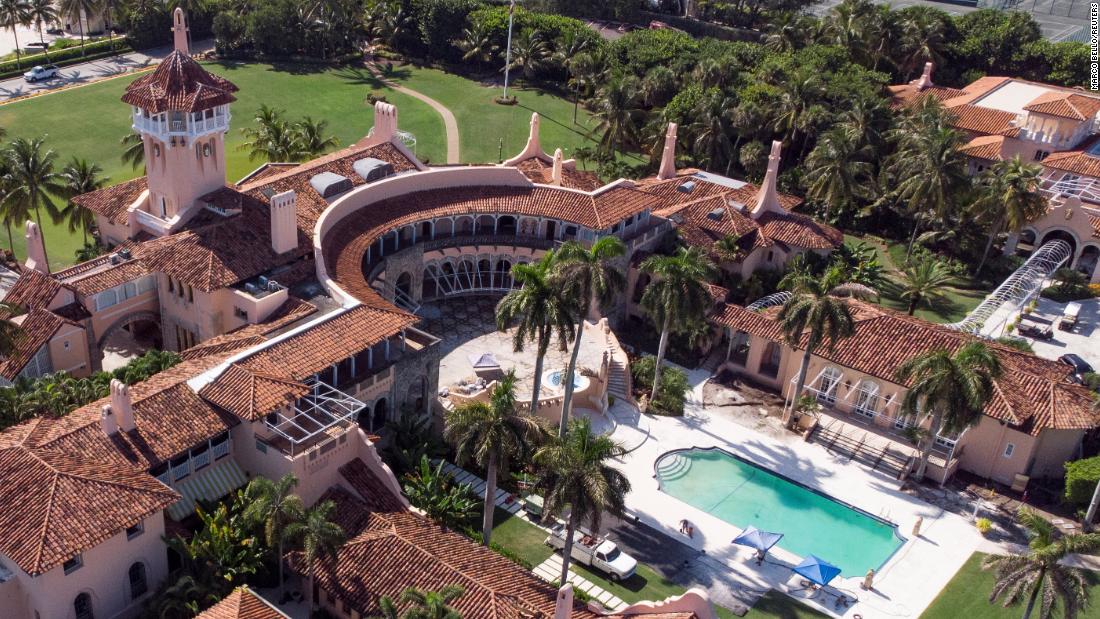
(CNN)The intelligence community has been working with the FBI since mid-May to examine some of the classified documents taken from Mar-a-Lago in order to determine their level of classification, according to multiple sources familiar with the matter.

This document-by-document review has allowed the agencies to determine whether any immediate efforts needed to be made to protect sources and methods as a result of the documents being held at former President Donald Trump‘s Florida residence and resort, the sources said.

After the National Archives provided the FBI with access in mid-May to the 15 boxes it retrieved from Mar-a-Lago in January, the bureau began providing copies of relevant documents to individual US intelligence agencies to assess whether those that contained classified markings were in fact classified — and allowing the agencies that owned the sensitive information to informally determine whether the disclosure of the material could place sensitive sources at risk. That effort took place as part of the Justice Department investigation that resulted in the FBI search of Mar-a-Lago earlier this month.

Under pressure from Congress, the director of national intelligence notified key lawmakers on Friday that her office, which oversees the intelligence agencies, will also conduct a formal damage assessment of any potential harm that could result from the exposure of the documents. While individual agencies have had a window into some of what was retrieved from Mar-a-Lago, assessments like the ones Director of National Intelligence Avril Haines launched are designed to offer a more wide-ranging analytical picture of both short and long-term risks to US national security if such information were to be exposed, rather than resolve any immediate operational risks.

Spokespeople for the FBI, the Office of the Director of National Intelligence, the CIA and the National Security Agency declined to comment.

For now, the risk posed by Trump’s storage of top secret documents at his Palm Beach, Florida, resort remains purely theoretical. It is not known publicly who may have gained access to or viewed any of the classified material contained in the boxes recovered by the Archives and the FBI — or what the documents themselves reveal.

But current and former US officials have raised alarm bells about the potential danger of the highly insecure storage of such sensitive documents and top US lawmakers have put pressure on the intelligence community to detail what it knows about the fallout.

There are multiple concerns for intelligence officials, including that secret US programs might have been exposed. There is also the concern that the sensitive ways in which the US government collects secret information — including human sources, overseas wiretaps and other technical platforms like satellites — might have been exposed to the wrong eyes and rendered useless. Of particular worry is the possibility that a human source might be placed in physical danger if their identity is revealed to an adversarial government.

Formal damage assessments like the one announced by Haines are designed not only to uncover any immediate damage from the exposure of classified information, but also to look at the long-term risks if that information were to be made public, according to Brian Greer, a former CIA lawyer who specialized in national security investigations. For example, such a review might analyze whether there are any foreign policy concerns for the US if a particular piece of classified information were revealed.

That’s different, Greer said, than the kind of case-by-case review done by the relevant operational units at each agency that are geared at immediate damage mitigation.

“It makes sense to me that this has been going on since the second the FBI identified those documents,” Greer said. “Those risk mitigation efforts are different than a formal assessment, which is going to be analytical in nature and look at not only immediate damage but also damage in the long term — it’s both concrete and theoretical.”

According to Greer, there are some potential risks to conducting a full damage assessment: In particular, that it might interfere with any criminal prosecution that the Justice Department may choose to pursue as a result of it investigation. In theory, the damage assessment might be discoverable in court and risks offering the defense the opportunity for what’s known as “graymail” — using the threat of exposing state secrets in public court in order to get the DOJ to drop the case.

Haines in her Friday notification to Congress vowed that the ODNI “will closely coordinate with DOJ to ensure this IC assessment is conducted in a manner that does not unduly interfere with DOJ’s ongoing criminal investigation.”

In January, the National Archives retrieved 15 boxes of presidential materials that contained 184 documents containing classified markings, “including 67 documents marked as CONFIDENTIAL, 92 documents marked as SECRET, and 25 documents marked as TOP SECRET,” according to a DOJ affidavit released on Friday.

The Justice Department sought a warrant to search Mar-a-Lago earlier this month and obtained 11 sets of classified material, including one marked “top secret/SCI” and four marked “top secret.”

Categories
Saved Web Pages

Vatican: Pope Francis’ Ukraine War Comments Not a ‘Political Stance’

2022083014084_630dfcf086c25620efd35c62jp

The Vatican’s statement appeared to refer in part to criticism over Pope Francis’ Aug. 24 appeal for an end to the war in Ukraine, in which he referenced Dugina’s death.

VATICAN CITY — The Holy See said Pope Francis’ recent comments on a car bombing that killed the daughter of an ally of Russian President Vladimir Putin should not be interpreted as a “political stance.”

In a statement released Aug. 30, the Vatican also called the Russia-Ukraine conflict a “large-scale war in Ukraine, initiated by the Russian Federation.”

Since Russia’s invasion of Ukraine, some of Pope Francis’ comments have come under criticism, including a statement he made in an interview in June that Moscow’s invasion of Ukraine was “perhaps somehow provoked.”

He was also rebuked by Ukraine’s Vatican Ambassador last week for his characterization of the Aug. 20 death of Darya Dugina, a 29-year-old journalist and political commentator known for her support of Russia’s invasion of Ukraine.

Dugina was the daughter of Aleksandr Dugin, a Russian political thinker believed to be close to Putin.

The Holy See’s unsigned communication said Pope Francis has made “numerous speeches” on the Ukraine War “mostly aimed at inviting pastors and the faithful to prayer, and all people of goodwill to solidarity and efforts to rebuild peace.”

“It is reiterated that the Holy Father’s words on this tragic issue should be read as a voice raised in defense of human life and the values attached to it, and not as taking a political stance,” the Holy See said.

The Vatican’s statement appeared to refer in part to criticism over Pope Francis’ Aug. 24 appeal for an end to the war in Ukraine, in which he referenced Dugina’s death.

“I think of that poor girl blown up by a bomb under her car seat in Moscow. The innocent pay for war, the innocent! Let us think about this reality and say to each other: war is madness,” Francis said at the end of his general audience.

Ukraine’s Ambassador to the Holy See, Andrii Yurash, criticized Francis’ remarks on Twitter, writing that the speech “was disappointing” and conflated the categories of “aggressor and victim.”

The Holy See’s statement said, “on more than one occasion, as well as in recent days, public discussions have arisen on the political significance to be attached to [Pope Francis’] speeches” on the war in Ukraine.

“As for the large-scale war in Ukraine, initiated by the Russian Federation, Holy Father Francis’ speeches are clear and unambiguous in condemning it as morally unjust, unacceptable, barbaric, senseless, repugnant, and sacrilegious,” the statement continued.

Pope Francis’ most recent mention of Ukraine was during his Aug. 28 trip to the central Italian town of L’Aquila.

After leading the Angelus, he said: “Let us pray for the people of Ukraine and for all those who suffer because of war. May the God of peace revive a human and Christian sense of pity and mercy in the hearts of the leaders of nations. Mary, Mother of Mercy and Queen of Peace, pray for us.”

Categories
Saved Web Pages

Early lessons from the Russia-Ukraine war as a space conflict

6738018-scaled.jpg

Airpower after Ukraine

August 30, 2022 • 9:00 am ET

By David T. Burbach

The 1991 Persian Gulf War is often called “the first space war” owing to the American military’s use of global positioning systems and other space-based technologies—the first of several US conflicts against opponents with no space capabilities. Three decades later, the Russia–Ukraine war is perhaps the first two-sided space war.

As a potential harbinger of the future, Russia’s war in Ukraine offers four preliminary lessons for political and military leaders. First, despite having no indigenous space capability, Ukraine has made effective battlefield use of space-based communications and intelligence, surveillance, reconnaissance (ISR) assets from US and European commercial providers. Second, for all the attention on kinetic anti-satellite (ASAT) weapons, Russian counterspace attacks have been limited to the cyber domain—achieving some success and causing collateral damage in NATO countries. Third, commercial space will only grow in importance in conflicts, while policy makers in Western countries have yet to make clear when and how they would protect commercial assets. Last, Russia is gaining surprisingly little advantage from its space capabilities, reflecting the long-term weaknesses of the Russian space industry—weaknesses not shared by China, however.

Combatants can conduct space-enabled operations without owning space assets

In 2022, Ukraine had no national space capability. Nevertheless, space systems, in the form of third-party commercial and government assets, have played an important role in the Ukrainian war effort. The Ukrainian military makes extensive use of commercial satellite communications, in particular satellite links share data for its networked artillery system (GIS Arta, sometimes called “Uber for Artillery,” is an android app that collects target information from drones, US and NATO intelligence feeds, and conventional forward observers, then distributes orders to fire among multiple artillery units to make counterbattery fire more difficult.). Ukraine obtains high-resolution imagery from Western commercial firms, including synthetic-aperture radar that can “see” at night and through clouds. Specifics on Ukraine’s military use of commercial images are scarce, but the available resolution and timeliness of such images should make them tactically valuable. Commercial imagery can show individual military vehicles, and constellations of multiple satellites can image any target every few hours. This capability provides enough information to enable warfighters to attack fixed targets, or to cue assets such as unmanned aerial vehicles to the vicinity of mobile targets. The United States is also reportedly sharing imagery or signals intelligence from classified collection satellites.

The war in Ukraine demonstrates that what matters is having access to the products of space systems, not owning the satellites. With the explosion in commercial communications and imaging services, many combatants will have such products. Access will not be universal, however. Western companies are far in the lead in their capabilities and are subject to formal and informal limits on the customers to whom they sell data. Iran or North Korea could not buy the level of space-based services that Ukraine has at any price. Western governments should see this as a comparative advantage in supporting partners relative to what Russia or China can provide to their clients. Facilitating commercial access, supplying funding, and offering training in the use of commercial space products (or sharing classified products) can affect battlefield performance in a tangible way; moreover, such efforts are relatively low cost and perhaps less visibly provocative than weapons shipments.

Counterspace operations are more likely to be cyber or electronic than kinetic

In November 2021, Russia tested its Nudol kinetic ASAT weapon and created a cloud of orbital debris that threatened astronauts and satellites of many nations. Whether or not that demonstration was meant as a warning to NATO regarding Ukraine, there are no reports of physical space attacks being attempted. Russian cyberattacks, however, have succeeded. On the first day of the conflict, a Russian operation used destructive malware to disable tens of thousands of user terminals of ViaSat, a US-based commercial network, requiring factory repair of the devices before they could function again. The Ukrainian military was a heavy ViaSat user and the obvious target. Following that attack, SpaceX collaborated with Ukraine to deploy Starlink terminals. SpaceX leaders report that Russia has also attacked their service, so far unsuccessfully.

Space experts had assessed that cyber and electronic jamming would be more likely than physical space attacks, for several reasons. Cyberattacks do not create debris, they are less expensive than building interceptor missiles, offer deniability, and are probably less likely to spur armed retaliation. Developments in Ukraine also demonstrate the value of redundancy against ASAT attacks, that is, relying on large numbers of individually expendable satellites instead of a handful of large satellites. Starlink has twenty-five hundred satellites in service—too many for Russia to shoot down with its few, expensive interceptors. Communications and remote sensing services will continue to shift toward these so-called “mega-constellations.” The success of Russia’s attack on ViaSat, however, shows that an invulnerable satellite fleet is irrelevant if cyberattacks can impair its ground-based control systems and user access.

Commercial firms as important actors—and targets?

The Russia-Ukraine war highlights the explosive growth of the commercial space sector. Although the US military has long leased bandwidth on commercial satellites, the integration of Starlink at the battlefield level and the tactical use of commercial remote sensing is groundbreaking. Unsurprisingly, Russia says the satellites of companies working directly with the Ukrainian military are legitimate military targets—and the Russians are probably correct under international law. The international community accepts the established principle that third parties directly and knowingly contributing to a combatant’s war effort can be attacked, within the limits of proportionality and when causing minimal collateral damage. Recent articles in Chinese military newspapers suggested the Chinese also believe Starlink could be valid target in a future conflict.

It is unclear how the United States and its allies would respond to attacks on commercial space systems, whether by physical or cyber means. Russia’s successful ViaSat attack caused significant property damage to civilians in NATO nations, requiring tens of thousands of terminals to be replaced and causing disruptions, such as knocking thousands of wind turbines off the European electric grid for days. Satellite operators have been asking governments for more assistance in securing their systems and for more clarity about what governments will do to protect them; the current lack of clarity risks causing miscalculation by adversaries.

Evaluating Russian space capabilities (and lessons about China?)

Despite the long history of Soviet and Russian spaceflight, it is not obvious that the Russian military has benefited more from space than the Ukrainian side. Russian command-and-control difficulties, the absence of an apparent ISR advantage, and surprisingly large errors from Russian precision munitions (presumably GLONASS-guided), all hint at less effective employment of space systems than that of the United States or its more capable allies. This is not entirely surprising, however. Russian military communications and surveillance satellites lag far behind those of the United States in numbers and technology–Russia may only have two operational military imaging satellites. Technology sanctions imposed in 2014 set back the development of Russian space capabilities. Some Russian munitions may have been built with chips pulled from consumer appliances, but there is no alternative source for the unique radiation-hardened chips needed in satellites. Strict technology sanctions and the likely decline in Russian government revenues make it doubtful that Russia can close the space gap.

In the future, China would most likely be a more adept military space power than Russia. Beijing has launched dozens of military ISR satellites in the last five years. China has an emerging commercial space sector, and, unlike Russia, it has a sophisticated domestic electronics industry that can supply components for advanced military satellites. Russia might still lead China in ASAT missiles and a few other areas, but in most respects Chinese military space capabilities have surpassed those of Russia in quantity and technology. How the Chinese military fares at exploiting and integrating space capabilities in a real conflict remains to be seen.

Policy recommendations

Several implications flow from these observations:

  1. Space-based information services are a key enabler that the United States and its allies can provide to partner nations, especially “middle powers” with some technical proficiency (as opposed to less developed militaries, as in Afghanistan or Iraq).
  2. Redundant mega-constellations offset adversaries’ kinetic ASAT weapons, but cybersecurity at all levels must be a critical design and operational focus of space systems.
  3. The US commercial space sector is a strategic asset, but the United States and its allies need to develop clear policies for protecting commercial systems, whether through defense or deterrence.
  4. Although China has long been seen as “behind” Russia in space, that view is outdated. US military planners should assume China will likely make more effective use of space capabilities in a future conflict than Russia has in Ukraine.

***

David T. Burbach is an Associate Professor of National Security Affairs, US Naval War College. The ideas expressed in this essay are the author’s personal views and do not represent those of the Naval War College or the US government.

Forward Defense, housed within the Scowcroft Center for Strategy and Security, shapes the debate around the greatest military challenges facing the United States and its allies, and creates forward-looking assessments of the trends, technologies, and concepts that will define the future of warfare.

Image: A Starlink antenna operates during the Global Information Dominance Experiment 3 and Architecture Demonstration and Evaluation 5 at Alpena Combat Readiness Training Center, Alpena, Michigan, July 9, 2021. The North American Aerospace Defense Command and U.S. Northern Command, NORAD and USNORTHCOM, in partnership with all 11 Combatant Commands, led the third in a series of Global Information Dominance Experiments designed to rapidly develop the capabilities required to increase deterrence options in competition and crisis through a data-centric software-based approach. GIDE events combine people and technology to innovate and accelerate system development for domain awareness, information dominance, decisional superiority, and global integration. The GIDE 3 experiment was executed in conjunction with the Department of the Air Force’s Chief Architect Office (DAF CAO) as part of their fifth Architecture Demonstration and Evaluation event (ADE 5), and the Joint Artificial Intelligence Center. (US Air Force photo by Tech. Sgt. Peter Thompson)

Categories
Saved Web Pages

War in Ukraine Has Sparked a New Race to Succeed Putin

78530__b2e24be544db7d4b0c786348fe6bfc95.

The war in Ukraine and ensuing sanctions have failed to cement Russia’s power vertical or unify the country’s influential business and political groups. Had President Vladimir Putin gotten the swift victory he was clearly counting on when he launched his “special operation,” he would have solidified his position as ruler, but as the conflict drags on, the elites are being forced to think of their future and to try to find their place within it.

Putin himself demonstrates no intention to step down but looks increasingly relegated to the past. The elites and potential successors are watching his every military move, but they can already see that he has no place in their postwar vision of the future. His sole remaining function in their perception of the new era of peace will be to nominate a successor and leave the stage.

The war has, therefore, set in motion a public race of the successors. In recent years, political maneuvering in Russia was kept in the shadows, but in this new era, loud proclamations and high-visibility political gesturing are again the norm. It is as though an active election campaign is already under way, with bureaucrats and functionaries within the ruling party doing their best to get into the limelight and even attacking one another. Until recently, such behavior was almost unthinkable: the presidential administration worked in silence, while high-status functionaries at the ruling United Russia party restricted themselves to making promises on social policies.

 Former president, ex-prime minister, and deputy chair of the Security Council Dmitry Medvedev has been particularly busy making statements. His over-the-top, hardline comments on foreign policy issues and insults hurled at Western leaders often look comical, but the role he’s trying to play is clear. It blends tough isolationism with populism, firmly placing the blame for internal woes on the shoulders of external enemies.

Another politician newly making loud gestures is the first deputy chief of staff and curator of the Kremlin’s political bloc Sergei Kiriyenko, who has now been given responsibility for overseeing the breakaway republics in the Donbas. He has become one of the new era’s highest profile politicians, though previously—ever since he became a presidential envoy in the early 2000s—he had never demonstrated any inclination for the limelight.

But now Kiriyenko has taken to wearing khaki and talking loudly of fascists, Nazis, and the unique mission of the Russian people. He headlines public events, and in the Donbas he unveiled a monument to “Granny Anya,” the elderly woman the Russians tried to turn into a symbol of the “liberation” of Ukraine. He is clearly emphasizing his status as curator of the self-proclaimed Donetsk and Luhansk “people’s republics” (DNR and LNR): something done by neither of his predecessors in that role, Vladislav Surkov and Dmitry Kozak. 

Media reports have stressed that those taking up administrative jobs in the Donbas republics are alumni of the school for governors, Kiriyenko’s brainchild. And though Kiriyenko isn’t directly involved in the military campaign, he has clearly managed to carve out a niche for himself in Putin’s martial agenda.

The speaker of the State Duma, Vyacheslav Volodin, is another front-runner in the battle of the hawks. Since his transfer from the Kremlin (as first deputy chief of staff) to the State Duma, Volodin has stepped up his public profile, making numerous provocative statements that are guaranteed to be picked up as sound bites. Now he is redoubling his efforts, backing a ban on foreign words on shopfronts and calling for the death penalty to be kept in the DNR and LNR.

Other influential bureaucrats have adopted a very different strategy, choosing to steer as far away from the subject of the “special operation” as their position allows. That silence is in itself a political gesture.

Prime Minister Mikhail Mishustin and Moscow Mayor Sergei Sobyanin, both regarded as contenders for Putin’s succession prior to the war, have been notably tight-lipped about the “special operation” in Ukraine. Sobyanin toed the line by appearing at a rally in support of it at Moscow’s Luzhniki stadium in March, and traveled to the LNR in June, but he has yet to be spotted in army fatigues or to call for Nazism to be crushed. Mishustin, meanwhile, has avoided the subject of the war entirely.

The rational explanation for their silence is that war is a temporary affair, and relations with the West and even with Ukraine will, at some point and somehow, have to be restored. When that time comes, those who haven’t insulted “hostile countries” or directly participated in the military campaign will be better placed to go about that.

Remaining silent has its own risks, however. If Putin eventually requires complete commitment from all bureaucrats on the Donbas and military issue, the fact that they remained silent could be held against them.

This is all reminiscent of the situation in 2007, when Putin’s second term as president was coming to an end and he could not run for a third consecutive term under the constitution. There were two candidates for the role of successor: first deputy prime ministers Sergei Ivanov and Dmitry Medvedev. Ivanov positioned himself as a conservative and authoritarian, while Medvedev played the role of a liberal modernizer oriented toward the West.

The winner, Medvedev—who claimed back then that “freedom is better than non-freedom”—genuinely strayed from Putin’s beaten track, drawing closer to the West. He spoke sincerely about continuing his presidential career, but quickly folded when Putin wanted to return to the presidency in 2012.

Following Putin’s reelection in 2018, the issue of succession again arose, only to be cut short when Putin changed the constitution to reset the clock on presidential terms, enabling him to run for two more terms from 2024. Now the Russian elite is again looking around for a successor, but in this new era of political gestures, it is the potential successors who have fired the starting pistol, rather than Putin.

The two strategies—loud gestures and resounding silence—reflect the different approaches and assumptions of those who use them. The hawks operate on the basis that the successor will be chosen by Putin, so they mimic his behavior in their attempts to win his favor, indicating that they will preserve his legacy loyally. “After Putin there will be Putin,” Volodin once said.

Those remaining silent are counting on a different succession scenario, whereby the new leader is selected by the elites. As a rule, in this scenario, bets aren’t placed on the most popular potential candidate: they’re not backing anyone who likes to get up on the podium and flex. Instead, technocrats who are capable of taking into account the interests of various groups will become the leading candidates. A “new Putin” could start a redistribution of influence and property, and the elites have little interest in that.

The 2022 version of the successors’ race is a virtual event, of course. Putin hasn’t announced the start of casting and clearly isn’t planning to leave his job: the presidential administration is preparing for elections in 2024, and it goes without saying who will be in the central role. The war and potential annexation of further territories will remove the need for Putin to come up with a manifesto of any kind. He wants to go into the election as the man who defeated Nazism (irrespective of the actual results of the invasion) and as a historic figure who doesn’t need to make any promises to his people.

Nevertheless, the interest shown in the succession race by the most senior members of the elites—not to mention the enthusiasm of its participants—demonstrates that the system wants to discuss (and see) a post-Putin future. It might seem that the extreme circumstances of wartime should banish any thoughts of what will come later. But whatever that future looks like, there appears to be less and less room in it for Putin.

This article was originally published by the Carnegie Endowment for Peace.

Categories
Saved Web Pages

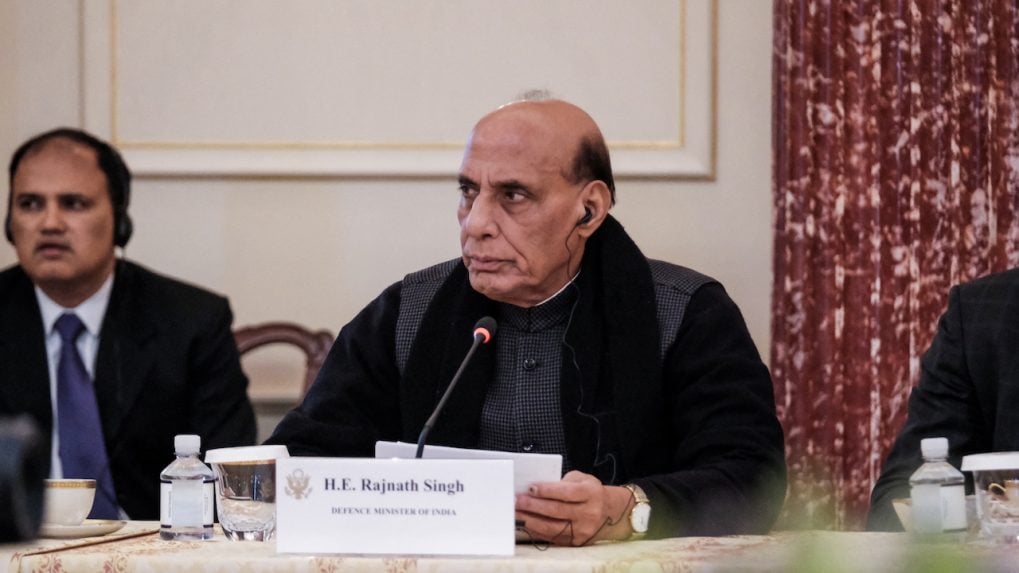
Rajnath Singh thanks Russian defence minister over detention of IS bomber planning to target India

twoplustwo2-1019x573.jpg

Read Time2 Min(s) Read

Profile image

Russia’s Federal Security Service (FSB) said on Monday that it detained the Islamic State terrorist from a Central Asian country who underwent special training to carry out a suicide attack against a member of India’s leadership elite for offensive comments on the Prophet.

Defence Minister Rajnath Singh on Wednesday thanked his Russian counterpart Sergey Shoigu over Russian authorities detaining an alleged Islamic State (IS) terrorist who was planning to target a key Indian politician from the ruling party. Singh conveyed his appreciation to Shoigu when he exchanged pleasantries with the Russian defence minister at a conclave of the Shanghai Cooperation Organisation (SCO) in Tashkent.

“During the exchange of pleasantries with Russian Defence Minister Sergey Shoigu this morning, Rajnath Singh conveyed his deep appreciation and thanks for arresting in Moscow a terrorist who was planning attacks in India,” the defence ministry said.

Russia’s Federal Security Service (FSB) said on Monday that it detained the Islamic State terrorist from a Central Asian country who underwent special training to carry out a suicide attack against a member of India’s leadership elite for offensive comments on the Prophet.

It said the foreign national was recruited by one of the Islamic State’s ringleaders as a suicide bomber sometime between April and June 2022 while he was in Turkey.

“The Federal Security Service has identified and apprehended in Russia a member of the outlawed (by the Russian Federation) Islamic State international terrorist organisation. The detainee is a native of a Central Asian country who planned to commit a terrorist attack against a member of India’s ruling circles by blowing himself up,” the FSB said.

Also Read: Congress leader Jaiveer Shergill resigns as national spokesman, says decision making influenced by ‘self-serving interests’

WP Radio
WP Radio
OFFLINE LIVE