Categories
Saved Web Pages

Feds say he was a Russian spy in Miami, now scientist gets 4 years behind bars

QWETNVHZOVHSFNK7RZ6ZUM4CWE.JPG?_a=ATAK9d

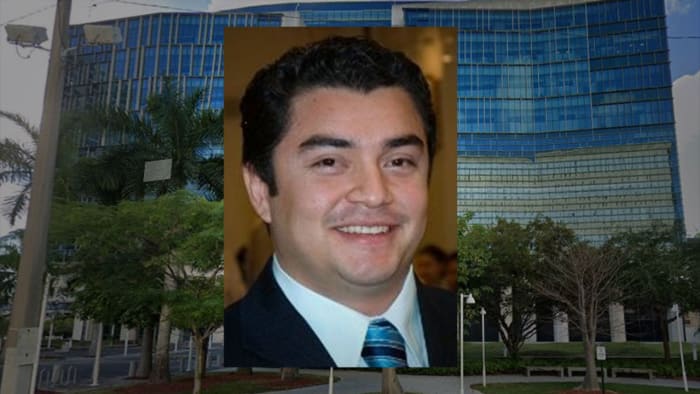
MIAMI – A judge sentenced a Mexican scientist who pleaded guilty in court to acting as an unregistered foreign agent behalf of Russia to four years and a day in prison Tuesday.

The story of Hector Cabrera, 36, involves, among other things, espionage tactics, trips to Moscow, and two wives on two separate continents. And it all comes back to South Florida.

Prosecutors said Cabrera arranged for an intermediary to lease an apartment in a Miami condominium building where a U.S. confidential source lived and he followed the source, keeping tabs on his or her vehicle, according to federal prosecutors in Miami.

FBI special agents in the counterintelligence division concluded Cabrera’s behavior was an example of Russian intelligence services’ tactics “for spotting, assessing, recruiting and handling intelligence assets and sources.”

Cabrera, a Mexican physician and scientist doing research in Singapore, earned doctorates in molecular microbiology from Kazan Federal University in Russia and molecular cardiology from the Justus Liebig University of Giessen in Germany, court records show.

He was also purportedly married to two women at once: one from Mexico and another from Russia.

U.S. Customs and Border Protection agents arrested Cabrera before he boarded a flight to Mexico City on Feb. 16, 2020, at Miami International Airport. While agents questioned him, he said he was traveling with his wife from Mexico, and his spying in Miami was related to his wife in Russia, according to the Feb. 18, 2020 complaint.

Cabrera will be deported at the end of his prison term, prosecutors said.

Read the criminal complaint here:

Copyright 2022 by WPLG Local10.com – All rights reserved.

Categories
Saved Web Pages

Moscow threatens NATO member Lithuania over transit ban on goods to Russia’s European exclave Kaliningrad

kaliningrad-lithuania-train-ap2217342687

June 22, 2022 / 1:29 PM / CBS News

Lithuania’s decision to ban the transit of certain goods between Russia and its isolated exclave of Kaliningrad has provoked wrath among top officials in Moscow, and even a threat of retaliation against the European nation. Kaliningrad shares land borders with two NATO nations, Lithuania and Poland, but not Russia. Captured from Nazi Germany by the Soviet Red Army in 1945 and later ceded to the Soviet Union, the Russian territory is home to about 500,000 people.

While it is surrounded on two sides by NATO nations, it’s a strategically vital patch of ground for Moscow as it provides Russia’s only Baltic Sea coastline. It is home to the Russian military’s Baltic Fleet, and a number of advanced nuclear-capable Iskander missile installations.

But the isolated patch of ground relies on its rail connection to the rest of Russia for the majority of its civilian imports. That rail line runs through Lithuania and then neighboring Belarus, which is a Russian ally.

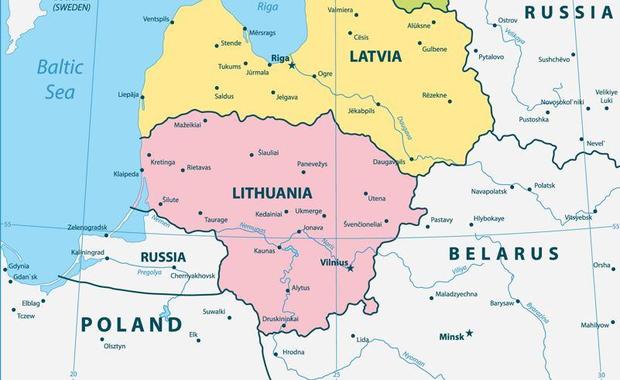
kaliningrad-map-russia.jpg A map shows Russia’s Kaliningrad Oblast, lower left, sandwiched between NATO and EU nations Poland and Lithuania. Getty/iStockphoto

On June 18, European Union member Lithuania prohibited the transit of all goods subject to EU sanctions imposed on Russia for its invasion of Ukraine via the rail link. That includes coal, metals, electronics, and construction materials.

Nikolai Patrushev, the Secretary-General of Russia’s Security Council and one of the most powerful figures in President Vladimir Putin’s inner circle, called Lithuania’s actions “hostile” and “in violation of the international law” during a visit to Kaliningrad on Tuesday.

“Russia will certainly respond to such hostile actions,” Patrushev was quoted as saying by Russian state media. “The consequences will have a serious negative impact on the population of Lithuania.”

In response, Lithuania said it was simply complying with EU decisions and stressed that the transit of passengers and non-sanctioned goods “continues uninterrupted.” 

The transit of passengers and #EU non-sanctioned goods to the #Kaliningrad region through the territory of #Lithuania continues uninterrupted. 🇱🇹 has not imposed any unilateral, individual, or additional restrictions on the transit and is acting fully in accordance with EU law. pic.twitter.com/qqgr9F84XM

— Lithuania MFA | #StandWithUkraine (@LithuaniaMFA) June 20, 2022

Anton Alikhanov, the Governor of Kaliningrad, said the ban was affecting about half of all imports to the territory.

“We consider this to be a most serious violation… of the right to free transit into and out of the Kaliningrad region,” he said in a video address posted on the Telegram messaging app the day after Lithuania’s announcement.

Videos posted on social media last weekend by residents in Kalingrad appeared to show panic buying at stores.

Lithuanian authorities have mocked the complaints from Russian officials, saying no “blockade” is being imposed on Russia’s European exclave.

“It’s ironic to hear rhetoric about alleged violations of international treaties from a country which has violated possibly every single international treaty,” Lithuanian Prime Minister Ingrida Simonyte told reporters, according to the Reuters news agency.

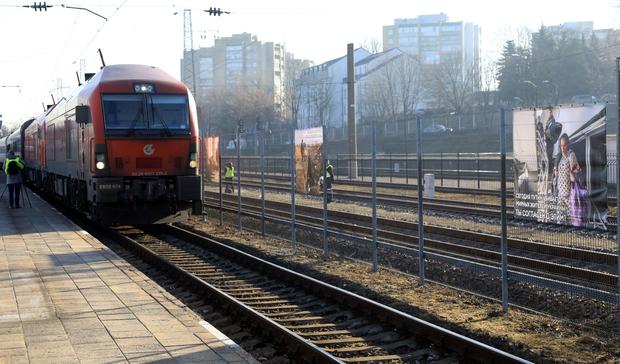
LITHUANIA-UKRAINE-RUSSIA-CONFLICT-TRANSPORT-PHOTOGRAPHY Photographs of Russia’s war in Ukraine are displayed as part of an exhibition at the railway station in Vilnius, Lithuania, March 25, 2022, where transit trains from Moscow to Kaliningrad make a stop over. The exhibition is intended to give transiting Russian travelers a true picture of the conflict.  PETRAS MALUKAS/AFP/Getty

Western officials have been quick to point to Russia’s blockade of all ports along Ukraine’s southern Black Sea coast, which has interrupted global food supplies. The United Nations has warned that blockade could lead to a prolonged global food crisis.

EU foreign policy chief Josep Borrell cautioned Moscow against any escalation over Lithuania’s enforcement of the bloc’s sanctions.

“We are in a precautionary mood,” Borrell said Monday. “But Lithuania is not guilty. It is not implementing national [unilateral] sanctions. It is not implementing their will. Whatever they are doing has been the consequence of the previous consultation with the [European] Commission.”

With its Baltic Sea port that remains ice-free year-round, Kaliningrad had provided Russia a viable way to try and bypass the myriad international sanctions imposed against it over the Ukraine war. But the restrictions on goods moving through Lithuania will greatly limit that prospect.

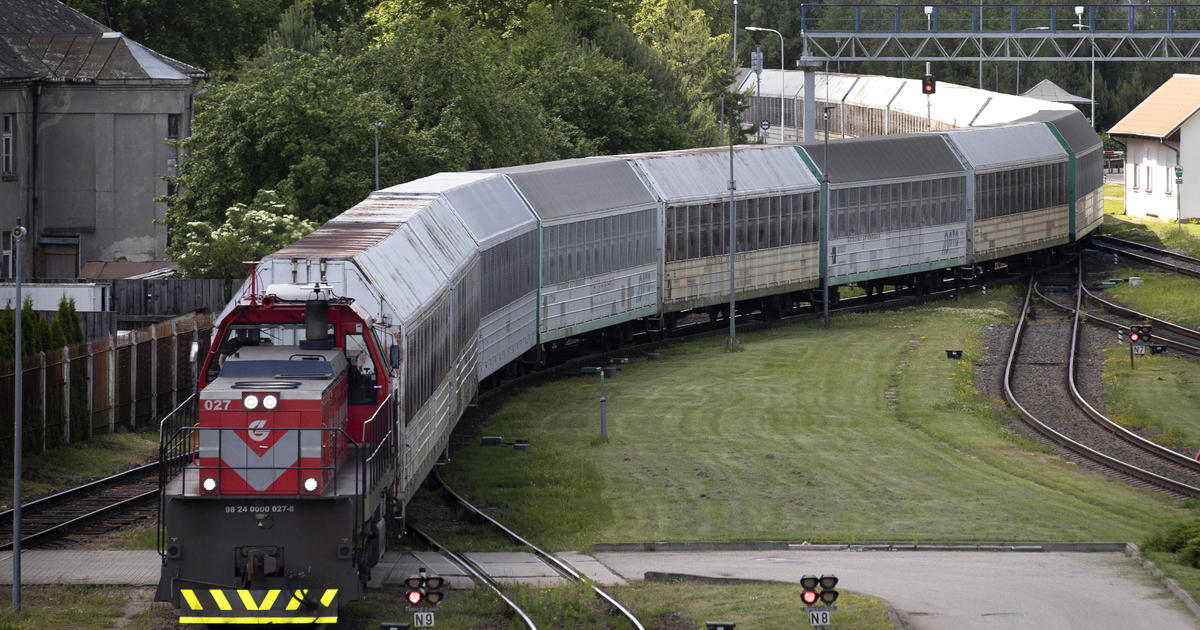
Lithuania Russia A cargo train from the Russian enclave of Kaliningrad moves to the border railway station in Kybartai, about 124 miles west of Lithuania’s capital Vilnius, June 22, 2022. Lithuania has defended its decision to bar rail transit from Russia to its Baltic Sea exclave of goods under European Union sanctions. Mindaugas Kulbis/AP

Both the Kremlin and Russia’s Foreign Ministry echoed Patrushev’s threats of “practical” retaliation against Lithuania, but Moscow hasn’t yet indicated what that will entail.

Russian lawmaker Leonid Slutsky told state news agency RIA Novosti on Wednesday that Moscow could, as a potential option, disconnect Lithuania from the regional power grid.  

On Wednesday, Lithuanian President Gitanas Nauseda told Reuters that his country was ready for Russia to retaliate by severing its connection to the BRELL power grid, but he added that he did not expect a military confrontation over the transit ban.

Three decades after they severed ties with the Soviet Union, Lithuania, Latvia and Estonia still depend on Russia for much of their power supply. Last year, however, Lithuania established a way to connect to the continental European grid via Poland, lowering its dependence on Moscow.

More

Categories
Saved Web Pages

Песков заявил о «различных» вариантах ответа Литве из-за Калининграда — РБК

756558918721181.jpg

По его словам, решение по ответным мерам из-за ограничения транзита товаров в российский регион находится на этапе обсуждения. МИД ранее указал, что ответ будет «практическим», а не дипломатическим

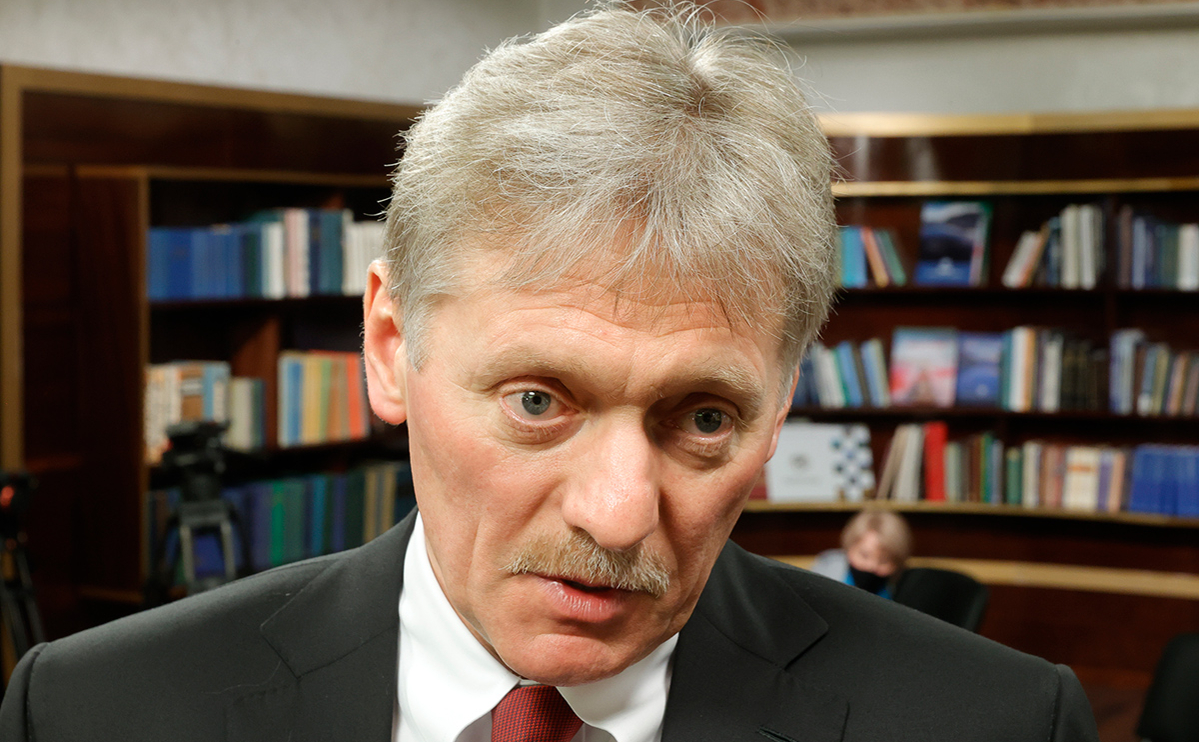
Дмитрий Песков

Дмитрий Песков (Фото: Михаил Джапаридзе / ТАСС)

Россия рассматривает различные варианты мер в ответ на ограничения Литвы по транзиту в Калининград, сообщил журналистам пресс-секретарь российского президента Дмитрий Песков, передает корреспондент РБК.

«Обсуждаются конкретные меры, мы об этом говорили, разумеется. Мы убеждены, что эти незаконные санкции в данной ситуации абсолютно неприменимы», — сказал он.

По словам Пескова, применение санкций против Калининграда противоречит «основополагающим документам».

«Меры готовятся. После того как мы внимательно все взвесим, уже будем о чем-то говорить», — сказал представитель Кремля.

Ранее официальный представитель МИДа Мария Захарова сообщила на брифинге, что ответные меры на ограничения транзита в Калининград будут лежать «в практической плоскости». Она отрицательно ответила на вопрос, будут ли они в дипломатической плоскости.

Литовские железные дороги ввели запрет на транзит составов ряда товаров в Калининград с полуночи 18 июня. Среди них — цемент, строительные материалы, металлы и некоторые другие важные для производства товары. Министр иностранных дел Литвы Габриэлюс Ландсбергис пояснил, что страна не вводит никаких ограничений самостоятельно, а исполняет европейские санкции, вступившие в силу с 17 июня.«Это сделано после консультаций Еврокомиссии и под ее руководством», — отмечал министр.

Власти Калининградской области опубликовали список товаров, которые нельзя перевозить через Литву. Туда вошли технологические установки для сжижения природного газа, продукты из чугуна и стали, чистопородные лошади, трюфели и продукты из них, сигары, парфюмерия и другое. Глава региона Антон Алиханов заявил, что для доставки «санкционных» грузов будут использовать паромы и суда, а не попавшие под ограничения товары будут возить поездами. Губернатор также отметил, что транспортные трудности «вполне преодолимы», «самолеты летают, поезда пассажирские спокойно ходят».

После введения ограничений на транзит в МИД России вызвали посла ЕС Маркуса Эдерера, там он заявил, что о «блокаде» Калининградской области речи не идет, а также попросил решить вопрос дипломатическим путем. Российское ведомство также выразило протест временной поверенной в делах Литвы Виргинию Умбрасене (с апреля Литва понизила уровень дипотношений и отозвала посла).

Categories
Saved Web Pages

Scenarios for Russia’s strategic Kaliningrad exclave

Russia’s exclave in Kaliningrad has long given nightmares to NATO’s defense planners. The outcome of the Ukraine war will bear heavily on its future.
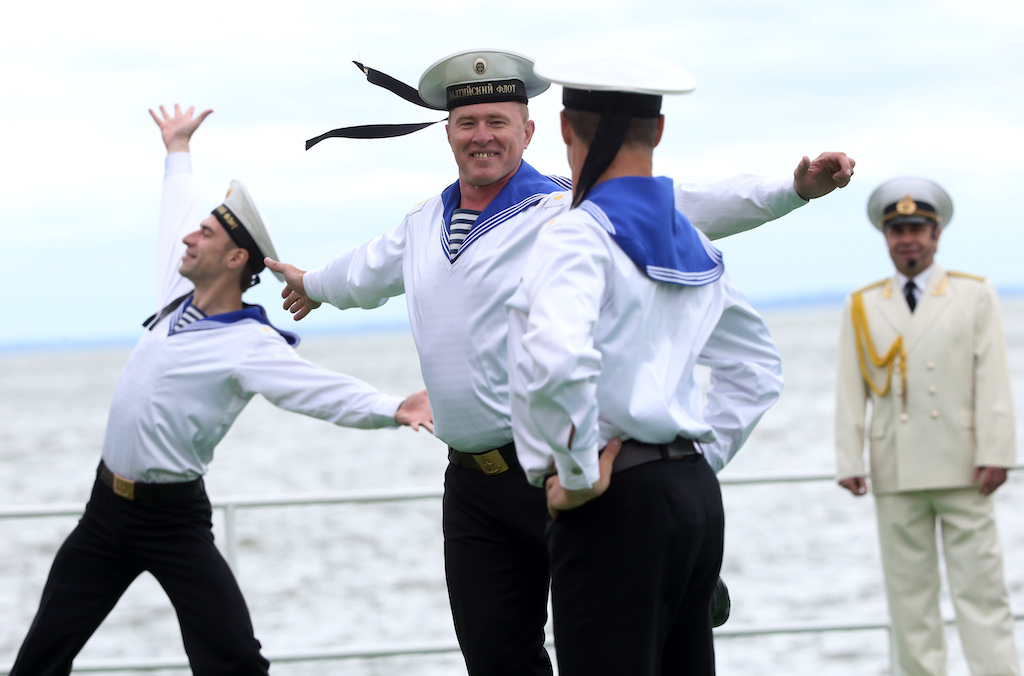
The Russian Baltic Fleet EnsembleThe Kaliningrad garrison serves as an intimidating Russian presence in the Baltic region. The Baltic Fleet, headquartered there, has been significantly upgraded in recent years with new ships, ground forces and missiles. © Getty Images

×

  • The outcome of the war in Ukraine may seal the future of Kaliningrad
  • Russia’s military forces serve as a lock on the Baltic
  • The exclave may morph from Moscow’s strategic asset to a liability

NATO military planners have long been concerned about Russia’s strategic Kaliningrad exclave. Wedged in between Poland and Lithuania, the chunk of Russian territory with fewer than half a million people has been a fixture in the security architecture of the Baltic Sea region. During the years leading up to the 2022 war in Ukraine, major Russian moves to upgrade its military presence there have triggered concerns. The scenarios hinge on how that war ends and if the regime in Belarus survives.

The heightened posture featured the introduction of Iskander ballistic missiles that may carry nuclear warheads, combined with Russia’s top-of-the-line S-400 air defense systems and Bastion coastal defense systems. Meanwhile, the ground forces were enhanced with new units, including more and better tanks and artillery. And the Baltic Fleet, also based in Russia’s westernmost town of Baltiysk, received both upgrades and additional ships.

As Russia’s “special military operation” in Ukraine continues to reveal disastrous shortcomings, it is becoming questionable how much of this still matters and if Kaliningrad will play much of a role in the future.

Kaliningrad exclave’s military significance

The main reason why NATO has been so concerned has to do with the exposed position of the two northern Baltic states. As shown in numerous war-gaming exercises, a Russian armed invasion of Estonia, for example, could have been swift and would have presented NATO with a fait accompli. Once it failed to repel the attack, the alliance would find itself in an unenviable position of having to expel the invader to honor its mutual defense obligations under Article 5.

If such a rescue were to be launched over land, it would have to proceed from Poland into Lithuania. NATO forces would need to transit the “Suwalki Gap,” a 70-kilometer stretch of land between Kaliningrad and Belarus, and the opposition would heavily bombard it from both sides. The alternative would be a combined airlift and naval convoy proceeding up the Baltic past Kaliningrad’s missile batteries.

Given that NATO assets attempting to pass through that area would have had to reckon with heavy losses, Kaliningrad served as an intimidating Russian lock on the Baltic. In military jargon, it was an “A2/AD (anti-access/area denial) bubble.” Adding that a Russian attack on one or more Baltic states would likely have been associated with a Russian assault to seize the demilitarized Swedish island of Gotland, strategically located in the center of the Baltic, the double lock seemed to be quite formidable.

With NATO troops present on the ground in Finland, the Russian rear would be dangerously exposed to missile and artillery strikes.

Although no NATO source would have admitted this possibility, Moscow may well have calculated that if it did choose to invade, say, Estonia, NATO would seek and find an excuse to settle the matter without the use of force. In the case of Finland and Sweden in NATO, that calculus changes beyond recognition.

Enter Finland and Sweden

It is true that Russia has long viewed both countries as de facto NATO members and that despite their nonaligned status, NATO troops would still have been able to come to the rescue of the Baltics via the Swedish and Finnish territories. But there are three important points to be made here.

One is that with NATO troops present on the ground in Finland, the Russian rear would be dangerously exposed to missile and artillery strikes. Another is that the Swedish and Finnish air forces, which now have ample experience in joint operations, would constitute a formidable problem for Russian aviation. And the third important circumstance is that the Swedish navy has advanced submarines that could swiftly take on the dual task of eliminating any Russian naval opposition and aggressively mining the approaches to St. Petersburg, including the Russian naval base in Kronstadt.

This enhancement in the ability of NATO to protect Estonia and Latvia will significantly reduce the importance of Kaliningrad. While this will erode the incentive for Russian military planners to invest in keeping it up to scratch, the garrison there will remain consequential. It retains its strategic location in the southern Baltic, and it has the capability of launching nuclear missile strikes against Warsaw, an option that has featured in war games.

×

However, from the Kremlin’s distant horizon, Kaliningrad could be transformed from an asset into a liability. The outlook features very different scenarios where the critical feature concerns what will happen in Belarus.

Pushing back Russia

The first scenario emerges if a decisive Russian defeat in Ukraine leads to a collapse of the regime of strongman Alexander Lukashenko. A cessation of economic support from Russia to Belarus could prompt a cascading crisis, strikes and civil unrest, with parts of the armed forces eventually switching their allegiance. Battle-hardened Belarusian volunteer forces that have fought against the Russians in Ukraine could be decisive here, returning home to help expel all remaining Russian troops from Belarus.

If Belarus switched sides, the consequences for the Russian garrison in Kaliningrad would be immense. Already depleted from having contributed troops to the war in Ukraine, the military outpost would find itself surrounded by hostile forces. As Russia’s borders in the West would be pushed back to roughly where they were at the end of the 16th century, the “Suwalki Gap” would cease to matter. Lines of communication between Poland and Lithuania – and points further north – would be wide open.

Defense consequences

Having already declared Russia a terrorist state and branded Russian warfare in Ukraine as genocide, the government in Lithuania could be expected to join Poland in putting a squeeze on Kaliningrad. It would not result in the exclave becoming formally demilitarized, but, over time, the situation of its garrison would come to resemble that of the Russian outpost in Transnistria in Moldova.

The military would become degraded. Even if Russia had resources to spare for Kaliningrad, which is doubtful, military planners would be constrained by the prohibition of transporting troops or military hardware over land. With the Baltic Sea in the hands of NATO, resupply by sea would be at the mercy of the alliance. With sophisticated missiles stationed on the Swedish island of Gotland, the airspace would also belong to NATO.

Economic deterioration

The exclave’s economy would become equally degraded. The sanctions regime would block all forms of imports over land, leaving shipping as the only lifeline, and Russian ships would have a hard time finding foreign ports at reasonable distances that would receive them. Shortages would become ubiquitous.

In consequence, the local population would find everyday life increasingly complicated. Those employed in the dominant military sector would feel the squeeze of dwindling payments from Moscow. At the same time, those living off border trade would no longer be able to continue such operations.

Under this broad scenario, Kaliningrad would fizzle into irrelevance. With its nuclear weapons eventually removed, the Baltic Sea region would enjoy peace and stability.

Russia prevails

An alternative scenario would occur if the Western resolve to stand by Ukraine erodes over time, and Kyiv is forced to accept a settlement. A deal between the European Union and Russia could end hostilities and cause a withdrawal of Russian forces from much of Ukraine. The price for that would be allowing the Kremlin to retain control over the Crimean Peninsula and Donbas (at least), plus most likely also the coastline up to, and possibly even beyond, Crimea.

Such an outcome would allow the Russian regime to save face, thus removing the threat of regime change via a coup. It would also be associated with a gradual lifting of sanctions to allow Russia to resume cooperation with its former European partners. And it would be associated with Belarus remaining within the Russian camp, fostering even deeper bonds between the two militarized autocracies.

If the Lukashenko regime survived, it may be expected to deal harshly with those who sought to undermine the Russian war effort in Ukraine, ranging from volunteer forces to railway saboteurs and civil society activists. Increased repression would feature the use of the recently reintroduced death penalty and possibly even assassinations of opposition figures abroad. The potential implications for Kaliningrad are considerable.

Regaining strength

As Russia recovered its economic strength, buoyed by continued energy exports to Europe and a resumption of trade that has European industry majors returning to the Russian market, it would also be able to start rebuilding its military capabilities. Embittered by its humiliation in Ukraine, the Kremlin would be prone to use the Belarus-Kaliningrad axis to drive home that its voice must still be heeded.

Given that a negotiated settlement of the war would still be associated with a heavy buildup of NATO forces along Russia’s western borders, and that its conventional military hardware has proven inferior to NATO weapons, Russian planners would be escalating their already loud nuclear saber-rattling.

Kaliningrad would be assigned a critical role in this endeavor. The exclave’s land-based Iskander missiles constitute a lethal threat to Poland. The Baltic Fleet has missile corvettes that may launch nuclear-capable Kalibr cruise missiles capable of striking land targets at 1,500-2,500 kilometer-distance and Kh-35 cruise missiles that may strike enemy ships. If these forces are maintained and upgraded, peace and security in the Baltic Sea region come under a very dark cloud.

Perpetual threat

A middle-of-the-road outcome is possible, where Russia suffered a decisive loss in Ukraine, but Belarus still manages to muddle through. Under this script, the country offers the Kremlin a vantage point to extend future influence toward Kaliningrad and the EU. But it would be a weak link, in constant danger of breaking.

The obvious alternative to a clear Russian defeat is a dubious deal. Western resolve could dissipate over time. The leading European powers may succeed in brokering a “peace” plan that would allow Russia to retain a hold over Ukraine and Belarus to remain in the Russian camp. This scenario ensures access to resources for Russian leaders bent on seeking revenge.

Categories
Saved Web Pages

Kaliningrad, Russia’s Westernmost Outpost, Is Again a Flash Point in East-West Relations

21ukraine-briefing-kaliningrad-explainer

Kaliningrad’s House of Soviets was never fully occupied but still towers over the remains of the Prussian Königsberg Castle, which the Soviet authorities demolished in the 1960s.

Kaliningrad’s House of Soviets was never fully occupied but still towers over the remains of the Prussian Königsberg Castle, which the Soviet authorities demolished in the 1960s.Credit…Emile Ducke for The New York Times

Dan Bilefsky
  • June 22, 2022, 9:13 a.m. ET

A former American national security adviser once called Kaliningrad, a Russian enclave sandwiched between the NATO members Poland and Lithuania, “a dagger in the heart of Europe.”

Now Kaliningrad, a port city captured from the Nazis by the Soviet Union during World War II, once again finds itself a fault line in a Cold War-style conflict between Russia and the West.

The Russian authorities this week threatened Lithuania with retaliation if the Baltic country did not swiftly reverse its ban on the transportation of some goods to Kaliningrad by rail. The restrictions exposed the geopolitical vulnerability of Kaliningrad, which is Moscow’s westernmost outpost but more than 200 miles from mainland Russia.

Russia’s invasion of Ukraine has stoked tensions in the region, where memories of Soviet subjugation run deep.

As nationalist rhetoric has grown more intense in recent years, Russia has moved advanced Iskander missiles into Kaliningrad, which is on the Baltic Sea. Lithuania’s defense minister said in April that Russia had stationed nuclear weapons in the region, which Moscow denies.

Having invaded Ukraine and deployed its troops to its pliant ally Belarus, Russia has suddenly flexed its military muscle near the borders of several NATO countries, including Baltic nations. Only a thin corridor between Lithuania and Poland, about 60 miles long, separates Russian forces in Belarus from Kaliningrad.

While analysts say that Moscow, already overextended in Ukraine, is unlikely to provoke another war in Europe, any attack on a Baltic state would trigger NATO’s mutual defense treaty. And any attempt to defend them would have to get past Kaliningrad and the missiles stationed there.

There was a time when Russia touted Kaliningrad as a symbol of its links with European culture. In the 1990s, the Russian authorities promoted Kaliningrad’s past ties to Germany to help attract tourists, lauding its role in the life and work of the 18th-century German philosopher Immanuel Kant, who was born and lived in Königsberg, the regional capital now named Kaliningrad. (The Soviet authorities renamed the city in 1946 after Mikhail Kalinin, a Bolshevik revolutionary.)

The city has had other high-profile residents: Lyudmila Ocheretnaya, the former wife of President Vladimir V. Putin of Russia, was born there.

In the immediate post-Soviet era, Moscow tried to reinvent Kaliningrad as its own duty-free Hong Kong. The region sprouted with factories producing cars, electronics and furniture. After the provincial government negotiated visa-less travel to Polish border areas, the Ikea outlet in nearby Gdansk, Poland, became a popular destination for Russians.

But Moscow historically has also sought to obfuscate Germany’s historical ties to the area. In the 1960s, the Soviet authorities blew up a still-standing portion of a Gothic castle to make way for the House of Soviets, a towering building meant to symbolize the Soviet Union’s control over former German territory. Instead, the building was marred by structural defects, was never fully occupied and became a monument of sorts to Soviet failure.

The latest flare-up with Lithuania is not the first time Kaliningrad has been the locus of tensions.

In 2016, about 70 nautical miles off Kaliningrad, two Russian Su-24 planes buzzed the American guided missile destroyer Donald Cook, simulating an attack and drawing protests from Washington.

In another episode that same month, a Russian warplane intercepted an American reconnaissance plane at an unsafe distance over the Baltic Sea.

Categories
Saved Web Pages

Twitter Has Onboarded At Least a Dozen FBI and Intelligence Agents Since 2019

Twitter-Onboards-A-Dozen-FBI-and-Intelli

Twitter, a soon-to-be jewel in the world’s richest man’s crown, has onboarded at least a dozen FBI and intelligence agents since 2019—and mostly to very high positions—according to a new investigative journalism report. 

MintPress News (MPN) published a June 21 article that appeared to rely on a simple scrape of LinkedIn bios, making the discovery based on publicly available information. 

Some of the heads Twitter has hunted include:

  • A former Lockheed Martin Director of Innovation turned FBI Senior Innovation Advisor who became Twitter’s Director of Corporate Resilience in March of 2020
  • A 20-year veteran FBI supervisory Special Agent turned Twitter Director of Corporate Security and Risk in August of 2020
  • A 14-year FBI SWAT Team Leader turned Twitter Corporate and Executive Security Services member in September of 2019

Additionally, the outlet noted three former FBI agents—who keep their last names obscured with only an initial on LinkedIn—that now hold Director-level positions in different corporate risk, security, and trust divisions.

Besides FBI agents, another individual served as a 10-year CIA Analyst before becoming Senior Policy Specialist at Twitter Singapore in 2019. They transferred to Silicon Valley in July of 2021.

MORE ON GOVERNMENT SURVEILLANCE

The outlet quoted former-FBI-agent-turned-9/11-whistleblower Coleen Rowley as stating she knows of a “revolving door” between the FBI and the industries the establishment’s enforcement arm regulates. 

Rowley told MPN she felt the situation created a serious conflict of interest, “The truth is that at the FBI 50% of all the normal conversations that people had were about how you were going to make money after retirement.”

According to MPN, many of the agents listed in the article “were active in the FBI’s public outreach programs,” which the outlet described as “a practice sold as a community trust-building initiative.”

Rowley characterized such programs as “ways for officials to meet the important people that would give them jobs after retirement,” deriding the affairs as “warp[ing] and pervert[ing] the criminal investigative work that agents do when they are still working as agents because they anticipate getting lucrative jobs after retiring or leaving the FBI.”

The whistleblower, who was named one of Time Magazine’s Persons of the Year for 2002, shared her opinion on the advantage this type of recruitment presents to Big Tech’s cornerstones, “Retired agents often maintained good relationships and networks with current agents. So they can call up their old buddy and find out stuff.” 

“There were certainly instances of retired agents for example trying to find out if there was an investigation of so and so. And if you are working for a company, that company is going to like that influence,” she added.

MPN also pointed out that Twitter has absorbed at least three graduates or fellows of a training facility under the NATO-globalist think tank Atlantic Council .

One of the most notable, albeit perhaps lesser-noticed, missives issued by the Atlantic Council in recent years was “The Longer Telegram,” a policy instruction initiative that advocates for regime change inside China

However, the document does not call for the elimination or the fall of the notorious human-rights-abusing and mass-murdering Chinese Communist Party, but instead for the replacement of current CCP leader Xi Jinping in favor of a more traditionally Marxist-Leninist Party head.

One individual mentioned by MPN was directly hired from NATO in 2019 “to work on cybercrime policy.” 

The man is notable because, “There is sparse information on what [he] did at NATO, but, alarmingly, his own LinkedIn profile stated simply that he worked on ‘psychological operations’ for the military alliance,” MPN said.

The individual removed the references to psyops from his profile after an April article by the publication brought the references to light.

In May of last year, establishment media outlet Newsweek published an article chronicling how the Pentagon had created a “secret army” of clandestine online operatives tasked with serving as something of the English-language version of the CCP’s “Wumao” state-backed internet influencers.

The article was a result of a two year investigation covering 600 resumes, 1,000 job postings, and a variety of undisclosed Freedom of Information Act requests, Newsweek stated. 

In the end, they found an army 60,000 strong, “many working under masked identities and in low profile,” backed by an annual budget of more than $900 million.

In May, an undercover video sting by investigative journalism team Project Veritas caught a Twitter senior engineer inauspiciously bragging to a woman he believed he was on a date with that staff not only worked as little as a few hours a week and weren’t trying to make money, but that “we’re all commie as f***.”

“I started working for Twitter and became ‘left.’ I think it’s just like the environment… like you’re there and you become like this commie,” he admitted candidly.

Categories
Saved Web Pages

Has the FBI become a threat to democracy?

?url=http%3A%2F%2Fmediadc-brightspot.s3.

Last month, in the District of Columbia
, a jury could not bring itself to find Michael Sussmann guilty of lying to the FBI
. Nonetheless, we learned a lot during that trial. An FBI agent testified that he is under investigation for withholding exculpatory material during the investigation of the Trump campaign. Other revelations in that courtroom highlighted the eagerness of FBI brass, “the 7th floor,” to proceed with the investigation of that presidential campaign. Withholding exculpatory information about someone is a threat to that individual’s civil rights; withholding exculpatory material about a presidential campaign is a threat to democracy.

When explaining the FBI in the past, I and others would often stress how blessed the United States was to have as our domestic security service a law enforcement agency, an organization that works within the guidelines of the law, to protect our democracy.

Doubts about this blessed situation first surfaced after the 2016 election with the exposure of the FBI role in the orchestrated Russian collusion hoax. The current FBI director’s response, repeated like the reggae tune “Don’t Worry, Be Happy,” is simply, “Those responsible are no longer with us.” Developments are multiplying that call into question that happy assumption.

The federal case concerning an alleged plot to kidnap Gov. Gretchen Whitmer of Michigan ended with zero convictions. The defense of entrapment was discussed for the first time in years with credibility. In the aftermath of the bureau’s famous ABSCAM cases of the early ’80s, guidelines were put in place and strictly followed that eliminated entrapment as a viable defense. Basically, there is no entrapment if the government can show the defendant was predisposed toward the crime. Agents were cautioned and trained not to entice someone, who was “not otherwise disposed,” into committing a crime. Disclosures in the Michigan case likely convinced jurors that informants and undercover agents helped shape the conspiracy.

In the government-recorded conversations in that case, many passages show the Michigan defendants expressing unease with the idea of kidnapping and confusion about what was planned. One agent, in a text to his informant, just before he led a surveillance of the governor’s residence, is quoted: “Mission is to kill the governor specifically.” In the aftermath of ABSCAM, we believed entrapment had become a nonissue. Maybe not.

Only four defendants went to trial in the kidnapping plot. But there were as many as 12 FBI informants and two undercover agents among the plotters. Reminds me of the joke, or the criticism in some quarters, about the FBI and the Communist Party during the 1950s and ’60s. The bureau had so many informants in the party, they were most of the members at the party meetings. The not-so-funny joke was that only the dues of the government-paid informants kept the party going.

What is also not so funny is the alleged kidnapping plot was weaponized by Democrats in the 2020 presidential election. Nor is it funny in our democracy that a couple of ultimately acquitted defendants endured 18 months of imprisonment.

Earlier, in November 2021, the FBI in New York conducted pre-dawn raids at the homes of Project Veritas journalists. This was part of an investigation into the “possible theft” of a diary, belonging to President Joe Biden’s daughter. Why use an intrusive search for a mere diary, particularly if Project Veritas had, as claimed, tried to return the diary to law enforcement and Biden’s lawyers. Even left-wing media groups have expressed concern about the violation of a media organization’s First Amendment rights. If the diary belonged to anyone else’s daughter, it is hard to imagine the FBI involved at all. Certainly it is a waste of resources. But to violate a journalist’s rights in the process is a threat to democracy.

On March 11, a redacted internal audit from 2019 became public that showed FBI investigations failed to comply with the Domestic Investigations and Operations Guide at least 747 times in “sensitive investigative matter” cases. These involve politicians, candidates, religious groups, or the news media. The review identified over two “compliance errors” per case. Errors included failure to get approval for opening a case, failure to document a legal review before opening a case, and failure to keep prosecutors informed. The subjects of the cases are those that brush right up against specific constitutional rights.

Rather than being blessed to have a law enforcement agency as its domestic security agency, is the United States now cursed to have a domestic intelligence organization with police powers? Has a once-great agency now become a threat to our democracy?

Thomas J. Baker, a former FBI agent, is the author of The Fall of the FBI being released later this year by Bombardier Books.

Categories
Saved Web Pages

Live Updates: Ukraine Urges Civilians to Flee Russian-Occupied Areas in South

21ukraine-briefing-promo-445pm-facebookJ

Ukraine urges civilians to flee the occupied south ahead of a promised counteroffensive.

Ukrainian soldiers in the Kherson region this month.Credit…Tyler Hicks/The New York Times

A top Ukrainian government official has made an urgent plea for hundreds of thousands of people living in Russian-occupied parts of southern Ukraine to evacuate in advance of a potential Ukrainian counteroffensive, working to prepare the public for a bloody struggle on another front even as Russia makes steady gains in fierce and costly battles in the east.

In trying to take back territory in the south, Ukrainian officials are facing deep challenges. Russia has been dug in for months in parts of the region, complicating evacuation routes for civilians and forcing Kyiv to decide how much damage it is willing to inflict on towns and cities that — even if an eventual counteroffensive is successful — it would have to rebuild.

“Please, go, because our Army will definitely de-occupy these lands,” said Iryna Vereshchuk, Ukraine’s deputy prime minister. In one sign of the dilemmas facing Ukraine, she indicated that civilians might first have to flee to Crimea, which was seized by Russia in 2014 and has been a key staging ground for Moscow’s invasion.

Russian forces have intensified searches at checkpoints in the region and are preventing civilians from traveling to Ukrainian-controlled areas. The safest escape route for many of the 500,000 people still estimated to be living in the Kherson region may be to head south to Crimea, she said.

“We know that today it is almost the only humanitarian corridor available, if it can be called that, that can be used to leave,” Ms. Vereshchuk said at a news conference on Monday. “So, if possible, get out of there, especially if you have children.”

From Crimea, she urged people to make their way to another country where they can reach out to the local Ukrainian consulate. She did not elaborate on how Ukrainians would be able to leave from Crimea.

While it is not clear when or if Ukraine will launch a broad offensive, it has been staging limited counterattacks that have put the Russians on the defensive. Ukrainians are now battling Russian forces trying to hold defensive lines less than 12 miles from the city of Kherson — the only regional capital to fall to Russian forces since the Feb. 24 invasion.

The Russians have used indiscriminate, heavy bombardments to level whole towns and villages before infantry troops move in to claim the ruins. But like other towns and cities that fell quickly in the first days of the war, Kherson was spared the kind of widespread destruction that has defined the Russian advance.

Now the Ukrainians are wrestling with complicated calculations in the fight to reclaim lost lands.

Ukrainian officials have stressed how important it is to keep the local population on their side — a task that may be complicated after months of Russian occupation and propaganda. The Russian Ministry of Defense said on Tuesday that it had repaired the last of seven television towers in the Kherson region to broadcast Russian channels.

The Ukrainian military also hopes to use local residents behind enemy lines as a force multiplier by staging sabotage operations, scouting enemy targets and generally creating a hostile environment for occupation forces.

A picture taken during a media tour organized by the Russian Army shows a Russian servicemen standing guard near the Dnipro River in Kherson last month. Russian forces have been in control of the city since the early days of the war. Credit…Sergei Ilnitsky/EPA, via Shutterstock

That could include attacks like one over the weekend on three Russian soldiers as they sat at a waterfront cafe in Kherson. Two were killed and a third had to be transported to a hospital in Crimea for treatment after they came under attack by an unidentified gunman, according to the Ukrainian military southern command.

Ukraine would also need to assess how much damage it is willing to inflict in any effort to retake Kherson, since, if it succeeds, it would fall on Kyiv to rebuild. “If the city is demolished, then why liberate it?” asked Oleksandr Samoilenko, a Kherson official.

But the Russians have had months to fortify their positions.

“It will be very, very difficult to open a humanitarian corridor when there are children there,” Ms. Vereshchuk said. “It was difficult in Mariupol, and in the Kherson region it will be even harder.”

Military analysts have cautioned that it could most likely be several weeks before the Ukrainians get more powerful weapons and ammunition needed to wage a wide offensive in the south. But Ukrainian forces continued to set the stage for a broad assault.

The Ukrainian military’s southern command said on Tuesday that Russia was being forced to “resort to desperate means” to hold onto its outer defensive ring, including launching a “massive missile strike.”

There were no reported casualties and the region’s air defense systems limited the damage, according to the military.

Categories
Saved Web Pages

A Brooklyn Home Designed With Fun in Mind

05sp-design-brooklyn1-facebookJumbo.jpg

The twice-reimagined home of Jun Aizaki and his family in Brooklyn.

The twice-reimagined home of Jun Aizaki and his family in Brooklyn.Credit…Brian W. Ferry

To transform his Williamsburg townhouse into a whimsical playground, an architect consulted his own early memories (treehouses were involved).

The twice-reimagined home of Jun Aizaki and his family in Brooklyn.Credit…Brian W. Ferry

Tim McKeough
  • Published June 2, 2022Updated June 6, 2022

This article is part of our latest Design special section, about spaces inspired by nature.

Sometimes, when life changes, your home needs to change too. Or at least that’s what Jun Aizaki, the founder of the architecture and design firm Crème, determined after he started a family.

In 2010, before he was a parent, Mr. Aizaki bought a two-family townhouse in the Williamsburg neighborhood of Brooklyn that was so poorly maintained it had begun to fall apart. “Things were literally patched together with duct tape,” Mr. Aizaki, 49, said. “The canopy was supported by two-by-fours and the roof had holes everywhere. It wasn’t in real livable condition, even though a person lived there.”

Mr. Aizaki, who designs restaurants like RedFarm and L’Amico in Manhattan and hotels like Hyatt Centric in Philadelphia, paid a little more than $500,000 and undertook a down-to-studs renovation. He put on a new roof. He bought a generous supply of redwood reclaimed from old New York water tanks and had it milled to create exterior siding as well as interior features like a custom bathtub and bookshelves. He dug into the backyard to add an extension that expanded it from about 2,500 to 3,000 square feet, and to create space for a sunken patio beneath a new deck.

ImageRedwood reclaimed from water tanks found its way into the kitchen.

Redwood reclaimed from water tanks found its way into the kitchen.Credit…Brian W. Ferry

The plywood ceiling is a recent soundproofing addition.Credit…Brian W. Ferry
Jun Aizaki and his son, Luka, at the dining table.Credit…Caroline Tompkins for The New York Times

After 10 months of construction, it was complete. Mr. Aizaki and his newlywed wife, Fanny Allié, an artist who is now 40, moved into the 1,500-square-foot apartment occupying the first two floors and rented the same-size unit on the top two floors.

For years, the apartment seemed perfect. Then, in 2017, the couple had a son, Luka, and everything began to change. Mr. Aizaki decided the home could use more family-friendly features.

Luka reaches his bedroom nook by ladder.Credit…Brian W. Ferry
Inside is a spray-painted sky night sky.Credit…Brian W. Ferry

To carve out a dedicated space for Luka, who is now 5, he converted a large closet into a treehouse-like sleeping nook with a loft bed that can be reached through a hatch. The exterior of the room is clad in reclaimed water-tank wood, which Mr. Aizaki had left over from the original renovation, and the interior is coated with spray paint that fades from peachy pink to dark blue at the ceiling, where glow-in-the-dark star stickers create a simulated night sky. Underneath the bed, a play area carpeted with artificial turf gives the impression of an indoor park.

“I just wanted to make something really fun,” Mr. Aizaki said. “It’s a tiny space, but it encourages him to use it.”

Indeed, fun was the guiding principle for most of the design changes. Revisiting his childhood memories, Mr. Aizaki tried to imagine elements that would have thrilled his younger self. That is how he arrived at the idea to design and build three copper speaking tubes that snake through the apartment’s two levels to enable remote conversations. One tube connects the living room to Luka’s bedroom, another goes from the living room to the bathroom, and the final one runs from the kitchen to the primary bedroom.

Speaking tubes run downstairs from the dining room…Credit…Brian W. Ferry
…so you can call upstairs from the bath.Credit…Brian W. Ferry

“In this age of Siri and Alexa, it’s just totally low-tech,” Mr. Aizaki said. “We play games or just talk to each other. And when he has friends over it’s the first thing they do.”

Mr. Aizaki also punched a hole through the tiled wall of the primary bathroom to add a small ribbed-glass window on a wooden turntable that can provide privacy when needed. It also serves as a pass through for notes, toiletries and toys. “It’s just a little funny thing,” he said.

Along the way, he made a few less whimsical changes. When the family needed more soundproofing between their kitchen and the upstairs neighbor, he added a layer of plywood paneling to the ceiling. When he tired of the original kitchen, he made new kitchen cabinet doors from additional surplus water-tank wood. Recognizing that the family spent most of its time in the kitchen, he also added a steel island and topped it with a butcher block counter made from still more water-tank wood.

The backyard treehouse.Credit…Brian W. Ferry

But it is the playful projects that seem to inspire Mr. Aizaki the most.

When he first purchased the house, he planted a cherry tree sapling in the backyard. Now that the trunk is about 10 inches in diameter and strong enough to hold a structure, he recently built a treehouse that includes a bucket on a pulley system for raising and lowering toys and snacks.

“When I was a kid, I would have loved to have had all these things to play with,” Mr. Aizaki said. Now Luka is the beneficiary of his father’s imagination, living in a home that Mr. Aizaki described as “a little bit like a dream house.”

Categories
Saved Web Pages

Russia’s misinformation campaign failing, say Canadian general, EU and NATO officials

f8bc5194-1803-11e8-b880-a3843e00524a.jpg

OTTAWA – A Canadian general and senior NATO and European officials say Russian attempts to sell false narratives in the West about the invasion of Ukraine are failing.

At a security conference in Ottawa, they say misinformation campaigns by the Kremlin are being successfully thwarted and countered in both Europe and North America.

But they warn Russian President Vladimir Putin is stirring up dissent in Africa and the developing world, blaming Western sanctions for food shortages when they stem from the Russian invasion and the blockade of Ukraine’s ports.

Jay Janzen, communications director for NATO’s Allied Command Operations, says Russia has experienced catastrophic failures since the invasion of Ukraine, including with its misinformation campaigns.

Maj.-Gen. Michael Wright, commander of the Canadian Forces Intelligence Command, says the U.K., U.S. and Canada have successfully countered disinformation from Russia since the beginning of the war.

Charles Fries, EU deputy secretary-general for common security and defence policy, says the EU is fighting a war of narratives and pushing back Russian propaganda, including untrue Kremlin claims that food shortages stem from sanctions.

This report by The Canadian Press was first published June 21, 2022.

The Canadian Press. All rights reserved.

WP Radio
WP Radio
OFFLINE LIVE